Game Opinion Summaries: Game Boy

This is a new name for my series of short (one to three paragraphs each) reviews of all the games I own for a system.  This one is one of my personal favorite videogame systems ever.

Note: This thread is for games compatible with the original, B&W Game Boy. Game Boy Color only games, which require that system, will be done another time, in a GBC article someday.  The Game Boy and Game Boy Color are different systems, so I will not list them together.  That will cause some repetition, but still, I think this is the right way to do things.

Nintendo’s original Game Boy was one of the most important videogame system releases ever. It created the modern handheld gaming market, lasted 12-13 years, and was a great system along the way, too. I actually started on a SNES Game Review Summaries thread first, but got bogged down with about 50 to go, so I dropped it for the time being (I’ll get back to it), and started on this one instead… and it went much easier, and here the thread is!

The Game Boy, in its original form, was the first console I ever owned — I got one for Christmas in 1993.  Before that we’d had a computer for a while (since early ’92; yeah, I didn’t have anything beyond a couple of LCD handhelds for video/computer games at home before I was nine), but this was my home introduction to Nintendo.  I had no chance of convincing my parents to let me get a TV console, but they finally gave in on handhelds, so I looked at the GB and Game Gear.  I was interested in both, and listed what stuff I’d want for each one of course, but ultimately ranked the Game Boy higher because it had more games I was interested in.  I ended up getting the GB, Super Mario Land, and Kirby’s Dream Land on Christmas.  I think that I made the right decision asking for the Game Boy, and I’ve liked Nintendo handhelds ever since.

As a result of this, expect a bit more personal recollection stuff in these reviews than in any of my previous threads. I’ve had the N64 since 1999, sure, but I got a GB a good 6 1/3 years before that… the several dozen GB games that I got between 1993 and 1998, particularly, have pretty strong nostalgia value for me, good or bad. I got a Game Boy Color for Christmas 1998, so from that point on I more played GBC games. However, many GBC games released between 1998 and 2000 have original Game Boy compatibility, so those games will of course also be in this thread.

Oddly enough, though, I don’t have nearly as many games for the Game Boy as I do for consoles that I got much, much more recently; I have at least 150 games each for a bunch of systems I didn’t even own before 2005 or later, like the SNES, Genesis, PS1, and PS2, and also some systems I’ve had for longer but not as long as the GB, such as the N64, but still have only about 98 GB games, plus 27 more dual-mode black-cart titles, for a total of 125 games.  It’s a good-sized library, but I do have more games for a bunch of other systems now.  I’m not sure why I don’t have more, but one reason would be availability — it’s harder to find Game Boy games than it is consoles like the NES, SNES, or Playstation — and also maybe because I’ve owned the GB for longer, so I might have higher standards or something… I mean, I regularly buy not-that-great console games, but for the Game Boy? Unless it’s something I think I might actually like, I don’t get it.  So yeah, I do not have a large collection of mediocre licensed Game Boy games. Maybe someday I’ll lower my standards for GB purchases more. I do have some interesting, lesser-known titles, though, and look for reviews of those games here, along with the more popular stuff.  Oh, I should mention that I own all but one of the GB games that I have ever owned.  The only one I don’t have anymore is Ken Griffey Jr.’s Major League Baseball, which is one of two GB games I disliked so much that I sold it — that style of top-view baseball screen where you can’t see much of the field and have to catch balls by the minimap isn’t something I like at all.  I was quite partial to the Hardball series (on PC particularly).  The other GB game I sold is Toy Story, but I bought a $1 or $2 copy of that sometime last year, so I can review that below.

This is the original Game Boy box. I do have my original GB box, but it’s not this model; I have the later version that came with only the system and batteries, not the link cable and Tetris like this original pack did.

My favorite Game Boy and dual-mode (as played in B&W/SGB only) Games (of what I have only) – #1 is for sure, but numbers two through nine can shift around. Numbers 3 through 6 could be in almost any order, for instance, and I’d like the list just as much…
—
1. The Legend of Zelda: Link’s Awakening
2. Super Mario Land 3: Wario Land
3. Donkey Kong [’94]
4. Kirby’s Dream Land 2
5. Gradius: The Interstellar Assault
6. Final Fantasy Adventure
7. Kirby’s Pinball Land
8. Mega Man IV and V (tie)
9. Micro Machines
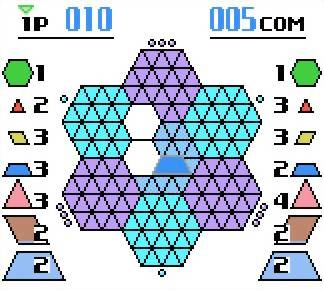
10. Hexcite (GB/GBC dualmode game)
#10 for GB-only games list: Gargoyle’s Quest

Honorable Mentions (after Gargoyle’s Quest): Mega Man in Dr. Wily’s Revenge, Mega Man III, Kirby’s Block Ball, Kirby’s Dream Land, Kirby’s Star Stacker, Super Mario Land, Super Mario Land 2: Six Golden Coins, Quarth, R-Type DX, Wario Land II, Looney Tunes, Montezuma’s Return, Wave Race, Survival Kids, Aerostar, Quarth, Bomberman GB, Shanghai Pocket, Tetris DX, Speedy Gonzales, Looney Tunes, Taz-Mania, Daffy Duck: The Marvin Missions, Out of Gas, Amazing Penguin, Operation C, Alleyway

Worst game I own: Toy Story

Top 5 for GB/C Dual Mode (black-cart) games only
—
1. Hexcite
2. Montezuma’s Return
3. Survival Kids
4. The Legend of Zelda: Link’s Awakening DX
5. Wario Land II

Top honorable mention: R-Type DX

Worst game I own: Pokemon Pinball

Table of Contents (games are mostly in alphabetical order, but I mostly put series together, regardless of alphabet order.)
—
Game Boy (grey carts/B&W-only) – ~98 games
—

4 in 1 Funpak Vol. 1
Adventure Island II: Aliens in Paradise
Aerostar
Aladdin
Alfred Chicken
Alleyway
Amazing Penguin
Balloon Kid
Bart Simpson’s Escape from Camp Deadly
Batman
Battle Arena Toshinden
Bionic Commando (1992)
Wario Blast: Featuring Bomberman!
Bomberman GB
Bonk’s Revenge
Boomer’s Adventure in Asmik World
Brain Drain
Bugs Bunny Crazy Castle 2, The
Castlevania Adventure, The
Cosmo Tank
Daedalian Opus
Donkey Kong [’94]
Donkey Kong Land
Donkey Kong Land 2
Donkey Kong Land 3
DuckTales 2
F-1 Race
Final Fantasy Adventure
Flipull
Gargoyle’s Quest
Gradius: The Interstellar Assault
Incredible Crash Dummies, The
Iron Man / XO Manowar in Heavy Metal
James Bond 007
Kirby’s Dream Land
Kirby’s Pinball Land
Kirby’s Dream Land 2
Kirby’s Block Ball
Kirby’s Star Stacker
Lazlo’s Leap
Legend of Zelda: Link’s Awakening, The
Lion King, The
Mega Man: Dr. Wily’s Revenge
Mega Man II
Mega Man III
Mega Man IV
Mega Man V
Mercenary Force
Metal Masters
Metroid II: Return of Samus
Mickey Mouse: Magic Wands!
Micro Machines
Milon’s Secret Castle
Mole Mania
Monster Truck Wars
Motocross Maniacs
Mystical Ninja Starring Goemon
NBA Jam: Tournament Edition
Ninja Gaiden Shadow
Operation C
Out of Gas
Pokemon Red Version
Prehistorik Man
Quarth
Radar Mission
Revenge of the Gator
Rolan’s Curse
Rolan’s Curse 2
Samurai Shodown
Sneaky Snakes
Solar Striker
Speedy Gonzales
Star Wars
Street Racer
Super Chase H.Q.
Super Mario Land
Super Mario Land 2
Wario Land: Super Mario Land 3
Super Off-Road
Super R.C. Pro-Am
Super Star Wars: Return of the Jedi
Tarzan: Lord of the Jungle
Taz-Mania
Teenage Mutant Ninja Turtles: Fall of the Foot Clan
Teenage Mutant Ninja Turtles 2: Back From the Sewers
Tetris
Tetris Blast
Tiny Toon Adventures: Babs’ Big Break
Tiny Toon Adventures [2]: Montana’s Movie Madness
Torpedo Range
Toy Story
Trax
Turrican
Wave Race
Yoshi
Yoshi’s Cookie
Zen: Intergalactic Ninja
—
GB/GBC Dual Mode – 28 games
—
Asteroids
Ballistic
Conker’s Pocket Tales
Ghosts ‘N Goblins
Hexcite
Hot Wheels: Stunt Track Driver
Jeff Gordon XS Racing
Klustar
Looney Tunes
Looney Tunes: Carrot Crazy
Looney Tunes: Twouble!
Montezuma’s Return
Oddworld Adventures 2
Pocket Bomberman
Pokemon Pinball
Power Quest
Prince of Persia
Quest for Camelot
R-Type DX
Rats!
Roadsters
Shamus
Shanghai Pocket
Survival Kids
Legend of Zelda, The: Link’s Awakening DX
Tetris DX
Turok 2: Seeds of Evil
Wario Land II

Games use my standard format and list save type (if any), multiplayer (if any), and other accessories supported.  For multiplayer, I list whether the games use the Link Cable, the 4-Player Adapter, or whether they support same-system multiplayer, and whether the game is alternating or simultaneous play in multiplayer.  Games with Super Game Boy or GB Printer support also mention that in accessories.  I also list which techniques I know Super Game Boy games to be using — custom (SGB-exclusive) screen borders, enhanced sound versus a normal Game Boy, a custom color palette (the selection of four colors used on the screen), auto-changing color palettes (games which change palettes during play, so each level looks different), multiple color zones on screen (a SGB technique that allows you to have specific parts of the screen use a different palette from the rest of the screen.  These zones cannot scroll, but are useful for status bars and the like.), and multiplayer on the SGB with SNES controllers (supported in some fighting and Bomberman games) are the ones.  Only the techniques a game supports will be listed with that game.
Remember, the Game Boy Color, and GB/GBC dual-mode games as they run on the GBC, GBA, GBA SP, or GB Player, will be in a separate list; that is a different system from this one, and should be listed separately.  Also, the reviews of Game Boy/GB Color dual-mode (black cart) games in this thread are supposed to focus on how they run on the original Game Boy, GB Pocket, GB Light, and Super Game Boy, not the GB Color or beyond.  I will mention some of how they run in color too though.

At the end of each review, I mention other platforms the game is available on.  If none are listed there, it’s an exclusive.

—
Game Boy (Original) – 95 games
—


4 in 1 Funpak Vol. 1 – Two Player Alternating – Link or Same System.  This game is a collection of board games. It includes Chess, Checkers, Backgammon, and Reversi.  There’s no saving here, so all you can do is just play a single game of the game of your choice.  All four games do play reasonably well, but there are surely better options than this now, on newer consoles.  Still, for Chess and Reversi (aka Othello), this was worth the very low price; I like those games.  There are multiple difficulty levels too, as you would hope, and it supports two players on one system, which is great.  While that might be expected, it isn’t a given, so it’s good that it is here.  The game has very basic, early-GB graphics that aren’t too impressive, but do the job.


Adventure Island II: Aliens in Paradise – One player, password save. I’ve never loved the Adventure Island series, and find the games too simplistic and kind of boring or frustrating, and this game does not entirely escape that. However, it isn’t too bad. Adventure Island II for the GB is a game inspired by Adventure Island III on the NES. (The first GB Adventure Island is based on AI II for the NES, so this makes sense.) It may be a little confusing (III is II…), but that’s what it is. The game is not identical to the NES game, though; even though the area themes are the same, so this game has dinosaurs to ride on as with the NES game, which is great; the better AI games are the ones with the ridable dinosaurs. The general game structure is the same as the NES version as well, but the level designs are, as usual on the Game Boy, new. The levels are still very short, unfortunately — I have never liked SMB3’s super-short-levels concept that AI3-NES/II-GB takes its inspiration from — but the layouts are new, and the levels are fun while they last. I like how the path can branch at times, and that there are hidden levels to find, too. Considering the different screen resolution, it makes sense to redo things, and that’s what they did here. The graphics are good, with nice detail and art design, justl ike the second and third NES games, but in monochrome. Overall, even if you have played the NES games, these Game Boy games are worth playing if you like the series. And even if you usually don’t, like me, the NES and GB games are as good as Adventure Island gets. This game is still overly simplistic and gets boring quickly, but at least this one has passwords, so you don’t have to play it all at once! The NES games don’t have saving, but the GB games do. Still though, even the Game Boy Adventure Island games are average at best. I first played the first GB Adventure Island back in the early ’90s, and didn’t like it very much, and that impression of the series has stuck. But overall, this one is alright, and is improved over the first GB game. Remake of Adventure Island III for the NES.


Aerostar – One player. Aerostar, or Aero Star, is a fairly unique shmup. The game is a fairly early GB game, from 1991, but it has pretty decent graphics for the time, and not much slowdown either. The game also has some original game design. You see, in this game, instead of simply moving around the bottom of the screen, your vehicle here must stay over the roads. Yeah, your craft looks like a futuristic fighter plane, but it’s landbound. It’s kind of odd, but makes for some good gameplay. To move between road sections, you can hit the Jump button, which makes you take to the air. However, in the air you have a very limited flight time, as marked by the meter on the top of the screen. If you don’t land, or at least go over road surface when the meter runs out, you will crash and lose a life. Yeah, make sure to land on the roads! The game is a vertical-scrolling autoscrolling shooter, so you always need to pay attention and learn the levels. There are often multiple roads you can be on on the screen, so as you play you will learn which ones are the better paths. The game doesn’t have any areas where the screen scrolls horizontally, so it’s always just one screen wide, but they put a lot of interesting challenges into the stages. There are four different weapon powerups available, too, and they are all good, and different from eachother, so there’s a nice variety of weapons here as well. Aerostar is a moderately challenging game, and I haven’t managed to finish it yet though I have gotten pretty far. This game is cheap and highly recommended — it’s a pretty good shmup, and most people haven’t heard of it, either. The graphics and sound are somewhat average, but are classic Game Boy stuff and look nice enough, and the gameplay holds up great.


Aladdin – One player, Super Game Boy enhanced (w/ background and single color palette). Aladdin for the GB is in fact a port of the Genesis game of the same name. Yes, the Genesis game has a Game Boy port. It’s also on the GBC as well, but I don’t have those versions, only the original. The game is somewhat cut down from the Genesis original, as you would expect — the animation isn’t as good or as smooth, there are fewer levels, and the graphics are on the small side. This game is not anywhere remotely near as good as the all-time classic that is the Genesis original. It’s mostly interesting in that they actually tried to port the Genesis game to the GB, and didn’t make a new game for the handheld, unlike the Game Gear game, which is entirely different. An original title probably would have been a better idea, honestly, but this version wasn’t helped by its mediocre, cheap-handheld-games budget and development team. The sprites have outlines around them to make them stand out; they do, but it looks kind of ugly.For Genesis Aladdin, this game sure looks average. The Super Game Boy gives it a nice, appropriately yellow color palette and decent border. There are nine levels in this version, so it’s not as short as some GB games, but isn’t all that long either. Unfortunately, no saving. This is really only a curiosity. Also on the Genesis, Game Boy Color, and PC.


Alfred Chicken – One player. Alfred Chicken is a European platformer for several platforms. The game’s somewhat difficult and has no saving, so this one will be frustrating. The gameplay is classic ’80s/early ’90s Euro-platformer stuff, so the game has good-sized levels which you have to wander around as you try to find your way through. The levels are nonlinear, as expected, and the game is frustrating. The graphics are extremely bland, as well; have low expectations for this one. The game is quite short, with only five levels, but it’s not easy to finish, in part because of the puzzle elements in the level designs and the limited lives and continues, and in part because you can only get to level five if you collect a certain item (the watering can) in each one of the first four levels. This is one of the few games where you play as a chicken, but this game isn’t really funny like, say, Mort the Chicken for PS1 is. This really is for classic Euro-platformer fans only. Also on NES, Amiga, and Amiga CD32.


Alleyway – One player. Alleyway is a very early Game Boy game, and looks it. This game is a Breakout/Arkanoid style blockbreaking game, and it’s really quite good and addictive. I wasn’t sure if I would like this game or not when I got it a few years ago, but I most definitely do. I want to mention the biggest drawback first, though — ball bounce angles in this game are limited. The ball seems to only bounce at a couple of angles, and this can make hitting that one last block VERY frustrating at times. Apart from that though, I really like the game. It’s simple, but great. The game is mostly like Breakout, as there are no Arkanoid-style powerups or enemies in this game, but it has some new elements to make things more interesting. Each area in the game has a unique block layout and is made up of four stages. The first stage has a static block pattern. The second stage has a pattern where the blocks horizontally scroll across the screen, with each of the three block colors moving at a different screen. Once they hit the side, they wrap around and appear on the other end. The last main stage in each world has the blocks slowly descending down towards you. In the first area there is only one pattern of blocks, but after that these stages always have two full sets of blocks in them. You can’t lose if you fail to get them before they hit the bottom, though — all that will happen is that the blocks will vanish when they get too low. This should be avoided when possible, though, because you don’t have any continues in this game, and it’s easy to lose lives, so every extra life you can get from points is precious, and you won’t get points from blocks that vanish that way. The last stage in each area is a bonus level, where you have to try to destroy all the blocks in a Nintendo-related shape before time runs out. As usual in such stages, the ball passes through bricks in this mode. Overall, Alleyway is a quite challenging game, with its limited bounce angles and no-continues design, but it’s addictive and has kept me coming back again and again. This is one of my most frequently played GB games in the last few years; I’ve probably played it more than anything other than Hexcite. Also on 3DS Virtual Console.


Amazing Penguin – One player, password save. Amazing Penguin is a quite good classic arcade-style game. There’s no story ingame, but you play as a penguin, and apparently the idea is that you’re a penguin cutting away the ice blocking your access to the sea, or something. The game has basic but functional graphics; it’s nothing special looking, but it’s good enough. It’s the gameplay that keeps this game going, though, and this game is good enough to be well worth it. I’d never heard of this game when I got it, but it’s a good game. The game is a topdown game, and you move around a maze along lines. The lines form square areas, and the game is somewhere in between Crush Roller or Zoom! on the one hand (that is, games where you win by passing over all of the territory in the level), and Pac-Man. So, in Amazing Penguin you win by turning all of the rectangles from blank to patterened, but you don’t do it by just passing over the ground, as in that first group of games; instead, you do it by clearing the screen of these little items. You turn each side of a rectangle by hitting a button when you pass over the item, or items, which usually are at the midpoint of each side. Destroy all of the items around a rectangle and you kill any enemies touching it. There are two types of items, The black one can be kicked, with one button, or destroyed, with the other. Destroying it will just get rid of it, but if you remember to press the other button, you’ll kick it in a straight line, which will kill any enemies it hits. The other item, which is white, can only be destroyed; the kick button will do nothing to these. Enemies respawn while you’re playing, so you can’t get rid of the enemies forver. You win each level once you’ve cleared all the ice. The game may sound basic, and at first it is, but as you progress through the game, the levels get more complex and more challenging. You have to make tough decisions, such as when to use an item — do you knock it away right away, or keep that one in place in case you get cornered and need to defeat some enemies? You can only destroy the enemies around a square once, after all; once all four sides are clear, the items around it won’t come back. At first levels are only one screen in size, but later on they expand. The game also plays great on any model of Game Boy. I liked the game from the beginning; it’s simple, but fun. But yes, as easy as it may seem at the beginning, it does eventually challenge. There are 40 levels, broken up into 10 4-level worlds. The difficulty curve is done well, overall, as is this game. There are harder games for sure, but it’s a fun one. It’s a classic arcade concept, altered a bit and adapted well to the Game Boy. Plus, with passwords for each world, you don’t need to start the game over every time you play! Good game, and it’s recommended.


Balloon Kid – Two player simultaneous – Link. Balloon Kid is an early (1990) GB game from Nintendo where you play as a girl who has to rescue her brother, who floated away on some balloons. Yeah, it’s a reverse of the usual game story; nice touch! A girl saving a boy? You can tell Miyamoto didn’t have a part in making this game. :p Anyway, the game is essentially a sequel to Balloon Fight for the NES, and was only released in the West on the original GB; Japan had to wait ten years before they got the game on handhelds, though they did get a colorized version of it, with battery save added too. That version was only released in Japan. Looking at the version we did get, though, I like the game. It may not have saving, but this game is short, so that’s not so bad; this one is not hard to finish in one sitting, once you are good enough to do so. Getting good enough to finish it will take some effort, though, so there’s solid replay value here. The game is a sidescrolling “platformer”, except of course you spend most of the time in the air. There are also bonus areas to find. This game doesn’t include the original Balloon Fight’s Joust-clone single-screen arcade mode. There is a versus mode in that style, but that’s link cable only. Instead, the main game is a platformer, inspired by the original game’s Balloon Trip mode, but more complex, and with a level structure and ending. Balloon Kid has basic, small early-GB game graphics, but they’re decent enough, and if small, they have some nice detail. The levels are made up of walls and platforms, as well as pits. There are boss fights every couple of levels, fought on the ground. You can walk on the ground anytime though, and even jump if you land and lose or get rid of your balloons, though playing this as a traditional platformer is impossible, as many areas require balloons to traverse. There are times where you’ll just have to lose a life to continue, if you get stuck without balloons somewhere where you need them. So, don’t get hit too much and lose those balloons! You have two hits before dropping, as with the original Balloon Fight (and indeed, that you got two hits instead of one was just about Balloon Fight’s ONLY difference versus Joust, Balloon Trip mode aside…). I never really liked Joust all that much, but in this platformer form, I think the concept works well. It’s pretty much a flying platformer, and avoiding the obstacles and finding the bonus rooms is quite fun. The game has some challenge to it, and you have limited lives and there are no continues, so it will take some replay to finish, but it’s more than fun enough to be well worth it. I imagine that the import color version is pretty short; a lot of the playtime here is in the time it takes to get through it all at once, but with saving this would be a very short game. The game also includes an endless “Balloon Trip” mode, as in the original Balloon Fight, so you can also play that and try to get better, though of course in the Western version you’ll have to write down your scores yourself, since it won’t save them. There’s also a versus mode, which apparently is a classic versus Joust/Balloon Fight-style game, though as I have only one copy of the game, I haven’t tried it. I’d like to get another copy eventually so that I can. Also on NES (Japan only, reprogrammed and redrawn as “Hello Kitty World”), GBC (Japan only, as “Balloon Fight GB”) and 3DS Virtual Console (US/EU have only the Western B&W version, Japan only the Japanese color version). Of course, the 3DS VC version has the multiplayer removed.


Bart Simpson’s Escape from Camp Deadly – One player. This is a very difficult, mediocre Simpsons game where you play as Bart, as he has to, well, do as the title says. The game has some pretty nice graphics, but the game really is very hard and frustrating. You’ve got limited lives and continues, and you’ll lose them quickly, with how many obstacles there are to avoid in this game, and because of the not-the-greatest controls. I remember this game being a popular one back in the early ’90s, because of its license, and you certainly could do worse — the visuals at least are good — but the high frustration factor drags the game down quickly. As with most Simpsons platformers of the era, unfortunately, this game isn’t that great. Even just playing long enough to beat the first level might take some effort — this game’s hard from the start, and I didn’t play long before quitting. I did pay only $1, though, so it was probably worth the cost.


Batman – One player. Batman is one of Sunsoft’s earliest Game Boy games, and you can tell — this game has tiny, simple graphics. Fortunately though, the game plays great, even if it looks quite unimpressive visually. The game is a horizontal platformer. You always move to the right, and can’t move backwards either (the screen doesn’t scroll back). Batman is tiny, and you will do a lot of breaking blocks as you go, as they hold various weapons and collectables in them. Yeah, it’s a simpler game than the NES Batman game — there’s none of that game’s huge levels or grappling action here, this is a simple, but good, platformer. The game is quite difficult, too, just like that game. You do have infinite continues, but there’s no saving, so this is a tough one to beat. I’ve gotten to the final boss, but as with the NES Batman game, The Joker’s just too tough, and I eventually gave up right at the end. The last level before the final boss is hard as well. Still though, Batman is a pretty good game. You have several different weapons, including, oddly enough, a gun, and the level designs are well, if sometimes cruelly, designed. The music is fantastic, as well; the graphics may be early-GB basic, but Sunsoft’s usual audio mastery is in full display here. This game is worth playing for sure.


Battle Arena Toshinden – Two player simultaneous (Link or Super Game Boy req.), Super Game Boy enhanced (w/ background, two player mode with 2 SNES controllers, and auto-switching color palettes). Toshinden for the Game Boy is a 2d handheld fighting game from Takara based on the then-popular PS1/Saturn 3d fighting game franchise. The 3d Toshinden games are of mixed and dated quality, with early polygon graphics, some odd design decisions, and mediocre at best gameplay; they can be fun, but aren’t that good. Toshinden for the Game Boy, though, is a better game. Yes, this is my favorite Toshinden game overall. It’s a very, VERY easy game, but it’s legitimately well designed, works well on the handheld, and plays great. The basic game is a button-mashing heavy 2d fighter, but there is a unique element here in the ring-out system. You see, once pressed against the left or right ends of the arena, you can knock out the other player if you hit them enough times. You won’t just fly off the first time, but if you lose all of your ‘ringout protection’ marks through taking too many hits to the wall, well, then ring-out can happen. This mechanic really makes the game different, for a 2d fighter, and I like how it works. As for the cast, you can choose from the eight characters from the original Toshinden game, and there is a basic plot here of course. The game looks great on the Super Game Boy, and I highly recommend using one with this game! The border is nice, the color palettes are well chosen, the game switches palettes to fit each stage best. The two player mode on SNES is great, too. There’s also a higher game speed only accessible on the SGB. There is also a link cable mode, though, and that’s quite fun as well; I do have two copies of this game and have played it in link mode. Great fun. On a note of the difficulty level the game IS easy, and that really is the biggest drawback here. I beat the game on Normal the first time I played it, without losing a single match! I may have lost a round or two, but never a whole match. Yeah, really. There is a difficulty level option, of course, but even on hard, this game is not challenging. Still, it’s fun enough that the fun factor makes up for that. Overall, this is probably the best fighting game I’ve played for the original Game Boy. Don’t expect too much depth here, but it is fun, fast, simple, and entertaining. (Oh yeah, I think Ellis is the best character.)


Bionic Commando (1992) – One player, password save. Bionic Commando, from ’92, is a sequel of sorts to Capcom’s classic arcade and NES Bionic Commando titles. This game is set in the future, and Nathan “Rad” Spencer has to save the day — as usual, Super Joe was captured, and the enemy is trying to take over the world. This game has definite similarities to the NES game, but is an entirely new title in level designs, story, and graphical design. Plus, they added password save in this game, which is fantastic, and makes the game much more fun than the NES game was. As with the NES game though, you still have a world map to explore. That map has 16 stages on it, but 5 are Neutral Areas, so there are only 11 actual levels. As with the NES game, the Neutral Areas are short zones where you usually will not fight anyone, so they mostly exist for weapon/item collection. They feel kind of pointless, but I guess they do tell a bit of the story. There are also enemy vehicles on the world map, as with the NES game, but here the fights you get into if your ship runs into one of those vehicles are side-scrolling, not top-down. So, yes, this entire game is all sidescrolling. Otherwise the vehicle missions work as expected, though — you go through the area, beat the enemies, defeat the bosses, and pick up those vital extra lives the bosses there drop. The controls are good. I do think that Bionic Commando: Elite Forces has even better controls, with greater command over your bionic arm swing, but even though the controls here are a bit more restricted, they do work well, and once used to them, it’s easy to swing around, cross levels on the ceiling, and more. I just love the freedom you get from the bionic arm, and though the arm controls are stiffer than Elite Forces, it is implemented well. The difficulty level here is only moderate, too, for anyone who knows Bionic Commando games, so this game is definitely on the short side, unfortunately. that really is the game’s only flaw, though; Bionic Commando for GB has great pixel art, good, classic Bionic Commando controls, the usual assortment of weapons and items you expect from the series, some challenge in the later stages, and more. I’ve loved Bionic Commando ever since I first played the NES game, and this really is a fantastic game too. I didn’t own it in the ’90s, unfortunately, and I do like Bionic Commando: Elite Forces for the GBC even more than I do this game, but still, GB Bionic Commando is an absolute must-have game!


Wario Blast: Featuring Bomberman! – One player (on any handheld Game Boy) or four player simultaneous (on Super Game Boy), password save, Super Game Boy enhanced (with multiple borders, auto-changing color palettes, enhanced sound, and 4 player multiplayer via a SNES with Super Multitap). This game is listed here because in Japan, its title was Bomberman GB, and it’s really a Bomberman game, so I’m keeping it together with the below game. Wario Blast is a Bomberman game, so it plays like Bomberman. You go around a maze, lay bombs, blow up the destructible blocks, and try to kill the other players or monsters with bomb blasts without getting hit yourself. It’s a simple formula, but it’s as fun here as ever. Plus, this is the only Bomberman game with Wario (or any other Nintendo character) in it. The game has a single player mode, where you choose Wario or Bomberman and then go through a traditional Bomberman game, somewhat like the original NES game in its somewhat bland graphics and “kill all the enemies” gameplay, and a multiplayer mode on the SNES only where up to four people can blow eachother up. The multiplayer is of course great, if you have the setup, but Bomberman GB (next) is similar, but better. And that really is the biggest problem with the game — Wario aside, this is a pretty basic game, and feels almost entirely superseded by its sequel below. That game has better graphics, a more unique theme, more powerups and abilities, more map variety in both single and multi player, and that hidden 1p vs CPU opponents battle mode, too. This game has none of that. Still, if it’s cheap, pick it up. It’s a fine Bomberman title. But Bomberman GB is better.


Bomberman GB – One player (on any handheld Game Boy) or four player simultaneous (on Super Game Boy), password save, Super Game Boy enhanced (with multiple borders, auto-changing color palettes, enhanced sound, and 4 player multiplayer via a SNES with Super Multitap). Bomberman GB, released in Japan in 1994 but the West in 1998, is actually Hudson’s third Bomberman-franchise title on the Game Boy. First came Atomic Punk (Bomber Boy, in Japan), second Wario Blast (Bomberman GB, in Japan, and sans-Wario), third this game (Bomberman GB 2, there), and last was the Japan-only Bomberman GB 3 (1996). Bizarrely, that last one has no multiplayer at all. Yeah, I don’t know that we missed much. Oddly enough though, Bomberman GB 3 is available on the Japanese 3DS VC, while the previous games are not anywhere. As for this game though, it is unfortunate that the link cable mode Atomic Punk (the first GB Bomberman game) had is absent here. The previous GB Bomberman title, Wario Blast, is like this too, but still, it’s just bizarre that this Bomberman game, which is a classic top-down action-puzzle Bomberman title, has multiplayer, or that no GB Bomberman game supports the GB’s four player adapter. Only when played on the SNES through a Super Game Boy and Super Multitap can you play four (or even two) player. The battle mode option won’t even appear on the screen unless you play on a SGB, though you can access it through a code, if you want to play one player versus three (comically bad AI-controlled) CPUs. Despite how hilariously bad the AI is in single player battle mode is, though, I loved this at the time when I got this game in ’98, and played it a lot. I can still see why, too — this is a really good game, whatever mode you play. Overall, this is probably my favorite Bomberman game. I’m sure that nostalgia is part of that, as this was the first full-version Bomberman game that I owned, but still, the game has that classic Bomberman design, executed well, and it’s certainly one of the better games in the franchise. The main game has a somewhat Indiana Jones-esque theme, as you play as a Bomberman with a Indy-style hat, travelling through ruins looking for lost treasures. Naturally, the ruins are full of monsters. I like the theme, it makes the game more interesting than generic Bomberman games. The game has eight worlds, with a password for each one. The last world is a boss-rush, and it’s very difficult; I got up to that point, but always got stuck there, so I didn’t quite finish the game. Still, it’s great, classic Bomberman fun. You explore mazes, blowing up the destructible blocks, and hopefully the enemies as well, as you try to clear each stage by destroying all of the monsters, or the boss for boss levels. In battle mode, you can choose a stage (there are eight, each one based on the setting for one of the eight worlds in the game) and number of players, each human or CPU controlled. Each level doesn’t only have a different layout, but also its own unique elements. For instance, in some you can control the bikes which let you drive over the indestructible blocks. Others have warp squares which move you from one point to another. Others have more powerups available — you can’t select which powerups are available in each stage, but instead it’s set so each level’s stage has more stuff than the last one. While lots of options might be nice, I think that this design works well enough too, and there’s good variety between the stages. Overall, Bomberman GB is a great game. The lack of a link cable mode is a real flaw, but still, with good graphics and sound, great gameplay, and some fantastic multiplayer if you have a SNES with SGB (seriously, I like playing Bomberman GB more than Super Bomberman, for a SNES 4-player Bomberman title…), get this game!


Bonk’s Revenge – One player, Super Game Boy enhanced (with border, auto-switching color palettes, and multiple color zones on screen). Bonk’s Revenge is an original Bonk game for the GB. The game may have the same title as the TurboGrafx-16 Bonk’s Revenge game (the second game in the TG16 Bonk trilogy), but it is in fact an entirely different game, and overall, it feels more like Super Bonk on the SNES than it does the game they borrowed the title from. The first Bonk game for GB was a modified port of the original Bonk’s Adventure, but this second and final Game Boy Bonk game is new. The game is crazy but somewhat easy fun, and anyone who enjoys Hudson platformers should definitely get this game. I may somewhat dislike Adventure Island, but Bonk’s games are good, and this one is no exception. Bonk’s Revenge has good, detailed graphics and art, solid level designs, decent music, and a very strange style. The game has great Super Game Boy support, too — not only are the color palettes well-chosen (space looks dark, for instance), but the game even has separate color zones in the status bar, which is rarely seen in third party titles. The game’s a classic, if basic and slightly slow (as always in the franchise, though it’s a little worse here; there is some slowdown), Game Boy platformer. As always in the series, you play as Bonk the caveman. He defeats enemies by jumping, flipping over, and then hitting them with his hard head. As with Super Bonk, this game is set in a silly world that has a random mix of cave-people-with-dinosaurs, modern, and futuristic elements. You may be playing as a caveman, but as in that one, this game has a wild array of crazy environments you’ll travel through, up to and including a space station. Or at least, I think it’s a space station… it’s either that, or Bonk can breathe in a vacuum. :p Your goal is to stop King Drool from stealing half of the moon. No princess rescuing this time, nicely enough, just a basic, nice “save the day” story. In this game, when you pick up meat, Bonk will start quickly flipping between three different special forms which you can change to. Hit the button to see which one you end up with. Each form has different powers, so one can open doors to some rooms with more point items and meats in them, another can stun all enemies on screen with an attack, etc. Of course, you’ll lose your power if hit. The powers are a fun aspect of the game; the way you change form is different from the TG16 games, but the results are similar and fun to see. There are also bonus rounds, of course. The most common one is a versus game where you have to fight a computer opponent in a best-of-three bout, with an extra life on the line. The game is definitely on the easy side, as the enemies are somewhat sparsely laid out and are usually easy to defeat, but levels are long enough that as in the TG16 and SNES Bonk games you can be worn down by the end, and if you get game over you do start the level over. The game’s such a weird game, and I just can’t even begin to figure out how Bonk got into space halfway through the game, but seeing the silliness is definitely part of the fun! Bonk’s Revenge is a good game well worth playing for anyone who likes platformers. Plus, the passwords make getting through it even easier. Save functions always improve games. So yeah, overall, Bonk’s Revenge is a nice looking and decently good game that I like. SGB owners should be particularly sure to pick this one up.


Boomer’s Adventure in Asmik World – One player, password save. Boomer’s Adventure in Asmik World, from Asmik (surprisingly enough!), is a somewhat odd top-down action/puzzle game that I find more frustrating than fun. In the game, you have to go around small levels, slightly Pac-Man-esque, trying to look for the hidden treasures. The problem is, these treasures are buried under the ground, so you can only find them by digging. You’ve given a hint arrow showing you the general direction you should go in, but beyond that, have to find them by trial and error. Really, I don’t think that the game was improved versus other classic arcade/puzzle style games by hiding your objective items; quite the opposite, it makes the game kind of annoying. At first the game may look like some kind of adventure game, but it’s not; it’s really a maze-hunting game, where you look for those hidden treasures. There are boss fights occasionally, but other than that, you just hunt around similar-looking mazes beginning to end. If you enjoy the basic gameplay it might be good, but I find it more annoying than anything. There are a lot of enemies here, and I just don’t really like the hidden-objects element that is central to the game.


Brain Drain – One player, password save, Super Game Boy enhanced (with background). Brain Drain is a difficult puzzle game from Visual Impact, and published by Activision. It’s a somewhat odd tile-flipping game, where you beat each stage by rotating tiles until you get all of the tiles into matching squares of four. You have a square cursor, so when you rotate, you’ll rotate all four currently selected one space each around the square. The game takes some getting used to, but once learned, is an okay game. The game starts simple, but quickly gets quite hard as the tiles will take a lot of flipping to get into their proper matching-squares orientations. The game’s not great, but it’s okay to good, I think, and the concept works well. There are two modes (the main mode, and a mode where you try to finish a set of levels as fast as possible), passwords in the main game, some powerups and negative effects which can make things harder, and over 250 puzzles, but everything is about flipping tiles into squares, so there’s no variety here. As a result, the game really succeeds or fails based on how much you like this kind of challenging, tricky matching game; the variety of content is limited. If you do like it it’ll take a while to get through, for sure, due to the difficulty. I’m not great at this kind of thing… it’s okay for a while, but I start to get quite frustrated. Still, it isn’t a bad game. After a long convalescence, Brain Drain returned in 2010, when Visual Impact (and a new publisher, Enjoy Gaming) made WiiWare and DSiWare versions of the game. Obviously the graphics are much better there, and it saves to the system instead of passwords, but the basic concept is the same. I haven’t played those versions. Oddly though, neither IGN nor NintendoLife’s reviews of either game ever mention that they’re remakes of this older title. They obviously didn’t do any research (like, five seconds at GameFAQs would do it)… ah well. Regardless of platform though, this is classic portable-puzzle-game fare. This kind of thing frustrates me after a little while, but some will like it. GB exclusive, but it has WiiWare and DSiWare remakes.


Bugs Bunny Crazy Castle 2, The – One player, password save. The second game in a puzzle-platformer series from Kemco that lasted until the GBA, this game plays like all of the other ones: you explore a mazelike level with a small character, hunting for all of the doors and items. While the first Crazy Castle game was on NES and GB, this sequel is Game Boy only; it must have sold better here than on the console. The series has a somewhat odd history, as while it’s best known for Bugs Bunny in Japan some of the games starred Mickey Mouse instead, and the last one has Woody Woodpecker in it, but regardless of the character and platform, the game is the same: you explore the mazelike levels, find collectables and items, and figure out how to use them to defeat the enemies. Doors transport you to other parts of the stage. Even though you’re a rabbit, you cannot jump in this series. Yeah, odd character choice, considering. All you can do is find ways to drop weights on baddies, and things like that, no jumping on them! Most paths are only just tall enough for you to stand in anyway, but even so, considering the character, it’s odd that you can’t jump. That does make the game more strategic, though. You will need to plan out your moves in each level in order to complete it, once it gets harder. I think that this is an okay game. It’s not great, but it’s alright, and figuring out the puzzle that is each level can be fun. Level designs are good, with a nice mix of fun and frustration. Some people may find it too hard, though; it is tough, and not all will like this game. The graphics are well-drawn though, even if they are small. And yes, it’s nice that the game has a password system so that you can continue from the level you left off at. There are 28 levels. Note that this is the only B&W-only Crazy Castle game — the first was also on NES, the third one is a dual-mode GB/GBC game, and the fourth was color only for GBC (and of course the fifth is for GBA). It’s just as good as any of the others, though, from what I know. Eight years passed between this game and the next one (1991 for CC2, 1999 for CC3), but the gameplay was left unaltered. It’s one of many franchises, and publishers, which largely left the GB through the mid ’90s, as the system slowed down, only to return after Pokemon and the GBC resurrected handheld gaming.


Castlevania Adventure, The – One player. The Castlevania Adventure is the first of three original GB Castlevania games. As with many series, there were two early releases (’90-91), then one more in ’98 after the recovery of the handheld market. This is probably one of the better-known early third party Game Boy games, and it’s got a mixed reputation at best. The music is great, but the gameplay… well, there’s better. Castlevania Adventure is an okay game, with decent if somewhat basic graphics (the characters are on the small side, and the art clearly early for the system) and very slow gameplay. Your character, Christopher Belmont, the latest whip-weilding Belmont would-be defeater of Dracula, really trudges along in this game. The game is short, with only five levels, but it’ll take a while to finish because as likely as not you’ll turn it off out of boredom or annoyance before the end. There’s also a time limit, with a clock on screen, though you have more than enough time to finish; the clock isn’t a big issue. You go back to the last checkpoint when you die, and there isn’t a checkpoint right at the boss, so a tougher boss can require some level replay. But the biggest issue here is simply that the game isn’t as fun, or as well designed, as the NES Castlevania games. With your slow movement speed and the quite different style of level design in this game, it’s more average than great. The game does have some unique features though, such as how when fully powered up your whip shoots fireballs, which is cool, or how instead of those iconic Castlevania staircases that you have to hold Up to use, this game, and its sequels, instead use ropes you can climb on. When you think of this game’s level design, the ropes, which are everywhere, are the first thing I at least think of. I first played this game as a kid, and I thought it was okay, if a bit hard for me when I was ten, but I liked other games more. I’d say the same thing now. However, The Castlevania Adventure is an okay game, and is worth a try, for a cheap price. It’s not so much bad, as it is not as great as many other titles in the franchise. And the soundtrack at least is really good. The game is GB exclusive, but Castlevania Adventure ReBirth for WiiWare is theoretically a remake of this game. It’s got almost nothing in common with the original version apart from the rolling-eyeball enemies, that it has the same main character and story, and that it also has five levels, though, so if you’ve played that, don’t consider it the same game — really, it’s completely different. That is a better game than this, but the original isn’t all bad. It’s more fun than Castlevania II for the NES, at least… Also available on 3DS Virtual Console.


Cosmo Tank – Two player Simultaneous – Link. Cosmo Tank is a somewhat interesting, but flawed, topdown and first-person tank action game by Asuka Software and published by Atlus. The game is in some ways good enough to almost be a forgotten classic, but it has some downsides dragging it down, most notably that this game is WAY too long and difficult to not have a save system. Seriously, games like this, particularly on a handheld, this long and this tough, with no saving? Why would you do that? It’s awful game design. You have infinite continues, but in a handheld game particularly, that’s not much help; you’re not going to leave a Game Boy on for days while you play a game like this, after all! And don’t expect a level-select code in this game either — there isn’t one. As for the actual game, though, Cosmo Tank has okay, if repetitive, visuals and design. The graphics are fine for a 1990 release, but the early release date does show. The game has three gameplay modes. Some of the time, you drive around in your tank, killing the enemies and looking for where you should go next. Levels are large and somewhat open, so there is an exploration element to this game. There are plenty of enemies, and also recharge areas which heal you. This part of the game is mostly fun. Once you find a cave and enter it, though, the game switches to first person. This is not a FPS, however — instead, it’s more like a first-person RPG, or something. You have a static view, and can turn and move as in early first-person adventure games or dungeon crawling RPGs. When you run across an enemy in first-person mode, you fight it from a first-person viewpoint where you can scroll the view horizontally. The enemy, or boss since most bosses are fought in this viewpoint, appears in front of you, and you have to get it first. If you turn so that the enemy is offscreen, they can’t hurt you — you are only vulnerable on the front, apparently. So, you turn to avoid fire, then turn back to hit the moving target. These fights are okay. There is no map in the dungeons, so if you don’t want to get lost, I recommend either looking the game’s good GameFAQs guide, or drawing a map yourself; otherwise, the game will get frustrating, fast, as you get lost in the identical-looking passages. There’s also a short shmup section at the end of each of the six worlds. The controls are basic — you can move, fire your main turret, or fire bombs, and that’s it. There are a couple of powerups to restore your ammo or health, but no alternate weapons. So, overall, Cosmo Tank is a somewhat unique title, but overall it only sort of works. The game lacks variety, both of level designs and armaments; yes, it has three different game types, but within each one, almost nothing ever changes. The graphical variety is limited as well. As for the other modes, there’s also a training mode, where you try to defeat as many enemies as possible in top-down action before time runs out, but it’s only moderately interesting. As for versus mode, I only have one copy of the game so I can’t test it, but it’s probably a versus shooting game in the overhead view. Might be okay. Overall, Cosmo Tank is a moderately disappointing game. I was hoping that it would be good, and at first it seems like it is, but it’s just got too many issues, and within a world or two, I had lost interest. This would be more tolerable with saving, I think. And a map for the dungeons.


Daedalian Opus – One player, password save. Daetalian Opus is a puzzle game where you have to fit shapes into a larger shape. You clear a stage once you manage to fit all of the pieces into the shape, filling the interior with no overlapping or space left empty. So, it’s like those physical puzzles that work like this, only in a videogame. The game may seem simple at first, but it quickly gets quite challenging. The game has password save so that you can return to the puzzle you’re at. Daedalian Opus is an early Game Boy game, with simple graphics and presentation, but the challenging, thinking-required gameplay carries it over. This is a simple game, but it’s a good one.


Donkey Kong [’94] – One player, battery save, Super Game Boy enhanced (custom border, auto-changing color palettes, enhanced sound, high-color static screens). Donkey Kong for the GB, aka Donkey Kong ’94, was the Super Game Boy’s firs system-seller title, and it’s one of the best Super Game Boy games, too. The game makes amazingly good use of the SGB, showing off most of the capabilities of the system. About the only things it doesn’t do is multiplayer and having an actual SNES game on the cart… (missed opportunity to have a SNES version of arcade Donkey Kong! Ah well.) But Donkey Kong ’94 wasn’t only popular because of the Super Game Boy, it’s also popular because of its great gameplay and game design. While it may share a title with the early-’80s classic, this game’s quite different from the original one. This game’s a brilliant puzzle-platformer with nearly 100 stages to play through. It’s the best Donkey Kong game where you play as Mario, I’d say, and as with many people, it’s one of my favorites from the GB. The game isn’t the longest game around, since even though it has a lot of levels they are short each, but if you get stuck, it can take a while. Still, when I first played it back in the ’90s, while it took me a decent while, I did have a huge stock of lives by the end. It’s very easy to build up enough lives to get near the 99 life cap. That’s as much a testament to how much fun it is as it is to the moderate difficulty, though — this game’s as fun to replay as it is to play.

The game is broken up into four level blocks. You play through three standard puzzle stages, with a goal of finding a key, picking it up, and bringing it to a door. If you drop the key for too long, it will return to your starting location. Mario has a lot of acrobatic moves in this game, including a handstand, spinning on wires, a triple jump, a backspring, and more — it’s the first appearance of the acrobatic Mario that would next be seen in Super Mario 64. Mario could have used that handstand in some other games, being able to fend off things dropping on you from above is handy. Mario here can also pick up and throw enemies, as in Mario 2 for the NES. The fourth stage in each world is a vs. Donkey Kong stage, where you have to reach the top, next to where Pauline is, in order to yet again fail to rescue her from DK (until the end, that is, of course). You can only save after DK stages. The little cutscenes between worlds are funny stuff, too. The level designs are absolutely brilliant, and almost every stage is great. The graphics are small, but detailed, and it’s a good looking game. The game also plays well on original Game Boys, as the somewhat limited scrolling works well on that blurry screen. With moving platforms, wires, numerous enemy types, lots of moves, temporary platforms that you have to place, and more, the puzzles get more and more interesting, and challenging, as the game goes on. This game really is one of the best ever in its genre. Its sequel of sorts, Mario vs. Donkey Kong for the GBA, isn’t nearly as good. That game’s alright, but it’s no Donkey Kong ’94. Also available on 3DS Virtual Console, tragically in B&W only of course. Buy the cartridge and a SGB.


Donkey Kong Land – One player, battery save, Super Game Boy enhanced (custom border, auto-changing color palettes). Donkey Kong Land, released in ’95, is an original title in Rare’s Donkey Kong reboot franchise. This was the first Rare Donkey Kong game that I owned, and it’s the only one of the GB/GBC Rare DK games that I actually bought during the systems’ lives. Maybe I should have bought some more of them, but while this was a good game, it has some issues, and I can understand why I passed on them. The biggest issue is that the graphics, while quite good, blur horribly on an original Game Boy. This game really was meant for the SGB, and on a standard Game Boy is very hard to play. Unfortunately, the original GB’s all I had, at the time. You can finish this game on the GB, and I did, but it’s far from ideal. Detailed ACM (computer-rendered) graphics like this just weren’t meant for the original GB. As for the gameplay itself, though, though, this game isn’t a port of Donkey Kong Country. The story is new, and the levels are as well. This game has four worlds, Jungle, Underwater/Temple, Snow/Ice, and City/Construction. Yeah, it’s similar to worlds from DKC, but there are fewer of them, with more levels in each one. You can play as either Donkey or Diddy Kongs, and switch between them with Select. However, the other Kongs, from Cranky to Candy to Funky, do not appear in this game. It’s just DK, Diddy, three of their animal friends (Espresso the Ostrich, Rambi the Rhino, and the swordfish) and the Kremlings. To save, instead of going to a save hut, in this game you have to collect the K-O-N-G letters in a stage. After getting all four in a level, you’re allowed to save. It’s a somewhat poor design, and leads to frustration at times. At least this means that you can save after any level as long as you got the letters, though, so it’s got that one advantage over the first two SNES DKC games, where you have to get through several levels when you first reach a world until you’re finally allowed to save. A common tactic used is to get through a tough level, return to an easy one, and play that one to save in, since it’s much less dangerous that way if you’re low on lives. As with the first SNES game, there are secrets to find here. Every level has several hidden bonus areas in it to play, and you won’t get the max percent completion unless you find them all. I did like this game enough to beat it, but not enough to find all of the hidden bonus rooms; many are, as always, in quite obscure locations, so you’d be very unlikely to get them all without a strategy guide. Oh, as for the SGB support, it’s just barely adequate. There’s a basic border, different color palettes in each level, and that’s it. Nothing special. Overall, Donkey Kong Land is an okay game. I liked it back in the mid ’90s, but I didn’t love it, as that I didn’t buy the sequels shows. Donkey Kong ’94 was, and is, the better game, and the SNES DKC games are better too. Still, when played on anything other than an original Game Boy, the game is a good (not great, but good) game and is playable and fun most of the time. It’s worth it for classic platforming and Rare fans.


Donkey Kong Land 2 – One player, battery save, Super Game Boy enhanced (custom border, auto-changing color palettes). DKL2 released a year after the first one, and is the least improved of the three DKL games, when you compare the GB games to their SNES counterparts. This game doesn’t have a new story or theme; instead, it’s a conversion of the SNES game, albeit one with level designs that have been redone to fit the handheld’s resolution, but they tried to be as accurate as they could to the SNES levels here. The other two GB DKL games at least have all-new level designs, even if the themes are similar, but not here. So, here you play as Diddy and Dixie Kongs, who have to rescue the captured Donkey Kong and save the day from K. Rool again. But because of the level design changes, despite that this is not a straight port, and is worth a look even if you’ve played DKC2, but still, as it’s the least new, it is somewhat less interesting than DKL1 or 3. The game is bigger-scale than DKL1, and has all of the settings and NPC Kongs that you’ll find in the SNES game, all of the animal companions, and lots of levels, too. The graphics are similar to the first DKL, so it has the same problems running on an original GB, but at least by the time this game came out the Game Boy Pocket was available, so there was a system able to run this better that was portable. I never got one, and still don’t have a GBP, but it did exist. Maybe if I had one, I might have been more interested in this game. Overall, DKL2 is a pretty good game, with the good level designs, detailed graphics, and classic Rare DK gameplay you expect from the series. It’s definitely not as good as the SNES game, with downscaled areas and plenty of slowdown, but it is an impressive effort at least. Still, on originality, this is the least of the three DKL titles. The SGB features are also not improved; there’s a new border, but it’s not any more impressive looking overall.


Donkey Kong Land 3 – One player, battery save, Super Game Boy enhanced (custom border, auto-changing colore palettes). DKL3 was released in 1997, and it’s one of the relative few good Game Boy titles from that low period in the system’s life. Despite that, I didn’t get it. I still only had the original GB, after all, and as always, the DKL games are horribly blurry. Sure, they’re playable (I beat DKL1 on an original GB, after all!), but they’re very blurry and the enemies are hard to make out. The GBC solved that problem, though, so these games are much more fun now than they were then; even on the SGB enemies can blend in with backgrounds sometimes, but with how the GBC can make sprites and backgrounds different colors, stuff stands out. As for the gameplay, DKL3 is a pretty good game. The graphics may still be blurry, but they are better than the first two games. This game is a sequel of sorts to DKC3, at least in story; in gameplay, it’s far behind it. The setting is similar, and you have a similar world and similarly-themed areas to explore, but the level designs themselves are all new, and the story explains how this actually is set after that game. The game has the various bears in it to visit, and lots of stuff to collect too of course. I liked DKC3 the best of the three SNES games, and I might like this one best of the three GB games, though not by nearly as much. Unlike DKC3, which centered around unique elements in almost every level, this game is for the most part still a standard platformer, as the first DKC and DKL games had been. It’s a bit more complex basic platformer than the original DKL was, but still, it’s still a standard platformer game with (slightly less) blurry graphics. The level designs are solid and the game reasonably fun, though. The main negatives are that the gameplay is similar to the last two games at its core, that ACM graphics just aren’t ideal for the GB, and that it’s still the most fun to play on hardware that didn’t yet exist when the game was released (the GBC, GBA, or GB Player, that is). Still, for Rare DK fans, this is worth a look, unless you’re planning on playing it on an original GB for some reason, of course. This probably is the best-playing DKL game, and it’s a good game. Also on Game Boy Color, in Japan only (they did not get the B&W release, but instead got an exclusive GBC-only colorized version), as “Donkey Kong GB: Dinky Kong & Dixie Kong”.


DuckTales 2 – One player. DuckTales 2 for the GB is a Game Boy game based on the NES title of the same name. As with most of Capcom’s GB Disney games, even though the name, story, and level themes are the same as the NES title, the actual level designs are original, so this is not a port. That’s almost unfortunate, since this game is cheap while DuckTales 2 for NES is pricey, but that’s how it is. I do wish that the game had password save, but otherwise, this game is a classic, great DuckTales adventure. As with the other DuckTales games, you play as Scrooge McDuck, and have to collect treasures, and as much money as possible, in various lost cities and the like. As with the first game, the levels are somewhat nonlinear, as getting money and secret treasures is as much of a goal as finding the bosses is. The game has good graphics, great gameplay, and generally is a very good game. Perhaps partially based on nostalgia I think I like the original NES DuckTales game the best, but still, this one’s well worth playing as well. The controls work just like the original but with a few more moves, so Scrooge can bounce on his cane like it’s a pogo stick, hit blocks with the cane, push and pull blocks with the cane, and more. The levels are full of secrets and gems and more to find, and you can play the initial levels in the order you choose. The game has good, detailed graphics as well. DuckTales was one of my favorite cartoons as a kid, and I loved what I saw of the first NES game. It’s too bad that I never got either GB game back then, but I’m sure I’d have liked them. Regardless, this is still a great fun game to go back to. Original title based on the NES game of the same name.


F-1 Race – Four player (with multitap and link cables), battery save. Perhaps most famous for being packed in with the GB’s Four Player Adapter, F-1 Race is also a decently good racing game. F-1 Race is actually the second or third F-1 Race title in Japan, but the previous ones, for the Famicom (NES) and Famicom Disk System, only released in Japan. This one finally got a Western release. Like the original F-1 Race for Famicom, F-1 Race for Game Boy is a behind-the-car racing game. (The FDS F1 Race game is top-down, so the series had done both styles.) F-1 Race is a simple but challenging racing game. The battery save feature is a nice surprise; when this released in 1991, that was not standard in even first-party GB titles. It’s grea that this game saves your progress, as winning the races will be quite tough. It would be even more frustrating if you had to start the game over each time. But you don’t, thankfully. Still though, winning the races in this game will take skill and memorization. The graphics are simple, but work well, and the game looks nice for an earlier GB game. Behind-the-car racing on GB is always going to be visually limited, and for one this looks good enough. As always in this kind of game the game has smooth curves only; this Pole Position-esque linescroll style of design requires that. So, as always in these games, the actual course won’t be quite the same as how it looks on the map. Still, that will tell you when curves are upcoming, which is essential — you will need to carefully manage your turbo in this game, and some turns will require the brakes too. This is an arcadey game, but there’s definitely some skill involved. Your turbo in each race is limited. You can turbo quite a lot, but once that meter runs out that’s it; there’s no way to refill it during the race. So, save it for when you need it most. Also of course, you’ll need to learn the courses well enough to not go off the side of the track on turns if you want to win, which you’ll have to do to advance. You need to run very good, near-perfect runs to win in this game. As for the multiplayer, it’s like the single player, but against other humans. It’s fun stuff, and if you have a GB multitap and cables, do try this game with them (note that there is no GB Pocket or Color Four Player Adapter, but you can use those systems with the one that came with this game if you use the Universal Game Link Cables that have a GBP/GBC plug on each end, with a GB-sized adapter for one end. The Four Player Adapter of course has all larger GB-sized plugs, so use the adapters.). Overall F-1 Race isn’t a great game, as the visuals are simple and repetitive and the gameplay gets frustrating after a while, but still, it’s a reasonably good game at least.


Final Fantasy Adventure (Sunsoft re-release) – One player, battery save. Also known as Mystic Quest in Europe and Seiken Densetsu: Final Fantasy Gaiden in Japan, FFA is Square’s one and only action-RPG for the Game Boy. It’s also the first game in the long-running Mana series. In the game, you play as a guy who is a gladiator slave in the villains’ empire. The game starts in a boss fight against a monster, in fact. You soon escape, though, and end up on a quest trying to save the world from the villains who enslaved him and want to kill the Mana Tree, the source of the world’s power and life. The main character is a nameless boy you name. There’s also the Girl, who also is nameless until you name her, but she travels with you some of the time; it’s not a “rescue the girl at the end” kind of game, the story has a bit more to it than that. The writing is simple early-90s Square stuff, but it’s good for its time. Square only released four Game Boy games, this game and thre three SaGa (Final Fantasy Legend) RPGs, and only supported the Game Boy for two years, releasing their last title for the platform in Japan in late 1991. They would not make another handheld game until they started supporting the WonderSwan in 2000, and didn’t return to Nintendo handhelds until the GBA. Despite this, the GB games they did make were popular, and while I haven’t played, and am not so sure I’d have much of any interest in, the FFL games, this game I love. Final Fantasy Adventure is an amazing game, one of the best games on the Game Boy and still my favorite Mana title. The game plays sort of like Zelda, except with RPG elements like JRPG towns, levelling, having to buy new equipment regularly, and the like. The graphics are okay, but it looks like an early release; the game looks good enough, but the system can do better than this. It’s really too bad that Square didn’t keep making handheld games. The game does have a great soundtrack though; the compositions are in the top tier of GB music. The main menu theme is simple, but it’s still my favorite track in the game… it really nails the somewhat sad tone of the game.

As the title suggests, I got this game when Sunsoft re-released it in 1998. I was not too interested in their re-releases of the FFL games, but this one looked good, so I picked it up sometime in ’99, after getting my GB Color. The actual contents are the same as the original version though, so you still got that thick 80-page manual. And as for that gameplay, in the game you waner around, killing stuff, levelling, solving puzzles, getting items, and the like. In towns you talk to people, either tocontinue the story or for clues about what to do next. The game has some tricky puzzles, such as the infamous one with the palm trees in the desert town, but what’s wrong with some challenge? Exploring the world and figuring out what to do is part of the fun. Plus, the game has save anywhere, which is fantastic. However, there are points where it’s possible to get stuck if you don’t have the right stuff. Always carry enough keys when in dungeons! Maybe also use both save slots, too. Regardless, having four keys at all times is a good idea. The game has maps in the dungeons,, and of the overworld, but they aren’t highly detailed, it just shows the squares and connections in the dungeons, and town locations in the overworld. Still, they’re great to have. The battle system is great and works well. Like in Zelda, it’s just basic hack-and-slash stuff. It’s much more fun than the annoying Secret of Mana battle system with that bizarre delay between when you attack and when the hit registers. As in that game though you can charge up for stronger attacks, but it doesn’t affect your regular damage; either you do a regular attack, or a charged one. Again, I think I like this better than Secret of Mana’s style. You also have a companion with you most of the time, though you can’t choose who. Instead, you are partnered with different people at different points in the game. The AI ally can’t really die, and isn’t much use in a fight, but they do each have a different special ability that you can call on. The Girl can heal you, for instance. As for the story, Final Fantasy Adventure is pretty dark, depressing game. There aren’t too many characters in this game, but among the small cast, the bodycount is fairly high. Several named characters who the main characters know die right near the beginning of the game, the first time you meet them, for instance, and more die later on. There’s one particularly cruel moment midgame, with one of your character’s friends… that the game actually forced you to control your character during the scene made it matter so much more than if it’d just been a cutscene. The story is simple, and predictable at times, but good. The ending has some real emotional weight, I think. It’s perhaps over-depressing, but still, it’s good.

Overall, Final Fantasy Adventure is one of the GB’s very best games. It’s got okay graphics and art design, great music, great gameplay, good game design, and more. Overall it’s a fantastic, compelling game that I couldn’t stop playing until I’d finished it. Incredible work. The game is GB exclusive, but there is a mediocre GBA remake, Sword of Mana. The game lets you play as the girl instead of the boy if you wish, which is great, and it has a two player link cable mode, but otherwise it is a highly disappointing, bland game. It’s got a combat system and graphical design like the SNES games, a very linear design that gets rid of almost all of the open-world and actually challenging puzzle elements the original game has, and it changes the story, too. There are massacres in this version, to make the villains nastier, but some characters who die in the original GB version don’t in this one, so somehow it doesn’t feel as dark, even if in other ways it’s worse. Hopefully that makes sense. They make many changes to the plot, and they’re definitely not for the better. Yes, the original version has a simple script and expanding on that could be fine, but this really wasn’t the best way to do it. Play this original version instead!


Flipull – Two player simultaneous – Link. Flipull is a puzzle game also released on the NES in Japan, but in the US on GB only. In the game, you have to toss blocks at a field of blocks that is in the lower left part of the screen, trying to match them to clear the field. The game has some somewhat confusing rules, and will take a little while to learn. The game is a matching-tiles game, sort of, but instead of just breaking blocks when you hit ones of the same type, the way it works is that the matching tile(s) and the next non-matching one PAST the matching tile(s) will be destroyed, and then the piece you threw will be left behind in the field. To be clear, if there are several of the same type in a row, all of them will be destroyed, plus the next non-matching one, and in the last spot, the thrown block will now be. Lines will collapse as blocks fall, as according gravity. So, the game is unique. But is it fun? Well… for some people. This is a complex, challenging game which takes time to get used to and definitely will not be something everyone likes. The bland graphics don’t help either, certainly; this game looks very basic, though this is a 1990 release so that isn’t too surprising. The music’s probably even worse than the graphics, too. And the game gets quite hard, quickly. I find this kind of thinking puzzle game too hard for its own good, and haven’t gotten too far into it. The game has some unique elements, but the flaws, and limited-audience issue, are significant too. As this is a color/shape-matching game, I’m sure it’s more fun on the NES than it is on GB, because this kind of game is the kind that most suffers from a lack of color — you have to go entirely by shape here, which is much more challenging. Also, the graphics in this game are quite small. In order to fit the whole field onto one screen, they shrunk everything down. It’s easy to distinguish tiles in, say, Kirby’s Star Stacker or Yoshi, but here, with them so small, you will probably occasionally make mistakes. But returning to the gameplay, in addition to the normal tiles of several types, there are also some special ones, like the S tile. Also, you can toss tiles at either the left or upper sides of the block field — there’s a sloping ceiling in the game screen, and toss at that to have the block then fall vertically down onto the blocks. You lose if you can’t play anymore because you destroyed the blocks in the wrong order, so each level is a puzzle you have to carefully work your way through by doing everything in the right order. The concept makes me think a bit of a very hard version of Zoop, but that game’s simpler than this one, and probably more fun. This kind of logic puzzle isn’t my favorite thing. Still, there’s surely a market for this kind of game, and for its genre, Flipull is quite competent. Beating all 50 levels will be very hard, though, considering that the game has limited continues and no saving. Yeah, ouch. Also on NES (in Japan only). That version is better because of the color.


Gargoyle’s Quest – One player, password save. Gargoyle’s Quest is an early GB platformer-RPG from Capcom starring Firebrand, aka Red Arremer, the gargoyle villain from Ghosts n Goblins. The American cover is somewhat toned down, with a cartoony green gargoyle, but make no mistake, that’s really supposed to be bright-red Firebrand, and here he’s a hero saving the demon world. The game has very nice graphics, great design, and is a popular classic. And yes, I like it too. I didn’t get this in the ’90s, but it was one of the first GB games I got when I started collecting GB games again in the mid ’00s. Other than the occasional slowdown and moderate-length passwords, there isn’t really anything here to complain about. Gargoyle’s Quest is nowhere near Ghosts n Goblins levels of hard, thankfully; this is a more fun, approachable game. This game’s unique element is the RPG-platformer hybrid. The game has an overworld with random battles, and JRPG-style towns, but the actual “dungeons”, and random battles, are sidescrolling-platformer fare. You can get powerups as you progress to get more health, more abilities, and more, as expected. The story is simple enough, but works; the inhabitants of the demon world are threatened by, well, even worse villains, and need you to save them. Fortunately, Firebrand is up to the task: He can not only run and jump, but also hover and fly. You can also upgrade these abilities as you progress. Gargoyle’s Quest is one of the best looking early GB games around, too. The graphics are large and beautiful. This does come at something of a framerate cost, but still, it’s quite playable. As your character is large you can’t see too far ahead, but the levels are well designed, and you can hover of course, so it works overall. Gargoyle’s Quest isn’t especially long, unfortunately, but it’s fun while it lasts, and the game doesn’t feel too short; it’s more that it just isn’t extended out. The length as it is is pretty good, it doesn’t need to be longer. I was hoping to like this game when I found a copy a few years ago, and I did; it’s as good as advertised. This game shows what the Game Boy can do, and does some interesting new things too, with how it mixes RPG elements into a platformer. I don’t even mind the random battles here; the fights are fun, and it makes world exploration take a little longer in a game with an only moderately-sized overworld, so it works fine. This game was successful and has two sequels, Gargoyle’s Quest II (for NES in all regions, and also on Game Boy in Japan only; I have it for NES, but would love to see the GB version sometime… I actually like the first game more than the second, comparing 1 for GB to II for NES.), and finally Demon’s Crest, a popular and expensive SNES game. Only the first one has the overworld random battles. Also available on 3DS Virtual Console.


Gradius: The Interstellar Assault – One player. Interstellar Assault, also known as Nemesis II, is the second GB Gradius game. This game was the first GB shmup that I owned, and it made a big impression on me at the time. And as its place in my top 10 shows, I still think that this game is one of the best on the system. Released in 1992, this game has the most complete story and setting consistency in any of the classic Gradius games; only Gradius V compares. It’s also the only Gradius game with little level intros, showing how you got from each stage to the next. There’s also a short cutscene at the beginning showing the enemy attack that started all this. Yes, this game’s actually connected in a narrative, it’s not just a disconnected sequence of levels, as you almost always see in shmups. The game starts with a chase scene, as a giant ship tries to catch you, so it starts on a high note. The game has only five levels plus a final boss area, and for a Gradius game is on the easy side, but still, it’s an outstanding game and is one of my favorite shmups. I’ve played the game so many times that I find most of it pretty easy now, but the level 3 boss still gives me trouble. That guy is also the only boss in the whole game with a traditional Gradius “shoot the core” design; the other bosses are more interesting, and do things differently from the Gradius norm. I like that this game mixes things up and isn’t just another Gradiuys game just like the others. Gradius may be my favorite shmup franchise, but the series would be even better if more of the games took cues from this game’s good ideas, of which there are many. The game has great graphics, good backgrounds, almost not slowdown, a wide variety of environments and enemies, and more. The music is even better — this game’s soundtrack is Konami at its best, and every track is outstanding. This is one of the better Gradius soundtracks. The next handheld Gradius game after this, Gradius Gaiden for the GBA, is a much harder, longer game than this one, but its music isn’t nearly as good. The game also has the classic, and great, Gradius powerup system. You can only have two Options max on the Game Boy, but other than that it’s all here. You can also choose between three different laser types, three different missile styles, and three different gun types at the beginning of the game, giving the game a good amount of customization. I like the Ripple laser, top-and-bottom (both forward) missiles, and forward-and-diagonal-up/forward gun, myself.

As for flaws, they are minor quibbles. I should mention them anyway, though. Most notably, the game does have some odd level design choices. For instance, the first level is the longest, with more segments than any of the others, and it’s also the only level with multiple screen high areas in the main level. Why didn’t they put any more of those in? The one in level one is great, but otherwise, the only vertical parts are when you travel straight up or down for at the beginning of a few of the later levels (going from one stage to the next; remember what I said about level transitions). In comparsion to level 1, level two is suprisingly short. It’s a great level full of cool design elements, enemies, and challenges, but it’s short and on the easy side. Level three then gets tougher, but after that level four is easier again. Then level five and the final boss section (it’s sort of a “level 6”) are tougher, but still, nowhere near console Gradius levels of challenge, even on Hard. And none of the later levels match the first one in length. On that note, I would recommend Hard for anyone at all used to the game; it adds things like making those falling rocks early on into things which will destroy you, and I like the challenge of having to dodge the rocks. It’s kind of silly how in the lower difficulties they just pass through you. Even at hard though, some bosses have blind spots where you can’t be hit. I know several of them. But overall, the game’s absolutely exceptional, and is one of the system’s best games. Most highly recommended — this is my favorite handheld shmup of the ’90s. The game was also re-released in one of the Konami GB Collection volumes (which were released in only Japan and Europe, in different forms in each region). In Japan this series is GB/SGB only, so it’s the same except for a SGB background, but in Europe the collections are for GBC too (the SGB support was removed, but GBC support is added), so the games are all colorized. I’d love to import those collections from Europe sometime… but still, the original B&W cartridge is pretty awesome too.


Incredible Crash Dummies, The – One player. This game is based on a license. Back in the early ’90s, the government tried to get people to buckle up more by having crash dummies, those dolls used in car crash tests, as marketed cartoon characters. This game is a part of that franchise. It’s kind of silly, but I don’t know, the idea sort of works… I mean, why not? The Incredible Crash Dummies for GB/GG is a minigame collection, sort of. That is, each level in this quite short game has you doing an entirely different task, with different controls and game design. None are standard platformer levels, either. The SNES Crash Dummies game is a generic platformer that’s average at best (and that’s being kind), but this one’s more original, and even if it’s somewhat ludicrously short, I quite like it. This game looked interesting when I first saw it in the early ’90s. I didn’t get the game then, but when I did a few years ago, I liked it as much as I was hoping I would. It’s quite fun, and I like the variety and style of the different levels. The first level is easy: you have to jump off a building, get as many points as you can on the way down (but don’t run out of time or health), and land on the target if possible. You can get down quickly (and tear through the obstacles) if you just dive and go for the bottom, but you can slow yourself down by tilting up and bouncing on awnings, for example. This level is short, but it’s fun, and I like the different ways you can get down. Second, you drive a car into a wall. Along the way there are obstacles to avoid and powerups to pick up. There’s also a somewhat strict time limit. The controls are okay, and the level’s again, fun. Very short, but fun. Third, you have to ski down a mountain without hitting anything (until you reach the bottom, of course). You have to get a certain number of flags along the way. This level’s harder than the last two, but it still plays well. It is easy to lose lives here by turning the wrong way though, so some memorization will be needed here. Once you run out of lives, it’s game over — to make up for the short length, the game has no continues. Then, there’s level 4, which is sort of like a modified version of Tapper. Here you have to put out bombs in a bomb factory. You hit one button to blow out lit bombs coming down the line, and can use the hammer to hit other (non-bomb) objects and collect them. If bombs comes off the line that line fails; a couple of misses and you lose a life, so it’s strict. The fifth level is a sort of Lunar Lander or Sub-Terannia style gravity-flight game, where you have to navigate a test bomb horizontally through a landscape through of obstacles, without hitting anything. You win by landing correctly on the target. This is challenging and will take practice — touch anything and you die instantly, and the path is narrow and there are lots of obstacles that are easy to hit. That’s the last new level, though if you want the good ending, you’ll have to play through four progressively more difficult loops of the game before it ends. Each loop is only 7-10 minutes long, though, so this is a quite brief game. But if you spend only a couple of dollars for it, I’d say get it; the tasks are varied and fun, and I like the controls, level designs, and gameplay. Also on Game Gear (US/EU) and Master System (EU only); that version is pretty much the same as this, but in color. I think this might be the original version, and those ports.


Iron Man / XO Manowar in Heavy Metal – One player, password save. Iron Man/XO Manowar in Heavy Metal is a licensed superhero platform-action game from Acclaim that stars Iron Man and… um, that other guy probably best known for being in this game with Iron Man. Isn’t it just a crazy cooincidence that XO Manowar was in a comic book published by Acclaim’s comic book company? I know that they got Turok from their comics publisher too, but XO Manowar’s games weren’t nearly as successful. This game is a GB-only title related to the Playstation and Saturn 2.5d platform-action game of the same name. Neither game is well-liked, to say the least, but going against the standard opinion, I think that they’re okay games, and like them. This handheld version has basic, not-so-good third-party GB graphics, so it looks quite bland and has mediocre art design. I never liked this style of GB look that much, with small characters that have outlines around them and somewhat disproportionate body styles. They certainly look nothing like the characters that they’re supposed to be. Ah well, at least the gameplay is better. The level designs are solid at least, and even if it doesn’t look great, the game plays fine. The game has large, mazelike levels, as with the console title, so whether you have the patience to explore them will determine whether you enjoy the game or not. I don’t mind, and think the level designs are good enough. I should say, though, you can play as either superhero in the title, but apart from the sprites, they’re identical. The most interesting element here is that you have a jetpack, so you can fly around. You do have limited fuel, which refills quickly when you land, so you can’t just fly around anywhere, but still, you have limited flight! It’s great. The levels can be complex and mazelike at times, so exploration is important. Fortunately, the game has password save to help you out. You’ll need them. This game is average overall, but it’s on the good side of average.


James Bond 007 – One player, battery save, Super Game Boy enhanced (custom border, auto-selected color palette). James Bond for the Game Boy is a sort of Zelda-esque from 1997. The game was moderately successful at the time, as it was just about only action-adventure game released on the system around that time, but even compared to the other ones on the system, James Bond 007 is a good game. I don’t think that this game is nearly as good as the GB and GBC Zelda games or Final Fantasy Adventure, but it is at least on par with stuff like the Rolan’s Curse games. The game has fighting and puzzle elements. The fighting is hand-to-hand, though you can also get some weapons to make your job easier. It feels different from other games on the platform, though the fighting engine is simple and doesn’t have much depth. The puzzles are also usually simple, though they get more complicated as you go along. This game is linear, so you’re stuck in each area until you’ve beaten it, and then you move on to the next one. This makes sense for a James Bond game, but don’t come in expecting a Zelda-style open world; all you get is a small open area within each level. The game has a nice variety of items and gadgets to use, for both puzzles and fighting. Make sure to talk to everyone and look everywhere, you’ll need everything you can find! The game can get frustrating if you get stuck, of course. Also, the graphics are only average; the sprites are a little small, and the game isn’t as detailed as some GB games. I’m also not much of a James Bond fan, so the theme doesn’t mean nearly as much to me as it does to many people. Fantasy and sci-fi settings interest me more than spies. Still, this is a good game, so maybe give it a look.


Kirby’s Dream Land – One player. Kirby’s Dream Land released in 1992, and the game started off one of Nintendo’s longest-running and, in Japan particularly, most successful franchises. After Mario, Kirby is one of Nintendo’s next biggest mascot names at home, and the series is reasonably successful in the US too. I first got this game with my Game Boy when I got it for Christmas in 1993, and my first impression (beyond the silly but charming box art) was that the game had good graphics and sound and played great, but seemed to be a bit too easy. Well, that’s a generally accurate description not just of this game, but of the Kirby franchise in general — Kirby games are usually fun, but somewhat on the easy side. Kirby’s Dream Course for SNES is a notable exception to this, but most other Kirby games are easy. The first Kirby game is a platformer, and it’s a short one. The game has no saving, but since this game has only five moderately-lengthed levels, that isn’t a problem; this game’s maybe half an hour long, if you don’t die.

However, the game has several features to keep you coming back. First, there’s the great graphics, sound, and gameplay. While Kirby does not yet have his most distinctive ability, the ability to get powers from enemies he swallows, in this game, he can fly and swallow enemies here, so he does have that. Kirby has six hit points per life, and there are infinite continues from the beginning of the level if you get a game over. The graphics and design are just so charming and lovable. The bosses in this game are memorable, from Wispy Woods the eternal pushover of a first boss, to Lololo and Lalala, Hal character references, that balloon that shoots cannonballs at you, and Kracko, the tough cloud… not to mention, of course, the final boss, selfish King Dedede. Also, though, this game has a hidden Extra Game. Once you beat the game on Normal, at the end of the credits you get the code for Extra (aka Hard) mode. This time the game is much more challenging than it was the first time. Enemies are harder, and you see tougher enemy types earlier, too. Getting through this will take some actual effort, and it’s more fun overall. Once (or if) you beat the Extra Game, wait through the credits again, and you get a code for the secret options menu. Here you get a sound and music test, and can set your starting lives and maximum health for the main game. If you want a very steep challenge, play the Extra Game with one life at the start and a maximum health level of 1 hit… that means get hit once, and you start the whole level over. And no, health powerups won’t increase your max level. Yeah, even the first level’s tough if you do that. I have beaten the Extra mode, but not with 1 hit max. Still, Kirby’s Dream Land is a real classic. It’s cheap, so get it. Also on 3DS Virtual Console.


Kirby’s Pinball Land – One player, battery save. Released a year after the above game, Kirby’s Pinball Land was the second Kirby title. The game is a video pinball game, and it’s one of the best videogame adaptations of pinball I’ve ever played. This game still is pre-powerups, so Kirby, here a pinball of course, doesn’t have other powers here. Also, the table themes and characters, including Wispy Woods, Kracko, and the bomber brothers, are all from the first game. That’s quite fine, though, because this is pinball, and it plays like it should. The game has three tables, each three screens high. Each table also has a boss, and there are two different bonus games you can access from any table. There’s also a final boss, if you beat the other three. The game also has battery save, and saves your top four high scores, and your game in progress. More than four scores would be nice, but still, it’s great that it saves some, that really helps this kind of game.

The best thing about Kirby Pinball is the table designs, though. This is a classically videogame pinball game, in the Alien’s Crush vein, in that each screen has its own flippers. I think that this style works great, and is better than a multiple screens high scrolling table, as some handheld pinball games try to do. All three tables have some design similarities. The lowest screen, where you can lose your ball, has some letters you can hit to open a warp to the table-select screen, so yes, you can leave any table for any other table if you go in the warp. There’s also some way of putting a stopper in the bottom so you can’t lose the ball. If you do fall down below this screen, you have a chance to save the ball, though each time it falls down the save spring gets smaller. Eventually, you can’t get back up. On the middle screen, there’s some way to get to the bonus stages, and also to the top screen of course. Try to get the warp stars here if you want to go to the bonus stages and work up your score multipliers. The bonus games, particularly the soccer/hockey-like one, are fun. On the top screen, there’s some way of getting to the boss area. Kirby Pinball endlessly loops, but you can “beat it” by beating all three bosses and then Dedede. Afterwards you’ll return to the stage select screen, able to start over and keep building up your score. I like this compromise, as pinball is a score-based game, but as a videogame I like the idea of there being an ending of some kind — I generally prefer games to have endings than not. This game has the best of both, pretty much. I thought that Kirby Pinball was amazingly good back when I got it in 1994, as did my sister, and I still love the game; it’s one of my favorite Kirby games ever, even if I have always been frusterated in my efforts to beat that high score she set back then. :p Also in 3DS Virtual Console.


Kirby’s Dream Land 2 – One player, battery save, Super Game Boy enhanced (special border, auto-changing color palettes, enhanced sound, multiple color zones on screen). Kirby’s Dream Land 2 was the GB’s big game of 1995, and it’s one of the few Game Boy games that got a Nintendo Power cover, along with Link’s Awakening and few others. This game stands as still my favorite Kirby game ever made. I love some others too, including Kirby’s Adventure, Kirby’s Pinball Land, and Kirby’s Dream Course, but this one is my favorite. KDL2, actually the third Kirby platformer since Kirby’s Adventure on the NES released in between the two Game Boy ones, is bigger, better, and longer than the original Dream Land. The basic game is just like the first one, so you play as flying pink terror (to his consumed enemies that is) Kirby. There are seven worlds this time, with multiple levels each. Kirby’s Adventure introduced the powers system, where you can get special abilities by swallowing certain types of enemies, but this game builds on that by adding friends who you can ride in. These friends are Kine the fish, Rick the hedgehog, and Coo the owl. KDL2 has six base powers, spark, fire, ice, needle, etc., but four versions of each power, as each power will do something completely different with each friend. The game doesn’t have the special one-time-use powers that abound in Kirby’s Adventure and Kirby Super Star, but instead varies things with the power/friend combination system. Between the two styles, I definitely prefer this one. Some of the combinations work better than others, of course, but it’s fun to experiment. Coo’s needle attack and Kine’s spark attack are great, for instance.

Kirby 2’s graphics are similar to the first game, but it’s even better and more varied than the first one. The game also has great SGB support, with multiple color zones on screen and more. It’s a very good looking game for the system. It’s also ridiculously cute, of course, but it works great. Kirby 2 also added collectables to the franchise: KDL2 also has some hidden things to find, if you want the good ending. You need to get one star piece item in each world, if you want to face the real final boss. The first five are easy enough to get, but the last two are trickier. You need specific powers to break down the walls, so you’ll need to get the right power, then get to the correct place without losing it. Getting all seven takes some effort, but it’s worth it — the final boss fight is great, and matches Kirby’s Adventure’s in epic scale. Once you beat the real final boss, you unlock a boss-rush mode and a minigames-only mode. The minigames mode is a fun amusement, as you play all of the six bonus games you play after completing each world, but the bosses-only mode is tougher, and is a fun challenge. Overall, this game’s an absolute must-play, and it’s one of the Game Boy’s, and Kirby series’, best games too. Later Kirby games are longer and harder, but this game strikes a good balance — it challenges, some, and has a bit of collecting, but it doesn’t go overboard with it like Kirby 64 would. As with all 8-bit Kirbies, the game also keeps its pace up, avoiding the tediously-slow-gameplay pitfall that Kirby’s Dream Land 3 (for SNES) and Kirby 64 both fell into. This game plays just the same as Kirby 1 or Kirby’s Adventure. Also on 3DS Virtual Console, without the Super Game Boy enhancements of course.


Kirby’s Block Ball – One player, battery save, Super Game Boy enhanced (custom border, auto-changing color palettes, multiple color zones on screen). Kirby’s Block Ball is a Breakout/Arkanoid-style Kirby game. The game, from ’96, is Kirby’s fourth GB title, and it’s a good one. I got this game shortly after it came out, and liked it then. I did think that Kirby 2 and Kirby Pinball were better games, but still, Block Ball was a great game too, and I played it until I beat everything. The game is an interestingly unique Breakout-inspired game. Of course, Kirby is the ball. You can hit a button while playing to use a power, if Kirby has hit an enemy that grants one, or to inflate into larger Kirby for a stronger hit. These powers mix up the gameplay a lot, making this more than just your standard Arkanoid clone. Also, instead of just having a paddle on the bottom of the screen, or one you can move around, in this game, you have one paddle on each side of the screen, and you control all four at once, with up and down moving the side paddles together, and up and down moving the top and bottom paddles. Not all stages have four paddles, though; indeed, through much of the game, you just have the standard bottom-only paddle design. Also, instead of open space, the sides have spikes on them. In boss fights, you will have all four sides with paddles, and the spikes can be covered with items which Kirby will bounce off of once, if you collected them during the levels within that world. In order to have the best chance at the boss, try to get all the star panels for full coverage! There are also four minigames this time, and as usual, they’re good. You can unlock direct access to them if you beat the game (the real ending, that is). Regardless, your goal in each world is to get a score above that world’s Borderline score. Beat all the borderlines, and you’re allowed to go to the real final level. These will take some practice though, as the game, while not really hard, does at least get more challenging as it goes along. The game has nice SGB support too, with a good border and colorization. Kirby’s Block Ball isn’t my favorite Game Boy Kirby game, but it is a very good game, and is one of the more original blockbreaking games around. Also, Kirby will move at any angle, so the game avoids that frustrating angles-restriction element that made Alleyway so tough. Progress indeed. Also on 3DS Virtual Console.


Kirby’s Star Stacker – Two player simultaneous – Link, battery save, Super Game Boy enhanced (custom border, auto-changingcolor palettes, multiple color zones on screen). Kirby’s Star Stacker, from ’97, was the last B&W Kirby game. It’s too bad that Kirby didn’t get one final platformer, as handheld gamers had to wait all the way until the GBA to get one after Kirby 2, and even then the first GBA Kirby game was a remake so only the second was actually original, but still, what we did get is a great game. A great block-dropping puzzle game, that is. I didn’t play Kirby’s Star Stacker back in the ’90s because I was less interested in it than the other GB Kirby games due to its genre, but I under-rated it; once I finally got a copy, I found that this is actually a fantastic puzzle game. I may like puzzle games more now than then, but really, I think that I was just underestimating the game. Star Stacker is a little on the easy side, as far as puzzle games go, but it’s brilliantly designed and fun. The only real negative is that you need two copies and a link cable for multiplayer. It’d be awesome if one of the GB puzzle games had a 2-player mode with two controllers on the SNES with SGB, but sadly, while some board, fighting, and Bomberman games have that, block-dropping games do not. Ah well. What you do get is great use of colorization areas to make the screen look even better than it does in B&W. It looks very nice, though it’s great in B&W too, of course.

The core gameplay in the game is of you dropping tiles to try to destroy the blocks on screen. There are five types of blocks: star blocks, black blocks, and Rick, Kine, and Coo blocks. The core game is about matching Rick, Kine, or Coo blocks; if two are in a connected vertical or horizontal row, with no blocks of one of the other friend types in between, they will be destroyed. Just destroying pairs won’t get you anywhere, though. The real goal here is to destroy the required number of star blocks, which will be destroyed if they’re in between those pairs of animal blocks you’re destroying. You can set off chains too, if things are set up so that once one pair and the star blocks between them are destroyed, things will fall into place to line up more. You see, setting off a nice line will cause temporary star blocks to drop down, and set off a bigger chain if the other blocks are in place to line up one after the next. Black blocks are double-thick star blocks, so you need to destroy an animal pair once to turn them into a regular star block, then again to destroy the star. As with many GB and GBC puzzle games the blocks are large and the field small, so the pressure is always on here. While the game isn’t too hard, it is easy to lose a stage if you mess up, because once you reach the later levels, you often have virtually no margin for error. The game has a bunch of modes, but is not endless. Instead, you play through stages, clearing each one once you hit its star-block target. There are four difficulty levels in the main game, plus there are several other modes to play too, plus multiplayer of course if you have the setup. I do have two copies of this now, so I’ve played it in versus; it’s as good as I thought it would be. And of course, the battery saves your progress and high scores. This is one of the only B&W GB block-dropping puzzle games with battery save, so it’s a great feature to have. The game was also released on the SNES in Japan only, as Kirby no Kirakira Kids. It’s an even better version of the game, and even has multitap support for playing with a bunch of people! It was a 1998 release, though, so they didn’t release it elsewhere, unfortunately. Really, the game should have had an N64 port… even had it been feature-identical to that SNES version, it’d have been much appreciated! I really don’t know why Nintendo would release this on SNES and GB but not N64. Back in the early ’90s they did puzzle games like Yoshi’s Cookie, Wario’s Woods, and Tetris 2 on both NES and SNES. Why not do that again with SNES and N64? Also on 3DS Virtual Console, without the SGB enhancements or multiplayer support as always.


Lazlo’s Leap – One player, battery save. Lazlo’s Leap, more understandably called Solitaire in Japan (who’s Lazlo, anyway?), is a very difficult version of this classic boardgame. Now, this isn’t the cardgame Solitaire; this is the one played on a Chinese Checkers-style board, where you jump over marbles with other marbles. As with the Solitaire card game, the game is named as it is because it’s a one player only boardgame. Each level has a different starting layout, so this isn’t just full-field Solitaire; instead, each puzzle has black pieces on certain spots. You can control any piece, but can only move via jumps over other pieces. In order to win, you must end with only one piece, that should preferably be on the center square of the board. This is much easier said than done. You’ll fail if there are two or more pieces on the board in places where they can’t jump anywhere. So, you have to carefully plan out each move, as you try to figure out how you can manage to jump over every single marble on the screen, fluidly, going from one to the next. It’s a good game, with impressive production values thanks to the battery save system and decent graphics for the time, but this is also a very difficult game. Go into this expecting a serious challenge, and you will not be disappointed. I liked the game at first, but eventually gave up once I hit a level that I just couldn’t figure out. You can play the levels out of order, but still, this game gets HARD, and then even harder. There are a lot of puzzles to challenge, 100 in all, so there’s a lot of content here. However, with simple graphics that work perfectly in B&W and battery save, this is a perfect handheld title. Recommended, if you want to challenge yourself. Lazlo’s Leap may be unknown, but it shouldn’t be.


Legend of Zelda: Link’s Awakening, The – one player, battery save. Link’s Awakening was the first Zelda game that I owned, and it’s still my favorite 2d Zelda game. This game isn’t the first Zelda game I ever played, as I’d played a bit of the first NES game before, but it was the first one I owned. I loved it then, and it’s held up impeccably. I could write a lot about LA, but I don’t know if I want to… it’s the best. (Yes, I think I want to.) And yes, it’s still my choice for best handheld game ever made, too. This is my favorite version of the game, as well; I think the colorized version is fine, but the original is the best.

Link’s Awakening also has by far the best story ever in a Zelda game. Now, that’s saying very little, because even though Zelda is my favorite console game series most Zelda games have quite poor stories, but still, it’s absolutely true. Link’s Awakening ascends out of the mediocrity and stupid sexist rescue-the-princess-again junk that most Zelda games have as their core plot, and instead tells the story of a strange world, and the tragic tale of Link’s adventures in a place he never should have been able to reach. The story is told through a minimum amount of text, but the brilliant writing and design maximizes the impact of that minimal text. This game is the best example of great storytelling through simple, short writing that I’ve seen in a game. Supposedly the guy who did the story had to sneak it in so as to not let Miyamoto know that he actually wanted to tell a decent story in a game, something Miyamoto has always opposed; he makes some of the best games ever gameplay-wise, but his idea of a good story is … bad, to say the least. I’m thrilled that he succeeded, though really this game is the best of both — great story, AND incredible gameplay! The cast of characters is memorable as well. The game has not only classic Zelda enemies, a cast of original characters, including Marin and Tarin, the animal village’s inhabitants, and others, but also characters who reference other Nintendo titles, like Kirby, Goombas and Pirahna Plants, Mr. Write (from SNES SimCity), Richard (from a Japan-only GB action-adventure game tragically not released outside of Japan), and more. The game has eight dungeons plus a final maze and boss. The dungeons aren’t as long as the dungeons in some other Zelda games, like LttP, but all are brilliantly well designed. There are no bad design decisions like the ones you find too often in LttP. LA’s overworld is also vastly superior to that games’; no more boring box level designs here, this game has detailed, complex areas that are fun and challenging to explore. LA has the best overworld design in a 2d Zelda. I do kind of wish that the game had used that Raft Ride section for something else, and put that in a minigame or something, since that takes up a big chunk of the map, but that’s a minor issue. The game more than makes up for it with its better art and level design; there’s no reason other than “to waste space” that trees are four times larger in LttP than they are in LA, for example. LA is such a better game…

As for the combat, LA ditches that awful, way-too-small LttP attack animation in favor of a nice, wide one that hits almost three whole squares. It’s just great, the LA attack animation is fantastic. You can also change your equipment in both hands in this game. Only the LA engine games, that is LA and the two Oracles games, have the shield and sword as equippable items; in every other Zelda game, they are auto-equipped and are hard-mapped to certain buttons. I love LA’s design, because it lets you customize your equipment more, and because it forced them to make the shield better, too. LA’s shield is far and away more useful than the weak shields from previous Zelda games. You will have to regularly switch items in LA, but really, that’s not a problem; it works fine. LA has no magic or magic system, but I’ve never missed it. The game does have some cool item combinations like bomb-arrows, and fun parts like when you can ride on the giant chicken or when Marin is following you around, so overall, in terms of items, LA has lots of variety and originality. I’d love to see Zelda games get back to letting you fully re-equip your character, instead of being locked to the sword on this button and the shield on that one. Another way LA distinguishes itself is that it’s the only Zelda game where you can walk up to objects and get text descriptions of some of them. Chests in buildings, things you can pick up with the Power Glove or break with the Pegasus Boots, and more, they all have text blocks that pop up when you touch them. While it is slightly annoying when you’ve seen them 50 times, it’s cool that the game has them. It adds a sort of adventure game feel that doesn’t exist anywhere else in the Zelda series. Overall, LA is one of the best games ever made. The game has some flaws, but they are very minor, and the strengths are legion; I only began to list them in this review. There’s also a remake, Link’s Awakening DX, for GB/C, listed (and reviewed) below. That version (in color only) is on 3DS Virtual Console, but not the original one, or the DX version in B&W as an option (hah, VC with options… as if!).


Lion King, The – One player, not actually Super Game Boy enhanced but the box and cart lie that it is (yes, really!). I got this game back after watching the movie, because I loved the movie so the game has to be good too, right? Well, poor 12-13 year old me, I sure learned how wrong that idea was. The Lion King for GB, one of the many Lion King games based on the Disney movie of the same name, is not a horrible game, but it is a deeply flawed one thanks to several poor design and programming decisions. Most importantly, the controls are not very good. GB The Lion King requires pixel-perfect accuracy to do anything much at all. Want to land on that ledge? You’ve got to jump from the EXACT right spot to do so. Otherwise you’ll hit some invisible obstacle, or drop through what looks like solid floor, or what have you. Want to kill an enemy? Be sure to land on them just right, or you’ll get hit instead! Etc. It’s aggravating, and really makes the later levels a nightmare to play, once you’re adult Simba and also have to deal with a third button, Slash, which is on Start. Yeah, it’s not good; I never finished this game mostly because of how hard it gets in Adult Simba’s part, and the controls are part of why that is. There’s a slight delay on the controls, too. The game IS easier than the SNES Lion King game despite the serious control flaws, because of how much shorter this game is than that one, and because of design changes that simplify some very difficult parts of that game like the ostrich ride, but it’s still not easy, but not for any good reasons. Poor controls, poor hit detection, and frustrating level designs (in part because of the controls and hit detection that make level navigation annoying) are not a good combination. I’ve played worse games than this, and it definitely has a good-sized nostalgia factor, and it IS playable and sometimes fun… but still, overall, it’s a disappointing, subpar game. This game was the first one I owned that told me that yes, licensed games sometimes weren’t good.

The game does have a good side, though. Past the bad controls, which you DO get used to with time (watching Youtube videos of the game is painful, the people are mostly so bad…), the actual level designs are mostly not too bad. The last few levels are frustrating, but the first three quarters of the game at least are okay. They also did keep in the avoid-the-stampede level, as a topdown stage. Also though, the graphics and sprite animations are very good. The game does a much better job of looking like the SNES/Genesis game than you might expect, and really does look good. Unfortunately they obviously were more focused on the audio-visual presentation than on the gameplay here. Also, second, the game has an absolutely OUTSTANDING soundtrack. The gameplay may be mediocre, but the music is top-tier stuff! Really, it’s one of my favorite GB soundtracks, it’s that good. The GB version’s main menu theme is just amazing stuff for the hardware, and the ingame music’s just as good. The Game Gear Lion King game (entirely different level designs in that one, I should mention) may have even better graphics than this game, but it’s the other way around for the music; the GB version’s is powerful and strong, while the GG’s is weak. Also, the GB version has a simple level-skip cheatcode, so the lack of a save system isn’t too bad, while the GG version has not only no codes, but doesn’t even give you one single continue! Other Lion King games were on many platforms, and they all share some basic design similarities, but this game is different from any of the others in the details. For versions, there’s a SNES/Genesis version, a GG version, a GB version, and a EU-only NES version. All focus too much on graphics above gameplay, unfortunately.


Mega Man: Dr. Wily’s Revenge – One player, password save. Also known as Mega Man I, Mega Man in Dr. Wily’s Revenge is a good Mega Man platformer. I first got this game when I borrowed it from a friend in the mid ’90s. He never returned the game he borrowed from me (despite my repeated requests for him to give it back…), so I never returned this. Well, at least it’s a pretty good game; I remember he also had Adventure Island (1, for GB). I sure chose well in picking this one over that. The game is probably the fourth best of the five GB classic Mega Man games, but that still leaves it as a good game overall. Mega Man I is a short but tough game. The game has only six full-sized stages, but the fifth level has five bosses in it, so there are as many bosses here as in any other Mega Man title. Still, it does feel cheap that the second set of four bosses, the ones from Mega Man 2 (NES), don’t have their own levels, but instead are just fought from a set of teleporters. The later GB Mega Man games all have a level for each boss. Also the last password is, of course, from before the first of the two boss levels. Beating both boss levels in one sitting’s definitely not easy; this may be one of the shortest Mega Man games, but it’s certainly not one of the easiest! (That would be Mega Man II…) Mega Man I has classic Mega Man action-platformer gameplay, for the levels it has, though. The new-here GB Mega Man engine zooms in significantly versus the NES games, so that you can’t see as far, but everything is designed for the small screen, so there are no blind jumps here. Level designs are impeccable. The music is good, but visually you can tell that this is an early GB game, as it has way too much flicker and slowdown, and they would improve significantly on both of those things in the later games. Minus the number of levels, this game set the standards that the next three GB Mega Man games would be based on: the game reuses bosses from the NES games, but designs all-new levels for those bosses, and the bosses are fought in a different order from in the NES games, too. Also it uses four bosses from one game (MM1, here), and four from the next (MM2). Each of the next three would copy that. And before Dr. Wily, there is one new boss, from the Mega Man Killer series. The fifth GB game brings back all four past Mega Man Killers, for a nice reference to the past titles. And the tough challenge in this game is something that really kept me coming back for a long time. The controls are near-perfect too, of course. Still, the rougher graphics, the flicker, and the skimpy level count are real negatives here. Mega Man I is a decent to good game, but it’s not a great one. Regardless, play it. Also on 3DS Virtual Console.


Mega Man II – One player, password save. Mega Man II is a seriously disappointing game. Indeed, when you compare expectations to results, this is one of the Game Boy’s worst, and most disappointing, releases. I didn’t own MMII until recently, but first played it back in the ’90s, when I played my cousins’ copy… and I finished it less than two hours later, the very first time I picked it up. Yes, this game is ludicrously easy. It’s probably the easiest Mega Man platformer ever made, in fact. It’s strange that it is so easy, because the other four GB Mega Man games are quite difficult, but it is, that’s for sure. And it’s not only easy, it also has horrible music for a Mega Man game, and it’s got some bugs as well. Yeah, this game was a shoddy effort all around. The controls are of course great, tje graphics are decently well done, and I like the stages on a conceptual and visual level, but for a Mega Man game, there’s not much else good to say about this one, unfortunately. With that crazy-low difficulty level and awful music, this game’s poor and one that should be skipped. Unfortunately, of course, the Million Seller line late ’90s re-releases of GB Mega Man titles ended with this game, so this game is cheap and common, while the vastly superior later titles are much pricier, IV and V particularly. Sad.


Mega Man III – One player, password save. Mega Man III is something of a forgotten classic. That is, while the game is brilliant, and one of the GB’s best platformers, it doesn’t get much respect because it comes before Mega Man IV and Mega Man V, two of the few games that are even better. I didn’t play this one in the ’90s, so I under-rated it then too, but when I found a cheap copy a few years ago and played the game, I realized that I really had missed something great. Mega Man III does not have the original features of MMIV or V — that is, no shop, no P-chips, no Tango or Arm Buster, etc — but it does have great design, great music and graphics, and very challenging gameplay. It all adds up to a compelling quest that really is a must-play game for all those people who probably have passed over it, looking more at its two sequels. This might be the hardest of the five GB Mega Man games, but don’t give up just because of how frustratingly difficult it is; keep playing, it’s worth it! It really is amazing when you compare MMII to MMIII, this game is incredibly much improved in every category. Plus, since the game is half MM4 as well as half MM3, this game has the charge shot in it, which is great; I prefer MM games with the charge shot to the oens that don’t have it. The engine is the same as ever, only it’s been mastered now. The art is the best it’s been yet, and the slowdown and flicker are pretty much gone. The level designers really pulled out all the stops with some of these levels, but the game is beatable with effort; I finished it, after all. I haven’t finished most of the other super-hard Mega Man games, like MM Zero, MM & Bass, or MM X6, but I did beat this one. So yeah, it’s a great game. Not quite as great as its sequels, but great all the same, and it’s a whole lot cheaper than either of them, too!


Mega Man IV – One player, password save. Mega Man IV was the first Mega Man game that I owned for the Game Boy. It was the first one released after I got my GB, so I was understandably interested, and I ended up getting it. Before this the only Mega Man game I actually owned was the “Mega Man 3” for the PC… I don’t actually hate it, but yeah, that game’s not Mega Man at all. This game not only is, but it’s one of the greats. First, the graphcis and sound are, of course, outstanding. This is top-level work for the Game Boy. The game is challenging, but probably isn’t quite as hard as the previous game. That’s probably a good thing; MMIV’s balance is just right. The game’s as fun as anything in the franchise, and should be on the short list of the great Mega Man games. Mega Man IV still has recycled bosses, from MM4 and 5 on the NES, but this time there are some important new features. Most notably, the game is the first ever Mega Man game with an ingame shop where you can buy items for money that you get in the levels. It’s a good mechanic that works well and adds something to the game. Beyond that this game goes by the formula, but the level designs, from the deserts of Pharaoh Man to Wily’s final fortress, are so well designed and great that that really doesn’t matter at all. Of course, as always the levels and boss orders themselves are all-new. Mega Man IV really is Game Boy Mega Man perfected. It’s got none of the graphical and length issues of the first game, none of the flaws of the second game, and a slightly less cruel difficulty level than the third game. Really, MMIV has it all. The only thing it’s missing is a cheap price online, or a re-release… this game’s price is very high now. Hopefully we will finally see that on 3DS Virtual Console. Here’s hoping! It’s outstanding.


Mega Man V – One player, password save, Super Game Boy enhanced (custom border, auto-changing color palettes). Mega Man V was the last GB Mega Man game. The next GB Mega Man-related title, Mega Man Xtreme for GB/GBC dual-mode, wouldn’t release until 2000, and even then, the game was just a collection of straight ports of SNES levels; it’s not an original title like the GB Mega Man games are, and that’s the main reason why I don’t own it. This game is the least common and most expensive of the Game Boy Mega Man games, and it’s one of the most pricey US Game Boy releases, too. I was very lucky though, and found a cart-only copy for $3 last year. I even mentioned that the game was rare, but the price for the game ($3 for anything in that box of GB games) was the price. I didn’t think I’d actually own this game because of its value, but now I do… and yes, it’s outstanding! The game is the only Mega Man game with Super Game Boy enhancements, too. I unfortunately didn’t get this game when it came out, probably because I was still busy with MMIV and MMI, but I should have, because the price rose to $50-plus for cart-only copies later that decade.

Anyway though, in the actual game, MMV does some interesting things. First, this game is the only GB Mega Man game with all-new bosses. No rehashed settings or boss sprites and attacks here, it’s all new. The bosses are all themed after planets, and the different theme is great. The final boss is even new; this game doesn’t have Wily in it, crazily enough. The game does reuse the usual GB Mega Man engine, with the addition of that Super Game Boy support. The graphics are about as good as MMIII or MMIV. The border and colorization look nice; that’s the best way to play the game, probably. The basic gameplay uses the standard GB Mega Man system too, so it is familiar in that respect. The shop from MMIV makes a reappearance as well. There are two major gameplay additions, though. First, you have the new, and MMV-exclusive I believe, Mega Arm, which is a new animation for your full-power shot which shoots out Mega Man’s fist like a boomerang. You an also do stuff like grab items with super shots now. However, full-power shots knock you back a little. Getting used to the new charge shot takes a while, but once you do, it’s an interesting change that works. Second, the game has one new companion, Tango the cat. Sadly Tango is only moderately useful, and only shows up in one other Mega Man game — Tango’s only other appearance is in the obscure, Japan-only, and apparently not any good Rockman & Forte game for (B&W) Wonderswan. That game also has some appearances from other GB Mega Man series characters, so it’s too bad that it wasn’t good; it wasn’t made by Capcom, and the team making it just wasn’t good enough. This game was internal, though, and it shows. As with MMIV, this game is of the absolute highest quality, and MMV is equal to MMIV in greatness. I probably mostly gave that game the edge for nostalgia reasons. Mega Man V is a truly great game. It’s too bad that Capcom stopped publishing handheld Mega Mans for six years after releasing this game; another victim of the GB’s weak mid-decade period, I assume. It’s even more unfortunate that once they finally did return, it was with games that, in my opinion, are nowhere near as good as the better GB Mega Man games. I mean, I loved Mega Man X, but Xtreme 1 and 2? Yeah… they’re okay, but are not my favorite Mega Man games. This game, though, would be on that list.


Mercenary Force – One player. Mercenary Force is, though the name may not sound like it, a horizontal shmup set in premodern Japan. Instead of controlling a plane or tank or mech or something though, in this game you play as a team of four people, walking on the ground. You have five different characters to choose from, each with a different attack pattern, and can choose any layout of characters you wish. And yes, you can use multiples of the same one; you’re not required to use one of each. Each character has a different strength (health) level, and costs a different amount of money. Part of the strategy of the game is in picking the attack pattern layout that you like the most. The game has okay but not great graphics and sound; it looks and sounds fine, but the system can do better. You’ll get game over if all of your characters die, but if you get far enough to reach a store point, you can buy new mercenaries with the money you’ve gotten from enemies in order to fill up your party again. There are also some shops, such as teashops, where you can pay to refill some health. It’s kind of a funny game, as you’re playing as this group of four characters all controlled together, and all attacking with different types of attackes each time you hit the button. Oh, and there are no continues here; if you have no characters left, that’s it. The games’ fantasy classical Japanese theme is great; you’ve got ninjas, samurai, fighting priestesses, etc. Most enemies are humans, samurai, ninjas, thieves, and such, but there are also monsters to fight. Overall, Mercenary Force isn’t one of the Game Boy’s best shmups, but it is a decently good one that genre fans should definitely check out.


Metal Masters – Two player simultaneous – Link. Metal Masters is a not very good fighting game. Most GB fighting games are on the weak side, it seems, and this game is no exception. The game is a very simplistic fighting game where you choose from one of a variety of robots (hence the title) and beat up other robots. On the good side, the music’s alright. It doesn’t play during matches, though, naturally (I mean, can’t have too many good thigns here!). Also, there are two planes, so you can step in or out in the arena. Also your robot has health stats in four different areas (body, armor, arms, legs), and you can upgrade your robot between matches with your winnings. Decent mechanic. However, with bland graphics, unfair difficulty (the AI cheats…), and no extra lives or continues at all, this game isn’t much fun. Yes, it’s a fighting game where you get one and only one chance; lose a match and you start the whole game over. There’s not much strategy here, either… just mash your buttons to hit the enemy, try to corner the enemy, and hope you win. This is one of the few GB games that I wish I hadn’t gotten; it was cheap, but isn’t really worth playing at all. The game is adapted from a European Amiga/Atari ST game.


Metroid II: Return of Samus – One player, battery save. Metroid II is a classic side-scrolling action-platform game where you, sci-fi female bounty hunter Samus, wander around a large world, killing enemies, collecting powerups, and trying to figure out where you should be going next. In Metroid II, you continue the story of Samus in what is, by the series chronology, one of the last games in the Metroid series. Here, Samus exterminates the remaining Metroids from their homeworld of SR-388. The graphics, sound, controls, and gameplay are all very good and are similar to the original game, only this time you have to defeat all of the Metroids, so there is an ingame counter of how many are left. Also, many areas of the game only open up once you’ve beaten enough Metroids to unlock them. The game has good graphics for its time and plays well, but REALLY needs an ingame map; use a printed map or something with this one if you’re going to play it. Metroid II is a popular classic, but it’s not something I played more than a couple minutes of during the system’s life. And I was hesitant about going back to it, too; Metroid II, after all, like the first game, still doesn’t have an ingame map, and in a game like this that’s a serious flaw. I think that Metroid 1 (NES) is kind of fun, but really requires a printed map or walkthrough (or hand-drawn map) if you want to actually play it because of how large and mazelike the world is, and because of how much backtracking is required in your quest. Metroid II is kind of in between on that. On the one hand, the game does have a large world and no map, and there aren’t even color differences to help you out since it’s in B&W, so everything looks the same. On the other hand, the game locks off areas until you’ve killed enough Metroids, so the game is more linear than the first one… but you still need to wander around and figure out exactly which one of the many walls was taken down each time you kill enough Metroids to progress, so it’s really not much better. Still, the game has a bit less random wandering wandering at least, which is good. Still, I would much rather play the GBA Metroid games (either one of them) than this one. Ingame maps really do wonders for this kind of game. Overall it’s okay, but there’s better. Also on 3DS Virtual Console.


Mickey Mouse: Magic Wands! – One player, password save. Mickey Mouse: Magic Wands! was an early midlife (1993) Game Boy release in Japan, but the graphics and sound look even more dated than that. By the time the game finally released in the West though, oddly enough only under the Million Seller line (no, there are no Western non-Million Seller copies of this game), it was even more dated. It is somewhat notable as it’s the only one of the five Kemco Mickey Mouse games that actually released in the US starring Mickey Mouse (more on that later), but other than that, it’s bland. The game is an okay at best puzzle-platformer. As Mickey Mouse, you have to explore around levels, find all of the crystals, and use your magic wand on them to reveal the picture piece or item hidden inside. You complete each level once you complete that level’s picture. The controls are basic, with one button for jump and the other for wand. The first two levels are very simple, but the game does start to get more complex, and puzzley, as you progress. Returning to the series though, the first two Mickey Mouse games were released here as the first two Bugs Bunny Crazy Castle games (#1 for NES and GB, #2 for GB; #2 was released in Europe as Mickey Mouse though (no number, as the first one had released there as Bugs Bunny), and also had a later Europe-only version redone as Hugo). The third one was released here as Kid Klown for the NES. The fourth was released here as The Real Ghostbusters, and was released in Europe as Garfield Labyrinth. Only this, the fifth and last one, actually released everywhere as a Mickey game. (Oh, once Kemco restarted the Bugs Bunny Crazy Castle series in ’00, they just used the name “Bugs Bunny Crazy Castle 3” in all regions.) Anyway though, even though it’s a series of sorts, the third, fourth, and fifth games all have different gameplay, so it’s really a series in name only past #2. This game is a puzzle-platformer like Bugs Bunny Crazy Castle 2, but the actual gameplay is quite different. That’s probably a better game, overall.


Micro Machines – Two player simultaneous – Single System, Four player simultaneous – Link w/ Four Player Adapter. Micro Machines is a top-down racing game from Codemasters. The game uses the mini toy car brand license in the title, but this is no average licensed game! Indeed, Micro Machines was a great game, and it spawned a long-running series. There hasn’t been a new Micro Machines game in a few years, but the last one, V4, was on the PS2, PC, and DS, for instance. The original Game Boy has ports of the first two games. And yes, this is a port of the console great — the game, and course, designs are exactly the same here as they are on any other platform. So, it’s a top-down racing game where you drive on courses formed out of real environments, like breakfast tables, beaches, and the like. The roadways are marked by lines of objects, but you don’t have to stay in the road, and can drive around the table. It’s best to stay on the road though, as pitfalls and objects will stop you if you go off track. It’s a challenging game until you learn it, but it’s well worth the effort. The developers did a fantastic job bringing the game over to the small screen, and this game is outstanding and is easily my favorite racing game for the B&W GB. The graphics are good, and the gameplay even better. I loved this game back when I first got it in ’98 or so, and it’s still a fantastic game. At the start, you choose a racer. Three are better than the rest of the field, and three worse, so you can handicap yourself, or get an advantage, if you wish. Spider is the best racer, if you want the best chance of winning. In the single player game, you have to race through a several dozen track long circuit. In order to move on, finish 1st or 2nd on each race, out of four cars. Lose and you lose a life; run out of lives, and it’s game over (no continues here). The game’s tough, but it is beatable, and I eventually finished it back then. Micro Machines 1 is fast, but not too fast for the system. Memorization will be required for sure, but this game’s managable. You can see what’s coming at you. Micro Machines 2 really is too fast for screens this size; I have it for GBC in the Micro Machines 1&2 collection, and it’s really not fun in how far ahead of time you often have to turn, due to the increased speed. That game really is a pure memorizer. It may have more content than the first game, but it’s not as good on the portable. Also of course, MM2 for original GB was only released in Europe, and that GBC collection isn’t very good. I would unhesitatingly recommend this original GB version of Micro Machines over the MM 1&2 collection if you want to play Micro Machines 1, because this is a better, more fully featured game. The color choices are not well chosen and that adds nothing, and the GBC version cuts out the link cable mode! It’s quite sad. (MMV3 for GBC is good, though; still no link support, but the gameplay’s great.)

On that note, one of the most important elements of Micro Machines has always been its multiplayer support. This version has four player multiplayer support via link cables and a four player adapter, which is pretty awesome. I only have two copies myself, but the two player link game is still great fun. The game also has an interesting two-players-on-one-system mode, where the cars automatically accelerate, and one player uses Up and Down to turn and Left to brake, and the other uses A and B to turn and Start to brake. It works better than you might think. There are two different multiplayer modes. First, there’s the traditional Micro Machines mode, where all cars are on one single screen. When a car gets a full screen ahead of the others, they get a point on a meter. Your goal is to fill the meter with your color, or failing that, to have the most spots on the meter after three laps. All Micro Machines games have this mode, and it’s great fun. But exclusive to several of the older handheld Micro Machines games is a more standard multi-screen mode, where each racer races on their own system, and can be at any point in the track. Here, your goal is simply to be the first one to finish. Sadly there are no AI racers, but still, it’s fantastic to have, and this is one of the only Micro Machines games with this kind of mode in it. Remember, the GBC games don’t have it, even this game’s remake! The only downside to the multiplayer mode is that only a very limited selection of the single player game’s tracks are available in multiplayer, but this annoying restriction is present in every version of the original game. You need to play the second game to get every track in multiplayer (and yes, that EU-only GB version of MM2 does have link cable support), but again, at its speed, it’s a much harder game. Overall though, this is a very good game. Also available on PC, SNES, Genesis, Game Gear, CD-i, and more.


Milon’s Secret Castle – One player, password save. Milon’s Secret Castle is a platform-adventure game where you play as the wizard Milon who has to explore a castle in a generic rescue-the-princess-etc. videogame quest. For a weapon, Milon has a bubble-shooting wand. The game has the same name as the NES classic, and the same story and basic execution, but while the concept may be the same, the actual level designs here are often different. Really, it’s more of a remake than anything. Most of the level maps are new, the difficulty level is lower, and there’s password save this time, so you can save your progress. In a game this confusing, that’s great to have. As with the original though, the game is a very obtuse game where your goal is to explore each area, find hidden stuff, and figure out where to go next. Nothing is obvious, and a LOT of trial and error, and random guessing as to whether stuff is somewhere, will be required. I’ve never liked that kind of thing; I know it’s somewhat common in older (NES-era) games, but I don’t like it. I want there to be some kind of hint about what I should do, but this game doesn’t have that. You just need to go around randomly attacking every brick you can find in search of money and items, and such. Still, if you have the patience to wander around, do everything you can pretty much everywhere, and such, this can be a pretty good game. There’s also a shop where you can buy things with the money you’ve found. The graphics are average, but decent, and the music’s about the same. This is a decent game, well worth playing for exploration fans. The passwords and lower difficulty make it more accessible than the original is.


Mole Mania – Two player simultaneous – Link, Super Game Boy enhanced (custom background, auto-selecting color palettes, multiple color zones on screen). Mole Mania was one of the best Game Boy games released during its darkest period, those years from mid 1995 (or maybe even several years earlier, though this was the worst period) until early 1998 when it didn’t seem like either Nintendo, or much of anybody else, still cared about the system. Sure, the Game Boy Pocket released in 1996, but the new release lists stayed incredibly thin. It wasn’t until Pokemon took off in the West in ’98, and then the GBC rleeased later that year, that Nintendo handheld games finally got going again. Nintendo’s focus from mid ’95 to early ’96 on the Virtual Boy definitely didn’t help it (note: I actually like the VB, but it’s not a handheld.), but even after that, things did not improve for years. Anyway though, in addition to Wario Land II and a few Kirby spinoffs (Block Ball, Star Stacker), Mole Mania was one of the next biggest games released in this period. Even so, it’s more of a cult classic thian anything, and not enough people know about how great it is. The game is a brilliant puzzle game from Hal. The game is essentially a modernized, improved remix of the classic Adventures of Lolo top-down puzzle-action series, except this time, you play as a cartoony mole named Muddy, who has to save his wife and seven children from the farmer Jinbei who, angry at how they keep taking his crops, has kidnapped them all. The graphics in this game are great and quite cute, and the game is very likeable. The SGB colorization looks fantastic as well. This game really shows off what the SGB can do, and the tricks used to show multiple color palettes on the world-select screen (along the lines of Kirby 2, which does something similar) looks great. The puzzles themselves are every bit as good as the graphics, sound, and presentation, too. While it had been a while since Hal made a Lolo game, they obviously hadn’t forgotten how to make a great topdown puzzle title. And Mole Mania isn’t only good, it’s probably Hal’s best game ever in this genre. The key mechanic here is that since you are a mole, you can dig under the ground. This means that there are two planes on each screen, the above-ground plane, and the underground. You can peek your head above ground, but if you want to surface, you must dig a hole. However, your goal in each screen is to push the heavy metal ball into the rock blocking the door. The ball will fall into holes, you see. The only way to get it across holes is to push barrels into the holes, but those barrels will then block off that square in the underground layer. There are also enemies to deal with above ground (though there are none under the surface), walls aboveground, pipes underground blocking off some paths, and more. Each screen’s puzzle will require a specific set of moves to clear, and figuring out all of this is great fun. If you fail, you can reset screens as much as you like. You do need to watch your health and lives, but screen resets cost nothing. There’s also a boss fight at the end of each world, and they get interesting as you get farther. Also, at several points in each world, you will find old grandpa mole, who has some health, and advice, to give you. Be careful if you try to talk to him too many times without leaving the screen, though… :p There are also some other items, and cabbages, to find in each world, for hints and for completion percentage purposes. The game has eight worlds, so there’s a decent amount of content here, though it’s a testament to how good the game is that when I finish it, I always feel like I wish there was more. How about a sequel, Nintendo? It’d only be perfect on the DS or 3DS. Ah well. There is a multiplayer mode via link cable, where one player plays as Jinbei and the other as Muddy Mole. Each player is trying to defeat the other, boss-fight style. It’s fun, though it’s only a minor diversion compared to the main puzzle game. Overall, Mole Mania is a fun, moderately challenging puzzle game that’s the best in its genre on the system. Definite must-play game. Also available on 3DS Virtual Console, with no SGB or multiplayer support naturally.


Monster Truck Wars – One player. Monster Truck Wars is a short, simple top-down racing game. The game seriously lacks in variety, as there is only one environment to drive in. The game’s also on the easy side for sure, and isn’t very hard at all to finish. Replay value is also poor. The controls are fine though, and graphics are okay if always the same. The game’s fun enough to play, for the short time it lasts — drive around, go through the tracks, and win. You have to qualify for each race before you can race on it, and some qualifying times are tight, but still, this game is very easy. The gameplay all works fine, and the game has no glaring flaws, apart from the above stuff that is. The controls are decently good, you can see far enough ahead given the slow-ish speeds you drive at, etc. But really, don’t pay more than a couple of dollars for this game, if you get it at all. There’s almost nothing to it. This is only for top-down racing fans who really want to play something different. I moderately enjoyed it, but it’s just so short and lacking in replayability that it’s very hard to recommend. And it doesn’t even have multiplayer! Play the better games that this copies, like Micro Machines, Super R.C. Pro-Am, and Super Off-Road, instead. Also on Game Gear.


Motocross Maniacs – Two player simultaneous – Link. Motocross Maniacs is a side-scrolling motorcycle racing game. It’s sort of like Excitebike, but with tracks full of loops, platforms in the air, and more. The game is an early title for the GB from Konami, and the graphics and sound are simple. The gameplay holds up better than the graphics, though. The game has three modes, timed, vs. CPU, and 2-player link. Motocross Maniacs starts out easy, but gets quite difficult as you go along. Some later tracks require near-perfection throughout the race in order to succeed. The game has a turbo system, and the many powerups, which are usually in jumps, loops, and the like, are essential. You’ll need many to beat your opponent or complete each race in the time required. So, memorization is key in this game. The game doesn’t save, so instead you can simply start from any level when you turn on the game from a level-select menu. It works. The game’s fun, as driving through the tracks, zooming around loops and over jumps, and the rest is all pretty well thought out. There’s also multiplayer, though I don’t have two copies so I haven’t tried it myself, I’m sure it’s fun. The only real flaws here are the lack of saving, the frustration on some of the harder races, and the very simplistic graphics. The game was successful enough to get a sequel, though it came much later, and is a GBC-only title. I don’t have it, unfortunately, but I do have the third and last game, Motocross Maniacs Advance for the GBA. It’s too short and is a lot easier than this game, but is quite fun while it lasts, and I like it a lot. This one’s good enough to be worth playing if it’s cheap, though.


Mystical Ninja Starring Goemon – One player, password save, Super Game Boy enhanced (custom background, preselected color palette). This game was the second Goemon GB game in Japan, though it released seven years after the first one so there’s a big gap in between (1991 to 1998). Unfortunately, the game is also pretty poor, and is easily the worst Goemon game with a Western release. The first GB Goemon’s simple (it’s a side-view-isometric action game pretty much, walk to the right and hit things), but it’s a lot better than this thing; import that European GB Collection volume that includes that game, instead of wasting your time and money on this disappointment. The game has nice cover art, but that’s where the good side of the game stops. This game is a top-down action-adventure game. You play as Goemon, Sasuke, or Ebisumaru, and have to resue Yae, who was kidnapped. Yeah, so it’s off to a bad start; why isn’t Yae playable, and instead is reduced to must-rescue-girl status? She was playable in the third and fourth SNES games, and is in the first N64 game, but not this one. That’s not good. And once you get into the game, thigns don’t get better. This may have been a 1998 release, but it looks dated visually. The Game Boy can do much, much better than this, and did years before this game was released. The art design is bland and subpar as well. And as for the gameplay, it’s just as flawed. In this game, you go through five large, somewhat nonlinear levels. If you die (and you get one life per game) or use a password, you start you from the beginning of the level again, so you’ll have to beat each one in one try. The game isn’t easy, so that can be frustrating when you again and again have to start over levels that you’ve gotten almost to the end of. In each stage, you have to explore around, find the required items and get money from chests, and eventually make your way to the boss room. In each screen, you fight enemies. Combat is basic; you’ve got your main weapon, a throwing weapon, and that’s pretty much it. Enemies don’t drop money, so you can only get that from chests, and fights feel pointless. There is an ingame map, but even so wandering around the levels looking for the items and the end isn’t much fun, and quickly gets tedious and boring, too. Really, there’s nothing good about this game. I only got it because it’s a Goemon game, and I don’t entirely regret doing so because I like the franchise, but really… don’t. Oh, the SGB support’s decent. Nice border and such. Doesn’t improve the game though. Also on 3DS Virtual Console, minus the SGB support.


NBA Jam: Tournament Edition – One player, password save. NBA Jam was of course one of the most popular arcade games of the early to mid ’90s. I liked the arcade game, but with how you had to put money in every quarter, I didn’t play it all that often. So, once I got a Game Boy and this game was released for it, I wanted the home version, and picked it up. NBA Jam TE for the Game Boy is a port of this second version of Midway’s great arcade classic, and TE is still my favorite game in the franchise for several reasons. The game does have solid graphics and gameplay. The scaling is fake, of course, but it’s okay for the system, and the game plays well. However, while this version is pretty fun, the Game Boy and Game Gear NBA Jam games all have one serious flaw: no multiplayer! I have no idea why none of them even have link cable support, but they don’t. It’s a very unfortunate omission, considering how multiplayer-centric the original game, and console versions, all are. All handheld versions also have password save systems instead of batteries or save files. The passwords are short enough that it’s not too bad. What this game does have, though, is decently good graphics, all of the teams and players from the console game, and pretty decent gameplay. The game also has all of the features TE introduced, like being able to switch players every quarter, the damage ratings that affect your player’s performance as you get hurt, and those special options that make TE so great and better than the other games in the franchise, including the 2x through 4x turbo-speed modes that make the game crazy fast, the hot-spots which have circles appear randomly on the court where you can score up to 8 points if you make a shot from them, and the power-ups which let you get abilities like instant fire or knocking down the other players. I love these features, and have never understood why almost all of this stuff was reverted, removed, or made not as good in the next games, namely NBA Hangtime and NBA Showtime. Sure, the create-a-player modes in those games are cool, but they’re not as good as TE because of all the stuff they’re missing. However, since this version is single player only, I really can’t recommend it. If you really want to play a ’90s handheld version of NBA Jam, though, this version’s as good as any, and better than some.


Ninja Gaiden Shadow – One player. Ninja Gaiden Shadow, actually by the people who made Shadow of the Ninja, not Ninja Gaiden, is a short and mostly easy platformer where you play as, well, “Ryu”, who has to save the day again. This game’s great fun, but the extremely short length and low difficulty are important problems. There are no difficulty levels here to make it harder, either. There are only five levels here, and none are particularly long or difficult until the end, and even that final level is only moderately challenging. Also, don’t expect a story worth mentioning in this game. There are not cutscenes between levels, and the plot is quite basic. Still, Ninja Gaiden Shadow does have good graphics, good gameplay, a fine soundtrack, and a high fun factor while it lasts. Sort of like in Shadow of the Ninja, you can grab on to some ceilings in this game with a grappling hook you have. You also have super attacks with ninja magic, and six health points (refillable with items of course). The graphics are fine Game Boy stuff, and the music’s decent. Enemies are present, but generally can be avoided or defeated without too much trouble. There’s some decent variety though, and plenty of fun sections. But really, even for a GB game, this game is way too short and easy. It’s pretty fun while it lasts, but it’s over FAR too soon.


Operation C – One player. Operation C is the first of two Contra games for the Game Boy. So, the game is a side-scrolling and top-down run and gun action shooting game. From ’91, this is an earlier release for the system, but Konami did a great job here — the graphics and sound are all high-quality stuff. This game looks and sounds great, and the gameplay is just as good. Operation C is a somewhat easier game than the NES Contra games, with fewer enemies on screen than that version would have. I’m quite fine with this, though; I find the NES Contra very difficult and it’s not my favorite thing, but this game I like a lot more. Operation C is actually one of the better Contra games, I think, in my opinion. The game may have fewer enemies and less frustration, but there’s still plenty of challenge here. The game has three side-scrolling levels, and two vertical-scrolling (and top-down) levels. I think the vertical levels might be the tougher ones, but in general, the difficulty level slowly ramps up as you go. The game may seem easy at first, but it won’t be quite so easy to actually beat, since you don’t get many lives or continues before you’re starting the game over. There are some cheat codes, but if you don’t cheat, the game provides plenty of challenge. The game keeps me coming back, though, even if I’m not that good at it and keep dying in level 2 or 3. The graphics and weapons may be classic Contra, but the action’s also very much Game Boy stuff, and I mean that as praise. The graphics really do look quite nice as well. Because of my mixed feelings for the Contra franchise as a whole (basically, I think that Metal Slug blows Contra away, and the only Contra game I really liked was Contra: Hard Corps for Genesis) I went into this game not sure if I’d like it, but I quickly found that I did. Operation C is great running, jumping, and shooting fun.


Out of Gas – One player, password save. Out of Gas is an interesting futuristic “racing” game that’s really as much of an action-puzzle game as it is racing. In the game, you play as a guy in a spaceship who’s running out of gas, so you’re off to fill up. However, that’s much easier said than done, and you end up in this game, instead of just a space gas station. Poor guy, you won’t get stranded (on purpose) with your girlfriend so easily, she brought a gas can… (Yes, spaceships run on gasoline. Who knew?) So, in the game, in each level you have to shoot all of the target icons in the correct order, before time runs out and presumably you run out of fuel. Then, it’s off to the next level. How shooting targets refills your fuel I have no idea, but apparently it does. Yeah, the story and gameplay don’t really have much in common, but hey, at least the story is amusing, and the gameplay good! The concept is simple, but the levels get larger and more complex as you progress, and you will often have to wander around, remember where the various goal points are, and then go back and hit the min the correct order. So, the game has more than a bit of puzzle game in it as well. There are enemies to deal with, slightly skiddy controls to get used to (though they are good once you get used to them), and bullets to avoid, but the biggest challenge is getting to all of the targets, in order, within the time limit. As you go along you will also have to deal with things like one-way paths. The game’s good, and is fun to play too. I like the challenge the game presents, and even though the graphics are on the basic side, it does the job well enough. The game has 8 worlds, each made up of 8 levels, so there’s plenty of content here too. You get a password after beating each world, which you’ll need, because the game gets tough as you get farther in. Overall, it’s a good, simple game.


Pokemon Red Version – Two player simultaneous – Link, battery save, Super Game Boy enhanced (custom border, auto-selecting color palettes). While I technically own this game now, I’ve played it for under an hour total, so I really can’t review it. This game was originally my sisters’, and she played it a lot, but while my sister and two younger cousins loved Pokemon, I thought it looked stupid from the beginning, and had next to no interest in actually playing the game. “Collect them all” just doesn’t interest me, and the nearly nonexistent story and uninteresting JRPG battle system sure didn’t catch my interest either. I like JRPGs more now than I did back then, for sure, but still, I haven’t tried to actually play this game, and doubt I will. I will say that the Super Game Boy support is nice, though. For a final note, in more recent years all three people who used to like this game now admit that they have no idea why they ever liked the thing. So yeah, I was right all along… :p There’s a remake of Pokemon Red on the GBA.


Prehistorik Man – One player. Prehistorik Man for Game Boy, from Titus, is a downscaled, redesigned adaptation of the computer game Prehistorik 2. The plot is the same as any game in this series (such as the SNES/GBA game also released in the US), though: As Sam the Caveman, get the food back from the badguys who have taken it from you. The game has some nice graphical effects in it. The game’s yet another platformer, but the ingame graphics are pretty good. However, the most impressive thing are the scrolling text segments before levels. These are done from a third-person “3d” perspective, as the text smoothly scrolls into the screen. It’s a very cool look. It is a bit annoying once you’ve seen it, because the text scrolls quite slowly, but still, it looks great. As for the game, it’s a fairly simple platformer. You wander around the levels, trying to find your way to the exit. Enemies appear at points where arrows pop up, so they’re not on the screen all the time. Instead, they only appear when you’re about to run into the arrow, so be on your guard and ready with the attack button. You can take several hits before dying, but this game gets frustratingly hard after a while, and you have limited lives and continues, and no saving. The only real respite is that there are some codes, including a level-skip code. I’d recommend using them. Also, the levels are large, but somewhat empty. Unless you care about points, lots of the exploration isn’t really worth it, as often that’s all you get (apparently on the PC, you got a completion percentage after each stage. No such thing here.) Overall, Prehistorik Man is a pretty decent game for a Titus release, but it’s not above average by normal standards, and might be slightly below that. Nice visuals though. The game is original, but is based off of Prehistorik 2, available (in Europe) on the PC and Amstrad CPC. Prehistorik Man for SNES/GBA/iOS/DSiWare also has the same concept.


Quarth – Two player simultaneous – Link. Quarth is another early GB game from Konami. It’s a unique shmup/puzzle game. The graphics and sound are somewhat bland, but the game more than makes up for that with great, original gameplay. As in a vertical shmup, in Quarth you are always flying up the screen in a spaceship (you can choose from several, but they’re just visually different). However, instead of shooting enemies, you shoot out blocks, at a field of blocks that come down the screen towards you. Once blocks have formed into squares or rectangles because of your shots filling in spaces in the pattern, those squares or rectangles will be destroyed, clearing that space. Your goal is to beat the levels by not letting any blocks reach the bottom of the screen. The gameplay is simple, but compelling, and I quickly became addicted to this game while playing it. It’s a fantastic concept, and it’s executed very well, too. You get more points for making larger rectangles, and there is strategy here in how you deal with the blocks. Sometimes shapes that may look like you have to deal with them piece by piece actually can be dealt with in one large block if you fill in the right spaces. About the only real complaint I have is in the lack of saving. As with some other early Konami GB games there is a level select, but you can’t start from any level, only some of the earlier ones, so if you want to see the end, you’ll have to play a good-sized part of the game without turning off the system. Also, the graphics and sound could be better. It’s too bad that this game never got a sequel, it deserved one! The game also has link cable multiplayer. I do have two copies, so I’ve played it multiplayer a little. The multiplayer mode works well, as both players compete to be the first to get through a level. There is a handicap if one player is better. Good stuff. Overall, this game is highly recommended! Also on 3DS Virtual Console, with multiplayer removed.


Radar Mission – Two player simultaneous – Link. Radar Mission, an early GB game from Nintendo, is really two games in one. Game A is a Battleship knockoff, and plays pretty much identically to the real thing. If you don’t know that board game… look it up. You and a computer, or human via link cable (though I only have one copy so I haven’t tried it), take turns shooting at the other player’s fleet by choosing which square on a grid you want to shoot at. There are various sized ships to hit. It’s a fine version of Battleship, but it’s not too exciting as a videogame, I think. Game B is something different, however: the B-game is a shooter of sorts. Here, you play as a submarine. You can move left and right on your side of an ocean, and shoot at the enemy ships, which pass by you in the distance. You’ll have to judge their speed correctly in order to hit them. There’s also an enemy sub, again controlled by either a human (via link) or computer, shooting at your fleet. The winner is the first one to destroy the other side. Radar Mission doesn’t really have any kind of lasting campaign mode; instead, it’s just single-game stuff. However, the B-game particularly is both fun and challenging, and for a very low price, the game is probably worth it. It’s perhaps interesting to mention that part of Nintendo’s game Steel Diver for the 3DS is slightly reminiscent of Radar Mission’s B-game. Also on 3DS Virtual Console, with multiplayer removed (seriously, I’m not sure if it’s worthwhile with no chance for multiplayer… that’s a big part of the game.).


Revenge of the Gator – One player. Revenge of the Gator is Nintendo’s first pinball game for the Game Boy. This game has one three-screens-high table, and is quite fun, but became completely eclipsed once Kirby’s Pinball Land released. I know this game has fans, and after playing it I can see why they like it as it’s a quite good videogame pinball table. The game also has separate paddles on each screen, as in Alien Crush, Kirby Pinball, and some other videogame pinball tables. I think this design works as well here as ever, you really do need to be able to see the whole table for pinball to work well, and if each screen is a separate “table”, you can. Revenge of the Gator’s table is well-designed and great fun to play on. However, with only one table and no battery for high-score save, there’s a lot less content here than there is in Kirby’s Pinball, or many other pinball games. A pinball game with only one table can be great, but multiple great tables is even better. Still though, I do enjoy playing this game, and it’s a good game. I’d pick this one over Pokemon Pinball any day… yeah, I don’t like that game very much (see below for how bad that game is).


Rolan’s Curse – One player, password save. The Rolan’s Curse games are, along with Final Fantasy Adventure, James Bond 007, Zelda LA, and a few others I don’t have, some of the few action-RPGs, or Zelda-style action-adventure games, on the Game Boy. These games are much lesser-known than those I listed above, but are worth a look. As with all of th games listed, the Rolan’s Curse games are top-down, and have a world of connected areas to explore. Here the game does scroll, so it’s not all single screens, but each area is separated with screen breaks. The first Rolan’s Curse is a very simple action-adventure game. Since you level up by collecting items, as in Zelda, instead of by experience, it’s not really an RPG. In the game, you play as a generic warrior hero guy who’s off to save the land from the evil of Rolan’s Curse, naturally. The game has some towns where you can talk to villagers, but you spend most of your time in this somewhat short game exploring around the areas, finding stuff and fighting enemies. As I said though, this is a simplified action-RPG, so there’s not much depth here at all. Inventory and strategy here are kept to a bare minimum; instead, it’s mostly just about fighting and exploration. There are a few new weapons to find along the way, though, and you can also collect health and mana upgrad items, new armor, and healing potions. Some items are temporary, others permanent, so you’re always looking around for more. Rolan’s Curse is a somewhat early release, and the graphics are somewhat bland, but they look fine. Everything looks like what it is supposed to represent. The combat is simple but fun, as you go around whacking the various different types of enemies and seeing if they dropped anything. The game IS short (it’s got only four bosses in the whole thing!) and simplistic, but still, it’s certainly good enough to be worth playing. Simple but fun game.


Rolan’s Curse 2 – One player, battery save. Rolan’s Curse II is similar to the first game, but is on a somewhat bigger scale. This game is longer, with more dungeons, characters, and enemies than the first game, and battery save was added too. Visually the game looks somewhat similar to the first game, only better all around. The graphics are more varied and more detailed, and look nice. It’s no Link’s Awakening, but it looks fine. The music is alright to good as well. Rolan’s Curse 2 is set long after the first game, so your hero is a new generic warrior guy. This time he’s not your only player character, though — in Rolan’s Curse 2, as you play you will slowly amass more characters in your party. There are eight possible party members in the game, and you can have a maximum of four at any time. You can switch between characters on the fly while adventuring, and this is vital because each one has their own separate health and magic bars, and restoration items can be scarce. As with the first game, you level up by collecting items. These items appear in chests, oddly enough, so yes, you level up from treasure chests. Each character levels up when you collect the item that looks like their face, so you can’t really control who gets the most levels, it just depends on what you find. Generally they’re all reasonable, though, and it keeps all of your characters leveled up even if you’re using them less, which is a good thing once your other characters run low on health. I like how you keep getting new party members. First you find an elf boy who can drop bombs (this is more a mischevious little elf than a Lord of the Rings one), then a healer-mage girl, then a zombie warrior, and more. Though like the first game this is a simplified game, there are also some other items to find, such as healing items, armor or weapon upgrades, and such. In towns, about all there is to do is to talk to people (one of whom will have a quest for your newest party member, if you chose to add them), resurrect any dead characteres at the priests’, and that’s about it. No, you can’t heal there or buy anything (as with the first game, there’s no money system in this game), you’ll need healer characters (or items) to heal your health, and level-ups (or items) to heal your magic. Rolan’s Curse 2 is still a somewhat short game, though there are eight chapters (and bosses) this time instead of four. Each chapter’s dungeon looks unique, so there’s some good variety. Even so, the overworld explorable areas are on the small side, and the dungeons only a bit larger, so this isn’t all that long of a game. It does gradually get more challenging as you go along though, and it’s quite fun while it lasts, so that’s okay. And it is longer than the first game for sure, by a good margin. Do make sure to fight the boss once you reach the end of each dungeon, though. The boss warps look like a skull face icon on the ground, and you have to walk around on the icon until you warp to the boss’ chamber. The first time I played a dungeon I walked on it but the warp didn’t trigger, so I just went on, but later realized that I really did have to go back and fight that boss… the problem was that I guess it only warps on the right side, or something. However, since I’d leveled some, when I did fight that boss, it was pretty easy. Heh. The game does have an overworld map, but that just shows how the various explorable areas, towns, and dungeon areas all connect. There are no maps of the areas or dungeons themselves, that you’ll just have to figure out on your own. However, the maps don’t get that complex, so maps aren’t generally needed. It’s not too hard to find your way around. Overall, Rolan’s Curse 2 is a fun action-adventure game, and I like it. The game is uncommon and a little pricey (cart-only costs are $12 at least), but it’s well worth it.


Samurai Shodown – Two player simultaneous – Link or Super Game Boy (with two SNES controllers), Super Game Boy enhanced (auto-changing color palettes, multiple color zones on screen). Samurai Shodown is one of Takara’s earlier Neo-Geo-to-home-system ports. This Game Boy version is not nearly as good as the major-console releases, as you would expect, but it’s okay. The game has a somewhat slow pace, as with the arcade game, and it’s got all of the content from the original, too. Yes, unlike the Genesis and Sega CD versions, Earthquake (the character) is in this game. However, the gameplay really does suffer in the translation to Game Boy. While I like Samurai Shodown, this GB version feels a bit slow and boring. The graphics are only average, too, and the music somewhat bland. Takara would do a better job with its later GB fighting games, and if you want a great classic handheld Samurai Shodown game, the Neo-Geo Pocket and Pocket Color games are much better than this. The game is good on its own, though, even if it’s no match for the other versions of the game. For a fighting game on the Game Boy, a quite weak platform for the genere in general, this one’s above average. All the characters and moves are here, the superdeformed-style sprites look okay though not great, the backgrounds are nice looking, and it does have multiplayer either via link or SGB. The graphics and colorization here are not as good as some of their GB later games would have. The game doesn’t even have a custom border, just the usual one. Still, the two players on two controllers mode is great to have, though of course you could just play SNES Samurai Shodown. Overall, GB Samurai Shodown is okay, but has some issues. This version is GB-exclusive, but other versions of the game are also on many other platforms.


Sneaky Snakes – One player. This game is a 2d platformer from Rare based on their NES (and Genesis in Europe only) game Snake Rattle ‘n Roll. This game is sidescrolling, instead of being isometric 3d like that game, but it’s even less interesting of a game overall. I don’t particularly love Snake Rattle ‘n Roll, but it is at least better than this game is. Yeah, this one disappointed me. The graphics are okay for 1991, but don’t look particularly good. Audio is no better. The gameplay is somewhat like Snake Rattle ‘n Roll, in that your goal is, as one of the snakes from the original game, to eat enough food to grow your body long enough to weigh down the goal enough so that you’ll be allowed to move on to the next level. As it’s side-scrolling instead of isometric, though, this task is even less fun here than it is on the NES. There is plenty of platform jumping to do of course, though with this game’s somewhat mediocre collision detection that can be annoying, but the ultimate goal is always to eat the required amount of food and grow your snake. This game has little variety indeed, but the task won’t be easy, as getting large enough without falling in a pit or getting hit gets tough, but it’s not any fun either. Playing this game makes me want to stop playing almost immediately, not keep trying to get better and actually accomplish much. Not recommended at all, except to diehard Snake Rattle ‘n Roll fans who really want to try the other game starring those characters.


Solar Striker – One player. Solar Striker, another one of Nintendo’s first wave of Game Boy games, is their only ever attempt at a traditional shmup. The game has very basic graphics, controls, weapons, and design, but it’s playable and decently fun. The game has fans, but I think that the game’s a bit too simplistic; there’s almost no depth here. Games like Aerostar are much better than this one. Still, Solar Striker is an okay game. You just move left and right, shoot the enemy spaceships as they come towards you, and try hard not to die because when you do you lose a lot of weapon power, making getting much farther much more difficult. And as with many first-gen Nintendo games for the system, the game has no saving or continues. It’s not very long, but finishing it will require good play. I do like how your ship gets more powerful as yuo go if you do manage to stay alive, though, and the simplistic graphics and decent music keep it going. But this is an unexciting, generic game, and it’s really not all that interesting. Playable, certainly, but interesting or unique, no. Overall, slightly below average.


Speedy Gonzales – One player, password save. Speedy Gonzales is Sunsoft’s first game starring this classic Looney Tunes Mexican mouse character. The game is, as you might expect from a character known for running fast, a fast-paced platformer where you play as a somewhat small character character, zipping through worlds on your quest to do whatever it is. It probably involves cheese. The game is fast and fun, and the passwords save your progress after each level. As in most of Sunsoft’s GB and GBC Looney Tunes games, it’s a fairly short game with few levels, but the game presents a decent challenge and is a lot of fun to play. You have momentum in this game, Sonic-style, though the platform layouts are their own thing and are not Sonic-like for the most part, though there are some sloping platforms or loops that are reminiscent of that series. This is a challenging game, and each level will take some doing. Fortunately there are checkpoints in the levels to help you out. Instead of rings Speedy collects cheese, though they don’t work at health like in Sonic. The graphics and music are good, as expected from Sunsoft, and the game is pretty good. The levels are interesting and challenges are varied, with bouncing pads, moving platforms, angled wall areas to find your way out of, and more. It’s good stuff for sure! Many years later, after the handheld market’s recovery, Sunsoft did a second Speedy game, for GB/GBC dual mode. I haven’t played that one, but it looks similar to this original game, so I’d like to get it. Speedy’s SNES game is good too (unlike some of the Sunsoft SNES Looney Tunes platformers), and is longer than this one, but this game might be even better.


Star Wars – One player. Originally made for the NES, Star Wars is a multiplatform platformer published by JVC. As you expect, you mostly play as Luke, but later in the game you can play as Leia or Han too, though only in limited capacity (they have many fewer lives each). The game’s somewhat mediocre, but was popular because of the license. I was interested in the game back during the GB’s life, but didn’t get it… and playing it now, that was probably a good decision. The GB Star Wars game I did get, Super Return of the Jedi (below), is a lot better than this game, that’s for sure. As for this game though, it’s a difficult, and somewhat average, platformer. The first half of the game is on Tattooine. Here, you drive around in your landspeeder, and can play these levels in any order. There is a best order, but you have to find it. Some areas are unnecessary, too. The Game Gear version streamlines this, and is a linear game with a bit more level variety (so there are some simple desert levels, instead of so many caves), and I think I like that design more. Plus, that one starts with a level where you play as Leia on the ship before she got captured, which is cool. From the midpoint, though, the two games are very similar: after a somewhat frustrating flying level where you have to dodge or shoot rocks in the Falcon, the second half of the game in both is a sequence of mazelike levels on the Death Star. I’ve gotten partway through the Death Star levels, but not to the end of the game; you do have limited continues and no saving here, and it’s not an easy game. Also the play control is average at best, and the graphics and music somewhat bland, particularly here on the GB (the GG looks a bit better). Even on the GG though, this game is average at best. I love Star Wars, but there are much better Star Wars platformers than this. Overall, the Star Wars name is the best thing this game has going for it. With it it’s a borderline okay game maybe worth trying, but if this didn’t have the license, it wouldn’t be all that interesting. Also on NES and Game Gear, and also Master System (Europe only; it’s a GG port).


Street Racer – Two player simultaneous – Link, Super Game Boy enhanced (custom border, auto-selecting color palettes). Street Racer on the Super Nintendo is a somewhat little-known, but really good, Mario Kart style game that uses Mode 7. I actually think it’s better than Super Mario Kart. The controls are better than SMK, and the game is more fun to play. Plus, it had four player splitscreen support! The game was successful and later got Playstation and Saturn ports, though the Saturn version (better than PS1) wasn’t released in the US. But then they made a Game Boy version. Now, obviously the Game Boy cannot to Mode 7. So, the GB game is your standard behind-the-car GB racing game, with the same alternating-color-bars fake-3d, and pretty much the same gameplay, as anything else like it on the platform. That is, all turns are smooth curves due to the nature of the technology. You can ram the other karts, to make things slightly interesting, but really, this game is very unexciting. And even for a GB behind-the-car racer, this game’s not one of the better ones. There are a few modes: the championship mode, where you choose a championship to try to win, single race mode, multiplayer (I only have one copy, so I haven’t tried it), and Rumble mode. Then, you choose one of the various characters (the whole cast from the SNES game is here), and then pick a circuit. The graphics are okay, and they do try to at least hint at the SNES game’s visual style here. The track designs don’t vary very much, though. Just turn as the courses do, learn the tracks, and try to place well at the end. Rumble mode is the same, except here the goal is to push all of the other cars off of the track. Yeah, you do still push people off in Rumble, but otherwise it’s nothing like the SNES game’s battle arena-style Rumble mode, and it’s nowhere near as good either. Soccer mode is missing, too; that would obviously be impossible here. Overall it’s a simple game, and it’s not all that fun to play. You can definitely do worse tha n this for a Game Boy behind-the-vehicle racer, but you can do better too; though the visuals are better, this isn’t as good as F-1 Race in gameplay. It’s more like Jeff Gordon XS Racing in quality.


Super Chase H.Q. – One player. This game is a Game Boy edition in this popular classic arcade game franchise. Chase H.Q. is a behind-the-car driving/action game where you play as a policeman who has to catch criminals. Each level is made up of two parts. First, you play a traditional driving level, where the goal is to get to the end of a stage (to catch up to the crook you’re chasing) as fast as you can, in order to have as much time as possible left on the clock. Once you reach the end, you will catch up to the lawbreaker’s car, and have to batter them into submission. You’ve got a tight time limit, though, and the game’s kind of annoying in how many hits these cars take to take down. I know many people liked these games, but I have this game and the SNES Chase H.Q. game, and I don’t like either one very much. The driving sections are okay but generic, but the boss fights are frustrating, and I don’t really have fun. It’s not rewarding, either; you hit the other car, it zooms ahead, you catch up, rinse and repeat. The only variations are if you hit them from the side, or if you use a turbo, in which case you can bash them more. The game is somewhat tough, and it isn’t bad, I guess, but I definitely don’t like it that much. Since this came is third-person, instead of first-person-only like the SNES game, I might actually like this more than that one, but that’s not saying very much.


Super Mario Land – One player, battery save. Super Mario Land was Nintendo’s first platformer for the Game Boy, and it was one of my first games for the system too. Made by Nintendo’s primary handheld studio, R&D1, the game is a very unique Mario game, and you really can tell that Miyamoto’s EAD didn’t work on this game. Super Mario Land has small, but detailed, graphics; you can tell that it’s first-gen, and at first it may look ugly compared to the visually impressive styles of later GB platformers from Nintendo, but the detail does show, and I think that Mario Land actually looks nice. I like how original the visual design is; this is not your standard Mario. This is a game that I kind of liked at first, then turned against, but over time came to appreciate more again. I do like Wario Land the most, of the Mario/Wario platformers for the GB, but still, Mario Land 1 is a great game. The game has only 12 levels, so it’s not that long, but it does have limited continues; you don’t have any, unless you earn them (100,000 points per continue). That makes it much more difficult, and even though this was one of the very first GB games I got back in 1993, it was quite a few years until I managed to finish it. Two of the levels are shmup stages, one with a sub and the other with a plane, and the other ten platforming. So, there’s variety here — nowhere else does a Mario 2d platformer have shmup levels. The game starts out in a traditional Mario setting, but the later levels go to Egypt, Easter Island, China, and more. Some of these settings are unique to this game, unfortunately; it’d be great to see the giant Easter Island heads again in a Mario game. Yes, this game has some great level designs. Another unique element is Mario’s powerup in the platformer levels, the superball. Instead of a fireballa, Mario here throws a superball. It’s similar, but won’t bounce along the ground like a fireball; instead, it bounces once at an angle, then goes up into the sky, unless of course there’s a block up there for it to bounce off of, in which case it will bounce around. The superball also can collect coins, interestingly enough. I don’t know if it’s as good as the fireball, but it’s great to see something different. Also of course, here Mario needs to rescue Princess Daisy, instead of Toadstool (Peach). I guess Daisy’s smarter than Peach or something, because she only got kidnapped once, not scores of times like Peach does… and even this one time, it was to an alien in a UFO, not just to that same somewhat-hard-to-take-seriously-now giant turtle. On the negative side, once you are good enough to ge through it Super Mario Land is a somewhat short game, and also the coin rooms screens repeat — there are only a small number of them, so you’ll see each one many times through the game. Apart from that though, Super Mario Land is a great game. It’s about as good as it is different. Also on 3DS Virtual Console.


Super Mario Land 2 – One player, battery save. The second Mario Land game released several years after the first one, and it’s got much better, bigger graphics, more levels, battery save, another assortment of unique area concepts to travel through, and the first appearance of Mario’s money-loving rival Wario, too. However, the game’s also a bit too easy; this game isn’t hard to finish, that’s for sure. The game has six worlds, each with 3-5 levels, a long and reasonably challenging final level, along with two additional stages on the world map, a simple bonus game, and 5-6 secret hidden levels to find. Those secret levels add some replay value, but that’s about it. The game has two difficulty levels, Normal and Easy, but there isn’t a harder one. Still though, while it lasts, Mario Land 2 is a great game. The levels have all kinds of interesting settings, including inside a tree, in a giant Mario statue, shrunken and tiny inside a house, outer space, under the sea, and in a giant halloween-style pumpkin. The area themes are nothing like Mario Land 1’s, but the game certainly has variety, and the level designs are good too. I’m not sure if they’re quite as good as Mario Land 1’s are, on the whole, but they are pretty good. The game has an original powerup, too. This game has Mario’s standard fireball, but the other one is some bunny ears which give Mario a higher jump and the ability to hover. It’s a great, really powerful powerup. I particularly like levels like the outer space level, the one inside the tree with the sap in it, and the final level. And the three-phase final boss fight is great. Wario’s tough here, and big too. But overall, I’m honestly not sure whether I like Mario Land 1 or Mario Land 2 more. When I first got it back in the mid ’90s I preferred this game, but over time the first one has grown on me more, and this one has gone the other way… but still, it’s certainly a great, must-play game. Also on 3DS Virtual Console.


Wario Land: Super Mario Land 3 – One player, battery save. Wario Land: Super Mario Land 3 was R&D1’s third attempt at a Mario-style platformer, only this time they finally got to make one with their own character, instead of having to use Miyamoto’s Mario. Freed completely from the restrictions of Mario, Wario Land has a style all its own, and a quality above either of its predecessors. So, in this game, Wario, kicked out of Mario Land in the end of the above title, has decided to go make a fortune on his own. So, off to find treasure, he goes to where the Brown Sugar Pirates reside because he’s heard that they have a great treasure. Wario can jump on enemies like Mario, but also has a shoulder charge to bash them. If Wario hits an enemy on a non-spiky side, he can knock them unconcious, then pick them up and throw the poor enemy at other enemies or obstacles. He can also slam the ground with one of the powerups, the bull horns hat. The other hat powerups are a fire-dragon one which gives you a flamethrower attack, and the eagle hat which gives you limited flight, like the bunny ears in Mario Land 2, but even better. Enemies can be attacked on any side that they don’t have spikes protecting them, so each enemy type must be approached a different way. Unlike Mario, Wario won’t take damage when he just touches enemies; he’ll have to touch spikes, or spiky sides of enemies, for that to happen. This gives the game a very different feel from a Mario game. Wario feels tougher. He’s also bigger on the screen, but the whole game is designed for this very large sprite, so it works perfectly. It’s interesting, because in terms of scale, it’s sort of the other end of the spectrum from Mario Land 1, but the results stand for themselves. There are also bosses at the end of each world of course, and about 15 hidden treasures scattered around the game. To find these you must first find a key (probably hidden), then must find the door that it goes in, which is also probably hidden. This adds an exploration and replayablity element to the game which is important, and it’s done well. Plus some levels change as you progress through the game, too. The first level feels quite different after the tide comes in later in the game, for example.

On that note, you start on the island’s beach, and from here each world is set on one part of the island, as you cross ice, fire, water, and more on your quest for the great treasure. One of the areas is optional, the others required. Wario Land is a little bit on the easy side again, but even so is an outstanding, incredibly good platformer, and it’s both one of my favorite platformers on the Game Boy, and it’s my favorite Wario game ever, too. It’s also a nostalgic classic for me; I was promised a game if I could do well at Mavis Beacon Teaches Typing (whichever version we had for DOS, that is). I did just barely well enough (and chose some easy stages, too), and got this game as the reward. Even if I chose some easy challenges though, Mavis Beacon really did help teach me how to type correctly and well, and I kept playing it after getting this game too. But anyway, Wario Land was a good choice. I played this game over and over, and eventually got just about every one of the endings. You see, depending on how much money you have at the end, you’ll get a different reward. The rewards go everywhere from a hole in the ground to your own mansion, and beyond. The mansion may be the canon ending (as Wario Land 2 shows), but I like the best ending, myself… fun stuff. 🙂 I won’t spoil this game’s surprise at the end. Yes, anyone who’s played Wario Land 2 or Wario Land: Shake It already knows, but for anyone who hasn’t… just play this game, and see! (Mario you jerk…) Overall, Wario Land 1 is a little on the easy side, and I wish it was longer (there are plenty of levels, but not all take a long time to get through), but it’s one of the best handheld platformers ever, and it certainly has replay value. Exceptional game. Also on 3DS Virtual Console.


Super Off-Road – One player. Super Off-Road is a port of the great arcade racing game classic, “Ironman” Ivan Stewart’s Super Off-Road. Almost all home versions (NES aside) don’t have the license, but the game is the same. The arcade game is one of my favorite arcade racing games ever, and for the most part this is a good version of the game. However, there’s no multiplayer, which is a pretty big drawback considering that the arcade game was a three-player game, and that all of the console releases have multiplayer for at least two people as well. The NES version even has a great four player mode. This might be the only single player videogame system release of Super Off-Road, too — the Game Gear has a two player link mode, and the Lynx supports four players via link. But the GB? One player only. Ugh. Other than that though, the actual gameplay is good. The game is zoomed in, so you only see part of the track on screen. The arcade game had each track on a single screen, but on a small screen, scrolling works better. This puts it above the Lynx version, where they tried to fit each whole track on a single screen, and resulted in really tiny graphics. The GB version has larger graphics than the GG version too. You can see far enough ahead to know where you’re going, though, and of course any fan of the game probably knows the tracks by now already.

As for the gameplay, Super Off-Road is a slightly isometric top-down truck racing game where you race around dirt tracks against three opponents. You have turbo boosts, and can buy more between races. There are also pickups on the track for money or turbos. You can upgrade your truck between races with the money you win. Each home version of the game seems to have a slightly different selection of tracks, interestingly enough. This version has seven tracks: Blaster, Big Dukes, Fandango, Sidewinder, Huevos Grande, Wipeout, and Cliff Hanger. The 16-bit versions seem to have ~16 tracks, but 7-8 is about what you get for the 8-bit editions. In this version, you can keep going as long as you don’t finish in last, but you do have multiple lives if you lose a race. Super Off-Road has always had a somewhat odd difficulty curve — the harder parts are earlier on. Once you max out your cars’ stats, it gets easier. From that point on the game can be a bit easy, but the challenge does slowly increase. Still, with a little practice it’s not hard to have very long sessions with the game. Fortunately, it always stays fun. The tracks are all just as they should be, and the physics here are fairly good as well. This version of the game is endless, as many versions are — you can play this forever if you want to. Even the versions that do end just end at something arbitrary like 99 races, though; SUper Off-Road is meant to be a game you play until you either lose or get bored. I wish the game did have a defined ending, but still, it’s too much fun for me to mind this much. I generally just try to see all of the tracks, which will take a while because the game slowly adds more tracks each time you get through all of them. And the good graphics help too; color aside, the track designs and graphics are probably better here than on the NES. However, it is hard to ignore the fact that they left out any multiplayer support, as that really is a big part of the game. Still, this version does play well, and that counts for a lot. Overall, get it for cheap.


Super R.C. Pro-Am – Four player simultaneous – Link (with Four Player Adapter; two player max without it). Super R.C. Pro-Am is a racing game from Rare. I think it’s an okay game, but it’s too short. Releasing between the two NES games, the game’s the second of the three R.C. Pro-Am titles, and in features and design, it indeed feels like a game in between those two games. The game plays simply: you just have to not finish in last, of the four cars, to move on to the next race. On each track are some weapons (mines or missiles, you can have one type at a time), powerups (to make your RC car better, or to get you letters towards the bonus; there is one of each of those on each track), maybe some boost strips or slick areas to avoid, and a curving, top-view course. The game has okay but simple graphics and sound. It looks fine for its 1991 release date, but is certainly not impressive. I found this game fun, but I can see how it’d bore some people. As with the other games in the series, you can’t leave the course in this top-down racing game; if you hit a wall, you just bounce back towards the track. So, while the perspective and small-vehicles theme may be similar to Micro Machines, in gameplay, this is a much simpler game. That simplicity extends to the difficulty level, too — Super R.C. Pro-Am is nowhere remotely as difficult as even the first Micro Machines game, much less any of the sequels. Yes, unlike the first NES game, this game does have an end; after a couple dozen races, the game is over. I beat this game in a week at most when I first bought it, and I think it didn’t even take that long. And with no options or difficulty levels, there’s not much to bring you back to this game unless you get a couple of copies and a link cable and play the game in multiplayer. The good news is, the multiplayer mode is pretty cool; this is one of the games I have two copies of, and it’s a great multiplayer game. The 2-4 player mode (I’ve only played with two, but 3-4 player is surely the same, and it’s cool that the game has 4-player adapter support!) is a co-op campaign, you see. You start from track 1, and go through the whole game together. It may make the game even easier, but it’s great fun. R.C. Pro-Am II for NES does also have four player, but there all four players must be on the same screen at all times, so if you fall behind, you just keep getting bumped forwards. There’s no points system like in Micro Machines, or “it’s really hard to catch up” compensation like Moto Roader, so this makes maintaining a lead difficult, as it’s easy to fall back. In this game, however, each player can be in their own part of the track, so it’s a much better multiplayer mode. Overall though, as a single player game, Super R.C. Pro-Am is worth a few bucks, but expect a short ride.


Super Star Wars: Return of the Jedi – One player, password save, Super Game Boy enhanced (custom border only). Published by THQ’s Black Pearl division, this downscaled handheld edition of the SNES game is pretty decent. I got this one back after it was released, and thought it was an okay game. It certainly is not Nintendo-quality, but it is quite okay for a licensed Game Boy game. When compared to the SNES original this game has fewer stages, a much lower difficulty level, fewer characters to choose from in each stage, and no force powers, but still, it is a good game. There are 10 levels, three of which are special, and the rest are platforming. The platformer levels are average or slightly above average in both graphics and gameplay. The graphics are okay and the music does a decent job of sounding like the classic John Williams themes. The spritework’s very average GB third-party stuff, but it’s not too bad. It’s better looking than the previous GB Star Wars games at least, even if the graphics are only okay. There’s also a Super Game Boy border, though that’s it — there are no color palettes at all, just the default. Disappointing! The special levels are one Endor Biker level, played from behind-the-bike as you dodge the trees coming at you and shoot the Imperial troopers on their speeders, and the last two levels, which are two-plane, top-down shmup levels. As for the platformer levels, you start on Tattooine, then move on to Endor and the Death Star. You can choose from several playable characters in most levels; the only level with only one choice is level 5, where you play as Wicket the Ewok. Luke is playable in levels 1-4, 7, and 8, Leia in 1-4 only, Han in level 6 only (that Shield Generator level), Chewie is in 1-3 and 6 only, and 9-10 of course have you controlling the Millenium Falcon in the second Death Star, and thus it’s Lando and Nien Nunb there. Yeah, there are a lot fewer levels, and fewer levels where you can play as each character, in this game versus the original. It’s certainly easier, too. Each platformer level is fairly similar to the SNES originals, though, and it’s a fun game to play. Some later stages, the Shield Generator particularly, are challenging, too, and there are multiple difficulty levels, though unlike the SNES the passwords don’t save this, so the same passwords work for any difficulty (selected from the options menu). The platformer levels are simple but fun, though, and I like those shmup levels at the end. Here you’ve got two planes, an upper and a lower, and have to dodge things on one by switching to the other at the correct times. Also, defeat the TIEs as they come at you. It’s somewhat easy, but fun, and it’s a whole lot better than those horrendously choppy, awful-looking first-person-Mode 7 final two levels in the SNES game… ugh, Mode 7 can be cool, but that was NOT a good use for it. Still though, this obviously is not as good a game as the original, being so cut down in content. But even so it’s okay, and it’s certainly worth a try if you’re a Star Wars fan. It’s easily the best of the three Star Wars games on the GB, too. Also on Game Gear.


Tarzan: Lord of the Jungle – One player. I should begin by saying that I completely rewrote this review after playing it again; it’s better than I gave it credit for. Tarzan is a platformer made by Eurocom and published by Titus. It’s not a great game, and many people will hate it, but ultimately I actually kind of like it, oddly enough. It’s probably mediocre overall, but I did enjoy it, and finished the game recently. Tarzan: Lord of the Jungle is a collection, and exploration, focused platformer. In each of the games’ six levels, first you, as Tarzan, have to wander around the stage and find what is usually 16 items of some kind. There’s a timer ticking down as you go. The item type varies from level to level, but this is always your first objective. Then, with all items in hand, you have to go to the boss and beat them. Sometimes there is a third step, such as how in the first level first you have to go to the witch doctor (upper right) to get the potion before you go back to the boss (upper left), but that’s the general formula. If you stay alive enemies you have killed stay dead, thankfully, but if you die, they all respawn. At least the timer resets when you die, though. If you get a game over, you start the whole level over from the beginning. Thankfully, the enemies are forgiving and instant death pits rare, so the search is a bigger threat than the enemies. I did get a few game overs before beating the game, but it wasn’t a serious problem. Keeping going through the frustration was the bigger issue, but it was ultimately fun overall. The game doesn’t allow saving, so you have to play it all in one sitting. This really is the game’s biggest flaw, because the game can be frustrating and levels can take a long time. There may only be six moderate-sized levels, but this game will take several hours to get through, and that’s if you don’t give up. The graphics are okay; the art design is average, but I like the spritework and animation. The music’s not that good, and repeats CONSTANTLY. Seriously, the music gets maddening, and levels don’t even all have their own music. Expect to listen to the same songs loop over and over. Between that and the frustration factor of having little time left to find that one last item that you just can’t find anywhere, the game can be annoying… but that latter part, at least, is the challenge. Once I finally did manage to find all of the items in a level, it was felt pretty good. But I did have to leave my GBA SP plugged into the wall overnight to beat the game — it was too much to play in one day. With a password system this game would have been much better.

Level design in Tarzan is okay. As I said, instant-death pits are rare. There are none at all in the first two levels, though they do start showing up from level 3 on. That’s good — you can usually jump around without much fear of instant death. That is very important in a game like this where you are absolutely required to take constant leaps of faith as you explore around the levels in search for those elusive items. Most levels are taller than they are long, so jumping, searching trees, and looking around numerous layers of platforms up on the trees is central to the game. There are also caves, though, and the last level is in a temple. Each level has a different story. Make sure to read these, as they will tell you what you should be doing in the level. There are, of course, also many vines in the levels, as you would expect from a Tarzan game. You can swing on vines; make sure to drop to the bottom of the vine (you can’t fall off) before swinging, if you want to get to the next one. You can also climb up vines, if you let the vine stop and then press up. This is very frequently required. Also be on the lookout for cracks in the walls! In levels 2 and 5 particularly, and maybe also 4, you will need to find some secret passages through cracks in walls if you want to find all the items. This had me stuck the first time I played the game, and I gave up at level 2, but this time I tried pressing Up at one of the openings, and it was a door! Don’t miss them. Of course, there are also enemies to fight. Most aren’t very hard to beat, as I said, but there are a nice variety of them. Your default weapon is throwing knives, but you can collect other weapons from the enemies. There’s a gun, a throwing spear, a bow, and more. Each one of the collectable weapons has its own ammo and weapon power. You can attack diagonally up, and straight up, so make use of it! Unfortunately you can’t attack downwards, but otherwise your attacks are good in this game. The default weapon is usually fine, but the others are good particularly for bosses. Overall, Tarzan: Lord of the Jungle is a decent, quintesentially Western platformer. It’s a collection-centric exploration game, and it definitely can be frustrating, but I enjoyed it enough to play through the game recently, and liked it overall. This game is definitely not for everyone, and it’s not well known, but it is an okay game, provided you’re interested in this kind of thing.


Taz-Mania – One player, password save. Taz-Mania is another one of Sunsoft’s Looney Tunes games. This one is, as you might expect, a platformer starring Taz. The game has nice big graphics, a surprisingly hard level of difficulty, and pretty good gameplay. It’s a standard platformer, as you have to traverse platforms, cross pits, and kill enemies by jumping on them or via Taz’s spin attack. The graphics are nice and detailed too, so the game looks and plays quite well. This game isn’t as original as the other three original GB Looney Tunes games, but still it’s a pretty good game. And yes, do expect to be challenged; even getting through the first level took some effort. As usual from Sunsoft GB Looney Tunes games the game is short, with 5 or 6 levels, and it does have a password system so that you won’t have to replay completed levels, but the levels are long and just challenging enough that this game will last a decent amount of time for an older handheld platformer. And it’s definitely fun along the way. Note that while there is a “Taz-Mania 2” for Game Boy, that’s from a different developer and publisher, and isn’t nearly as good of a game. Sunsoft did return with a GB/C Taz-Mania game, but that one’s an outsourced, top-down collect-the-food action game, and is fairly average. This is probably the best handheld Taz game; Sega’s games on the GG are average at best, I would say. This game’s a little better than that.


Teenage Mutant Ninja Turtles: Fall of the Foot Clan – One player. TMNT: Fall of the Foot Clan was the first handheld Ninja Turtles game. I didn’t actually get this game in the ’90s, though I did play it some since my cousins had it. Stupidly enough, though I loved the Ninja Turtles, and played the arcade games whenever I could, the only classic TMNT game I actually bought was the PC version of that not-very-good first NES game. Yeah, great choice there me… as for this one though, it’s okay, but not great. On the good side, you can play as any of the four turtles, you have a good-sized health bar, the game is sometimes fun to play while it lasts, and the between-levels minigame is okay. However, this game is flawed. The main problem with the game is that it’s just so short and easy. The game is a side-scrolling platformer/beat ’em up. Basically, you walk to the right, kill the enemies as they appear, jump over pits and platforms on occasion, and then beat the bosses at the end of each level. It’s simple stuff. The graphics are big, which makes for nice pictures, but simplifies the gameplay because of how large the characters are, and how slowly the game plays. The difficulty level is way too low, too, and this game can be easily beaten in an hour. The game doesn’t have continues, but after a minimum of practice, they won’t be needed. Honestly, passing on this was a resonable decision. Still, for the short time it lasts it is a fun game, so I do consider it well worth the few bucks I spent for it a few years ago… but had that been $20 or $30, I doubt I’d still be saying that. I know handheld games were often short, but there’s a limit, and this game toes that line. The game also suffers badly in comparison to the amazing Ninja Turtles arcade games. It’s kind of hard to go to this after playing those. Still, with okay graphics and sound and competent if simplistic game design, Fall of the Foot Clan is somewhat mediocre, but is alright. Get it if it’s under $5 and you like the Ninja Turtles, but don’t otherwise.


Teenage Mutant Ninja Turtles 2: Back From the Sewers – One player. TMNT 2 for the Game Boy is one I missed back in the ’90s, but that’s unfortunate — while in screenshots this game may look similar to the first one, and it is still a platformer/beat ’em up, really, this is a hugely improved game. The third game is probably even better, and I wanted that one when it came out, but sadly I didn’t get it, and I still don’t have that game… I really need to buy that sometime, that was one of my most-wanted GB games that I didn’t get. Anyway though, this second game’s good too. The game is still on the short side, and obviously runs on an improved version of the same engine as the first game, but it’s got a lot more variety this time, and more challenge too. There are also some side-view isometric segments, which is pretty cool. I really like these, and kind of wish that we’d seen an all-isometric TMNT game on the GB. Those parts are probably the most fun parts of this game. The graphics here are good too. The backgrounds are more detailed than the first games’ are, among other things, and those isometric parts look good as well. Coming from the not-that-great first game my hopes weren’t that high with this game, but it surprised me, and really is a good game. It’s bigger, longer (not long enough, but longer), and better than the first one. The music here is better as well. This game isn’t really hard, but won’t be easily beaten, unlike the first game. You can also do a minigame between levels to rescue a captured Turtle, if you’ve lost a character. Try not to lose multiple turtles in a level though of course, or to fail the minigame. But yeah, overall, this is a decently good game worth getting. It’s not as good as the classic full-scale Turtles beat ’em ups, but it is better than most of the other sidescrollers.


Tetris – Two player simultaneous – Link. Tetris is one of the great puzzle games, and its megahit success created the block-dropping puzzle game genre. You have to drop blocks of various shapes in order to make lines, which will then disappear and give you points. Tetris was the original Game Boy pack-in game, but I didn’t own it until a few years ago, because when I got my GB in ’93, it was the basic set and didn’t come with a game, and I never ended up getting this one then. I have played Tetris though of course, on the PC and more recently on various consoles. This version is a good one, and it’s far better than the NES version Nintendo later published. In most ways the later Tetris DX edition is better than this one — it’s similar, but has more content and battery save — but I do like the music better here; GB Tetris’ classic Russian music is fantastic. As for the gameplay though, you’ve got standard endless Tetris, versus mode via link cable (it’s as good as expected), and that’s about it. The depth here is in how addictive most people find Tetris to be, not in any wealth of options. I like Tetris, but I don’t love it; Tetris is not one of my favorite puzzle games, though it is a good one, and I will admit that it can be addictive. Also, I do like having more options, as in Tetris DX, but I can’t deny that the core block-dropping puzzle action is done very well, without any of the exploits like the infinite spin you can go in the DX version. Plus, as one of the most common GB games, this is incredibly cheap. Still though, there are huge numbers of versions of Tetris out there, and most of the ones on newer platforms will save your scores, too, which is great in a game like this. Also on almost everything, in many different renditions, but this edition is GB-only (the NES version is similar, but has no multiplayer).


Tetris Blast – Two player simultaneous – Link, password save, Super Game Boy enhanced (multiple custom borders, auto-selecting color palettes). Tetris Blast is actually a Bombliss game, and it’s the only Bombliss game to be released outside of Japan; the various SNES editions all stayed there, unfortunately. Bombliss is a modified version of Tetris where instead of destroying blocks by completing lines, your goal is to clear a screen by blowing the blocks up with bombs. The pieces fall from the top, though the pieces have new shapes not seen in Tetris, and are made up of both regular and bomb tiles. When you complete a line, any bombs in that line will detonate. Small bombs will blow up the next couple of blocks to their left and right, while large bombs, formed by putting four bomb tiles together, will destroy a large area of the screen. The game is fun and challenging, and I like this game a lot. I really like that the main game mode does have an ending; as I’ve said before, I like it when games have endings, and this one does. The game has several different borders on the Super Game Boy, too, which is pretty cool. Tetris Blast has a good amount of content, too. There are three different single player modes: Contest, which is the main level-based game with password save where you try to clear each screen, Training, which is an endless mode, and and Fight, where you compete against an AI opponent. The enemy is actually walking around on the screen in the field, which is amusing. There are two ways to win: either hit the enemy with enough bomb blasts or dropped blocks to reduce their health to zero, or trap them in a giant explosion and take them out. There are eight opponents in Fight mode, and no passwords, so this you do have to play in one sitting. There are several difficulty levels though, and you can play them in any order so you can “continue” that way once you’ve beaten each one. There’s also link cable play; though I haven’t tried it myself I’m sure it’s good. Overall, Tetris Blast is great. More Bombliss games should have released in the US for sure. Other Bombliss titles released in Japan for the NES, SNES, and GBC, but all are Japan exclusive.


Tiny Toon Adventures: Babs’ Big Break – One player. The first of two Tiny Toon Adventures platformers on the system from Konami, this game is the easier one to find. Both games play pretty much the same, though, so if you like one, the other is more of the same. The GB Tiny Toon Adventures games are decent platformers with nice graphics, okay music, and plenty of fun, traditional platforming. They are on the easy side and are not very long either (flaws too common in GB platformers), but it will take a little while to get through the game, and it’s a bit bland, so I haven’t finished it because it’s not fun enough to play through in one sitting. I know that happened in the early GB days, and throughout the Game Gear’s life on that system, but I’ve never liked it, and that these gaems don’t have password systems really is a negative for me. They are on the short side overall, so once you spend some time with them they won’t be hard to get through, but still, that should not be required. The actual gameplay is good, but very standard; there’s nothing original or unique at all here. You just walk to the right (or explore, in the few open-area levels), find the hidden areas, collect carrots, and jump on or throw stuff at the enemies to beat them. At the end of each level you can play a simple bonus game. Very standard stuff, though like most Konami GB platformers, the pace is a bit slow compared to games from other publishers. That is a factor in why I get bored of the game after a few levels, I think. You can play as Buster, Hampton, or Plucky, but not Babs; naturally the female character is the goal (you’re chasing her to stop her from continuing her quest to be a movie star), not a playable character. Sigh. At least she wasn’t kidnapped. As for Hampton and Plucky, really, Buster is the best character, so only fans of those characters will choose them much. This really is a very standard game, though. The graphics are nice, and the gameplay is good, though, so sure, I do like the game. It’s a little above average, anyway.


Tiny Toon Adventures [2]: Montana’s Movie Madness – One player. Montana’s Movie Madness is pretty much exactly like the first game, except with new levels this time, and only one playable character: this time you can only play as Buster, no one else. Other than that though, the two games are nearly identical. There still isn’t a password system, it’s still slow, and it’s still an extremely conventional platformer that is playable and moderately fun, but won’t amaze. The plot is that the villain, Montana Max, has made some movies where Buster is the villain, so you have to go in and change them so that people won’t think that you are a badguy. Therea re four movies, so four worlds each with a different theme. As with the first game, you can occasionally play a minigame, though there are more this time, 12 in all. So, overall, this game is okay. It’s a decent game with nice graphics and competent gameplay. However, it’s about as unoriginal as they come — they changed almost nothing from the first game. I know it’s fairly short, but come on, add a save system! Still, it’s fun.


Torpedo Range – One player, battery save. Torpedo Range is a somewhat obscure, and interesting, game where you control a submarine. The game is sort of an action minigame collection, I guess; that’s the best I can do. You choose which one of six (real-world) countries you want to play as, and your task is to conquer the world by subduing the other five. The sub-game concept is a little like Radar Mission, so they may have been inspired by that game, but this game isn’t Battleship, it’s something completely different. The game released in Japan in ’91 but the West in ’96, but you can tell that it was originally an earlier release, as the graphics are simple. The music is simple too, but it is catchy and addictive, so I like it. In the game, you sail around in your submarine on a map. At various different points on the map, you can do a mission. There are five mission, and thus minigame, types. Some types do scroll a little, but the usually it’s just a single screen. The game is pretty tough at first, though thankfully you can save at any time on the overworld map. You will have to learn each of the game types in order to progress, and each one is different. You get points by beating missions, and can then choose which stat you want to improve once you get enough points to do so. It’s nice that you get a choice. So yeah, there are RPG elements here. You have shields to protect from damage, and your shields recover after you win battles. If you lose, you lose points. The first minigame type is battles against cruisers. This plays similarly to the B-game in Radar Mission: shoot the targets, which are at varying distances from your sub, while avoiding the shots they shoot back at you. You need to get them all if possible. The second game type is against a carrier. This is a static-screen side-scrolling game where you move your sub around in the water, dodge incoming fire from ships and planes, and try to take out all of the attackers with your missiles that shoot straight up. There are some classic arcade games like this, and this uses the concept. Fourth is a side-view, and again single-screen, underwater battle between you and several enemy subs. Here you shoot straight torpedos, and have to try to take them all out without dying yourself. The fourth and fifth types are close-up attacks, viewed third-person behind your sub, against either a battleship or an enemy city in front of you. You can move left and right across the target. Here you have to try to take out all of the targets on the enemy ship or city while avoiding enemy fire, missiles, and such. It’s easier said than done, particularly for the battles against cities. Those are tough. Overall, Torpedo Range is a simple game with basic graphics, but the battery save system, save anywhere design, and reasonably fun action make it definitely worth a look. The game does lack variety, as these five things are all you do throught the game, and there are no new minigames introduced later, but still, for what it is, it’s a good game. It could have more variety and better graphics, but as it is, it’s worth checking out.


Toy Story – One player, Super Game Boy enhanced (enhanced sound only). Toy Story for the GB is a downscaled version of the SNES/Genesis Toy Story game. The basic concept is the same, but it’s on the handheld, and has a lot of problems. This game was the worst game that I actually bought for a videogame system in the ’90s, hands down, and I disliked it so much tha I actually sold the game (I bought a very cheap cart copy last year, so that’s why it’s still on the list). The game has a horribly bad framerate, serious control lag between when you press the button and when anything happens, sometimes confusing objectives, poor collision detection that makes actually accomplishing some of your objectives quite difficult, and more. The game has graphics that look great in screenshots, but once it actually starts moving, you can tell that they pushed the hardware way too hard here, and the results are unacceptably slow. The game also has limited continues and no saving, and no level-skip codes either. I remember getting almost to the end of the game despite this, to the last level I think, but I don’t think I won… oh well. Anyway, the game is of course a side-scrolling platformer, where you play as Woody from the great Disney movie. The game loosely follows the film’s plot, though many of the objectives here are made up for the game. The game isn’t usually just a go-to-the-right game; instead, you often have to do objectives, like freeing certain characters from walled areas, in addition to some levels where you do just have to go to the right. But with the horrifically slow speed at which this game plays, it’s not even remotely worth it. Woody can use his pullstring like a lasso, so you can swing over gaps, which might be fun if the controls and gameplay were actually decent, but they’re not of course. Otherwise, you just have to either get to the right fast enough, or wander around the level looking for whatever your objective is (it’s often not obvioust all), depending on what stage you’re in. Ugh. This game was one of the early Disney games from after Sega and Capcom lost their Disney licenses and Disney started licensing it out themselves, and the results are terrible. This game finished off the last shreds of faith I had in movie licensed games.


Trax – Two player simultaneous – Link. Trax is a shmup from Hal where you take control of a tank and have to go defeat the badguys in it. The tank is a somewhat cute, round thing with a spherical body and four spheres as wheels, but the enemies are deadly. The game is an earlier GB game, and is quite short. Trax has good if early-gen graphics and some pretty good music, so the presentation is good. There are three modes: the main single player game, vs. CPU in the multiplayer arenas, and link cable play. The game is mostly good, but has one significant issue: short length. There are only five levels, and unfortunately, there are no difficulty level options to make the game harder. The actual gameplay is great and the game is really fun to play. You can shoot and rotate the turret each with a button, so it is possible to shoot in one direction and move in another. In a game with a tank, that’s great to see; not all games had it. There are also several powerups to collect which give you different types of special weapons. You can blast away at the buildings, walls, and more, so it’s possible to destroy a lot of your environment. It’s great fun. The game is strictly vertical scrolling — there are no horizontal areas. You can move around though of course, and will have to to navigate the stages. Plenty of enemies come at you, in many different types. They can’t really match your firepower when upgraded, though, so I found most of the game quite easy. Lots of fun, but quite easy. Each boss is different and requires a compeltely different strategy to fight, which is cool. The last level, and remember that there are only five or so in the game, is much tougher, though — it’s got a tough boss rush in it, and I probably spent almost as much time, or as much time, in the last level as I did in the whole rest of the game up to that point. Unfortunately the last level’s music is one of my least favorite in the game… oh well. That boss rush is nasty, though, and if you get a game over, you start it over from the beginning. You have infinite continues in this game so victory is only a matter of time, unless you give up of course, but still, the last level won’t be anywhere near as easy as the rest of it. First you fight each of the previous bosses, then the three-stage final boss. The last fight is reasonably epic, with each form getting more intresting than the last one, too. The last level took a good amount of time to beat, and it was satisfying when I finally won, too. Overall, though, this game is too short. I wish that there were more and harder other levels, then maybe a bit less at the end, to balance it out better. I don’t have two copies so I can’t play the link mode, but this game does have a somewhat uncommon (for the system) vs. CPU mode where you can play against three AI opponents in any of the 12 battle arenas. The game keeps track of your wins and losses, but there is no lasting game here (or difficulty level options, naturally), just single battles. Still, the battles as they are are pretty fun. Each of the 12 arenas comes from a different environment style you saw in the main game, and they’re well-designed and fun to fight in. Good stuff. Overall, Trax is a good but short game that I absolutely recommend purchasing. I only wish that it had gotten a sequel that added to the content. Unfortunately for Trax, Hal made Kirby next instead…


Turrican – One player. Turrican is a port of the computer and console game of the same name. Like the TG16 version, this is a stripped-down version of the game with fewer levels than the original release — there are only 12 here, of the original 16. The Genesis version does have all of the levels, but as all versions have a high challenge level, limited continues, and no saving, they’re all extremely hard. But this game has much bigger problems than that. The biggest issue here is that this game was designed for a big screen, and the tiny graphics make this an even more difficult version of the game to play than it already was. And I know that some C64 and Amiga fans seem to like this game, but while I think the rest of the franchise, including Turrican 2/Universal Solider (Genesis) and the great Super/Mega Turrican games from Factor 5, are fantastic, this first one is rough, and not nearly as good as the rest of them. Turrican 1’s biggest problem is that you just can’t see far enough ahead. In this game, you will have to frequently make leaps of faith in areas full of bottomless pits. Yeah, it is NOT fun. If I could just see far enough ahead to know where I was going, or if the level designs were better, this might have been a great game, but as it is, it’s just not. Turrican 2/Universal Soldier, even though visually it looks similar to the first game, almost entirely gets rid of this issue — in that one, you can see where you’re going, and don’t have to constantly jump into space, just hoping that you land on something. And on top of that, again, the graphics here really are tiny, and don’t look that great either. This game just wasn’t designed for a handheld. The controls are somewhat complex too, with lots of functions mapped to just a couple of buttons — you have your main gun, the multi-way gun that you can aim in any direction, the Samus-esque ball form, and several types of screen-clearing superbombs, too. There are also several different types of main guns, though you can only have one at a time, as always in the series. Turrican has huge levels, an extremely high difficulty level, and a lot of game to get through, and as a Turrican series fan I don’t regret getting this when I saw it for a few bucks, but this is probably the worst released Turrican game you can find. There’s also a GB version of Universal Soldier, though it’s mostly only better than this one because Turrican 2 is better than the first game. Overall, probably pass on this unless you love Turrican as I do. Also on Amiga, Commodore 64, Genesis, and TurboGrafx-16.


Wave Race – Four player simultaneous (with Four Player Adapter, two without), battery save. Wave Race was Nintendo’s second major racing game for the Game Boy. As with the later N64 game, you race (unlicensed, here) jetskis on the water. Somehow, though, back in the ’90s I always passed on this, and never really gave it a first look. It is true that the game has dated graphics compared to later games like Micro Machines, but still, the game looks okay, and plays better. Once I finally played the game, I realized that that was wrong of me — Wave Race is a great game, and I’d surely have loved this game as a kid. Wave Race is a top-down racing game, as are most of the better GB racing games like Micro Machines, Super Off-Road, or Super R.C. Pro-Am. And it has battery save too, something those other games do not. Wave Race has three main modes: Circuit, which is the main championship, Slalom, and the versus (link cable) mode. I haven’t played it in multiplayer, but with how good Micro Machines and Super RC Pro-Am are, I’m sure it’s fun. All races, single or multi player, have four boats (well, jetski knockoffs) in the race. For the single player modes, each mode has six series, made up of two different sets (National and World) of three championships each (three speed classes). Circuit mode is a standard points-championship mode. You win if you have the required number of points at the end, and finish in first. It gets difficult quickly — this is a hard game. There are eight different tracks in total in this mode, with later series getting longer than the early ones. The other single player mode is Slalom mode, a somewhat unique mode where you have to try to be the person to go through the most checkpoints first. As with the circuit mode, there are eight areas to race in in this mode. These are new: each mode has its own tracks. This is not a point-to-point race, however. Instead, the four boats can fan out across the race, and each racer gets a point if they’re the first one to travel through one of the checkpoints on the map. The race’s winner is the person with the most points at the end. As a result, memorization matters here even more than in the circuit mode — you NEED to learn the best paths, or you will not win. It’s an interesting mode though, and is fun to challenge. It’s great having something different, that isn’t just standard racing. Learn how to use the controls well — you only turn at 22.5 degree angles, so make sure to point yourself correctly considering the angle and the water, and any jumps of course. Strategy matters in this game. Overall, Wave Race is a good, but challenging, game. The game can get frustrating, even early on, as it can be hard to win championships — the AI in this game is tough. Still though, it’s a very good game well worth getting. And yeah, it’s cool that it’s another four player compatible game.

Wario Blast: Featuring Bomberman – See in the “B” section, above Bomberman GB.

Wario Land: Super Mario Land 3 – See in the “S” section, below Super Mario Land 2.


Yoshi – Two player simultaneous – Link. Yoshi is a simple puzzle game from Nintendo. The game was the only puzzle game we owned for the Game Boy back in the ’90s, so I played the game a good amount, but honestly, it’s not all that great of a game. Yoshi is just too simple and repetitive to be a great game. I may not love Tetris, but yes, it’s far better than this. In Yoshi, you play as Mario, and are controlling four stacks of tiles. You hold two at a time, and can flip the stacks by pressing a button, and change which stacks you are currently holding with left and right. A constant stream of tiles fall from above. The normal ones look like Mario-universe enemies — Bloobers, Pirahna Plants, Goombas, and such. You can make pairs of them disappear by having two of the same type touch (vertically within a stack only; no horizontal rows in this game), or you can stack by putting different types together. The reason to do this is because of Yoshi eggshells. There are two Yoshi eggshell parts, the top and the bottom. If a bottom eggshell is in a stack, and then a top eggshell lands anywhere above it in the stack, both eggshell parts, and all tiles in between them, will be destroyed, and you’ll get a bonus. There’s a different little animation for each number of blocks you get between the eggshells. Top eggshells that land somewhere not on a bottom one will just break on landing. The game is decent, and eventually gets moderately hard, but gameplay depth is very limited, and there’s no help from the game’s featureset; there just isn’t much here — there’s endless play or versus, with no other options other than difficulty and music. And no saving, of course. The (lack of) options is just like the first version of Tetris, and with a game that is so much less compelling, I don’t really like this game all that much. There are much worse games out there for sure, and it can be fun for a while, but Yoshi is really bland, and most of Nintendo’s other GB puzzle games are better. The NES version is on 3DS Virtual Console, but not the GB version. I presume it has no multiplayer (I mean, the NES version has splitscreen, but where’ would the other controller be?).


Yoshi’s Cookie – Four player simultaneous – Link (with Four Player Adapter; two player without it). Yoshi’s Cookie, also on SNES, is a puzzle game where you have to clear a field of cookies on the screen. In order to clear a line, you have to make all cookies in a row of two or more be the same type of cookie. At that point that row will be cleared, and the other remaining cookies will move together, to the left side of the field, to reform into one block. You can control a cursor that will move any block either horizontally or vertically. When you move it, it will shift all other blocks in that row or column one space over as well. Over time more rows of cookies will slowly be added to the field, but if you clear all of the cookies in the main part of the puzzle, you clear it. Once you clear a puzzle, you go to the next one. The game has 100 puzzles in the main mode, breaking down into 10 rounds of 10 puzzles each. The game has no saving for scores, but does have a round select, so that you can start from any of the 10 rounds. You play as a character on the right side of the screen, and can choose either Mario, Yoshi, the Princess, or Bowser, though your choice really doesn’t matter — you’ll spend almost all of your time looking at the field of cookies, not the characters and “how many cookies have you cleared in this stage” info on the right. As with most of the earlier Nintendo puzzle games, the game has a minimum of modes. All you can do is choose the round you want to start on, your speed, music, and go — nothing else, other than multiplayer. It took Nintendo way too long to start offering more full-featured featuresets in their puzzle games… stuff like Tetris DX or Kirby’s Star Stacker are lightyears ahead of these earlier ones (Tetris, Tetris 2, Yoshi, Yoshi’s Cookie) in features. It is pretty cool that the game has a four player mode with the 4 player adapter, though. This is one of the only puzzle games that supports it, and it’s great that there is at least one puzzle game that supports it, even if it’s surely quite rarely used because of all the hardware required. The game itself is good, too. Yoshi’s Cookie has average graphics, but the cookie-flipping puzzles are fun. Overall, this is a good, but not great, game. It has potential, and it’s too bad that the only updated version of Yoshi’s Cookie, other than the similarly thin-featureset NES and SNES versions, was the Japan-only-released version in the Nintendo Puzzle Collection for Gamecube. GB-exclusive version of a game also on NES and SNES (though two player only on both of them).


Zen: Intergalactic Ninja – One player, password save. Zen Intergalactic Ninja is a slow-paced platformer-beat ’em up from Konami that runs in the same engine as the first two GB Ninja Turtles games. The graphics and design here are very similar, particularly to the first TMNT game, Fall of the Foot Clan. This game released after the second GB TMNT game, but this game returns to the short, exclusively side-view style of the first game. As for the gameplay, in Zen you play as the cartoon character of the same name. This is one of those ’90s environmental-themed cartoons, so the villains are all trying to pollute, and you need to stop them to save the environment. I don’t remember ever watching the show, but my cousins had this game, and while it’s sort and simple, I liked it then, and still do now. Zen has a staff for a weapon, and can shoot with it too if you charge up your attack. You can play the first four levels in any order, and then there’s only one more level and it’s over. The passwords help make this game even easier, but they are welcome; I always like to see save systems. The level designs here are good — while the game has the same slow pace as the TMNT games, the level designs are better than Fall of the Foot Clans’, and there are some more interesting challenges to face. The grahical detail and music are well done as well, and the diffrent bonus stages are nice. Overall, I’d put this game in between the two TMNT games in quality. It’s not as good as the second one, but is definitely better than the first. It may be very short, but it’s fun while it lasts.

—
GB/GBC Dual Mode – 28 games
—


Asteroids – One player, password save, Game Boy Printer support. Asteroids for the GBC isn’t just a port of the original arcade game. Instead, it’s a new game published by Activision, along the lines of their PS1, PC, and N64 Asteroids game released in the late ’90s, but designed for the small screen. The gameplay, as with the console version, is classic Asteroids action, as you shoot rocks in a single-screen-per-level design, watch them break apart as you shoot them, then shoot the pieces so as to try to keep them from hitting you. Of course the game also has the original thrust-style controls, where you press a button to move forward, and your momentum will keep you going until you spin around and thrust the other way, or hit something and die. Apart frm the “stuff warps around the sides of the screen” thing, it’s accurate outer-space physics! Heh. Anyway, occasionally enemy UFOs will show up too, and this game has levels and an ending, so the game does get harder, and the backgrounds will change, as you progress. I really like that they put the game in a proper game structure this time. Sure, endless games can be fun, but I do prefer games to have endings. The backgrounds look great on the GBC too, though this plays fine in B&W as well, and still has nice art. After you beat each set of 10 or so levels, you get a password to save your progress. Asteroids for GB/G is a simple game, but it’s a good one. It can take a little while to get used to Asteroids’ controls, but once you do, the game plays well, and looks nice too. Recommended.


Ballistic – Two player simultaneous – Link. Ballistic is a version of Mitchell’s ball-shooting puzzle game that probably is better known thanks to PopCap’s blatant ripoff title, Zuma, than it is in its original incarnation. Despite that, Mitchell did originally come up with the idea, and Ballistic versions are available on various consoles. It’s a great, classic puzzle game, where you control a central shooting point which shoots colored balls at a line of balls moving along a track. If you hit two or more balls with one of the same color, they are destroyed. Simple concept, good execution. However, this is far from the best version of Ballistic to get. If you want a great handheld version of the game, I highly recommend Magnetica for the Nintendo DS — it’s an evolved version of this game, is amazing, and blows away this barebones release! First, the graphics are basic. This only barely looks like Ballistic, and the ball movement and shooting doesn’t look very good. It looks even worse in B&W, of course, which this version of the review is for. Good luck telling the colors apart, you need to go just by the shapes in each ball, like in the GB Bust-A-Move games (which I don’t have, for a reason!). Ugh, color-matching games in B&W doesn’t work at all! And the music’s poor as well. But the biggest problem here is that because the game doesn’t have a battery, there’s nothing here to save your progress through the mission mode, or your scores in the game in general. And without that, it just feels like a game without a point. I know that most early GB puzzle games don’t save, but this game is much newer, and came from a time when a lot more games did save. That it doesn’t have it at all really is a problem. Scores is one thing, but it’s particularly annoying that there’s no way to save your progress in the puzzle mode. You’ll just have to remember, and start over each time. There are several modes, but not too many — endless, puzzle, versus (link), that’s about it. This is a good game, but play a better version of it. Other versions of Ballistic are available on the PC, Mac, Nuon, and PS1. Any of those are better than this version. Magnetica for the Nintendo DS is a sequel of sorts (and is awesome).


Conker’s Pocket Tales – One player, Super Game Boy enhanced (with custom background, auto-changing color palettes). Conker’s Pocket Tales is an interesting game — it’s the only game which is completely different between a B&W (or SGB) system and a color (GBC/A/Player) system. Yes, there are two different games on this cartridge, one for each system. Unfortunately, the game only allows you to have save files for one version on the cart at a time, so you must finish one before putting the cart in the other kind of system and playing the other game. Make sure not to accidentally lose your file because of this! As for the games, both are top-down action-platformer titles. You wander around, finding items, looking for where to go next, and avoiding, or defeating, enemies. You can dive under the ground at points, and collect stuff like acorns. The level designs and some game design elements are different between the two versions of the game, though. As I said, this cart is two games in one. In this B&W version, you have save points where you must save at (the color game has save anywhere). Despite the more limited saving, though, I like the level designs in the B&W version better than the color game, so this is the better game overall. Buildings are a little bit smaller, but I think that change is good, and the overworld maps are better designed as well. The game does have nice SGB support, too, so I would recommend playing the game in that. Conker’s Pocket Tales is a bit like Banjo-Kazooie: Grunty’s Revenge for the GBA, except earlier. The two games definitely feel similar, though, which makes sense since both are topdown platformer games from Rare. This game has a bit more of an adventure game feel than that one, though, and I think I like it a bit more than that game. This game is of course extremely cute and lighthearted; this is from before Conker’s dark turn. As such it’s somewhat interesting to see, because of how drastically different it is from the Conker of Conker’s BFD. The gameplay is the best thing here, though. This is not a great game — I don’t love top-view or top-view isometric platforming most of the time, it’s very hard to do well in my opinion — but for a topdown platformer, this is at least better than most, and it’s at least moderately fun. And yes, I do like the B&W/SGB game more than the color one. It’s just more fun to play. And yes, it looks good in a SGB. This was Rare’s last B&W, and SGB, compatible game, and it’s one of their nicer efforts.


Ghosts ‘N Goblins – One player, password save. Ghosts ‘n Goblins is a port of the NES classic of the same name. The game is a pretty good port of the classic, with all the difficulty and frustration of the original, except with a password save system this time to help make things a little bit less frustrating. I very much like that addition, and it makes this the better version of the game, I think… in color. However, this is supposed to be a review of the B&W version, and it’s just not as good as the color version is. The game is still playable, but it’s hard to make out the enemies from the backgrounds here, as with Donkey Kong Land for instance, and the game blurs too much to be at all playable on an original GB. In B&W mode the gmae uses a black sky with white sprites, so the colors are reversed from most Game Boy games, and it looks odd and is hard to get used to. On a Super Game Boy or GB Pocket it’s playable, but still the enemies blend in with the backgrounds some. It can be more frustrating than it is fun, even beyond the level of the original game. For those who don’t know the game, Ghosts n Goblins is a classic, and very difficult, Capcom platform-action game. You play as the knight Arthur, who has to rescue his perennially kidnapped, nearly impossible to save girlfriend Princess Prinprin from the evil forces of demons who keep taking her. All GnG games have two quests, so after “beating” the game, you have to play it through again, at a higher difficulty level, in order to see the real ending. Here that password system really helps out, for sure. The game’s hard, but fair, and everything can be memorized. You’ll sure need it, to get anywhere in B&W! This game probably should just have been made color only, but Capcom wanted it to work on older systems, so they did, even if the results aren’t that great looking. Still, though this game is quite unplayable on an original GB, at least on a GBP or SGB you can play it, even if it isn’t as good as it is in color. GB-exclusive port of a NES classic. The NES and arcade original versions are on other platforms too (arcade collections, etc.), but not this one.


Hexcite – Two player alternating – single system or Link, battery save, Super Game Boy enhanced (with background, different color palettes, and two player multiplayer with SNES controllers). I did a thread for Hexcite a while back. It got no attention, but it should — this is one of the GB/C’s very best games, and it’s in my top ten list for a reason. Hexcite is a conversion of the little-known board game of the same name. A bunch of systems got Hexcite games in Japan, but in the US, there’s only this, and a PC version only available on Bigfishgames.com. Both versions are good, but while the PC ersion has better graphics and harder AI, for features, this one wins hands-down. See my thread for the full list of features, and detailed information on how the game works, but Hexcite is a great, complex, and challenging strategic tile-placing boardgame. In the game, you place tiles into a hexagonal board. There’s only one board in this version, but that’s all that is needed. The board is broken down into seven smaller hexes, each of which is made up of small triangular spaces. Those triangles are the spaces you play on. Each different type of playing piece has a different size, from one triangle to a half-hexagon, and the challenge is to play as many pieces as you can, and outscore your opponent. Solitaire puzzle mode aside, it’s a two player game always, versus a computer or human. There are several game modes, including a single game match where you set the rules and play, a main challenge mode where you create a file and gradually level up and face harder and harder competition as you gain experience by winning matches in this mode, a solitaire puzzle mode where you have to use certain pieces to solve the puzzle put before you, and versus mode. This is a very full-featured production with some of the highest production values and volume of content I’ve seen in a B&W-compatible, or even GBC, board or puzzle game. The game even has a nine different music tracks to choose from, lots of different board color sets, and different sets of colors for the Super Game Boy and Game Boy Color. Impressive.

The most challenging rule is that you can only place a piece if its whole side lines up with a side. That is, you cannot overlap a piece, and have it partially match up with the side of the piece you’re playing against, and partially be out into empty space. That’s not allowed. Because of this, larger pieces can be blocked off from being played anywhere once the game has progressed a while. You lose points for any piece left in your hand at the end of a round (loss being based on the number of sides the piece has, not its size), so be sure to try to place as many points of your pieces as possible! This challenge is the core of the game, and it’s a gripping, compelling challenge. The AI is somewhat exploitable even at the highest setting (which has to be unlocked; see how on GameFAQs), but it’s tough regardless, and beating this game will take quite some time. Hexcite for the GB/C is a very impressive effort, with great SGB support, multiplayer any way possible (single system alternating, via link cable, on SNES SGB with two controllers… any is fine), it has battery backup to save your stats and progress in the main challenge, your settings, and your progress in the solitaire puzzle mode, too. Overall this is an absolutely exceptional production, and there’s a good reason why I played it almost every day in 2011, until I finally had beaten everything I could in the game. The only real negative about it is that it can take time for the AI to play its turns. I recommend doing something else while playing this, like watching TV or something, because if you’re focusing only on the game, sometimes it can get boring while you wait for the computer to play. Don’t let you keep you from getting this game, though! Get it, now. Must have.


Hot Wheels: Stunt Track Driver – One player, password save. Hot Wheels: Stunt Track Driver is a mediocre side-view racing game. The GB and GBC has a lot of very average racing games, and this is one of them. The side-view perspective, which plays at a slightly isometric angle and has a little bit of depth, is different, but that doesn’t make it better, really. This is a quite mediocre game. However, it could be worse… at least it’s easy. That makes it a whole lot more fun to play than the PC game of the same name, I think. For a review of that see my PC racing game thread, but this game does do a decent job of feeling like a simpler version of that same concept: you’re driving Hot Wheels cars around narrow Hot Wheels tracks that are laid out around rooms in a normal house. So, the backgrounds show the room the track is set in. It’s not as impressive as the FMV backdrops in the PC game, but it’s fine for the GB. The biggest reason for that low difficulty level, though, is that unlike the PC game, turns are not a factor here. Remember, the game is side-view isometric; you can move up and down the track, but other than trying to hit boost strips, you can mostly just play it like a sidescroller. And of course, you cannot move around while in the air, which you will be a lot. There are lots of jumps in this game, after all; see the name, “Stunt Track Driver”. Stunts mean flips and spins in the air. I’ve always liked flipping cars around in the air, so the stunts are quite fun. The game is quite forgiving on your landings, so you don’t need to land at the correct angle, really. Being off is okay. That makes it easy and fun to zip through the levels, but it is one of the main factors in that low difficulty level, along with the complete lack of any turns, which could be tough to get around correctly, in the PC game. In that game the time limit on each track is a steep challenge; in this one, it’s barely relevant. After each race you get the 5-character password for the next track, and there aren’t that many races in the game. So yeah, this game’s easy but entertaining. Don’t expect it to last, at all. As for color versus B&W, the gameplay is the same, and the graphics are similar too, considering how bland this game looks. It will be harder to play on an original GB, though, of course; the game may be forgiving with its landings, but not so much that you’ll do fine on the blurry screen of an original GB. Use a GB Pocket at least.


Jeff Gordon XS Racing – Two player simultaneous – Link, password save. Jeff Gordon’s XS Racing is a futuristic behind-the-car racing game licensed by Jeff Gordon, famous NASCAR driver. See my review of the demo of the PC version in my PC Racing Games thread for more on that version of the game. This is the only console Jeff Gordon’s XS Racing game released; the PS1 and N64 versions of the PC game were both cancelled. Looking at this game, I can see that the developers were trying to make something that is at least slightly like the PC game of the same name. So, you have the same cars to choose from, and tracks with the same names as the PC tracks. Plus Jeff Gordon himself gives you some hints here and there, though none are particularly useful. Of course you can’t do a 3d futuristic racing game on the GB, though, so instead you get a generic behind-the-car GB racer. The game has bland but okay visuals, perfectly average controls, a low difficulty level, and tracks that only incidentally resemble the tracks from the PC game. Your car looks similar, and it still has wings in the jumps, but you don’t have much control in the air here. The tracks are totally different in feel, too. While in the PC game laps are very short, as they are in NASCAR, in this game, they are long, easily a minute per lap. You only do three laps per race, too, quite unlike the PC game. And there’s a very poor sense of speed here; with how slowly the dashes on the road scroll by, 100 MPH feels more like 20 or something. It sure doesn’t feel like you’re going 300+ miles per hour here. There are also only five cars in each race. The basic strategy is to take the lead, then get in front of the other cars to bump them back when they try to pass you. This will get you far. Even if you finish second, that’s probably okay because the game uses a points system. You don’t need to win every race, just come out on top overall. The game gives you a password after every race, too, though they’re an annoyingly long 18 characters each. As far as options go, there are just a few: championship, single race, or link cable multiplayer. That’s it. Still, the game is okay. It’s fun enough to play, and the game plays perfectly in B&W. You’ll lose those colorful backgrounds, but the game plays quite nicely on, say, a Super Game Boy. It’s even playable on the original GB. Overall, this game is straight down the middle average at best, slightly below average at worst. I don’t have two copies, so I haven’t tried it in multiplayer.


Klustar – One player. Klustar is a puzzle game, but it’s more Tetris than anything, so it does work fine in B&W. This game is sort of like a version of Tetris with larger pieces and a design where pieces fall towards the center of the screen, instead of to the bottom. You control a single block at the start, and when you touch one of the pieces as the cross the screen, it attaches to your central point. So, as you go, your shape you are moving gets larger and larger. The goal is to make squares of blocks. When you make a square, those blocks will be destroyed. The game is okay, but gets repetitive; this game has little variety. The game doesn’t save scores or anything either, and has few modes. It’s mostly just an endless survival game. The game is somewhat addictive, as you try to survive longer, but overall, I’d rather play something else.


Looney Tunes – One player. Looney Tunes for GB/C is a colorized remake of Sunsoft’s first handheld Looney Tunes title, originally released back in the early ’90s. I first played this game back before I even owned my own Game Boy, and loved it because, well, it was a Looney Tunes game, and I loved the cartoons, and the game was good too. This game is short, but fun, and it’s a quite fun game with great graphics and sound and good gameplay. The challenge level is perfect for kids; adults might find it a bit easy, but the fun factor holds up, if you like the Looney Tunes at least of course. It’s got Sunsoft’s usual good graphics and sound too. In this game, you play as one a bunch of Looney Tunes characters for one level each. The first level stars Daffy Duck. This stage is a sidescrolling platformer, and you can attack with a frisbee. The level is long, and there are some underwater parts too. In level 2 you play as Tweety, and have to avoid Sylvester as he chases you. This level is somewhat short and easy, but it is fun. The third level is a shmup stage starring Porky Pig in a plane. Good stuff. Next, there’s the somewhat bonus level-esque Taz level, where you tear through blocks collecting food. You can’t really lose in this level. Next comes Speedy Gonzales; this level is fast, as you’d expect, and plays like a precursor to Speedy’s own Game Boy game that released later on. It’s pretty good, but tougher than the last few stages. Next is Road Runner. This is another sidescrolling running level, and you have to outrun Wile E. Coyote. It’s basically just a boss fight, as you avoid Wile E.’s attacks and then hit him. The stage has some nice software parallax. In the last level, you play as Bugs Bunny. The controls are the same as Daffy’s, but it’s fun to have a second traditional platformer level. This color version is exactly the same as the original, except when played in a GBC it’s in color. B&W or color, though, this game’s quite fun and is well worth playing if you get it cheap.


Looney Tunes: Carrot Crazy – One player, password save. Looney Tunes: Carrot Crazy is one of Infogrames’ first Looney Tunes games after they got the license around 1998. Sunsoft did also release a couple of GB/C Looney Tunes games (though they sadly seem to be less common than the Infogrames ones, apart from the GB/C Looney Tunes remake above), so it can be confusing, but this game and the game below have nothing to do with the pretty good Sunsoft titles. Carrot Crazy isn’t Sunsoft quality, but it is an okay game, anyway. This game is a platformer where you play as Bugs and Lola Bunnies, trying to get all the carrots for some reason. You play as both games in this game, and can switch between the two characters by pressing Select. Bugs can push boxes and dig through specific areas to get under some platforms, while Lola can float with an umbrella. Yeah, that’s a gender-based distinction there for sure. There are some random jumps, marked with umbrella icons, where you must float down; try to jump down, and you’ll die instantly for no apparent reason (there aren’t spikes or anything). The game has falling damage when you fall too far, apparently. The two characters share health, and there are passwords for each level. Overall, this is a quite average game. It’s kind of fun, but come in with low expectations. The game isn’t really any different between B&W and color; this is an early GB/C game, and you can tell. There is color, but it doesn’t make great use of it.


Looney Tunes: Twouble! – One player, password save. This game is another one of Infogrames’ mediocre Looney Tunes games. In this one, you play as Sylvester, and have to try to catch Tweety Bird. This game is a hybrid title. It’s one part isometric 3d platform-adventure game, and one part side-scrolling running platformer. The latter parts are short and very easy, while the former parts are long and make up the bulk of the game. Unfortunately, it’s not much fun. The running-platformer parts are way too short and simplistic to be fun; you don’t really need to use any thought here, and have so much health that you’ll finish these stages just fine even on an original GB. The graphics are nice on the GBC in these levels, and they are more immediately fun than the main part of this game, but that’s all good that can be said about them. The bulk of the game is an isometric 3d adventure game, though. As with other games in this category, like Solstice (NES) or Altered Space (GB) but not quite as good as those games, you need to deal with a hard-to-get-used-to angled perspective as you slooowly walk around, pick up items (you can hold two at a time), combine them (and it’s key that you figure out how to do this, or you will get nowhere; I was stuck right at the start when I first played since I don’t have the manual and it’s somewhat unintuitive, but you can combine items in the items menu.), and use them in the right places. The enemies here, such as Granny and the dog, are to be avoided; Sylvester’s no match for them. The puzzles aren’t too hard once you get used to how the game plays, but it’s never fun. Also, the isometric portions of this game are incredibly visually bland, and often look like there aren’t many more than four colors on screen. I’d guess that this game was originally designed as B&W-only title… and its late 1998 release date, early in the GBC’s life, does make that possible. Of course, in a B&W system it looks fine, and since these parts don’t scroll, they are playable on the original GB, though the slightly small graphics do make seeing details a little tricky on the original screen. Regardless of which system you use though, this game really isn’t worth playing, I think.


Montezuma’s Return – One player, password save. Montezuma’s Return is one of two games which brought back the classic early ’80s game Montezuma’s Revenge. The original game is a quite difficult platform/puzzle game where you explore tombs, find items and keys, and find your way through the pyramid you are in. The game doesn’t scroll; instead, each screen is a separate trap and enemy-filled challenge. The levels all connect together in a mazelike layout. The game required pixel-perfect jumps and movement; this game is as much about precision as it is about exploration. For instance, when you jump, you go a specific distance in the direction you jumped in. You can’t control yourself in the air. Each obstacle type has its own specific properties to learn. Falling more than a couple of body lengths kills you. It’s a demanding game, but brilliant, and this newer GB/C game is just like it, but might be even better. The best console version of the original game is the (US-only released!) Sega Master System release, though it’s sadly rare. It’s also on several 2nd/2.5 gen systems. There was also an iOS release of the original game in 2012. Of the new games though, this one, on the GBC, is a great, classic platform/puzzle game very much like the original Montezuma’s Revenge, except redesigned, with new level designs, new puzzles, rooms that are larger than a screen (though it’s still a large network of interconnected rooms), and passwords to save your progress. The other game, on the PC, is a 3d, first-person platformer where you explore the pyramid. That game’s alright, but the first-person viewpoint is a quite odd one for a game where platforming is central, and it didn’t do as well as the developers were hoping, so potential followups were cancelled. That’s unfortunate, but honestly, between the two new games, this is the better one. The PC game’s an interesting effort, but this one holds up better as a game, and what a great game it is! The game well earned its place in my black-cart-games top 5, and only just barely missed the overall B&W GB top 10. Montezuma’s Return is a very, very difficult game, but it’s oh so much worth it… really, this is a forgotten classic, and should be remembered!

Montezuma’s Return for GB/C is enough like the original game that it’s as much of a reimagining as it is an all-new game, but still, this is a new pyramid that you are exploring. It may look similar, and some rooms are quite similar to rooms from the original game, but most of the game is all-new, and there are new traps and enemies as well. You collect items as you go, and hold them in an inventory on the bottom of the screen. Keys open similarly-shaped doors. If you have a knife, you will kill an enemy if you touch it, though each knife is single-use; if you don’t have any, touching any enemy kills you. The original game had items, but you can hold more now for tougher puzzles. There’s also a map screen, so you can see where you are and which rooms you have visited so far. The best new feature though are the passwords. They are infrequent, and it will take some serious effort, and level memorization, until you even get far enough to figure out where the first one is, but they’re invaluable. The game is brtually difficult even with them, so they’re quite welcome. You see, you have only a handful of lives here, and once they run out, it’s game over, and unless you have a password, you’re back to the beginning. This is an unforgiving game, and it’s easy to lose a lot of lives in a hurry. When you die you just start from the room you’re in, but again, those lives will run out fast. The key is to learn more of the dungeon each time you play, and try to get farther the next time. Many games will be lost until you figure out where you’re supposed to be going next, and how to get through the next area, but that’s all just part of the challenge. There are 150 rooms in the game, so there’s a lot here. And no, the game has no walkthroughs I know of online; you’ll have to figure it out. The game also looks great in either B&W or in color, and plays just as well either way. The game was first released in Europe only as a B&W-only game on a grey cart, but this dual-mode game, which released shortly afterwards, released in both regions. The music is great too, and is quite addictive. Montezuma’s Return is a brilliant game, and really is a must-have classic. It’s rock-hard, but great! Also on GB, in Europe only.


Oddworld Adventures 2 – One player, password save. Oddworld Adventures 2 is the second handheld Oddworld game from Saffire. The first one was a B&W-only game, but this one has color too. These two games have original stories, but the gameplay is straight out of the first two side-scrolling Oddworld games for PC/PS1 — it’s a platformer from the Flashback or Blackthorne vein where you have to use a simplified version of “Gamespeak” to order around other Mudokons, creatures like your hero Abe, as you try to save them from their imprisonment in the latest factory designed for their demises. The game has decent graphics with some nice detail for the system, and familiar gameplay for this subgenre. Unfortunately sometimes telling walls from background objects can be tricky, though; some trial and error will likely be involved. In this game you have four commands, Hello, Follow Me, Work (at the spot you are standing), and Wait Here. There are actual voice samples for each command, which is uncommon for the original GB (and yes, it’s exactly the same in B&W). Nice. The first GB game apparently had fewer Gamespeak actions, and they were only sounds, not actual voice samples like this game has, so this one improves there. Each one works exactly as it sounds, and ordering them around, having them follow you, activate things for you with Work commands, and then freeing them by holding Select in the right places to open a portal, work just like in the original game. There is also a stealth component, of course, where you sneak around in order to avoid guards. As usual in the franchise Abe can also possess enemies sometimes. The first level acts like a tutorial, which is good — it’s needed, this game is more complex than your average GB platformer. Passwords save your progress between levels, and the game is longer than the first Oddworld Adventures too. People who like the original two games should definitely try this one. It’s probably not as good as the console games, but it is a similar game in the same style, so try it. I’ve never loved the games either on PC, PS1, or GB/C, though, so it’s hard for me to judge this objectively; I get frustrated quickly by the controls, Gamespeak, and puzzles, and just have never enjoyed the games enough to get anywhere. It’s a very slow paced game that centers around stealth and getting Mudokons to do things, and neither one of those things are the kinds of things I love to do in games. But that doesn’t mean that this is a bad game, just that it’s not really for me. There was one last handheld Oddworld game after this one, a top-down Munch’s Oddsey title for the GBA. I haven’t played it though.


Pocket Bomberman – One player, password save, Super Game Boy enhanced (multiple custom borders, auto-selecting color palettes). Pocket Bomberman is an easy but fun side-scrolling platformer that stars Bomberman. In each of the games’ 25 or so levels, you have to kill all of the enemies to advance. As usual with Bomberman, you attack with bombs. Some platforms can’t be destroyed, but blocks that can have items in them are scattered around to blow up. There is a time-bomb item, which is quite useful, but is one of the reasons why this game is easy. Since this is a sidescroller though, you can also use bombs as (dangerous) objects to jump from, and will have to be clever with how you place your bombs in order to kill the enemies moving around each level without also blowing yourself up. Pocket Bomberman was the first game I got for the Game Boy Color, and while the game is a bit short and is too easy beginning to end, it’s a fun game that I quite enjoyed. There are no difficulty levels unfortunately, but it’s fun while it lasts. In addition to the main game mode, there’s also the Jump mode. In Jump mode, you choose one of three different stages, and then play. Here Bomberman constantly jumps, at all times, and your goal is to get to the top of a several-part level, and kill the bosses on the way. The screen has a field of classic Bomberman blocks on it, some breakable and others not, plus crystals that spawn enemies. Jump mode is a lot of fun, and is a quite different challenge because of the bouncing character. It’s a bit short and is no replacement for this games’ sad lack of multiplayer, but it’s something at least. There are also powerups in both modes, of course. Pocket Bomberman also has some nice SGB support, with a different border for each mode and good palette choices. This game is worth seeing in both GBC and SGB. I wish that the game was longer and was actually challenging, and had multiplayer too, but still, this experiment in a Bomberman 2d sidescrolling platformer worked. It’s too bad that they never made another one. Also on the original Game Boy, in Japan only.


Pokemon Pinball – One player, battery save, Rumble cart (requires one AAA battery to vibrate), Super Game Boy enhanced (multiple custom borders, auto-changing color palettes), supports Game Boy Printer. Pokemon Pinball was Nintendo’s first Game Boy pinball game since Kirby’s Pinball Land. As such, I was interested. However, on the other hand, it was a Pokemon game, so I didn’t get it because of the license. Finally, a year or two ago I got a cheap copy… and found that it is, unfortunately, awful. The graphics are good, and the rumble feature great, but the gameplay? Awful! One interesting feature is that when playing on a Super Game Boy, the rumble is automatically disabled. Nice touch, you wouldn’t want your SNES shaking. The borders are nice though, and match the tables (so there are two). Seriously, this game isn’t any good at all. If you want a good GB pinball game play Kirby Pinball (I won’t repeat how amazing that game is, just see my review above), or if you want a good GBC one, play Sierra’s 3D Ultra Pinball Thrillride. Unless you’re a serious Pokemon fan, though, don’t bother with this thing. Pokemon Pinball has two tables, each two screens high at max; I think it’s actually less than that. That is oen table less than Kirby Pinball has, and one screen (or more) less per table, too. Also instead of having each screen be a separate table section, this game has each table as one single table, with scrolling. It may make it look more Pinballey, but it’s not for the better of the actual game. The biggest problem here, though, is that the table designs are incredibly boring, and that there’s almost nothing to do. Both tables have the same very bland basic layout, with some kind of thing in the middle, some stuff down below, and a loop outside the edge. Sure, the three Kirby Pinball tables had similar themes, but it’s much, much worse here, and with so much less content, that’s a real issue. Except for the center stuff and, on a SGB or GBC and beyond, the color, it’s easy to mistake one table for the other. There aren’t many targets or ramps in this game either. About all there is to do is repetitively hit the targets that can cause a Pokemon to appear, then hit the things that try to capture that Pokemon, and then repeat that procedure over and over and over and over again until you catch them all, or get a high score, or both. And that’s it, there’s really nothing else. I don’t care about catching them all, and the tables just don’t have any depth, complexity, or interesting elements! They have so few targets each, it’s disappointing. The rumble feature is cool, but 3D Ultra Thrillride has that too, and that table is like fifty times better than these two combined… that game has only one table, also about two screens high, but it’s actually well-designed, full of stuff to do, and packed with content too (the game has like 10 minigames!). This game may be well-regarded, and that one forgotten, but seriously, don’t waste your time with Pokemon Pinball, the tables are NOT worth it. I don’t just dislike this because it’s Pokemon, as I do like Pokemon Puzzle League/Puzzle Challenge — that is, the Pokemon versions of Tetris Attack/Puzzle League. Those are great. Pokemon Pinball is just a bad game, period. Pinball tables worse than these would be hard to find.


Power Quest – Two player simultaneous – Link or Super Game BOy (with two SNES controllers), password save, Super Game Boy enhanced (custom border, auto-changing color palettes, two player multiplayer with SNES controllers). Power Quest is a fighting game/RPG from Sunsoft. It’s okay and is somewhat unique, but the controls hold it back. In the game, you play as a boy who builds a fighting robot, and then you go around fighting other people’s robots with your robot. You can choose from five different robots at the beginning of the game, each with different looks and stats. As you progress and build your robot stronger, you will be able to take on tougher opponents. In the game, you can wander around and talk to people, and of course choose to fight some of them. You’ll need to fight people in order to get enough money to upgrade your robot, but the parts cost a lot of money, so be prepared to have to do a lot of fights to get anywhere. You will also need to slowly move up through the different classes of opponents, as higher-value fights will require parts you don’t have at the start. Eventually you get enough money and parts to take part in the national tournament. You can get a password at any time on the city map if you want to save; they’re 12 characters long, so it’s not too bad. The controls and fighting engine are only average, too. You have two attacks (only two buttons, after all) and some special moves that you do with a direction press and then a button. The controls are simple, and work, but aren’t great. This game isn’t one of the system’s best fighting games, though for the GB, it could be a lot worse; the GB just isn’t powerful enough to make great fighting games. Sunsoft tried here, and this is probably above average for a GB or GBC fighting game, but it’s nothing beyond that. Now, this game also has Super Game Boy support. Of course there are fewer colors this way, but the palette choices are good, and most importantly, this game does have two player play on the SNES, with SNES cotnrollers, so you can play this game in versus mode without having to have two copies, two systems, and a link cable. That’s just great, and it’s a fantastic feature to have. Overall, Power Quest is decent enough to be worth a try sometime, for cheap.


Prince of Persia – One player, password save. Prince of Persia for GB/C is a colorized remake of the original Game Boy version of Prince of Persia from years earlier. From what I’ve seen online, this version looks identical to the original on B&W systems, and only adds color, so it’s in the same category as Looney Tunes’ colorized re-release is. In either form, Prince of Persia for GB is a port of the classic computer game where you play as an ancient Persian prince on a quest to rescue the princess from the evil Vizier who is going to kill her, and you. Yeah, the story defines generic. Even though the game is a popular classic, though, I didn’t play either one of the PoP games as a kid, so I have no nostalgia for this game. I remember playing PoP2 (PC version I think) in a store demo once for a few minutes and liking it, but that’s the extent of my experience with the Prince of Persia games then. And while I do own some PoP games now, I still haven’t played them all that much, though I do like the Dreamcast one and liked the movie. Sands of Time… eh, it’s alright I guess. As for the original game, though, Prince of Persia is a platformer with a timer. You have one hour to get through 12 levels, and the game has levels with many dead ends too. The game is absolutely packed with traps, and finding your way through the game requires a great deal of trial and error. PoP’s controls were the inspiration for later games like Oddworld, Flashback, Blackthorne, and such, and like those games, your character has a lot of animation, and every action you can do does a specific thing. You can jump up, jump forward, walk slowly, run, and such, and will need to do the exact right thing at each moment to stay alive. The controls in this version are apparently a little odd, going by reviews, but I haven’t really played other versions, so I can’t say. It is true that the combat has some hit detection issues, though. The animation is great, as expected from PoP as it is one of the game’s hallmarks, but the fact is, you need to go slowly and carefully to find, and find your way around, the traps, but also need to hurry because of that timer. It’s a frustrating combination. I hate timers in games! They’re okay in racing games, but in a game like this, it’s NOT good design. In this version, as in the GB original, there is a password system to help you out, though it does save your time, so the time still counts, annoyingly enough. Still, that’s much better than nothing. Even so, this genre of platformers has never been one that I like enough to actually play much. As with all the rest of them — Blackthorne, Flashback, Oddworld, etc — I haven’t gotten far into this game, and I don’t know if I will. Still, this is a quality version of the game, and it can be fun to try to figure out my way through the dungeon. Prince of Persia has been released on over 20 platforms over the years, so I’m not going to list them all. This version is a colorized remake of the original GB version. Also available on 3DS Virtual Console, in GBC mode only of course.


Quest for Camelot – One player, battery save, Super Game Boy enhanced (custom border, auto-selecting color palettes), supports Game Boy Printer. Quest for Camelot is a top-down action-RPG from Titus based on the okay animated movie of the same name. This was the only game based on the film, and it interested me at the time even though I hadn’t seen the movie because it promised to be something like Zelda. I didn’t end up getting the game, and that was in part because it got mixed reviews, but playing it later, this really is an okay game. It’s nowhere near Zelda quality, of course, but this is an okay action-RPG. The game has some issues for sure, but really, it’s not bad. In Quest for Camelot, you play as Kayley, a girl who wants to be a knight in the mythical time of King Arthur. Despite her gender, she is destined to succeed. You also need to stop a villain, of course. So, you wander around, following the story, killing monsters, and more, with a sword as your main weapon. There are also more items to collect as you progress. The game has some reasonably nice graphics, in either color or original (and yes, the SGB support is good). The gameplay is average, as you explore around, do simple quests, and defeat enemies, but it’s fun. There are some quests which require you to find things, and others which are more about fighting; it’s standard stuff, but there is a little variety. You can save when you want to, too, though it costs money if not saving just between chapters. There’s also a map screen and some optional stuff to collect. I think I would have liked this game just enough back then to probably make it worth getting. As for now, it’s something to play if you’ve played the other GB and GBC action-adventure games. Try it, it can be fun.


R-Type DX – One player, battery save (GBC only). R-Type DX is an amazing game, and collection, of some classic shmups… on the Game Boy Color. When played on an original Game Boy, though, this is a much less impressive collection. On the GBC, this game lets you play eiother the original B&W GB versions of R-Type and R-Type II, complete with the original graphics and the original three continue limit in R-Type 1 for GB (though the second one at least has infinite continues), colorized versions of both of the same that enhance the graphics greatly, or the DX mode, which pastes both games together into one 11-stage game. It’s a pretty great collection of these very difficult, but very good, classics. However, there are three major issues: First, R-Type 1 for GB had two levels cut of the original eight, and R-Type II had one level cut of the original six. So, three levels are missing. They were not added in in this version, even in the colorized or DX versions — those levels are still gone. Disappointing! I really wish that they had put the rest of the games in to this release, they really should have. And second, the flicker and slowdown get pretty bad. In color both games look great, but it comes at a serious flicker cost. This problem seems common in versions of R-Type — the TG16 version of the first game also had lots of flicker, for instance — but it’s even worse here. Plus, after beating DX mode, you unlock this silly little bonus thing, the artificial life sim program De Souza. It’s very simple — just make dots, and watch them go around and eat eachother — but amusing for a few minutes. The cart also saves the levels you have reached in the color (I or II) and DX games, so you can start from any level you have reached, and your high scores. R-Type and R-TYpe II are such hard games that by the time you finish them you might not want to play them again for a long time, because the games are pretty much pure memorizers and require the player to perfect every motion through every level to not die, but at least (outside of the first game in B&W) you have infinite tries, and level select. It’s a great, must have collection for the GB Color.

However, on a B&W system (GB, GB Pocket, Super Game Boy), this collection’s nowhere remotely near as interesting. You see,all you can do on an original system is play the two original B&W modes. That the color modes would be missing makes sense, but why couldn’t they at least have bothered to include high score save and level select here? It’s just cruel that the cart has a battery in it to save those things, but in an original GB that battery serves no purpose. This makes R-Type I incredibly hard to finish as well, as with only three continues you will need to get VERY good at memorizing those levels. And of course, R-Type I’s graphics particularly don’t look that great in B&W; they enhanced them significantly in the second game, and then even more in the color remakes, but in the first game, on a B&W/SGB system, you’re stuck. So yeah, for an original GB, this is just a collection of the two original grey-cart releases. It’s okay, but it’s not what people get R-Type DX for. That’s why it’s only the honorable mention on the list at the top of the thread, primarily. R-Type and R-Type II are also on quite a few other systems, but these versions are exclusives only found on the GB (for the two original versions) and GBC (for this collection. Other versions of the game are on the arcade, TG16, SMS, PS1, X360, and more.


Rats! – One player, password save. Rats! is a puzzle-platformer from the same studio as Montezuma’s Revenge (above), except this one isn’t a classic remake, and isn’t as good. Montezuma’s Revenge is probably Tarantula’s best game ever, though, so that’s not surprising. What this is, however, is a decently good game. The basic look is a bit like Montezuma’s Revenge, in that the characters are a bit small on the screen, but here your tasks and goals are much simpler. Playing as a rat with a gun, you go around killing enemies, jumping on platforms, and making your way to the door to the next stage. Passwords save your progress. The game does have puzzle elements though, and exploration as you search around looking for all the items in each stage, but stages are often only a few screens in size, so each one won’t take too long. The game has a lot of levels though, 75-85 in total, so there’s a good amount of content here. The graphics are decent, and the color work on a GBC looks okay. The details also look nice in B&W, though, so it’s good either way. The art design is a bit odd (look at some of that character art to see what I mean), but the actual ingame graphics are more normal. Enemies take quite a few shots to kill, so this does earn that puzzle aspect. Overall, this is an okay game. It’s fairly standard stuff, but it’s good, and the gameplay and level designs are solid. There is also an uncommon, and European-only, B&W grey cart release (under its European title, Reservoir Rat).


Roadsters – One player, password save, supports Game Boy Printer. Roadsters is a behind-the-car style racing game from Titus. Apart from that it is a racing game, the game is nothing like the N64/DC Roadsters game that I actually kind of like on N64. Instead, the game plays sort of like a followup to Lamborghini American Challenge for the SNES, in that it has similar gameplay, and even has a betting system before races where you can choose to put money in a pot that the person who finishes in first will win. You can use your winnings to buy car upgrades, as in LAC. Roadsters is a lot shorter than that game, but while it lasts, it plays similarly. Races also take place on roads full of traffic that you and the other racers have to avoid; I know that this is very common, but the specific style here, with lots of traffic and the seven cars in the actual race, is quite similar to LAC. The race ends when you reach the required distance, as shown on the gauge on screen. The gameplay, just like LAC, is bland, generic, and not all that fun. It’s playable, but that’s about it. Yeah, it’s another extremely average game from Titus here. Unsurprising. The game does have one interesting thing about it, but it’s not the races, it’s the FMV. You see, when you play the game on a GBC (and only in a GBC), before each race, there’s this FMV clip that looks like it either comes from real life, or maybe from a CG render. There’s no sound here, and it’s just this video of a camera zooming down a road, but it looks impressive. And then you hit a button, the actual race starts… and it’s yet another very bland alternating-colored-lines, smooth-curves-only 8-bit third person racing game. There aren’t even any hills in this one. Most of these games at least manage that. Sigh. And yeah, the actual gameplay is just as good on a B&W system as it is on color. But aws I mentioned earlier, Roadsters is a short game. There are only 12 tracks, and the difficulty level is on the low side, too. There are also passwords after each track, so this game will be over quickly. At least LAC lasted, even if it was far too bland. Not recommended.


Shamus – One player, password save. Shamus for the GBC is a somewhat obscure game, but some people will like it. The game is a remake of the ’80s computer (first Atari 8-bit, then numerous other early ’80s computers) game of the same name. This is the only console Shamus game ever, though; the ’80s games were computers-only. I’ve never played the original, but this game is kind of good. The game is a top-down action-exploration game where you have to make your way through a maze, Berzerk-style but with an ending, adventure elements (items, keys), and a preset maze. You’re playing as this good robot, and have to take down your evil counterpart. The controls are simple — you can move, fire in the direction you’re facing, and that’s about it. The game has simple graphics, a very high difficulty level, and more. Shamus for GB/C still looks like an early ’80s game. The graphics are a little better than shots of the original look, but still, this is a very visually simple game. The electric walls look like something out of Berzerk, and the sprites are basic Game Boy stuff. In the game, you wander around a large maze made up of rooms, looking for keys, killing enemies, and getting lost. Each room is a little bigger than a screen. Each of the four levels is quite large, and getting through one without running out of lives and getting game over is very challenging. This game really needs a map. If you do manage to beat a level you do get a password to start from the next one, which is great, but still, this game will require memorization, as the levels have many areas you don’t need to go in, and repetition, as enemies respawn pretty much as soon as you leave a room. That gets frustrating fast, but still, the game is fun to play. Overall, I like Shamus. I wish that it was a little more forgiving, or had an ingame map, but even as it is, it’s worth playing. This remake is GBC exclusive, but the original game is on C64 and, more recently, iOS. There is also a C64, A8, and iOS-only sequel.


Shanghai Pocket – Two player simultaneous – Link, Super Game Boy enhanced (custom border, preselected color palette). Shanghai Pocket, from Sunsoft, is a handheld version of Activision’s classic Shanghai, or Mahjong Tiles, game. As with all versions of this game, the game is a solitaire (ie single-player) matching game using mahjong tiles. The tiles are all laid out in a pattern on the screen, and you have to match pairs of identical tiles. However, you can’t just select any tiles. Instead, you can only select tiles which are open (not touching another tile) on either the right or left. Also the tiles are stacked, so sometimes you will doom your chances of successfully clearing a puzzle without knowing it because some piece you need is underneath one, but you used the only other usable pair for that top piece somewhere else. Despite this frustration, though, I like Shanghai/Mahjong Tiles. I first played a version of this game on the PC back in the late ’90s, and it’s a fun, challenging solitaire boardgame. This version has three game modes. The main game, Shanghai, has twelve main puzzles in the main game, where you try to solve twelve puzzles, one for each animal of the Zodiac. By default each puzzle has a time limit, and that time limit is strict! If you want a real challenge, play the game with the time limit enabled. I actually did manage to beat the game with the default time limit, but it wasn’t easy; you can’t move a cursor with a gamepad as fast or as accurately as you could with a mouse, so things take a little more time. In order to finish the game, you’ll need to beat all twelve puzzles in one sitting, because there’s no saving or passwords here. I did that through the Super Game Boy and leaving the system on for a while. The SGB background is good too, and playing it on a TV expands the size of the tiles, which is good; the game is playable on a GB, but those tiles are really small as they have to fit the whole field onto the screen. They did a good job making it as visible as it could be, and you can choose several different block sets if you want something simpler than the classic Mahjong tiles, though, so there are some nice options here. The music is great as well, nice addictive stuff. The other two modes don’t have campaigns, and instead are single-level games. The second game mode is Kong Kong. This is a versus mode, against a computer or human, where the goal is to be the first one to clear your block field. You can send blocks to the other player if you clear certain types of tiles, so in this game you’ll be sending blocks back and forth as you both try to clear your field first. Your block field takes up part of the screen, and an image showing your oponents’ proress takes up another part. The final mode is Gold Rush, and it’s also multiplayer (or vs. CPU). This is a timed mode with a small block field, and the challenge is to try to uncover the gold block as quickly as possible. The first player to uncover the block wins. It’s simple but fun. Overall, Shanghai Pocket is a great game. I’d love to get another copy for multiplayer, but even with one copy, with a main game and two vs. CPU modes, this is a great version of Shanghai. The only real flaws are that with only twelve puzzles you will beat it more quickly than some Shanghai games, and that you can’t save your progress. Still, for the interesting versus games, and for the main game’s fun challenge while it lasts, this is absolutely recommended! The game was released on the GB/C only in the West, but in Japan was released only on the original Game Boy, and also on the WonderSwan. The WS version is mostly the same, but has one additional mode, a boardgame challenge.


Survival Kids – One player, battery save, Super Game Boy enhanced (custom border, auto-changing color palettes). Survival Kids is a fantastic action-adventure game from Konami. The game is a top-down survival adventure game where you play as either a young boy or young girl who has been stranded on a remote jungle island after a shipwreck. The game is exactly the same for either gender, quite unlike this games’ vastly inferior descendants in the Lost in Blue series. Your mission is simply to survive, and hopefully also to be rescued. Apart from a monkey companion you find along the way, you are all alone in this game. The game looks somewhat like Zelda in terms of graphics, and like LA DX, supports both the GBC and the SGB. Both look great, though I probably do like it more in color. The game plays a little like Zelda too, though this is more of an adventure game than even Link’s Awakening. In the game you will need to find items, combine items with other items to make useful items or tools beyond the basic knife you start with, try to find enough edible food to stay alive, build a shelter, and explore the island. It’s quite satisfying how you start out with nothing, but eventually build a fire, learn which foods are edible and which make you sick, make a bow, kill some animals, and more. It does a good job making it feel like you are learning how to survive here, and over time you will be able to travel farther around the island than you could at the start. This is a videogame of course, and many areas are walled off until you get the right item, but still, it’s brilliantly done. The atmosphere and puzzles in this game are great. There are some tricky parts, but as you progress, find more items and tools, and explore, you will gradually be able to get to more and more of the island. The game has fantastic presentation and production values, and you really feel alone in a wild place. I also like how as you progress you start finding some strange things on the island. I won’t spoil anything, but there are some odd ruins to explore later in the game. Survival Kids has seven different endings, depending on how you get off (or don’t get off) the island. There are also a couple of minigames to find, including one where you play as the monkey, collecting coconuts from trees. Fun stuff. I got several endings in this game, but not all of them, unfortunately. Overall though, SUrvival Kids is an absolutely exceptional experience unlike anything else I’ve played.

The game did have a sequel (on GBC) that was released only in Japan, but after that the series died for a while. When it finally returned, as Lost in Blue on the DS, and then in that games’ two DS and one Wii sequels, unfortunately a lot of the magic had been lost. The Lost in Blue games all have two characters (or four, for the Wii one) paired together, so the isolation aspect is gone. They also have gender-based distributions of labor in most games, which is unfortunate. And they’re full of minigames too. Where the original game has you simply building a fire, on the DS you need to do a touch-based minigame to do that. I love the DS and its touchscreen, but this kind of thing is kind of annoying. It’s also easier to miss things on the DS games, because it’s not nearly as easy to see what you can interact with in these 3d games as it is in the 2d originals. The worst problem, though, is simply that the LiB games are obviously done at a much lower level of production values than the original game. It’s obvious that the games were not given the same kind of care, attention, and budget relative to what is needed on their platform as the original was, and that’s unfortunate. I do kind of enjoy Lost in Blue 2, but it’s nowhere remotely as good as the original Survival Kids, not even close. Play the first game. It’s outstanding.


Legend of Zelda, The: Link’s Awakening DX – One player, battery save, Super Game Boy enhanced (custom border, auto-changing color palette), supports Game Boy Printer. Link’s Awakening DX is a colorized version of the original GB Link’s Awakening game, which I had gotten back in the early ’90s and, as I said in my long review above, absolutely loved. However, when I first saw this color version, I was not impressed; I didn’t like the color choices, and hearing that this version was easier than the original was not welcome either. So, I didn’t buy it. I did get both of the GBC Zelda Oracles games, and loved them, but it wasn’t until recent years that I finally got LA DX. So, what do I think? Well, it’s good, but I do prefer the original version. There are several important differences between the DX version and the original. First, there’s the color, of course. Second, there is a new, color-only dungeon. Third, the game adds Super Game Boy support, though of course you can’t play the color dungeon there (the SGB is after all only fakely “colored”, and really is B&W to the games). Fourth, the game adds twelve photos you can find (and print, if you have the GB Printer), and a camera to take them with. These images are worth finding, and are fun to see. There’s also a camera store added, replacing one mostly empty screen with a camera house. And last, the DX version does indeed make the game easier. There are two ways that it does this. First, the color dungeon has, as its reward, blue or red tunics. These tunics essentially give you permanent versions of the booster items, so you will either take half damage, or do extra damage. Yeah, with those, the game gets a lot easier. I know that LA is a challenging game, but still, was that really needed? The other way is that now each dungeon has several hints, instead of just one. In the original game, each dungeon has one Stone Tablet with a hint on it if you find the tablet shard. In the DX version, the tablets are replaced with Owl Statues, and each statue has a different hint on it. This definitely makes some dungeons easier. Some of those hints are useful, but still, it wasn’t necessary. And as for the choices of colors, LA DX is a perhaps garishly bright game; the colors are a bit overdone, I still do think this. Sure, the game looks good enough, but still… I like the B&W look better. So, overall, LA DX is a great, great game, but it’s not quite as great as the original version. Also available on 3DS Virtual Console, in GBC mode only.


Tetris DX – Two player simultaneous – Link, Super Game Boy enhanced (custom borders, preselected color palette, special border for the JP-only SGB 2). Tetris DX was one of the first Game Boy Color games released, but it is still backwards compatible with the original GB, as most early GBC games were. Tetrix DX is an enhanced version of the original Tetris, with more modes, battery save, and more. Some Tetris fans seem to still prefer the original version, because this version introduces some modern Tetris rules like the infinite spin that the original does not have, but I think that the otherwise vastly improved featureset of the game more than makes up for that. In this game, you can save your name, and the game will keep track of the best scores for each person on the cartridge, as long as the battery lasts that is of course. There are several modes, too. First, there is the usual endless Marathon mode, where you can choose your speed and music and play. This is somewhat diffrent from the original version, as it levels off at a lower difficulty than the GB Tetris game, but it’s certainly hard, and with score and stat save, there’s more content here than the original version. The other two single player modes are the new ones, 40 Lines and Ultra. Both of these are time or line-limited modes, so your goal here is either to get as many points as you can quickly (Ultra), or see how quickly you can clear 40 lines (40 Lines). I really like that they added some new modes, the game needed it. There’s also of course the usual link cable mode, and Super Game Boy support, though it’s pretty average. The SGB1 border is really bland, and the SGB2 was only released in Japan. Still, if you want a version of Tetris with lots of modes, newer versions have more, and also have the same rules (pretty much) as this one. Is there any real reason to play this version over, say, Tetris DX, for example? I can’t think of any. Also, the original Russian music is gone, and the new stuff is blander. So, overall, Tetris DX is a good handheld version of Tetris, but there isn’t much reason to play it over some newer versions of the game, I don’t think.


Turok 2: Seeds of Evil – One player, password save. Turok 2 is the second of four handheld Turok games. The first two, the original GB Turok game and this one, are side-scrollers. The next two were top-down action games. This is the only one of them that I’ve played, though. Turok 2 for GB isn’t the same as the console game, of course. The graphics are bland, and this is obviously a very early GBC game. For the original GB though, it’s decently good. The story has a passing similarity to the N64 games’ story, but that’s about it. In fact, this game starts on Earth, with you, as Turok, having to get through most of the first level without a weapon. The first level is somewhat frustrating until you FINALLY get that weapon, as you have to sneak past and avoid all of the enemies. It’s tough. Once I finally got the weapon, though, the game changed into a more standard action-platformer, and got more fun. At least the game is different, I guess. The game has large levels, and as seen in the first level, there is variety. Not only is there stuff like that opening stealth segment, but also there are some third-person parts (8-bit style of course) where you have to dodge stuff coming at you, like in the Endor biker level in Super RotJ on GB, for example. But the majority of the game is about exploring levels, looking for stuff, and figuring out where to go next. In that way this does feel like a handheld version of a Turok game, though it’s its own thing as well, as that opening level shows. Overall, however, this is a fairly average platformer in terms of design. It has a few nice ideas, but for the most part this is standard stuff. It’s a good standard, though, so overall, I think it’s a moderately good game. The game has some flaws, but I mostly like it.


Wario Land II – One player, battery save, Super Game Boy enhanced (multiple custom borders, auto-changing color palettes, multiple color palettes on screen). Wario Land 2 may be the last game on the list, but it is far from the least. Wario is back, and this time the Brown Sugar Pirates want revenge. So, they attack Wario’s castle, and steal his treasure. Your goal is to get it all back, and more. This game is a platformer, but it’s a very different platformer from those which game before it. WL2 was one of the earlier games I bought for the GBC, and I thought that it was good but frustrating. The key game mechanic in WL2 is that Wario cannot die, but you can be set back, as many areas will send you back to the start of the sequence if you mess up. The game also has many puzzles and tricky sections where you need to use precision, and memorization, toget through. This time Wario has new powers, though they don’t come from hats like the first two WL games had (WL:SML3 and VBWL, that is). Now, Wario gets powers by being affected by the environment. So, get squashed by a large block and you become flat Wario and can float. Get hit by a zombie and you become zombie Wario, who can fall through thin floors. Etc, there are more forms. The puzzles are inventive, and the challenge of figuring out what to do to progress is interesting. WL2 also is a nonlinear game with numerous different paths, depending on what you do at certain points in the game. If you find all of the regular endings, there’s a Real Final Level to unlock, and it’s naturally the hardest and most frustrating level in the game. Some of the alterate paths are interesting, particularly in how you find them. Each set of levels has a different theme, too. The game has a good length, and is much harder than either previous Wario Land game. The graphics are decent as well, though standard for the platform.

Wario Land 2 has some real downsides, though. First of course is the frustration factor, as I’ve referenced above. As you cannot die, the main challenge in this game comes from forcing you to redo sections over and over until you can do them better, or until you figure out the secret to the puzzle. This game is often as annoying as it is fun, as a result. And second, the graphics and sound in this game are mostly rehashed. The first Wario Land looked great, but this game isn’t only similar looking, it’s basically the same, at least as far as the character sprites go. Most characters, and enemies, are ripped straight out of that game, unchanged, and dropped in this one. SUre, the story explains why this is, but it feels a bit lazy, particularly with how this game released a full two years after the previous Wario Land title, the VB one. That game was wildly original, in terms of enemies and settings. This one’s just not, the originality is all in the gameplay. I liked seeing the pirates again, but still, it was somewhat disappointing.

Finally, I want to discuss the GB/SGB and color versions. WL2 allows for only one save file on each cartridge, and the game is one of those few GB/C games which have separate save files for the original and color versions. Unlike Conker’s Pocket Tales, though, there’s no apparent reason for this — I’ve beaten both versions, and they both look, play, and feel identically. The only difference is the color. Why is the game locked out between versions, then? This matters because WL2 isn’t only a decently good looking, if early, GBC game, it’s also an impressive SGB game. WL2 has many different borders, a new one for each world, and has great color palette choices too. I’ve beaten WL2 twice, once each on GBC and SGB, and it was well worth beating twice. However, I’ve never managed to get myself to play much of Wario Land 3. I liked this game, overall, but that game also has a no-die design, and I just couldn’t stomach another game of this. I did finally get WL3 a few years ago, and it seems okay, but still I’ve barely made progress in it. Still, though, Wario Land II, at least, is well worth playing. I do like the classic (first two) Wario Land games better, but still, this is a very good platformer, and it’s one of the better handheld platformers around. Also available on 3DS Virtual Console, in GBC mode only.

And that is all for now.

Posted in Classic Games, Game Boy, Game Opinion Summaries, Lists, Reviews | Tagged , , | Leave a comment

Gauntlet Legends and Dark Legacy Appreciation and Version Comparison: Remembering Some of the Best Action-RPGs Ever Made

As an aside before I begin, in fact the first Gauntlet game with some of the hallmarks of Gauntlet Legends — saving your character, character levels, a quest with an ending, themed areas to play through with bosses at the end of each area, a home base area with a shop in it and access to the five worlds (which you can do the first four of in any order) — actually debuted in Gauntlet IV for the Genesis.  It’s a very good game that I would say was a transitional title between the classic style of Gauntlets I and II and the style of Legends and Dark Legacy.  It also, sadly, has its saving done by 30-plus-character passwords… oh well, it is great anyway.

(Note — NES Gauntlet I also has saving and an ending, but because the game doesn’t have most any of the features listed above, the password only saves equipment and the game level you are at (there are no character levels), and only at five or six points in the game.  It should be mentioned, but it is quite different from the full RPG mode of Gauntlet IV’s Story mode.  No bosses, the areas aren’t themed, just broken up into worlds, no hub area, shops, experience system or leveling up, no game time clock (that is saved), etc. But still, it is saving, so it should be mentioned.)

Gauntlet: Legends was a great, great game, and it’s surprising that the Gauntlet series hasn’t really had a good thread here before, I believe.  These two games are some of my favorites ever of their type; I’ve beaten Legends twice (on N64) and Dark Legacy once (on Gamecube), and have played it a lot more than that, in arcades (Legends only) as well as consoles.  These games seem to be love-or-hate games with not too much ground in between; I have always loved them, but critics, like GameSpot’s reviewers for instance, trashed them all.  But just because a game is relatively simple does not mean it can’t be great!

Essentially, Gauntlet Legends and Dark Legacy (and Gauntlet IV) are simple action-RPGs. The core concept is, as in all Gauntlet games, defeating enemies that are infinitely spawned from monster generators by destroying those generators, and then going and finding the exit to the level.  You hack and slash your way through dungeons and fields and castles and forests and more with your character or party of heroes, choosing one of a variety of character types that each have their own strengths and weaknesses.  You level up as you gain experience, and at each new level multiple of 10 (10, 20, 30, etc) you get a new title.  You also get other bonuses as you level up, such as a permanent familiar and, finally, at level 99, a permanent anti-death halo (awesome item!).  All characters have basic projectile and melee attacks (with bonuses, generally, for using more melee; strength determines your skill here of course), can use magic potions for an area-of-effect attack that varies in strength depending on your characters’ magic skill, and have Turbo Attacks, charged shots that do extra damage and have larger areas of effect (and cool visuals!).  They are spectacular multiplayer games designed for 4-player co-op play above all else.  I have always also liked playing them in single player, but there’s nothing quite like four player Legends or Dark Legacy. Hack, slash, hack some more, shoot at walls to find secret areas, collect gold and keys and potions, hit switches and figure out the sometimes clever puzzles, find even more secret areas… the level designs in Gauntlet Legends and Dark Legacy are fantastic and are some of of the best things about the games.  I really, really love the levels, and find going through them endlessly fun.  It’s great that they aren’t just straight linear paths, but are often branching levels with lots of secret areas and things to find, and I really like that they do actually make you search around some to find those switches; the game would be much more boring if the level designs were plain and straightforward, for sure.  The designers did a great job in making the levels interesting and fun to explore.

The characters and design are generally great as well.  The characters are all interesting and each of the base classes has four completely different designs based on which color you choose.  Hidden characters often only change in color, but still, there are a lot of options here.  You can build characters up to a maximum level of 99, and I find it hard to resist the desire to want to max out a character’s level; you haven’t really finished until you’re level 99! 🙂  The enemies are as varied and interesting as the characters, and the bosses are gigantic and hard.  Indeed, boss levels (excepting Dark Legacy’s oddly easy final boss battle) are often the hardest levels in the game, even though all you do in them is fight a boss and don’t have to deal with a stage as well (except for the Skorne fights, which is part of why they are so tough).  Thankfully, you can skip the boss levels for a while in all console ports of the games and play them later when you are better prepared.  But from the generator-spawned enemies large and small to the single archers and bombers and suicide bombers, the enemies are varied, well designed, and fun to fight.  There are also different enemy types in each realm.

Gauntlet: Dark Legacy is essentially just an enhanced, larger version of Legends. It has many new levels as well as the old ones, new characters as well as the old, more of the same great gameplay, slightly improved graphics, and more.  As a result, the original game serves less purpose now; excepting only one solitary stage, you can play all of Legends’ content in Dark Legacy.  The exception to this is Dreamcast “Gauntlet Legends”, which is actually an odd mixture of elements from both titles, and as a result feels more like a half-complete version of Dark Legacy than an actual version of Legends.  It’s an interesting game, but as a result of how it feels like half of the game is missing (having only four of Dark Legacy’s eight main realms, etc), it probably isn’t the version to get unless you have no other choices.  Its oddity was what inspired this thread, though; I was playing it and thinking that it was a strange conglomerate, and had to go back and think about/look up the differences between all of the versions as a result… 🙂  The Gamecube and Xbox versions of Dark Legacy are the best versions of the game, for sure, however, and are the most highly recommended, particularly the Xbox version.  If you do want to play classic Gauntlet Legends, however, thanks to the exceptional inventory system, it is by far the best on the Nintendo 64.  If you want to play Gauntlet Legends or Dark Legacy, ideally do it on the Xbox, Gamecube, and/or Nintendo 64.

(I may add more to this post in the future, including more on the gameplay and levels, about the gameplay that is, not just the listing of the next post.  But this is pretty good now, I think, for a start…)

Gauntlet Series Game List

—
Gauntlet (Arcade, Atari 2600, Apple II, BBC Micro, Amstrad CPC, Commodore 64, Sega Master System, Game Boy Advance, Midway Arcade Treasures 1 (GC/Xbox/PS2/PC), Midway Arcade Treasures: Extended Play (PSP), X360 Live Arcade (digital download), cellphones), Midway Arcade Origins (PS3, X360), Arcade’s Greatest Hits: The Atari Collection 2 (PS1), Midway’s Greatest Arcade Hits Volume 2 (DC), Midway Arcade app addon (iOS)
—
Gauntlet (NES – it’s quite different from the arcade game)
—
Gauntlet II (Arcade, NES, Commodore 64, Atari ST, Game Boy, Midway Arcade Treasures 2 (GC/Xbox/PS2), Midway Arcade Treasures: Deluxe Edition (PC), PS3 PlayStation Network (digital download)), Midway Arcade Origins (PS3, X360), Midway Arcade app addon (iOS)
—
Gauntlet: The Deeper Dungeons (Commodore 64) (third party game)
—
Gauntlet III (Commodore 64, Atari ST, Amstrad CPC) (third party game)
—
Gauntlet: The Third Encounter (Lynx) (third party game, originally not a Gauntlet game)
—
Gauntlet IV (Genesis)
—
Gauntlet Legends (Arcade, N64, PSX, DC) – though each version is very different (see below)
—
Gauntlet: Dark Legacy (Arcade, PS2, GC, Xbox)
—
Gauntlet: Dark Legacy (GBA — it’s completely different from the other versions
—
Gauntlet: Seven Sorrows (PS2, Xbox; generic and no good)
—
Gauntlet (DS) — Upcoming [2012 EDIT: later cancelled, tragically]
—

2015 EDIT: Note: Errors in a couple of release listings in the section above were corrected by Leo A from Digital Press.


And now to the point, a description of the games and their differences.

Gauntlet Legends/Dark Legacy Version Comparison (Some of the differences are pretty interesting, I think!)
2012 EDIT: Originally (in ’08) I thought that N64 Legends was a port of the arcade game, for whatever reason.  This has at long last been corrected, along with some resulting errors.

For a complete table comparing all levels in each version, go here: http://www.neogaf.com/forum/showpost.php?p=42879144&postcount=24 I would post it here, but WordPress has a character count limit, and I can’t find any way of inserting a lined-up table like that, either.  I did, however, insert some tables from Quattro Pro below.  Those, and the posts below, replicate just about everything in the table above.
—
Levels
—
Gauntlet Legends (Arcade) – 19 standard levels, 6 bosses/boss levels
—
Mountain (6 levels): Valley, Peak, Cliff, Cave, Cavern, Dragon (Boss)
Castle (5 levels): Courtyard, Dungeon, Armory, Treasury, Chimera (Boss)
Forest Realm (5 levels): Swamps, Roots, Tree, Branches, Spider Queen (Boss
Desert Land (5 levels): Ruins, Temple, Pyramid, Tombs, Genie (Boss)
Skorne’s Cathedral: Skorne’s Cathedral, Skorne (Boss)
Underworld: Underworld, True Skorne (Final Boss)

—
Gauntlet Legends (N64/PSX)— 22 (N64) or 26 (PSX) standard levels, 6 bosses/boss levels
—
Mountain (6 levels): Valley, Peak, Cliff, Cave, Cavern, Dragon (Boss)
Castle (5 levels): Courtyard, Dungeon, Armory, Treasury, Chimera (Boss)
Town (5 levels): Fields, Cemetary, Spire, Airship, Plague (Boss)
Frozen Plains (5 levels): Docks, Camp, Mine, Fissure, Yeti (Boss)
Skorne’s Cathedral (1 level with boss at the end, no separate access or saving before boss): Skorne’s Cathedral, Skorne (Boss)
Battlefield (3 levels): Trenches, Towers, Fortress
Underworld (1 level with boss at the end, no separate access or saving before boss): Underworld, True Skorne (Final Boss)
(PSX version has 4 additional hidden levels at the end: Mountain: Summit, Castle: Barracks, Desert: Tombs, Forest: Village. The latter two are from the Legends arcade game, but the first two were new. Castle Barracks was later included in the console Dark Legacy ports, but Mountain Summit is PS1 exclusive.)

—
Gauntlet: Dark Legacy (Arcade) — 33 standard levels, 11 bosses/boss levels (note that two (sort of three) Gauntlet Legends (console versions) levels, Town: Airship, Mountain: Summit, and sort of Town/Province: Poison(ed) Fields, are not in any version of Dark Legacy. Poison Fields is “sort of” because the setting returns, but the level design in DL is almost entirely new.  All other Gauntlet Legends (console and arcade) levels are in it, despite the Town realm being broken up between two new areas.  Thus 8 standard levels are new in this version, plus 3 bosses.)
—
Mountain Kingdom (ex-Mountain) (6 levels): Valley, Peak, Cliff, Cave, Cavern, Dragon (Boss)
Sky World (4 levels): Spire, Docks, Shipyard, Plague Fiend (Boss)
Castle Stronghold (ex-Castle) (5 levels): Courtyard, Dungeon, Armory, Treasury, Chimera (Boss)
Forest Realm (5 levels): Swamps, Roots, Tree, Branches, Spider Queen (Boss)
Forsaken Province (5 levels): Fields (very different from the old “Fields” level), Town, Cemetary, Mausoleum, Lich (Boss)
Ice Kingdom (ex-Frozen Plains) (5 levels): Docks, Camp, Mine, Fissure, Yeti (Boss)
Dream World (4 levels) : Carnival, House, Illusion, Wraith (Boss)
Desert Land (5 levels): Ruins, Temple, Pyramid, Tombs, Genie (Boss)
Desecrated Temple (ex-Skorne’s Cathedral) (1 level with boss at the end, no separate access or saving before boss): Desecrated Temple, Skorne (Boss)
Underworld (1 level with boss at the end, no separate access or saving before boss): Underworld, True Skorne (Boss)
Battlefield (4 levels): Trenches, Towers, Fortress, Garm (Final Boss)

—
Gauntlet Legends (Dreamcast) — 23 standard levels, 6 bosses/boss levels (all levels are Dark Legacy level maps.  Note how Fields was added to the Castle for some reason, too.  The Forest and Desert worlds were reversed in play order versus the original arcade game.  There’s one semi-exclusive level, the hidden Castle: Mausoleum stage.  It’s a reversed version of the Dark Legacy Mausoleum level.)
—
Mountain Kingdom (6 levels): Valley, Peak, Cliff, Cave, Cavern, Dragon (Boss)
Castle Stronghold (7 levels): Fields (DL ver), Courtyard, Armory, Treasury, Mausoleum [Reverse] (Hidden Level), Dungeon, Chimera (Boss)
Desert Land (5 levels): Ruins, Temple, Pyramid, Tombs, Genie (Boss)
Forest Realm (5 levels): Swamps, Roots, Tree, Branches, Spider Queen (Boss)
Desecrated Temple (1 level with boss at the end, no separate access or saving before boss): Desecrated Temple, Skorne (Boss)
Battlefield (3 levels): Trenches, Towers, Fortress
Underworld (1 level with boss at the end, no separate access or saving before boss): Underworld, True Skorne (Final Boss)

—
Gauntlet: Dark Legacy (PS2/GC/Xbox) — 37 standard levels, 11 bosses/boss levels (As with Legends, the home versions of Dark Legacy added levels and moved others around.  There are three new levels plus one previously only seen in PS1 Legends, Castle: Barracks.  The new stages are Sky: Mothership, Dream: Illusion, and Dream: Nightmare. Level order was shifted around again: the Forsaken Province was moved from being the 5th realm to the first.  A couple of realms had slight name changes as well.)
—
Forsaken Province: Fields (very different from the old “Fields” level), Town, Cemetery, Mausoleum, Lich (Boss)
Mountain Kingdom (6 levels): Valley, Peak, Cliff, Cave, Cavern, Dragon (Boss)
Castle Stronghold (6 levels): Courtyard, Dungeon, Barracks, Armory, Treasury, Chimera (Boss)
Sky Dominion (5 levels): Spire, Docks, Shipyard, Mothership, Plague Fiend (Boss)
Forest Realm (5 levels): Swamps, Roots, Tree, Branches, Spider Queen (Boss)
Desert Land (5 levels): Ruins, Temple, Pyramid, Tombs, Genie (Boss)
Ice Domain (ex-Frozen Plains) (5 levels): Docks, Camp, Mine, Fissure, Yeti (Boss)
Dream World (6 levels) : Carnival, Grounds, House, Nightmare, Illusion, Wraith (Boss)
Desecrated Temple (1 level with boss at the end, no separate access or saving before boss): Desecrated Temple, Skorne (Boss)
Underworld (1 level with boss at the end, no separate access or saving before boss): Underworld, True Skorne (Boss)
Battlefield (4 levels): Trenches, Towers, Fortress, Garm (Final Boss)

—
Gauntlet: Dark Legacy (GBA) — See explanation below for more on this version.

(2012 EDIT: Fixed various fact errors in this post.)

—
Characters

For a table showing which games have which characters, see lower in the post.

—
Gauntlet Legends (hidden upgrade characters are in quotes)
—
Warrior (Minotaur)
Valkyrie (Falconess)
Wizard (Jackal)
Archer (Tigress)
(Sumner) [modified Wizard] (not in all versions)

—
Gauntlet Dark Legacy
—
Warrior (Minotaur)
Valkyrie (Falconess)
Wizard (Jackal)
Archer (Tigress)
Dwarf (Ogre) [modified Warrior]
Knight (Unicorn) [modified Valkyrie]
Sorceress (Medusa) [modified Wizard]
Jester (Hyena) [modified Archer]
(Sumner) [modified Wizard] (not in all versions)

Note: the Dwarf, Knight, Sorceress, and Jester are also playable in Dreamcast Legends. Their upgrade forms are not, however.

—
Features and Differences

For a table showing most of these elements and some more, see lower in the post.
—
Gauntlet Legends (Arcade) — 1998
-For 4 players
-Includes levels as noted (Mountain, Castle, Forest, Desert, Temple, Underworld)
-Includes all Gauntlet Legends characters
-Level Unlocking: You simply play through them in order, there isn’t a hub world. You can select a world, but once in it you play through all stages in that world in order.
-Item/Interface System: No Item Storage or Selling (once you collect an item, it is activated until it times out.), No Health Buying (you can buy items and stat-ups only in the shop you access between levels), No In-Game Stat Display (you can see stats only between levels), Can access the shop after you beat a level, Inventory Items Have No Visible Counter (cannot see how much time or uses are remaining)
-Controls: Attack, Magic, Turbo. Move via stick.
-Death: Black, steals 100 health
-Health slowly decreases over time. Put in more quarters or find health to increase it. Unlike the home versions of Gauntlets 1 and 2, no home versions of Legends or Dark Legacy have this feature, thankfully.
-Saving: Password (PIN number).
-Naming: Initials Only (for saving and identification)

The classic, and still great! It’s a quarter-muncher but is a fantastic arcade game.

[Note — keys and potions are stored in all versions. Keys are used automatically, potions by a button.  “Item storing” refers to other inventory items, not keys and potions.]

Gauntlet Legends (N64) — August 1999
-For 4 players
-Includes 11 arcade Legends levels plus 4 bosses (Mountain, Castle, Temple, Underworld), plus 11 new levels and 2 new bosses (three new worlds: Town, Ice, Battlefield).
-Includes all Gauntlet Legends characters
-Level Unlocking: In order to unlock realms, you need to find the hidden Obelisks, of which there are three per Realm. In order to play the Cathedral, you need to beat the four main bosses.  In order to play the Underworld, you need to find all 13 Runestones, which are scattered through the game.
Controls: Attack, Magic, Turbo. Move via analog.  The C-buttons navigate the inventory, stat display, and special item panels (boss-killer weapon and bonus-level crystal) that are shown in your character’s box in the bottom bar.  R enables/disables items; when you pick them up you switch to that item and it is enabled, so you will need to disable it to keep it.
-Bonus characters are unlocked by getting enough tokens in the Treasure Room bonus levels. The game saves the number of tokens you have, so if you fail and come back again you only need the remaining number from before.
-Item System: Full Item Storage and selling (because you can store items, now you can sell them as well as buy. You can sell everything you have, no restrictions.), Can Buy Health (in the store), In-Game Stat Display (with the C-buttons, navigate to the stat screens), Can access the store both after you finish a level and anytime from the tower by talking to Sumner, Can see exact count of item time/uses remaining
-Death: Black, steals 100 health
-Naming: Can name your character, ~7 letters.
-Can save between levels. Can access the shop at any time in the tower. Each save file includes one name and base character, but if you switch to a bonus character, you can then switch between any of the five bonus characters at any time in the tower (though once you have switched to a bonus character, you cannot return to your original base class form, you can only switch between the bonus characters), though your level is static.  You can change your character name at any time in the tower.  Can save to any memory card, controller paks 1-4.

This is a great port! It has all the features of the arcade game, plus more.  This version has the best inventory management system in the series, is the only game in the series where you can look at your character’s stats ingame (by using the C buttons to change what is displayed on the lower bar display), and more!  Plus, it has four player support and improved graphics with the Expansion Pack.  This is the console version of Gauntlet Legends to own.

Gauntlet Legends (PSX) — February 2000
-For 2 players (!!)
-Includes all N64 Gauntlet Legends levels plus 4 postgame bonus DL levels as listed above (in Extra world)
-Includes all Gauntlet Legends characters
-Level Unlocking: In order to unlock realms, you need to find the hidden Obelisks, of which there are three per Realm.  In order to play the Cathedral, you need to beat the four main bosses.  In order to play the Underworld, you need to find all 13 Runestones, which are scattered through the game.
-Controls: Attack, Magic, Turbo. Move via d-pad or analog. Shoulder buttons disable items in your inventory and move through the menu screens.
-Item System: Full Item Storage and selling (because you can store items, now you can sell them as well as buy.  You can sell everything you have, no restrictions.), Can Buy Health (in the store), In-Game Stat Display (with buttons, navigate to the stat screens), can access the store both after you finish a level and anytime from the tower by talking to Sumner, Can see exact count of item time/uses remaining
-Naming: Can name your character, ~7 letters.
-Saving: Between levels, can save at the tower.
-Bonus characters are unlocked by getting enough tokens in the Treasure Room bonus levels.
-Difficulty Levels: Unlike all other versions, there are NO difficulty level options in this version — there’s just one, somewhat easy, preset.  Very unfortunate.
-Death: Black, steals 100 health

This version is decent, but with no item saving, only one too-easy difficulty level, only 2 players max, and inferior graphics, don’t bother with this if you have an N64 unless you want to play its exclusive level.  Indeed, that is its main positive feature, but it’s only one level at the very end of an otherwise identical but not as good version of the game, versus the N64.  It’s nice, and it’s also nice that it has those three other levels that do also show up in other versions but that the N64 version does not have, but even so, it’s definitely not enough to put it over the N64 game.

Gauntlet: Dark Legacy (Arcade) — 2000
-For 4 players
-Includes most Dark Legacy levels (home versions added three more than this has), except the order is different
-Includes all Dark Legacy characters except for Sumner.  Additional hidden characters (available via a code): Pojo, Armored Warrior, Stick Figure Jester
-Level Unlocking: You simply play through them in order, there isn’t a hub world.  You can select a world, but once in it you play through all stages in that world in order.
-Item/Interface System: No Item Storage or Selling (once you collect an item, it is activated until it times out.), No Health Buying (you can buy items and stat-ups only in the shop you access between levels), No In-Game Stat Display (you can see stats only between levels), Can access the shop after you beat a level, Inventory Items Have No Visible Counter (cannot see how much time or uses are remaining)
-Controls: Attack, Magic, Turbo. Move via stick.
-Health slowly decreases over time.  Put in more quarters or find health to increase it. Unlike the home versions of Gauntlets 1 and 2, no home versions of Legends or Dark Legacy have this feature, thankfully.
-Death: Black, Red? Unsure
-Bonus characters are unlocked by reaching level 10 with a class and then going to ‘create new character’ after loading that file.  You can now choose your classes’ alternate version (Wizard to Jackal, etc).
-Saving: Password (PIN number)
-Naming: Initials Only (for saving and identification)

I haven’t played the Dark Legacy arcade machine, sadly, so I’m not certain on the specifics here…

Gauntlet Legends (Dreamcast) — May 2000
-For 4 players
-Levels: Mountain Kingdom, Castle Stronghold (with DL Fields added to it), Forest Realm, Desert Land, Battlefield, Desecrated Temple, Underworld (note that these are all the Dark Legacy levels and world versions, not the Legends ones.  They try to hide this by putting Mountain first as in Legends, but it’s obvious once you see it.)
-Characters: Warrior/Minotaur, Valkyrie/Falconess, Wizard/Jackal, Elf/Tigress, Dwarf, Knight, Sorceress, Jester (that is not a typo: the 4 new Dark Legacy characters are there, but not their alternate forms, and Sumner is not playable in this version, unlike all other home versions.)
-Death: Black, steals a level
-Level Unlocking: In order to unlock realms, you need to find the hidden Obelisks, of which there are three per Realm.  In order to play the Cathedral, you need to beat the four main bosses. In order to play the Underworld, you need to find all 13 Runestones, which are scattered through the game.
-Controls: Attack, Magic, Turbo. Move with d-pad or analog.
-Bonus characters are unlocked by reaching level 25 and then starting a new game while holding down Turbo.  The four hidden characters are now selectable. (Treasure rooms just have money in them, unlike all other home versions.)
-Item/Interface System: No Item Storage or Selling (once you collect an item, it is activated until it times out.), No Health Buying (you can buy items and stat-ups only in the shop you access between levels), No In-Game Stat Display (you can see stats only between levels), Can access the shop after you beat a level (but not anytime from the tower!), Inventory Items Have No Visible Counter (cannot see how much time or uses are remaining)
-Naming: Initials Only (for saving and identification)
-Can save between levels. Each save file includes initials and a character. You cannot change your initials. Can save to any memory card, A1 to D4.

This version is strange — this is actually essentially a mixture of Legends and Dark Legacy. Like Legends there are only four main worlds, but all of the levels in those four worlds are from Dark Legacy, and reflect the changes they underwent in the Dark Legacy arcade machine when compared to the original Legends.  Two levels new to Dark Legacy were added to the game as well.  However, Legends features like unlocking new realms by finding obelisks remain in this game, as opposed to the item-collection system of the “Dark Legacy” home ports.  In the end though, as interesting as it is, not being able to buy health ruins this otherwise great version of the game.  Recovering health in this version is a massive grind.

Gauntlet: Dark Legacy (PS2) — November 2001
-For 4 players (3-4 player requires multitap)
-Includes all Dark Legacy arcade levels plus three more
-Includes all Dark Legacy core characters
-Level Unlocking: In order to unlock Realms, you need to collect a certain number of crystals. Collect enough crystals in one realm and you unlock the next; each realm has its own crystal type, you you need to repeat this in each realm.  To unlock wings of the building (the realms are divided into several areas), you need to collect items you get from major enemies in levels — the giant enemies like gryphons, etc.  These items are exclusive to the enemies in the realms in that wing; collect enough, and you unlock the next wing. Realm access within that wing still requires crystals, of course.  To access the Desecrated Temple (Cathedral), get all 13 Runestones, which are scattered across the game.
-Item/Interface System: No Item Storage (items disappear when they time out and cannot be suspended in an inventory), No In-Game Stat Display (can see stats only when you level up and then finish a level, in the ‘level up’ screen between levels.), Can Buy Health (in the store), Inventory Items Have No Visible Counter (cannot see how much time or uses are remaining)
-Controls: Weak Attack, Strong Attack, Magic, Turbo.  Move via analog.  Alternate option to aim your shots with the right stick instead of only being able to fire in the direction you are facing, for true dual-stick firing.  While the new addition of two Attack Types — Weak Attack and Strong Attack, each on a button — is a potentially interesting addition, overall it means little; you usually just use your standard (“weak” attacks).
-Experience: Enemies give you reduced experience once you are too high level compared to them, and this eventually reduces to zero.  To get to level 99, you’ll need to steal levels from death or gain XP on the hardest areas.
-Bonus characters are unlocked by getting enough tokens in treasure rooms.  If you fail you lose the coins, so you must collect every coin in the room in order to unlock the hidden character.
-Death: Black, steals a level, and Red, steals 100 health
-You can save between levels.  Unsure on details, but likely largely similar to the Gamecube version.
-Has Crash Bugs

This port of Dark Legacy is competent and is the base the GC and Xbox versions would built on.  However, because it has no inventory (no item storage) management and requires a multitap for 3-4 player mode (and few people have them), don’t get this version if you have any way of playing the GC or Xbox versions.  It’s not bad, but the later versions are better.

Gauntlet: Dark Legacy (GC) — February 2002
-For 4 players
-Includes all PS2 Dark Legacy levels
-Includes all Dark Legacy core characters
-Bonus characters are unlocked by getting enough tokens in treasure rooms.  If you fail you lose the coins, so you must collect every coin in the room in order to unlock the hidden character.
-Level Unlocking: In order to unlock Realms, you need to collect a certain number of crystals. Collect enough crystals in one realm and you unlock the next; each realm has its own crystal type, you you need to repeat this in each realm.  To unlock wings of the building (the realms are divided into several areas), you need to collect items you get from major enemies in levels — the giant enemies like gryphons, etc.  These items are exclusive to the enemies in the realms in that wing; collect enough, and you unlock the next wing. Realm access within that wing still requires crystals, of course.  To access the Desecrated Temple (Cathedral), get all 13 Runestones, which are scattered across the game.
-Controls: Weak Attack, Strong Attack, Magic, Turbo.  Move via analog. Alternate option to aim your shots with the right stick instead of only being able to fire in the direction you are facing, for true dual-stick firing.  While the new addition of two Attack Types — Weak Attack and Strong Attack, each on a button — is a potentially interesting addition, overall it means little; you usually just use your standard (“weak” attacks).  The d-pad navigates the inventory — left/right to select, up to enable/disable item.  When you pick up an item it is disabled by default, so you will have to enable it to use it.
-Experience: Enemies give you reduced experience once you are too high level compared to them, and this eventually reduces to zero.  To get to level 99, you’ll need to steal levels from death or gain XP on the hardest areas.
-Item/Interface System: Full Item Storage (though items are used up at double speed against bosses), Limited Item Selling (for no apparent reason, you can only sell some items, some of the time, in the shop), Can Buy Health (in the shop), No In-Game Stat Display (can see stats only when you level up and then finish a level, in the ‘level up’ screen between levels.), Inventory Items Have No Visible Counter (cannot see how much time or uses are remaining)
-Death: Black, steals a level, and Red, steals 100 health
-Can save between levels.  One save file includes eight save slots, each of which has each character as a completely separate file (each one has their own level, items, etc), with only the file name in common with the rest.  You cannot change your name once chosen in file creation (very annoying!).  Saves one large file, to slot A only.
-Has Crash Bugs
-1.0 Version Is Buggy (no boss health bars, your 11th inventory item disappears, items are invisible in your inventory upon loading a save game, and more; the 1.1 and 1.2 release fix some of the problems.)

This is a great game, but early releases are buggy.  If you are very lucky, you have a mostly patched up v.1.2 disc and not 1.0 or 1.1!  But like me, most people have version 1.0 discs, which are by far the most common ones, and that version is loaded with bugs.  Some of the bugs include crash bugs (on the pop-up note screens, for instance), that your items in your inventory are invisible when you boot the game up (every time) and you have to enable and then disable them all in order to make them appear, and more.  But still, if you don’t have an Xbox, this is the best home version of Dark Legacy; the bugs are annoying, but I’d still take them over not being able to save items at all as is the case in the PS2 version.

Gauntlet: Dark Legacy (Xbox) — April 2002
-For 4 players
-Includes all Dark Legacy core levels
-Includes all Dark Legacy core characters
-Bonus characters are unlocked by getting enough tokens in treasure rooms.  If you fail you lose the coins, so you must collect every coin in the room in order to unlock the hidden character.
-Level Unlocking: In order to unlock Realms, you need to collect a certain number of crystals.  Collect enough crystals in one realm and you unlock the next; each realm has its own crystal type, you you need to repeat this in each realm.  To unlock wings of the building (the realms are divided into several areas), you need to collect items you get from major enemies in levels — the giant enemies like gryphons, etc.  These items are exclusive to the enemies in the realms in that wing; collect enough, and you unlock the next wing. Realm access within that wing still requires crystals, of course.  To access the Desecrated Temple (Cathedral), get all 13 Runestones, which are scattered across the game.
-Controls: Weak Attack, Strong Attack, Magic, Turbo.  Move via analog.  Alternate option to aim your shots with the right stick instead of only being able to fire in the direction you are facing, for true dual-stick firing.  While the new addition of two Attack Types — Weak Attack and Strong Attack, each on a button — is a potentially interesting addition, overall it means little; you usually just use your standard (“weak” attacks).  The d-pad navigates the inventory — left/right to select, up to enable/disable item.  When you pick up an item it is disabled by default, so you will have to enable it to use it.
-Experience: Enemies give you reduced experience once you are too high level compared to them, and this eventually reduces to zero.  To get to level 99, you’ll need to steal levels from death or gain XP on the hardest areas.
-Death: Black, steals a level, and Red, steals 100 health
-Item/Interface System: Full Item Storage (though items are used up at double speed against bosses), Limited Item Selling (for no apparent reason, you can only sell some items, some of the time, in the shop), Can Buy Health (in the shop), No In-Game Stat Display (can see stats only when you level up and then finish a level, in the ‘level up’ screen between levels.), Inventory Items Have No Visible Counter (cannot see how much time or uses are remaining)
-Can save between levels. Unsure on details, but likely largely similar to the Gamecube version.
-Has Crash Bugs

I haven’t played it, but everything I have heard about this game says that it’s probably the best version of the game.  Recommended.  (However, are there any differences between this and the GC one aside from the removal of some of bugs?  Here I have assumed that there are not, but not having played it I of course cannot be certain…)

Gauntlet: Dark Legacy (GBA) — November 2002
-For 1 player only (!!!!!)
-Completely different graphics and level designs from any other version.  This version was outsourced to Pocket Studios.  The graphics are isometric 2d and the artwork is mediocre at best.  Overall, the graphics are poor.  The music is not very good.  Levels are huge, overly long, and hard to navigate (the path is often hidden in a corner somewhere and can be tough to find until you tediously walk all around the area), and, as a result, boring.
-There is minimal voice acting, including almost no speech ingame; Gauntlet without the announcer is a far less fun game… and it’s almost all gone here.
-No Turbo Attacks or Combination Attacks — your only attacks in this game are the normal attack (ranged or melee) and magic potions, as well as the few items (which you can’t save of course).  Boring!
-You cannot name your character or file, only select which one you want.
-Levels: Either 27 (IGN) or 32 (Gamespot) total.  I can’t find a level list online and don’t have the patience right now to play through this whole sad game… but the worlds are evidently Mountain, Castle, Desert, Ice, and Dream, based on five of Dark Legacy’s eight realms, with at least some of the usual Skorne/Battlefield levels afterwards I imagine. Each realm of the main five has five levels (Mountain, for instance, has no Cave stage).  But remember, the level designs are all different and incredibly boring to explore.
-Characters: Warrior, Wizard, Valkyrie, Archer. Each one has four colors as usual, but only one costume; only the colors change, not the costume.  The art on the character select screen is the standard Legends/Dark Legacy art, but some ingame sprites bear no resemblance to those characters — the Valkyrie is black and has some completely different costume, the Archer has pants and a wrap top instead of the usual Green Archer costume in the art you selected… the Warrior and Wizard look a bit more like their art, but still are noticeably different looking.
-Items/Interface: No Store (what is the money for?), No Item Storage (and there are very few items to pick up compared to other versions, and less variety as there are only a few item types in this game), Cannot talk to Sumner in the tower.
-Can save between levels (three save slots, each of which can hold a character)

Is this debacle the worst Gauntlet title ever? Probably so! Do not get this game! This is an awful, awful game…

—

TABLES
—
2015 EDIT: Tables replaced with new, much better versions — they are screenshots of the actual spreadsheet now.
2026 EDIT: Images fixed.  If you would rather just view the spreadsheet itself, here is a copy. Please note that it is in Quattro Pro format because that is what I use.
Gauntlet Legends and Dark Legacy Stages.qpw

Levels Present In Each Version
NOTES: R = Realm, L = Level. Brackets [] mean that the level is not in that place in that version; it’s somewhere else, at the point noted in the brackets (so yes, Poisoned Fields is in three or four different places and worlds, depending on which version you play). Asterisk * means a hidden level (that you reach via a secret level exit). Columns are ordered right to left in order of release – left is first, right is last. ALT marks mark points where that game does not have that level, but has a different level with a similar theme in them instead, such as Poison Field vs. Poisoned Field, or Toxic Air Ship vs. Mothership. See notes below this block for a list of the titles.  A -V ending to a listing (R1 L1-V for instance) indicates a variant level.  Specifically, it indicates Reverse Mausoleum.

Also, Underworld and Desecrated Temple are broken up into 1-1 and 1-2 instead of just stage 1 and stage 2 because in those two worlds, you do not go back to the tower between stages, and thus cannot save between the level and the boss in any console version.  In the arcade version there is no tower, so you must play each world straight through each time, so in those versions the stages are simply called “1” and “2”.

L-Arcade: Legends, Arcade version. L-N64: Legends, Nintendo 64 version. DL-Arcade: Dark Legacy, Arcade version.  L-PS1: Legends, Playstation version.  L-DC: Legends, Dreamcast version. DL-PS2: Dark Legacy, PS2 version.  DL-GC: Dark Legacy, Gamecube version.  DL-Xbox: Dark Legacy, Xbox version.  The Xbox version off the table to the right has an identical level set to the Gamecube and PS2 versions.  Click on the images of the table to view the full versions of the images which have the Xbox column.

Levels part 1

Levels part 2

Notes: Some stages, while similar, have enough differences that they can’t be considered to be the same level.  These stages are, as a result, not listed in brackets in eachothers’ versions, because the levels are too different. Poisoned Field and Poison Field are in the same location, but the stages are different.  They reused the location for a new stage. Also, the hidden Dreamcast version of Mausoleum plays in reverse — you start at the DL version’s end point, and go to its start point.  It is the same level map though, so I count that as a variant, and not a completely different level.

Also, Mountain Summit is PS1-exclusive.  It is also important to note that Mothership and Toxic Air Ship have similar themes but are entirely different levels.  As a result, there are three levels not in GC/PS2/Xbox Dark Legacy: Mountain Summit, Toxic Air Ship, and Poisoned Field.  Reverse Mausoleum is also not there, if you count it as a separate stage.

Characters Present In Each Version
The columns here aren’t named, so line up the columns with the names from the first image.  Again the Xbox in the last column may be cut off on your screen; click the table to open the full image.  Xbox does have several exclusive character costumes.  Yes means the character is selectable from the beginning.  No means the character is not in that game. Yes (Unlockable) means that the character is unlockable in that game.  Yes (Code) means that this alternate outfit can only be accessed with a cheat code you enter on the controller or with a special character name.
Characters

Features Version Comparison
The features of each game, as in the descriptions above, but in a table format and with some additional categories.  Again click the table for the full image if the right end is cut off.

Features

Note: Some parts of some boxes can’t be read.  I don’t think much can be done about that, but here are some longer parts.

Overworld – “Selection Screen”, “Sumner’s Tower”, or “Large Tower”; How to Unlock Realms: All Start Unlocked, Obelisks, or Crystals and Miniboss Items; Ending: Legends, Dark Legacy, or Dark Legacy False’; for the three Bug categories: the full GC boxes say “Some (in 1.2), No (in 1.2), and No (in 1.2). 1.2 fixes some of 1.0’s problems.; Exclusive Levels Other Than Below: PS1: “Extra Treasure Room”; DC: “Reverse Mausoleum”; PS2/Xbox/GC: “Mothership, Grounds, Nightmare”; Visible Boss Health Bars: “Yes (in 1.2) for the GC; Four Player Multiplayer Support: Yes (2 player only) for PS1, Yes (with multitap) with PS2; Custom Character Names: they say either No (Initials Only), Yes (Can Rename), or Yes (No Rename).  I describe the differences between these things in the paragraph descriptions earlier.

Posted in Dreamcast, Gamecube, Lists, Nintendo 64, PlayStation, PlayStation 2, Reviews, Xbox | Tagged , , , , , , , , , , , , , | 2 Comments

Game Opinion Summaries: PC Racing Games

Racing games have been one of my favorite genres ever since the mid ’90s. I didn’t play racing games all that often before that point, but since then, I’ve loved the genre, and have played a good number of racing games. I prefer more arcadey, futuristic, or less realistic racers, and not sims, so don’t expect good reviews of the top PC racing sims here — you won’t find any. Fortunately, however, there are plenty of great futuristic, top-down, and arcade-style racing games on the PC too, they’re not just on consoles. Here I will review all of the PC racing games I own, plus I will also cover all freeware, shareware, and demo PC racing games currently on my PC. The majority of titles on this list are from the second half of the ’90s. There is only one or two from before 1994. Maybe I should look up more pre-’94 PC racing games, but I’ve never done it. A for newer titles, there are some, but after the release of the Xbox the PC started fading, so the numbers of interesting titles dropped off significantly. Thing did seem to get better around 2010, but in between, I only have a game or two each year, even including demos, because I didn’t see much of interest, and maybe also because I’m less likely to keep large, newer demos installed than I am small, older ones. Anyway though, this is what I have. I think it’s a pretty good collection of mostly non-sim PC racing games. On to the list!

First though, some notes. Unless noted, these games all work fine on my 32-bit Vista install (through DOSBox for DOS titles). Obviously in 64-bit I imagine that many won’t work thanks to 16-bit installers, etc, but I have 32-bit so I can’t test any of that.

This list is mostly in alphabetical order, but I rearranged it so that series are in order. Also, games are PC exclusive unless noted. Asterisks are for older titles that I only got in the last couple of years, mostly as jewelcase-only titles (there’s only one, noted, exception); other games I’ve had for much longer (and do have complete in box), or are recent. For digital download courses of course the box/disc stuff doesn’t apply, but I put asterisks by the older ones, to note that I did not buy those back when they came out. 56 retail games total. If games do not work in Vista 32-bit (my OS), I say so. All titles were tested (yes, that took a while), so if I don’t say anything, it almost certainly works in 32-bit Vista. Also, unless I say it doesn’t, presume that games do have gamepad support (for regular directinput, not the 360 controller’s xinput of course; that’d only be in a few recent titles. I don’t have a 360 controller, so I DO mention games that only have xinput, because it’s annoying, and I have to us a xinput-to-directinput wrapper to get those games working correctly.).

My overall favorite PC racing games (in no order)
—
Pod: Planet of Death
Moto Racer 2
The Need for Speed High Stakes and The Need for Speed: Hot Pursuit (2010) (tie)
Extreme-G 2
Driver San Francisco

Honorable Mentions: Rollcage Stage II (Death Track Racing), Moto Racer, Screamer 2, Nitronic Rush, Driver, Skyroads, maybe some more (perhaps Re/Volt, Carmageddon, and Screamer, for instance)

Table of Contents -This list is broken up into five parts.
1. Games that I own the full version of on physical media.
2. Full games that I own through digital download services.
3. Freeware titles.
4. Demos and shareware.
5. Demos of games I also own the full versions of, but still have the demo of on my computer too. I played a lot of PC demos back in the ’90s, so I think that they absolutely have a place on this list. I write less about them than I do about the full-version games though, of course.

Table of Contents

Full games, have on disc
—
*18 Wheels of Steel: America’s Long Haul
*3-D Ultra Radio Control Racers
*3-D Ultra Radio Control Racers Deluxe: Traxxas Edition
*4X4 Evo
*Boarder Zone
*Carmageddon Max Pack
Demolition Racer
*DethKarz
Drome Racers
Driver
#Extreme-G 2: XG2
*Hard Truck II
*Hot Wheels: Stunt Track Driver
*Hot Wheels: Stunt Track Challenge
*IndyCar Racing
Klik & Play (Included Games)
*MegaRace 2
Micro Machines 2: Turbo Tournament
Monster Truck Madness
Moto Racer
Moto Racer 2
Motocross Madness 2
*Motorhead
*Need for Speed II
*Need for Speed III: Hot Pursuit
Need for Speed: High Stakes
Need for Speed: Hot Pursuit (2010)
Network-Q RAC Rally Championship
PCG CGC1: Road & Track Presents: The Need for Speed
POD: Planet of Death
*Powerslide
Racing Fever: Screamer 2
Racing Fever: Test Drive Off-Road
Racing Fever: Death Rally (1996)
*Re/Volt
*Road Rash
*Rollcage
Death Track Racing (aka Rollcage Stage II)
*Screamer
Sega Rally Revo
*Simpsons: Hit & Run, The
*Speedway Challenges: Network-Q RAC Rally
*Speedway Challenges: Lamborghini American Challenge
*Front Page Sports: Ski Racing
*Snowmobile Championship 2000
*Star Wars: Episode I: Race
*SODA Off Road-Racing
*Streets of SimCity
*Test Drive 5
Ultim@te Race Pro
*VR Sports Powerboat Racing: Pure Power
Interplay 15th Anniversary Collection: Whiplash
Twin 2 Pack: Sonic 3D Blast/Sonic R

Digital Download
—
Blur
Death Track: Resurrection
Driver: San Francisco
Ignite
*MegaRace 3
Skydrift
*OutRun 2006: Coast 2 Coast
*WRF: World Rally Fever

Freeware
—
#Astro Rally
*Kosmonaut
Nitronic Rush
Race the Monkey
Rolling Ball 3D
Skyroads
Skyroads: Xmas Edition
Tube
Turbo

Demos and Shareware
—
Ballistics
Bang Bang Racing
BeamBreakers
Big Red Racing
Carmageddon II: Carpocalypse Now
CART Precision Racing
Daytona USA
*Destruction Derby
Destruction Derby 2
*FlatOut
Grand Theft Auto
H-Craft Championship
Insane (1NSANE)
International Rally Championship
Jeff Gordon’s XS Racing
Johnny Herbert’s GP 1998
Little Racers: STREET
Moto Racer 3
NASCAR Racing 4
Need for Speed 2 SE
Need for Speed: Porsche Unleashed
Official Formula 1 Racing
Plane Crazy
Pyroblazer
RalliSport Challenge
Redline Racer
Ridge Racer Unbounded
Sega Rally Championship
Sega Rally 2
Skunny Kart
Snow Wave: Avalanche
Space Haste 2
Speed Busters: American Highways
Split/Second
Sports Car GT
Superbike 2000
Super Laser Racer
ThunderWheels
TrackMania / TrackMania Nations Forever / TrackMania Sunshine Forever
TrickStyle
Vangers: One for the Road
Viper Racing
Wacky Wheels

Demos I still have installed of games I now own for PC
—
Carmageddon
DethKarz
MegaRace 3
Moto Racer
Motorhead
Need for Speed III
Re/Volt
Road Rash
Rollcage
Test Drive 5
Ultim@te Race Pro
VR Powerboat Racing

==
REVIEWS
==
Full games, have on disc
—

*18 Wheels of Steel: America’s Long Haul – 2007, WinXP or above. By the same developer of the earlier Hard Truck 2 (below), this is a boring 18-wheeler driving game that I got for free. This game has okay but not amazing mid-’00s graphics and numerous American cities to drive between delivering loads from one place to the next. There are quite a few trucks to choose from too. Distances are very compressed, thankfully, so trips won’t take days. The campaign mode starts you with a truck and $20,000 in the starting city of your choice, and you get loads and bring them to places. There’s also a single-trip mode where you choose a start point, a cargo, and a destination; there isn’t any multiplayer. This game is a basic trading/transit game with simple, not very realistic handling modeling, no visible damage or onscreen damage indicator, and indeed only partial damage modeling (the truck can break, and crashes can hurt fragile cargos, but most crashes won’t do anything except slow you down, unless police are in the area in which you’ll be ticketed), and such. If the truck does break, there’s a roadside assistance line to call for repairs. Still though, don’t expect much depth or realism here in the driving model or map design. The in-truck view is nice, they put some detail into the interior. Of course the game is much harder to play from inside, though the mouse does look around to make looking at the mirrors and such easier. As for the gameplay, though, this really is what it seems like: a low-budget, simplistic truck-driving game that probably will not satisfy either sim racing fans, arcade racing fans, or transit economics sim fans. The latter group’s the only hope for this one, but I really dislike that genre, so I can’t say exactly how good this is for that market. But with the very simple driving model, average at best graphics for its time (it looks a few years out of date, for a 2007 game), basic road map which doesn’t give you much freedom at all in what routes you choose as there are highways, a few city streets in each city, and that’s about it, and more, this game’s pretty dull. There are only two songs included in the radio, too — if you want to listen to anything else, you’ll have to put files into the game’s music folder. Driving itself isn’t too hard, so this is not a full sim. The game does use a lot of buttons though, and yes, you will be ticketed if you break traffic rules around police — and this is very easy to do. Beyond that though, these economic-focused games really are not my thing at all. I don’t like delivery-based space games either (X, Elite, etc.), and this is even less interesting than those. I’m sure there is an audience for this, and indeed this game is part of a series, but I’m not it, at all. I get bored quickly. I did try one delivery, but eventually gave up when the truck refused to go backwards after I accidentally ended up against a wall. I guess that broke it somehow. Oh, and the truck wouldn’t let me go over 40MPH either. I don’t know if that was because of the load I was carrying or what. This is a slow-paced game for those who are really interested in the subject matter, and not for anyone else. Attaching to your load at the loading dock, and detaching at the end, are also quite tricky. Many runs have time limits too, so you’ll need to hurry… or as much as you can in a game as slow-paced and tedious as this, anyway. I’d rather just play something else, myself. Sega’s 18-Wheeler: American Pro Trucker may be ridiculously short, but at least it’s fun.


*3-D Ultra Radio Control Racers – 1999, Win9x or above. 3-D Ultra Radio Control Racers is a top-down racing game from Sierra. It was released as part of their “3-D Ultra” line of casual-friendly pinball, minigolf, and top-down racing games. Ironically, none of the “3-D Ultra” games actually use polygons (the cars might, actually, but I’m guessing they’re probably just sprites); they’re all prerendered sprites. This game is a R.C. Pro-Am inspired racing game with an element of Super Off-Road to it too, such as bumps and pits, so the tracks are not just flat. The overall game is somewhat like Death Rally (below) but a bit more casual in focus. Still though, even if this game’s not the genre’s best, it’s a good game that’s a lot of fun to play. It’s something that top-down racing game fans should definitely check out — it’s one most probably haven’t played, and it’s a solid entry in the genre. Death Rally is well known, but somehow this one is not… too bad. The game has eight tracks and four cars, and there are three circuits to play through in the single player mode. The first two circuits are four laps each, the last eight. There’s also a custom circuit option, but the game is a bit short due to the moderate at best difficulty. On each track you first do a three lap qualifier, then a five lap race, so that does add to it a bit, but this game won’t take too long to finish. It is fun while it lasts for sure, though. The tracks have walls along the sides, so this is more R.C. Pro-Am than Micro Machines. There are weapon pickups scattered around too. I like the track designs; each one is set in a real-world location like a swamp or a theme park, and you get a good sense that these are little cars in a larger world. The camera is in a fixed overhead isometric angle. I like this 2d style a lot more than Micro Machines V3 and V4’s confusing 3d cameras that keep spinning around and make figuring out the turns so much harder. This game does have some visibility problems on lower resolutions, but if you bump up the resolution it’ll zoom out, which should solve those. Alternatively, learn the tracks. That always helps too. Multiplayer is two player splitscreen only. This is a fun game, but it was superseded by its successor below — there’s little reason to get it, really, considering that the enhanced version also exists. I have both because I found this for quite cheap, and had always wanted to play it. It was certainly worth the cheap pickup, but the Traxxas Edition is the same thing but better.


*3-D Ultra Radio Control Racers Deluxe: Traxxas Edition – 2000, Win9x or above. This release is an enhanced version of the first game, listed above. In the Traxxas Edition, there are 14 tracks now, so they added six more tracks, a nice addition. As a result, in championship mode, each of the first two circuits are now seven races long instead of four, and the last is fourteen races instead of eight. Yes, all of the old tracks do return, so this is less than half new. Still, it was a budget title, and it adds a good number of new tracks, so that’s alright. It’s nice to have a definitive version. But yes, otherwise it’s basically that game again. Multiplayer is still splitscreen only (two players). The game also has two multiplayer battle modes, a soccer game and battle ball, which is sort of a soccer variant with a central goal everyone tries to score in. It’s nice to have some modes other than racing. The graphics and gameplay are pretty much the same as the first version, so it’s a nice, solid looking 2d overhead-view RC racing game. This is the version of the game to get — there are no real advantages to the original version over this one. 3-D Ultra Radio Control Racers Deluxe: Traxxas Edition still isn’t particularly long, but any fan of topdown or RC racing games should certainly play it. The controls are great, graphics are good, and it’s plenty of fun.


*4X4 Evo – 2000, Win9x or above. This game is sort of like a newer version of Monster Truck Madness, except with trucks and SUVs instead of monster trucks, and even more boring gameplay. Somehow I just don’t find this game very fun at all… it gets tedious in minutes, and I struggle to even finish a single race. The basics are there, though. 4X4 Evo has good graphics for its time, okay track designs which use that open-level, checkpoint-based style that dirt-track truck racing games usually seem to use, basic but solid arcade-style handling, and more, but I just don’t find it fun. The game feels too slow, for one thing. The handling’s very average too. You have quite good control here, don’t expect to lose much traction in this dirt. So yeah, the controls are quite unrealistic. Also I’ve never liked trucks, or rock music, at all. Still, truck racing games can be fun; see Super Off-Road, for instance, that’s a favorite of mine. I just find this game dull. It is better than some previous things in the genre, and the graphics are nice, but I don’t have much fun. Oh, the game does have an online network multiplayer mode, but don’t expect a splitscreen mode like the console version has, it isn’t here. Also on Dreamcast.


*Boarder Zone – 1999, Win9x or above. Boarder Zone is a very difficult, but okay, snowboard racing game from Housemarque. The game has three tracks, each with three variants of differing difficulties, so there’s a fair amount of content, but newer snowboarding games have more. There are six boarders and a good number of boards, each with different stats. There are also three courses each for halfpipe and big-air. Boarder Zone has very nice graphics for 1999, and still looks quite solid visually. The game does have draw-in in the distance, but the visuals are good. Boarder Zone has four main modes of play with its Arcade, Championship, and Versus modes. The game types are Race, Time Attack, Big Air, and Half-Pipe. Boarder Zone has simple controls, with a two-button control system. Button one charges a jump, and button two, combined with directions on the stick, does stunts in the air. And that’s it. As I said earlier, this is a game focused on the racing, not on the stunt aspect. Most snowboarding games have a lot more focus on stunts, but I much prefer the racing myself, anyway. However, as a racing game this game is, again, very difficult. There are no difficulty level choices in Boarder Zone, so you’ll essentially need to be perfect to have any chance of winning a race. Your opponents will almost never mess up, and the game punishes you harshly for crashes as recovery takes a couple of seconds, so in order to win, you’ll need to memorize the courses and not crash. This is frustrating, because there are a lot of things you can run into, and it’s not always obvious whether you’ll crash when you hit something or not. Boarder Zone is a simple game — don’t expect any rail-grinding or such here. You just board down mountains, do the occasional trick if you can, and try desperately to stay upright and not crash so you have a slight chance of maybe winning. Avoiding all of the objects isn’t easy, and staying straight on the jumps is even harder. Some things that can cause you to crash can be hard to see, too, unhelpfully. I don’t find this game very fun, myself. I can see the quality in some aspects of the game, but I just don’t like it very much. The jump-charging system does deserve mention, though — indicators on the bottom of the screen show the current twist and spin amounts you’ll do when you let go of the jump button and take off, which is great. Very nice touch, and helpful once you start learning the tracks, for sure. And the graphics really are nice. There are four times of day you can race on, too, which is cool; there are torches along the track in the night races. Late ’90s 3d games sure did love to show off their particle effects. Overall, Boarder Zone is a challenging, but somewhat content-light, snowboard racing game. Its main strength is that there just aren’t all that many snowboard games on the PC. Still, though, I’m sure that there are newer ones than this that are as good or better, and have much more substantial feature sets, and multiple difficulty levels too. Oh, and there’s no musical variety here either — it’s all somewhat annoying (in my opinion) rock. You also can’t remap the gamepad controls; button 1 is jump, button 2 is trick. Multiplayer is LAN or modem only, no direct-IP. The game also crashed on me a couple of times, and does not have patches.


*Carmageddon Max Pack – 1997, DOS. Carmageddon was a big hit, and very controversial title, when it released. The game is a futuristic 3d driving game where you can run over people gorily, as either Max Damage or Die Anna. The game’s blood and violence (“you get points for running people over!” And it’s true, you do.) made it extremely controversial, but the game is actually quite good too, this didn’t sell just on controversy. There are three ways to win each level in Carmageddon. First, if you finish the race, you win. This game doesn’t have places; if you finish without running out of time, you win. Second, if you kill every single person on the map, you win. This is quite challenging, there are lots of people on each map and you have a strict time limit. You do get more time each time you kill someone, but not very much. The third way to win is to destroy all of the other racers. This is generally the easiest way to complete each stage, and quite possibly the most fun too. The levels themselves are huge cityscapes. Carmageddon does not take place on railed courses; instead, it’s a checkpoint racing game where you go through large environments, finding powerups, running people over, and trying to not get lost. It’s easy to get off the path in a game like this. The physics reminds me of the San Francisco Rush games — gravity is a bit low, but on the ground the driving model is challenging and somewhat realistic. The Rush games are my favorite racing games ever, so that’s a great game to copy. 🙂 This collection includes both the original game and its expansion pack. There are lots of levels to play through, that’s for sure. Unfortunately in this collection the high res mode (or 3DFX and such too) don’t seem to work, which is quite disappointing — these games are ugly in low res. Still, the game’s more than fun enough to be well worth playing. Oh, on one final note, the European version was censored, and has zombies instead of humans. Get the uncensored release. Unfortunately none of the Carmageddon console games are uncensored, all of them (the N64 one, PS1 one, GBC one) have zombies. And before someone says “well the N64 one was terrible anyway”… go see my N64 thread, I actually like it. It isn’t as good as this one, though, certainly.


*Demolition Racer – 1999, Win9x or above (sort of). This is an enhanced port of the PS1 title of the same name, released in between the PS1 and Dreamcast releases. This game is in between the other two in quality — it’s improved over the PS1 original, but definitely is best on the DC. It also has some significant issues when running on modern OSes. Demolition Racer is of course a game inspired by the Psygnosis classic Demolition Derby. This game is Pitbull Syndicate’s attempt at a game of that type. They did a good job here and this game is fun, but I really would highly recommend the DC version over this one for several reasons. First, that later release has more tracks and cars than this one. On the PC the game has 8 cars, 10 normal tracks, and 3 arenas. On DC, there are 18 tracks and 24 cars — lots more content! There are more cups on DC too, so it’ll take longer to play through. Also this PC version has no multiplayer at all. Yes, it’s a single player game. Both console releases have two player splitscreen modes, which are of course great fun (on DC especially). The game is fast and fun, with decent graphics (when running on an older computer; more later), good course designs, and lots of crash-focused racing. As with, for instance, Rollcage Stage II, in this game your finishing position is based on both points scored from hitting the other cars, and from your place in the race. You will need to do well at both to succeed. This PC version adds some more ways to score points than there were on the PS1 (which only had side or rear impacts and nothing else), so the top-impact instant kill, for instance, is in, but the DC version did add even more than this one has. As a result the PC version has enough ways to get points to be fun, but isn’t the best version of the game. At least it is very fast and smooth, as it is on DC (but is not on PS1). Unfortunately, this game runs very poorly on Vista or other modern OSes. First, the lighting is all wrong — everything is very, very dark, and it’s nearly impossible to see much of anything. I don’t know if this can be fixed, but I couldn’t figure out how to do it. Needless to say the game’s not very playable this way. Second, the game won’t start because it’s missing a couple of dll files. You’ll need to download wmaudsdk.dll and drmclien.dll, and put both of them in c:\windows\system32 in order to get the game to start; links will be at the end of this review. The game also only starts in WinXP SP2 compatibility mode, so set it to that. Third, the CD audio didn’t work for whatever reason. And last, my gamepad didn’t work either. The game menu recognized it, but it doesn’t actually function ingame. Yeah, not good. Overall, Demolition Racer is a good racing game, and is one of the better Destruction Derby style games, but don’t play this version, it has far too many serious flaws. Play it on the Dreamcast. The PC version is more playable on an older, Win9x PC, but still, the DC version is better by a significant margin. Also on PS1 and DC. dlls needed for vista: http://www.dll-files.com/dllindex/dll-files.shtml?wmaudsdk http://www.dll-files.com/dllindex/dll-files.shtml?drmclien


*DethKarz – 1998, Win9x or above. DethKarz was a fairly popular game at the time of its release, but I’ve never liked it much. I’ve also always had technical problems with the game. Unfortunately, in both the demo and the full version, I’ve always had horrible crashing problems with DethKarz, on both my older or newer computer, so I can’t give this a fully fair review — it’s hard to like a game which is incredibly unstable. But even beyond that, while I’ve always wanted to like DethKarz – I love futuristic racing games, after all – I just never have. The graphics are nice, but the controls are somewhat frustrating, and I don’t really like how most tracks are on wallless floating courses — this makes the game quite tough, as any mistakes are harshly punished. I’ve never gotten too far into DethKarz; either it crashes on me, or I give up because of the frustrating handling and track designs.


Drome Racers – 2002, Win9x or above. Drome Racers is a Lego Drome Racers-licensed racing games from ATD, the same developer as Rollcage Stage II. This game is not as great as Rollcage Stage II, but it is a good, solid, and fun futuristic racing game. In the game you race as Drome Racers cars through realistic environments. Unlike the Lego Racers games, you can’t customize these cars — they’re just preset models, full scale versions of Lego cars. Of course, the Drome Racers line itself worked similarly, so that’s understandable even if a little disappointing; part of the fun of Legos is building your own things. Drome Racers is a good game, but its biggest issue is that there’s nothing really special about it. Don’t expect any originality here. What the game does have, however, is nice graphics, a good selection of well-designed, varied tracks, some fun weapons to shoot the other cars with, and a surprisingly good physics model too. Remembering that this same team did Rollcage Stage II, that makes sense. This game has several different kinds of vehicles, and each type handles completely differently, as they should. The racecars have much skiddier handling than the off-road vehicles, for instance. Some cars are easy to control, and others require precision to keep going straight. The tracks are well designed and fun, too. This game uses a branching system, so each course has several different variants which go through different sections of the track, as in the Ridge Racer games or XG2. The gameplay, though, is focused on the driving and the shooting. I like the weapons, the game has some fun ones. Drome Racers is a somewhat underrated game, and it’s one that futuristic or combat racing game fans should not miss — it’s good. The game has two player splitscreen and network play. Also on Gamecube and PS2. I’ve played it on GC, it’s pretty much the same as on computer except at lower resolutions of course.


Driver – 1999, Win98 or above. Driver was a very ambitious open-world racing game for the Playstation and PC from Reflections. While this game was also on consoles, though, this PC release clearly got a lot of attention visually, because the game looks great for the time. All turns are 90 degrees in this game, which is kind of silly, but apart from that it looks great. As good as the graphics are though, the gameplay’s even better. There is one important catch, but it’s a great game. Driver is an open-world driving game set in the 1970s where you, playing as Tanner the undercover cop, have to do point-to-point driving missions through a sequence of four cities. You start in Miami, then go though San Francisco, LA, and New York. The story is a somewhat average crime story, but is solidly told with FMV video sequences at plot events. Unfortunately the cutscenes are VERY low resolution, so it’s quite hard to make out much of any detail. It doesn’t matter much, though, as the gameplay’s the real star here. But first, that one catch: Driver is a rock-hard game. This game is infuriatingly difficult for several reasons. Despite the insane difficulty, though, it’s very, very good and keeps pulling you back again and again until you finally either give up, or beat it. The difficulty does start right from the very beginning, though: Driver has perhaps the hardest tutorial sequences of any game I’ve ever played. I imagine some people gave up there, and never saw the actual game… it’s just crazy difficult for a tutorial. Stick with it and master the driving controls, though, and you’ll eventually get out of that garage. At first things seem to ease up, but after not too long, that difficulty comes back, and never goes away. The first reason for this is that this game does not allow you to save after every mission. Instead, you’ll have to do three or four missions in a row before the game allows you to save. You can continue, sure, but can’t save. This is horribly annoying game design and probably ruins the game for some; it really is a problem, when you combine that with the strict timer, constant police presence, and car damage systems that will cause you to fail missions again and again. Yes, this is a very, very challenging game, and that’s true even on Easy police difficulty. In each mission, your goal is to get from one point in the city to another. There are two main variants of this. First, missions on a timer. These timers are strict, so you’d better hurry. Second, missions with no timer. For these you can slow down and perhaps even obey the traffic laws — this will keep the police off you. Some missions have special rules, like having to chase someone or break things at the locations you go to, but those are just variants on the two basic types. The police system in this game really is very well done — the police don’t just chase you mindlessly, they only do so if you break the rules. If you speed, hit cars, go through red lights, and such while police can see you, the police will start chasing you; occasionally, because of story events you’ll start being chased, and have to get away. You can see police locations on the onscreen minimap, so you can tell when they’re nearby. Even so, once you’re being chased escaping the police can take some time, so be careful in missions with strict timers where you have to be free of police at the target location. Yeah, when the game combines that with long distances and tight timers, it can get frustrating. I got this game shortly after its release, and loved it, but it was simply too hard for me at the time, and I never managed to get past the first mission in San Francisco, the second city. And the first SF save point is AFTER that mission, not before it, so I didn’t get to the first SF savepoint until when I was playing the game again for this review. Yeah, I had that much trouble with it.Still, I loved the game as far as I did get, and it’s still a very good, addictive game — I will surely be playing this game more. Driver is one of, or maybe the, best open-world racing game I’ve played. I liked the gameplay and cities to explore a lot. This game is nonviolent (apart from some cutscenes, of course; you are undercover in the criminal world, after all) too, which is great. No other Driver game has been entirely gun-free as this one is, and that’s really too bad — somehow Reflections has completely forgotten what made the first game so great, and keeps making Driver games full of shooting and violence instead. That wasn’t any good in Driver 2, and it still isn’t. Driver isn’t GTA, and doesn’t need to be ike it; it’s its own thing, and is just as good (or better). Fortunately the most recent Driver game, Driver San Francisco, finally gets back to the nonviolent style of the original. Great game! I like how you can’t run over pedestrians in this game, either; when you try, the flatten themselves against the nearest wall and cannot be hit. It’s kind of silly, but hey, this is Driver, not Carmageddon (or GTA). Driver San Francisco does this as well. I remember sometimes wanting to be able to run the people over, but it’s fine this way. Overall, Driver is a great game. It’s just too bad that almost every title since in the franchise haven’t been. Also on PS1, though the graphics are better here. It’s impressive that they pulled it off at all on PS1, but the visuals sure don’t look nearly as good.


Extreme-G 2: XG2 – 1999, Win98 or above. Extreme-G 2 for the PC is a somewhat rare PC port of the N64 original. For anyone who doesn’t know the game, read my review of the N64 version in that thread. I played this version first, though, and absolutely loved it. XG2 is a fantastic game, and is one of my favorite futuristic racing games. I actually do like XGRA (GC) even more, so this is my second favorite Extreme-G game, but XG2 isn’t too far behind that exceptional classic. First though, for those who know the N64 game or read the other review, I’ll mention the differences between the two versions again. First, there is a great CD audio soundtrack on the PC. XG2’s CD audio remix is really good, and is worth listening to on its own — this is one of my favorite futuristic racing game soundtracks around. The music is really changed from the N64, and every change is much for the better; just listen to the new Eschaton and Lumania music, it’s great! It really blows away the N64 version’s music. Second, there’s no multiplayer at all, sadly. They gave some excuses for that, but ultimately, what matters is that it was cut, and the whole battle mode went with it. It’s really too bad, that was pretty well done on the N64, and network modes would have been great here (as well as splitscreen of course). Most PC racing games have one or the other. Third, the game supports much higher resolutions than you’ll get on the N64. You can adjust the resolution through command-line switches, and the game looks fantastic at high resolutions. The text starts breaking up at or above 1024×768, but the actual game looks just fine, and that’s what matters. Of course the game is a product of its time, so don’t expect the polygon counts or detail levels of 6th gen console games; this is an N64 game at heart, and you can tell. Still, the visuals are pretty good. XG2 has twelve tracks, each with three different variants, and there are at least six or seven championships to play through, too, so there’s a lot here to do. The later championships get very challenging, so this game will not be easy. Making that harder is the save system; yes, just like on N64, you can only save progress every four races (or three, for 6-race championships), and you have limited lives. That makes the later races of each set of four quite challenging, when one failure means you go back several races. The track designs themselves are fantastic though, some of the best in the genre, so I don’t mind that nearly as much as I would in a worse game. I love how complex and detailed the tracks are. These aren’t just Wipeout cooridors, they’re real environments, or as real as they could do at the time XG2 was made. Oh, and the box is really cool, too. It looks like a huge version of the N64 XG2 box, and I love the resulting look. This version of the game is not common, and complete it won’t be easy to find, but fortunately loose copies don’t cost too much; this game isn’t too highly in demand. Still though, I would put this up as one of the two or three best ever futuristic racing games on the PC, right up there with Pod. The only disappointment is the missing multiplayer. Also on N64.


*Hard Truck II – 2000, Win98 or above. This is another tedious 18-wheeler sim that I believe I got for free. It’s an earlier title in the series that also includes 18 Wheels of Steel: American Long Haul, so a lot of the basics of the game are the same as in that title. As expected, the game is an open-world driving game with a business sim element — you buy and sell cargoes at the different towns, and will make or lose money depending on how in demand those places are in the various towns. There are also some races, though they occur at preset times, so you’ll have to be at the right location at the right time to compete. So the game does have some interesting ideas, it’s just not the kind of game I’m going to enjoy… I like business games significantly less than driving sims. The main differences between this and the later one is that this one has weaker graphics, of course, and isn’t on a nationwide map — instead of traveling to dozens of cities around the country, in this game you drive around one, smaller area with a network of towns and businesses. In each town you can get jobs at the depot, dealing with the economics side as described above. The driving and gameplay is very much like 18 Wheels of Steel, just not as nice looking. So yes, it’s tedious, slow, and boring, and is only for trucking sim fans.


*Hot Wheels: Stunt Track Driver – 2001, Win95 or above. This game is a Hot Wheels racing game by Semi Logic Studios where you race on Hot Wheels cars, on those plastic tracks you could buy, in rooms in a house setting. Yeah, it’s a mini car racing game, with full-size animals, furniture, and such in the background. The game runs with polygonal cars and maybe tracks running on what clearly has to be an FMV backdrop. The game has six tracks to race through, all one way courses and not lap tracks. There’s also a track builder mode where you can put down tracks to form your own track. In the six predesigned ones you’ll see stuff in the background such as a cat or dog, fishbowl, couch, etc, but of course the ones you make yourself are done with a bland, empty-garage background — of course with FMV backdrops, it’d be impossible to allow you to place tracks in environments like the other ones, but it’s nice that they put in the option. This game didn’t make a good first impression, as you’re driving down extremely narrow paths with FMV backdrops so it is an incredibly railed game, but it’s actually not easy, and was a little fun, I think, overall. The game gives you a very strict time limit for each track, and you pretty much need to be perfect to finish. So, the challenge is getting or turning and braking right, to pull off each jump and turn without a crash. This isn’t a good game, but it’s moderately amusing. Fans of mini-car racing games should check this one out, too — many Hot Wheels games don’t actually use mini-car settings, oddly enough, but this one does.


*Hot Wheels: Stunt Track Challenge – 2004, Win98 or above. This second Hot Wheels Stunt Track game is from Climax Studios. No, not the Japanese one, a British company of the same name. This game has you playing as a competitor in a futuristic, Hot Wheels-themed TV racing gameshow. This game is a simple, but fun, arcade-style futuristic racing game. It’s entirely different from the game above — this one has you driving what appear to be full-scale versions of Hot Wheels cars through full-size (usually), outdoor environments. You’re not on those plastic orange one-car-width tracks that you’re driving on in the above title, and you’re not a tiny car in a large world either. That doesn’t mean it’s worse at all, though; it’s better, really, it’s just a bit less obviously Hot Wheels. The vehicles you drive are all of course Hot Wheels vehicles, though. The game’s clearly inspired by other futuristic racing games like Extreme-G or Rush 2049, but this game’s not as complex as those — it was clearly made for kids, so this game is easier and more forgiving than most such titles. There are no alternate difficulty levels, either. The game is a fairly standard “extreme” style racing game, with tracks full of jumps and obstacles you’ll have to avoid. The main unique feature here is that it’s not just about races against other cars. Stunts are done Rush 2049 style — it’s all about spinning and flipping in the air with the analog stick. It’s not as varied or deep at that game’s stunt system; indeed, it’s quite simple, just spin or flip — but still, it’s entertaining. Instead, each of the six championships is made up of ten events. Three are races, but the rest include two top-down sections (with small cars) where you have to collect five items and then find the exit, and a variety of other games including races where you have to go along a narrow track, sometimes without walls, going through hoops or checkpoints as you head towards a goal, a stage where you play pool (by knocking giant balls into holes in the corners), stunt-jumping challenges where you go through a short course and then over a jump, and more. Excepting the topdown bonus stages, which just exist to allow you to unlock more decals, the other events are all scored in a bunch of categories, including stunts, time, position (for races), etc. The person, of the six competitors, with the most points at the end of each championship is the winner. You’ll be rewarded for finishing second with a new car, or two if you win the championship. The game doesn’t have weapons, but does have turbo. You can build turbo either by doing stunts or collecting turbo powerups. The graphics are solid early-’00s stuff. Stunt Track Challenge looks quite average for the time, but it’s a good average, not a bad average — this is a reasonably nice looking game. Each championship’s environment is different from the last, and the themes, from a pirate ship to a hive of spiders, are varied and fun. to attack your rivals with. Overall, Stunt Track Challenge is a fun game, but the easy difficulty holds it back a bit — this game is just too forgiving. For instance, when you fail to finish spins before landing, no problem; you won’t get the points, but it won’t punish you in the race itself at all. Actually winning every challenge actually would be difficult, but you don’t need to — a mixture of top-3 finishes should easily win every championship. Still, the varied challenges, from racing to jumping through hoops to going over jumps to the topdown bonus stages, keep the game fun. Stunt Track Challenge is a good game, I just wish it lasted longer and had some more depth. But for what it is, it’s good. Also on PS2.


*IndyCar Racing – 1993, DOS (though I have the 1996 CD re-release). IndyCar Racing is an early Papyrus racing sim. As expected from Papyrus, the game is realistic, detailed, and a very good game for its time and genre. As the title suggests, this one is an IndyCar game, so it’s open-wheel racing. Papyrus later became famous for their NASCAR games, but this is one of their earlier titles; it’s only their second racing game. As with all Papyrus games, it is a high quality, accurate sim. I find such games somewhat boring, of course, but for 1993 this is a very good open-wheel game. The game has very good graphics for a 1993 racing game — indeed, I was impressed with the visuals here. The polygonal visuals are nice looking, and the game runs fast and smooth on any modern PC. This game isn’t as technical of a sim as later Papyrus games would be by default, so it’s quite playable by anyone. The game has assists such as automatic gears and the option to turn off damage modeling that help make the game simpler for people who don’t want the full experience, and you can set race lengths too so you don’t need to do 150 laps. The game has fifteen tracks from the 1993 IndyCar season, so it’s got all the courses too. Unfortunately as was common in sim racers the game has no ingame music, only sound effects. As with most F1 and IndyCar games I find this game somewhat boring, but that says noting about its quality. This is clearly a good early ’90s racing sim.


Klik & Play (Included Games) – 1995, Win9x (does not work in Vista, not sure about XP). Klik & Play was the first of a series of innovative and brilliant game creation programs from Clickteam. This first one was published by Maxis, and I loved this in the mid ’90s. Sadly because I was really stupid I lost just about all of the games I made back then by the early ’00s, but still, KNP was great. It has limitations — scrolling is nearly impossible to do for instance, so almost all games are single-screen, and you can’t really do any kind of 3d or first-person stuff — but it was really fun to play with. Anyway though, this isn’t here for the game creation side. It’s here for the included games. KNP includes 15 small games built in; the later Clickteam programs don’t have anywhere remotely as many, maybe just a couple each. KNP, though, comes with a full suite of little games. Relevant to this topic are the racing games. They are top-down, because I don’t think there’s any way KNP could do first-person (2d or 3d) or faked-scaling titles. The first is Racing Line, a Super Sprint-esque game with F1 cars. It’s got one or two player support. In one player mode, you play against a really hard to beat computer which drives along one specific line, probably faster than you can. You bounce off the computer car if you hit it, too. Yeah, it’s kind of lame in 1p. Two player is a lot more fun, though; I liked this one a lot. Setting lap times was fun too, though it doesn’t save them (KNP only supports password saving, pretty much; later Clickteam titles would add in save-file support). The game has five tracks, each a bit harder than the last. Fun little game. This is the only true racing game of the included titles, but there are two two player only car combat games included. First is Quads, an ATV game where the goal is to bump the other player into holes that are scattered around the playfield. It’s okay, but not one of the better packin titles. Maniac Racers is the second one. In this one you shoot the other car, and each player has a health bar. There are three maps, and it’s better than Quads. These two are not anything I’d call a racing game, though; just combat. Overall though, some decent options. I liked KNP’s built-in games. They’re very simple, but can be fun.


*MegaRace 2 – 1996, DOS. The first MegaRace was and early attempt to do a futuristic racing game, sort of, on the CD medium. The game was FMV-heavy, and indeed was more of an on-rails FMV shooting game than a real racer. The live-action video segments and fancy CG-rendered backgrounds drew people in, but in retrospect the game’s pretty awful. Well, MegaRace 2 is a bit better than the first one, but not by enough. Like with the first, MegaRace 2 has you racing on prerendered CG tracks that play like movies in the background. They improved the illusion somewhat here, and the graphics look fantastic in screenshots, but actually play it and you’ll see just how limited it actually is. Because the background is video you don’t have full control over your motions or what you can see, unlike most games, which is very frustrating at times. I just don’t like the style much as something I have to play. The combat is similarly limited by the technology. The host from the original game does return, and he’s moderately amusing, sure, but he can’t make up for the badly lacking gameplay. Oddly enough while the first and third MegaRace titles had console ports, this one is PC only. It’s two discs, too — lots of track video there for the game to stream. Great. Futuristic racing games are one of my favorite genres, and are my favorite kind of racing game, but MegaRace 1 and 2 are two of the worst futuristic racing “games” I’ve played. I know that MegaRace 1 and 2 have some fans; people who are interested in FMV racing games might want to try this. I’m not one of them.


Micro Machines 2: Turbo Tournament – 1996, DOS CD version. Micro Machines 2 is the second, and maybe the best, game in a great racing game franchise. As with the first one, in MM2 you drive tiny little Micro Machines cars in real-world environments. You aren’t railed to the road, so one of the major challenges is learning the tracks so that you turn correctly so as to stay in the path, and not fall off the table or run into something or what have you. It’s a great system, and works extremely well. The first Micro Machines was a fantastic top-down racing game, but the sequel’s bigger and better. There are lots more tracks, more modes, more multiplayer, and more in this title. Micro Machines 2 has a surfeit of modes, including single race, championship, Super League, a track editor, and a large collection of user-created tracks as well. Those last two options, the track editor and user track collection, aren’t in the console versions of the game. Super League mode has you in a series of four leagues. Each league plays a set of races, and at the end the bottom player is dropped, while the top player moves up a level. Your goal is to make it to the top. This is much easier said than done, though. Super League is a great mode, and was my favorite one here. Championship mode works just like the original game — play through all the main tracks one at a time, with limited continues. It’s tough, but of course is great once you learn the tracks. The large collection of user tracks is a great inclusion as well. Micro Machines 2 has a really cool reflective silver box, too — it really stands out. MM2 is a tough game, though. Your little cars go faster than in the first game, so you have less time to react to the upcoming turns. I think I like the first game’s speed a bit better, personally — this one can be hard to deal with sometimes. You get used to it, but it’s a fast, tough game. This means that the game is harder than the first one, and memorization is even more important. The PC version is probably the best version of this game out there (it’s also on Game Boy, Game Boy Color, and, in Europe only, Genesis and Game Gear), but the handheld versions are extremely difficult due to the short draw distance. The Genesis version is good, but it’s probably even better on PC. The game saves your times and such too, of course, something not all of the console versions do (the handheld versions do not, for instance). I have mixed feelings about the 3d cameras in Micro Machines V3 and Micro Machines V4, but MM2 is an outstanding game and stands next to the first Micro Machines near the peak of top-down racing greatness. Oh, and yes, it’s a fantastic four player multiplayer game too. The first MM was two player only, but this is the one that introduced four player to the series. It stuck, in a big way. Oh, for anyone with an older machine, this game is extremely incompatible with Windows — it really needs to run in pure DOS mode, without Windows running in the background, to function. This doesn’t apply in DOSBox of course. Also on Game Boy and Game Boy Color (in the Micro Machines 1 & 2: Twin Turbo package, on the latter), and in Europe only also on Genesis and Game Gear. The handheld versions don’t have saving, while the PC and Genesis (Megadrive) versions do.


Monster Truck Madness – 1995, Win95 or above. Monster Truck Madness was Microsoft’s first major entry in the racing genre, as the company got into PC gaming in a big way in the second half of the ’90s. Of course they would later ditch this for the Xbox, but for a while they were focused on the PC. MTM is a fairly simple game, with okay graphics for its time (1996-1997) and decent gameplay. The monster truck theme is silly, but the gameplay, which is a checkpoint-based racer in large open levels, works well. This game is simple, but fun. There are two level styles, lap-based races with circuit tracks, and longer point-to-point races. This is far from a great game, but it’s decent for the time, and is kind of amusing to play even now. I’ve never cared about monster trucks at all, but this game’s not too bad. It’s certainly not great, and gets old after a little while, but it can be fun. The game has a sequel, but I haven’t played that one. I have played the N64 game, which is based on the second one, but don’t like it as much as this one.


Moto Racer – 1997, Win95 or above. Moto Racer was released in late 1997, and was one of the best, and best looking, arcade-style PC racing games released up to that point. It is on GOG. The game as quite popular, and for good reason: this is a very good arcade-style racing game. Moto Racer has 3DFX and Direct3D support for nice 3d graphics, and it is indeed impressive both visually and in the gameplay. The game has some issues on modern computers I will address at the end, but regardless it’s a great game and is playable. Moto Racer is both a superbike and dirt bike racing game, so you have both the dirt racing full of jumps and tricks of dirtbike racing, and the high speed road racing of superbike racing. Moto Racer’s gameplay is arcade through and through, and I wouldn’t have it another way. The goal here is to get through each race without hitting the walls, because hitting the sides will cause a significant loss of speed or, worse, a crash. You can wheelie for additional speed, but it greatly reduces turning, and makes you much more likely to crash if you hit anything. These simple controls work very well and results in a fast and thrilling game. The game does have turn indicators before turns, but they’re not really necessary. This game has unrealistic courses that are fun in the best ways, and each one has a different setting, too. One’s on the Great Wall of China, for example. The tracks are railed paths, so the scenery is just that, but it works. I like the track designs in this game, they’re designed well. There is a timer, but you will only run out of time if you’re doing badly. All you have to do to move on is finish in the top 3. There’s no points championship or anything, so the only reason to finish first would be personal satisfaction. The game is short, with only eight tracks and a short campaign mode that is easy to finish in a short time, but if you get into it there there is some replay value. Once you beat all 8 races you unlock Reverse mode, for a second run. You can also try to improve your lap times. Still, the one flaw here is the somewhat limited amount of content. Apart from that, it’s fantastic. The music is good, but somewhat unmemorable. MR1 has great graphics (640×480 max resolution, but it looks great for ’97), great gameplay, fantastic arcade-style handling and controls, nice visual variety, and more. Moto Racer 2 has even better graphics, but the first one does look nice. Also, while there are only eight races in the game, there are three difficulty settings, reverse mode, and you can play with 12 or 24 bikes. More bikes adds to the excitement, but also to the challenge. Still, it IS short; this is where the sequel comes in. Moto Racer’s multiplayer is LAN or Direct-IP only. Overall though, Moto Racer is a classic! As for the performance issues, in order to get the game to run, make sure to install the patch 3.22. That will get the game working. Moto Racer does require Windows to be set to 16-bit color to run, but once done it’ll work. In addition, the “mototrac” patch adds in the two demo levels. Unfortunately it just has them replace two of the races in the circuit (as an option, you can still use the originals if you wish), but still it’s nice to have. GOG’s release comes with the patches pre-installed. This game has performance issues on modern computers, but they are mostly fixable. First, it doesn’t work with USB gamepads, only gameport. I don’t know if the GOG release fixes this. Second, I already mentioned the 16-bit-color-only issue. And last, the game is tricky to get working in Direct3D mode — the game will dump you into the not as nice looking software mode at the start of each race, by default. The fix is to use command line parameters. The full set of command line parameters I use is ” -D3D -ZBuffer -FrameRateMax60 -TextureVideoMem268435456″ (after the address in the Target box, in the Start Menu shortcut’s properties). There are some other options you can enable through these parameters too, such as different framerates (the default is 30; I chose 60; setting it to 0 will unhook the framerate, for no limit, but I’d recommend using a limit. You can set it up to 99.). -CorrectRatioTextures and -nodither might help too. -h displays the list of parameters you can use, though that -TextureVideoMem one that fixes D3D is hidden one found by a guy in the GOG thread linked below (thanks! It’s awesome!). If you want to use software mode for whatever reason (no command line parameters), there are graphical issues, so turn graphical detail down to 3 (of 5) before dirtbike (motocross) tracks; otherwise you’ll see lots of game-killing slowdown when making sharp turns. Superbike tracks work fine at detail 5 in software mode though, but of course there’s no reason to be using it. Just use hardware, with the command line parameters above. See this link for more info on the parameters and how to use them in the GOG release (it’s slightly more complex than with the disc release, you have to make your own shortcut to the game (moto.exe) and then put the parameters on that shortcut), see this page: http://www.gog.com/en/forum/moto_racer_series/direct3d_problem/page2 Finally, to install the game in 64-bit Windows, follow the instructions in this link: http://gamebender.wordpress.com/2010/01/02/moto-racer-1997/ GOG’s release includes the patches and of course replaces that 16-bit installer. Oh, there’s also a PS1 version, but its graphics are pretty bad compared to the PC original. Finally, I didn’t put an asterisk on this game, but I didn’t buy it when it came out; I just have this as a disc only title, and got it in the mid ’00s. I’ve had it much longer than any of the titles with asterisks, though, and also I played this games two demos a lot when it released, so it’s one I did play some of back then. The game is just as great now as it was back then, impressively.


Moto Racer 2 – 1998, Win95 or above. Moto Racer 2 is essentially just like the first game, but more and better. While the series changed dramatically after this title and became a generic, not particularly interesting sim racer series, these first two are fantastically fun arcadey motorcycle racing games with nary a realistic racecourse or bike customization option in sight. The controls and handling are nearly identical to the first game, which means that they’re great. Turn indicators have been removed from the game versus MR1, but I don’t miss them; they were never needed anyway. Track designs are very similar to MR1 as well, except now there are a huge number of courses, instead of very few, and multiple championships. The controls, just turning and wheelie/stunt, are simple but deep,and there’s a lot more to Moto Racer 2 than you might think at first glance. In order to get good at Moto Racer, you’ll have to learn the numerous courses, learn the types of turns, and figure out how to take them at the best speed possible. I, at least, think that this is a much better game style than the later ones. I got Moto Racer 2 when it first released, and it’s been one of my favorite PC racing games ever since. This game really is that good. I even don’t mind the rock music soundtrack, which is saying something. Moto Racer 2 takes the core of the first game and makes it better. The graphics looks very similar, but better. The game supports higher resolutions, too, up to 1024×768 (and does have a 16:9 option). MR2 is a very good looking game for 1998. The game has four player splitscreen multiplayer now, as well as the LAN and direct IP modes the first had, so multiplayer is easier and better. The game doesn’t have as many environments as the first game — there are only six this time, instead of eight — but it makes up for it with an essentially infinite number of tracks. The game has a good 40+ built-in tracks, and four different championships to try to win. If you beat all of the included championships, you can make your own too, using tracks you make yourself in the track editor. The track editor is simple, easy to use, and works great. You simply place the connection points, and then curve the track in between those points. Moto Racer courses are entirely railed paths, so it works well. You can’t customize the scenery, but can regenerate it until you get a look you like, and you can choose the setting, from the five available for each bike type (one environment is exclusive to each type, and four are shared). I was slightly disappointed that there are fewer environments than the first game, despite having so many more tracks, but otherwise this game is a huge improvement over the first title. Highly, highly recommended! Moto Racer 2 does have some of the first game’s problems, but fewer of them, and they are fixable. This game is on GOG.com too, but GOG removed the original annoying and yet perfectly fitting punk rock music and replaced it with some bland and generic rock. I assume some rights issues were involved, but it’s very disappointing — a disc copy is best. First, to fix Direct3D (this is required in either version of the game, disc or GOG, the only difference is how you input command line parameters), use the command line parameter “-KeepAvailableVram668435456” (use what’s inside the quotes) in order to get the game working in the far better looking D3D mode. As with MR1, there are more command line parameter options, if you wish. Use the command line parameter -h to see the full list. Similar to MR1 the -KeepAvailableVram one that fixes D3D is hidden, thanks GOG thread below! It’s great that D3D can be fixed, because software mode doesn’t look nearly as good. If that command line parameter does not work for you, see this thread and try some others. -KeepAvailableVram268435456 works for some people. http://www.gog.com/en/forum/moto_racer_series/d3d_solution_for_mr2/page1 Also, for the disc release, two patches will be required to get the game working; GOG of course comes prepatched. First install the official 1.34 patch, then download and install the unofficial 1.36.3 xp patch which will get the game working. See here: http://gamebender.wordpress.com/2010/01/03/moto-racer-2/ Fortunately, this time you won’t have to set your desktop to 16-bit color to run the game, and Moto Racer 2 WILL recognize USB gamepads, unlike the first one. Also while software mode doesn’t look as good, at least it runs smoothly, unlike MR1’s software mode. So yeah, there are some issues, and they’re annoying, but at least there are fewer this time. Despite the problems, Moto Racer 2 is an outstanding, must-play arcade racing game. A must play for arcade racing fans. Like the first this is also on PS1, but expect awful graphics from that version. It’s fast, but looks like a hideous moving sea of pixels. Buy this on disc for the PC — again, avoid the GOG release if at all possible because they removed the original, better music.


Motocross Madness 2 – 2000, Win9x or above (sort of; read below!). Motocross Madness was Microsoft’s motorcycle series, and quite unlike the above two games, this one is a sim at its core. I went from Moto Racer 2 to this, and my first reaction to this one was not good. This is a much, much harder game, and it does get frustrating. Still, it does a lot of things right, and is very good for its genre. Motocross Madness is, as the name suggests, a dirt bike racing game. The game has tough, fairly realistic handling and will take quite some time to get used to. You also need to learn to not go off of all jumps at full speed — often there are obstacles in the distance, so be careful. There are a lot of bike configuration settings too. If you do get used to it there’s a lot of content here, but at the time I was disappointed by this because I had such a hard time trying to figure out the controls and how to do well that it made me just want to go back and play Moto Racer 2 again. Still, even if it wasn’t quite my thing, Motocross Madness 2 has good graphics and good gameplay. The game has three basic types of races: first, checkpoint races in large open levels. These are pretty cool, and really are the highlight of the game. Second, Supercross races (indoor, tight-turns courses). And last, stunt arenas. There are a few other variants, but those are the basic types. Riding around in the open levels particularly can be fun. Of course I crash constantly — this is a difficult game after all — but it’s fun anyway. This is better than most other dirtbike racing sims I’ve played, for sure. I like the large, open courses, and when working correctly the graphics are nice as well. Oddly however there is no ingame music, just engine noise, which is kind of boring. On the graphics note, though, this game has one significant problem: it doesn’t work right on modern computers. Specifically, on systems with more than 2GB of RAM, you can’t play the game in anything other than Software rendering. Needless to say, Software mode is very ugly. Looking around on the net, I can’t find any way to fix the problem other than limiting Windows to only 2GB of RAM, or physically removing the RAM and then editing the game’s config files to reflect the change. Yeah, not good. Instructions: http://www.tomshardware.com/forum/103457-13-motocross-madness Overall, Motocross Madness 2 is tough but good, though that graphics issue is quite unfortunate.


*Motorhead – 1999, Win98 or above. Motorhead is a somewhat unique looking racing game. The game has a simple polygonal look, but uses lots of visual effects to have a very shiny, reflective look to it. This game definitely shows off the visual effects that video cards could do for the first time in the late ’90s. I imagine some find it garish for sure, with all that lighting. I think it looks reasonably good, but there is better. The polygon models are fairly basic, and the draw distance and fog are a bit too close — and you can’t get rid of it, unfortunately. Was this designed for the PS1 first or something? As for the gameplay, this is a fairly straightforward arcade-style racing game. It’s got solid arcadey controls, a good track selection, and plenty to do. Nothing to argue about here — Motorhead is a good game. It’s not great, but it’s definitely good, and worth a look. The visual effects are perhaps overdone though. Those shiny, 3d-accelerated visual effects are all over the place; the designers were showing off what they could now do, and went pretty far with it. Still, it is a quality game with solid, stylized visuals. Also on PS1.


*Need for Speed II – 1997, Win95 or above. In Vista, set compatibility to Win95 or Win98 for the game to work properly. The demo of NFSII was the first Need for Speed game I played, and it left an impression on me — I thought NFS2 looked great, back in early 1997, and the game seemed to play well too. The idea of racing very expensive supercars, such as the eight in this game, was a fun one. I didn’t buy the game until much later, though. Looking back on the game now, the game has aged for sure. The graphical difference between this and NFSHS, released three years later, is huge, indeed almost generational. This one looks a lot more like NFS1 than any of the later titles, though it does have much improved car models versus that game. Overall though, NFS2 is a transitional title. It doesn’t have the point-to-point races or more simmish design of NFS1; instead, it’s got all circuit tracks, and and a bit more arcadey feel. However, just like NFS1, the game does have nice interior views for all of the cars, based on the real looks of those vehicles. The driving model is also okay for the time; sure, it’s a bit simplified from NFS1, but braking and turning certainly are still important. Overall the game looks dated, but plays like something in between the first NFS game, and the third or fourth ones. NFS2 is a good game. My main problem with it is that I think that the next two were even better — more cars, better graphics, better controls, wider courses, and more. NFS2’s track designs are good enough for the time, but definitely have that walled-in feeling that racing games usually did around that time, in order to reduce the polygon counts. Areas where you can drive off of the road, even just into a grass shoulder, are rare. The next two games are quite different in that regard, and I think that that was a real improvement. The graphics also get much better, as I said, though there is a second release of this game, NFSII SE, with 3DFX support (emulateable, of course, with a Glide wrapper) and another track. Maybe I’ll get that one sometime. Still, while NFS2 is a good game for its time, and I do find it more fun than NFS1 (yeah, I’m not one of the NFS1 devotees; it’s good, but I like the later ones more.), it’s outclassed by its successors. The game’s fun to play a bit, and there’s certainly some challenge here as you learn the tracks and try to avoid crashing, but overall I’d rather play the newer ones. Still though, this game does have some nostalgia value for me for sure. Also on PS1.


*Need for Speed III: Hot Pursuit – 1998, Win9x (not sure about XP). Does not work properly on Vista, unfortunately; I need to play this one on my old computer. NFSIII was the 1998 NFS game, and it’s a great one. The game has good graphics, good track designs, and great fun gameplay. The game’s main problem, apart from not running on Vista, is that NFS High Stakes includes all of its tracks and cars (as unlockables), and has very similar graphics and gameplay too, except better all around. That leaves NFSIII as something of a relic, a good game that was completely superceded by its sequel. This game doesn’t have much of a single player campaign, just like the previous two NFS games, either. You choose a car, choose a track, and go. I prefer racing games with more substantial campaigns, like High Stakes has. NFSIII does introduce some great new features like being able to play as the police, though, which is cool. Still, as good as this game is, and as fun as it is — and it is very fun — I struggle to come up with reasons to play this one over its sequel. Is there anything at all in NFSIII that’s not also in NFSHS? Plus, it doesn’t work on Vista, either. Has two player splitscreen and IPX network or direct IP multiplayer. Also on PS1, but far better on PC.


Need for Speed: High Stakes – 1999, Win9x or above. The 1999 entry in the series, NFS High Stakes is one of the best games in the Need for Speed franchise. The game runs on an improved version of the engine that ran NFSIII, but this one looks even better, and runs fine on Vista, too. NFSHS is still a very good looking game even now. NFSHS has, for the first time in the series, a significant single player campaign mode. Also for the first time in the franchise, NFSHS has car damage that is both visual and affects performance. Car damage is broken down into four different categories, so this isn’t just your basic damage meter, it’s got more depth than that. And on that note, you want to avoid damage in this game, if you take too much winning will be very difficult. This is a major factor in the campaign mode too. So, you start out by buying a car. Then you can enter the first circuit. The first one is free, but all other circuits have entry fees. You’ll need to make money by doing well in the races in order to get anywhere here. You spend that money on repairs — yes, if your car is damaged in a race, you have to pay out of your winnings to fix it; entry fees for circuits; and new cars and car upgrades. There are quite a few circuits to race through as you work your way to the top. I found this game hard when I was younger, but in retrospect it’s not quite so bad. Still, if you get in trouble, this game can be harsh — you can’t back out of races you’ve entered, so the only way of restarting a disastrous circuit is to alt-tab out of the game and force close the program, and try again. The game has a lot of tracks to race on, too, with a full new set of tracks as the main game, and every track from NFSIII also present hidden away as unlockables. This is probably the most feature-rich classic NFS game. There are lots of cars for this game, and EA released more as downloads too. Again you can play as either the police or the speeders, and both have a sizable array of sports cars and supercars to choose from. With beautiful graphics, lots of tracks and cars, car damange, and a full single player campaign, NFSHS is my favorite Need for Speed game. It has two player splitscreen multiplayer as usual. When released it had online play too, as well as IPX network and direct IP, but EA shut down the online servers after a few years, unfortunately. The online play was fun while it lasted though. Also on PS1, but the PC version blows away the console release.


Need for Speed: Hot Pursuit (2010) – 2010, WinXP or above. Criterion’s NFS Hot Pursuit is an interesting game. Finally getting away from the tedious tuner-style games that in my opinion had ruined the NFS series and had made it irrelevant for years, NFSHP plays like a cross between one of the classic NFS games, Hot Pursuit II perhaps (that’s the one it reminds me the most of, within the NFS series), and Burnout. Coming from the developers of the Burnout series this is to be expected, but it is true — this is about as much a Burnout game as it is NFS. I like the Burnout games, though, so that’s not a problem at all. NFSHP may be slightly annoying for using a name nearly identical to a previous game in the series, but as far as the gameplay goes this game is great. The game is the first (non-tuner; I haven’t played most of those) NFS game since the original one to center around races along one-way courses, instead of circuits like NFS II through HPII all used. It works well enough, I like this style of racing too. The game is played on a road network map, and each race will take you through a certain chunk of this road network. This reminds me of some old Road Rash games; Road Rash 64 works exactly like this, and Road Rash 3D too I believe. This is a far better game than those though of course. You can’t just drive around the roads freely, you can just do the races, so this is not an open-world game. I prefer this style, myself. The game has a great variety of races and missions, with different goals in different races and lots to do. You play as both the police and the speeders separately, which is great. The game’s car selection returns ot the style of NFSHS and before — it’s all sports cars and supercars. Classic NFS cars, just how I like it! This game doesn’t have a car damage system as detailed as NFSHS’s, but that does make the game a little less frustrating, so I guess it’s okay (though it’d be a nice option). The courses have shortcuts and long-cuts too, so memorization is important. The graphics are of course fantastic, too. The courses are full of great scenic vistas, towns, forests, deserts, and more. The game has some minor performance issues on my computer, but is quite playable. NFSHP is the best NFS game since the ’90s. The game has online-only multiplayer, no splitscreen. Also on PS3 and X360.


Network-Q RAC Rally Championship – 1996, DOS. I got this game in 1996, because PC Gamer gave it a good review and it claimed to have a lot of tracks, but I didn’t really know what I was getting into. I’d never played a rally racing game before, and this one taught me that the genre wasn’t for me, at least not when it’s done semi-realistically like this. This game is time-based, so you’re not really racing directly against others, but instead are racing against their times. I prefer to race against opponents and not just a clock, myself. The huge course selection was a disappointment too — almost all of them look identical, so sure there are a lot of tracks, but they’re all variations on the same thing. Still, Rally Championship isn’t all bad. You can’t go off-road, either. You’re railed to the course. I may often have been bored, but I did play it a good bit, and had some fun with it. The graphics are nice, particularly from the in-car view; I used it rarely because I find in-car views make racing games harder, but the in-car view is nice. It even has working wipers while its raining, something I though was really cool at the time. The rain effect, with the wipers, looks impressive. The game has plenty of options too, with several difficulties of a basic arcade mode, as well as the full championship tour, all available. The game’s sequel, International Rally Championship, looked more interesting thanks to its addition of a much greater variety of places to race in, but I wasn’t quite interested enough to buy the game, so I’ve only ever played the demo. I did like that you could race somewhere other than England, though. The graphics of that one look quite similar to this, but slightly improved.

PC Gamer magazine (US) had a collection of about 15 classic (’80s to early ’90s) PC games on a second, subscriber-only bonus disc from late 1999. One racing game was in the collection. The acrynym is for “PC Gamer Classic Game Collection 1“; they didn’t do another full collection, but did include Duke Nukem 3D on an issue in 2000, and then Wolfenstein 3D on an issue in 2001. Anyway though, it included this one racing game.

PCG CGC1: Road & Track Presents: The Need for Speed – 1996, DOS. The first NFS game is a good racing game, but I never spent much time with this. By the time I got this collection in ’99, I had many newer racing games after all, and I prefer the gameplay of NFSIII or NFS High Stakes to this one’s slightly more simmish design. The graphics are a lot worse too, of course. I found the game hard, with tougher controls than I was used to in the series (II, III, HS). Sim racer fans surely like that, but I don’t. Also it has fewer tracks than the later titles, with only three circuits and three 3-part one-way courses. Still, it’s a good racing game. This isn’t the best version of the game though — there’s an SE version with an additional track, but unfortunately that’s not the one in the collection. Also PCG had to cut the car videos in order to fit everything else on the disc, but I don’t mind, because I don’t watch those anyway (even in the version I own which does have them, for Saturn, I mean). Also on PS1 and Saturn, enhanced from the 3DO original.


POD: Planet of Death – 1997, Win95 or above. See my thread. Pod is a futuristic racing game from Ubisoft, and it is not only one of my favorite racing games ever, and my overall favorite PC racing game. I would say a lot more, but well, I already did… Pod is incredible! I love the music, I love the graphics, I love the gameplay, and I love the huge track and car selection too. After all of the available downloadable addon tracks, Pod has 40+ tracks and 50+ cars, and they’re all great. The game has two player splitscreen too, along with network and modem multiplayer. It had online play at release, but that was shut off after several years, unfortunately. Still, this was one of the early online racing games. The graphics were very impressive for the time, too — this game was a showcase for Intel’s new MMX technology, and it really showed off (as few games would) what MMX was. Pod has outstanding art design to go with those great track designs and good graphics, too. The game has everything from simple circuits, to incredibly complex and confusing mazelike tracks that you’ll spend hours memorizing before you can even hope to compete. I love that variety. Pod really has just about everything, unless you want weapons in your racing game that is; this isn’t a combat racing game, it’s focused on the driving itself. In some games that might be boring, but not here; it works great. Pod’s as good as arcade-style racing games get, in my opinion. I know this isn’t an opinion shared by everyone — I remember PC Gamer giving the game a 70-something percent, for instance — but it’s mine. I’ve loved this game since I first got it as a packin with a new computer in 1997, and it still holds up extremely well. My Pod thread I reference here is at this link: http://www.neogaf.com/forum/showthread.php?t=328773


*Powerslide – 1999, Win95 or above. Powerslide is a challenging drifting-heavy post-apocalyptic futuristic racing game with a fairly realistic driving model, great track designs, and some pretty nice graphics too. This game made a bit of an impact when it released, and it’s still a great game. Sadly the developers, Ratbag, didn’t last long after making this (and only also made a couple of short-track dirt racing games), but at least they made this one great title. Powerslide is a game which will take a while to learn, but is very rewarding once you do. Learning the powersliding technique, and getting the turns right without crashing, will take some practice. The game’s well worth the effort, though. I really like the graphical design in Powerslide, and the very realistic physics model was unique in the genre too.

Racing Fever: This is a 4-pack of DOS racing games that I bought at some point in the late ’90s.

Racing Fever: Network-Q RAC Rally Championship (1996) – 1996, DOS. Yeah, I got a second copy of this game in this collection. This one wasn’t what I bought the pack for for sure.


Racing Fever: Screamer 2 – 1996, DOS. Screamer 2, the second game of this series, was the first one I played. I’d heard of the Screamer games, but hadn’t played them when they were new. Going back and playing this one a few years later, though, I could see why the series had been successful. Screamer 2 is a great good car racing game. I think on consoles this game would have been quite successful, but on PC it’s been somewhat forgotten, unfortunately. Games this good shouldn’t be forgotten. While Screamer 2 is a lot like the first game in some respects, they mixed things up in several important ways. First, instead of being Daytona crossed with Ridge Racer and some original elements, this game is more Sega Rally crossed with Screamer. Yes, this game has an unmistakable Sega Rally feel to it, from the fast speeds you drive at, the super-skiddy, drift-centric controls, and the four car races and selection of rally-style cars. The track designs are more like Screamer tracks than Sega Rally, but you can see some influence there too. Turning arrows showing you the direction and severity of upcoming turns have been added, too, like in a rally game. The graphics are fantastic in this game — this game looks really good for 1996, in high-definition 68,000 color mode particularly. Sure, it has blocky textures, but otherwise looks great, and is nicely improved over the first game. Car models look particularly improved. The controls are better in this game, too — analog responsiveness options have been added in the config program, and on Medium the game plays perfectly with an analog gamepad, unlike the first game. However, a few bad things from the first game do return. First, the massive amounts of catchup do return, and worse than ever because of how the races have only four cars in them this time, instead of ten like the first game. That means that you’ll almost certainly stay close if you fall behind, but can’t really get any kind of a lead either, so one significant slipup late in the last lap of a good race can doom you. Yes, the degree of the catchup is a real pain. Apart from that though, this is a great game. The graphics are very good, with nice detail and fun, varied course designs. The music’s great this time, too — instead of rock music, this game has a more techno/videogamey sound to it, and I think it’s much better. I like Screamer 2’s music. It could use some more tracks, as once again there are only six, but they are about twice as long as Screamer 1 tracks, so they have expanded on the amount of content in that way at least, so it’s probably enough. The gameplay’s great, apart from that catchup. And there’s certainly plenty of challenge too, for sure. There are four championships to race through in Screamer 2, and three difficulty settings on top of that, so this game is longer than the first one. Again though, the biggest problem are technical issues that you need to be aware of. Like with Screamer 1, in DOSBox you’ll need to set the CPU cycles to a fixed number, instead of Auto or Max, in order for the config program to work. Do something similar to that game (see below). In addition, Screamer 2 will only recognize your first CD drive, no matter what you try setting screamer.cfg to, so if you normally use something else other than the first-lettered disc drive for your games, you’ll need to change your DOSBox config to put this one in the first slot in order to play the game. Yeah, it’s a bit annoying. However, this game is more than worth the trouble. The Screamer games are well worth going back to! There is one more Screamer game from the same studio, Screamer Rally, from 1997, but I haven’t played it. After that the name was used in 2001 for a generic-looking 4×4 racing game, but that’s unrelated to the earlier ones in every way except for its name. A sadly weak end to a very good arcade racing game series.


Racing Fever: Test Drive Off-Road – 1997, DOS. This game was the worst racing game I owned in the 1990s, I thought at the time, and yes, it isn’t any good. TDOR is a bad, ugly looking racing game that doesn’t work well either in DOSBox or even on my older computer. This doesn’t bother me much because the game’s so bad that there’s no reason for me to want to play it anyway. TDOR is an attempt at a checkpoint-based truck racer like 4X4 Evo or MTM, but the tracks are hemmed in with lots of walls of impassable cones and trees. As a result, while the levels are large open 3d spaces, you’ll spend almost all of your time on the road if you want to get anywhere. The frequent checkpoints also encourage sticking to either the path or the few, fairly well marked shortcuts. The level designs are quite bland. TDOR has deep problems beyond this, though. For one thing, in DOSBox the game runs at an unacceptably low framerate. I’m not sure if it even hits 15fps reliably. I don’t know if it’s a game problem or a DOSBox problem, but either way it’s distracting. I did get used to it after a few races, but it never becomes okay. In addition, the analog controls are broken and unconfigurable — up is accelerate. With a joystick. Yes, this means that joystick controls are useless, and you’re relegated to the keyboard, unless you want to use a wheel with the game. Great. The game has four licensed trucks to choose between, but that’s all you get — only four. That’s not much. At least the truck models look okay. Seriously though, for 1997 this is pathetic. This game released after Screamer 2, but looks like it should have been out well before it. Another major problem is the draw distance. While you can see the ground going out far enough, and trees appear a fair distance away, those omnipresent walls of cones pop up right in front of you, often with no warning (unless you’ve already memorized the track). The draw distance on cones is extremely short, and you can’t drive through them, that’s for sure; they are impassable obstacles. This does help keep you on the path to the next checkpoint, but come on, why can’t I see them coming at me? Where’s the draw distance slider to let me push them farther back? This game’s Playstation roots couldn’t be much more obvious, and it wasn’t a good game there either going by reviews. The truck controls are very loose and slippery, too — you’ll be all over the track all the time. Maybe this is an attempt at slightly “realistic” dirt handling controls, but in this game it’s just a cause for frustration. Constantly crashing into walls or going off track because your truck is so hard to control is no fun. The only multiplayer is a two player splitscreen mode, but only play this with someone you want to torture. The graphics, controls, and gameplay are all bottom of the barrel. The game does have two player splitscreen, but why would anyone want to play this with a friend over much better games? The game has several sequels, but I’ve never played any of them. I gave this game a 1.8 when I scored it back in the early ’00s. That was probably a bit harsh — the game is playable, despite all of its major faults and serious lack of fun — but it doesn’t deserve a passing grade, anyway, certainly. Also on PS1.


Racing Fever: Death Rally (1996) (1996) – 1996, DOS. Death Rally is a great racing game developed by Remedy, and was their first game. There recently was a remake of this game for iPhone and now PC, but I’m talking about the original DOS release here. Death Rally is a top-down racing game, a classic style that I like a lot, but with a heavy combat focus. The game has great graphics, with nicely drawn cars and some 3d-esque track graphic elements, very good track designs, and lots of fun action. The game does keep you on the track, so this is no Micro Machines. It’s also not one of those topdown racers where you have to memorize the whole course in order to do anything because of speeds that have you going too fast to see what’s coming at you; speeds are much more reasonable here, so you’ll have no problem with the upcoming turns. This is essentially exactly how a topdown racer should look, and should play. About the only flaw is that the game seems to end too quickly, and replay value is a bit limited. Part of that’s because of how much fun it is, but it is a bit short. Oh, and yes, since it was published by 3D Realms, Duke Nukem does make a cameo as a playable racer.


*Re/Volt – 1999, Win98 or above. Great version of this RC car sim classic. Re/Volt is as close as I’ve ever seen to a true RC car sim. The game has a very difficult handling model, and realistic physics as well. These cars are small, and feel it — control in this game is very tough. Re/Volt is NOT an easy game, that’s for sure. It is a great one, though. Re/Volt left an impression when it released, and it’s still at the top of its class — I don’t know of anything else that seriously competes with it in the RC car game field. Its PS1/PS2 only sequel, RC Revenge, certainly doesn’t — that one’s an arcade game. Re/Volt on the PC or DC is the better title. Re/Volt has a good selection of tracks, all set in real environments. I love these games where you drive through the real world with tiny cars, they’re great. This one even has stuff like bouncing balls, moving doors, and stuff — the tracks aren’t just static. The tracks are all complex and very well designed. You will have to take Re/Volt seriously to do well at it, though. While there is an easier handling option, even in that mode, this game is tough and realistic. Re/Volt isn’t all sim, though. The game does have weapons to use, and they’re fun stuff when used correctly. These follow the physics model too, though, so be careful where you drop that bowling ball — it’ll roll around depending on where you left it. Overall, Re/Volt is an outstanding game, and the best game ever in the RC car subgenre. If you haven’t played Re/Volt, you should. It’s a hard, frustrating game, and I lost many times on the early races before I got any good at the game at all, but with patience and skill, you will eventually get better. The game’s well worth it. The game has LAN and TCP/IP (direct-IP) multiplayer. Also on DC, N64, and PS1, but only the DC and PC versions are really worth playing.


*Road Rash – 1996, Win95 or above. A port of the popular 3DO game, Road Rash is a combat motorcycle racing game. This is also the only Road Rash game that ever was released on the PC. Fortunately, it is a good one. This PC version is certainly the best version of the game, too, with better visuals than on consoles, and a network multiplayer mode too; none of the console releases have any multiplayer at all. There’s still no splitscreen, unfortunately, but at least there’s something. As for the gameplay, for those who don’t know, Road Rash is a point-to-point combat motorcycle racing game. You drive along through lenghty levels, avoiding traffic and obstacles while beating up the other racers. It’s a good game, and popular too, but while I do like it, I’ve never loved it. I didn’t really like the Genesis games all that much, either. This one is certainly better than those, but I still find it a little boring… the levels are long, and it’s very frustrating when you crash because you need to run all the way back to your bike, just like in those three games, and that can take a while — crashing near the end of a race dooms you. Some later Road Rash titles would add in things like respawning in order to reduce the challenge a bit, but this one doesn’t. I imagine the Genesis Road Rash fans love it for that, but I don’t. Also on 3DO, PS1, and Saturn.


*Rollcage – 1998, Win95. Rollcage is Psygnosis’s other futuristic racing series, sadly forgotten now in favor of Wipeout. Actually developed by ATD and published by Psygnosis, the game’s outstanding. Wipeout is of course an incredible game, but Rollcage was just as good. It’s really too bad that they abandoned this series after only two games. As expected from Psygnosis, the game is beautiful looking for the time. Play this in OpenGL mode I think, it looks fantastic for 1998, with flashy visuals and lots of stuff going on. The soundtrack is a decently good techno-style soundtrack. Getting to the gameplay, though, Rollcage is a quite different game from Wipeout. Instead of driving hovercars along often floating roads made of preset parts, in Rollcage you drive two-sided wheeled cars which have tires taller than the vehicles, so they can drive either rightside up or upside down. This is a key game mechanic, and you’ll have to get used to driving upside-down in this game too, as you can drive on walls and ceilings, and can blast through many buildings too, provided that you’re going fast enough of course. Rollcage also has a weapons system, with some fun weapons to blast the other cars with including missiles, speed boosts, warps, and one that slows down everyone who isn’t you, but the cars are invincible, so you can just delay, and not destroy, them (and the same goes for you).There are also buildings in the environment that you can blow up either by ramming them with your indestructible car, or by shooting with some of the weapons. It’s great fun to be able to blast through stuff without a scratch. Cool stuff. However, Rollcage isn’t an easy game. The driving model is tough, and it’ll take some practice before you can drive around the courses without constantly spinning out — these cars spin very easily. Only the best players won’t spin; really, the best thing to do is learn how to drive well enough that you won’t spin very often. When the cars get out of control, as happens often, they can go flying in all directions, spinning into the air, and more. One crash late in a race will certainly end your chances of winning. And though all that destruction is fun, you don’t get anything for it in this game; points in the championships are only earned for your finishing position, nothing else. As a result, in the first Rollcage it is best to focus on winning races, and not the destructible buildings, unfortunately. But yes, the controls are unique. Turning is very, very sharp, and that’s something players will need to get used to. At first, the controls may seem awful, but they’re actually good, or at least work exactly as intended; it just takes some time to get used to them, but I actually like Rollcage’s controls, even if it s frustrating when you go flying around because someone hit you. Rollcage is a great game. There are a fair number of tracks and cars, and lots of fun and challenge to be had. The game has four player splitscreen (it’s only two on PS1), and network and modem multiplayer too. Also on PS1, looking nice for the system but a lot worse than the PC version does for sure.


Death Track Racing (aka Rollcage Stage II) – 2000, Win9x or above. From ATD and Psygnosis. I got this game back when it released, and it’s fantastic. While the title changed for its US release, the game inside did not: This is Rollcage Stage II, the second and sadly last Rollcage title. Rollcage Stage II is everything the first one was and more. They improved on the first game across the board here, and addded lots of features too. Rollcage Stage II has more tracks, more cars to unlock, more destruction, and better graphics than the first game. The single player campaign will take quite a while to get through, as just with the first game this is a tough game, and learning the tracks, and how to get through them without spinning out too much, will be tricky. One major element is added this time, though — now destruction counts for points too. At the end of the race, the winner won’t just be the person who finished in first, but instead you’ll get points for your finishing position and for how many destruction points you earned, and the two will be added together. I like this, it adds some variety to the game and the destruction is just as fun as the racing, too. The game also adds a new platform-esque mode where you have to get through a stage within the time. This feels a lot like a Rollcage version of what you can also see in Super Monkey Ball — you’ve got narrow floating pathways to carefully navigate before time runs out. I loved this mode, and played it until I beat all of the challenges. The graphics are even better than the first games’ are, too. Whichever title you find it under, Death Track Racing/Rollcage Stage II is a must-have title. Also on PS1.


*Screamer – 1995, DOS. Screamer is a great racing game from Grafitti. The game was clearly inspired by classics like Daytona USA and Ridge Racer, and plays something like those titles. The game has graphics that are as good as or better than anything on consoles at the time, and gameplay and controls that are just as good as any of them too. The game has only six tracks, and they’re short at under a minute per lap each, but this game is far too good for that to hold it back very much. There are ten cars to choose from, each one either manual or automatic only. Races have ten cars in them. There are three difficulty levels to play on, with championship circuits on each. The game autosaves between races, so you won’t need to replay the circuit if you’re struggling on a later track. Nice touch. Much like Screamer 2, Screamer 1 does have lots of catchup, so it’s hard to get out with much of a lead, and computers will quickly pass you if you make any kind of mistake. You can build up a lead, but only very slowly, and it will vanish in an instant. Still, the game is very good. The graphics are pretty good, the car handling is a great, arcadey design that makes the cars fun to drive, the tracks are well designed if short, and many people will probably like the rock soundtrack, though I find it bland. Really the only problems Screamer has are technical — this game has some issues in DOSBox. First, you’ll need to run the Setup program to configure your controls, or if you want to use a joystick or gamepad instead of the keyboard. However, the setup program won’t work with DOSBox CPU cycles set to max, so you’ll have to set it to something lower. 150000 cycles preset works well in both the config program and the game. Either use a custom startup for this game, or remember to set the DOSBox config file back after playing Screamer. In addition, with a gamepad the analog controls are extremely touchy. This game was clearly designed for a joystick, not a pad. I’d recommend a joystick or wheel. The game is playable with an analog gamepad, but the extreme touchiness of the controls is somewhat frustrating at times. And finally, Screamer has high and low (SVGA and VGA) detail modes. The game looks great in SVGA, so make sure to set it to SVGA in the config program, but track five crashes frequently on that setting. To fix this (thanks, DOSBox Compatibility page), you need to make a copy of the MAP5L.DAT and rename it to MAP5H.DAT, after backing up that file under a different name. That is, make it so that the game loads the low detail background instead of the high detail one that is causing the crash. It won’t look at nice, but it’s just one track, and it won’t crash now. So yes, Screamer has some technical issues. Don’t let that hold you back, though — this is one of the best arcade-style car racing games on the PC.


Sega Rally Revo – 2007, WinXP or above. Sega Rally Revo is an arcade-style rally racing game. This third Sega Rally game unfortunately isn’t anywhere near as good as the first two. While each Sega Rally game has more tracks, more cars, and lengthier championships than the last one, in terms of gameplay, the progress has unfortunately been in the opposite direction — the first Sega Rally game pretty much perfected things, gameplay-wise, and it’s been all downhill from there. Indeed, Sega Rally Revo doesn’t really play much like Sega Rally. It does have a nice terrain deformation engine, but that’s really the only notable thing here. This is more like a B-grade rally racing game with the Sega Rally name on it. Think of it that way and it’s not too bad; this is no RalliSport Challenge, but it’s alright. But I would not recommend playing it over either of the original Sega Rally titles. I’m glad I only paid a dollar for this. Also on PS3, X360, and PSP.


*Simpsons: Hit & Run, The – 2003, WinXP or above. The Simpsons: Hit and Run is a Grand Theft Auto-inspired mission-based driving and platforming game. It is considered one of the better Simpsons games, and when it released was the first good Simpsons game since the Konami arcade game. In the game, you play as the four Simpsons, plus also Apu. Each one has a separate level, which consists of a part of Springfield. There is no full, connected city here, only these seven levels, each only accessible for its character (Bart and Homer each have two levels). The levels are largely linear; most side streets come back to the main path. Each level has only a few truly branching areas. As a result, this Springfield doesn’t feel like a real city, it feels like a videogame. Kind of too bad. Still, Hit & Run is a pretty good game that’s a lot of fun to play. The game has a wide variety of missions. There are races, timed missions where you must collect objects along the road, missions where you have to destroy certain other cars, missions where you have to run around on foot and kick things, and more. The game does a good job of mixing up the mission types. The platforming element is interesting — you expect this game to be mostly a racing game, and it is, but you do spend a fair amount of time on foot too. And yes, there are some jumping puzzles. Each level has seven main story missions, one bonus mission, three races, some other special missions/races, and a bunch of collectables to find. You CAN go back and re-enter levels you’ve beaten, so don’t worry about finishing a level without getting everything — you can go back. The game has a story written by the Simpsons writers and voice-acted by the real voice actors, which is cool. The story’s a silly story about these robotic bees with security cameras on them that have appeared all around town. Then, even worse things start happening, and it’s up to the Simpsons to figure out what, find and destroy the robotic bees scattered around each level, and save the day. It’s not a great story, but it’s good enough to keep you going. Overall, The Simpsons: Hit and Run is a simple, but fun, mission-based driving game. It has good graphics which really look like the Simpsons world gone 3d, good controls (presuming that you have a dual-analog gamepad, you’ll want one for this game), and plenty of fun. The main story isn’t particularly difficult, but some of the side missions are harder, and there’s a lot of tricky collecting to do too, so this game has replay value. Overall, pretty good! Also on PS2, Xbox, and GC.

*Speedway Challenges – 1996, DOS. Two game collection, on one CD, of Network-Q RAC Rally and Lamborghini American Challenge. See below for reviews.


*Speedway Challenges: Network-Q RAC Rally: 1994. I got Rally Championship (below) back in 1996, but hadn’t played this earlier title until recently. It’s interesting to see, because it’s clearly a predecessor to that game. This is a simple rally racing game set in England, just like its followup would be. This game isn’t 3d like its predecessor, though; instead, this is a somewhat ugly looking fake-scaler game. It’s in-car only, so there’s no external camera unfortunately. The game has narrow tracks full of tight turns. Go too fast on the turns and you’ll spin or flip over. In a couple of races, I found myself flipping constantly, but finished in decent positions anyway. The visuals are simple, with a track lined with objects that mark the sides (and slow you down even more if you hit them), as in 16-bit console racing games of the time. This game is pretty mediocre and, for me at least, not very fun. There’s no ingame music, either, so the audio presentation is boring; it’s just engine noise and sound effects. The game claims to be in stereo, but Soundblaster mode only had audio in one ear of my headphones, so something doesn’t work right. Overall, this game isn’t awful, but I’d much rather play something else that’s faster, more fun, and looks better. This game does not hold up well. Play one of its sequels instead; Rally Championship may be a bit boring, but it’s a much better game than this across the board. There are as expected a lot of tracks to drive, but that doesn’t help when the game itself is this generic and uninteresting. Oh, this game has speed issues too, so Max cycles in DOSBox won’t work well. Set it to 10,000 cycles or something; try various values, and try to get something decent. No matter what I set it to, I felt like the cars were too slow on straightaways, but turned too quickly at the corners… maybe some settings could deal with that, but yeah, I don’t really like the handling either. This one isn’t really worth going back to I think.


*Speedway Challenges: Lamborghini American Challenge: 1995. This is a PC port of Titus’s SNES game of the same name. I have that version as well, and it’s very similar here. The graphics are slightly improved, but unfortunately in-race music is gone — there’s menu music, but ingame it’s just engine noise. How annoying. At least they did add saving, so you don’t need passwords to save your progress. By default this game runs straight off of the CD, but does create a config and save file on the C drive. They also cut out the SNES version’s unique light-gun mode; this is just a racing game. Apart from the music and visual differences, though, this is for the most part the same game it was on the SNES. As with the SNES, the two modes of play are championship or two player splitscreen. The SNES game is an okay, but somewhat bland, fake-scaling, behind-the-car racing game, and that’s what this one is too. The game has various races around the US, as you drive your yellow Lamborghini and try to win the championship. And no, you can’t change the color. Each race requires an entry fee, so, though you can choose your driver picture. Because of that fee and your limited starting funds, a couple of lost races early on will lead to a quick game over. Yes, this game is unforgiving. Your main competitors are twenty ranked opponents, each with an image, but only up to four (including you) will be in each race; the rest of the 20-car fields will be local drivers. The main advantage here is that there’s a lot less competition on the PC in this category than there is on consoles, I think — unlike the Amiga, which was loaded with these fake-scaling racing games, I don’t think the PC had nearly as many. It’s nice it did have this one. Lamborghini American Challenge is average for its genre, but it can be some fun. The game’s a decent challenge, as well — winning races is hard and will require skill. There is a lot of traffic on the roads you have to avoid, because if you hit it you’ll slow down a lot. It won’t take many touches before you’re completely out of it. Those little slowdowns might not seem like much at first, but in fact you really do need to get good at this game and try hard to avoid both the trackside obstacles and the other cars. The game has the betting element from the SNES version as well — in LAC you can bet on races against your main competitors, and the one who finishes on top gets the money. If you think you can win, it’s a good system to get some bonus cash. Overall, LAC is a decently good fake-scaling racing game. It’s average for the genre, and doesn’t have in-race music on PC, but the PC doesn’t have all that many games like this, I don’t think, so it stands out a bit more here than it does on the SNES because of that. At least the graphics are better than on SNES, and the game’s very smooth too. That helps. Oh, one odd thing — despite being set in America, your car only displays speeds in KPH. No option for miles. Um, what? So yeah, I have no idea how fast these cars are actually going. Also on SNES in the US. There’s also a Game Boy version, though of course it’s not a straight port. LAC is an enhanced version of Titus’s earlier Amiga game “Crazy Cars III”. The game, often under that title, was released only in Europe on many more platforms – Europe had Amiga, Amiga CD32, Atari ST, Amstrad CPC, Commodore 64, and PC releases of CC3. It’s similar to LAC, but has no multiplayer, and a red car instead of yellow.


*Front Page Sports: Ski Racing – 1997, Win9x. This game does not work at all on my Vista computer. The first of two ski racing games from Sierra, FPS: Ski Racing is an okay game. This is very much a sim for its time, though — if you miss one gate that’s it, so you will need to spend time memorizing the courses in order to progress. Controls are fairly realistic as well. The graphics are quite bland and generic; don’t expect much visually from this game. I don’t think this is a bad game, but don’t like it all that much either. It’s not fun enough, and the bland look doesn’t drive me to want to spend the time to learn how to play it well either.


*Snowmobile Championship 2000 – 1999, Win98 or above. Snowmobile Championship 2000 is an extremely bland and low-budget snowmobile racing game from Infogrames. With a bare minimum course selection (there are only five tracks), bland and mediocre at best graphics, and very average gameplay, this game’s about on par with other low budget, mediocre snowmobile racing games like Polaris SnoCross for the PS1 and N64. Actually, that game’s probably better than this one. This one has even fewer tracks and you’ll finish it even quicker, for two points, and that is a short game. Graphics might even be worse too. This game actually is moderately amusing for maybe a half hour, but don’t expect anything more than that — there’s very little to do here, and nothing to draw you back. The actual races are moderately amusing, as I zip around in my snowmobile through the white snow, but with so little gameplay, and such a bland, featureless presentation, there’s not much reason to play this game unless you really love snowmobiles or want to try every arcadey racing game you can find. The game has keyboard-only controls too. If you want a good snowmobile racing game, though, get SledStorm for the PS1.


*Star Wars: Episode I: Racer – 1999, Win9x. I don’t know about XP, but this game does not run in Vista. Now there is an asterisk by this game, but I did get it for the N64 back in 2000, and played the demo of the PC version too, so I did play it back then. This PC version is pretty much the same as the N64 release, except with better visuals of course, and network multiplayer options. Otherwise it’s the same as that game, which I review in my N64 thread. And yes, that means that it’s a pretty good game, but is also extremely frustrating in the later parts thanks to the long, challenging tracks and the cruel AI that is nearly impossible to catch once you fall behind. The smooth framerate helps some, versus the N64 version, but the game is, overall, just as hard; I’ve always had love-hate feelings for Ep. I Racer. On the one hand I like the intricate track designs, the Star Wars theme, the graphics, the music, and more, but on the other hand I hate the too-hard gameplay, the fact you can never catch up once you fall behind, some of the crueler track designs (Abyss, seriously, what were they thinking…), and the too-long races. Also, it’s annoying that it doesn’t work on my newer computer. Also on N64 and Dreamcast.


*SODA Off Road-Racing – 1997, Win95 or above. SODA Off-Road Racing is Sierra’s off-road racing simulator. The game was developed by Software Allies, with some assistance from Papyrus. The game is licensed by SODA, the Short-Course Off-Road Drivers Association, a truck dirt-track racing series that existed at the time (I don’t know about now). The game looks about average at best for a 1997 PC game — they’re very simple and bland. However, the gameplay here is not simple, that’s for sure. SODA is a hard, hard game, with some of the most difficult turning control I’ve ever seen in a game. Essentially, this game is about trucks slipping around in the dirt, and unlike most such games (4X4 Evo, TDOR, etc.), this one tries to get the physics, and thus the slipperyness, right. As a result, just going in a straight line is quite challenging. As I’m not one for sims, I don’t know if I can see myself spending the time to get good at this game, but if you want a realistic, and by that I mean really, really frustratingly (but realistically) slippery, offroad truck racing game, certainly, try SODA. The game does have a demo, if you want to experience a bit of it. This game has one of the most realistic driving models ever in a dirt-racing game, but that means that it’s a very difficult game to get a handle of. It will take some time before you’re even remotely competitive in even the first race. Needless to say, getting good at this would take patience, and a love for car sims of course. A wheel is highly recommended. I do have a wheel, but not the love for car sims that that would require… still, good game.


*Streets of SimCity – 1997, Win95 or above. Streets of SimCity was a SimCity 2000 3d spinoff title. By that I mean that this game is compatible with SC2k courses. Yes, in Streets of Simcity you can drive in cities that you made in SC2k – pretty cool! Unfortunately, the game got awful reviews; this game was from Maxis’ low point, at the end of their days as an independent studio, and wasn’t that great. It’s also buggy, but was never patched, so expect the game to crash sometimes. The other SC2k 3d spinoff title, 1996’s SimCopter, is supposed to be a better game, but unfortunately I’ve never played it. This one is a combat racing game where shooting has more emphasis than racing. The game is a mission-based game where you can either freely roam around your SC2k towns, or the 50 included ones, or play missions in campaigns in the included maps. The missions include combat missions where you have to stop robbers, aliens, or post-apocalyptic mutants, delivery missions where you go from point to point, and things such as that. Unfortunately, while that sounds like it could be interesting — an open-world racing game, from 1997! — the game doesn’t really work. First, on Vista, or XP from what I’ve read, and maybe even on Win98 or ME (I will test this game on my ME computer and see what happens), all other vehicles just bounce up and down, very high in the air, instead of actually driving anywhere. This is somewhat amusing to watch, but certainly doesn’t make for a very functional game. You’re the only car on the road. Win95 compatiblity mode can help, but the game still has serious bugs. In addition, you must play this game in 256-colors-only mode — tell Windows to limit it to 256 colors (in street.exe’s properties menu) or you’ll get constant color problems. Also this game doesn’t seem to have any analog controls at all; it’s digital only. Of course since this is SC2k, all turns are 90 degrees as well. I didn’t run into any program crashes, at least, but that’s probably because I didn’t play for very long; the game’s notoriously crash-prone. But even if the game does technically work, those reviews it got back when it came out (Gamespot gave it a 4.4/10, for instance) suggest that it’s probably not very good even so. And yeah, that is the impression I got; playing it a bit did not make me want to spent more time trying to get it working better. SimCopter’s probably the better option, if you want to go around SimCity 2000 cities in 3d. Or if you want a good mission-based open-world driving game, try Driver or Driver: San Francisco.


*Test Drive 5 – 1999, Win9x or above. Test Drives 4 through 6 were by Pitbull Syndicate, the same developer who also did Demolition Racer. A somewhat under-rated arcade-style racing game developer, Pitbull’s racing games are certainly not sims, but they are fun, simple arcade-style racing games. Test Drive 4 was a very difficult, oldschool arcade racer, with point-to-point tracks and a focus as much on avoiding traffic as on the turns. Test Drive 5 builds on TD4’s success, except now for the first time in the main series there are six circuit tracks, in addition to the 11 point-to-point races. It’s nice to have the variety, because both kinds of racing are fun. As usual in the series point-to-point races are broken into five segments, each timed. In this game it’s not hard to meet the times, so I think they eased up on the difficulty versus TD4. Still though, the game’s certainly got some challenge to it; the tracks will take some practice to get good at, and between the turns and the traffic, there are plenty of ways to mess up. The game has a somewhat light, floaty physics model, so when cars hit eachother the cars go spinning around wildly. It’s fun to watch, unless you’re involved. The handling is slightly realistic, though, so do expect to have to learn when to slow down and when to brake — you won’t do well in this game if you just hold on the gas, that just results in constantly running into walls. I like the controls in this game, it’s a fun balance between arcade and hints of sim. There’s a Sim handling mode too, for greater realism. As for the game, circuit races are on closed courses, but the other races are in cities, so as usual you have to deal with traffic. I really do think that the Burnout games took some lessons from TD 4-6, there are some definite similarities… though they added plenty more, such as the boost meter, and all the ways to charge it. These games aren’t as good as Burnout, but they are good, fun arcade racing games. The game has a licensed rock soundtrack. I find some of the music obnoxious, but I’m sure many people will like it. Overall, like TD4 and TD6, TD5 is a fun arcade racer that too many people overlooked, particularly on the PC. And the PC is where you want to play this game — it runs fine on Vista 32-bit, at least, even in DirectX mode, and looks a LOT better than the PS1 version, graphically. TD5 isn’t a great looking game, but the visuals are certainly good enough to do the job. TD5 is a solid B-grade arcade-style racing game. (Oh, I have TD4 for PS1 and TD6 for DC.) Also on PS1.


Ultim@te Race Pro (packin with Creative 3DFX Voodoo2) – 1998, Win9x. This game never worked on my WinME computer, but does work on Vista through Win95 compatibility mode. The game and installer both need to be in Win95 Compatibility to work at all, but once set will work fine. Ultim@te Race Pro is a game that was primarily inspired by Ridge Racer, along with some Daytona USA. It’s not as good as either one, but the influences are obvious, and the graphics and gameplay come straight from those series’ formulas. Controls are extremely skiddy, and the cars start sliding with only the barest touch of the turning controls. This is somewhat annoying, I’d like tighter controls at least as an option… you can make them a bit tighter, but this is a drifting-centric game for sure. The game has nice visuals, and is a decent to good game. However, it has one problem: limited content. Ultim@te Race Pro has only five actual tracks. The game tries to pretend that they are “seventeen” tracks by changing the weather, mirroring, and reversing them, but unfortunately you can’t choose each of these separately. One track, the oval, is forward daytime only, too. The weather effects, including day, night, fog/rain, and stormy night, are nice, and the night races definitely can be tough, when it’s hard to see anything not in your headlights’ view. Still though, the fact is that the four versions of each track are all preset and unconfigurable. Say one is regular, one is night and reverse, one is raining and mirrored, and the fourth is reverse and mirrored. You can’t change the weather effects independently of the track version, unfortunately. Also there isn’t any kind of championship here. You simply choose time-trial or single race, and race it. You’re only playing for best times and finishing positions and nothing else. That may have been vaguely acceptable on consoles in 1995, but on PCs years later it was not okay. The game was criticized for its lack of content at the time, and rightly so — this game’s fun, but needed something to keep you coming back beyond just trying to get better racing lines and faster times. It doesn’t have it. The option to turn on an ideal racing line, which actually puts a physical line on the track showing wher the best driving line is, is a cool one, though. You can save replays too. Multiplayer is network, direct ip, or modem only – no splitscreen. Overall, Ultim@te Race Pro is a fun game which looks nice for its time, but the skiddy, somewhat average controls and lack of single player content hold it back.

*VR Sports Powerboat Racing: Pure Power – 1997, Win95. This is a retail demo, essentially — or rather, limited version. You get more tracks than the demo, but it’s not the full game. But honestly, that doesn’t matter. VR Sports Powerboat Racing is an awful game, and even just playing it long enough to finish this “Pure Power” edition is a chore. Interplay was one of my favorite game publishers, but they had their share of poor titles, and this is most certainly one of them. The game’s graphics are ugly, first. Even back when I first played the demo of this game when it was released, I thought the game looked bad. The sheets of water that shoot up from the sides of your boat obscure your view from the standard behind-the-boat view, too — no transparency here! It’s painful to look at. Unfortunately, the gameplay’s probably even worse. This is as generic and bland as arcadey racing games get, and it’s no fun. Go around the circuits, and try to win… or don’t, it doesn’t matter in a game this poor. This is one of the worst PC racing games I own, along with TDOR. Also on PS1.

Interplay’s 15th Anniversary Collection is a fantastic 6-CD collection of 15 classic Interplay games from 1999. It only has one racing game among the fifteen, though, but it is a good one.


Interplay 15th Anniversary Collection: Whiplash – 1995, DOS. Whiplash is an “extreme” but modern-day racing game from Gremlin. That is, the game has all kinds of jump and trick-filled tracks. The game’s graphics are fairly average, but in SVGA they look decent for a mid ’90s title. Fortunately, the gameplay holds up better than the visuals. When I first played this in the late ’90s I thought it looked ugly (though that the game would not let me go into SVGA mode certainly didn’t help either, VGA mode is quite blocky) but played well, and that impression holds up. Whiplash, called Fatal Racing in Europe, is so mid ’90s it almost hurts, but darnit, why did they ever stop making games like this anyway? We could use more fun racing games with interesting tracks! Whiplash’s sixteen tracks are varied in designs. Some have jumps, others loops, others twisty segments. Fun stuff. There are always walls on the sides of the tracks, in that polygon-limiting mid ’90s style, but otherwise the track designs are good. I like the variety, and that they’re not just plain circuits. There are a lot of tracks for a game from 1995, too. Many races are too long, though. Ten laps on some tracks, really? And you can’t customize race length, either. Apart from that though, the driving is just as good as the tracks. This isn’t a drifting game; handling is quite tight, giving you good control through the turns. This is not one of the great racing games, but anyone who likes racing games with somewhat low gravity, bashing other cars, solid car modeling, and some decent tracks should probably give this a try; it’s a solid B-grade effort. One note though — as I said earlier, I never could get VGA mode working after I got this game in the collection mentioned above, which was quite annoying. However, I’ve finally figured out how to do it — I needed to install the patch in “whipadd.zip” available on Patches-Scrolls. This patch was for the Creative Labs 3D Blaster (Rendition Verite card, I believe), but for some reason, installing it and running that wl3d.exe executable finally makes SVGA mode appear. It’s been way too long, I wish I had discovered this back in 1999 or 2000, but I don’t believe I ever did. SVGA certainly makes the graphics sharper. Also, to fix the audio glitching you get in DOSBox, use Soundblaster (not SB16, basic Soundblaster) as your sound source in the sound setup, along with CD Audio for music. That’ll fix the problem.


*Twin 2 Pack: Sonic 3D Blast/Sonic R – 2002, Win9x, doesn’t work well on modern PCs (as with most of Sega’s ’90s PC games). This version of the PC version of Sonic R isn’t worth playing — it’s got no music! Yes, Sonic R’s … unique … soundtrack is absent from this disc, for no apparent reason, and wasn’t released with anything either. If you want Sonic R for the PC, get a version that has the music on it. There are some. The game itself is intact, and is a fine version of this fun racing game, but without the music I’m not interested. Also on Saturn and Gamecube (and PS2 in Japan).

Digital Download (note: dates here are for the games’ original release dates, not the date they became available on digital download services, for games not available on them at their original release.)
—

Blur – 2010, WinXP or above. Blur was marketed as a kart racer for people who don’t like the cutesey graphics in kart racers. Well, there is some kart racer in this game, but really it’s a good, solid arcade-style racing game with weapons. Blur didn’t do that great, but actually is a pretty good game. The game has nice graphics, mostly solid track designs, a good selection of weapons, and plenty of fun. It is kind of odd to have these realistic modern-day cars in a game with weapons, but you quickly get used to it, and it works well enough. They should have marketed this game diffrently, it’s actually quite good, something I was not expecting given the ads. Blur does have a few issues, including some somewhat bland visual design and the slightly odd pairing of driving licensed cars in a weapon-based combat racing game. They probably would have been better served making a more standard combat, or kart, racer, though — this concept, with real-world environments full of sometimes drab, current-gen colors that also shoot colorful weapons at eachother just didn’t catch on. It’s too different I guess, real-car games aren’t usually like this. I really did dislike their ad campaign, and if that was the real reasoning behind the design, then maybe they should have failed — I don’t like that attitude. On the other hand though, the game itself definitely is good despite that, so perhaps not. It isn’t great, due to the sometimes mixed quality of the track designs (they’re never bad, but aren’t always great) and the visual design issues mostly, but it is good, and fun for sure. It’s worth getting if it’s cheap. Online only multiplayer. Also on PS3 and 360.


Death Track: Resurrection – 2009, WinXP or above. Death Track: Resurrection is a Russian-made sequel to a 1989 Dynamix title, Death Track, that I haven’t played. Like that game, this one is a post-apocalyptic, weapons-heavy racing game. Death Track Resurrection is a very fun game which makes a great, visceral first impression, but it does suffer from extremely random gameplay and no multiplayer at all. In the main Story mode (and yes, this game does actually have a story), you play as a new racer on the Death Track circuit. The story is told through CG-rendered video sequences between races. The circuit has been dropping in the ratings recently, so the mob boss type guy who runs it is trying to increase ratings. His solution is to kill off one of the racers in an “accident” after each race. Absurdly, somehow no one ever questions these accidents. No racers stop racing because they don’t want to be next, the media in the news segments shown in the cutscenes never challenge the “accidents”… it’s all quite odd. The story is kind of hard to figure out, probably because of translation issues from the original Russian (the lip-synching isn’t very good either, on that note), but it doesn’t really matter, because this game’s about the action anyway. There are ten tracks in Death Track Resurrection, so the Story mode is ten races long. You have to finish first or second in each race to progress. Between races, you can spend your winnings upgrading your car. The first race has ten racers, and of course each race after that has one fewer. There are several other modes available, too, including a story-free Tournament mode where you go through a standard circuit of races, a single race mode, a mode where you have to accomplish a specific objective on a track to win, and a drag-race mode. Again though, no multiplayer. The game has a pounding hard-rock (or something) soundtrack. The menu music is awful, but the in-race music’s appropriately energetic. The visuals are quite nice; this game looks great, it’s current-gen and looks it. There are a few signs of its low budget, but overall the game looks quite nice. All ten tracks are set in ruined cities, and they’re all a lot of fun to drive through. The tracks are full of branching paths, and there are destructible objects in the environment too. The tracks are very long — races will be 9-10 minutes total — but stay fun throughout, thanks to the constant action and the good track designs. Your car is armed with three weapons at a time: two top-mounted guns (primary and secondary), and mines/spikes you can drop behind your car to hit people behind you. You do have limited ammo, but can replenish it with pickups on the track. You also have Nitro, also refillable from pickups. The same goes for your health, though in this game if you get blown up it’s not race over; instead, you get respawned, after a bit of a delay. Your guns will auto-target enemies in front of you, so shooting is simple and fun. However, this is where that frustratingly random element of the game comes into play too — you’ll get blown up, a LOT, and most of those deaths will be unavoidable. Death Track Resurrection is as much a game of luck as it is a game of skill. I see that reviewers criticized the game for this, and rightly — it is indeed random, and luck is indeed important to winning. Still, the game’s a lot of fun to play. The visceral thrill of the driving and combat keeps it fun, even when I’m getting blown up yet again. Death Track Resurrection has some issues, but overall is an above-average combat racing game that anyone with an interest in this kind of racing game should pick up. Also on PS3 PSN.


Driver: San Francisco – 2011, WinXP or above. Driver San Francisco is an impressive, and very fun, game. Probably the best Driver game since the original, Driver San Francisco is an open-world driving game with nice, current-gen graphics, good, fun arcadey driving gameplay, and some unique design elements that make this game unlike any other. This game clearly is a Driver game in ways that many of Driver’s sequels weren’t, but it’s also something new. There’s a bit of Burnout in this game as well. This game has only one city, instead of the four that the original has, but it’s a large, detailed city, so that’s okay; there’s a lot of road here, and more opens up as you play. The driving itself is great fun. There are a variety of different mission types, including traditonal Driver timed “get to point X on the map within a certain amount of time” challenges, races, taxi missions, stunt missions where you have to do certain tricks (speed, crashes, etc.) at certain points, and more. The game’s not nearly as immediately, crazily difficult as the first Driver is, so don’t expect that kind of stratospheric challenge. Police seem a bit harder to annoy, and the game doesn’t start out nearly as hard. That’s good, the first game really was overdone in challenge. This one saves after every mission you do, too, of course. Of course though, it does get harder as you go through the game. The game’s most unique element is its Shift feature. In the story, you again play as Tanner the undercover cop. He’s recently caught the dangerous criminal Jericho, but the guy escapes on the way to jail, and Tanner tries to stop him. Unfortunately his car gets hit by a truck, and he goes into a coma. While in this coma, Tanner imagines himself still in the city, exept this time he isn’t just himself; instead, he’s a spirit of sorts and can possess anyone driving a vehicle in the city. So, you possess specific vehicles in order to do a mission in that vehicle. The Shift button jumps you into and out of vehicles, and you can scroll around and zoom in and out of the map to jump into any car you want. You can buy cars of your own, too, for other missions or what have you. This Shift system is very unique, and really is a lot of fun. Some people make comments about the crazy things you just did while driving in their car, too, which is fun; of course they can’t see Tanner and think that the original driver did all this stuff. It’s quite amusing. The story plays on this well. Of course, Tanner’s ultimate goal is to catch Jericho again, since he escaped in the accident at the beginning. This game looks like it’s set in the present day, but Tanner doesn’t look any older than he did in the ’70s… huh. 🙂 His car does look like a ’70s vehicle, though, which is cool; I think it’s one he’s had in previous games too. On that note, all of the vehicles in the game are real, licensed vehicles. Nice. There are really only two significant negatives that I can think of. First, the game is 16:9 only, annoyingly, which means black borders on my monitor. Bah, other recent games like NFS Hot Pursuit have 4:3. There’s also no DirectInput gamepad support; it’s X360 controller (xinput) only. Stupid Microsoft, you should require everyone to support both! I had to use the xinput-to-dinput emulator in order to make the game playable. You can find the x360ce wrapper here: http://code.google.com/p/x360ce/ Once that was in place, though, the game’s great. Driver San Francisco really is a great racing game. Driver San Francisco really is a great racing game. It’s got good graphics, good, simple controls, a nice variety of missions to take, free-roam fun if you want to just drive around, no guns or running pedestrians over (just like the original Driver!), an interesting story with a unique concept, a fun city to drive around in, and more. Highly recommended, this game’s just pure fun and is one of this generation’s best racers. Online only multiplayer. Also on Mac, PS3 and X360. The Wii version is an entirely different game.


Ignite – 2011, WinXP or above. Ignite is a low-budget, PC-only racing game. It’s also widescreen only, which is annoying — this is one of only two widescreen-only racing game that I own, everything else has 4:3 options, which matters to me because my monitors are 4:3. Apart from that though, this game is simplistic fun. Ignite is a basic arcade-style racing game. The central mechanic is boosting. You can build up boost (“Ignite”) power by drafting or collecting items that are scattered around the courses. The graphics are nothing amazing, certainly, but are decent enough to do the job. Track designs are similarly solid; they aren’t incredibly impressive, but are fun to drive around on. This game isn’t expensive, and for the money it’s probably worth it for arcade-style racing game fans. Don’t expect anything amazing or original, though.


*MegaRace 3 – 2002, Win9x or above. MegaRace 3 is the first MegaRace game that’s actually fully 3d, instead of being mostly prerendered video backdrops, and not cooincidentally is also the first one that I actually think is a good game. MegaRace 3 clearly is a somewhat low-budget title, and is average in many ways, but it does enough interesting things that I think it’s worth playing. First, yes, Lance Boyle, the live-action-video host of the first two games, does indeed return. He’s weirder than ever this time, and is amusing at least some of the time. Again you’re in a futuristic gameshow as an Enforcer, and have to win races to succeed. The game has very basic menus and a simple, unpolished onscreen interface, but the track designs are better — there are some pretty cool visuals in the courses themselves. This game has a lot of morphing lifeforms and pulsing alien things in the courses — this game isn’t set in sterile cities, but instead is in a organic-looking biological hazard zone pretty much. The interesting visuals help hold up the otherwise bland game. Controls are average. The various hovercars you drive are floaty, as expected for hovering vehicles like these. Collision detection is very average to annoying; it’s easy to get spun around, which will force you to stop and turn straight again. Let go of the accelerator on sharp turns if you want to make them. Your car has three forms, Speed, Attack, and Defense. Each has a single, dedicated item, so the Speed mode can use turbo, Attack can shoot homing missiles, and Defense can use a shield. All cars, yours or the enemies’, have low health — two good hits from missiles will kill, so watch out. Items use up your special bar, which can be replenished by the blue pickups, but also slowly regenerates over time. Now, MR3 has no difficulty levels; you’ll just have to play it as it is. The difficulty is decent, but some options would have been nice. There are four main modes in this game: Practice, Arcade, Survival, and Multiplayer. The game has a total of 30 tracks in eight environments across the various modes, so there’s a good amount of content. Practice is a training mode. There are three different practice races, one each for each of the three ship forms. In Attack trials you have to kill enemies to win, in Defense you have to survive, and in Speed you have to hit certain lap times. There are four cars in each race in this mode. You’re required to go through this on the easy setting in order to play the other two modes, but the higher difficulties in Practice mode are optional. Learn to attack here — the key is to only shoot after the enemies’ shields go down. The second mode is Arcade, a straightforward mode where you have to win a series of races. This mode won’t save after each race, so don’t back up to the menu between races — you’ll lose your progress (and no, the game doesn’t warn you about it — poor design!). There are eight vehicles in each race in this mode. The last mode is Survival, and that’s the new one for this game. Survival is a gameshow mode where you have to save the human race from certain extinction at the hands of genetic mutations and such. Somehow, you can accomplish this by completing races through affected areas and destroying some mutants in other races. These races have some cool concepts and are as fun as this game gets. Multiplayer is LAN or direct-IP only, no splitscreen. Overall, MegaRace 3 is an unpolished game of average quality, but is a decent game overall even so. It’s certainly not great, but it’s okay, and the crazy, biological nature of the visual design is interesting and makes for some fun moments. Also on PS2, though the PS2 version was only released in Europe.


Skydrift – 2011, WinXP or above. Skydrift is a semi-futuristic plane combat racing game. In the game, somewhat reminiscent of the late ’90s title Plane Crazy for the PC, or perhaps Freaky Fliers (PS2/Xbox/GC), you race planes around in the air in a simple but fun, and combat-heavy, racing game. Skydrift has a bunch of different weapons to use, and you can have two at a time too. Collecting a second of a powerup you have will upgrade the weapon, if you don’t use them in between. Combat is at least as important as actually navigating the courses here. The courses are well designed track full of branching paths and obstacles, and have some challenge to them, but I found myself when I lost losing more often to enemy fire than the tracks. The game starts out only moderately challenging, though, so it’s a game more focused on fun. It didn’t take long before I started regularly winning races. The graphics are good but annoyingly 16:9 only, with a good current-gen look. I like the parts where events happen such as rockfalls and such, for you to avoid, too. There’s a good amount of content in Skydrift, with plenty of tracks to race through and events to challenge. The game has several race types, including standard races, knockout races where the player in last is knocked out every minute or so, and speed races where there are no weapons and the tracks are full of speed rings to fly through. The game has a pounding soundtrack that helps keep things exciting. Skydrift isn’t one of the best racing games ever, but it is a pretty good, fun game, well worth playing for any combat or arcade racing game fans. Just know that this really is a very weapons-heavy game, and that can lead to some random losses when you get hit by missiles late in a race. Of course though, you can do the same back to them. Fortunately the weapon and upgrade systems are done well and keep the game fun. Also, it’s great seeing something a little different, and there aren’t that many airborne racing games. The game has online-only multiplayer. Also on PS3 PSN and X360 XBLA.


*OutRun 2006: Coast 2 Coast – 2006, WinXP or above. Outrun 2006 is a PC port of this Sega classic, and it’s every bit as good as the game is on consoles. Outrun 2006 is one of Sega’s best ever racing games, and this is a great version of it too. Unfortunately the online play was taken down after not very long, so the game has no multiplayer, but the console versions don’t have any either, so it’s even. As for the gameplay, this is classic Outrun 2 through and through — the game is a drift-heavy arcade racer with zero realism and insane amounts of fun. Outrun 2006 is the most feature-rich Outrun title ever. It’s got all of the courses from Outrun 2 and Outrun 2 SP, both of the original arcade modes, lots of cars, a wide array of stuff to buy in the shop, great music including many original and remix versions of classic Outrun songs plus some new works, and a full set of campaign modes too. These include four increasingly difficult Flagman modes of races against other cars, and three Girlfriend modes where you race with a girlfriend next to you in the car, doing challenges. You’ll have to play through arcade mode first, unlocking different stages, before you can play them individually. You’re graded on each stage too, and move on to different tiers of the next stage depending on your score on the previous one. As a result, you’ll need to get quite good in order to unlock all of the stages in a level. At least the game will automatically unlock all tiers of a stage below the one you just completed, so if you beat the hardest version of a stage on the first try it will unlock the easier ones (in single race Girlfriend mode). There’s a huge amount of content here, and between Flagman, Girlfriend, and the arcade modes, Outrun 2006 will keep you racing for a long time. Oh, the graphics are good, but the console roots show a bit; this isn’t one of the best looking PC racing games from its time. Still, it looks more than good enough to do. Also on PS2, Xbox, and PSP.


*WRF: World Rally Fever – 1996, DOS. World Rally Fever is a somewhat mediocre scaler-style kart racing game from Psygnosis released in 1996. The game looks like it took its primary inspiration from Sega’s classic racer Power Drift, and the game plays very much like that title. Unfortunately, it’s not quite as good as Power Drift. It’s a frustrating game, too. The game is broken up into three four-race championships, with a standard points-based system, but if you finish out of the top three, you have to try again, and you only get one continue. And with tracks as tricky as these are, that makes finishing even the first championship tough. The graphics look rough, too; perhaps in 1996 this looked good, but the very blocky scaling sprites this game uses have aged. I was not impressed with this game, and struggled to get anywhere near the top three on the fourth track of circuit one, too. It’s easy to fall behind in this game, with obstacles everywhere (in that case, pits to fall in, parts where you can go off the side, and more), and very hard to catch up — you’ll need a clean race to have a chance, and you only get two tries before it’s back to race one. Not so good. Also, this game must be run through its custom DOSBox executable; it won’t work at all through normal DOSBox. That’s annoying, because I much prefer to run games through a single DOSBox install (and navigate to the games through the DOS prompt), instead of having separate configs for everything.

Freeware (these are DOS games unless noted)
—

Astro Rally – 2000, Win9x or above. Astro Rally is a single-screen freeware racing game from Aggressive Game Designs. The game is a very simple single-screen racer, but it shows enough promise that I wish there was a more complete version of this game out there. You see, Astro Rally has two major flaws that take away a lot of the fun of this otherwise pretty good single-screen racer. First though, the good side. Astro Rally has sixteen built-in tracks, in four groups of four. Win all four tracks on each group to move to the next. There’s no ending when you beat all of them, though, just little trophy icons next to each track. The game is played with tiny sprite spaceship cars driving around on tracks made of white lines, over a black starfield background. It’s funny how the tracks are just made of connected lines, but the cars actually are sprites. There are powerups in the game too, some good (green) and some bad (red). The good powerups include a speed boost, and the bad ones include one that reverses direction, and another that kills the engines for a few seconds. All powerups activate when hit — the only controls here are left, right, and accelerate. Oddly accelerate is X, not up, even though left and right turn. I like the handling — it feels like you’re in space with how the cars float on the turns. Controls are not configurable. There is a track editor, though, and you can import your own car pictures too. There is no music, but each car has a unique engine sound – nice touch. The two flaws are huge, though. First, this is one of the only single-screen racers I’ve played that has no multiplayer. Multiplayer is perhaps the primary staple of this single-screen, top-down racing genre, so it’s very odd that this one doesn’t have any, even if it’s freeware. And second, the game is easy. Once you’ve practiced with the game a bit it’s not hard at all to beat almost every track on the first try, and there are no difficulty settings. Yeah, this game won’t last long, that’s for sure. Still, for a free title, it’s decent fun for the hour or so it’ll last you.


Nitronic Rush – 2011, WinXP or above. Nitronic Rush is an indie racing game done as a project, initially. Well, this game isn’t just a project — it’s an outstanding racing game, and one of the best PC racing games in years. The game is inspired by Rush 2049 and other ’90s futuristic racing games, but it has something of its own character too. While the name and car graphics will make you think Rush 2049 (yes, the car in this came would fit right into Rush 2049, visually), in fact in gameplay and controls, this really is its own thing. First, this is not a circuit racing game. It is in fact a point-to-point racing game, and your goal is to get to the end of each stage as fast as you can. The levels are varied, and you’ll dodge falling obstacles, fly through the air, and drive down curving roads, tunnels, and tubes, as you try to save the world or what have you. You’re not racing against live opponents, just the clock or a ghost. They were inspired by the Rush 2049 obstacle course stage for sure, but this isn’t just a sequence of challenges like that; that is the core of the game, but you also do some point-to-point racing too. It does have a very Rush 2049-inspired obstacle course mode, though. Pretty awesome. In addition, while the cars do have wings here, you actually have real flight in this game, not just gliding. Yes, your car can fly. It’s pretty cool. Handling is also not just like Rush; this is a different game. Nitronic Rush also has a very cool glowing-lights visual style, very reminiscent of something out of Tron. The game looks very cool visually. Everything glows. Nitronic Rush looks great, and plays even better. The levels quickly get challenging, and I always want to go back and try to get a better time. This is a game which richly rewards practice and perfection. Nitronic Rush is an incredible game, and was easily my favorite racing game of 2011, freeware or no. The only complaint I can really make is that story mode is short. However, there are more, harder challenges to attempt after you complete story mode, so really finishing story mode is just the beginning. Most of the challenge comes later, in the harder stages. The pulsing techno soundtrack is great as well. There’s only one other qualifier I need to mention — Nitronic Rush is an xinput only game. That is, it only supports 360 controllers. Stupid designers, put in directinput! Fortunately you can correct this mistake with an xinput-to-directinput wrapper like x360ce, found here: http://code.google.com/p/x360ce/ Download it now, for anyone using a regular gamepad. And yes, you want a pad for this game, certainly. Overall… I already said it: it’s outstanding, and one of the best PC racing games around! The game does have online support for ghosts and such. There are four updates to this game, each with more tracks, music (all techno of course), and even stunt arenas added. Make sure you get the latest version, which currently is version 4.


Race the Monkey – ~1997, Win3.1 to 9x. Race the Monkey is one of PC Gamer’s little Coconut Monkey minigames. These are games starring PCG’s mascot Coconut Monkey. The first batch, including this one, are very simple games made in Klik & Play. Several later titles use other engines that are a bit more capable, but the KNP ones were fine examples of Coconut Monkey’s budget styles and innovative gameplay. That is, they’re blatant clones of the built-in Klik & Play games but with Coconut Monkey in them, and look like they were made on a zero-dollar budget. So yeah, it’s just as you’d expect! This one is actually Racing Line. The game doesn’t run on Vista, naturally, like all KNP applications. Quite unfortunate.


Rolling Ball 3D – More of a techdemo than a game, this little game made as an example game for Clickteam’s Jamagic 3d game creator has you zooming down a randomly generated, straign path trying to avoid falling in holes. The only point is playing for score since once you reach the end — and that won’t take long — you just loop around. The game does keep track of your current, last, and best scores of the session, based on how far you got before falling into a hole. There are some powerups which alter your jump, but some are over pits. The perils of randomized level design. The first joystick button jumps, making this feel like a fast, autoscrolling version of Dschump or other games of that sort. The game moves almost too fast to be playable. It’s right on the edge of that. This probably isn’t worth checking out.


*Kosmonaut – 1990. This is the first of the Skyroads-style games. It’s quite primitive compared to its successors, and is mostly only maybe worth a look to see the origins of the great title below. It’s not nearly as good a game. The graphics are EGA, and look somewhat mediocre, with not many colors. PC Speaker audio only too.


Skyroads – 1993. Skyroads is a real early ’90s PC classic. This game is sort of a racing game/platformer cross. It’s set in the future, and you’re a pilot of a spaceship/racing vehicle. You have to get through many courses, each made up of 3d polygonal objects. Your car is a sprite, but the graphics are flat-shaded polygons. The game has Soundblaster audio and nice VGA graphics. The visuals have a nice look to them. You have to keep a look at your fuel and oxygen, too — run out of either and you’re done, just as much so as if you fall off the track. While most parts of the track are just “road” to drive on, some colored floor sections have different effects, so one color kills you instantly (avoid that shade of red!), among other things. Learn the floor colors that have special effects if you want to complete the courses. Skyroads is a brutal game, full of extremely challening platforming puzzles which you have to get through quickly if you don’t want to run out of fuel. You need to carefully control your speed, as too slow can leave you with not enough oxygen to finish, or not enough speed to get over longer jumps, while too fast will leave you running into walls frequently. Each stage has a different gravity level, too, which affects how high you can jump. Oxygen can deplete at different rates, too. Skyroads has a lot to consider, and a lot to learn, so each track will require memorization and near-perfection before you will get through the stage. You can play the levels in any order, but they do get harder from upper left to bottom right. The game records how many times you’ve finished each track. Each set of levels has a different, nice looking space background, too, and there’s a different music track for each background as well. This is a great, classic title that platformer and futuristic racing game fans should consider a must-play, if they haven’t already played it. It may be highly challenging, but it’s very much worth it.


Skyroads: Xmas Edition – 1994. Christmas Editions were a somewhat popular theme back in the mid ’90s, and games such as Jazz Jackrabbit, Jetpack, Lemmings, and Skyroads all got Christmas Editions. Unlike some though, Skyroads Xmas Edition isn’t just a reskin with Christmas-themed backgrounds — it’s a new game, with four new areas of three very challenging levels each to play through. The other six areas return from the original game, but still, yes, this is really Skyroads’ sequel. The visuals are the same as the first game in quality, and the game plays exactly the same as the original, but the tracks are all new, and are even harder than the original game’s are. Skyroads Xmas Edition is a very hard game, but it’s fantastic to have a sequel to that classic. It is funny seeing Skyroads gameplay with Christmas music and backgrounds, though, I think of it as a space game…


Tube – 1995. Tube is a game by Bullfrog that never saw full development or a release, and may have started out as a test. Whatever its origins, though, Tube is a pretty cool futuristic combat tunnel racing game. Tube has decent graphics, and the tunnel effect is great. The game reminds me somewhat of Skyroads but with combat and flat, or perhaps something like Dschump (PC), but with cars… or maybe most appropriately, the “follow the green track” minigame from Tempest 2000, except without instant failure if you leave the course. That means that in this game, in each stage you go down a long tunnel. The tube is made up of a sequence of connecting pathways. When moving on ground, you go fast. On space, however, you go very slowly. Jump panels jump you over gaps. There are enemies and barricades to impede your progress. Barricades must be avoided, but enemy ships can be blown up with your gun. Powerups will make it stronger. The game has multiple levels, but not multiple lives — run out of health and it’s game over. The game does have two player splitscreen, though, which is cool. The game has gamepad and Soundblaster support too. Overall, Tube is a pretty cool futuristic racing game that’s well worth playing. It’s too bad that it didn’t get a full release — this could have been pretty good, expanded into a more complete game. Even as it is though, it’s fun for sure.


Turbo – 1987. Turbo is an early, and CGA, freeware racing game in the style of ’70s or early ’80s racing games like Turbo (the early ’80s Sega game) or Speedway! for Odyssey 2. The game has no sound, not even PC Speaker, and 4-color CGA graphics with a green and yellow palette. In the game, which is behind-the-car, you drive up a straight two lane road. Yes, no turns here. Cars in the right lane are moving slowly, while ones in the left lane are moving fast. Left or right switch lanes (tap once to switch, you don’t need to hold it and can’t stay in the middle or something), Shift accelerates, and Up or Down change gears. It’s a two-gear system, like many early titles. You have 60 seconds to get as far as you can. Passing cars gets 250 points per pass, and score accumulates over time too. Crashes, of course, slow you down. Up to that point, this game’s nowhere near as good as, say, Speedway — the CGA graphics are ugly, there’s no sound, and the two-lane system is frustrating because when there are cars in both lanes, there’s nowhere to do — you’ll probably just crash. There’s no brake button, either. However, the game does have one slightly more interesting feature: if you get 10,000 points before time runs out, you’ll get an additional 60 seconds. So yes, if you can avoid crashing much, you can keep playing. This makes the game somewhat more interesting, but still, the frustration of the two-lane design limits how long this game is fun. Turbo is maybe amusing for a couple of minutes, but probably not more than that. The game doesn’t save your best times, either — there is a score table, but the game doesn’t save them, annoyingly.

Demos and Shareware (note: asterisks here mean demos/shareware that I did not play until the last couple of years, but were released earlier.) These are for Windows unless they are noted as DOS. I’m not going to bother listing years for all of these. Assume they work in 32-bit Vista unless noted otherwise. Most of these demos come from PC Gamer, from when I was subscribed or buying the magazine from 1996 to 2001. A few are newer (noted), but most are from that period — I’m more likely to try demos when they came to me on a disc, than when I have to go around the net downloading things to try them.
—

Ballistics – Ballistic was the first game by Grin, the developer behind Bionic Commando (the remake) and who went out of business several years ago. Unfortunately they did not return to the racing genre before going under, but going by the quality of this game, they should have. I’ve played the PC demo and the arcade version of Ballistics, and both are great. Ballistics is a tube-based futuristic racing game. It’s sort of like Tube Sliders (GC) or the tube levels in F-Zero X or GX, but this game has more of a sim element to it. Well, in arcade mode it’s simple and fun, but in sim mode, this is a tough, tough game. Tube racing has never been so challenging — in sim mode you really need to learn which part of the tube to be on on each turn, or you’ll fail to get around it properly, and might even detach from the tube and start floating in the middle. This is bad, because you’ll lose a lot of speed, fall behind, etc. Ballistics also has extremely impressive graphics for the time of its release (in the early ’00s), too. This is a demo worth playing! I’d like the full version sometime.


Bang Bang Racing – This is a recent (2012 release on Steam) topdown racer that clearly was designed first for consoles — it’s 16:9 only and requires X360 controllers, so use that xinput-to-dinput wrapper. As for the gameplay, this is a fairly typical cartoony topdown racing game. The graphics are decent; they’re not amazing, but certainly are good enough, and all of the color is nice. The tracks are narrow, with walls close on both sides, so the eight car fields make the tracks feel quite crowded — the cars are often all bunched up and bumping into eachother. This game doesn’t have weapons, unfortunately, unlike, say, RC Pro-Am, but you do have turbo. Turbo has a meter, and can be refilled by driving through the pit area in each track. The demo has two tracks. The game seems to have nine tracks, but claims 59 variants; clearly they can change the routes on each course. This seems like an okay game, but I don’t think I’ll be buying it now.


BeamBreakers – BeamBreakers is a futuristic racing game with flying hovercars. In the game, you race around future cityscapes. This game clearly was inspired by things such as the Star Wars prequel trilogy Coruscant hovercar segments. Going by the demo, it seems like an okay, though not great, game. Graphics are average early ’00s stuff.


Big Red Racing – DOS. Big Red Racing is an extremely, extremely ’90s racing game. It’s got crazy menus full of font-shifting text, an annoying announcer, and more! There are even random sound effects every time you move in the menus. Beneath the obnoxious exterior, though, is a pretty good racing game. This demo has two tracks. The first is a water-racing track, with boats and hoverboats on a lake. I liked this track the most; lots of fun! Graphics are okay but not great, early polygonal stuff. The other track is a truck-racing stage on a dirt track. It’s much harder to control than the boats are, which means that the handling in this game is somewhat realistic. Not bad. I still want a full copy of Big Red Racing…


Carmageddon II: Carpocalypse Now – Run in Win95/98 compatibility for the sound to work. This is a one-level, pre-release demo in which you can drive around a level, running people over and bashing the other cars. The checkpoints (for racing mode) don’t seem to be put in place yet, so this is somewhat limited. Still, there are a huge number of helpless citizens to splatter (1,300 total in the stage, and they barely even try to get away…), and other cars to bash too. The game uses a somewhat ridiculous number of keys for everything (about twenty not including the movement controls), but you only need a few most of the time. Carmageddon 2 seems like an okay game. Its reputation is that it’s not as good as the first one, and I can see that, but it doesn’t look too bad. The 3d graphics look fine for the late ’90s.


CART Precision Racing – CART racing sim from Terminal Reality published by Microsoft in ’97. This is a full-on sim, so only approach if you want a realistic CART racing game. I’m absolutely terrible at these things, can’t do anything at all. I think I can say that this is less fun than Papyrus’s Indycar Racing, though. This is an okay game for the time, but doesn’t look like anything really special. It’s got a lot of options, but regardless, this is definitely a sim. It doesn’t seem to have much damage modeling, but the handling is very simmish. This seems like an okay game, but if you want to play a ’90s open-wheel racing sim, there are better options than this.


Daytona USA – The PC port of the classic. Expect having some problems getting it to work, but once you do, this is a short demo. There’s just the first track, which is fine for a demo, but the visuals and options don’t really make me want to get this PC version, and I absolutely love Daytona USA… stick with other versions of the game, really.


*Destruction Derby – DOS. The first Destruction Derby is pretty ugly looking, but has some decent gameplay. This is one of the original crash racing games, and though it’s certainly far from the best now, you can see why it was successful – the game has a good formula and executes it reasonably well. I definitely like the sequel more, though.


Destruction Derby 2 – DOS. When I first played this demo, back in 1996, I found it very difficult. I don’t think I’d played the first game (I played that demo, above, later), but I definitely liked this demo, though I didn’t buy the game. It has fine graphics for a PC game from the time, and pretty good gameplay as far as I could tell. It was so hard though, I remember frequently having the car wreck before the race would end. 🙂 This version seems to be less popular than the PS1 one because of some things like the PC version’s 256 color only graphics, but I think it looks fine (though I haven’t played this one on PS1, only the first game).


*FlatOut – Flatout was the first game in a moderately successful series. This first one was on PC/PS2/Xbox, but it certainly looks better here than on consoles. I didn’t play the games when they released, though, and playing them now, I don’t like Flatout at all. Flatout is an arcade-style racing game with very, VERY drift-heavy mechanics, overly light-feeling cars, and some pretty graphics. The biggest selling point for the game was that when you crash, your driver goes flying out the windshield in amusing ways. There are even some minigames where you send your guy flying for points. There’s one in the demo, and it’s kind of amusing. This demo has that minigame and two different tracks, so it’s got more content than most racing game demos (one track is the norm). That doesn’t make me like the game, though. First, I find Flatout annoyingly hard. I fall behind quickly and just keep falling back as the race progresses. The light feel of the cars, and the incredibly drift-centric design on courses that are not that wide, combine to frustrate. If I played it more I’m sure that with time I’d get better, but I don’t enjoy the games nearly enough to want to even begin to try. The visuals are nice, but I don’t like the gameplay.


Grand Theft Auto – DOS. This is the first game in the later-megahit series. I paid it a little attention back when it released, but this demo didn’t catch my interest much. The strict top-view look looked dated compared to other, behind-the-car racers, and I didn’t like the idea of being a criminal either. I also prefer a somewhat more structured game style over open-world stuff like this. I mean, I like top-down racing games, but not so much with an open world like this one, it doesn’t work nearly as well here as it does in, say, Micro Machines. Overall, GTA 1 is an okay game, but it’s not my thing at all.


H-Craft Championship – H-Craft Championship is an indie futuristic racing game released in the last couple of years. The game is a somewhat Wipeout-inspired game where you drive hovercrafts on floating tracks. Expect lots of segments with no walls, making this game quite tricky when combined with the very floaty controls. Of course, as the vehicles are hovercraft and don’t have any wheels, floaty is to be expected. Once you get used to the controls, though, this game is moderately fun. It’s not great, but I like it. The game has simple graphics, as expected for an indie title. The demo is short, but takes a while to master thanks to the controls. I have considered buying the full version.


Insane (aka 1NSANE) – This is another one of those checkpoint-based, off-road racing games. 1NSANE’s from the early ’00s, and it’s an okay to good game. It’s got a lot in common with all of those other checkpoint-based off-road racing games, but this one has more variety of vehicles than most, and a somewhat over-the-top theme to it as the title suggests. The game has realistic physics, which makes the game tough, but not too complex handling. There is damage modeling though. There are a bunch of modes, but in the demo you just race from checkpoint to checkpoint in the game’s wide open spaces. The full version even allows for player-created vehicles, and there is a random terrain generation mod too. The game was a cult hit, and still has an active fan community on the internet, but I never played it much because of my limited interest in the checkpoint-based off-road-racing genre, and because 1NSANE didn’t leave a big impression on me, versus others. I tried the demo, found it okay but not compelling, and moved on. However, going on its lasting fanbase, it clearly did something right and is probably still worth checking out. This game was made freeware by Codemasters in the early ’00s. However, they took it down in 2006, claiming after the fact that it had been a time-limited offer (I don’t think that had been mentioned before). Codemasters now makes no mention of the game on their site. Still, downloading that freeware version would be grey-market stuff I guess. Anyway, though, for the full version, two patches (patch 2 and TRM1) and several user mods and vehicles are recommended to get the game complete. You can easily find them on 1NSANE (Insane) fansites, which aren’t hard to find. The full version could be played online on Gamespy Arcade.


International Rally Championship – The 1997 sequel to Rally Championship, this one is a very similar game, except it’s for Windows now, and it has tracks from all around the world instead of just Britain. The graphics are somewhat improved too, though the biggest change is the variety of locations. The demo’s a desertlike level set in China. It’s good; gameplay is basically the same as Rally Championship, but I liked seeing a different environment, that one needed the variety. I liked this demo back when it came out too, thinking pretty much what I do now, but didn’t buy the game because of my moderate antipathy for the first one. I should get it sometime.


Jeff Gordon’s XS Racing – Futuristic racing game licensed by Jeff Gordon from 1999. Only released on PC and GBC (entirely different there of course); console ports were cancelled. It’s not a great game, but the demo’s alright. The game has high speeds and up to 40 cars per race, which is cool. This demo race has 10 cars. Also, Jeff Gordon’s voice is heard during the game, so he is in it beyond the title. The demo track is very short, only 20 seconds long, and I think all 10 tracks in the game are similar. You do do lots of laps though, 10 in this demo. The game has handling slightly like a Rush game but a bit skiddier; it’s okay, overall. Cars have wings, which is great. However, unlike Rush 2049, this isn’t for stunts or anything; it’s just for gliding, so it’s not nearly as interesting. The graphics are decent, though it is stuck with a 640×480 maximum resolution — quite low, for ’99. The game also has no multiplayer. This game has severe problems on modern computers, unfortunately: neither full-screen mode nor Direct3D work. As a result, you’re stuck in windowed software mode, in a 320×240 window that cannot be expanded. Yeah, it’s painful. Turn on “Run in 640×480 screen resolution” in Compatibility in the Windows properties for the game in order to get it playable at all. I looked some, but couldn’t find any fixes online. The game doesn’t recognize USB gamepads either — gameport only. Useful. For an older machine (or virtual machine) which can run it properly, though, Jeff Gordon’s XS Racing might be worth a look if you like this kind of game like I do. The action is fast and fun as you bash the other cars for position and make the turns and jumps. With only 10 very short tracks it’s sure to be a short game, but fun. The full game claims to have 3DFX support, but either this demo doesn’t or it doesn’t work, because a Glide wrapper didn’t help. The demo could well not have 3DFX support. If you can get a Glide wrapper working with the full version, this game might be good. Limited, but good.


Johnny Herbert’s GP 1998 (aka Johnny Herbert’s Grand Prix World Champions/World Championship) – Bland sim-style racing game. It also doesn’t work at all in Vista, so you’ll need an older computer for this one. I find this kind of game so boring, and so, so hard… it’s a decent game in the F1-sim genre, but that genre doesn’t interest me much at all. It has many fewer car customization settings than the hardest of hardcore sims, but still has some. Graphics are good for ’98 though.


Little Racers: STREET – (2012 game) Little Racers: STREET is an indie top-down racing game. The game was released on Xbox 360 Live Indie Games, and now the author is aiming for a PC release on Steam through Greenlight. It’ll need some work to see a release, but going by this demo he released to show the game, I hope it happens! I’d love to play the full version of Little Racers. The game was clearly inspired by great racing games like Micro Machines or those railed-path, high-speed topdown racers on the Neo-Geo and such. This game is fast, and you’ll need to learn the turns, because there isn’t much reaction time between when you see things and when you reach them. There are four different cameras to choose from, thankfully; the default one is a little too close. I like the zoomed-out one best. Little Racers is graphically simplistic, but the gameplay is pretty good. You really can tell that this game is an indie title, though; the 3d models are simple and sparse, particularly for environments. The cars themselves look nice enough. The behind-the-car camera really shows how mediocre the graphics are. From above though it looks a bit better. At least the game does have some nice visual effects, and anyway, most of the time I was far too busy trying to get around the turns better to notice the visuals. This game plays great, when zoomed out a bit, and is a pretty good fast topdown racer. I wish that Rush Rush Rally Racing on Dreamcast had had a zoomed-out camera like this one, that one was too fast and there was no way to manage the turns unless you memorized absolutely everything. Now, the courses in this game are less ambitious than some in the genre. The ones in the demo are all set in a city environment, and they’re narrow too. The graphics are repetitive. Still, the game is a lot of fun, and a definite challenge as well. This demo has six tracks and five cars, so you can get a good sense of the game. The full game apparently has 47 tracks. You can change the difficulty level too; on Normal the game is somewhat easy, but on Hard or Insane it’s a solid challenge. One other issue to note – this demo is keyboard only. That’s a little annoying, but hopefully a full version would have gamepad support. The game does play on keyboard, but of course it’d be better on pad. Overall, I quite like Little Racers: STREET. It’s a good topdown racing game, and it’s great to see a good game in this classic genre. Despite its issues, this should be selling for a lot more than the $1 it costs on XBLIG.


Moto Racer 3 – A real disappointment, Moto Racer 3 is basically a sim-style racer. The game has three different race types – superbike (on realistic superbike circuits, not MR1/2 style tracks), dirt bike (on realistic dirt-bike tracks), and street racing (with traffic and such). The demo includes one race each for the first two modes, but unfortunately doesn’t let you try the third, and most interesting sounding, one. This is a bland, generic, mediocre sim-style racer that didn’t interest me much beyond its title.


NASCAR Racing 4 – One of Sierra’s NASCAR games from Papyrus, this series was famed for its realism and high quality. This one, from ’01, is one of the later ones. The graphics are nice, but this is very definitely a serious sim. I’d recommend a wheel with this one, no way would a gamepad cut it. This is the kind of game I’ll never be good at… Oh, the demo has a few minor glitches, but nothing too bad.


Need for Speed 2 SE – The NFS2SE demo lets you play the one new track added in the SE release, the Mexico track. I’ve seen this tactic before, of letting you play the new content in the demo, but it is intresting. This demo also shows off the improved 3DFX graphics, so use a Glide wrapper for it.


Need for Speed: Porsche Unleashed – Run this in WinXP SP2 compatibility. It functions in some others, but runs much, much worse than XP SP2 (it doesn’t work without compatibility mode in Vista, unlike NFSHS). As for the game, this is your average one car and one track demo. NFSPU is a somewhat different NFS game. While visually it looks a lot like its predecessor High Stakes, Porsche Unleashed has a somewhat more simmish driving model and adds point-to-point races back into the series too, for the first time since the original game. Yeah, those people who say that the NFS series got worse after the original because it became more arcadey probably didn’t play this one, or at least not the PC version; the PS1 title’s quite different, and much simpler. For me, though, going by this demo, I can see why I didn’t buy this game — I just don’t find it as fun as NFS II through High Stakes were. You spin out much more easily here, and braking is more important as a result. I prefer High Stakes myself, but this is a good game. The visuals are certainly nice for the time too.


Official Formula 1 Racing – Run in Win98/ME compatibility for it to work. This very average F1 game from ’99 has two modes, sim or arcade. Games like this that try to be both arcade game and sim often end up failing at both, and that’s exactly what this game does. It’s playable, sort of, but not any good. And the game’s somewhat hilariously broken on modern computers, too. The opponents’ cars don’t move around the track properly at all, it doesn’t recognize my gamepad so it’s keyboard only, there are no graphics options (at least, not in this demo; all greyed out…), the sound is glitchy, and more. There are speed issues too. Even on an older computer where the game’s actually playable as designed, though, the boring, subpar gameplay doesn’t recommend it, that’s for sure. But on a newer one, it is somewhat amusing to see how broken it is.


Plane Crazy – Plane Crazy is a late ’90s racing game where you race planes, as the title suggests. It’s a fun, arcadey game. Good stuff. One thing to note though, with a dual-analog gamepad, acceleration will be mapped to the right stick,period. No matter what buttons you set it to in options, they won’t do anything. That’s kind of annoying, I much prefer button acceleration. Also, button 8 is cockpit view switch; this control also cannot be remapped (on gamepads). The other buttons, for your weapons and such, and the movement controls of course, can be, though. The track in this demo has you going through a canyon. You have a fairly constrained range of motion, with walls not far away and a low height ceiling, but still, you do have some maneuverability. The combat element of this game is somewhat understated, but there are occasional weapon pickups. You can also use some weapons that alter the world, so you can blow up rock pillars and knock them over, blow a hole in a wall and create a shortcut, and such. Those are fun. This demo has single and multi player options. The multiplayer is IPX network or direct IP (TCP/IP) only. The graphics are okay; the game supports high resolutions, but textures and such are only average. Overall, decent game. Plane racing games can be fun, and this seems like a solid one.


Pyroblazer – Futuristic racing game from 2008 with flying cars that can take to the air. Going by the demo (it’s on Steam), this game is awful and no fun at all, at least on first impressions. Controls are really bad too. You play with keyboard and mouse, and I found it barely controllable. The tracks are entirely linear and are full of invisible walls blocking off everywhere you can’t go. I didn’t stick around long enough to figure out if you could get better. Apparently there is a Gold Edition of the game with a bit of extra content, but it’s only on the publishers’ store linked here and not Steam. http://www.eipix.com/store/games/pyroblazer The Steam version’s much cheaper, though, only $5 versus $12, but it does come with less (Gold has an artbook, soundtrack, and topdown minigame also included). There are a few people who actually like this game, so maybe check out the demo. At $5 it is cheap.


RalliSport Challenge – I have this game (and its sequel) for Xbox, but don’t have the PC version of the first one. Going by this demo, RalliSport Challenge is just as good of a semi-realistic rally racing game on the PC as it is on the console. Unfortunately, the second one is Xbox only, no PC release. Thanks, Microsoft. This demo is good, though. I like how you can actually go off the track, on lots of 5th gen era rally games you can’t do that, including PC ones like Rally Championship or International Rally Championship. It is a somewhat difficult game and there is some sim to it, as well as some arcadey elements, but it’s good and the mix works.


Redline Racer – Redline Racer is a fun, very arcadey late ’90s motorcycle racing game. Clearly somewhat inspired by Moto Racer but not quite as good, Redline Racer is a very fast game with high speeds and a fun course to race through in this demo. This demo’s great, I’ve always wanted to play the full game too. As I said it’s not quite as good as Moto Racer in either track design, music, controls, or overall experience, but it’s still a solid B-grade effort worth a look. The Direct3D mode crashes on modern systems, but with a Glide emulator like DGVoodoo, the game does run in 3DFX mode. It has some graphical glitches, but works. The game has a sequel, Suzuki Alstare Extreme Racing. That one was on Dreamcast as well as PC. I do have the DC version; it’s a very good arcade motorcycle racing game, with impressive visuals and a great sense of speed. Comparing it to this demo, Redline Racer seems good, but Suzuke Alstare is probably better. I’d need to play the full version of this one to compare them better though.


Ridge Racer Unbounded – 2011 game. I didn’t have any expectations for this game, but going by the demo, it’s actually pretty good. I’d definitely like to get Ridge Racer Unbounded sometime, when it’s cheaper. This is the only Western-developed Ridge Racer game, but it’s better than most of the Japanese ones… though of course, I’ve never been a fan of that series. This is fun, though. The game’s a somewhat Burnout-inspired racing game where you drive around tracks, blasting through some buildings along the way in your search for shortcuts. The graphics are nice, and I like the fun shortcuts. The full version even has a track editor, rare these days.


Sega Rally Championship – This demo lets you race through the first two of the four tracks in the game. So yeah, it actually gives you half of the courses, though you can only play in one mode, 1-lap, and can’t change the difficulty. Sega Rally is a great racing game but comparing it to other PC racing games really does show off the game’s biggest problem, that it has almost no content. Sega Rally makes up for its … minimalist to say the least … feature set with great track designs, good speeds, and plenty of fun. However, especially on the PC the excessively thin feature set really does show through. This is an incredible racing game for sure, but there’s so little to do… As for this port, it’s okay. Looks decent, and works better than many ’90s Sega PC ports. I guess it’s a decent version though. Higher res than on Saturn at least.


Sega Rally 2 – This game has more content than the first game, and the port is good, too. The visuals are better than on the DC, which is nice. The DC version’s a little disappointing looking, but this is better. I think this one is better on PC than DC, going by this demo anyway. The demo’s just got one track, but it’s enough to show that it’s definitely better than the DC version.


Skunny Kart – DOS. Skunny Kart is, essentially, a Wacky Wheels ripoff. It looks SO much like it that the rumor is that Copysoft actually ripped off Wacky Wheels’s engine. I don’t remember the whole story, but if they did, it wouldn’t be surprising… this game really does look like a reskin of Wacky Wheels. It’s not as good as that classic, because Copysoft are no match for Apogee, but the shareware’s worth trying for anyone who loves Mario Kart, I guess. I’d say don’t pay for it (because of the whole Copysoft scandal element), but well, you can’t buy this new anymore, for sure. 🙂


Snow Wave: Avalanche – Does not work in Vista. Snow Wave: Avalanche is a late ’90s arcade-style ski/snowboard racing game. This really is a racing game, and not a stunt game. The demo has just one hill, but I quite liked it; this is a game I’d still like to play the full version of. The graphics are okay, though nothing special for the time for sure, but the simple, fun skiing action works fairly well. I’d like to play more of this one. It’s really too bad that the game doesn’t run in Vista; I’d like to play it again without having to use my old computer. There are no videos of it online that I’ve found, either.


Space Haste 2 – Space Haste 2 is an Eastern European futuristic racing game from ’03. In the game, you race cars that look like hovering 1940s-style vehicles around futuristic circuits. That concept sounds a lot better than this game actually is, unfortunately. The game has average to subpar graphics, bland design, and boring gameplay — this is about as dull as futuristic racing games get. The demo cars feel quite slow. I imagine the game gets faster later, as usual in the genre, but with tracks this narrow, that’d get frustrating. You do not have great control over your car, either; don’t expect Wipeout precision here, Space Haste 2 control is somewhat loose and floaty. The game can get frustrating, too, as you immeditately lose if you run out of energy, and lose a point of energy each time you touch a wall. Powerups can restore it, but still, it’s kind of a pain with the narrow, Wipeout-esque-but-worse track you race on in this demo. The menus are poorly designed too — for instance, the game doesn’t even show you your gamepad mappings. Instead, it just tells you if each command is mapped to a button or not, and how many buttons it’s mapped to if it is. Yeah, it tells you that, but not WHICH buttons. Great. Overall, Space Haste 2 doesn’t do much right. This demo may only be one track, but if the full game’s as boring as this is — and I expect that it is — it’s not worth tracking down.


Speed Busters: American Highways Demo 2, and Mexico Demo – Speed Busters has two different demos, each with a different track. On my Vista computer though, only the Demo 2 demo works — the Mexico demo doesn’t, for whatever reason. Demo 2 lets you race on the Hollywood track, and was the first Speed Busters demo I played. Now, I do have this in this category, because I don’t have Speed Busters for PC, but I do have both Speed Devils games for Dreamcast, and they’re just retitled versions of Speed Busters. It’s a good, but not great, game, released at about the same time as NFSIII. I think Speed Busters might be slightly better, but it’s close. I do like that Speed Busters/Devils has an actual circuit mode, and not just single races, and the tracks have some shortcuts and fun parts. Handling is only average, though, which can be annoying at times. Note that the Demo 2 requires Windows to be set to 16-bit color before it’ll work.


Split/Second – This is a racing game with lots of explodable bits from just a couple of years ago. You press a button while driving, and some obstacle ahead of you blows up. The goal is to take out the cars ahead of you with them. The demo’s great fun, liked it for sure. I’ve heard that the game gets repetitive (in the full version), and I didn’t buy it, but the demo is definitely fun and I would like to play the game eventually.


Sports Car GT – Run in Win98/ME compatibility mode for it to work. This is a GT racing sim from EA released in ’99. The game was also on PS1, and you can tell, but it looks nice enough for the time. As for the gameplay, this is a sim — handling is realistic, which means I’m horrible at the game. I only managed to finish above 4th (last) once, in the five races I did on the demo track, and that time was in the easiest car and with speed-assist on. Yes, this game does have assists to help out. There are also numerous car settings, for people who know about such things. That I actually raced five times says something too — despite how frustrating it was to constantly spin out, I was somewhat enjoying this game. You really can tell the difference between the car types, too — the GT1 car was very hard to drive and I spent half of my time spinning out, while the practice car, while not easy, was much more managable. Decent game, for its genre.


Superbike 2000 – Superbike racing sim from EA. I had about as much fun with this one as you’d probably expect. :p Seems solid for its genre though. The game has significant braking and acceleration aids enabled in this demo, so the bike will automatically slow down for the turns, as you’re supposed to. Kind of interesting to see. For people who want it more realistic there are some realism settings, but I doubt that this is the hardest of hardcore sims as far as bike customization goes. Still, it’s indisputably on the sim side of things. The tracks are all real-world Superbike World Championship race courses, as well. So yeah, the track in the demo is one of those bland official-racecourse tracks that I never find interesting to drive on. The graphics are definitely nice, though, this is a good looking game for its time and still holds up reasonably well. Still though, this isn’t a game I’ll play. The game requires Win95 or 98/ME compatibility modes to run, though those modes do impact performance — the framerate isn’t too good. I’ve seen this problem in other games (NFS: Porsche Unleashed demo, most notably for this list), but the solution that worked to fix that game, using WinXP SP2 compatibility instead, doesn’t work here (the game won’t start in that mode). I found a slightly better framerate in Win95 mode. Turning down the graphics might help some.


Super Laser Racer – This is an indie topdown combat racing game from ’09 with Geometry Wars-style graphics, but gameplay that feels like it’s actually more Mario Kart than Wipeout. It’s somewhat reminiscent of Astro Rally, except more complete and with scrolling, as these tracks are not single screen. Also, while this game has walls made of white lines just like that game, Super Laser Racer also has colored lines just inside of the white ones that mark out the track. Outside of the track, you will go slower. Each track has differently-colored colored lines, to mix up the visuals. The combat element is heavily emphasized in this game, as my Mario Kart comparison suggests. The track is littered with red weapon powerups to pick up and use. There’s a homing missile, guns, turbo, the usual. Fun stuff. There are also yellow boost strips on the tracks. You will need to learn the tracks in this game, too, though, as turning is a bit slow, so you’ll need to start turning a bit ahead of the turn in order to not go off the track. This demo has four tracks to go through of the many in the game. It’s chaotic, but pretty good. I do wish that the controls were a little more precise (I think I actually like the handling in Astro Rally a little more, even if it has nothing else over this game), but overall, it’s a good game. The full version has multiplayer, too. There is also a track editor in the full game, which is great (and yes, is another thing Astro Rally also had). Overall, Super Laser Racer is a stylish and quite fun top-down stylized combat racing game. I might buy this, it seems good. It is on Steam.


ThunderWheels – (2012, on Steam) – ThunderWheels is a knockoff, or clone to be kinder, of the great late ’80s classic Super Off-Road. Now, Super Off-Road is one of my favorite arcade racing games ever, so this game is pretty cool to see. The game is not complete yet and is not currently available, but this demo is up on Steam. In the demo, you can play a championship on 6 tracks included in this version. There are six vehicles available; the best ones are the off-road trucks. The buggy is much harder to control. Essentially, ThunderWheels is Super Off-Road, but with more realistic, slipperier handling, no shop between levels, and no turbo to help you out when you fall behind. Yeah, in this one, one mistake and you’re sunk, pretty much. I think this would be better with Super Off-Road’s turbo button. Apart from that though, this is a great homage to one of the great classics. It IS a blatant clone in some ways, though. One track is pretty much identical to a Super Off-Road track. Most other tracks are similar to tracks from Super Off-Road as well, though some are more different. The game also includes a track editor, which is great. For more Super Off-Road stuff, though, two of the AI racers are “Jammin” (red) and “Ironman” (black). Hmm, I wonder who those could be… :p And yes, the Super Off-Road vehicles are in this game, plus several more. One track is called “Fandango”, too. Oddly it’s not an exact clone of the original Fandango track, but the name has to be a reference. The game has four player support on a single computer. You can set how many cars are in the championship (1 to 8), and which of the seven tracks are included too.It does support gamepads, but not in options; instead, you have to choose that in the car creation screen, where you choose a vehicle (6 available) and name. Alright, I guess that works. This game also has a first-person camera that’s pretty tough to use, and a more interesting third-person behind-the-truck camera that’s actually pretty cool. It’s great to see Super Off Road style tracks from a different perspective; though the standard overhead one probably is best overall, behind-the-truck actually does work. Overall, ThunderWheels is quite unoriginal, but is great fun. Definitely play it. It is a challenge thanks to that somewhat realistic handling, but it’s great fun. I’m looking forward to the full game. It should release later this year.


TrackMania Demo / Trackmania Nations Forever / Trackmania Sunshine Forever – Yeah, I like this franchise quite a bit, but didn’t actually buy any of the PC games oddly enough… I just played the free versions, all of which are substantial. I do own the Wii version however. Anyway, no matter which one you play, TrackMania games are all obstacle-based racing games. The goal is to get to the end of a narrow track before time runs out, very much like that special mode in Rollcage Stage II. In this one though you do have opponents. They’re only ghosts, however — you never race against physical vehicles in the TrackMania series, you can always clip through the other cars. Tracks are narrow and short, so memorizing them is key. This is a timetrial-focused game. I prefer races against physical cars, but I can see how that’d be frustrating on tracks as narrow and confined as these… and at least there are online multiplayer options, even if you clip through the other cars. Very good, highly recommended series! The TrackMania games are very, very good. Figuring out what to do in each level to get the best time is both challenging and a lot of fun.


TrickStyle – TrickStyle is another racing game from the same team as Redline Racer. This one, though, is a futuristic hoverboard racing game. This game was also on Dreamcast, but the PC version released later, and is improved over the DC original. The framerate is of course much improved, depending on hardware, and that change was badly needed, but the featureset and gameplay are better as well. The DC game was okay to good but somewhat disappointing in some ways, but even just from this demo, I can tell that the PC version is better. It’s clearly the superior version.


Vangers: One for the Road – Vangers is an absolutely insane-crazy top-down open-world, mission-based vehicular game from Russia from 1998. It’s sort of an open-world car combat game, I guess. Kind of. The setting is utterly unique, original, and weird. Basically, it’s in the far future, and everything on Earth is genetically mutated with alien life. The game has this organic, bug-like style to it, but also looks like the environments were all done in claymation. Actually, the environments are Voxel-generated, with polygon cars on top of them. The graphics, from gameplay to interface, are all … unique as well. This game is so visually weird it’s kind of creepy looking. The questionable translation evident in this demo certainly doesn’t help the game make any sense at all, either, but that everything is referred to with strange alien words you will need to learn makes it worse of course. Basically, you’re playing a complex game with a mediocre translation that also has its own in-game language you will also have to learn. Wait, don’t give up, the game IS interesting and worth playing. The story is hard to make sense out of too though, and figuring out what to do is confusing. The game starts with many screens full of story text to read, too. Read it if you want to have any idea about what’s going on or what you’re doing. The graphical design certainly doesn’t help, either — while the graphics are quite good, everything looks unfamiliar, and the top-down view makes figuring out which things are obstacles and which are not tricky sometimes. The graphics are otherwise pretty good, though. Everything has weird alien names, too. The game also uses a fair number of keyboard keys and doesn’t seem to support gamepads (though it does play okay on keyboard). Yeah, there’s a definite learning curve here, to say the least. If you can figure it out though, there is actually an interesting game here. Vangers is a good mission-based racer, with some interesting visual design, a large world to explore complete with day/night cycle, missions and races to challenge, and more. In the full game, missions available include car combat, trading goods, and various missions. That learning curve really is a killer, though. Also, the demo starts out by dumping you in this world, with little handle on how to play and even less of an idea of what in the world you’re supposed to do. I’ve always wanted to like Vangers, and put the time into figuring it out, but somehow I just never have… for one thing I’ve never been a fan of open-world games so the start doesn’t make me want to keep going long enough to figure it out. The confusing story, iffy translation, and lack of effective tutorials don’t help, either. Overall though, definitely give Vangers a try. It’s so original it should be seen. Also, just driving around in the world is kind of fun, even if you don’t know what you’re doing. And if you do, it’s even better. Vangers is so bizarre that it’s freaky, but it’s also innovative, original, and a must-try, even if, like me, you never can quite figure it out. One of these years though, I’ll get the full game and put some serious effort into figuring out how you play this thing… it looks like it’d be worth it. This game requires patience, but there is reward, for some at least. Reviews of the game are understandably all over the map.


Viper Racing – Viper Racing is another sim-style racing game from Sierra from the late ’90s. This one, though, I genuinely liked, at least going by the demo only of course. Viper Racing is, as the name suggests, a racing game where you race Dodge Viper cars. Handling is pretty realistic, but for some reason I enjoyed this game at the time, and had fun getting better and better at driving around this demo course. It helps that you’re not on a realistic racing circuit, but instead are in a more videogamey race track environment — I find this setting much more interesting than that game. This game has some amusing cheats too, including one that “paves the world”, making all land handle like pavement. Fun stuff. I’d like to play more of this one.


Wacky Wheels – DOS. Wacky Wheels is an Apogee classic, and is by far the best Mario Kart clone I’ve played on the PC. Wacky Wheels has lots of tracks in its full version, but even this shareware gives you a solid five or so, plus battle mode of course. Three of the cute animal racers are available in the shareware. This is a great game, and it’s one I really should have bought… still though, even the shareware’s really fun! The tracks are all well designed, the battle mode (Comm-Bat [IPX or modem-to-modem] or 2-player splitscreen modes are both great, the music and graphics are well done scaling-sprite stuff, and more. As far as scaling-sprites Super Mario Kart style games go, Wacky Wheels is right up there among the very best.

—
Demos I still have installed of games I now own for PC (Windows unless noted)
—

Carmageddon (DOS) – See full version review, this is that but with only one track, pretty much. Oh, 3DFX might work in this demo though.


DethKarz (City Demo) – See the full version review, this demo’s just as crash-prone and frustrating. Yeah, this crashes a lot. And even when the game does work, I hate that none of the tracks have any walls, and hover over the ground! That does not mix well with cars that handle like these…


MegaRace 3 – One track demo. This demo shows off the low-budget presentation and somewhat average gameplay, but also the interesting and cool organic look of the course designs. Not much of the FMV here in the demo though of course; that would have taken up far too much space.


Moto Racer – Moto Racer’s demo has exclusive pair of short courses not originally present in the main game. They were later added via a patch though, which is nice for people who wanted to play them in the game. These tracks are very short and simple, though, so don’t expect much challenge or length here. Still, they are fun, and it’s great that the demo got new content. The demo requires you to manually set the desktop to 16-bit color to work, but once done runs. This version has some very unique Direct3D errors — oddly enough, the game appears mostly flat-shaded for some odd reason. Your bike is textured, but the world, and most other riders, are flat shaded. It’s a very strange look. Not bad really, I actually find it kind of interesting, but that’s not how the game is supposed to look. :p The full version is not like this, its problems (without the fix detailed above) are real, but do not result in THIS. I’m sure the same command line fixes that fix the main game will also work here.


Motorhead – See my review of the full game, my impressions of the demo are pretty much the same. Good but not great. One track demo. This is a very basic demo with one track and no configuration options (keyboard only controls… ick.). For some reason, the sound doesn’t work correctly in the demo, though it does in the full game. You can see the very stylized visuals and solid, if average, arcadey racing gameplay.


Need for Speed III – I didn’t buy the game at the time, but I did play this demo. NFS3’s demo has one track, and 1 or 2 player splitscreen modes. It’s a great track, and this is a very fun demo. This is still my favorite NFS3 track for sure. 🙂 I have good memories of playing this demo.


Re/Volt – One track demo of the great sim RC car game. Good graphics, great gameplay, does a great job of showing off this games’ impressive physics model too.


Road Rash – This demo lets you play the first course. I thought this was an okay to good game, but wasn’t quite interested enough to want to buy it, so I didn’t until I found that copy of the game for a few dollars. See the full review for my main reasons why.


Rollcage – One track demo of this classic futuristic racer. Don’t worry if you find it hard, the game’s tricky and definitely takes getting used to. Once you learn the controls, it’ll eventually click. Of course it’s always a challenging game, but it is great.


Test Drive 5 – One track demo. I played all three Test Drive game demos back in the late ’90s, but only have this one installed on my computer. As I say in the full game review above, it’s a fun arcade racer.


Ultim@te Race Pro – Just the test track. Plays like the full game, so it’s super-incredibly-skiddy, but with nice visuals for 1997.


VR Powerboat Racing – Just as atrociously bad as the “Pure Power” edition above, this is a water racing game to play as a case study for how to not make water racing games. If you must play it at all, that is.

Posted in Classic Games, Game Opinion Summaries, Modern Games, PC, PC | Tagged , , , , , | 1 Comment

Game Opinion Summaries: Saturn

As of 2013 I have 71 Saturn games, including 6 imports, not including the two demo discs, so it’s a whole lot less games than that N64 list I’ll post soon, but it’s a nice collection.  I don’t have an import-heavy collection, so I’ll be reviewing a bunch of the Western Saturn releases that people often seem to skip over.  Some are good games.  The list is complete, but I’m sure some work could still be done to improve it even more.  I’d also like to add all of the save file sizes.

One other thing to know is that I do have an Arcade Racer wheel and Mission Stick joystick, as well as the 3D Controller (and regular model 2 controllers too, of course, though I don’t use them), so I will be saying how games work with those controllers.  I think that not enough people know about how games work with the Saturn’s analog controllers, so explaining about that is certainly one of my goals in this list.  I don’t have the Stunner lightgun though.

My favorite Saturn games, of the ones I own:
1. NiGHTS
2. Panzer Dragoon
3. Bug!
4. Daytona USA
5. Galactic Attack
6. Panzer Dragoon II: Zwei
7. Sega Rally Championship
8. CrimeWave
9. Bug Too!
10. Star Fighter

Honorable Mentions: Willy Wombat, V.R.: Virtua Racing, Virtua Cop, Night Warriors: DarkStalkers Revenge, Blazing Dragons, Grandia, Fighting Vipers, Daytona USA: Circuit Edition, Clockwork Knight, Magical School Lunar!, Lunacy, Soviet Strike

Update History:

2/21/2013: Added five new summaries:

  • Jurassic Park: The Lost World
  • Lunacy
  • Maximum Force
  • Sonic 3D Blast
  • Soviet Strike

3/9/2017: Fixed a few spelling mistakes; removed many uses of parenthesis; changed a few summaries that needed fixes, most notably replacing mentions of “2.5d” fighting games with just “no full 3d movement”, which is a much more accurate description; and most importantly, added a table of contents with hyperlinks to all game titles in the article.

Table of Contents

Arcade’s Greatest Hits: The Atari Collection 1
Astal
Baku Baku
Battle Arena Toshinden Remix
Battle Monsters
Black Fire
Blast Chamber
Blazing Dragons
Bootleg Sampler (demo disc)
Bug!
Bug Too!
Bust-A-Move 2: Arcade Edition
Choice Cuts (video “demo” disc)
Clockwork Knight
CrimeWave
Criticom
Cyber Speedway
Cyberia
Daytona USA
Daytona USA: Circuit Edition (J)
Die Hard Arcade
Fighting Vipers
Frank Thomas: Big Hurt Baseball
Galactic Attack
Gex
Ghen War
Grandia (J)
Grid Runner
Hi-Octane
Impact Racing
Independence Day
Iron Man / XO Manowar in Heavy Metal
Jurassic Park: The Lost World
Last Bronx
Lunacy
Magical School Lunar! (J) (Mahou Gakuen Lunar!)
Maximum Force
Mass Destruction
MechWarrior 2: 31st Century Combat – Arcade Combat Edition
Myst
The Need for Speed, Road & Track Presents
NHL All-Star Hockey
Night Warriors: DarkStalkers’ Revenge
NiGHTS into dreams…
Panzer Dragoon
Panzer Dragoon II Zwei
Puyo Puyo 2: Tsuu (J)
Resident Evil
Rise 2: Resurrection
Robotica
Scud: The Disposable Assassin
Sega Rally Championship
Shanghai: Triple Threat
Solar Eclipse
Sonic 3D Blast
Soviet Strike
Star Fighter
Steamgear Mash (J)
Street Fighter: The Movie
ThunderStrike 2: Firestorm
Tomb Raider
Tunnel B1
Ultimate Mortal Kombat 3
Virtua Cop
Virtua Cop 2
Virtua Fighter
Virtua Fighter Remix
Virtua Fighter 2
V.R.: Virtua Racing
VR Soccer
Willy Wombat (J)
(Sega) Worldwide Soccer ’97

Now, on to the games.  I list the special controllers each game supports and whether it supports saving at the beginning of the review, and other platforms that the game is on at the end.

SUMMARIES—


Arcade’s Greatest Hits: The Atari Collection 1 – Mission Stick supported. One player, has saving.  This collection includes the arcade versions of Battlezone, Centipede, Missile Command, Tempest, and Super Breakout.  The ports of the games are solid, and the collection does save your scores and settings.  The Mission Stick support gives you analog controls in Super Breakout, Centipede, and Missile Command; the other two games always were digital.  For Centipede and Missile Command especially, it makes a big difference and really makes those games better.  I’m not so sure that it improves Super Breakout, though — in this game, in analog mode basically the stick acts as the paddle, so it’ll be on the left side of the screen when you move the stick fully left, at the center when centered, or on the right when you push it all the way right.  That is, it doesn’t move the paddle, but instead basically the stick is the paddle.  It’s kind of odd.  For those other two though, huge improvement with analog.  The analog mode will NOT work with the 3D Controller, so you’ll need a Mission Stick to make use of it.  This collection also has some bonus materials, including developer interview videos and information stuff; this is one of the top reasons to actually buy this collection, or its counterpart PS1 version, now, because these materials aren’t available elsewhere.  Also released on PS1, SNES (without saving or the extras), and PC.


Astal – Two players, no saving.  Astal is a beautiful, but somewhat empty, anime-styled 2d platformer.  You play as Astal, a superpowerful little anime character who has to save the world and rescue the girl, as usual.  The game has very good 2d graphics and animation, but unfortunately, the greatness ends with the graphics.  The game’s boring level designs don’t hold up well, and the gameplay suffers a lot as a result.  Basically, you just go to the right in every level, and there aren’t enough obstacles, or variety, to keep me interested long enough to keep playing.  Given the price this game usually sells for, I don’t know if I’d recommend it or not.  Still, it is an okay 2d platformer on the Saturn, and the Saturn doesn’t have too many of them.  Oh, the two player mode has player two controlling this little thing that flies around after Astal; it’s not a full versus mode or something.  Think Mario Galaxy’s two player mode, and stuff like that. Saturn exclusive title.


Baku Baku – Two players, has backup save. Baku Baku is a block-dropping puzzle game from Sega, and was the primary … inspiration … for Capcom’s much more popular game Super Puzzle Fighter II Turbo.  Basically, Puzzle Fighter is a blatant ripoff of Baku Baku. And yes, Baku Baku came first, it isn’t the other way around.  I’ve read some excuses saying that Puzzle Fighter took ideas from a third, earlier game too, but that one’s quite different… no, it’s just Baku Baku with a few additions.  Now, I do think that Puzzle Fighter’s additions make it a better game overall than Baku Baku is.  The additions of the timed drop blocks and the way that blocks next to eachother will (in Puzzle Fighter) combine to form larger, higher-value blocks are great features that Baku Baku does not have.  However, apart from that, the only real difference between the two games is the graphics.  In this game, you play as some prerendered anime style characters who have to capture all of the escaped zoo animals. So, to use Puzzle Fighter terms because that’s the game I’m the most familiar with, playing the role of the regular gems are food blocks, and playing the role of crash gems are the animal blocks.  It’s a cute game, and a lot of fun; Puzzle Fighter is one of the best puzzle games ever made, and this one is nearly as good too. This is a fantastic game, and you’ll get it for a lot less than the Saturn version of Puzzle Fighter, too! Also released on PC and Game Gear.


Battle Arena Toshinden Remix – Two players, no saving.  This is a modified version of the first Toshinden game from the Playstation.  For the most part it’s a port, but they mixed up a few things, and added another character I believe.  The graphics aren’t quite as good as they were on PS1, but otherwise the game’s intact.  Toshinden is an early attempt at a 3d fighting game.  It’s great that you do actually have full 3d movement — that was rare at this point, most polygonal fighters on the Saturn don’t actually allow you to move in three dimensions with the main d-pad controls — but the game only sort of works, and can be frustrating.  Toshinden never was all that great of a game, and I think the graphics and novelty were the things that really made the original PS1 release so popular in 1995. I will admit that this isn’t a terrible game, though; it’s not that good, but occasionally can be amusingly fun. Also released on PS1.


Battle Monsters – Two players, no saving. Battle Monsters is a unique 2d fighting game. The game’s not the greatest, but at least the developer did try something different, which counts for something.  To give a comparison, Battle Monsters is essentially the Super Smash Bros. of digitized-people (Mortal Kombat-style graphics) fighting games.  First, the arenas often have multiple levels, with different platforms to jump between.  The combat system isn’t exactly like SSB, but does make me think somewhat of it, as Battle Monsters has as simplified fighting system where all of the characters activate their special moves via basic, one or two direction plus button commands, and the game only has two attack buttons, punch and kick.  No quarter-circles here, it’s simpler than that.  That may sound too simple, but there’s enough depth in the different moves, and characters, to give it some decent lastability, if you like it that is.  The graphics are only okay; for a digitized-people game, this is probably lower tier.  It’s pretty hard to figure out what some of the characters are supposed to be, or even gender in a few cases.  Still, even if it’s certainly not one of the Saturn’s best fighting games, as a unique attempt at something clearly different from all of those Mortal Kombat clones, and indeed perhaps more of a predecessor to SSB than a clone of MK, Battle Monsters deserves a look.  It’s fun for a few playthroughs, at least, for sure. Saturn exclusive.


Black Fire – One player, has saving, and supports the Mission Stick.  Black Fire is a helicopter sim from NovaLogic, a company which made many sim games in the ’90s. NovaLogic mostly worked on the PC, but they did a few console games, obviously including this one.  Black Fire isn’t the most hardcore of helicopter sims — this is no Jane’s Longbow II, let’s just put it that way — but with a Mission Stick it’s not too bad. I wouldn’t really recommend it without the Mission Stick, though; without the analog flight controls it gives you, it just isn’t the same game.  This game is NOT 3D Controller compatible — it uses the analog stick’s throttle wheel for vertical movement, so controls on a 3D Controller in analog mode won’t work.  This game is really something for genre fans.  If you like somewhat simmish helicopter shooting games you might enjoy it. It’s not a great game though, I think; I’ve definitely played better helicopter games before, like, well, the aforementioned Longbow II.  I think I might enjoy the ThunderStrike games a bit more than this too, though they’re close.  Saturn exclusive title.


Blast Chamber – Four players (with multitap, two without), has saving (17 blocks). Blast Chamber is a multiplayer-focused action game from Activision.  It looks like they put some money into its marketing, but I just don’t like the core gameplay very much, and find this game disappointing and not very fun.  I must admit that I’ve never played it with other people, though; that’d probably be better than it is against the CPU. Still though… not so great.  The game does have an original concept, I just don’t know how much I like it. On that note, as for the gameplay, Blast Chamber is a single-screen game. In the game you find a four-sided, rotating chamber, the Blast Chamber.  You play one of four “contestants” who are in this game of death.  You don’t get weapons, though.  No shooting here.  This game is a bit more complex than that. Basically, all four players each have a life timer. When your timer runs out, you die. In order to add more time to your timer, you have to grab the crystal items and carry it to your colored base.  If you do that, you get time added. If anyone ELSE brings a crystal to your base, though, you lose time.  The only attack in the game is punching; you can hit the other players, and when they fall over they’ll drop the crystal if they’re carrying one.  Generally one player has their base on each side of the room, and that’s where the room rotation comes in to play.  See, at certain points, you can rotate the room.  The person who rotated the room will stay on their feet, but everyone else will fall down to the new floor, again dropping any crystals they have.  You can also jump, for more complex rooms with more obstacles and such in them.  And that’s the game.  You compete in Blast Chambers, either against humans or computers.  And… meh. My first impression wasn’t too good, and it’s stuck.  I just don’t have enough fun to want to keep playing. Also released on PS1.


Blazing Dragons – One player, has saving. This game is a classic-style graphic adventure game for consoles.  It’s funny and has good 2d art, like the best classic adventure games.  Well, this one isn’t the best adventure game — it’s far too short, for one thing — but while it lasts, it is a pretty fun, and entertaining, game.  If you like graphic adventures, you should play Blazing Dragons.  In the game you play as a dragon, not a human, which is great; nice change from the usual adventure game thing. This was also released on PS1.


Bootleg Sampler (demo disc) – demo disc with some game demos and some videos.  I think this one has Clockwork Knight 2 and some others.  Nice, for the few minutes they last.


Bug! – One player, has saving (2 blocks). Bug! is an early attempt at a 3d platformer.  It’s very, very ’90s, with a wisecracking anthropomorphic animal (bug, to be specific) as a character, but I think that gives it some charm; I think Bug’s lines are sometimes amusing, myself.  The game is part 2.5d platformer, part 3d platformer.  I think that it’s a very interesting, and really good, game, but it’s a very good game with one significant flaw — it’s incredibly hard.  And that really is a big problem.  This game is HARD.  The save system is unfairly designed, too — not only can you only save between worlds, but it actually limits how many times you can load your save file on each level before you have to go back to an earlier level! You can get around this by backing up your save file to a memory card and copying it back for each use, but still, it’s a pain.  As for the controls, Bug! controls okay.  The controls are entirely digital, as you’d expect in 1995, but most of the gameplay is two dimensional, so it’s not too bad.  That is, the levels are three dimensional mazes of platforms, traps, and challenges, but you’re almost always on a path that only allows you to move along one plane, except for when it intersects with other ones.  This system works well.  This clearly was a team trying to figure out how to merge three dimensional worlds with traditional platformer gameplay.  They succeeded, I think.  There are some bumps, mostly in the difficulty level and the very long length of the levels, though.  On that note, yes, the levels are very long too, and checkpoints are infrequent so when you die, expect to go back a long way.  And of course, on game over you go back all the way to the beginning of the world. And each world is made up of three long levels and a boss.  Still, overall, I like Bug! a lot. I don’t know if I’ll ever beat it, it’s just too hard, but I like it a lot even so. Bug! is one of my favorite Saturn games.  Saturn and PC only.


Bug Too! – One player, has saving (1 block). Bug Too!, the second and unfortunately last game in the Bug series, is a very similar game to the first one across the board. The game makes a few changes, such as improving the graphics even more and giving you three different characters to choose from, instead of just Bug, and also in having more areas with depth, instead of just 2d paths. Yes, this time fewer paths will be strictly flat, so you’ll have to deal with depth issues this time in ways you rarely did in the first one, where most of the time you were moving on a (horizontal or vertical) 2d plane only. I like that they were trying to mix things up, and add something new that the first game didn’t have, but they needed more 3d-friendly controls to go along with the level designs, I think, and I don’t know if this camera works the best for these levels either. However, this game does have some really cool sequences, both visually and gameplay-wise, so these are just criticisms of a great game, not game-breaking flaws, in my opinion. Still, as I said I wish that they’d added 3d controller support, it was out by the time this game released. Instead controls are the same as the first game, so you do still have to move only one one plane at a time. This doesn’t mix all that well with the game’s more open levels, I think — the depth issues make the game harder. Judging depth in a game like this can be quite tricky. Still, it’s a fantastic game… the complaints above are blemishes on this game, but the great graphics and good gameplay carry it through, if you can handle it. Yes, Bug Too! is probably even harder than the first game. As with the first game you can only save between worlds, and that means beating three long, LONG levels with a bare minimum of deaths, and then beating a boss, before you can save. Good luck, you’ll need it. Even the first world is brutally difficult — finishing it is a real test of skill. Apart from the difficulty and sad lack of analog controls I like this game a lot, but it is somewhat crazily hard. Saturn and PC only.


Bust-A-Move 2: Arcade Edition – Two player, has saving (69 blocks). First, for those who don’t know it, Bust-A-Move is one of the classic puzzle game series, and BAM2 is a great early game in that series. But this version of BAM2 isn’t just a great game. No, Bust-A-Move 2’s Saturn release is by far its best anywhere. Indeed, the Saturn version of BAM2 has some major features that don’t exist in any other release of the game. First, on the Saturn there is a second puzzle mode with an entirely different set of puzzles. So for that main single player mode, you’ve got twice as much content here as in other versions of BAM2. And second, BAM2 for Saturn has a puzzle creator. BAM3 and BAM4 had puzzle creators standard, but this is the only version of BAM2 with one. Beyond that, this is the same great puzzle action you can find in other games in the series. BAM2’s main options are the puzzle mode, where you play as Bub or Bob and go through a pyramid-shaped cone of levels, choosing your path at each branch (with, as I said above, two different entirely separate level sets, the second exclusive to this version), vs. CPU mode, where you play through a sequence of CPU opponents, and 2-player mode, in addition to the puzzle edit mode. I do think that BAM3 eclipses BAM2, and that one is my favorite in the whole franchise, but BAM2 is still a great game too, and this is the version to have. BAM2 is on many platforms (PC, N64, PS1, GB…), but they don’t have this one’s extras.


Choice Cuts (demo disc) – I believe this one is just videos, disappointingly.


Clockwork Knight – One player, no saving. Clockwork Knight is a 2.5d platformer. You’re a toy knight and have to rescue the kidnapped toy princess. Sigh, yes, it’s THAT plot again. Fortunately the gameplay’s a bit better than the story. This game’s only barely 2.5d, though. Quite unlike Bug! and its large 3d levels, in Clockwork Knight you just go to the right. This game doesn’t even have the perspective shifts you’ll find in most later 2.5d platformers. This is basically a 2d game with some polygonal elements. Of course however this game was a very, very early Saturn title, launching in December 1994 in Japan, so it deserves some lenience, and with that in mind, it is a fun game. Clockwork Knight is about as 4th gen like as 2.5d platformers can get, and it’s a simple game, but it’s a fun simple game, so that’s alright. I like Clockwork Knight. It might be a little under-rated, though certainly there are plenty of other platformers as good as it is, you rarely hear it mentioned even on that list. Saturn exclusive.


CrimeWave – Two players, has saving, has Arcade Racer support. CrimeWave is a 3d polygonal overhead isometric driving combat game. The game has some really good points, and some really bad points. Overall I love the game, but its flaws are so huge that while playing it I’m almost as likely to hate it as I am to love it… but I do like it a lot overall. First, the graphics. I like the visual look of the game; the game has solid 3d graphics for its time. I like the art design too, each area and vehicle has a good look to it. There are two zoom levels; I recommend the farther zoom, because you can see more. It’ll be a little slower, but it’s worth it. On either zoom though, slowdown is a definite problem. It is the biggest graphical blemish the game has by far — the slowdown is frequent. That’s unfortunate, but doesn’t ruin the game in my opinion. The good visual design shines through the framerate issues. As for the gameplay, your goal in CrimeWave is to destroy the offending cars. You’re a bounty hunter working for the government, and have to destroy the threats to the city. Problem is, the government strapped a bomb to your car, so if you fail to destroy your enemy within two minutes of closing in on them, your car explodes and you lose. And no, I don’t mean that you lose a life. You only get one chance in this game. Blow up once, and that’s it, start over. And that timer ticks down FAST. You do have a large array of weapons to use, and there are even more lying around the stages, though, so you do have a chance. However you lose all weapons you picked up when you die, so even though you will respawn until time runs out, dying once can be a game-ending error, sometimes. So, memorize the levels (learning the road networks is key!), memorize where the enemies come from and their patterns, and figure out how to not die. It won’t be easy, though. CrimeWave’s world is made up of eight interlocking areas. Once you beat an area, several others will be opened. You begin the game with two available as a starting location. Your starting area will determine which car you use throughout the game — each car is specific to each of the eight starting areas. While you cannot continue after dying, as I said above, you can unlock more starting locations by beating levels. However, you don’t unlock an area as a start point (and unlock its vehicle) by just reaching them. Oh no, that’d be far too easy. Instead, you have to actually finish a level in order to unlock it. Yes, seriously. Just reaching a level isn’t enough, you have to beat it in order to start from that level, they are that cruel. And that too-high challenge level really is this game’s biggest problem, in my opinion. The hardest challenge is saved for the end of each area, too — the end of level bosses are brutal. You MUST have a powered up car, with lots of powerups and a large array of weapons, or you’ve got no chance at all of beating the bosses. So, for area one, I recommend first memorizing some of the weapons cache locations hidden around the area, and getting them. Also, somewhere late in the level but before the boss, maybe also blow up some civilian cars intentionally, in order to get docked points. The goal here is to repeat the 9th enemy, so that you can have more points; it’ll be hard to beat the boss without blowing up civilians, and if you get docked too many points and don’t have 500 after winning, you’ll… have to fight the boss AGAIN, because the last enemy is always the boss. Ouch! The bosses are often faster than your default car speed, too. If I go straight to the boss, I’m never fast enough to actually keep up, and if you can’t keep up, time will tick away and it’ll be game over. So have turbo powerups before facing that thing. Oh, as for the Arcade Racer support, it does work (and is only analog with the wheel, important to note), but I’d rather use the gamepad, overall. The (gamepad) controls definitely take some getting used to, but I think I have quicker control with the pad, and you need that. Finally, the two player mode is a co-op mode – a second person can join in to the main game at any time, and the screen will go to a split. Pretty cool, though I’m sure it hurts the framerate even more. Overall, CrimeWave is really frustrating, but I like it anyway. The game’s fun to play, while I can stay alive. I just wish that it hadn’t been so cruelly designed… but even so, good game! I like CrimeWave, and I definitely think that it’s under-appreciated. Is it a casualty of its difficulty, its slowdown, or that it was a Western-developed Saturn exclusive? Whatever it is, despite the game’s significant problems, it’s too bad that most people seem to have discounted it. It’s good. Saturn exclusive title.


Criticom – Two players, no saving. Criticom is a terrible 3d fighting game. This game has full 3d movement, unlike something like Virtua Fighter, but that sure doesn’t mean that it’s anything other than atrocious. Don’t buy this game. This game has two sequels of sorts, or at least, two more 3d fighting games were made by this same team. The second is Dark Rift for the N64 and PC (releasing it on other platforms so as to spread out the pain, were they?), and the third is Cardinal Syn for the PS1. Avoid all three of them! Just like this game, the others are also atrociously bad. Another thing they all have in common is an insane challenge level — Criticom and Dark Rift are both excessively difficult games, so much so that they’re not any fun at all, if they ever were fun to begin with. That’s doubtful. Also on PS1.


Cyber Speedway – Two players, has saving, has Arcade Racer and Mission Stick support. Cyber Speedway is an early futuristic hovercar racing game for the Saturn. On that note, no, this is NOT a Wipeout knockoff. It actually released before Wipeout did, in fact. It’s just in the same genre, and while decent, admittedly is not as good as that classic. You can tell that it’s an early release, too — the graphics are rough and early. This is not a pretty game, art design aside. On that note, yes, one of the highlights of this game is the art, which was done by legendary sci-fi designer Syd Mead. It’s pretty good, but the ingame graphics… not so much. Cyber Speedway is broken into two circuits, the first with five tracks, and the second with six, the first five new tracks in the five environments from the first circuit (and these are entirely new tracks, not variants or something), and the last an all-new final course. Eleven races may sound like a good bit for this time, but actually this game is pretty short, and won’t take long to finish. Still, as a futuristic racing game fan, I liked Cyber Speedway. The game has a story too, told with conversations between races and backed by Syd Mead art, and it’s fun to go through. Overall, the game, while not amazing, is solid, anyway. Also, it works quite well with the 3D Controller; the 3D Controller emulates the Mission Stick mode, which is better than the Arcade Racer controls are thanks to the better up/down control (you can’t tilt the wheel up and down, after all…). And yes, this game does have splitscreen, unlike the other racing game released around this same time, Daytona USA. Get Cyber Speedway if you find it for cheap, but don’t pay too much. Saturn exclusive title.


Cyberia – One player, has saving. Cyberia is an early FMV title made up entirely of prerendered CG. The game was released on various platforms, and was somewhat successful too. However, this game is very much a relic of its time. You’ve got your standard turret-shooting sequences, you’ve got some prerendered adventure game elements where you have to explore a base and decide what to do, etc. This is all par for the course stuff for anyone with experience with early CG FMV titles. At least the game supports saving and saves at every major point… it’s needed. Cyberia’s a game which has aged badly, like the rest of its genre. Still, this isn’t really a bad game; it’s alright. I’d just rather play other things… but as one of the better examples of a popular early kind of 5th gen game, it’s maybe worth a look, though I don’t know about a buy. Also on PC, PS1, and 3DO. (Oddly, the sequel, Cyberia 2, was released only on the PC.)


Daytona USA – One player, has saving, has Arcade Racer support. This first version of Daytona is somewhat controversial. A few people love it, while most others can’t stand it and think it’s the worst version of Daytona around. Well, I’m in the former camp — I like this version of Daytona a lot. Sure, it has the worst graphics of any version of Daytona, has no multiplayer, and only has three tracks. It also doesn’t have a championship mode, so the only thing you can do here is single races. That problem is one that plagues most racing games on the Saturn, and all of Sega’s racing games on the system — they almost never have any lasting single player modes. Virtua Racing does, but that port was outsourced, which is probably WHY it does. Sega’s ports on the Genesis and 32X don’t. Why they didn’t realize that championship modes are absolutely vital in racing games? It makes absolutely no sense, and is annoying. At least they finally figured that out on the DC… but anyway, Those things are all true. However, Daytona USA is an incredibly fun game even so. Sure you have to make your own challenges, but it’s a very tough game and will take time to get good at. This version probably has the best controls of any console version of Daytona, which means a lot. I simply think that this version controls better than the CCE, CE, or 2001 (DC) versions. This game works fantastically well with the Arcade Racer or Mission Stick. Daytona games just have never quite worked well with analog gamepads, an issue that this version shares, but I actually think that Daytona plays really, really well with the Mission Stick joystick. I wasn’t expecting it to when I first tried it, but it does… and you can’t use a joystick with any later console version of the game, only gamepad or wheel. The handling in this version is perfect, it really is. With a 3D Controller the controls are too jerky, but later versions of Daytona wouldn’t really improve on that much, they’d just ditch the joystick support. I think that this game’s graphics are okay too; yes, it has a draw distance, and the visuals could be better, but they’re certainly not bad. Good enough to do for sure, and better looking than, say, Cyber Speedway. I think it’s quite acceptable looking. Overall, Daytona USA has a thin feature set, but great controls and fun gameplay. This is a good game, and I have no idea why people liked the first Ridge Racer title for the PS1 over this; I think that there’s absolutely no question, Daytona USA is a much better game. It’s more fun to play and has got more tracks, three versus 1.25 or so for RR, too, so even if three tracks isn’t many — and it isn’t — at least it crushes its main competition, Ridge Racer. Other versions of the game are also on arcades, PC, and PS3/360 download. Enhanced versions were also released on Saturn, PC, and Dreamcast.


Daytona USA: Circuit Edition (Japanese import) – Two player, has saving, has Arcade Racer and 3D Controller support. Daytona USA Circuit Edition is the final Saturn version of Daytona USA. This version has five tracks, so two more were added. It has better graphics than the first release too, and all the music, both the original game’s songs and the instrumental pieces from CCE. You can choose which music goes with each track. CE also has eight cars instead of the first version’s two. There still isn’t a championship mode — you’ll only find that in the Dreamcast version — but it does have more tracks and cars, at least, and splitscreen multiplayer. For the controls, while the intermediate Saturn version, the US/EU-released Daytona Championship Circuit Edition, had more Sega Rally-esque controls, this one returns to controls very much like the first Saturn version. I think that that one has slightly better controls than this one or the DC version, which controls very much like this release, do, but it’s certainly okay here, at least, and is better than CCE’s controls anyway. I was disappointed to find that the Mission Stick doesn’t work with this version, though, as I said earlier that is my preferred controller for the first version. It’s the same with CCE; that native 3D Controller support came at the cost of the Mission Stick, apparently. Whichever version of Daytona you play, the controls with analog gamepads are far too jerky and imprecise; Daytona somehow seems to absolutely need a wheel or, for the first Saturn Daytona, joystick to control well. At least the wheel is still supported in this version, and it works very well. This version is also on PC, and the DC version is an enhanced version of this release. Note that Daytona CE actually did get a US release, as the incredibly rare and expensive Daytona CCE Netlink Edition. That version is widely stated to be identical to the regular CCE release except with online, but I’ve read that actually it’s a US release of this version, the CE. Of course, given the price, just get the import like I did. There’s absolutely no Japanese text in the game; only the manual is in Japanese. The game is in English.


Die Hard Arcade – Two player, no saving. Die Hard Arcade is Sega’s first 3d beat ’em up, and it was a popular title in the arcades. Die Hard Arcade has okay 3d graphics, but they’re nothing great. Acceptable for the Saturn, I guess. The game is essentially a single-screen-at-a-time game; areas don’t scroll, instead you fight in a room, and after beating the enemies will move to the next room automatically. There are some QTEs in the segments between rooms, and failing them can lead to you having to do an extra room. Unlike its Dreamcast sequel Dynamite Cop, this game is pretty much the same each time, with one route and minimal alternate paths. It also doesn’t save, and the only way to get more than a minimum number of credits is to, at the beginning of every single game, play a lengthy game of an early Sega arcade game. This game’s a bit boring though, so I don’t think this was the best design decision. Dynamite Cop has an early arcade game in it too, but you don’t have to play it that time, it’s optional. Better design there. Overall though, while lacking in variety and with a few questionable design decisions, Die Hard Arcade is a good, and fun, game. The sequel is essentially an improved version of the same thing, though, except on a cruise boat instead of a large building as this game is. Saturn and arcades only.


Fighting Vipers – Two player, has saving. Fighting Vipers is one of Sega’s many 3d fighting games for the Saturn which do not have direct “3d” movement controls in most of the game. I say that because much like the Saturn Virtua Fighter games and some others, you don’t have direct 3d movement control. Instead, all you can do is just move on a 2d plane, even though the characters and arena are fully polygonal. In all of these games some moves do move the characters around in 3d, and there is a hidden option to enable true 3d movement in one special mode, but in most of the game moves are the only way to shift the plane of the fight around in 3d, which makes it feel very 2.5d at times. Where you go around the arena isn’t something you can easily control. I prefer 3d fighting games to actually have 3d movement, but of the Saturn 2.5d fighters I’ve played, this is my favorite one. Yes, I legitimately enjoy this game, unlike, say, Virtua Fighter. It’s a bit faster paced and more fun, in my opinion. I like how they made it more than just a VF game. The arenas are all walled cages, too, which is nice, though it makes me wish for 3d movement even more — it’s frustrating that it’s so hard to maneuver the computer against the wall, 3d movement would make that much simpler. Oh well. The graphics are pretty average for the Saturn. The character designs are a bit silly — this game looks pretty ’90s — but are okay. As with many 3d fighting games rounds, and games, are pretty short, which I’ve never liked; I prefer longer rounds in fighting games, like you find in the King of Fighters or Last Blade games. Too long isn’t good, but games like this go too far the other way. Still, at least it’s not as short as games like Tekken; it’d have been nice if Fighting Vipers rounds were a bit longer, but I don’t mind them too much as they are. It is a short game though, unless you get into it and want to get good. They try to make up for it with the higher, harder difficulty levels, and plenty of depth in the move system of course. Whether that’s enough or not is something that’s a matter of opinion, probably. Still, for a 2.5d Saturn fighter, this game’s pretty good. Saturn and arcade exclusive.


Frank Thomas: Big Hurt Baseball – Two player, has saving. This version has the same name as the 4th gen version from the year before, but is in fact a sequel. This game, from 1996, is Acclaim’s last baseball game before the first All-Star Baseball game, so it has some similarities to that series. Overall, it’s an okay game, but a bit slow-paced and boring; I love baseball, it’s my favorite sport by far, but did they really need to make the pitchers take almost as long to throw the ball in this game as they do in real life? It’s kind of ridiculous. Also, you only have three pitches to choose from, and aiming your pitches works in a very 16-bit style, and by that I mean that it’s somewhat limited and imprecise. You can supposedly change pitch speeds too, but I have trouble getting that to work right. Also, I found figuring out the timing for batting really hard — it took five or six innings before I even made contact once, I think, in my first game. Yeah, this game has very tight batting timing. It feels kind of unfair when I can barely even make contact while the computer keeps batting around… Still, overall this game isn’t bad. If you like baseball as I do it might be worth a try, but there are definitely better baseball games out there. Still, it’s better than some, anyway. The game works, fielding is good, the graphics (3d camera with sprite characters) are fine, and once you manage to figure out the batting timing, and learn to deal with the slow pace, it can be fun. Also on PS1 and PC.


Galactic Attack – Two player, has saving. This game is a shmup, and oddly enough is the only Saturn shmup that I own, right now at least. Galactic Attack, also known as RayForce in Japan, is a great shmup from Taito. The game is entirely 2d and looks fantastic. This isn’t just a standard vertical-scrolling shooter, though; instead, perhaps inspired by games like Xevious or After Burner and such, you have missiles that you can lock on to enemies with. In this 2d game, that functions as being able to lock on to things farther in the background, that your gun cannot shoot. The lock-on uses a targeting cursor located in a specific position above your ship — like in Xevious, you can’t move it around, it’s just in front of you a certain distance up. It works well enough, I guess. You can get powerups that let you lock on to more enemies at once, too, which is nice. The lockon system really is central to this game; indeed, at times the guns feel peripheral, as if they’re only there because people expect shmups to have guns, while in fact most of the game is really designed more for the missiles, with guns as a backup for things you miss on the first pass. At other times you are expected to use both, however, so there is a good mix of things. But the missiles are central to the game, and it does make it feel slightly gimmicky at times. I didn’t love this game when I first played it; bad memories of Xevious, which I’ve never liked, surely didn’t help me like the lockon-in-a-2d-shmup design. I came around over time, though, and now I’d say that it’s a very good game for sure. It’s a tough one — you have a continue limit and no way to unlock more credits — but it’s great fun. Oh, the saving just saves your options and top seven scores, that’s it. Still, it’s very nice to have. Arcade and Saturn exclusive, in the West at least. Japan may have a PS2 release.


Gex – One player, password only saving. Gex, a multiplatform 2d platformer starring a very ’90s wisecracking lizard voiced by a comedian, has system saving on the 3DO and PC, but passwords only on PS1 and Saturn for whatever reason. Beyond that though, this is a fine, very accurate port of this good platformer. At least those passwords aren’t too long. I don’t find Gex quite as fun as, say, Rayman (another major 5th gen 2d platformer released in that same year, 1995), but it’s not nearly as hard as that game at least. Gex is a good game. The game has large levels with lots to find in them, so there’s plenty to do in each stage. Game and level design is solid; there’s not a lot to complain about here. I just don’t find it quite as fun as stuff like Mario. As for the comedy, it’s amusing, but Bug!’s is about as good, and that game’s better overall than this one in my opnion. Still, Gex is a solid B-grade platformer that’s well worth playing. I’d say it’s a lot better than its sequels, too, or at least what I’ve played of them… I haven’t played Gex 3, but Gex 2’s not so great. Also on 3DO, PS1, and PC.


Ghen War – One player, has saving, has Mission Stick support (minimally). Ghen War is another one of those often-forgotten Saturn games, overlooked because of its Western origin and 3d graphics. Saturn fans usually seem to be very focused on the system’s 2d, Japanese-developed efforts, and forget about the other stuff. Well, this one isn’t one of the best Western Saturn games, for sure, but it’s not the worst either. Ghen War is a mech first person shooting game. In the game, you go through a series of large levels, having to cleanse them of evil aliens. The levels aren’t just cooridors, but are instead large areas full of hills and valleys to traverse. However, while it can be fun to play, Ghen War has some issues that hurt it. The game has mediocre graphics, first. I know this is an early title, but still, the Saturn can do way better than this. The draw distance is way too close, too; there’s a black wall not far away in the distance at all times. Also, the game doesn’t have any analog controls — the Mission Stick support mentioned on the back of the box simply switches the buttons around so that fire is on the main trigger, it doesn’t give you analog control of your mech; that’s why I said “minimally” above. It’s disappointing, but better than nothing for sure! Fire on C would have been a real pain. Still, Ghen War’s an okay game. Look past the graphics, and you’ll find a moderately entertaining mech-FPS. Kill those evil aliens trying to exterminate the human race! Saturn exclusive.


Grandia (Japanese import) – One player, has saving. Grandia was Game Arts’ first major RPG after the Lunar games, and it’s a very good one. However, this version of course is in Japanese, as it wasn’t released outside of Japan, sadly, so it’s not much fun to play. There is an English translation, but it’s just a text file and not a patch, and only covers the first and last thirds of the game; for the middle part you’re on your own. Still, I thought this was worth getting because I wanted to see how it differs from the PS1 version which, yes, I also own, and because there’s an addon of sorts to Grandia, Grandia Digital Museum, that’s Saturn-exclusive. I don’t have Digital Museum yet, but I’ll definitely get it eventually; it has some new dungeons and minigames, with a party of Justin, Feena, and Sue. Good stuff. As for this though, it does have slightly better graphics than the PS1 version. The ground map in the starting town makes more sense here too. Still, there’s not much reason to get this really; the PS1 version doesn’t look much worse, and it’s in English. Get this if you want to get the most out of Digital Museum or if you really want to see the platform differences. Also on PS1.


Grid Runner – Two player, has saving. Grid Runner is an okay, but not great, topdown 3d action game. The graphics are alright for the time, but unspectacular. Visually it doesn’t leave a strong impression either way. The game has some strong puzzle elements, inspired by, perhaps, Lode Runner, but it plays on an isometric grid instead of on a wall. This game isn’t as good as Lode Runner, but it’s okay. It’s not just a clone, though; this game is its own thing, and mixes things up by having each level center around a 1-on-1 challenge. You face off against a single opponent in each stage, and the goal is to get to the flags on each stage, and turn the required number to your color. The first player to turn enough flags to their color wins the round. Your moves include jumping, attacking, and creating platforms to fill in gaps in the pattern. However, if you’re hit while creating a platform it won’t build, so you need some space to make them. Flags are often surrounded by holes, so you’ll need to make platforms to get to them. Of course, the computer can make platforms too. There are powerups on the maps you can collect and use as well. The game’s somewhat mediocre overall, but can get frenetic at times, so it’s fun sometimes, anyway. This would probably be fun in multiplayer, too. And yes, I like it more than Blast Chamber. Also on PS1.


Hi-Octane – Two player, has saving, has Arcade Racer support. Hi-Octane is a port of the PC game of the same name. This is a futuristic racing game built on the Magic Carpet engine, which is an interesting use of that engine. The game has somewhat ugly graphics, particularly in this Saturn release, and a somewhat close draw distance though it is far enough away to see where you’re going, so it’s not too bad, and lacking analog in its controls as even the wheel’s a bit digital-feeling, but I do in fact like this game. Part of that’s because I love futuristic racing games in general, so they have to do a lot wrong for me to hate them, but it’s also that this is a genuinely fun game. The graphics may be ugly, but they do the job, and the tracks are all large, complex, and fun to race through. This games’ track designs are great. The games’ weapon system works well as well — shooting at your opponents is always entertaining. The game has some design and balance problems, such as how hard it is to hit the other cars with some weapons, and can be hard, but it’s fun most of the time, for me at least. The good weapon action, good track designs, and fun challenge carry this game through. I’d say that in terms of game design, they got more right than wrong. The Saturn doesn’t have enough games like this. Hi-Octane is a good game overall. Also on PC and PS1.


Impact Racing – Two player, has saving. Impact Racing is a mediocre futuristic car combat game. This is sort of a combat/racing cross — in each stage, you drive along a largely straight road, and have to kill a certain amount of enemies before the race ends in order to continue. How you do laps while always going straight ahead, I’ll never know… 🙂 Oh, and yes, there is a timer always counting down, so you can’t just stop or something. There are a bunch of different weapons to collect and use, but overall this is a very simplistic game, with a basic concept and execution. The graphics are strictly average at best; below average, perhaps. The controls are about the same. They work, but no one would call them great. This game doesn’t even have any analog support; though the lack of Arcade Racer support is somewhat justifiable with how it uses the shoulder buttons for triggers, and does use the face buttons too, there has to have been a way. And of course they could always have supported the Mission Stick. Too bad, analog is better in racing games. It’s not too surprising that such an average game as this wouldn’t have it, though. However, even if it’s bland, driving along and blowing up cars can be entertaining for a little while, so I don’t dislike this game, really. It’s not good, but it’s the kind of thing I find entertaining. Also on PS1.


Independence Day – Two player, has saving. As with the above title, but with even worse repercussions, Independence Day is a game with digital-only controls. As the title suggests, this game is a flight combat game where you play through the invasion of Earth, as seen in the ID4 movie, and fight back and defeat all of the alien motherships. The game’s pretty bland and generic, but it’s not as terrible as many reviews make it out to be, I think. Or at least, it’s not on Saturn; I do like how the draw distance appears to be better on Saturn than on PS1. For instance, on PS1, the motherships seem to just draw in in the distance and all you see beyond is blue sky, but on Saturn you can see a lower-detail mothership going far into the horizon. It definitely helps the game, that’s for sure. As for the gameplay, this is a generic flight combat game. Fly around and shoot planes and targets. And do so with a d-pad only; as I said above, don’t expect there to be any analog controls. With Mission Stick support this game could have been pretty fun, I think, but as is, it’s average at best. Too bad. Still, I don’t hate it, and it probably is the better version of the game, for what that’s worth. Also on PS1.


Iron Man / XO Manowar in Heavy Metal – One player, saving via (26-character) passwords only. Yes, that’s right, this game saves via TWENTY-SIX CHARACTER PASSWORDS. On the Saturn and Playstation. And yes, the PS1 version is the same in that regard. Absolutely unforgivable! Beyond that though, this game actually isn’t too bad. I know that most reviews seem to absolutely trash this game, but it doesn’t deserve it. Iron Man/XO Manowar in Heavy Metal, or Heavy Metal as I’ll call it, is a sidescrolling, probably 2.5d, platform/action game. You control one of these two nearly identical superheroes and explore large levels, looking for enemies to blow up, things to destroy, and bosses to fight. In addition to jumps, punches, and kicks, you also have a long-range laser shot, and hover jets. Yes, you can fly in this game! You do have a meter, so flight is limited, but still, I love the jetpack. Quite fun stuff. The action is fun as well. As I said above the levels aren’t always entirely linear, so there’s a bit of exploration, which is fun. The graphics are solid, too — the game has a nice 2d/2.5d mix look, and it works well I think. The visuals are a bit dark, but it’s not too bad. Overall I like the visuals and gameplay. However, the game’s somewhat unforgiving — it’s often hard to avoid damage, health ups are uncommon, and the password saves how many continues you have used, and they are most definitely limited, too. This combination can make progress after the first few stages tough. Still, I had fun with what I played of this game. Well, until it started getting hard, that is. And I certainly didn’t enjoy having to copy down those passwords. What happened there, how could they have not supported memory cards? Gah… oh well. But the actual gameplay of this game is a lot better than many of the reviews suggest. It certainly has some issues, but even so anyone who likes 16-bit-esque sidescrolling action games should check this out. I wouldn’t be surprised if one reason why it did badly when it released was simply because of how 16-bit the gameplay is, and because people wanted more “next-gen” 3d experiences… but it’s not that bad, it really isn’t. It’s an okay game, maybe even good. Also on PS1.


Jurassic Park: The Lost World – One player, password save, has not-actually-analog 3D Controller and Mission Stick support. The Lost World for PSX and Saturn is a 2.5d platform-action game. In the game, you play as five different of characters, including two humans and three dinosaurs, each in their own dedicated levels. There are 30 levels total; each character type does not have the same number of stages, and you play all levels with each character successively, so you do not switch back and forth. This concept is interesting, and I like the variety. You can’t choose which to play as, unfortunately; it’s all entirely linear. Too bad. Still, the game’s okay, though it could have been a lot better. Each character type plays differently, but the controls are decent. Some things are hard to figure out, as the game does not do a good job of explaining things unless you read the manual, though. Make sure to Eat things with the dinosaurs if you want to heal! Mission objectives are usually simple, but this game is occasionally confusing, and level designs are not always great. Also, the controls can be slippery depending on dinosaur type. As with Sonic 3D Blast, you can use the analog stick in this game, but don’t expect proportional analog controls; they’re digital. Still, better than nothing, and you can’t do that on PS1 for sure. The game has decent-quality 3d graphics and overall looks nice for a polygon game on the system. The game does not have amazing graphics, but it looks solid, and better than plenty of polygonal games from the era. Still, overall this is a just slightly above average game. While the parts all work, none are outstanding; the controls are okay but could be better, the polygon graphics are alright but not the best, and the basic gameplay simple and standard, varied characters and occasional confusion aside. Overall, this is a mediocre to okay platform action game with some interesting elements, but also some issues. Try it if you like the genre, but it deserves the moderate to low scores it got. Note that while the game does not have saving, it does have cheat codes that go straight to each of the five characters’ sections of the game, and also codes for image galleries of the various dinosaurs and such too. There’s also an Easy mode code. I’d recommend using the codes as a save system replacement. Also on Playstation.


Last Bronx – Two player, has saving. The last of Sega’s 3d-movement-free 3d fighters for the Saturn, Last Bronx released after Sega’s 3d fighters, Virtual-On and Fighters Megamix, but sadly does not have 3d movement. Instead, this game feels very much like Virtua Fighter or Fighting Vipers, but it’s even less original or interesting, in my opinion. I don’t know, Last Bronx just feels generic. This game’s not bad, it’s just absolutely nothing special either. It’s got your usual Virtua Fighter-inspired movelist, except with weapons this time; that’s Last Bronx’s main gimmick, but it doesn’t change things enough to make it too distinct from the rest of them, I think. It also has generic ’90s anime characters to control, barely more than a shred of storyline, and not much else. There are character descriptions in the manual, but that’s about it really, don’t expect endings worth mentioning for instance. It does have nice graphics, I guess, but gameplay-wise this is as generic as this genre gets. There are two modes of play, Arcade or Original, but they’re quite similar. I also find it disappointing that it doesn’t have 3d movement, given its 1997 release date. Come on Sega, get with the times. There are more problems with this game than just that, though. It’s just so bland… Released on arcades, Saturn, and PC.


Lunacy – One player, has saving. Lunacy is a good first-person, CG-rendered graphic adventure game from System Sacom, the developers of the two Mansion of Hidden Souls games for Sega CD and Saturn, and yes, they are different games; the Saturn one is not a port. There are even some references to those past games in this one, which is cool. With good enough graphics, an interesting story, and great music, the title impresses for its time. The game was brought to the US by Atlus, in one of only two US Saturn releases, and is one of Atlus’s few, and perhaps first, graphic adventure releases. Unfortunately, the Atlus name also means that this game sells for more than either Mansion of Hidden Souls title does. In this two disc adventure, you explore around a thinly populated city solving puzzles and getting involved in a complex mystery. The game is somewhat pricey, but I was lucky to find a slightly-below-ebay-value copy locally for $30. And yes, it is complete — and that’s a good thing, because the manual is very helpful, and the map that comes with the game invaluable. Either use the one that comes with the game, or find one online. You’ll need it. The game has good graphics for a Saturn FMV game; it has the usual pixelization, but the CG is good quality, as expected from the Mansion of Hidden Souls team. The game has simple controls, much like those games — left or right to rotate to points you can move to or interact with, forward to move or interact. Forward again on a zoom-in screen will pick up an item, if there’s one to pick up. X opens your inventory, so that you can try using use items on the current screen. Yeah, no pixel hunting here, as with their previous adventure games, just streamlined controls. While that makes the game easier than it would be, there is still enough challenge here that it will take a while. One oddity is that you often need to be told you can do something before it will work, so talk to everyone before giving up on a puzzle. You do have a real inventory this time after all, and the resulting inventory puzzles; even if all you have to do is use the correct item on the correct screen, it will not always be obvious. The story can be confusing for sure, but given the title, that should be expected. I don’t want to spoil much, but your character is on a quest to find his lost memory, and a mysterious city as well. You can re-watch video clips you’ve seen, which is helpful. The game starts out easier, but gets tougher by disc two. While disc one is linear, disc two also has more branching paths, and the game has multiple endings depending on your actions. Overall, this game is the best of the three US-released System Sacom CG FMV adventure games; Mansion of Hidden Souls for SCD is a good game, but it’s short and simple, and it moves much slower too. The Saturn sequel moves quicker, but still is short. Lunacy is a longer, more challenging game with no visible loading, and a very good sense of atmosphere too particularly thanks to that great, lulling music. Lunacy is a pretty good game definitely recommended for any adventure game fans! Saturn exclusive.


Magical School Lunar! (Japanese import) – One player, has saving. I love the Lunar series, and this game is no exception. Magical School Lunar! is a console remake of the also Japan-exclusive Game Gear Lunar game, Lunar Walking School. This Lunar spinoff title is set in an entirely different period of history from the two main titles, and stars a group of three girls who have been accepted at this eponymous floating magical school. The game’s a 2d game, as with both Lunar remakes, but unlike those sadly does not have visible enemies — this game returns to the classic style of annoying invisible foes. Too bad. At least it still does have save anywhere, as with all Lunar releases. The gameplay’s classic RPG stuff, except it’s all centered around this one “town”, the school, and the grounds on its island; only occasionally do you adventure off to other places. The characters are amusing, and I like the main cast — the three main girls are all good characters, and the lead is great. She’s a strong character and a good lead, and it’s great to see a Game Arts RPG with a female lead. There are three rival boys who never can quite match up to them, their flaky teacher, and several other characters. It’s all very anime, but in a good way. Obviously this game is in Japanese, but it is a Japan-only Saturn-exclusive, so if you want to play it you have no choice but to play this version. There is a translation patch for the Game Gear original, but this version is much enhanced from that one, and it doesn’t have a patch. There is a text-based translation on Lunarnet, though. It doesn’t translate all of the flavor text, but does translate the whole main story, and tells you where to go next too, and some of what the people are saying along the way. I still would absolutely love to see a full translation patch, but in the interim this one’s great, and will get you through the game understanding what’s going on. That’s important here; the story may not be the most complex thing, but it’s fun and amusing, and with all the time you spend in town, you really do need to know what people are saying, too. Otherwise the game would be very frustrating. Anyway, this game has a somewhat mixed reputation, but I think that it’s good. It’s not as great as Lunar 2, but it’s by far the best of the Lunar games made after Lunar 2. I actually kind of like Lunar DS — I kind of hate it, but I kind of like i — but this is a better game for sure. Saturn exclusive title, though it is an enhanced Game Gear remake.


Maximum Force – Two players, has saving, has 3D Controller and Stunner (light gun) support. Maximum Force is a mediocre port of the Midway arcade game. The game runs in the Area 51 engine, but with new visuals and enemies to shoot, so like that game, this one has prerendered video backdrops with live-action actors inserted on top for you to shoot. It has an over-the-top crime-fighting theme, like a light-gun take on NARC or something (but slightly sci-fi). The enemy descriptions in the manual are silly stuff; it’s worth reading. Maximum Force is an average at best game. The shooting is okay, but nothing great; there are a lot of enemies and destructible things to shoot, but the bland visuals, issues described below, and dated graphical style have not aged nearly as well as the Virtua Cop games, for instance. The game is short, too, with only three levels to fight through, and the first two don’t even have bosses! There are 35 bonus rooms to find, by destroying the right things in the environment, but still, the game is short. Still, the game is okay, even if it’s definitely not good. Maximum Force is great with the lightgun of course, if you have one and a compatible TV. The game also has 3D Controller support, though the box and manual don’t mention it anywhere; the analog cursor is slightly better than the digital one, but it’s still no match for a gun. Still, as the PS1 version doesn’t have analog gamepad support, it is one advantage over it. Also, I’m not sure, but the PS1 version does not have a save icon on the case, so I don’t know if it saves. The Saturn version, however, does support saving your scores and settings. However, in terms of visuals, the PS1 version is better. You see, the Saturn version runs in a window, just like with the Saturn version of Area 51. This time the border is smaller than Saturn Area 51’s border was, but it is still there, and sizable. It is annoying, but you get used to it; the bigger issue is the blocky Saturn-quality video. The PS1 version has clearer video thanks to its better video encoder. Also, the Saturn version costs more to buy than the PS1 version; it’s at least $15. It’s unfortunate that Midway didn’t put more effort into its (few) Saturn ports, but still, this is better than nothing at least, and it is nice that Midway released it considering its fall ’97 release date. Also, it is something more to use with the Saturn’s light gun; as good as they are, and they are good, Sega only made three light gun games itself for the Saturn. Considering the game’s issues, it’s probably not worth getting, even though it is stupidly amusing while it lasts. Only get this if you find it cheap, are wanting more to play with your Saturn light gun, or are a Saturn fan. I got it because I just can’t resist, and would rather play Saturn than PS1 anyway. And I don’t have the PS1 version, so it’s not a duplicate. I do like the gun support and saving. Also in arcades and on Playstation.


Mass Destruction – One player, has saving. Mass Destruction is a rarity — it’s a Western third party game released in 1997 that was actually designed first for the Saturn. There weren’t many of those, to say the least. It shows, though — Mass Destruction looks pretty nice for a 3d Saturn game, and apparently the game actually has better graphics on Saturn than it does on PS1, too. This is a good game, and was a nice find. Mass Destruction is a top-view isometric tank action game. In the game, you drive around in your tank blowing up buildings, gun emplacements, and enemy tanks. It won’t be as easy as it might sound, though. You’ll quickly find that damage is something to be avoided. You have a lot of health, but can take a lot of damage in a hurry, so learning how to fire accurately while strafing is essential. As your vehicles are tanks you can turn the turret and drive in different directions, and at least basic strafing is a must if you want to get anywhere in Mass Destruction. This game isn’t the longest game, but it definitely gets tough in a hurry. That’s a good thing, though — too easy, and this wouldn’t be as much fun. I like that it puts up a challenge. There are various different environments to drive around, too, and blowing up buildings is always fun. Sure, you often have to stand thre shooting at a building for a while to make it blow up, if you’re not using special weapons, but the payoff when it does go makes it worth it. And plus, some buildings drop powerups after being destroyed! Yeah, this is fun stuff. The controls are entirely digital, sadly, but are solid beyond that. Recommended. I only wish that it had multiplayer, that’d be great. Released on Saturn, PC, and PS1, but the PS1 version is the weakest.


MechWarrior 2: 31st Century Combat – Arcade Combat Edition – One player, has saving, has Mission Stick and 3D Controller support. MechWarrior 2 for the PC is one of the greatest mech games ever made, but this version, while good, isn’t quite up to the level of the original. This consolized remake of the PC classic cuts out a lot of the original’s complexity, but, particularly with the Mission Stick, still is a very good game. If you want the full mech sim experience you’ll need to play the PC original, but while I definitely prefer the original PC version, this more arcadey take on MechWarrior works fairly well too. It’s not quite as good, but it’s also pretty good, if that makes sense. Essentially, in this game you go through versions of most of the same missions from the original PC game, but everything has been streamlined to make it more action-packed. There are more enemies, your mech’s systems have been simplified somewhat, and more. It fits with the console audience fairly well I think. Still, if you play with the Mission Stick, MechWarrior 2 still has a good mech-game feel. With the 3D Controller, or worse a regular digital controller, it’s not nearly the same game that it is with the joystick, but with a Mission Stick this game is great fun. Sure, the graphics aren’t quite as good as other versions — and yes, it does look a little better on PS1 — but they visuals here are reasonable enough that I think they look fine. And, well, I have a Mission Stick, but not the Playstation Analog Joystick that I’d need to play that version acceptably. Those things are even rarer than Mission Sticks are. Overall, MW2 is good and a must-buy for joystick owners. Also on PS1, and a simplified port of a PC game.


Myst – One player, has saving. Okay port of the PC original. I think it’s an okay version, though Not quite as good as the PC original. I never liked Myst all that much anyway, though… but if I did want to play it again for whatever reason, it’d be on the PC and not any of the console ports. Also on lots of systems, originally PC.


The Need for Speed, Road & Track Presents (Need for Speed) – Two player, has saving, has Mission Stick and Arcade Racer support. Road & Track Presents: The Need for Speed (PC/PS1/Saturn) is an enhanced version of the 3DO original. While this version doesn’t have quite the feature set of the PC-only SE release, it’s close. As the 3DO version doesn’t have any of the circuit tracks, I’d say this is certainly the better version. The game has good controls too, and works well with the 3D Controller too, in addition to the wheel and joystick it directly supports. As for comparisons to other versions of the game though, I only also own the game on PC, and the PC version looks better than this Saturn release, for sure, though from what I remember it’s close between the Saturn and PS1. However, for consoles the Saturn version doesn’t look too bad. It does have ugly car models, but all versions of the game have that. The car interiors look great, and it’s cool that the game has an in-car view, unlike most later NFS games, but the exteriors… not so much. Still though, with four circuit tracks and three long 3-part one-way courses, NFS has a fair amount of content to race through, and can be fun. It’s definitely not one of my favorite racing games — I prefer futuristic racing games to realistic ones, and don’t think this game is as good as some later NFS games, including NFS4 (High Stakes) and NFS Hot Pursuit (2010), but this first NFS game is a solid one. It will take a while to get good at the game, as there’s a definite learning curve with the cars, and crashes are punished severely (seriously, don’t crash much at all if you want to win), and it’s not always fun, but it is an alright to good game overall. Also on PC and PS1, and an enhanced version of a 3DO game.


NHL All-Star Hockey – Twelve player (with two multitaps; two player without them), has saving. NHL All-Star Hockey is a very early Saturn game, and you can tell — this game’s pretty ugly looking. As for the gameplay, I haven’t played it all that much, so there’s not much I can say. It seems to be an okay, but unspectacular, hockey game. It works, but isn’t as much fun as Wayne Gretzky’s 3D Hockey on the N64, for sure. 🙂 Of course that’s a somewhat unfair comparison, arcade-styled game against this, but this probably isn’t as good as EA’s NHL series either. It does have polygon characters, while at this point NHL still used sprites, but there are at least as many disadvantages to the polygons as there are advantages. Saturn exclusive.


Night Warriors: DarkStalkers’ Revenge – Two player, has saving. This game is DarkStalkers 2, and it’s a pretty good port of that Capcom 2d fighting game. Darkstalkers is a somewhat simpler game than Street Fighter, with moves that aren’t quite as hard to pull off. Still, there’s plenty of challenge to be found here, and the game certainly rewards skill. Oddly, Capcom released DarkStalkers 1 as a PS1 exclusive, and almost at the same time released this game as a Saturn exclusive. Well, the Saturn came out very much on top there — this is a much better port than that PS1 port of the first game, and it’s got more content too, as it’s the sequel. This can’t compare visually to the import-only Darkstalkers 3 (Vampire Savior) for Saturn, but it’s about as good looking as Darkstalkers 3 for PS1, and has similar load times to that title too. Of course that one has a lot more content and features, but in terms of visuals and loading this matches up. It’s a great game, well worth it for 2d fighting game fans. It’s not one of the most expensive 2d fighters on the system, either; this one’s actually affordable. Saturn and arcade exclusive.


NiGHTS into dreams… – Two player (has to be unlocked, one player at the start), has saving, has Mission Stick and 3D Controller support. NiGHTS is one of the Saturn’s most legendary titles, and for a reason — it’s a great, great game, and Sonic Team’s premiere “platformer” for the console. It is also my favorite Saturn game. NiGHTS is a 2.5d flight game (flying platformer, sort of), essentially. It’s got some minimal 3d platformer elements, but if you’re good you should never be in the 3d platformer side of the game. Instead, you fly around along railed paths, defeating enemies, going through rings, and trying to get the best score you can. Occasional boss fights put you in an arena of some time, facing off against a challenging foe. There’s a clock too, and the game richly rewards you for finishing levels with speed. Indeed, NiGHTS is a game that centers around your score. The game has two characters to play as, though actually don’t spend any real time as them, you play as NiGHTS in either path. You do play different stages in each route though, and see different (CG) openings and endings, so they’re both worth playing. The game won’t take too many hours to finish, going by how long getting to both endings will take. Some of the later stages can be tough, particularly in the boy’s route, but still, this isn’t a long game. Beyond that, the main draw would be trying to get better. And there, at least, there is length — getting good ratings will take some real effort, and you’ll have to learn the game well in order to accomplish that. So yeah, this is a mid ’90s Sega game through and through. I found the game tough — learning the levels, and figuring out what to do for the best score, can be tricky — but a lot of fun, the first time through. And yes, going back to try to improve those frustratingly low scores is worth the effort, once you finally figure things out in a stage. NiGHTS is a fantastic game. As for the graphics and sound, the visuals are standard Saturn 3d. The art design is good, but the graphics… well, it’s the Saturn. It looks okay to good, but the art design carries things more so than the technical graphics. The audio’s great though. No issues there. The game controls perfectly with the 3D Controller in analog mode, and was designed for it. The analog stick perfectly controls NiGHTS’s flight. Play it with that, and not anything else. As for the multipayer mode, it’s an unlockable versus mode, Nights against Reala. You play it like the bossfights, essentially. It’s alright, but there’s better multiplayer games around. Saturn exclusive (outside of Japan; Japan got a PS2 port).


Panzer Dragoon – One player, no saving, has Mission Stick support. Panzer Dragoon is one of the first Saturn games, and it’s also one of the best. This exceptional rail shooter is an absolutely amazing experience beginning to end, and started off arguably the greatest rail shooter series ever. This first game does not have saving, instead using cheatcodes to access all of the hidden content, so look up the codes online. There’s some fun stuff hidden away in this game. What Panzer Dragoon does have is fantastic gameplay, great controls (particularly with the Mission Stick; this game is significantly improved with it, get a joystick today!), outstanding art design, good graphics for the time, one of the Saturn’s best soundtracks, and more. With the joystick, the controls work so essentially the joystick is your targeting cursor — when you point the joystick to the upper right the cursor will be in the upper right corner of the screen, etc. It’s much like Super Breakout above. This takes a bit of getting used to, but unlike that game, I think it works well here. However, that is also why this game doesn’t work well with the 3D Controller — you can’t fire into the corners thanks to that stick’s circular gate, versus the rectangle on the Mission Stick. Returning to the music though, I think that PD1 probably has the best music of any of the three PD rail shooters, and that’s saying a lot; all three are outstanding games with great soundtracks. Orta is probably my favorite overall PD game, but this one keeps things close — it’s about as good as single-path rail shooters get. PD1 is a somewhat short game, with only seven levels. And not all of those seven are full levels, either; really this is a six level game, as the sixth level has no boss, and the seventh level is just a boss fight. Orta is a much longer game than this. Still, while it lasts it’s amazing, and with the hidden stuff to play via the codes, there’s enough to do. Released on Saturn, PC, and Xbox (hidden in Orta).


Panzer Dragoon II Zwei – One player, has saving, has Mouse and Mission Stick support (with hidden twin-joystick Mission Stick mode). PDII: Zwei, the sequel to the above title, is similar to the first one, but adds new things such as saving, unlocks instead of cheat codes for the hidden content, ground levels where you’re running instead of flying, branching paths, and more. Zwei is a very, very good game, but I do think I like the first game a little bit more than the second; yes, the second has more to do, with the unlocks and the branching paths, but somehow I have a bit more fun with the first one. I also think the first one has a slightly better soundtrack. This one’s great, but the first’s is better. I also don’t know if I like the changed controls. You see, this time the game has a more normal control scheme where pressing the stick moves the cursor around, instead of tying it to the stick’s physical position. Going from the first game to the second one definitely takes some adjustment. However, this game does have some very interesting control options, including a hidden mouse mode, and a hidden twin-stick Mission Stick mode. For the latter, you have to have two Mission Sticks, and attach the both stick parts to one single central base unit. Then plug the second stick into the Sub Control port underneath the base unit. Now you have a twin Mission Stick, and will get dual analog in this game, with one stick aiming, and the other stick moving your dragon around. This mode takes getting used to, but if you want to spend the cash for two Mission Sticks, it is interesting for sure. Do know that this is the only game that is known to support this mode, though. Also twin Mission Stick mode isn’t compatible with Virtual-On, unfortunately, I’m pretty sure. Anyway though, PD Zwei is a great game. I like some of the additions, including a little bit more content — this game isn’t much longer than the first one, but it is slightly longer, and does have those branching paths along the way. I also like the saving, and that you have to unlock stuff now, that’ll keep the player coming back for sure. I do like the first PD even more, but this is certainly one of the great rail shooters. Saturn exclusive.


Puyo Puyo 2: Tsuu (Japanese import) – Two player, has saving. Puyo Puyo Tsuu is the second game in this great puzzle game series, and it’s a fantastic game. In Puyo Puyo, pairs of gel creatures drop, and you try to color match them. This gam doesn’t have Baku Baku/Puzzle Fighter’s strategic element of the crash gems, so instead the gel creatures simply pop when you get four of the same color touching. I think that that makes this not quite as good a game as those two, I like the additional strategy of the crash gems. Still, Puzzle Fighter is one of my favorite puzzle games ever, so even if it’s not as good as that game, this is a very good game. I also think I like the Puyo Puyo Fever style, with more variety of shapes that drop, slightly more than this classic style, but still, this is a great, and very difficult, puzzle game. As Arle the young mage, you have to fight your way past many cute anime opponents. The cuteness is just on the surface, though; underneath, this game is brutal. The game gets very, very fast, so you’ll need split-second reactions in order to get anywhere near the end of the story mode, and that’s just on Normal. Also, of course, all of the conversations between characters before and after matches are entirely in Japanese, so I don’t know what they’re saying. The gameplay requires no translation, but it is too bad about the story stuff, I’m sure it’s amusing. Overall this is a very good game that was well worth getting. It’s a good version of the game too. Also on a lot of other systems in Japan, including the TG16 CD, PS1, N64, etc.


Resident Evil – One player, has saving. Resident Evil for Saturn is a port of the Playstation version of the survival horror classic. I’ve only played a relatively small amount of the game, but it’s an okay to good game for sure. I like graphic adventure games, but survival horror adventure games have never really been my thing… I have a bunch of RE games, but don’t know if I’ve even gotten halfway in any of them. This one’s no exception. I don’t really like horror, I don’t like having to avoid respawning enemies instead of just being able to kill them (because of limited ammo), and don’t know if I like the key-hunt-centric gameplay; give me crazy-ridiculous adventure game puzzles over this, I think. Still, what I played of it seems alright. I never have been, but I can see how this game hooked a lot of people. It certainly is a tense game at times. That English voice acting certainly deserves its poor reputation, though. As for the version differences though, there’s a website detailing exactly all of the visual differences between the versions, but I haven’t played this on PS1 so all I can say is that for a Saturn game it looks pretty solid, and based on the screenshot comparisons it looks about as good visually as the PS1 version. I prefer the GC remake version to any of the original releases, but still, it’s great that RE was released on Saturn, and it’s certainly a good port. This is one of the only games with polygonal graphics that Capcom developed for the Saturn, and it’s the only one released in the US (the other one is the Japan-only Saturn exclusive Final Fight Revenge), but they did a fine job. This game is the only polygonal PS1 game that Capcom also ported over to Saturn, but given the quality of the port, it’s too bad that the Saturn didn’t get other polygonal Capcom titles like Mega Man Legends and such. Also on PS1, PC, and DS, and was remade on GC and Wii.


Rise 2: Resurrection – Two player, no saving. Rise 2 is the sequel to the infamous Rise of the Robots, one of the showcase “graphics over gameplay” titles of the mid ’90s. That game was hugely hyped before its release, but this one didn’t make much of an impact, and it’s obvious why — the first one turned out to be an awful game, so not too many people were interested in a sequel. At least the series did end with this one. As for the actual game, it’s a 2d fighting game with CG-rendered robots as the fighters, just like the first one, but with better graphics. There’s a quite large selection of robots to choose from, so the game does have choice, but they’re all fairly bland in design, so I don’t find any of them particularly interesting. The game’s pretty bad too. This is not a good fighting game. Characters, moves, controls, music, graphics… it’s all average to bad, and again the gameplay categories are the lowest. This isn’t worth playing enough to get good at. Also on PS1.


Robotica – One player, no saving. Robotica is a dungeon-crawler FPS from Sega, and it’s a very early release for the system. In the game you go through a sequence of thirty randomly-generated mazes, exploring rooms, collecting weapons, and killing evil robots. There’s a map on screen to help you find your way, thankfully; otherwise this game would be quite confusing. The game starts out easy, but gets tough a while in, and gets pretty hard after a while. The game doesn’t let you save, either, so you have to play this in one sitting. It does give you infinite continues — and on that note, one of my most hated game design elements is games which give you infinite continues but don’t let you save, that makes ABSOLUTELY NO SENSE — but when you continue you continue from the last cutscene point, which are 4-5 levels apart or so, so if you’re stuck on a tough level, you’ll be repeating the levels before it a lot too. Of course you have to start collecting the weapons from scratch again too when you die. Still, this game’s actually not too bad. The graphics look fine — yes, the draw distance is close, but otherwise I like the visual look here. The enemy robots and environments are all nicely done. Variety is almost nonexistent, though, so the game can get repetitive for sure. Most of the levels are basically palette swaps of the same textures, and enemy variety is limited too. Still, for a while at lest this is a fun game. If it let you save, it’d be fun all the way through, too. As is… maybe worth it, maybe not. Saturn exclusive.


Scud: The Disposable Assassin – Two player, has saving, has Stunner (lightgun) support. Scud is a 2d, or perhaps 2.5d, sidescrolling action game from SegaSoft, Sega’s mid to late ’90s Western publishing arm that mostly published PC games. SegaSoft also made a PC Scud game, Scud: Industrial Evolution, but that game, which is a topdown 2d action/adventure game, is entirely different from this one. Unfortunately, Saturn owners get the short end of the stick here — the PC game’s not perfect, but it is better than this one. The core problem is that Saturn Scud is just far too repetitive in both graphics and gameplay. Within each level the backgrounds and enemies repeat constantly from beginning to end, and it doesn’t get better. Sure, some of the art is decent enough, and I like that it’s a 2d Western Saturn game, but there are better run & gun games, and better lightgun games, on the Saturn. One of the early levels in this game is confusing, too — you have to go through this installation, and it’s possible to get confused about where you’re supposed to go to progress. The always-identical backgrounds don’t make this task any easier, needless to say. There is some fun to be had here, but Scud’s a bit disappointing. One thing to know though is that this game actually is two games in one, sort of — if you play with the lightgun, instead of directly controlling Scud, he’ll move on his own, and all you have to do is aim and fire at the enemies. That’d deal with the annoying level designs, at least. Also, if you play two players, you can play with any mix of gun and controller. I don’t have a lightgun to test that mode with, though. Saturn exclusive.


Sega Rally Championship – Two player, has saving, has Arcade Racer and Mission Stick support. Sega Rally, another 1995 Saturn racing game, is a great Sega arcade racing game port. The game is extremely thin on content, but makes up for it with extremely high fun and challenge levels. The game is the best looking Sega Saturn racing game of that year, probably, and has the gameplay to back up its solid visuals. Well, in single player it does; in two player the draw distance gets distractingly close and is an issue. In one player it looks pretty good though. Sega Rally is a fast and fun game that’s got gameplay that’s hard to match in its genre. However, the extreme lack of content really is an issue — the default mode here is a 1-lap-per-race, 3-race long circuit. There is a fourth track, but you’ll only ever see it if you somehow manage to finish the first three in first, a task I’ve never managed to accomplish; it’s simply too hard. This means that an entire game takes under five minutes. That’s … not long. Of course actually winning will take a lot longer — I don’t know if I’ll ever get good enough to finish the first three races at first, it’s simply too hard — but still, the game has a ridiculously minimal amount of content. That’s going to be an issue for people for sure, and it is one for me. As far as the gameplay goes this is my favorite of the three Sega Rally games for sure, but the seriously limited content is a bit annoying. If only Sega had put more effort into making their home ports true console games, like many other companies did, this great game would have been even better. Still this is certainly a must have. Released on Saturn and PC, and also PS2 in Japan.


Shanghai: Triple Threat – Two player, has saving for options only, password save required for game progress. Yes, you read that right, it saves your options, but you have to write down passwords for the actual game. It’s utterly bizarre, I can’t understand how they came up with that at all. The actual game’s a solid Shangai, or mahjong tiles, game, though. As usual for these titles, you play a matching game with the mahjong tileset, having to match pairs of identical tiles, with the limitation that you can only access tiles that are free on the left or right sides. This makes for a challenging, and quite fun, game; I like Shanghai, fun game. This is a fine mahjong tiles game, and has three major game modes, as the title suggests. There’s the classic Shanghai mode, The Great Wall, and Beijing. Shanghai is the usual game, with the tiles spread around a board. The Great Wall has the tiles stacked high in piles. Beijing allows you to slide tiles around as you make gaps in the field. Each mode has different rules, so it’s nice to have some variety. There are solitaire, arcade, and 2-player versus games available for each of the three game types, too. There are plenty of puzzles here, so this game will last a good while. Also on 3DO, and Japan only on PC-FX and Sharp X68000.


Solar Eclipse – One player, has saving. First off, repeat the usual complaints about 3d flight games that don’t have Mission Stick support. It’s annoying, this game’s pretty good, but would be even better with analog joystick support, for sure. Beyond that though, Solar Eclipse is a pretty good rail shooter. A spiritual sequel to the 3DO game Total Eclipse, this is the third game in that engine, after that game and Off-World Interceptor. It’s probably the best game of the three, too — this game really is pretty good. The graphics are solid; it does look like the enhanced 3DO engine that it is, so much so that I wonder if this started out on 3DO, or if it’s just that they’re reusing the engine, and still has all sprites for the characters and enemies, but it looks nice enough. The game’s tough too, with a strong challenge level and reasonably long levels. The game’s well balanced. It’s challenging for sure, but isn’t impossible. With effort you can get through. I like the branching paths too, there are multiple ways to play through the stages. The live-action video FMV cutscenes between levels are fun stuff too. This game’s biggest claim to fame is that Claudia Christian of Babylon 5 is one of the cast; yes, she’s there, along with other much lesser-known actors. Expect the usual mediocre acting you expect from ’90s live-action video sequences. The gameplay carries this through, though; the story parts aren’t great, but the game’s good. The game saves your progress too, far from standard in rail shooters like this. I like this more than Total Eclipse Turbo, I’d say. It’s too bad that this is the end of this line of games. Saturn exclusive in the US, though Europe and Japan both also got a PS1 version.


Sonic 3D Blast – One player, has not-actually-analog 3D Controller and Mission Stick support. A somewhat controversial game ever since its release, Sonic 3D Blast for the Saturn is a port of the Genesis game of the same name that Sega quickly made when Sonic X-Treme slipped out of 1996 and thus sadly was cancelled. I think I like the original Genesis game more — and yes, I do like it — but this is a fine version, with improved graphics and nice Sonic 2 style but polygonal 3d bonus stages. There’s one key problem though: they didn’t put in a save system! Idiots… Apart from that though this is a good port of a good game. The game is an isometric platformer, and while it has the usual pitfalls of the genre, most notably that jumps can be hard to judge, the game does not have pits of death, so the design was made with the constraints of the isometric viewpoint in mind, which is good. The controls are the same as the Genesis version, except as I listed above, you can use the analog stick on the 3D Controller if you wish; though actual control is still digital, with no proportional movement, 8 directions only, but in this kind of game a stick can help even so. In each level, you have to find five Flickies in each half of the level, then fight the boss. Most Flickies are found by defeating enemies which are holding them, which means that the enemies are spread out. The game is slow paced, and not as fast as most Sonic titles, but still, exploring the levels, avoiding obstacles, navigating the stages, and looking for killable enemies. There’s some good challenge here, and also good level design as well. I know many people dislike the perspective and speed, but the level designs are good regardless. The main issue is that things are spread out a bit, but I think it’s a challenging enough game as-is, considering the challenges of the viewpoint. This Saturn version’s improved graphics look nice as well, and those bonus stages, while they play quite differently from the Genesis ones, and I did like those bonus stages, do look great. This is the only version of 3D Blast with polygonal bonus stages. However, the PC version, while it’s got 2d sprites in the bonus stages, which play like the 3D Blast ones, but aren’t polygonal, and some serious issues running on many modern PCs, has one thing this version doesn’t have: saving. Yes, you can save your progress in that version, finally. With how long and slow paced this game is, it’s really inexcusable that Sega and Traveller’s Tales force you to play the whole thing in one sitting; this game is too long for that. There is a level-skip cheatcode, but that’s not quite the same, and doesn’t save crystals of course so you would need additional codes for that. Really there’s no defensible reason for this Saturn version to not let you save, except for that Sega, when this game came out in 1996, still hadn’t grasped the idea that games should all actually have saving in them, at least in password form, better on-cart or in-system. Nintendo had gotten that back in about 1992-1993, but for Sega, I’d say it wasn’t until ’97 or ’98 that they finally got the hint… it’s annoying. Also, this really is a 16-bit up-port, and not a fully new game. Still though, it’s decently good, even if it’s definitely not the Sonic platformer I wish we had on the Saturn. I mean, I like 3D Blast well enough, but at its core its’ a Genesis game, while X-Treme would have been something new… and with how the videos of X-Treme remind me of Bug!, and as anyone who read this probably remembers I love that game, I think it’d have probably been great, too. Oh well… Also on Genesis and PC.


Soviet Strike – One player, has saving, has 3D Controller and Mission Stick support. Soviet Strike for Saturn is an enhanced port of the Playstation version of this fourth game in EA’s Strike series of helicopter combat/sim games. As with all Strike titles, the game is played from an overhead perspective. This time the graphics are polygonal, but you still move on a flat plane above that 3d world, so it’s effectively 2.5d. The game has nice graphics for 3d visuals from 1996; the game does look ugly, with the usual texture issues and pixelated textures you expect, but still it looks better than some other 3d games did in 1996-1997. The controls are good, and are the most improved thing versus the Playstation original — while the PS1 version was digital control only, this one adds both Mission Stick and 3D Controller analog support, and both work great. Honestly I think that the game controls a bit better with the 3D Controller than the Mission Stick, since with the Mission Stick you have to push it so far to move at all that it gets a little annoying, but at least it is analog, and the feel of playing it with a joystick is hard to match. But for the easiest controls, use the 3D Controller in analog mode. It’s great that they added analog controls in. The other major addition is that the game has several Saturn-exclusive enemy and weapon types to use. Not bad. It did release after the PS1 version, but at least EA put some effort into this port. I never liked the first three Strike games all that much, but this one is better. It’s similar, and still has some of the issues that I disliked the originals for, but it is improved enough that I somewhat like the series this time. The most important thing to know about this game is that while the combat is actioney, as you fly around, shoot enemy tanks, soldiers, towers, or what have you, and pick up hostages, you need to be prepared, so make sure to spend a lot of time in the pause menu. The pause menu in this game has a large amount of information in it, and learning a lot of it is vital. First, because this game was on a CD, there are of course live-action video FMVs. Some come between stages, or at mission objective points, but there are also live-action or CGI FMVs in the pause menu, one for every single item there. Every objective, enemy type, weapon, what have you has a short video explaining it. They are not all required, but it’s amusing to watch at least some of them. Beyond that though, the pause menu also has a great map of the level, explanations of what to do for each of the many objectives on each map, and various displays you can put on that map. Displays include showing the locations of all enemies by type, showing where mission objectives such as hostages, buildings you have to destroy, and what have you, sorted by type are, where allied soldiers and refueling stations are located, and more. Memorize this information! It is quite hard to tell enemies from allies apart while in the game, so know which ones are your friends. Also make sure to know where the refueling station(s) are, because you will periodically need a refill. And the mission objectives are not always easy or straightforward, so learn that stuff too. And while you have a couple of extra lives / replacement helicopters, if you mess up and fail a critical objective, it’s game over, start from the beginning of the map again. Yes, this is a complex game, as usual in the series. There’s no saving between checkpoints in each campaign, either, as usual in the franchise. Sure, there are only five maps, but it will take quite a while to get good enough at each one to be able to beat the whole thing in one try, so there’s plenty of play value here if you have the patience to stick with it. It is quite frustrating when I lose several missions into one of the maps, but the game is well designed and good enough that it is worth playing, I think. This is the better version of a pretty good game. While the series started on the Genesis, this was the last Strike game for a Sega platform because Nuclear Strike was released for PS1 (1997), and N64 and PC several years later, but not Saturn or, of course, Dreamcast given EA’s refusal to support that system. Pick this one up; it’s overlooked, not too expensive, and worth it, particularly if you want a challenge and a game that requires some thought mixed in with its action, and have an analog controller. Also on Playstation.


Star Fighter (Star Fighter 3000) – One player, has saving, has Mission Stick support. Star Fighter 3000 is a great futuristic flight combat game. Originally on a computer, 3DO remade the game for their console. The game is a unique flight combat game with an exceptional atmospheric electronic music soundtrack. This version is one of the ports of that version. Unfortunately, while the 3DO original is a great game, the other versions aren’t quite as good. The visuals suffer badly on the other systems due to an unremovable black wall of draw-in off in the distance; on 3DO, you’ve got full visibility, with lower-detail stuff in the distance. No such luck elsewhere. And on top of that, the Saturn version here has the worst graphics of all the versions. Still, even if it’s the ugliest version of Star Fighter, it’s still a version of a great game, so I love it regardless. Plus, this game is fantastic with the Mission Stick — this game clearly was designed for flightstick-style joysticks, and it shows. Note, this game won’t work at all in analog mode with the 3D Controller. You’ll need a Mission Stick. You can play this game with a dpad, but it’s nothing like playing it with the joystick, that’s for sure. Nowhere near as good. Of course the 3DO and PC versions also support joysticks (not sure about the PS1), but still, this is a very good game with the Mission Stick. Analog control does wonders for Star Fighter’s controls. Oh, those controls WILL take some getting used to. Star Fighter has a very unique control scheme where turning left or right flips the plane over end over end, so basically to turn you have to carefully angle your plane at the correct angle, and then hold it there to turn. You don’t just press left or right to turn, that’ll get you nowhere. Take some time on the first, training map and get used to the controls; they’re not bad, just different. The controls are quite good once you get used to them. So yeah, this is no competition for the 3DO version, particularly with that system’s joystick, and of the ports is far behind the PC version visually, but even so it’s a great fun game with okay graphics and good gameplay. I like Star Fighter a lot. Also on PS1 and PC, as a slightly downgraded port of a 3DO remake of an Acorn Archimedes game.


Steamgear Mash (Japanese import) – One player, has saving. Steamgear Mash is an isometric action game with 2d graphics, fun shooter/action gameplay, and cute anime graphics. You play as a robot which has to rescue the kidnapped little girl daughter of the scientist who created him. Yes, it’s a rescue the girl plot again. The intro is told without words, so there are no language issues there. There are some bits of Japanese text, but it’s easy enough to figure out. As for the gameplay, it feels like one part topdown shooter, one part isometric platformer. You run around the stages in your robot, shooting the enemies as you find them and sometimes jumping between platforms. It’s pretty good, and a lot of fun. The levels start out cute, but get somewhat more serious as you progress. This game’s a lot cheaper than any of the import shmups, too, so it’s a good pickup. It has some hard parts of course, including plenty of tough bosses and some jumps I had trouble with. The game’s also on the short side, but it’s a good game even so. Saturn exclusive.


Street Fighter: The Movie – Two player, has saving. Street Fighter: The Movie is a 2d fighting game with MK-style digitized people as characters, based on hte movie. It’s a somewhat infamous game that’s generally regarded as terrible. I was somewhat pleasantly surprised, though. While Street Fighter: The Movie definitely has lots of issues, including serious balance problems, but this game’s not all bad. It’s a simplistic game, not as good as the Street Fighter II or III games for sure, but this isn’t some legendarily bad game, I wouldn’t say. It made sense for Capcom to try a digitized-actors fighting game, with how popular Mortal Kombat is, and this is that game. Well, Capcom fans didn’t take kindly to the idea, and Capcom never tried again, not after the arcade and home versions of this game. Still, as I said, if you don’t mind the questionable balance and somewhat broken moves, this game’s a somewhat amusing Street Fighter-eseque fighting game. This game’s not great, but it is better than I was expecting considering what gets said about it. On Saturn and PS1.


ThunderStrike 2: Firestorm – One player, has saving and Mission Stick support. ThunderStrike 2 is the sequel to Core Design’s Sega CD helicopter flight combat game Thunder Strike. Obviously the graphics have improved here versus the first game, and the gameplay has too, but this isn’t one of the best helicopter games around. That makes it much like the first one, which also wasn’t one of its platform’s best flight combat games. And in gameplay it certainly resembles the first one, with a lockon-based shooting system and lots of ground targets to blow up. Fly around, blow up your targets, rinse and repeat. This game’s more arcadey than Black Fire, so it’s a more approachable game. I don’t know which one’s better overall though, I’d need to play them more to be sure. Like that game ThunderStrike 2 is of course better with the Mission Stick. Also on PS1.


Tomb Raider — Featuring Lara Croft – One player, has saving. Tomb Raider of course is a popular game and series, but it actually started out as a Saturn game. As Core Design had been a strong supporter of the Genesis and Sega CD this makes sense, but they wouldn’t be sticking with Sega for long; Sony paid off COre to not release Tomb Raider 2 on the Saturn, and that was it for Core on the system, after this and the above game. Too bad. Still, the Saturn version of Tomb Raider here was pretty good. The graphics look great for the time — this is a pretty good looking game for 1996 on consoles. They clearly put some effort into getting this game looking good on the system. Looking at comparisons it might look slightly better in some ways on PS1, but it’s close enough that I don’t think it matters. As for the gameplay, unfortunately this game is digital only — and it did release after the 3D Controller, so it could have had analog — but beyond that has good enough controls. The large, exploration-heavy levels are the best thing about Tomb Raider, though. I was definitely not a fan of this game, or series, back when it came out, and I’m still not, but I must admit that the first Tomb Raider, at least, is fairly good. I like the exploration and platforming elements particularly; I have a lot more interest in that element of this series than the shooting. Fortunately, this one’s got a lot of the former, and somewhat less of the latter, unlike too many of the newer Tomb Raider games I believe. There are also some puzzles. Not bad, this game’s better than I would have ever admitted back in 1996. Still, I can’t see calling it game of the year as some did, no. Certainly not. But it is a good game, sure. And yes, this is a fine version. If you want the best version you have to get the Gold edition for the PC, of course, but between this and the PS1, this one compares quite well. Also on PS1 and PC.


Tunnel B1 – One player, has saving. Tunnel B1 is a first-person vehicular combat game. In the game, you control a vehicle of some kind and have to drive through tunnels, cleansing them of a plague of evil robots and such. Yeah, it’s a fairly generic concept, and is generic in execution too; there are plenty of other games that do something similar to this, and often a bit better than this one too. However, it’s not a bad game, just average. If you like vehicular combat games, you well might enjoy this one. Drive around, shoot stuff, collect better weapons, try not to die, and make your way through the increasingly complex tunnel networks. You start out with only basic weapons and in tunnels with only a branch or two, but it gets more interesting farther in. Still the game never reaches greatness, but it is average shooting entertainment, at least, and can be fun to play. I enjoyed it just enough to buy this Saturn version even though I already have it on PS1, but I do enjoy vehicular combat games. Also on PS1.


Ultimate Mortal Kombat 3 – Two player, no saving. While the Saturn port of Mortal Kombat II is considered disappointing, this release of UMK3 is done quite well and is great fun. Essentially, this is a Saturn version of UMK3 based on the work done for the PS1 version of Mortal Kombat 3, but with the UMK3 content instead of plain MK3 like that one has. Oddly MK3 was released on PS1 but not Saturn, while UMK3 was on Saturn but not PS1; I think the Saturn gets the better of that. This is a good version of Mortal Kombat, with fine graphics and good, solid Mortal Kombat gameplay. I always did like Street Fighter more than MK, but for an MK game this is pretty good; it’s certainly one of the better home console 2d MK games that I’ve played. The visuals look great, load times aren’t too bad at all, and the game plays just like you expect. I only wish that they’d listed all of the moves in the manual; they don’t, and only give you two moves (and no fatalities) for each character. Arcade port, also on SNES, Genesis, DS, and other systems.


Virtua Cop – Two player, has saving (11 blocks), has Stunner (lightgun) and Mouse support. Virtual Cop was Sega’s first 3d lightgun game, and it still holds up as cheesy fun. In the game you play as some secret agents fighting against evil organizations and terrorists and such. The game is short — there are only three levels, just like as in many other arcade lightgun games — but the game’s certainly not easy, so beating all three levels in one game, without running out of credits, will be quite hard. You can play them in any order though, so you don’t need to do that to see all three, which is good; otherwise this game would be quite frustrating. As is, the game’s great fun. This is a fun, fun game, that’s for sure. Even people who don’t like playing lightgun games on gamepad will probably enjoy this one even if you don’t have a Stunner or two. As for myself, I’m so bad with aiming with actual lightguns that I think I’m probably better with the pad… I mean, I don’t have a Stunner, but I do have lightguns for other consoles, and am horrible at hitting much of anything with them. These games are tough with pad too — mouse is the way to really make lightgun games easier — but I don’t have one for Saturn. Still, this game has variety, silliness, solid graphics, and quality gameplay. Released on Saturn and PC.


Virtua Cop 2 – Two player, has saving (11 blocks), has Stunner (lightgun) support. Virtua Cop 2 is quite similar to the first game in style and gameplay, but they made a few enhancements the second time, including branching paths, so the game doesn’t go exactly the same way every time this time. That’s definitely a good addition. The graphics are a a little better too. The game’s similar in length overall to the first one, but anyone who played Virtua Cop 1 should certainly play the second game too — it’s more of the same, at least as good as the first or better. Released on Saturn and PC.


Virtua Fighter – Two player, has saving. Virtua Fighter was one of Sega’s most popular early polygonal 3d titles, and from a visual standpoint I can see why. Gameplay-wise, though, the game has never interested me much, as I have said before. I don’t like the floaty jumps, and I don’t think it plays as well as 2d fighters, either. This game started the trend of polygonal fighting games using more realistic move sets, but I like classic fireballs and the like, myself… I can forgive that it doesn’t have full 3d movement — this is a pretty early polygonal fighting game, after all — but that does mean that the biggest differences from 2d games is visual, I think. I mean, the polygons do have an impact on the gameplay of course, but not as much of one as the visual look did, I think. The gameplay is different because of the more realistic move sets, not just the polygons. This version has a very poor reputation, but it doesn’t seem THAT bad… I mean, sure, visually it’s not all that impressive, but at least it works, and does support saving for your stats and such. The 32X port may look visually very similar to this version, but it doesn’t save… and it released months later, too, actually after the Remix version below on Saturn. So yeah, as a launch title and packin it’s a bit disappointing, but for a version of Virtua Fighter it’s fine. I like the shaded-poly look too; I know that in 1995 that was a big negative, and everyone wanted textures, but I think shaded poly styles are fine. But yeah, I know some people consider it a classic, but I think that Virtua Fighter is a quite dated game that I don’t find all that fun. It’s not a bad game, I just personally don’t like it all that much, and never have. Also on arcades, PC, and 32X.


Virtua Fighter Remix – Two player, has saving. Virtua Fighter Remix is basically the same thing as the first version, but with cleaned up visuals, maybe a slightly better framerate, and textures instead of shaded polygons. Otherwise though, it’s identical to the first version. Why is this considered such a huge improvement over the above release? Is it just because of the textures? I guess that because i don’t mind shaded polygons, I don’t know if I think that that makes it so much better… anyway though, the gameplay’s the same. Saturn and Arcades only.


Virtua Fighter 2 – Two player, has saving. Virtua Fighter 2 is often mentioned as a graphical showcase title for the Saturn,and I can see why — this game has impressive textured polygon graphics for the system. The gameplay works on the same formula as the first game, and again doesn’t have full 3d movement, unfortunately; that would have to wait for Fighters Megamix and VF3 on the Dreamcast. As always in the series, the focus is on more realistic fighting moves, over the over-the-top stuff other fighting games did… and of course, since I like that over-the-top stuff, I don’t consider that an advantage here. It makes the games different for their time, certainly, and maybe objectively good, but subjectively? I get bored quickly with this game, much like with the first one. This is a better game than VF1, but still, I like Fighting Vipers more, myself. Virtua Fighter 2 is one of the Saturn’s best selling games, or maybe its overall best selling game, because of its massive popularity in Japan, but I like many Capcom and SNK 2d fighters a lot more than this, personally. Also on Arcades, PC, and Genesis, and PS2 in Japan.


V.R.: Virtua Racing (Time Warner’s) – Two player, has saving, has Arcade Racer support. Virtua Racing is an outsourced port of the Sega arcade classic. While Sega itself did the earlier Genesis and 32X versions, Time Warner Interactive made this one. It also seems to have a somewhat mixed reputation. However, this is a fantastic version of the game, and indeed is probably the best overall version of Virtua Racing. I love other versions of the game too, but the Saturn version has more features, and better wheel support, than the other versions. V.R. for the Saturn has a significant amount of exclusive content. First, in addition to the three tracks from the arcade version, Time Warner made a full seven more courses, all just as good as any of the arcade tracks. That makes for ten total in this game; unfortunately the two tracks Sega added to the 32X version are absent from this release. The game also has all three car types that the 32X version has, including stock cars, prototype cars, and F1 cars. Each type of car handles differently. In addition, unlike the Genesis version or the Western 32X versions, this game saves your best times too; previously only the Japanese 32X version did that. This game has a full, points-based championship mode too, unlike any of Sega’s internal racing games for the Saturn. It goes through all ten tracks, and the person with the most points at the end wins. It’s just fantastic that this mode was included; I love the 32X game, but without a championship or any backup save, the game feels kind of pointless, unless I write down my times or something. This version entirely solves that problem, and that’s great. I wish Sega had put as much effort into their own home ports of their games as Time Warner did in this one. The game has the splitscreen mode you expect, too. The graphics are still flat-shaded polygons, like the other versions, but I think that looks great. I assume that that hurt the game a lot on Saturn back in 1995, because people all wanted shaded polys, but I don’t think it matters at all. In fact, the shaded look looks better than a lot of early attempts at textured 3d. The framerate’s good as well — this game is smoother playing than the 32X version for sure. The only blemish here, really, is that you NEED the Arcade Racer for analog controls. This game is entirely incompatible with either other analog controller, they’re digital only. This matters because the game’s controls really are significantly improved by analog control. T his game was made to be played on the racing wheel, and I highly recommend that anyone who likes this game should absolutely get an Arcade Racer — it makes a big difference in the game. The game’s playable with gamepad, but much more fun on the wheel. Less feature-rich versions of the game are available on Arcades, Genesis, 32X, and PS2.


VR Soccer – Two player, has saving. VR Soccer is Interplay’s attempt at a soccer game on the Saturn. The game is fully polygonal, with polygonal characters that you won’t see in most of the other Saturn soccer games, but unfortunately the gameplay does not match up to the graphics. VR Soccer’s biggest problem, you see, is that it’s absolutely glacially slow. This is one of the slowest-paced, least fun soccer games I’ve played since World Championship Soccer on the Genesis. It’s too bad, because the game has an extensive feature set and solid visuals for the time, but the gameplay is far too slow to tolerate. The characters run like the field is covered in molasses or something. Also on PC and PS1.


Willy Wombat (Japanese import) – One player, has saving. Willy Wombat is a top-view isometric 3d platform/action game from Hudson. The game has sprite-based characters in 3d environments, like some other Saturn games, and the look works well. Willy Wombat is a pretty good game that any platformer fan should pick up. The story is entirely voice acted in English, too, so there’s almost no language issue — the game’s all in English, with Japanese subtitles. The language fits with the nicely done Western-style cartoon theme and art design the game has. The only Japanese you need to know is “yes” or “no”, to choose the right option on the save screen. Willy Wombat can be a challenging game, but it’s very well thought through and high quality. The game has only a few real issues, most notably controls — this game is, of course, digital only. Controlling a character in a 3d world like this with only digital controls never works as well as analog controls do, and this game is no exception — there were many times in this game that I was wishing that they’d programmed in 3D Controller support. There’s no reason that they couldn’t have, either, given that this was a 1997 release. Apart from that though, Willy Wombat is a good game. You will need to get used to moving the camera around — you’ll often have to rotate the camera in order to get a good view, there isn’t an auto-camera — but once you get used to it it works well enough. In the game, you run around as Willy Wombat, the anthropomorphic wombat from the title, through large levels, collecting items, defeating enemies, going through jumping puzzles, and solving puzzles on occasion too. The story’s nothing great, it’s a fairly standard videogame story, but it’s certainly nice to be able to understand the text — it’s somewhat amusing at times. The voice actors are native English speakers, too. Given the English voice acting I imagine that this might have been supposed to release in the West, but sadly it didn’t, so you’ll have to import. Thankfully it’s not expensive like the shmups. Saturn exclusive.


WipEout – One player, has saving, has Arcade Racer support. Wipeout is a version of the first game in this now-storied futuristic hovercar racing game franchise. This version is mostly the same thing you can play on other systems, minus the multiplayer because the link cable mode from the PS1 original sadly was removed from this one so that it is single player only, unfortunately. However, from the techno music to the stylish visuals and narrow track courses, Wipeout is still a great game on the Saturn. Indeed, this version is similar to the earlier PS1 and PC releases, but Psygnosis made a few changes in this later port due to fan comments on the original release. Most notably, instead of losing all of your acceleration when you hit a wall, you only lose a small chunk of it. As a result, the game now handles like all Wipeout titles since the second one, all of which have you lose only a small bit of speed like this one does. I like the change very much, myself — it makes the game a bit less technical, so you don’t need quite the same degree of perfection to win that you do on PS1 and PC. The PS1 version is quite simply too hard for me — I tried many times, but never could get good enough to beat the first championship. On Saturn however, I can, and I can finish the second one too. So yeah, I like this version of Wipeout a lot. The graphics don’t quite match up to the PS1 version, especially in terms of visual effects, though — weapon effects are a lot less flashy here. Background and car graphics look about as good, but weapon effects aren’t close. Still, Saturn Wipeout looks pretty good on its own, if you’re not directly comparing it to the PS1 version, and has improved gameplay too, thanks to the wall-hitting change. It’s too bad that the link cable mode the PS1 version has was removed, but otherwise I’d say that this is the best version of the first Wipeout game. Wipeout is one of the greatest racing game series ever, so that is saying something. This game’s a lot of fun. Also on PC and PS1.


(Sega) Worldwide Soccer ’97 – Four player (with multitap, two without), has saving. Sega Worldwide Soccer ’97 is Sega’s second of three Saturn soccer games. The game is a good, solid soccer game. I am a little disappointed that it doesn’t support analog (and indeed, apparently even the ’98 edition doesn’t have 3D Controller support), but apart from that this game seems good for a soccer game. It’s certainly much, much better than VR Soccer. The game looks good though not great visually. Saturn games definitely can look better than this, but it looks alright for the system certainly. More importantly, it’s not too slow and plays well. The game has a lot of modes and options, with a good number of international teams available for play. Modern soccer games have hundreds more teams, of course, but for 1996 this game’s quite full featured. Gameplay is paced well, and the controls and speed are all just about right. You can do a bunch of different moves, too, not just run, tackle, shoot, and pass, like earlier soccer games had. Saturn exclusive.

Posted in Classic Games, Game Opinion Summaries, Saturn | Tagged , , | 2 Comments

Guild Wars 2 (PC) Beta Weekend Event 2 Impressions

  • Guild Wars 2
  • Developed by ArenaNet and published by NCSoft
  • For PC.  Game is not yet released and is still in beta.  First open beta test was in May 2012.

Note – this is the second BWE, and the third public-ish test, after a closed beta and then the first BWE which I unfortunately couldn’t participate in.

First, I absolutely love the first Guild Wars. I played the game for over 1200-1300 hours, probably the third most of any game ever (it’s behind only Starcraft and Warcraft III, specifically).  GW1’s in my top 10 PC games ever list.  I’ve been worried about GW2 from its announcement, though.  Well, overall, I’d say that the game IS fun — at least it is that, so it’s not as bad as I was fearing — but I do dislike how drastically different it is from the original.  I know they don’t want to just make the same thing again, but these changes will take a lot of getting used to, and they’re not all for the better.

First though, I want to say that I know I don’t know everything about the game; I’ve been skeptical about the game since its announcement, so I haven’t read all of the details.  I’ve read some stuff here and there about GW2, but wasn’t in the first BWE (my computer’s graphics card died earlier this year, and I didn’t get a replacement until after the first BWE), so this is my first experience with the game.  Also, I haven’t played PvP yet.  In the first game though, I only ever played random arenas — I never was in a guild relevant enough to play any GvG matches, so I’ve never done that.  I did play a bit of the Hall of Heroes back in the GW1 beta when you could do that with random groups, but stopped once the game came out and it became a more organized thing.  GW2 multiplayer is quite different though, as I will explain.

+ Good graphics – this game looks a lot like Guild Wars, but better.  Guild Wars was one of the best looking games of its era, and still impresses in terms of its great art design in both the world and the concept art.  I don’t know if GW2 impresses me as much in 2012 as GW1 did when I first played it in May 2004, it probably doesn’t, but it does look very good, with good art design, art, and graphics.  I expected the graphics to be great of course, and they are.

+ Good music – a lot of GW1 music returns, but there’s a bunch of new stuff too, and it’s all great.  The original game had a fantastic soundtrack, it’s nice to see it return, with additions.

+ Though it is an MMO, the game is far more fun than any traditional MMO I have ever played.  I can see getting addicted to this game for a long time. The game is addictive and fun to play – I already played it for seven-plus hours in just the first day and a half of this beta.

+ More options in character creation – customizable faces, multiple body types, etc. Very nice.

+ There’s a big world to explore, once again, and it’s quite different now, as expected for a game set 250 years later.

+ Permanent maps for all underground areas. Finally.

+ You can actually go into a few buildings here and there; in GW1, you can quite rarely go into buildings.  In this game you only can in places which have a story/quest reason, but still, it’s something.

+ The tasks you have to do for people to get the hearts — helping the farmers in the first zone, etc — are fun.  I like that there’s some decent variety there, a bunch of things to do, and some of those special timed events that appear at random in the area, too.  Fun stuff.

+ The “incidents in the world” system, one of the game’s key original features, is an interesting one, and leads to some fun, crazy-mobbed challenges.  The idea is that timed events will happen at random times in the overworld.  These will be special enemies to fight, bosses, etc.  While it lasts, any players in the area can come over if they want, and help out in the quest.  You get rewarded at the end based on how much you helped.  The system isn’t perfect — you can get none in an area for too long, and then several together — but still, it’s a cool idea and I like it overall.

+ Choices – you actually can make choices in this game, and they actually matter, at least a little. GW1 had no moral choices at all — you were a hero, period.  In this game, you’re a hero, but you can at least take a few different paths with your replies.  Nice.  In addition, you can choose several different origin stories at the beginning, and they have an impact on some of the early quests, so it’s worth trying all three origins for example.

+ Stability – The game didn’t crash very often at all, which was nice.  I only had one crash in the 10+ hours I played, and that one was in the Ashford zone, during the ending event, when it was very crowded with people.

+ Beta end event — This is a GW tradition, of course, and yes, the ending event was fun. It’s too bad that we didn’t get to see what happens when you get 100% corrupted, though… it got up to quite high on the bar, but then stayed there, as people figured out how to come back in as humans and just enough survived to keep the bar from maxing out.  And yeah, Rytlock was there too of course, killing everyone he saw until the end.  However, that end was too anticlimactic — there was no big final incident, it just stopped abruptly in the middle of the event right at 3am.  Disappointing.  The event was fun, but it needed an ending bang, and there wasn’t one.  I also miss the onscreen text you always got with GW1 events, with the “hosts” talking into the chat channel and stuff; there was none of that. Still though, they did have an interesting concept, even if it needed a little more work on execution.

+ PvP Multiplayer – GW2 has two main PvP modes.  One is World v. World, a mode I did not try.  The other is a timed, point control style match with a server browser to choose matches in.  GW1 had more different modes (random arena, team arena, Guild vs. Guild, Hall of Heroes, and more at special events), but this has only the two, it seems, unfortunately, unless there’s a Guild vs. Guild mode I don’t know about (could be, I’m not sure).  The basic mode in GW2, and the one I played, is much more complex than the Random Arenas in GW1.  Matches are 8v8 (or more perhaps) if full, and you have to seize and hold control points.  The team with the most points at the end of the round, based on control and on kills, wins, and you move to the next auto-selected map.  I don’t really know if these games actually end, or if this just goes on forever, with the matches cycling between the different maps endlessly.  There were only three maps in the beta.  Players can respawn at their base after being killed.  The maps are much larger than the RA maps in GW1.  I like this gameplay mode; it’s very much like the capture-point-based multiplayer modes in games like Battlefield, Return to Castle Wolfenstein.  It’s also somewhat like that multiplayer mode in one of the GW1 betas (removed before the retail launch) where you did an 8v8 match in the Fort Ranik map where one team tried to capture the fort while the other defended it (it was a cool mode, too bad it went away!  That map’s too big for 4v4…).  Anyway, returning to GW2 multiplayer, I have some definite problems with this multiplayer mode too — see below — but it IS fun.


+/- I’m not sure if this is a positive or a negative, so I put both here.  One of the most interesting changes in GW2, and one I’d either forgotten about or hadn’t read about before (I suspect it’s the former, but don’t know really), is that magic points are gone.  Yeah, no MP at all in this game, you just have health, and skills that you can use based on their timers.  Class skills do have special qualifications, for some classes (like the meter that powers Necromancer class skills for example), but they’re not the same. This is a very interesting change; MP was of course central to GW1, as with most RPGs, so removing it from the game entirely is a somewhat odd choice. I do remember one online RPG with a setup sort of like this, with a skillbar and timers but no magic points system at all, the (complete flop of a long-shut-down title) Fury, an action-focused online RPG, but that’s the only one I can think of really.  This removes some of the strategic depth from GW — no more worrying about MP, no more MP recharge skills, MP steal abilities, etc — so I don’t know if I like the change, really; I mean, the game’s quite fun, which is why I give it a +/-, but like some of the other changes, it seems to simplify the game versus what the original GW had.  I remain to be convinced that GW2 has GW1’s level of strategic depth, let’s put it that way.  It’s certainly a very good game, but does it match GW1’s level of greatness? GW2 needs a quick, easy multiplayer mode with a clear ending, like GW1 RA.

+/- Cities – In Guild Wars 1, cities were fairly small.  Even the largest cities, like Droknar’s Forge and Lion’s Arch, were of a quite reasonable size.  They dealt with this by having lots of districts, depending on how many people were in the zone.  Well, with GW2 instead having a server-based design, and with the “match those other MMOs” design focus, they decided to copy games like WoW and have the main city for each race be bloatedly huge. Divinity’s Reach is an absolutely massive city, and the other two capitals are every bit as large.  Now, there IS actual gameplay to be had here — many of the early missions take place in the city — but still, it’s kind of absurd versus the amount of land around the town. How do they feed all of these people, for instance?  I know GW1 didn’t have many farms versus the size of the town, but here it’s much, much worse.  There are like four tiny farms outside of this huge, highly populated city.  And I don’t know if the other two have anything at all.  And it’s not just about farms; the scale of the amount of countryside to explore, versus the scale of the cities, is outsized.  The cities take up too much of the world map, versus the total amount of terrain, I think… this balance was better in the first game.  I like some of the effects of having these large cities, don’t get me wrong — they’re pretty, and it’s fun having missions in the towns, and I know 250 years have passed — but overall, it’s clearly a WoW-and-such inspired move. It’s not one that makes the game any better, though. I just hope that the final game has a lot of territory to explore, like GW1 did, outside of these cities.  GW1 focused a lot of exploring large amounts of wilderness, while GW2 clearly spends quite a bit more time in town, and has towns that take up a significantly larger amount of the map as well.  And again, there IS fun to be had in the cities for sure.  I mean, Factions had a third of its entire map taken up by one giant urban landscape.  But because of the design, full of action zones, missions, etc., that felt quite different from GW2’s mostly peaceful cities that you’ll rarely do anything much in, apart from the missions that are set in them, or trips to the far-spread-apart armor and weapon smiths, item stores, etc.


– The game isn’t as good as the first Guild Wars.  It’s maybe 80% as good, to put a somewhat random value on it.

– Why is Kryta a medieval forest now?  It’s supposed to be a jungle.  I know 250 years have passed, and there were some forests to Kryta’s north in the first game, in areas you couldn’t go to much, but still.  Way to make it more generic.  Divinity’s Reach is huge, but design-wise is generic medieval stuff, and bears almost no resemblance to Kryta or the architecutre styles of Lion’s Arch; this is more a European version of the city in Factions than anything.  Towns that do return from the first game, like Beetletun, have suffered similar declines in uniqueness.  I know a lot is going to change over time, and a lot of people from Ascalon have come to Kryta and that would have an impact, but still… is anything left of Kryta at all?  And why are the trees all normal trees, with no sign of Kryta’s jungle anywhere near where it was in the first game?  You have to do down to Lion’s Arch or points southeast to find the jungles this time.  “Changes over time” is a good excuse, but “changes over time to something more generic” isn’t a great one.

– Servers — In GW1, servers were based on region only.  Everyone in America server was on one server.  When in towns, you’d be broken off into Districts based on how many people were in the zone, but you can switch between Districts with a menu on the screen, so it’s not a problem.  However, GW2 does things entirely differently — like with traditional MMORPGs, you have to choose a preset server that you’ll be on.  There are 48 servers each for the US and Europe.  Each is entirely separate most of the time, with its own separate version of the world and separate playerbase.  You can temporarily change servers in PvE from the character select screen, but cannot change while playing, and you are always stuck in only one server at a time.  The only exception are Overflow servers, for when a server is full; those are shared between multiple servers, but you return to your main server once space is available so that’s a somewhat minor point.

So, yes, another MMO element brought to GW2 that didn’t exist in GW1, now in this game you’re tied to a specific server.  You can change servers, with minor penalties, so it’s not as strictly limited as it is in many other MMOs where characters on a server are stuck there forever, but even so, this is definitely yet another more unwelcome than not MMO carryover feature included because they wanted to make this game more likely to be as popular as WoW, so they made it into an MMO.  But darnit, Guild Wars was a better game than WoW… sure, I get the idea of having servers — it ties you at least somewhat to a community, allows for the World v World multiplayer, however that works, etc — but still, versus a GW1 style of just having everyone together, with a number of servers to flip between on screen depending on how many people are in the zone?  Seems inferior to me.  And I’m sure they could have come up with ways to have other multiplayer modes, so I don’t think I could quite believe a “it’s required for WvW reasons” explanation.  Obviously the answer is just “because it’s an MMO now”, but well… see the rest of my comments. :p  I don’t like this system where you have to choose a server, and then only see people from that server… it’s such an artificial breakdown, when the contents of all the servers in each region are all the same.  GW1 had a better system for sure.

– Servers: more on the major problems with GW2’s MMO-standard server system — So, why is the GW2 system so bad, and so, so disappointing compared to GW1?  First, as I said above, splitting everyone up into so many different, hard-locked servers, where you can only temporarily switch from server to server (permanent main server switches require real-money payment!), is worse game design than having everyone together, as GW1 does. I’m sure this point could be argued, but while I can somewhat understand a regional server breakdown, I absolutely do not like having a breakdown like this within each region.  It divides people for no good reason.  Sure, in GW1 with all of those Districts you’d run into a random number of people each time, but it’d always be DIFFERENT people.  In GW2, you’re only going to see people from your 48th of the regional server each time — it’s an obvious, and substantial, downgrade.

And on that note, beyond the limited number of people that draws from, that has potential playerbase-per-area problems as well.  I mean, for anyone who remembers GW1, in the opening weeks and months after a new game launched (of the four, or the free mini-addon Sorrow’s Furnace), there’d be a lot of people around.  However, over time, as people move on, player populations in earlier zones decreased.  They helped this a bit once Expert mode was added, but still, the fact that there were now three worlds, one with two campaigns on it, did lead to a spread-out playerbase.  In many missions or towns, if you wanted a player group, you could wait for a long time with no success, and this was in a game with one server per region (remembering that the US, EU, etc were separate servers too in GW1), not 48.

But in GW2, GW2 does the MMO-standard thing of having separate servers, each with entirely different player populations.  That means that if you have areas with few people in them, like GW1 has lots of these days, you’ve got 1/48th as many people in any one specific server, yes?  And sure, you can switch servers from the character select screen, but you’re still stuck in only one server at a time, and THAT is the issue here.  That’s an artificial restriction that didn’t exist in GW1, regional servers excepted, and shouldn’t exist in the sequel either.  GW1’s Districts solution is a far better one than this.

Of course, as I said in my last summary post grouping isn’t nearly as important in GW2 as it was in GW1 because of the MMO design, so the effects of this aren’t quite as significant as they would be in GW1.  If the answer really is “well this is an MMO now and not GW, so don’t worry about it because grouping doesn’t matter as much as it used to anyway”… well, that’s getting pretty far away from what the whole point of GW was, that’s for sure!

Anyway though, regardless of that, it IS a potential issue.  I assume that they’re hoping that the fact that there’s only one campaign right now instead of four, the massive game design changes, and that they’re hoping for even more sales this time, will deal with the potential issue, but we’ll see if that is accurate or not.  No way to know right now, but based on what I saw in GW1, I’m skeptical; there never were any such issues in the betas, not with the time limits and with how they didn’t let you go to the whole world, they appeared in the full games after release, over time.

It’s nice that you can have friends in other servers, group between servers, etc, but seriously, that’s just fixing things around the edges of the problem, much like how they apparently want to add a lot more viable builds for each class, but of course won’t just let people make their own skillbars, and are sticking with this stupid weapon-based skillbar concept. I saw that excuse that that wouldn’t add that many “viable builds”, but seriously, that’s a weak excuse.


– Character creation – I wish that the old hairstyles and similar faces returned.  With how customizable the faces are this time that part’s not really an issue, but hairstyles are — there are only so many of them, and very few of the first game’s ones return.  I was hoping to create some characters as similar to my GW1 characters as possible, but with how different the hairstyles all are, that’s impossible, unfortunately.

– Costumes – I fully understand that the costumes are clearly a work in progress, so I won’t complain about much here (this is something that comes together late, of course), but I do want to state my disappointment that each race has one preset, unchangeable, identical underwear set for the whole race.  All Human females have identical yellow bra-and-panties sets, for instance. In GW1, underwear was class-specific, so each class looked different.  Not anymore, apparently, unless they’re going to add it later.

– Framerate – The framerate’s … iffy, at best.  Now, I know that my computer’s not exactly high end for this game, so I was expecting this — though I have a GeForce GTS 560 now, the Core 2 Duo 2.4Ghz CPU I have holds it back for sure — but well, that’s one reason why GW1’s mostly-instanced design was great.  The computer I played GW1 on (from the first betas in ’04 until early ’07 when I got a new machine) was pretty dated, and I’d often hit single digit framerates in the larger towns. Kaineng Center for instance absolutely kills the framerate on that computer, when at all busy.  But out in the zones, I’d get playable 15-30fps framerates, so I could keep the graphics settings high, which I like.  But in GW2, it’s an MMO, so you’ve got lots of people on screen at once.  And worse, they try to draw in lots of people with the time-based events.  During those, on this computer the framerate just completely falls apart.  The game’s quite playable most of the time (I don’t know the exact framerate, is there something like -perf for GW1 to have a framerate display on screen?), but when a lot of stuff starts happening, it gets really, really choppy.  Makes it hard to play to say the least.  But if I reduced the graphics settings to minimum, it’d be kind of a waste because I want to see it looking nice, and most of the time it’s playable.  Bah. Just one more reason why I like GW1’s design more than this, as interesting as the events-in-the-world concept is.  They need an option to have the graphics scale down automatically as the framerate plummets, or something, and then have it scale up again once you’re out of that fight.  That’d be great.

– Skills – The skill system seems much more limited this time. I know that you unlock more options later on — the ability to switch between two different weapons, additional Traits you can choose between, etc — but still, in GW2, a lot of skills are tied to weapon types.  I understood that they were trying to greatly reduce the number of skills in GW2, versus the huge bloat GW1 had built up after four chapters, and they have, but instead of letting you equip any eight you want, in this game, the skills you get depend on the weapon you have equipped.  Each weapon type has a preset group of skills that it enables, three skills for the main weapon, two for the secondary, plus four class-specific abilities, and the Traits I mentioned above that you unlock later. I like some of the new options, like the class-specific stuff, and some of the changes (Mesmers are easier to use this time, for instance), but there are some real issues with this design.  I mean, I want to choose what skills I want to use, I don’t want to have it preset based on weapon choice!  That limits skill options so much versus the first game… seems like it’d be hard for it to do anything other than reduce the strategic depth of the system.  I assume they added the other stuff to try to make up for it, but while the system isn’t awful, sort of like in Phantasy Star Portable (which has weapon-based skills, as opposed to the free skill selection system of PS Online and PS Zero), why did they do that in the first place?  It’s not as good.  You have more skills available at any one time than you do in GW1, but because of the limits on what skills you have (choice is much more limited), at least early on you actually have a lot less options. Disappointing.  (Also, do you ever get any choices for class skills, or is everyone in each class stuck with the same four?)

– Skills etc. – For instance, my main in the first Guild Wars was a necromancer.  I focused on blood magic, so I had all skills from the blood necromancer line (and a few monk skills for healing/res).  But in this game, at least for the weapon skills, you seem to have far fewer choices.  Is there more to be revealed that we don’t know about, or do the skills you unlock later on help give you more choice?  I have no idea, but I’m only at level 5, so I’m not exactly far in the game.

– Skills/Classes, and how much they are like their counterparts from the original game – Another thing I want to mention about the skills is that the skills in this game are almost all new, it seems.  The classes mostly have the same names or concepts, though there is one entirely new one in the Engineer, but the skills are all new.  This is understandable, they want to do something different, but not only are the skills all different, the classes play pretty differently too.  My biggest concern about GW2, ever since it was first announced back in ’06 or ’07, was that it sounded like it wasn’t enough like Guild Wars, and that they were aiming for World of Warcraft players instead of aiming for Guild Wars players.  Having played the game, I think that impression is absolutely correct.  As someone who absolutely LOVED Guild Wars, but has never been interested enough in traditional MMOs to stick with them for more than a few hours, this has always been very disappointing to me.  Well, the game IS good, but it’s not very much like Guild Wars in a lot of ways.  The classes play differently, the skills are different, the basic game design is different (preset weapon-based skillsets, unchangeable class-specific skills, etc.), the game’s an open-world MMO instead of a mostly instanced game, etc.  This is a good game, but it’s not anywhere near enough like the great original title!

– Enemies – You can’t clear out zones anymore.  That is, in the first GW, enemies you killed stayed dead until you left the zone.  This gave the game a sense of permanence — Death penalty returns, but enemies respawn, QUICKLY, in this game, which means that the challenge of dying and then having to decide about whether to go in and try again, because you’ve killed a lot of enemies in this area and if you give up and leave you’ll have to kill all the ones you’ve beaten already over again, or retreat back to town, get your DP healed up, and try it again from the start, simply doesn’t exist in this game.  The closest thing GW2 has to it are those timed missions; obviously, you don’t want to warp somewhere far away (because warp points in GW2 are far less frequent than res shrines are in GW1, so you’ll have a much longer trek unless someone rezzes you.  At least anyone can rez someone down, though, going by the “healers are gone from this game” design.), because you could run out of time.  Apart from that, the main other thing would be related to the point below.  Anyway though, I liked being able to clear zones, so this “the zone is full again by the time you’ve gotten just a few screens past where you just were” is pretty lame in comparison.  It really hurts your sense of accomplishment when an unending stream of spawning enemies keep appearing behind you, replacing the ones you killed! GW1 has no stupid spawning enemies. Better design, in my opinion.  (And yes, I know you can’t have permanent kills in an MMO like GW2.  That’s one more reason why I like GW1’s instanced design.)

– Transport – The game has fast transport, of course, but for some insane reason, you have to PAY to use it.  And it’s both not cheap (well, it is, for short-range stuff, but the costs add up!), and increases in cost depending on how far you want to go.  What the heck, ANet, why would you do this?  This is seriously one of the worst things in this list of negatives. You should not have to pay to use the fast-travel system.  It should be like how it is in GW1. Also, how about some resurrection shrines, instead of forcing you to hope someone shows up to heal you, or forcing you to warp back all the way to a warp point and then walk the whole way back to where you just were?  That’d be like if in GW1 there were no res shrines in the zones, and instead you went back to the zone entrance, or the middle of the PREVIOUS zone, when you died.  Um, there’s a reason the first game had res points all over, it’s annoying when you have to run long distances!  And on the same note, it’s a complete pain when the game forces you to warp back and forth for missions, paying money every single time you want to use the warps.  Bad design!

– Exploration – One thing I really loved about the first Guild Wars was exploring the world, and having that exploration matter as I revealed the black areas of the map with each character.  Some areas didn’t have permanent maps, like caves, the Underworld, etc, and that was annoying, most most did.  In GW2, however, exploration is mostly removed from the game.  Instead of being able to explore for yourself, the instant you step foot in a zone, the entire zone is revealed to you on your map. It’s tremendously disappointing, and is a significant design flaw in my opinion.  They try to keep some shreds of an exploration element by having Waypoints (places you can transport to) to find, and by marking certain points on the map for you to reach and reveal their names, but those points are marked on your map already from the instant you get into the zone, so there’s no surprise, and no actual exploration.  This is Guild Wars, Dumbed Down Edition. Now, I know you can look up maps online, but still, being able to explore the zones myself was so much fun in the first game.  “Go to the exploration points marked on your map” is a pale, pale shadow of that.  Pretty sad.

– Guild Wars 2 doesn’t have “click on the ground to move” — it’s been removed from the game, you have to move with the movement keys only.  Now, I didn’t use click-on-ground-to-move all that often, but I did use something else relating to it all the time, as did everyone — in GW1, you can click on a character or enemy and then hit the button, and your character will automatically run over to that character and attack or interact with them.  In GW2, this is entirely gone — you have to manually move over to whoever you want to interact with.  In crazy-hectic battles with my screen completely full of action, this makes for a challenge, because just figuring out where the enemy I just selected even IS can be tough.  I assume this is to add more skill to the game in some way, because of all the other changes I’ve mentioned that seem to reduce strategic options, but seriously, this just ends up being really annoying.  I don’t think that forcing players to move to enemies themselves, and entirely getting rid of all auto-move functions, is a good change.  At least autorun on R makes a return, but that’s about it as far as I can tell.

– 80 levels instead of 20 was unnecessary.  They obviously increased the number in order to compete with WoW and such, and people who expect lots of levels, but GW1 showed how all of that stuff isn’t necessary to make a great online MMO.  Of course PvP is at a flat par, as expected — all players are lv. 80 in PvP from the start — but for the single player, it’s a pointless change.

– Negatives of the Standard PVP Mode, or, Where is the Random Arena? – The main criticism I have is that there’s nothing like GW1’s 4v4 Random Arenas (RA), which as I said at the top was my favorite thing in GW1’s PvP side, and the only GW1 PvP element I played much.  However, while GW2’s main, point control-style multiplayer mode, as described above in the “positives” category, mode is pretty good, where’s the simpler, team versus team mode comparable to the Random Arenas?  Why in the world would they not include that in this sequel?  I know that they’re changing a lot of things in this sequel, but this is another one that by no means should they ever have even considered removing.  This GW2 mode is much more complex and doesn’t have the quick-fun, play-a-few-minutes-and-go simplicity of the 4v4 random arenas.  It also doesn’t have a clearly defined ending; instead, you just keep spawning, and the matches just keep coming.  RA is not something they should not have removed.


Finally, I’m going to have a special section for missions, because they were one of the most important things in the first Guild Wars.

+/- Missions, GW1 Background Information —  In the original GW, the main (story) game centered around a Mission – town/travel to next mission – Mission sequence. That is, the centerpoint of the game was the mission tree, bringing you through the mostly linear story.  Each game had 15-25 missions, sometimes with some branching options in the later campaigns.  As I said, this was designed for parties, and for the first couple of years after launch, one of the best ways to play GW in a group was to do that in missions. Playing Quests with others — that is, the quests you get in the towns and do in the main overworld — could be fun too, but since the overworld is so large, people often want to explore there. As a result, unless you were with people you knew, or were in a guild with, or something, apart from groups to go to the next story destination, grouping in the overworld would be less common; people want to do different things.  In Missions, however, the design brings people together, like it does for PvP but with a story and a PvE focus, and they were great.

However, after the release of Nightfall in ’06 and the addition of Heroes, that started to break down, and people mostly played the missions with their Heroes, AI allies you could set up skillbars for and give orders to.  Heroes made soloing missions (playing missions without any other human players on the team) much more possible than it had been before with just the dumb AI Henchmen.  Also, people were spread through three and then four campaigns, which didn’t help.  ANet did add the Party Search window to help here, but that doesn’t help so much when very few others are looking… still, it was something, and it did help.  And indeed, when you did actually manage to get a group together for a mission, it was as fun as ever. The same goes for when you got together human groups for things like the EotN dungeons, etc.  However, overall, the huge reduction in player groups in missions really hurt the game, in my opinion — yeah, you can beat most missions with just heroes and henchmen, but it’s not the same.

+ Missions in Guild Wars 2 –  While I also have some important criticisms, GW2 does do some things right with its missions.  In GW2, missions are much more single player focused.  While you can play them with others, as I will describe in the “negatives” section, they are mostly designed for solo play.  This isn’t good from a multiplayer standpoint, but does lead to many more choices in the missions, as I mentioned earlier, which is great.  I like being able to actually make choices and have them have some kind of effect.  The missions are fun to play, too, whether they’re entirely solo, or whether you play them with an AI ally.  The story is solidly done as well, no complaints there.  I also previously mentioned the multiple opening arcs, depending on your origin story; that’s a nice touch.  I had fun with the missions while playing them.  Missions are varied too; one even was entirely non-combat, which was pretty cool (though it could have been longer, maybe, it was definitely fun).  Note that like in EotN, Missions happen in sectioned-off parts of the overworld, not in special mission zones.  I like the special mission zones with lobbies, as used before EotN, more, but this works okay.

– Guild Wars 2 Missions and Multiplayer – In GW2, at least so far, the story tree seems to be entirely a single player affair.  You can play missions with others, if you’re partied with someone, but only the first player gets to make any of the choices; everyone else just watches, and only does anything during the action.  Also I didn’t see anything like the Party Search window; that’d be a significant loss, really, given that the game in general is, like most MMOs, not designed for as much formal party formation with random other people as GW1 was.  It’s clear that while the option is there, the focus is strongly on people doing this in single player.

Anyway, I like that the missions are instanced. At least something is.  However, I find it so, so odd that they seem to have decided that the solution to the “people aren’t grouping for missions very often” problem was to, well, mostly get rid of parties in missions, as I explained above. I understand that that allows them to allow you to make more choices, which is good, but Nightfall and EotN had a degree of branching, while still allowing parties of course. I don’t know, there has to have been a better way of splitting the difference here and both allowing choice, while maintaining the multiplayer nature of the missions. And given that GW2 has neither Henchmen or Heroes, really, just occasional AI allies in the missions, people would have some incentive to group…

Of course, that there weren’t enough people was WHY they added Heroes to GW1, I assume, but still. I know that these are tough problems, and I can kind of see why they did what they did, if I’m right about it (can anyone clarify for sure? Does it stay like that even after the personal intro story part, for instance? Or are they not revealing that part yet…), after trying a bunch of different things through Guild Wars 1 and its addons, but… there has to be another way than this…

– MMOs and Formal Grouping –  This isn’t exactly about missions, but it’s a good final thought.  On a related note that I referenced above, because of the instanced design, in GW1 you’d often make formal groups with a random group of other people, either in random arenas, or in missions when you actually had a player group, or for a special dungeon, or what have you.  But in an MMO like WoW or GW2, that seems less common, because you might run across someone in the world in that same area who’d help out at that moment, something that couldn’t happen in GW1, but without the conversation or actual grouping that you’d get in that game.  I mean, in something like GW2, or WoW, how often do you actually make groups, or talk with the other people while doing stuff?  I’m sure people in guilds do, for raids or what have you, but for the kind of thing I’m talking about?  I admit it happened more in GW in the earlier years than more recently, but still… there are going to be many more people around in GW2, but will, like often seems to be the case in MMOs, there be less actual (verbal/written) interaction? It looks that way to me, unfortunately.

Overall, the game’s very fun and addictive.  The numerous problems I mention above, and some others I surely didn’t get to mentioning, are issues, but they don’t ruin the game. As I said I do think the first game’s better, so far, but … well, seven hours in a day and a half?  It’s been a long time since I’ve played a PC game that much… I’ve gotten a whole stack of stuff from digital-download sales, and a bunch of used older (’90s/early ’00s) PC games too, but somehow it’s been several years since I’ve played one a lot, like I did with Guild Wars back in ’04 to ’07 or so.  Well, this could be that game…but no, it isn’t Guild Wars, it’s something quite different with similarities in name, graphics, and music, pretty much.  I wonder if ANet will succeed this time.  I mean, Guild Wars was successful, but ANet clearly wanted it to match World of Warcraft, but that didn’t happen.  So, the sequel is much more of an MMO this time.  Will that make it more successful than the first game as a result?  I loved GW’s mostly-instanced design, but I wouldn’t be surprised if this game does do better, because a lot of people seem to prefer MMOs like this to GW’s style.  I don’t, but there are some things to like in this game even so.  But it’s not anything like Guild Wars and that’s a problem.  I doubt I will be playing a huge amount of this game.


Posted in First Impressions, Modern Games, PC | Tagged , , , , | Leave a comment

Power Piggs of the Dark Age (SNES) Review

(Note: This is a substantially improved version of a review I originally wrote in 2008, not posted here before.)

  • Title: Power Piggs of the Dark Age
  • Developer: Radical Entertainment
  • Publisher: Titus Software
  • Released: May 1996
  • Platform: Super Nintendo
  • Genre: Platformer

I got Power Piggs of the Dark Age in summer 2007, complete with box and manual, from a movie rental store that was in a town we happened to be at vacation in, along with a couple dozen other SNES and N64 games.  All of the games came with boxes, but not all had manuals.  Anyway, I’d played Power Piggs a bit, but had only gotten to the second level or so… too many games to play, didn’t make time for this one too.

The cover.

However, I eventually decided to play the game more seriously.  I’d been going through my SNES games and sorting them into piles by genre and maximum number of players, and this of course made me want to play some SNES, which I hadn’t in a few weeks… so I picked this one, and started.  I got through the first four levels — half of the game, as it turns out — that night.   The next day I continued playing and got through levels 5-7 without too much trouble, though there were some tricky spots.  Level 8, however… level 8 was harder, fortunately.  I got through it in the end, though, and enjoyed my time with the game.  The game feels unfinished and lacking, but has some original ideas and is fun enough that I like it despite the incomplete feel.

Power Piggs of the Dark Age’s story is told in the manual in comic book form.  Indeed, I’d recommend getting a copy of this one with the manual, because apart from three pages telling you how to play, the rest of the manual is entirely taken up with a silly and entertaining backstory comic book that introduces some of the plot elements and characters, too.  It also sets the stage for the incomplete feel of the game as a whole, however.  Still, on its own, it’s decent.   The story tells of a Medieval-style fantasy land where three Piggs own a donut shop.  That’s just their cover, though; in reality, they’re heroes, fighting for justice against the evil Wolff wizard trying to enslave the land.  Or one of them is, anyway.  The other two appear in the comic and on the title screen, but not at any point in the actual game.  Presumably they were supposed to, but got cut at some point.  Even so though, the game has a strong humorous tone, and is amusing.  I mean, “Medieval hero pigs with a donut shop versus the evil wolf wizard”?  Yeah, that’s a silly fun plot. 🙂  And they really do love donuts — in the game, donuts are everywhere.  Whoever came up for the concept for this game must have been someone who was really, really hungry for donuts… your special weapons are all donuts, the pickups you collect (100-for-an-extra-life) are donut holes, your character’s an overweight pig who owns a donut shop, and more. 🙂


So, the gameplay.  In Power Piggs, you play as Bruno the Pigg.  As I said above, those other two characters from the cover and comic don’t exist in the game.  His actions were clearly inspired by Aladdin of the Genesis version of Aladdin, as he has a sword as his main attack, and takes damage if he touches enemies — so don’t jump on their heads!  His secondary attack is, like Aladdin, a throwing item; in this case donuts, not apples, to fit the humorous theme of the game.  In this game, however, there are several different types of donut weapons, from the basic throwing donut to the homing donut to the one that sticks around on the screen for a while, killing every enemy it hits in one hit.  He also has a slam attack (hold down when you jump), for breaking open crates to get at the contents inside.  When floating in a blowhole’s vent (note: blowholes are air vents that blow you into the air, and they’re everywhere in this game.), you can do a spin attack by pressing right or left and attack simultaneously.  There are a variety of enemies that you quickly become familiar with as you progress, from the archers hiding in windows to the other archers that chase you down to wolves (er, Wolffs, sorry… 🙂 ) shooting fire to a wide variety of others.  Each type of enemy takes predictable types of motions you can get used to as you face them more, and the game keeps introducing new enemy types until the last level to keep things interesting.  The game’s most unique gameplay element is in level design however, not character or enemy design.

First Level

Indeed, Power Piggs’ level designs come straight out of the “huge and complex” field.  The levels are quite large, with a main path you have to follow that often involves having to find a hidden path.  The hidden paths are often marked with some kind of clue to get you to go there, but are hidden.  They’re full of hard-to-access secret areas full of items to collect, often with alternate routes or large areas you can explore before you move on to the next part of the level, and often seemingly as many screens of height as length.  You do not just run right in this game, you go in every direction.  There are also no instant-death pits, which is great; there are some spike beds, but they only do damage, they don’t instantly kill you.  There are some pit traps and many jumps, but falling only sends you back or to an area you will then have to work your way out of, it doesn’t kill you.  This design decision works well, and the levels are interesting and fun to explore.  Level designs are pretty good.  The most unique element, however, are the aforementioned blowholes.  Blowholes are air vents that push you upwards into the air, which may not seem like an utterly unique concept, but I don’t know of any other game with anywhere near this many of them.  Every level is filled with blowholes.  You float up to higher platforms in them, fight in them, use them to get out of pits, fight bosses in them, and more.  Bosses come about every other level, so you’ll fight four bosses in the game.  Whether or not you like the game will likely depend in large part how much you enjoy the way the blowholes work.   I found the concept fun, myself. It’s somewhat original as implemented here, and floating around in the air is fun.

Floating on a blowhole

There is one frustrating element to the level designs, however: Checkpoints are often hidden just like items are.  This makes you really want to spend your time searching, because you really, really want to hit those checkpoints, and even in the first level, it’s easy to miss them if you’re not paying attention and watching for them.  Always pay attention to the paths made by the donut hole pickups, and follow those arcs with your jumps as much as you can!  I didn’t really mind this, however.  Making you work for your progress instead of just giving it to you, and having some more non-linear aspects to the game, are things that can work well, and they do here.  I think it works great overall, even if it causes a bit of frustration along the way; there are more than enough games out there that hold your hand the whole way along.  This one actually makes you think a bit to get to your goal, while not being TOO frustrating or obtuse.

Oh, and the last level may have been tough, but I wouldn’t have wanted it easier… it was hard, but quite doable once you’ve learned the level through a lot of trial and error.  Be careful, memorize what to do at each challenge, search for the more powerful donuts and use them strategically at the right points, and win! 🙂  The level is quite a bit more challenging than the previous levels in the game, though.  You’d hope the last level would be tough, particularly in a game with only eight levels, and it was.  Enemies are all over, every kind of enemy in the game is present in force, there are a lot of very hard to avoid hits, blowholes everywhere make navigation tricky, there are many frustrating jumps that are easy to miss, forcing you to return to the last checkpoint, which, on that note, are quite far apart — the stage has three checkpoints, two in the middle and one before the boss… which isn’t much, with how far you go between them.  So yeah, it’s a nice, tough classic side-scrolling platformer level.

As for the graphics and sound, as you can see from the screenshots and as I said earlier, the game has nice cartoon art.  I like the visual look of the game.  Each level has a somewhat different look as well, so they don’t all look the same.  The enemies are amusing too; all are fantasy-medieval animals, and each is silly looking in their own way.  I like the art design here.  The music is similarly solid.  Sure, it’s nothing incredible, but it’s more than good enough to do, and the tunes are a bit catchy as well.  No complaints here at all.

In a house

Despite how fun it is, the game does have several important flaws, unfortunately. The most obvious is how incomplete the game feels.  While the game clearly was supposed to have three playable characters, you’d think, only one is.  The other two are MIA, or something.  The game’s short length reinforces this incomplete feel.  Eight levels isn’t much, particularly when most of them are only moderately challenging.  A third element reinforcing that this game has to have been rushed is the password system.  You see, this game has password save… but there’s only actually one password.  For some bizarre reason, you only get a password at ONE point in the game — at the beginning of level five, halfway through the game.  What the heck?  Why… why not every two levels or something?  That’s so weird… and annoying. Sure eight levels isn’t long, but the last level takes a relatively long time to finish. It’d be great to be able to turn off the game and then later start right from that point, or at least from level seven (because as I mentioned above, there are only real bosses every two levels or so). You do have infinite continues (from the beginning of the level), but while great, that doesn’t help if you want to turn off the game. Oh well.

Also, I know I’ve mentioned it repeatedly, but I just find it really strange that the other two characters are absent.  Despite the box, manual, and backstory all clearly mentioning and describing the three Piggs in your heroic team, and the ending of the comic showing all three of them charging out to defeat the evil Wolffs, you can only actually play as Bruno.  The other two only appear in the manual and main-menu screen art, with one exception: for no apparent reason, when you touch a checkpoint, the point turns into an image of one of the other two character’s head.  I have no idea why.  The other two weren’t kidnapped by the bad guy or anything like that; they simply aren’t in the game. Odd. Was this game shipped only partially complete? Was it originally supposed to be much more ambitious with multiple playable characters, but they had to cut back (the fact that there is a password system but only one password also makes me think this happened, as I’ve said)? Was it supposed to create a franchise and later titles would bring in the other characters in a more substantial way, but the game wasn’t nearly successful enough to earn that? The ending is sufficiently “there could be a sequel, so be prepared!” to think that any or all of those may have been the case… but despite how much the artwork and design make the game look like it’s a licensed game based on some obscure early ’90s cartoon, it’s not. It’s an original design.  I’d be interested in hearing the backstory behind this game’s production.  Unfortunately, I’ve never found anything.  Too bad.

Oh, and one final oddity.  After beating the game and watching the ending cutscene (the Power Piggs are thanked by the happy Piggs for saving them from the evil Wizard of Wolff!  Shocking!), it sent me back to the beginning of level 8 again… Uh… I don’t get it, I don’t know if I’ve seen a game do THAT before… some games loop you back to the start, but looping you to the beginning of the last level?  How odd.  Oh well, I won.  You can beat the last level again then if you want, or something?  Strange, but minor point.  Fun game. Kind of rare, too — only a couple copies are ever on EBay… it’s not expensive, but is a bit rare.

Finally, the game does have some cheat codes.  Or rather, it has some hidden passwords that you will only find online, and not in the game.  Check GameFAQs for the list, but two of the secret passwords allow you to start from two more of the levels.  Not coincidentally, these levels are levels 3 and 7, so despite what I said above, you can indeed start from the other quarters of the game — you just aren’t given the passwords while playing.  Thanks.  Of the other three, one gives you a special credits sequence, one gives you a special message, and one a little shooter minigame you can’t play without this password.  This shmup is called “Bad Guys from Space II”, and it’s not half bad, really.  It’s a very simplistic game from the Space Invaders or Galaxian mold, where you move left and right and shoot at enemies coming down the screen at you, but it’s decently fun enough for its genre.  Amusingly, while your ship is an average shmup spaceship, the enemies are all digitized heads of three of the programmers. :p  Yeah.  Silly stuff.

Overall, I liked the game quite a bit, despite its issues and length.  I think it’s a lot better than the game’s two GameFAQs reviewers do (a 3 and a 4, and one of those reviews wrongly says that the game has only six levels?), for sure.  It’s a decently good, interesting, and somewhat unique platformer.   The artwork is great, in that Western cartoon style, and the music is pretty good as well.  These two factors definitely helped keep me interested through the game — the art and music are very well done.  In the end it’s not a great, great game, but it’s a solid, fun 16-bit platformer that fans of 2d platformers with exploration, Genesis Aladdin, or floating-in-the air action might want to try.  This game is very poorly known, but it’s actually good, or at least average.   Score: C+.

Posted in Full Reviews, Reviews, SNES | Tagged , , , , , | 1 Comment

Tempo Jr. (Game Gear) Review

  • Title: Tempo Jr.
  • Developer and Publisher: Sega
  • Released: 1995 in the US, Europe, and Japan
  • Platform: Sega Game Gear
  • Sega Club title

Tempo Jr. is a platformer by Sega for the Game Gear released in 1995.  It’s one of the Sega Club titles. The Sega Club was a line of games for the Genesis, Sega CD, and Game Gear aimed at a young audience, and all Sega Club titles are both easy and short.  Tempo Jr. is no exception; this game’s extremely easy and it’s not very long either.  Unless you’re a young child, expect to beat it without dying, and in not much time either (over an hour at most).  The other Sega Club games, like Kids on Site for Sega CD, or Bonkers or Ecco Jr. for the Genesis, are similarly extremely easy and content-light.

The Game Gear’s kind of funny, it has some pretty difficult games, like Sonic 2, but also some of the shortest and easiest games I have ever played, like Tom and Jerry: The Movie or The Lost World: Jurassic Park. This game is in the latter category, though it is a lot more fun than either of those games.  The difficulty… I’ve described, but at least it’s longer than a few GG games, though compared to games as insultingly short as those are, that is admittedly not saying much.  Seriously, The Lost World ends almost as soon as it begins… and that was a 1997 release too, Sega’s last GG game!  You’d think they’d have tried.  Oh well..

However, despite that, Tempo Jr. isn’t without worth, and even though I spent $7 for the cartridge and beat it in less than a couple hours of total playtime without dying a single time (and no, there are no difficulty level settings), I had fun enough that I don’t feel like I wasted my money.

Tempo Jr. is the second of the three games in the Tempo series, and it’s the last one that got a US release.  The first game is Tempo the 32X, and was designed by the guy behind Bonk’s Adventure if I remember right.  It’s a good game.  Not a great game, but a good game.  It’s a bit slow paced, and I wish it had on-cart saving instead of passwords and made more use of the 32X (it really only uses it for the animating, colorful backgrounds and nothing else just about), but it’s fun.  The last game is Super Tempo, 2d platformer for the Saturn released in 1998 only in Japan.  It’s maybe the best Tempo game, but it’s also quite expensive.

Tempo is, as the image above shows, an animate green bug of sorts with headphones on.  He’s supposed to be cool and into music.  Yeah, he’s a product of ’90s character art design for sure, almost painfully so.  But still, his design is certainly dated, but eh, it works okay enough, and I do like the color (green).  In the original game, Tempo has a girlfriend, Katy (naturally, she wears a pink dress… of course.).  She is in this game, but all she does is dances with Tempo after you beat levels, unlike the original game where she can actually help you (flying around or following him or something at times, I forget the exact details).  Oh well.

Controls – The game controls well.  Tempo can jump, roll, kick, shoot music notes, and dance.  Tempo can also hover by pressing the jump button again in the air; he’ll then very slowly descend, and there’s no flight timer or something, only your slowly descending height.  Music notes will stun enemies, at which time you can jump on or kick them.   Your normal dance is mostly just for fun, but if you collect the right powerups and your healthbar starts flashing, pressing A+B together will activate a special dance that drains half of Tempo’s health, but destroys all enemies on screen.  It’s not too useful given how easy the game is, but it’s fun to do once in a while anyway.  At the parts where Tempo’s looking depressed and moving slowly, kick the thing and he’ll get happy again.  This might be a checkpoint?  I’m not sure, it’s so hard to die I never found out.

Gameplay – It’s a platformer.  Kill the enemies, explore stages to find the items, the usual.  There are no pits of death here — that’d be too tough for this game’s very young audience apparently.  Instead, pits and spikes just do damage, and not much of it.  Most enemies drop health when killed, so running out of health is not easy.  The levels are solidly designed and sized about right.  The game is made up of four of five worlds, each with two levels and then a boss, with a minigame after that if you got any coins to use in it.  As I said, the levels are quite easy.  They’re decent length, to the point where I found myself getting bored after a couple of levels, so I didn’t beat this game all at once; instead, I left it on for some time and came back later (yes, I use my GG on AC power, not with batteries.).  There are passwords, but you have to get a game over to be given one, so unless you intentionally get a game over, you won’t be seeing them.  I did get a game over once, after beating the game, to make sure that the passwords are indeed there; they are, accessible from the game over screen.    Given the slow pace and minimal difficulty, they’re even almost useful… you may not want to play it all at once.  As for the bosses, they’re simple, but fun.  Most bosses have very easily exploitable patterns, so don’t expect anything too hard, but they are a bit tricker than the stages are, at least until you figure them out.  Like the rest of the game’s visual design, the bosses have good, clear designs.  I like the bosses, from the frog to the penguin to the toy soldier guy.  It’s kind of boring when all you usually have to do is stand still, or walk back and forth, while kicking… but oh well, at least the designs are good.   As for the minigames, they’re fun as I said.  Levels 1 and 3 have a Simon-inspired minigame, levels 2 and 4 a game of chance and strength, pretty much.  They’re fun diversions.  I’m absolutely terrible at the Simon game… it’s got eight different buttons that light up (named after the eight music notes, naturally; remember the musical theme), and I always mess up quickly.  I didn’t get past a +500 bonus.  The other game is a bit easier, but more random.  After beating the main worlds, there’s a short boss rush.  You don’t refight all of the bosses, you see; instead, you only fight two of them, and then the final boss.  The final boss is a lot like the first boss, but with a few more moves.  After that it’s an ending screen, some credits, and then it’s over.  Yeah, you don’t play this game for its great ending either.

Graphics – Obviously, they couldn’t recreate the graphics of the 32X on the Game Gear, but Tempo Jr. is a pretty nice looking game for the system.  It’s got good, clear graphics, with nice large sprites, colorful environments, and easy-to-see enemies and pickups.  For a Game Gear game, this is definitely a top-level effort visually.  The graphics have some detail to them, and some colorful art design too — just look at that main menu screen! There is slowdown when there are more than one or two enemies on screen, but that’s rare, so it’s not too bad.  As for the audio, it’s decent GG audio, but like the Master System that it’s based on, the GG’s audio is no match for the NES or Game Boy.  The advantage was visual, not aural.  Also, the music doesn’t sound much like what you’d imagine Tempo would be listening to, obviously, but that’s just a limitation of the platform (and I don’t mind at least, I prefer cart music over that…).

Overall, Tempo Jr. is a fun game that I enjoyed playing.  It’s ridiculously short and is one of the easier games I’ve played, but it’s fun while it lasts anyway, so it was worth playing even so.  I wish that they’d made a full handheld Tempo title, instead of this Sega Club game, but at least it’s better than nothing.  Despite the more popular platform, probably because it’s a Sega Club title, this game is perhaps even less common than the 32X game.  It probably should remain that way — it’s far too short and easy for me to give a strong recommendation for it — but anyone who likes Tempo, or Sega platformers, should check it out at least.  If you can find it for a couple of bucks and know about the caveats, consider picking it up. Score: C-


Posted in Classic Games, Full Reviews, Game Gear, Reviews | Tagged , , , | Leave a comment

Hexcite: The Shapes of Victory (Game Boy Color & PC) Review

I’m quite sorry for disappearing for so long… first I had lots of computer problems that took up months, and then I felt bad for abandoning it for so long so I just left it.  I do have some things to post though, starting with this.

2022 Update: Images and links fixed.

  • Title: Hexcite: The Shapes of Victory (US/EU), Glocal Hexcite (Japan)
  • Developer: Gu Inc., Gaijin
  • Publisher: Landwarf/NEC (Japan), Ubisoft (US/EU)
  • Released: 1998 (Japan), 1999 (US/EU)
  • Platform: Game Boy / Game Boy Color dual mode game

Hexcite is a great and very addictive Game Boy / Game Boy Color dual-mode game with Super Game Boy support.  It is a board game conversion of the board game Hexcite (shockingly enough).  While several Hexcite titles have released in Japan, the US only has gotten the GBC and PC download ones (I will mention more about the PC version later).  The game does have battery save, unlike many GB puzzle games.  I mean it when I say it’s addictive — I played at least a match of this game almost every day for months and months after buying the game, and it is easily my most played game of 2011.  I can’t say I’ve done that for too many games before… this game is really, REALLY addictive.

Unfortunately, some other versions of the game stayed in Japan.  The game was originally a Japanese board game, but I’m not sure how much Western distribution the boardgame version had or has.  Other console ports include a (B&W) Wonderswan version in 2000 (Glocal Hexcite, very much like the GB version), a Playstation version in 1999 (Glocal Hexcite, but enhanced for the more powerful system I think), and a Game Boy Advance version in 2001 (Hexcite: Metal Fusion EX, with new features and such), as well as a cellphone version in the mid 2000s (Hexcite Fusion); this last, cellphone version seems to have been released in the US on some carriers, according to Gamespot, but I don’t know for sure.  I would love to play them, and will probably at least play the GBA and PSX versions sometime.  They look like they have more features than the first game, I’d love to see what they are.

The West finally got another major Hexcite game in 2007, when a PC version was released.  It’s a download only title on Bigfish Games.  I will discuss that game after I cover the GB version and the basics of gameplay.  http://www.bigfishgames.com/download-games/1357/hexcite/index.html

Here is how the game works.  Hexcite is a puzzle strategy game.  In the game, two players take turns filling in a large hexagon with shapes.  The large hexagon is broken into seven smaller hexagons, each of which is broken up into a lot of triangles.  There are seven different pieces that the players use to fill in the space.  You can rotate pieces to angle them any possible way they could fit.  In each game, the players get a somewhat random selection of pieces and try to score the most points.  The rules are a little complex, but once you get used to it it makes sense, and I became able to quickly see where I could play my pieces, and where I couldn’t.


Title Screen

Start Screen. The text at the bottom scrolls.

Hexcite is a great and very addictive Game Boy / Game Boy Color dual-mode game with Super Game Boy support.  It is a board game conversion of the board game Hexcite (shockingly enough).  While several Hexcite titles have released in Japan, the US only has gotten the GBC and PC download ones (I will mention more about the PC version later).  The game does have battery save, unlike many GB puzzle games.  I mean it when I say it’s addictive — I played at least a match of this game almost every day for months and months after buying the game, and it is easily my most played game of 2011.  I can’t say I’ve done that for too many games before… this game is really, REALLY addictive.

Unfortunately, some other versions of the game stayed in Japan.  The game was originally a Japanese board game, but I’m not sure how much Western distribution the boardgame version had or has.  Other console ports include a (B&W) Wonderswan version in 2000 (Glocal Hexcite, very much like the GB version), a Playstation version in 1999 (Glocal Hexcite, but enhanced for the more powerful system I think), and a Game Boy Advance version in 2001 (Hexcite: Metal Fusion EX, with new features and such), as well as a cellphone version in the mid 2000s (Hexcite Fusion); this last, cellphone version seems to have been released in the US on some carriers, according to Gamespot, but I don’t know for sure.  I would love to play them, and will probably at least play the GBA and PSX versions sometime.  They look like they have more features than the first game, I’d love to see what they are.

The West finally got another major Hexcite game in 2007, when a PC version was released.  It’s a download only title on Bigfish Games.  I will discuss that game after I cover the GB version and the basics of gameplay.  http://www.bigfishgames.com/download-games/1357/hexcite/index.html

Here is how the game works.  Hexcite is a puzzle strategy game.  In the game, two players take turns filling in a large hexagon with shapes.  The large hexagon is broken into seven smaller hexagons, each of which is broken up into a lot of triangles.  There are seven different pieces that the players use to fill in the space.  You can rotate pieces to angle them any possible way they could fit.  In each game, the players get a somewhat random selection of pieces and try to score the most points.  The rules are a little complex, but once you get used to it it makes sense, and I became able to quickly see where I could play my pieces, and where I couldn’t.


On that note, for scoring, you get five points for each side of the polygon you are placing that is touching already placed pieces on the board.  However, you are docked for each piece still in your inventory at the end of the game.  You lose five points for each side the shape has, so a triangle loses you 15 points while a hexagon loses you 30.  You must play a piece if you have a play, even if it allows the other player to get more points off of it; you can’t pass.  So, you need to use strategy when deciding which pieces to play where.  Sometimes, it’s best to play somewhere that blocks you from being able to play there; even if you  lose 20 points on that piece, that’s better than giving the other player 30.

When it comes to playing your pieces, however, and this is important, you can only play if all sides of the polygon you’re playing are either fully empty or fully against other pieces.  That is, you can’t place a piece if a side of the piece you’re playing is only halfway against other blocks.  Each side must either be against empty space, or fully against placed sides.  This rule takes some getting used to, but you’ll get it eventually.

Also, the player who plays the last triangle in one of the six outer large hexagons on the map and fills it up gets a point bonus.  Three are worth 10 points, the other three 30; this is marked on the board with the three or one dots around the edge next to each triangle.  The two types are colored differently on the field as well, varying depending on which colors you have chosen in the options menu.  There is no bonus for filling the central hexagon.

The playfield, with two hexagons placed and the player considering where to put a small trapezoid.

The seven pieces are shown on the dies of the picture above.  These take up a lot of space, but because each side is only one piece long, you’ll have no issues with sides being partially covered at least.

First there is a large hexagon that fills up six spaces on the board.  This is a large piece, and with six sides the most costly to not play.  Because all sides are only one space long, though, you won’t need to worry about whether the sides are fully covered, only that there is enough space.

Second is a small triangle, which fills up one space on the board.  It’s always good to have a good number of these.  Very useful pieces.

Third is a small rectangle.  Two spaces.  These can be quite useful.

Fourth is a small trapezoid.  Three spaces.  A good piece, but a bit harder to play than the small rectangle.

Fifth is the large triangle.  Four spaces.  The smallest of the big pieces, but remember they only have three sides.

Sixth is the large rectangle — two large triangles end to end.  Eight spaces.  Three of these fill up a hexagon on the board.

Last is the large trapezoid, three large triangles.  These are the biggest pieces and the hardest to play — each takes up a full half of a hexagon on the board.  Play these first, or you likely never will.  And be afraid when you have a lot of them and the computer starts with a hexagon, you’ll lose a lot of points if you’re unlucky.  It still is only four sided though, size has no effect on how much you lose if you don’t play it.

Remember, size has no effect on point loss, only the number of sides, so small and large rectangles and half hexagons will all cost you 20 points if there are any left at the end, for instance.  So don’t focus on playing all large pieces first, then smaller ones — there are many cases where it’s smarter to play the small rectangles and trapezoids before the large triangles, as they cost more points if left in your hand.

So, those are the game basics and rules.  Now, on to game modes.

Main Menu

Main Menu

The game has One Player, Two Player, Level Game, and Practice mode modes, as well as an options screen.  Continue is for continuing a game you suspended — yes, you can stop a match in progress and continue it later in this game, which is awesome, that isn’t common on the GB or GBC.

One Player (1P) mode is for playing a single match; think of this as the quick-action mode.  You just choose a number of rounds, difficulty, a few more options (timer on/off, alternate starts or you always play first) and go.  There are five difficulty level choices.  It won’t be saving stats or anything, though if you win enough games without saving in the highest difficulty level, on a GBC, you will unlock another difficulty level above that.  This is the one thing I haven’t managed to do yet in the game, though I am trying.

Two Player (2P) mode is for a versus game.  It’s like one player but with two humans, obviously.  As this is a turn-based game, you can play two player on a single Game Boy, taking turns, if you wish.  If you’re playing on a Super Game Boy, the game supports using two SNES controllers, so that each player can use a separate controller.  It’s a nice option.  For handheld systems it also supports link cable multiplayer if you wish to play it that way.  Basically, the game supports every multiplayer method it possibly could have on the platform.  Great work.  As a great board game should be, this is a fantastic multiplayer game.

Level Gameis the main single player mode.  In this mode you save your progress into one of six slots as you go.  In each match you can choose the number of rounds; the default is six, which is what I usually go with, but you can choose any round number between two and ten.  You gain experience as you win rounds.  The game also has ranks, as the main goal here is to work from the bottom rank, E5, up to Master.  This took me a while to figure out, perhaps because I do not have the manual and this is not explained ingame, but you gain ranks not just through experience, but primarily through consecutive wins.  On the load screen, you’ll see a row of dots, or stars, at the bottom.  Each time you win a round, you get a star; if you lose, you lose the stars and the go back to blank dots.  So, in order to move up a rank, you need to get that number of wins in a row.  At first you’ll only need three wins to rank up, but by the end of the game you need seven.  These do carry over from match to match, though, so if you end a match winning three in a row, you just would need to win four straight to rank up at the end.  Winning many rounds in a row is not easy, so the farther you get, the harder it gets to progress.  You can sort of manipulate it by just playing two round matches and such of course, but still, it’s a good challenge.  As a result, it will take a good amount of time before you hit the max rank, Master, and complete the level game.  I played this mode the most by far.

Practice Mode

Practice Mode. Fill the space with only the provided pieces.

Practice mode isn’t quite what it sounds — actually, it is basically the puzzle mode.  See the picture below — you get specific pieces and try to win.   There are sixty puzzles to solve.  I usually hate puzzle modes in puzzle games (you know, the ones where you have to use just a few pieces to clear the board), but this one is fun.  Each puzzle starts with the field mostly full and points at preset values, and you have to figure out how to win with the few plays you have.  Some of them are tricky, but I eventually got through them all.  I was surprised to enjoy this mode, because usually I can’t stand modes like this, but with this kind of game, it works great.  In a game like Puzzle League/Tetris Attack I don’t like the puzzle mode at all, and am quite terrible at it, but here it is good.  I still would rather play the main game even in Hexcite, but at least I had fun and finished all the puzzles; I’ve never done that in a Puzzle League game.  So, despite my issues with the concept, it’s great to have Puzzle mode, and it is surprisingly good.

In the Options screen, the main options of note are the music and color set choices.  There are ten music tracks and eight different color sets to choose from, and the SGB and GBC each have their own different color sets.  Many GB or GBC puzzle games would have two or three music tracks and one color set, and no battery save either, but this is a better, more feature-rich effort, and I like that about this game — it feels much more complete and like a bigger effort than most other puzzle or board games on the console.  On SGB there are fewer colors on screen of course, but still it does a good job and the game is fun on a television.  I’m not sure whether I like the GBC or SGB versions better; the main reason that I mostly play on GBC (well, GBA SP that is) is because I like playing this game while watching TV, and you can’t do that with the SGB version.  There’s a nice help menu here as well with a good, visual tutorial of how to play the game and the rules for the various modes.  There are also a few messages from some of the developers, which is a pretty cool little bonus feature.  Read them.

The final option is Continue.  You can save a game in progress in the pause menu while playing, and you load it here.  This is a temporary save — the file deletes itself when you load it.  It’s an awesome option to have, temp saves are something all Game Boy games should have had. 🙂

So, Hexcite is a really fantastic strategy board game, but it can take a while, particularly on the GBC where the AI, on higher settings, will take some time to decide on each move.  As a result, this is a perfect game to play while watching TV or something like that — the audio doesn’t matter, it’s just background music, and it’s all turn based so if you look up to watch for a while it won’t affect the game at all.  One of the only real negavtives about GBC Hexcite, apart from that that backup battery will die sometime and need replacing, is how long the AI can take to make a move.  Watching TV while playing is also a good idea because sometimes the AI takes far too long to take a turn.  At times I’m waiting a 30 seconds to a minute until the computer finally takes a turn.  Maybe those times are exaggerated, but but you can be waiting for a while sometimes.  I can understand why it is though, the AI has a good number of different moves to choose from, and that poor, slow GB CPU takes a while to deal with deciding which one to do sometimes.  Chess games often had slow move times too.  This game isn’t as complex as that, but it’s enough to have some waiting sometimes.   Oh well, I don’t feel that this hurts the game much; it’s a great, great game, waiting or no.  There is a timer option, but it’s not much use because it doesn’t limit how much time you have per move until a player has used up ten minutes of time waiting (or more), which doesn’t usually happen — the computer often uses a good amount of the meter, but not all of it even on Master difficulty.  The timer isn’t much of a restriction at all, for better or worse.

Other than the wait times, really the only other flaw in GBC Hexcite is that the AI is somewhat exploitable — over the months I was hooked to this game I figured out things I could do which the AI would rarely go after me for, even though it should.  As a result, while the game is challenging and all along I lost sometimes, this did make it a bit easier.  This is both good and bad, because hard AI is great to have as an option, but also I do like winning, and the AI here isn’t easy; it can definitely win.  It’s just flawed.  But with the wait times as long as they are, that was probably inevitable, so it’s okay.  This game runs on the original Game Boy, after all! Limited CPU power there.


A game in progress

A game in progress

This is a picture of a game, midgame, with the timer on.  There are going to be leftover pieces in this match, I wonder who won…  As the board fills up more, playing pieces gets harder and harder.  Note how 1P can’t use that large trapezoid to take the lower left 30-point hex because of that one empty triangle on the upper side.  And if 1P played to fill it, the computer would surely play something to block the move.

Back of the box

The lower right shot on the back of the box shows a game nearing the end.  As you reach the end of the match, the stakes get high — both players are trying hard to play as many pieces as possible, without trying to keep the other player from being able to play as many pieces as you can.  You need to carefully consider each move, not only in terms of how many points you will get from it, but for what new moves it allows the enemy to do and whether they’ll be able to play pieces you’d rather they different — one of the best ways to win is to stick the computer with large pieces they can’t play and watch them lose points for it.  Look at all possible moves, and judge which will get you the most points and, in later parts, cost the other player the most points and moves.  It’s a complicated, strategic game, and that’s what I love about it — you have to think while playing this game.  I love it.

In conclusion, Level game mode really is my favorite thing about Hexcite for the Game Boy.  I really like the addition of progression and levels to a game like this, it’s a great idea and works very well.  Because of how you advance levels, through having to string together several wins in a row in order to advance, getting through the higher levels is challenging. It took me a long time to advance from rank B to rank A!  I finally did it after many tries, but even if this is the “easy” version of Hexcite, it still provides a sometimes stiff challenge.

After reaching max rank in Level Game mode and thus beating the game, unfortunately I got next to no in-game reward, but I thought it was well worth it anyway because of how great the game is!  It’s a fantastic game. After accomplishing that I learned about the Grand Master AI difficulty level, which unfortunately is only in Single Player and not Level Game mode.  Very odd omission there.  You have to win five times in a row (without saving) at Master difficulty in order to unlock it, which is a good challenge.  I did that and tried that hardest difficulty. Grand Master is a bit harder than Master difficulty, but it’s only a moderate step up really, and the AI strategies I’d come up with still worked, so I didn’t find it that much more challenging to beat.  Because of the games’ less exploitable AI the PC Hexcite game even at Medium felt at least as hard as GB Hexcite in Master; Hexcite is a tough game which requires a lot of thought to do well at!

Overall, I wish that GBC Hexcite had a better ending once you get a max rank in Level Game mode, and perhaps also that the AI at higher levels wasn’t quite as exploitable, but this is a really fantastic game I highly recommend.  Hexcite is an incredible handheld game, and should be on any list of the best Game Boy and Game Boy Color games.  Some version of Hexcite really is a must-try for any strategy or puzzle game fan, and while it has some drawbacks, GBC Hexcite also has some great exclusive features.  I love it.  The game gets a solid A score.  It is as good as I can imagine a Game Boy version of Hexcite being.


Hexcite (PC Digital Download, 2007)
https://www.bdstudiogames.com/hexcite.html
——————–

Beyond the GBC version, there are also Japanese Wonderswan and Game Boy Color versions, but the most accessible version for Westerners is the PC version, which is available only on Bigfish Games’s website as a download-only title, and I did purchase a while after falling in love with the GB/C game. (Note, Bigfish Games eventually changed names to BD Studio Games, hence the link above.) It’s better than the GBC version in some ways, and worse in others. The basic gameplay is still Hexcite, so I won’t explain how it plays, I’ll just mention the differences versus the GBC game above.  This is what a game screen looks like.

Yes, it’s Hexcite, but on the PC!  Here are the details.

-The game is clearly fairly low-budget, and has simplistic menus, few options, and limited stat saving.

-It’s got no Level Game mode, only an equivalent of One Player and Practice, as well as options.  Practice works just like on the GB, solve puzzles.  Match Game is the main game mode, and in that you choose your difficulty level, number of rounds, game mode, etc, and then go.  The game does keep track of your stats, such as number of wins and losses, best wins and losses, etc, but it doesn’t have anything beyond that in terms of progression.  Still, the very limited options are disappointing and hurt the games’ longevity.

-Multiplayer is local-only, so don’t expect online play. Cheap and lazy stuff here.

-No saving a game in progress, I believe. Again, disappointing.

-A new, shorter Hexcite game variety is added, Hexcite ES. In this you just play in one hexagon, broken up into six triangular areas which act like the hexagons in regular Hexcite — eg. you get the point bonuses for filling in each of the six triangles that make up the large hexagon.  There is no empty center space here.  Because of the smaller board, you have fewer pieces in this game, as the larger pieces aren’t available in ES mode.  ES mode is fun for a little while, but is probably less fun than the main game because the smaller, less complex board means that there isn’t quite as much to the game.  It’s an interesting option and does shorten games, but I didn’t play this much before returning to normal Hexcite.

-There are 10 or so music tracks to choose from, 13 boards, and 13 tilesets, for regular Hexcite.  There is some nice variety there for sure.  Hexcite ES has just two boards and two tilesets.  Hexcite ES isn’t in the GBC game, though, so it’s nice to have the additional mode! Still, ES should have had more tilesets and boards, I think.  Sure, most people will probably mostly play the standard mode, but why the huge disparity?  As for boards, the different tileset options are cool; on GBC and SGB you have many color-palette options, but the basic look of the tiles (color aside) is always the same.  With the better graphics of a PC, you can have greater graphical variety, and you see that here.  The game looks almost too big blown up to a full PC screen, though… I’m used to the whole board fitting on to a GBC screen! :p

-There are just three difficulty levels, which means there are a lot fewer difficulty levels than in the GB version, and no difficulty gradient here such as the one in Level Game mode, which has many more difficulty tiers as explained above.  This really is unfortunate. PC Hexcite’s Beginner mode is not challenging, but Intermediate is tough, and there’s nothing between that and Beginner.  This can get frustrating.  Other than that, options are similar. I did find Intermediate surprisingly challenging compared to the GBC game, perhaps because many of the strategies I was using to win on the GB/C (at any difficulty level) weren’t working as well on the PC.  The harder AI is great, but I liked winning too, so both ways have their advantages. :p  It would be best to have a Hexcite game with as many difficulty level options as the GBC, and also the challenge of the PC game, but unless the GBA version is like that — no, I still don’t have it; I need to import that sometime — that doesn’t exist. Ah well.

-No long pauses while waiting for the computer to play like in GB Hexcite. 🙂 It’s nice to have AI that plays so much faster.  Processor power has its benefits.  This is probably also why the AI is so tough.

Overall, it’s a fine version.  The graphics and piece options are nice. I just wish it had some more modes, and this is a perfect handheld game… still though, it’s pretty cool that it exists. 🙂  Hexcite is great fun; I like strategy games, and this is a fun strategy board game.  This, Blokus, Callisto — block-placement strategy board games like this are fantastic! I haven’t played Hexcite nearly as much in the last few years as I did back in 2011 when I was so hooked to the GBC game, but still, it’s a very good game.  This game has much lower production values than the GBC game, and the only major gameplay addition is the challenge level of the AI.  The better graphics and ES mode are nice, but those are just cosmetic differences.  Overall, I had more fun with the GBC version.  Maybe it’s because I played it first, but also I love the Level Game concept, and its absence hurts the PC game.  The cheap presentation and missing features — saving fewer stats, no saving a game in progress, few difficulty levels, etc — hurt the game.  I give it a B, maybe a B+ at most; the B+ might be a bit high, considering that I was hooked to the GBC game for the better part of a year but have only quite infrequently played the PC game, but the base gameplay is the same, so the basics are pretty great.  On any platform Hexcite is very good. B or maybe B+.

Posted in Classic Games, Full Reviews, Game Boy, Game Boy Color, PC, Reviews | Tagged , , , , , , | Leave a comment

Rock ‘n’ Roll Adventures (Wii) Review

  • Title: Rock ‘n’ Roll Adventures
  • Developer: Destination Software International
  • Publisher: Conspiracy Entertainment
  • Released: 2007
  • Platform: Wii

Rock ‘n’ Roll Adventures (Wii) – This is one of Data Design Interactive’s many very low budget EU PS2/PC-to-US+EU Wii ports released in ’07 through ’09.  This one is one of the 3d platformers, along with Anubis II and Ninjabread Man.  The games are extremely short, 4-level 3d platformers with some annoying motion controls and gameplay-wise play pretty much like N64 or PS1 games in the genre.   I still like those games, so I don’t mind this, and actually wanted to try one of these to see if I’d enjoy it — “It’s kind of Nintendo 64 3d platformer-like” is something that makes me WANT to try a game, not want to not try it. 🙂   So I got this game a while ago and having found this one cheaper than I’ve seen those other ones for, but hadn’t actually put it in the system until today.  Wasn’t exactly expecting much, considering the awful reviews.  I beat it an hour or so later, but I actually had fun along the way and there are some additional modes to play, so it was worth my $5.  This game’s not that bad, really, it’s just incredibly short.

I wonder if it took longer to play through the game or write this post about it… :lol

Probably play the game, because I did play some of the additional modes and stuff too, but I have written a lot about such a short game, haven’t I.  Oh well, it always ends up like this…

First, graphics and sound.   The graphics are alright, not upgraded from the PS2 original but decent enough looking for a game this low budget.  They are simple and somewhat sparse, like the N64 and PSX 3d platformers the gameplay was inspired by but using at least some of the PS2’s power.  The graphics won’t impress, but I thought they were good enough to do.  The Wii can do far more than this, but oh well, it doesn’t look bad, just low-end.  At least it has a consistent visual theme and runs fairly well.  As for the audio, it’s not rock music like the title might lead you to believe, it’s generic 3d platformer music.  I at least consider this a good thing, because I don’t like rock music, but I do like videogame music.  The music’s decent. Nothing special, but good enough. 🙂

The number one thing people seem to have complained about is the jumping controls.  If you read the manual and the ingame control explanation, it tells you to jump by waggling the nunchuck.  You attack by swinging the Wiimote (left, right, or down work, up doesn’t).  Move with the analog stick.  Your only speeds are a barely-moving crawl or a full-out run, there’s really nothing in between — makes some of the platforming a little harder than it should be, but I do like how fast he moves, at least if you miss a jump you can get back to where you were quickly (one bad design decision partially compensating for another bad design decision, perhaps? :)). Press B to go into aiming mode so you can shoot.  Problems are, first the Wiimote swinging is extremely poorly done and fails to recognize my attacks a lot of the time (this causes you to take way too many avoidable hits, and I know the Wiimote can be responsive, it just isn’t in this game), and second, the nunchuck-waggling for jumping is imprecise and hard to get right.  At least the nunchuck is responsive in that when I shake it Elviz (your character, the Elvis clone) jumps, but he often double-jumps right off, which is a big problem because lots of jumps in the game require precise double-jumping, so if it’s wasted at the start you will fall.  Over and over and over.

At least when you fall you won’t die — there’s no jumping over bottomless pits in this game, you fall to a lower platform and then try the segment again.  Very nice, particularly for anyone trying to play the whole thing with waggle jumping.  If you’re the kind of person who doesn’t like a game where you have to run around and try the same jump 10 times because you need to do it just right to clear the jump, though, you won’t like this. Wario Land 2 haters need not apply? 🙂  I found it a frustrating in a few points, but fun anyway overall.

The even nicer thing came when I pressed Z, though, and found that… Z jumps.  They didn’t bother to tell people this in the manual or controls screen, for some stupid reason, but it works.  I wish the jump button was A instead of Z, but oh well, works fine, and you can jump accurately.  Now if only there was a button for attack, too… but sadly no, for that you need the extremely unresponsive Wiimote swinging. 🙁

Oh, the camera’s not great and does get messed up, particularly after you try to return to normal play after using the gun, but one of the dpad directions centers the camera behind your character, so it’s not an issue.  You’ll just have to center the camera regularly (during jumping puzzles particularly), but that’s fine, in my opinion.

The first level is a tutorial.  After that, there are three real levels of average length.  To beat each level you need to collect the eight platinum CD items and then get to the exit.  The levels are largely linear, but there are some simple puzzles, and lots of jumping, along the way.  There are just three kinds of enemies, and all four levels have the same graphical theme.  The drum and cymbal enemies are just a minor nuisance, but the tape recorder is ar pain, you can’t jump on them (that’s the easiest way to kill enemies, given the bad wiimote-swing recognition) and they shoot at you, too. The levels are reasonably well designed and are fun to play through, I enjoyed playing through the game.

I did have to restart a level once, in level 2, because I got stuck between two platforms and couldn’t get out.  That was annoying, but it did only happen that one time and there is a ‘restart level’ option from the pause menu (and it was just a couple minutes into the level too, so I didn’t lose much progress).  Other than that the game ran well, at least the game isn’t horribly buggy even if it is seriously lacking in content.

There are no bosses in this game.  Once you beat the four levels you’re just sent back to the main menu, there’s no ending or credits (you can watch the credits from the main menu whenever you want, they aren’t shown at the end of the game).  DDI’s other platformers do this as well, I’m pretty sure.  Pretty lame.

However, at least you do unlock something — in each of the three main levels, you unlock several extra modes.  First is an item-collection mode with lots of stuff to collect scattered around the level.  You choose three difficulty settings, and that determines the percentage of the stuff you need to collect.  It’s funny, playing through the first time I didn’t even notice that the game was missing collectibles other than the health-ups you get for killing enemies and the platinum CDs, must say something about that I was enjoying myself.  The game is more fun with them though, a full game with these pickups there by default would be a better game than this.  This mode also gives a purpose to the various nooks and crannies in the levels that are just empty in the main game, now they have stuff in them. 🙂  Of course there’s a downside, though — there’s not much point.  The game doesn’t save your score or best total or anything, so all you get for winning is the satisfaction of having finished it. Great.

The second mode is time attack, where you have to finish the level in a specified amount of time.  There are three difficulties, each with a shorter timer.  This mode’s actually tricky, lots of cassette players shooting at you and a clock ticking away… again though your time, if you finish, isn’t saved.

The last mode requires you to find 20 “hidden items” hidden in the levels.  This is the hardest of the three unlockable modes, because the items are better hidden.

The manual claims that you need to beat each one of the three hidden modes to unlock the next, but in the actual game that’s not the case — beating each level in the normal game simply unlocks all three modes.  I wonder why they removed that, between the time they wrote the manual and finished the game, it’d have been nice because it’d give you an actual reason to want to play the extra modes beyond just trying to challenge them.

So yeah, that’s a DDI platformer.  Decent mechanics, okay last-gen (verging on two generations ago) graphics, almost no content unless you like playing the extra modes which don’t save your scores, and even then it won’t take more than a few hours to get through all of them most likely.  There are only three levels with the extra modes after all, each of those will take longer than getting through them the first time will but still it’s only three levels (plus the short tutorial stage).  I’m pretty sure Ninjabread Man and Anubis II are also 4-level, no-ending extravaganzas, maybe if they had combined all three of them into one game and then added a few more levels on top of that they’d have had an actual full game… it’s kind of too bad because I do find what’s here fun.  It’s got a decent level of challenge, with frustrating jumps, some tricky jumping puzzles, and more, but despite being annoyed at failing a jump for the 5th or 6th time in a row, because you aren’t punished too much (no falling in pits under jumps remember), just sent back to restart the section, it works.  Just use Z to jump most of the time, I actually find the waggle jumping entertaining and kind of fun, but it’s not precise enough to use on the longer jumps, it’ll just lead to lots of frustration trying to perfectly time your second jump, and most of the time having it do it too soon.  Even with a button jumping some of the jumps are tricky.  Quite a few jumps require you to jump right from the edge of the platform and use a near-perfect double jump in order to get across.  But that’s not really bad, if it was too easy it wouldn’t be very fun…

But I like 3d platformers, and jumping between platforms is what they’re supposed to be about, right?  I prefer 3d platformers that are actually platformers to the so-called “3d platformers” that are actually 3d action games, such as Ratchet & Clank and the second and third Jax games.  I don’t mean this game is better than those, it’s definitely not, but on a conceptual level I do prefer traditional 3d platformers to those kinds of games.  There aren’t enough true 3d platformers this generation.

Basically, my point is that only fans of the 3d platformer genre should consider playing these DDI games, but if you do like 3d platformers and can find the games for a couple of dollars, maybe think about picking them up, as long as you know about the drawbacks.  It won’t last long, but I at least had enough fun to think it was worth the time.  I might go back to try to finish the other modes, I haven’t beaten most of the extra modes yet.  And I think I want to try the other US Wii DDI 3d platformers too, if I can find them cheap I’ll probably pick them up as well.


As for a score, because of the severe lack of content I don’t think I could give this game a score above a D, but I did like it while it lasted.  IGN seems to be the only site that reviewed this game (here: http://wii.ign.com/articles/841/841408p1.html); they gave it a 3/10, but didn’t notice that there actually was a jump button, not just the shake-the-nunchuck jump mechanism.  They also didn’t mention the additional modes you unlock.  It doesn’t even mention that the game has only four levels!  It’s a pretty shoddy review.  The fact that there is a jump button has to raise the score some above that.  But I guess I’m a little lenient on games I enjoy, I don’t often give games failing grades… but in this case it’s just that what’s here is decent, for a classic-style 3d platformer, it just needed a lot more of it.  But of course, I do love the N64 and that style of 3d platformers, so I don’t mind the 5th gen 3d platformer-style gameplay at all.  DSI probably should have made one actual full game instead of a bunch of hour-long ones, but evidently they thought that this way would be more profitable, unfortunately.  The Wii has many better 3d platformers than this game, but even so I don’t regret playing it.  I do wish that they’d mentioned the jump button in the game and manual though, it’d have saved the few people who actually did play these games some frustration. Score: D+.   This is a bad but fun game!  This is the best of the three DSI Wii 3d platformers I have.

Posted in Full Reviews, Modern Games, Nintendo Wii, Reviews | Tagged , , , , , , , | Leave a comment

Ninja Crusaders (NES) review

  • Title: Ninja Crusaders
  • Developer and Publisher: Sammy
  • Released: 1990
  • Platform: Nintendo Entertainment System (NES)

Ninja Crusaders is an action-platform game for the NES published by Sammy.  The game is a difficult and memorization-heavy title that will certainly provide a stiff challenge, but isn’t quite as hard as the NES’s most infamously difficult games.  I beat the game fairly quickly, when I played it for the first time recently, beating the game in just two days.  Ninja Crusaders wasn’t the best known game when it came out, and I can see why, it does look generic.  The cover art is quite bland, and the game has a lot of obvious similarities to Ninja Gaiden, most notably the ninja theme and the “fake isometric” graphical style, but the game’s not Ninja Gaiden.  It’s something more traditional, though not without its own unique elements.  This game doesn’t have much in the way of story for instance, with no intro except in the manual and just some lines of text at the end, and no story scenes in between.  You play as generic modern-day ninjas.  Go kill the bad evil guys.  But that’s all the story you need, right?  First thing though, one hit dies, and when you die, you get sent back to the beginning of the level (unless you’re at a boss, in which case you will start from the boss until you get game over; then you get sent back to the beginning of the level).  There are a variety of weapons to pick up, but there’s no shield or anything like that. Yeah.  It’s cruel.

However, at least the game does have infinite continues, which is certainly a big part of how I beat it so quickly.  And while each area has two stages (1-1, then 1-2 with the boss at the end of the second one), you never have to redo a stage you have beaten, you will start from the stage you’re on (so you don’t get sent back to 4-1 after getting game over at the level 4 boss).  Also the game’s not very long — there are only five levels, each with two stages, and only level 5 has a boss after the first stage of the level; in the first four the only boss is after the second stage.

Also, though I couldn’t test it yet, the game has two player co-op.  That’s pretty awesome, there are not many NES sidescrollers with two player simultaneous. 🙂

Really, I can see why this game didn’t seem to make a big impact — though nice graphically it looks a lot like Ninja Gaiden, and gameplay-wise it’s nothing very original — but the total package is solid and good quality.  I like this game, I wasn’t expecting much from this game I’d never heard of with quite generic cartridge art, but it’s good.  Yes, the difficulty level is high, and you have to enjoy frustrating games which kill you over and over and over and over while you memorize exactly where to be at each point of each level so that you do not die.  If you don’t like games like that, you will hate Ninja Crusaders, because that right there is the entire game.

However, as the fact that I beat the game barely over a day after starting it shows, the game’s not impossible.  This game may be hard, but it’s no Ninja Gaiden 1 or Jim Power or something.  It’s just difficult. 🙂

Anyway, the actual gameplay.  There are several different weapons, and the weapons are balanced so that closer ranged ones do more damage, and longer ranged ones less; still, despite this, the default shuriken is my favorite weapon because despite being weak (and you can only have one on the screen at once, too), the full-screen attack is really helpful. Sure the staff or sword are very strong, but good luck not getting hit when you’re using them, and with how dying sends you back to the start of the stage, you want to avoid getting hit.  There’s also a midrange whip or mace thing.  You can also transform into an animal form by holding up or down + attack, with a different form for each weapon.  You switch back by again holding up or down+attack.  The animal forms are only moderately useful however, and with three of the four you still die in one hit; the sword’s animal form is invincible, but it also only can be used once in a level and lasts a short time.  Still using them does make parts of the game easier, if you want a real challenge beat it without them.  That’s what I did, actually. I’m not sure why, it’s not like I needed to make this game harder…

The enemies are varied.  Each level looks different, and new enemies are constantly being introduced, until the end of the game — each area has its own new group of enemies.  Despite not being particularly original in style, the graphics are solid and look good enough, plus I do like the variety.  This game is from 1990, later in the NES’s life, and you can tell.  There is slowdown, I think, but rarely.  The music’s good but not great too.  It’s not outstanding, but it works and I liked some of the tracks.  The environments and enemies are nicely varied.  There are quite a few water stages in this game; there’s a significant amount of water in one of the two stages in each level.  Fortunately swimming’s not a problem in this game, and they aren’t too bad.

Enemies spawn when you are in certain areas, sort of like Ninja Gaiden but not quite as quickly (so you will not face a point where an unending stream of enemies materialize in front of you, each appearing as soon as you kill the last).  Many enemies take multiple hits, with the weaker weapons at least, but as I said in the weapons part that’s balanced nicely.  Enemies don’t have specific patterns they always follow no matter where you are, but instead have specific patterns that they follow that often involve aiming at you — enemies will target you, or vary how they move depending on where you are in the screen, so a big part of the game later on is learning how exactly enemies will move as you try different approaches through the level.  Despite great frustration at times, and parts where I’d just die and die and die, fifteen or twenty times maybe in the exact same screen, before finally figuring out how to approach that part, it was worthwhile.  It was always nice to see an area that I’d died in so many times before, but now I knew how to do and could get through more times than not.  🙂  The levels are also not that long; they only take a while to beat because of the difficulty level, not the length.

… I still hate those stupid fly enemies in stage 5-2 though.  For small enemies they sure are a gigantic pain!  They’re not the easiest to hit, and they just won’t go way… hope that you hit each one with your first shot at them, because if you miss one it’ll probably fly under you and below, and then fly up at an angle you can’t do much about and kill you (while another one above you makes it so you can’t jump, and of course you’re on a narrow platform so you can’t move around much either).

As for the bosses, as I said there are six in total, but they fall into two or three general types, so you’ll see multiple similar bosses through the game.  The hardest bosses are the level 3 and 5-2 (final boss) ones, which move around a lot and have tricky patterns to memorize… one hint for almost all bosses, though, is that you often can do the whole boss fight from the left edge of the screen.  This isn’t always true — the first form of the final boss cannot be fought that way — but with a bunch of other bosses, the best approach is just to not move from your starting position, or to return there often.  I mean, assuming that you’re using the shurikens like I was, for full screen range. 🙂  That doesn’t mean the bosses are easy, though, just that most of the motion required for most of them is in perfectly timing your jumps, ducks, and shots, not moving around.  All of that is quite challenging enough. 🙂  The bosses definitely can be frustrating, but all of them have patterns to memorize, and once you figure it out you’ll eventually manage to beat them.  When I finally got down the final boss’s second (and last) form’s pattern and beat it, it was pretty cool.  I will say though, the level 5-2 boss isn’t that much harder really than the level 3 or 4 bosses, its first form is actually a little easy (I can die, but usually got past it).  The second form is harder, but once I figured it out it went down.

Overall, thanks to the short length, extremely generic characters and story, Ninja Gaiden-ripoff visual style, and lack of originality this isn’t one of the NES’s great forgotten classics, but it is a solid B or C-quality game.  It’s frustrating fun that overall I quite enjoyed playing through.  Sometimes I dislike NES Hard games, but this one was decent and fun, when I didn’t want to stop playing it forever out of frustration that is. 🙂  I definitely want to try the 2-player co-op mode sometime.  I would recommend Ninja Crusaders for anyone who wants a challenging but beatable NES action-platformer.  The animal transformations, if you use them, can make some of the hard parts much easier.  Ryu Hayabusa couldn’t just fly over those tricky jumps, but in this game you can.  It’s not amazing, but it’s fun enough to be worth a try. Score: B-

Posted in Classic Games, Full Reviews, NES, Reviews | Tagged , , , , , | Leave a comment