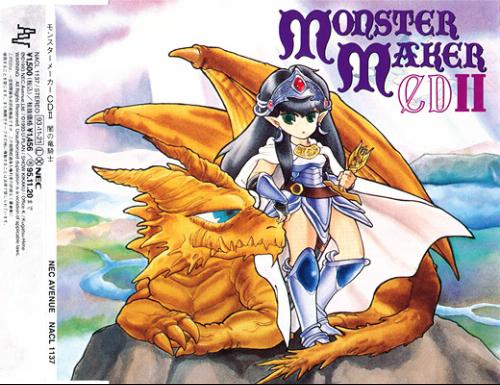
US TurboGrafx CD Games List

This is another one of those lists that was a lot more interesting and useful back before GameFAQs improved their search system, but hopefully it’s still got at least some amount of value.

This list should be complete and accurate. 44 licensed games were released for the TCD system in the US, evenly split between CD and Super CD titles. The four 1993 CD titles came out after the Duo did; as for the seven 1992 titles, there’s no way to really know, release dates for US TG16/TGCD releases are pretty much nonexistent. Release years is the most precise you can be.

But we do know that between launch in December 1989 (or maybe summer 1990? It’s unclear exactly) and December 1991, 12 CD games were released. Twelve. Ouch.  And most of those were released in 1990, with only a couple of lone releases in the mostly-empty year of 1991.  1991 really is the obvious gap in the US Turbo CD library, as anyone who reads this list should see!  It’s too bad it didn’t get more releases that year, there were lots of games to bring over.

Then in 1992-1994, Hudson and TTI tried harder to push the Turbo CD in the US.  The effort was unsuccessful, but did result in many more Turbo CD releases than were seen in ’91.  From ’92 to early ’94 31 games were released, with only 2 of those being in 1994, plus one more game in late ’94 to make a total of 32 releases for the Turbo CD in ’92-’94, versus 12 in ’89-’91, or ’90-’91 if the games didn’t release until then as seems likely.  It’s clear that it wasn’t until the Duo/Super CD/Johnny Turbo era that the Turbo CD was pushed much… but it didn’t sell nearly well enough, and TTI went bankrupt, hence only a few 1994 releases.

Victor Ireland of Working Designs said that he thinks that only 40,000 Turbo CDs and Duos sold in the US, split evenly between CD and Duo systems.  It’s likely that more Duos than that sold overall, because of systems Turbo Zone Direct sold off later on (Vic Ireland stopped releasing games for the TCD in mid 1993), but sales were quite bad, likely under 50,000 combining the CD and Duo together.  Compared to this, the TurboGrafx-16 itself sold 900,000 systems in the Americas.  That’s a low adoption rate, and it’s really unfortunate because so many of the best games for the system are on CD!  Even just the limited US library below is loaded with good games, and the region-free nature of the system makes playing imports easy as well, though I am not listing those here.

Key: For each game I list the title and [in brackets] the genre.  40 of the 44 officially-licensed releases were published by NEC USA.  The exceptions are noted with the note (Working Designs third-party release); these were published by Victor Ireland’s company Working Designs, the only third-party who published Turbo CD games in the US.

US Turbo CD Games

44 officially licensed titles. 2 unlicensed releases during the system’s life. 5 modern unlicensed physical homebrew releases.  At the end of the list I also list the 9 US and 4 Japanese Turbo/PCE CD games released on the Wii Virtual Console in the late ’00s.

CD-ROM2 – 20 games (plus 2 unlicensed)

1989 or 1990 (these games were ready for launch, whenever exactly that was between Dec. ’89 and Summer ’90 (it’s unknown exactly when the Turbo CD released), and are copyrighted to 1989)

Fighting Street [Fighting game]
Monster Lair [Platformer/Shmup]

1990

The Addams Family [Platformer] (US Exclusive Release)
Final Zone II [Topdown Run & Gun]
J.B. Harold Murder Club [Adventure]
Last Alert [Topdown Run & Gun]
Magical Dinosaur Tour [Edutainment Adventure]
Valis II [Platform-Action]
Ys Book I & II [Action-RPG]

1991

It Came From The Desert [FMV Action] (US Exclusive Release)
Sherlock Holmes Consulting Detective [FMV Adventure]
Ys Book III: Wanderers from Ys [Action-RPG]

1992

Exile [Action-RPG] (Working Designs third-party release)
Cosmic Fantasy 2 [JRPG] (Working Designs third-party release)
Jack Nicklaus Turbo Golf [Sports: Golf]
Lords of the Rising Sun [Strategy/Action]
Splash Lake [Puzzle/Action]
Valis III [Platformer]

1993

Buster Bros. [Action/Shmup]
Vasteel [Strategy] (Working Designs third-party release)

Unlicensed

Hawaiian Island Girls – 1993? [Photo CD-style thing]
The Local Girls of Hawaii – 1993? [Photo CD-style thing]

CD-ROM2 with Super CD-ROM2 Enhancements – 2 games

1993

Syd Mead’s Terraforming (“Super CD” packaging in the US, but in fact it is a regular CD game with some SCD enhancements)
Sherlock Holmes Consulting Detective Volume 2 (“Super CD” packaging in the US, but in fact it is a regular CD game with some SCD enhancements) [Shmup]

Super CD-ROM2 – 22 games (plus 4 recent homebrew titles)

1992

Gate of Thunder [Shmup]
Forgotten Worlds [Shmup]
Prince of Persia [Platformer]
Shadow of the Beast [Platform/Adventure]
Loom [Adventure]
Dragon Slayer: The Legend of Heroes [JRPG]

1993

Beyond Shadowgate [Adventure] (US Exclusive Release)
Super Air Zonk: Rockabilly Paradise [Shmup]
Camp California [Platformer] (US Exclusive Release)
Cotton: Fantastic Night Dream [Shmup]
Riot Zone [Beat ’em up]
Lords of Thunder [Shmup]
Exile: Wicked Phenomenon [Action-RPG] (Working Designs third-party release)
John Madden Duo CD Football [Sports: Football] (US Exclusive Release)
Might & Magic III: Isles of Terra [First-person RPG]
Shape Shifter [Platform-Adventure]
Sim Earth: The Living Planet [Strategy/Sim]
Dungeon Explorer II [Action-RPG] (NEC published, but Working Designs did the voice work)
Dungeon Master: Theron’s Quest [First-person RPG]

1994? (these games are probably actually Jan-Mar. 1994 releases, but are copyrighted to 1993 for unknown reasons)

Godzilla [Fighting]
The Dynastic Hero [Action-RPG]

1994 (definitely)

Bonk 3 – Bonk’s Big Adventure CD [Platformer, port of a HuCard game] (US Exclusive Release)

Homebrew Releases, mid 2000s to present
(all Super CD-ROM2)


Implode (2002) [block Puzzle game]
Meteor Blaster DX (2004) [Asteroids clone Static-screen Shmup]
Insanity (2009) [Berzerk clone Arcade Action]
Mysterious Song (2011) [RPG, port of an old PC game]
Pyramid Plunder (2013) [Pac-Man style Arcade Action]

Virtual Console Digital Re-releases on Wii

Wii Virtual Console re-releases of US Turbo CD games: Gate of Thunder, Super Air Zonk, The Dynastic Hero, Wonder Boy III: Monster Lair, Riot Zone, Lords of Thunder, SimEarth: The Living Planet, Fighting Street, Ys Books I & II

Wii Virtual Console Western releases of Japan-only PC Engine CD [Turbo CD] Games – These games are not localized, but did get a US release on the Wii VC.  All play fine without knowing Japanese. Titles: Gradius II: Gofer no Yabou [Shmup], Akamajou Dracula X: Chi no Rondo (Castlevania X: Rondo of Blood) [Platformer], Cho Aniki [Shmup], Star Parodier [Shmup].

Posted in Classic Games, Lists, Turbo CD | Tagged , , , , | 1 Comment

3+ Player Games List: Atari 2600

The Atari 2600 has only two controller ports, it does not have a multitap.  The Paddle Controllers come in a pair that connect to one port, however, so four people can play on one system.  Few games support this — games with simultaneous multiplayer on the 2600 must be Paddle games, and must be multiplayer paddle games, to have 4-player support.  In addition to games like Warlords with simultaneous multiplayer on the paddles, I will also list games which support 3+ player alternating multiplayer on normal controllers.  The list of 2600 games with 3+ player support is short, but does include a few great games, most notably the all-time classic Warlords.  Warlords is easily the best Breakout-style game on the 2600, and really is a must-play game!

Source: http://www.atariage.com/forums/index.php?showtopic=117531&st=0&p=1419114&#entry1419114

Key: Atari title/Sears title (for titles with alternate Sears titles)

Three Player Simultaneous w/ Paddles

Blackjack
GI Joe Cobra Strike

Four Player Simultaneous w/ Paddles

Breakout/Breakaway IV
Casino/Poker Plus
Medieval Mayhem (recent homebrew improved version of Warlords)
Party Mix
Street Racer/Speedway II
Steeplechase
Video Olympics/Pong Sports
Warlords

4-player alternating (with a single regular controller, usually)

Communist Mutants from Space
Decathlon
Fireball

8-player alternating (with a single regular  controller)

Summer Games
Winter Games
California Games

Posted in Atari 2600, Classic Games, Lists | Tagged , , , | 1 Comment

Article – Console Generations: The Missing Videogame Generation

This is an article from a few years ago that I just reworked and improved.  Unfortunately, this situation still has not been corrected, so the article is still entirely valid and important!

By now I’m sure that almost everyone knows of the seven generations of videogames.  My question is… why is it only seven?  Or better, why is one specific line drawn where it is?  It shouldn’t be.

Now, I know that there are some “borderline” issues between console generations that are frequently debated.  I’m with the majority on these — the Turbografx is fourth generation, the Jaguar and 3DO are fifth generation, and the Dreamcast is sixth generation, with absolutely no doubt.  Just because they are early systems in their generations doesn’t mean that they should for some reason be dumped in the previous generation in which they definitely do not belong.  They were designed as next-generation machines, and are exactly that.

Going back a little further, though, there’s another generation line where the line doesn’t make much sense to me — that between the second and third generations.  Next-generation machines were designed and released in 1982, and then later tossed back into the previous generation for flawed reasons.

Now, I know that when a system is released is as important for determining which generation it is in as anything else; indeed, really that is one of the most important factors.  The Great Videogame Crash of 1983-1984 took down most of the industry in the US, so it makes sense that when it started up again, it’d be called a new generation.  That was the obvious motivation for calling the consoles of 1982 retroactively “second-gen”.

But… I just don’t get it.  Why are the new consoles of 1982 considered “second gen”?  Honestly, this makes absolutely no sense whatsoever.  The Colecovision and Atari 5200 were both definitely “next gen” machines, and the Vectrex and Arcadia 2001 too, the other 1982 consoles.  Yet, because their generation failed a year in and because their games are just upgraded second gen games, they get dumped in the second generation.  But a lot of 4th-gen games are “just” upgraded 3rd-gen games and that doesn’t make the SNES a console in the same generation as the NES, so that’s no excuse!  And nor is the crash, as I will explain.

Now, I know that there is often big variation from one end of a generation to another — TG16 to SNES, Jaguar or 3DO to N64, Dreamcast to Xbox, those consoles on opposite ends of generations vary greatly in power.  However, in the case of the Atari 5200, it isn’t just variation, it is a successor console!  It would take a very special case for a machine considered at the time to be a successor to a company’s previous machine to be in the same generation as its predecessor.  It IS possible, and indeed both Atari and Sega did that in the 1980s, but in both cases I don’t think it’s hard to figure out which pairs of consoles should be grouped together in the same generations, and it’s not always the ones that are.

The Atari 5200 is obviously next-gen compared to the 2600, and the same for the Colecovision.   The Atari 7800 (Atari’s third console, released in 1984/1986) is much less of an upgrade from the 5200 than the 5200 is compared to the 2600, it’s not even close!  The 5200 even has significantly better audio than any Atari 7800 game that doesn’t have an expansion audio chip, even if its graphics don’t quite match what the 7800 can do.  Yet just because it’s convenient, because of the crash, the 2600 and 5200 get dumped in together and the 7800 is separated.  This seems very wrong to me; it’s the 5200 and 7800 that are similar, not the 2600 and 7800!  I mean, yes, the games are similar on the 2600 and 5200, but that’s fairly normal for successor systems from the same manufacturer that do not make radical changes such as polygons.  Hardware power, graphics, sound, and release dates all clearly make the 1982 systems next-generation.

Of course, the question then would be where you draw the “generation” line in the second generation.  The systems of 1977-78 certainly are all second gen, but the Intellivision, test-marketed in late 1979 and widely released in 1980, does seem to be a tricky one.  If you put the dividing line in 1982, that leaves the Intellivision as second-gen, though there is an obvious big power difference between it and any prior system of the generation.  But putting it earlier seems a bit too early… I’m not certain, but I’m leaning towards leaving the Intellivision in the second generation.  Are difficult questions like this one reason why all these systems were all just lumped in together? That would be a tough line to draw, but the Intellivision did release in 1979 in limited quantities, which puts its release date closer to the previous 2nd-gen console to release, the Odyssey 2 (1978), than the next console, the 5200 and Colecovision in mid 1982.  So second-gen the Intellivision is, I guess, just the best of its generation graphically.

Regardless of that, though, the 1982 systems are definitely not second-gen.  The only possible reason for calling them “second-gen” is the crash, but the crash is a localized event just in the US, while console generations should apply to the whole world!  The NES (Famicom) released in Japan in July 1983, only eleven months after the US release of the Colecovision and eight months after the US release of the Atari 5200.  Nintendo specifically designed the Famicom to be a system better than the Colecovision, they have said this in modern interviews, while Sega decided instead to use Colecovision hardware in their console that released that same month, the SG-1000.  There are not many cases of systems only being divided by about a year, but being considered as part of completely different generations… in fact, I don’t think I can think of any other such case.  Not on TV consoles, certainly; handhelds are messier, but the TV console generation lines don’t entirely work for handhelds so that’s okay.

Yes, the NES was much more powerful than any system that came before it, but still, it’s not a generation above the Colecovision, as homebrew games like GhostBlaster (Colecovision) clearly show.  Here is a video of GhostBlaster, a game which shows that the Colecovision can indeed do some pretty nice-looking scrolling playfields and solid 2d platforming.  http://www.youtube.com/watch?v=2lwp91w0u6c

Because of excluding the consoles of 1982, the third generation looks like it got few consoles releasing during it compared to others of its era.  Many systems are in the second generation, and the third, and the fourth, but only three consoles are always included in the third generation, the NES, Atari 7800, Sega Master System.  This also is perhaps a sign of this issue, maybe, one solvable by correcting where the generation line is.  Yes, the industry collapsed and most of the older hardware manufacturers and game types went with it, but comparing hardware, release dates, and the worldwide market, you cannot separate the consoles of 1982 from those of 1983.

I’m not expecting anything to come of this, the generations have been chosen, though by who I have no idea beyond “internet consensus”, but this is something that has been bothering me for years.  I’ve posted before about this on forums, but now I’m saying it here as well.  Hopefully eventually people listen.  I just don’t think there are any good arguments for keeping the consoles of 1982 in the second generation.
In one final note, poor Sega, its SG-1000 released the same month as the Famicom, July 1983, yet their system is often considered second gen and Nintendo’s third… I know, Sega had another system several years later that is put in the third generation, but I really wonder if in Japan they use anything resembling our generation breakdown.   Somehow I doubt it.

Sometimes now the SG-1000 is considered third-gen, as both Wikipedia and GameFAQs have changed how they classify the system since I first wrote about this issue a few years ago — they now list it as third-gen.  However, this change only heightens the ridiculousness of not counting the consoles of 1982 as also being third-gen.  The Colecovision and SG-1000 have almost exactly the same hardware inside, are both consoles with attach to a television, and released only 11 months apart, but if you go to GameFAQs or Wikipedia today one is listed as “second-gen” and the other third!  It’s completely ridiculous.

Oh, last, I should say, this has nothing to do with what I thought of the second generation systems in the ’80s; I didn’t own any of them then.  It’s about comparing system power, context, and release dates, pretty much.

Here is the conventional console generation listing, not counting addons or handhelds:

First generation: 1972-197? – Odyssey 2 and Home Pongs
Second generation: Systems of 1976-82 (and maybe some from 1983)
Third generation: Certain systems from mid 1983 through 1985 (1986 in the West) (Addon: 1986)
Fourth generation: 1987-1990
Fifth generation: 1993-1996
Sixth generation: 1998-2001
Seventh generation: 2005-2006
Eighth generation: 2011-2013?

And here is a correct one, again not counting addons or handhelds:

First generation: 1972-197? – Odyssey 2 and Home Pongs
Second generation: 1976-1980 (and maybe some from 1983)
Third generation: 1982-1985 (1986 in the West)
Fourth generation: 1987-1991 (1989-1991 in the West)
Fifth generation: 1993-1996
Sixth generation: 1998-2001
Seventh generation: 2005-2006
Eighth generation: 2011-2013?

There is no clean way to break up handheld generations before the mid ’00s, which is why I excluded them from the list above, and including addones makes the list less clear as well, but addons require the base system to work, so I think focusing on just those makes sense.  For home consoles that attach to a TV and are not an addon to a previously existing system, a nice, clean breakdown is both possible, and easy.  You just need to correctly include the Colecovision, Vectrex, Arcadia 2001, and Atari 5200 as third-generation machines instead of second-generation.

Posted in Articles, Research | Tagged , , , , | Leave a comment

Class of Heroes 1 (PSP) Review: Addictive, Grindey Dungeon-Crawling Fun, and Frustration

Okay… so, several years and like 150+ hours into playing this super addictive but at times nightmarishly unfun grinding simulator (or at least that’s what it is right now!), I really should write something about it, shouldn’t I? I mean, the hour count alone is way higher than anything I’ve played in the past few years apart from the DS Picross games and not much else, probably… there HAS to be some reason I’m playing it, even if most of the time I’m not sure if I’m actually having any fun at all or not. Or maybe I’m just too stubborn to just giver up on it for good, as I should have after beating the main game — it’s the postgame that I kind of hate, up to that point it was mostly fun.  Oh, yes, this is a new review, not old content.

Note: I updated this review to version 2.0 a day after first posting it.  The additions are in the Gameplay, Dungeons, and Combat sections only.  I was missing some details that needed to be explained.

Where I Currently Am in the Game: Post-Credits Class of Heroes
(Note: A full review will follow this section)

As in other similar games like Etrian Odyssey, Class of Heroes doesn’t end when you see the credits. Right on my CoH file, now the games’ clock is over 100 hours played, which doesn’t count the many times I’ve turned it off because of having my party get wiped out yet again. I beat the main game back at about 70 hours, back in late 2013 I believe. After getting over the games’ starting difficulty cliff, it evened out and was fun and not too hard until after “finishing” the game… when it promptly becomes nearly impossible. After seeing how hard and grindey it got I took most of 2014 off, but late in the year got drawn back in because I decided to finally get around to playing CoH2, but couldn’t help but start playing the first game again too shortly afterwards.

But despite all those hours played, my characters are only level 32-38 (plus one newer character ten levels lower). I’ve fully explored all but one of the maps I’ve found in the game; there’s one more area I haven’t been to yet, but I’m not sure how to unlock that. Mostly it’s just been Haint Path for a very long time now. Just in the last few days I finally managed to level just high enough to manage to not die immediately in every battle on the middle floor of Haint Path (one of the last areas in the game), though the bossfight there (for a quest) is still way too hard.

So, what does one do in this situation? And there’s more of that, too — there are new super-hard bosses in the middle floor of most every area, and I still haven’t beaten the instructors in that quest either because they’re all still like ten levels higher than I am. The amount of grind required at this point in the game is completely unreasonable! I like exploring out the whole map in a game, but can’t tolerate walking around in circles grinding. The main reason I quit this game through most of 2014 was because it seemed like that’s what the game had become. I’ve found a few more areas to explore, bu those are about to run out soon, and I’m not much closer to actually being able to compete in these last few quests I have to do, because those level 40-plus bosses are impossible with my characters at the levels they are at now and leveling now takes ludicrously long, hundreds of thousands of experience between levels!

And that’s not even mentioning the enemies late in the game (or maybe only in the postgame?) who can take a level away from your character randomly when they attack you… except unlike, say, Dungeons & Dragons, undoing the level drain is impossible. Essentially, if you ever see a ‘Character X has lost a level’ message in battle, seriously, save yourself the pain and just turn the system off immediately, it’s not worth continuing after that because getting that level back will be a MASSIVE grind.

box art

Class of Heroes Review

Class of Heroes is a first-person dungeon-crawler RPG with random battles on the PSP.  The game is Japanese and was published by Atlus and developed by ZERODIV.  The game is PSP-exclusive, but is available physically or digitally, so it can be played on a Vita as well if you have the digital release.

Class of Heroes was inspired by the original Wizardry titles.  It’s got somewhat basic graphics and simple gameplay, and can be quite frustrating, but I found it compelling enough to stick with it this long, so it does something right at least. The game has nice anime-style art design and writing, with plenty of dark dungeons to explore.  Before you start there are few options to set.  The main one is save difficulty, Normal or Masochist. I played the game 100% on the harder setting, because if you just remember to save often to save files the more forgiving respawning of the Normal setting isn’t needed, and monsters are slightly harder on Masochist too, supposedly. I’m not sure if that’s true.  But if you are going to play a game like this, I think the harder setting is the way to go. It’s not much harder, but I like it more than the easy setting.  Again, even on “Masochist” you can save anytime you’re not in battle to a save file.  But first, you have to make a party.

CLASSES

Class of Heroes has nine races and fifteen classes, each with different stats required to get them.  A balanced party is important, but there are many ways you can make a solid party in the game.  I recommend spending an annoying amount of tiem re-rolling characters, though; those extra stat points are useful, so keep rerolling until you get good numbers!  You don’t need to settle for a party with 5-10 starting points, you can get up to 40 or more if you’re patient, though numbers above the mid 30s are quite uncommon.  Above 30’s pretty good, that should be able to get any race any class.  Each race has different starting stats, you see, so it’ll take more bonus points for some races to take on some classes.  CoH2 locks half of the classes to only one race, in perhaps its worst design change, but in this game all classes are for any race!  I like it better this way for sure, it’s quite sad that I can’t make a Felpier Ninja in CoH2 for example. :(  The second game does have unique character art for each race+class combo, though, which is cool; in this game, each race only has two character portraits, one for each gender.

My main party:
–front row–
Drake [Bahamut in CoH2] Valkyrie (Good) [Paladins are basically the male-only version of Valkyries; I’ll refer to the Valkyrie below since that’s what I have in my party]
Felpier Ninja/Kunoichi (Evil) [Ninja and Kunoichi are slightly different gender-exclusive spins on the same thing; I’ll just call them Ninjas here, because Kunoichis are female ninjas, anyway.]
Human Samurai
–back row–
Celestian Cleric [Clerics can cast both White and Black magic and identify items.]
Erdegeist [Gnome in CoH2] Wizard
Diablos Evoker

One of my characters is male.  Guess which!

There are several things every CoH party needs.  First, and most importantly, you really MUST have a character which can identify items in your party if you want to have any fun at all.  Unfortunately, you won’t get identify untiol about level 7, which was one of the biggest complaints most poeple have about this game.  It’s a valid criticism, because the game before that point is awful: identifying in stores requires spending THE AMOUNT THE ITEM SELLS FOR to identify it, which means that until level 7 it is impossible to make money from item drops.  This makes the early hours of the game much more difficult than they should be because you’re always starved for cash, at a point in the game where you actually need it (it becomes less important later on).  I like the idea of identifying items, and dislike that CoH2 and beyond ditches it completely, but they should have had cheaper identification in the store, that’s for sure.  The two classes which can identify are the Alchemist and Cleric.  I have the latter in my party now (used to have an Alchemist too; now that character’s in my other party that I don’t use much).

The second rule is that you need a healer, of course.  Multiple characters with Resurrect is also fantastic.  Fortunately I have two, the Valkyrie and Cleric.  The Valkyrie has the most health in my party by far, so it’s great that she has resurrect because it has saved me quite a few trips back to town — the Valkyrie has died probably half as often as the rest of the party members, not counting times I got wiped out and turned it off of course. :p  Naturally Resurrect is a level 7 spell, the highest level, so it’ll be a while before you get it.  Before that, it’s back to town every time someone dies… argh.  That’s always frustrating.  Unfortunately my Valkryie didn’t get any healing spells, but at least she got Resurrect so she can bring back the healer!  You can’t use Resurrect during battle, unfortunately, but still, it’s great to have.

Last, have a Thief, Ranger, or Ninja to open chests; some mages  have spells which can do this, but spells are limited, while thief abilities aren’t.  You really need this as well.  Thieves and Ninjas can also see hidden doors.

Beyond those requirements, fill up the party as per usual in this genre — fighter-types in the front three spots, mage or ranged-types in the back.  I have found that having two characters with full sets of Black magic is extremely useful; the Cleric does get healing spells slower than the Devout, but having both schools of magic is great.  A dedictated Wizard is also great, though, even if theyr have only one class of magic, because the Focus ability is extremely useful.  Focus is a Wizard-exclusive class ability, and roughly doubles magic power for a spell you can use the next turn.  This basically saves you a spell, so instead of having to use up two of the same spell you can get that same amount of damage with only one casting.  Specialized classes like the Alchemist, Evoker, Thief or Ninja won’t do as much damage as Warriors or Valkyries, so they’re not going to be as important in combat as the mages or front fighters.  They’re more useful for other things.  The Ninja is a bit better in combat than those other classes, though, at least for me.  Hide is nice, when it works.

And as an addendum, have a second character or party who you keep back at Particus, the main town.  This is to sort of exploit the annoyingly small inventory size in the game.  Your inventory will fill up quickly with the games’ mountains of crafting materials.  The solution is, actually, to drop them.  You see, any dropped item is put into a global dropped-items pool which can be accessed from the magic orbs that are present near every floor entrance in the game.  So, drop stuff in any dungeon, and your party near town can go to the magic orb right next to Particus, grab those items, and deposit them in the much larger item storage back at base.  You’ll need to give this second party items to sell though, because they otherwise won’t be able to afford the costs of rezzing and teleporting back to town a fully dead higher-level party!

Finally, you can switch classes during the game.  This can be useful if you, say, want to start with a base class, and only move up to one of the higher-stat-requirement classes later on.  The higher-level classes level more slowly than the faster-levelling base classes do, so there can be a definite advantage to doing this; though in CoH1 I didn’t, maybe I should have, it’d have given my characters more health than they currently have, probably.  Switching resets your level to one and cuts your health in half, but that still gives you a lot more health than a new level 1 character would have, and you keep most of your spells, limited by the restrictions of how many spells per level the new class allows.  This can mean losing good spells, so dedicated classes can have an advantage there.  You can also change alignments, because characters of similar alignment will have MUCH better Affinity than Good + Evil.  My party now actually works well — 92% affinityor above for all characters – but compatibility problems can hurt character stats.  Still, I think the manuals overstate how important affinity is, you can mostly ignore it I think.  Diablos+Celestian, Good+Evil?  Eh, it works.  The worst I’ve seen so far is in CoH2, where one Evil Ninja in an otherwise mostly Good party has 44% affinity.  But really, Affinity is only important if you really want the highest possible stats, and there are ways to boost affinity as you play as well.  That low-affinity character is early in the game.

As far as CoH2 goes, bizarrely, that game gets rid of the separation between clerics and mages; there’s just one mage class that gets both types of magic, so basically it’s just Clerics instead of Devout, Wizard, and Cleric.  Some new classes are added in (Puppeteer, Idol, etc.), but still… weird.  And those one-race-only classes, which make up HALF of the total number of classes, really limit things.

MAGIC

CoH1’s magic system is obviously inspired by Dungeons & Dragons, in that spells are broken up into classes and levels, you have a set number of spells of each level that you can cast without resting.  Unlike D&D, though, you can’t rest while out in the field, only in a town, so when you run out of key spells is about the right time to start back to the nearest town.   Characters who have magic will have between two and four spells at each of seven levels.  How many spells a character gets depends on their class, and maybe also stats.  I love D&D, and I really like this games’ magic system too!  It’s great that the levels of magic aren’t just merged together; this adds some strategy in spellcasting, so instead of just always casting one spell you have to mix things up in order to not run out of that spell-level you use so heavily.  Unfortunately, CoH2 ditches this system in favor of a generic magic-points system, with each spell casting a set amount of magic points from the characters’ mana pool.  I like CoH1’s magic system better for sure.  I don’t think that some spells are particularly well balanced, though — the stat-boost and levitate spells last for the entire floor, for example, which is kind of odd.  Well, unless that floor has no-magic zones in it, that is; those dispell all boost spells and make casting magic impossible while in them.

There are four classes of magic in this game, White, Black, Psychic, and Summoning.  White is healing and protective magic.  It is obviously important.  Black is attack magic, mostly, and some useful abilities too (Levitate, Teleport).  Attack magic is great because you get a bunch of spells that hit all enemies in a row, and one which attacks all of your foes.  Psychic I’ve used less, but it has a variety of status and protective functions.  Last, Summoning is a class of magic exclusive to the Evoker class.  This class works uniquely in this game.  A party can only have one Summon active at a time, so there’d never be a reason to have more than one Evoker in one party.  You don’t just get summon spells like the rest of them, though.  Instead, there is a summon circle in the center floor of each of the games’ areas, and you get one summon for defeating the (easy) enemy in each of those summon circles.  CoH2 ditches this in favor of just giving them to you like normal spells, but it’s more unique in the first game.  It’s a bit quirky, but works.  Summons aren’t great, but enemies will sometimes attack your summon instead of your party members, which can save your life sometimes.  You’ll have to choose between another stronger attacker (another Wizard in the back row, say) versus the protective help of a summon.

ITEMS AND CRAFTING

Items in CoH work like they do in many RPGs.  Each character has an individual inventory, and there is also a pack for extra item storage.  However, equipped equipment takes up space in character inventories, so by the later game half of the character inventories at least will be taken up by your equipment.  Then add to that the various required items you need to carry around like a few maps, healing items, etc., and you have very little space indeed.  This is where the technique I mentioned earlier about dropping stuff and having a team at home to go pick it up comes into play.  Just as long as you remember that the dropped-items pool has a maximum size of 100 items, you’ll be fine.  The inventory system is pretty good apart from not telling you anything about crafting formulas or what you can make, and moving items between characters, or buying them in stores, works great.  I like having separate inventories for each character, CoH2’s “solution” of getting rid of separate inventories and just having one large pool isn’t as good.  Also, if your party is wiped out, the stuff in the bag is dropped, while characters keep their character inventories.  This is key, because if there is already too much stuff in the dropped-stuff pool, you can just lose some items!  So yeah, watch out for that.  The bag is much smaller than the dropped-items pool, but if there was already a bunch of stuff there you hadn’t collected there could be an issue.  The sequel does at least take equipped things out of your inventory and into separate equipment screens for each character, though, so those aren’t cluttering it up.

CoH also has a crafting system, sadly; I hate crafting!  There are two types of crafting items, the base items and materials.  Only one class, the Alchemist, can do crafting when you are out in the field, and even then you’re hamstrung because there is no in-game list of crafting formulas that you can access when not in an Academy!  You can buy formulas, but can’t see them anywhere other than in the Academies.  Absolutely baffling stuff, this is one of the more annoying things about CoH1 and I don’t think CoH2 fixes this problem either, from what I’ve seen.  If there was a nice web list of all the combinations this wouldn’t matter nearly as much, but as far as I know, there isn’t; there is very little out there about this game, at least in English (I don’t know about Japan).  If you are in an Academy, though, in the alchemy room you can look at the formulas you’ve gotten, and either pay to have them make stuff for you, or do it yourself if you have an Alchemist.  I mean, you can do that anywhere, but good luck remembering those formulas.  In the rare cases where I try to craft something I’ve got to keep going back and forth between my items list and the formulas list, because there’s no way to see exactly what I can make.  Now, part of the issue here is that I have always greatly disliked crafting in games; I don’t find this stuff fun at all.  Maybe I’d find this game easier if I actually did craft stuff regularly, but I almost never do, and just have piles of crafting materials cluttering up my Particus storeroom.

You can also upgrade items and add abilities to them, but how exactly you do the latter I’m not quite sure… how DO you add those various Bane abilities, and such?  I don’t see any ingame crafting recipes which explain this.  Upgrading items is simpler, but requires a specific, and uncommon, item, so you can’t do this as much as you’d like.  YOu can also disassemble equipment to turn it into its component parts.  Crafting formulas aren’t too complex, with only one base item and up to two component slots per formula, but still there are FAR too many components to just guess which ones go with each type of base item, and you’d need enough of the component in question as well.  Ugh, the whole thing is so annoying, but I always have kind of hated crafting in games.  But overall, I think it’s unfortunate that crafting had to be included in this game.  Why do people think that if it’s a modern wgame of course it needs to have stupid crafting in it?  It’s not fun!  Just give me items and stuff… and if you MUST have crafting, give me an easy way of recording the formulas.  But it would be better to have no crafting; crafting almost always makes games worse. (No, I do not like Minecraft, as anyone reading this can probably imagine. :p)  It’s too bad that crafting stays in the series and seems nearly unchanged in the second game, as far as I can tell.

GAMEPLAY: BASIC DESIGN, GRAPHICS, AND SOUND

CoH is a first-person dungeon crawler.  The game is broken up into a network of Academies and Towns which are connected by dungeon path areas.  Towns are 2d, with a picture of the outside, and then separate images for each room or building where you do the various functions, such as creating characters, choosing your party, getting quests, buying items, doing alchemy, dropping off items in your storage, and such.  Once you leave and choose an area to travel to, you go to the 3d world.  This is a tile-based game, so each move either turns your party 90 degrees or moves you forward once space.

Fast-travel is disappointingly limited, unfortunately.  From magic orbs you can access the dropped-item storage from, you can also warp back to the starting Academy, Particus, for free.  There are no other free warps to anywhere anytime in the game, though.  With the Teleport spell you can quickly get through an area, but traveling across the main map requires using a special rare item that you can only craft starting very late in the game, and even then they’re expensive and limited.  How annoying!  You should be able to warp to any of the academies for free at some point, in the postgame at least!

Graphically, CoH1 has basic 3d graphics in the dungeons.  You can only see two spaces in front of you.  So, you can see the space in front of you, and a wall, say, on the space beyond that, but a wall one space farther back wouldn’t be visible.  The Light spell will double your vision, but two tiles of visibility is still very poor; I rarely bother with it.  A lot of the screen is covered with an omnipresent black fog.  There is no sunlight in this game, only dark dungeons 100% of the time you’re not in a town or Academy.  There are a few graphical tilesets, but little variety within each of them.  Apart from the special tiles, described below, you’ll mostly just be looking at identical-looking walls and floors.  There are very, VERY few graphical touches making things interesting.  No rooms have furniture in them, there are no wall-hangings anywhere, all walls in each area look pretty much the same, and such.  There are some torches or such around the left and right entrances of each floor, but next to nothing else.

As for sound, there isn’t much music in this game.  There are a handful of songs, including one that plays while the character/inventory/spell menu is open, one on the main menu, and not much more, but that’s about it.  The few songs aren’t great and quickly get very repetitive.  That one menu-interface song gets old after a while, and you’ll be listening to it a lot.  The sound effects are good, however, but don’t play this game for the audio.

GAMEPLAY: THE DUNGEONS

Each area pulls a random set of dungeon maps, from a range of maps that can appear in that area, so the level order will be different each time you enter an area.  That is, the maps you will see in an area are always from the same batch of maps, but the order is always different.  Maps are 20×20 squares, and unlike Etrian Odyssey, there aren’t empty spaces between passages very often at all, so most of the space on each map is used.  They take a decent amount of time to explore.

Most of the maps themselves are mirrored so that the top and bottom halves, or sometimes the left and right halves, are identical mirrors of eachother.  This means that the exit door will always be in the exact opposite corner from where you enter.  Excepting middle maps, which have unique designs and aren’t mirrored, this is the way the game works, so get used to it.  The basic goal in each map is to find the switch which opens the quick-path route that will let you get from one entrance to the other more quickly.  Usually you can get through to the other end through the middle of the map, but occasionally you have to backtrack after hitting that switch and take the shortcut in order to get to the other side.  Then only explore out the other half of the map if you want to fill in that black space on your map, something I find quite irresistible.  I don’t want to grind, but I do love exploring out those maps!  Still though, that maps are almost all only half-original is somewhat lazy.

The middle map of each area, however, is preset and never changes.  Areas are linear, with several on the left side, a center map, and several on the right side making up the basic design; as you go, the number of maps per side gets greater.  Some middle maps do look similar to eachother, but they are at least different from the rest of the game.  Each center area also has a Labyrinth in it, which you will eventually have to face.  The labyrinths are unique one-floor dungeons, and aren’t mirrored stuff like the main dungeons are.  Annoyingly, you can only view a Labyrinth’s map in the town or if you enter the labyrinth; you can’t warp directly into one from the area it is in, and can’t view that map from the area map as you can the other floors in that area.  Labyrinths are something you’ll only need to enter a few times, though, so that’s not so bad.

There are a limited variety of tiles in this game, fewer than in many games in this genre.  Outside of town you will only see: floors, walls, doors (visible or hidden; thieves and ninjas can see hidden doors), no-magic zones (purple on the map), spaces which automatically move you in a preset direction (arrows on the map), treasure chests (indicated with crossed-swords icons in the world; these always have a monster fight on them, and then usually a trap on the chest), shallow (you can wade through this) or deep water (can only fly over this; there are no monster fights over deep water though), warp tiles, the left and right entrances, a magic orb by each entrance, magic key switches (marked by orbs not by the doors), electric trap tiles, darkness tiles (dark squares on the map), joke tiles, and magic-tank spaces which can heal or hurt you.  There also can be un-enterable tiles, which remain black unexplored territory that you just can’t get to.  That may sound like a bunch of things, but it’s really not; that’s pretty much everything in the game.  The vast, vast majority of the game is just simple walls and floors; the other tiles only appear sporadically.  The auto-moving spaces and no-magic zones are pretty much the only ‘challenge tiles’ that make dungeon layouts more interesting because warps are not used well in this game and trap and deep water tiles are too easily ignored: just cast Levitate for ground traps or deep water, and don’t tough electrified walls.  Class of Heroes has no real puzzles apart from ‘hit magic key [switch] X and it does something to open locked doors elsewhere on the floor’.  CoH2 dramatically improves on graphical and setting variety, to its credit.  It’s still mostly a game of walls, floors, doors, and water, though; some other games in this genre have more variety of objects in the levels.  Ah well.  The simplicity is part of the appeal, I guess, even if I definitely like Etrian Odyssey more overall.

Warp tiles warp you to some specific tile in the current map.  Teleporter mazes in first-person RPGs can be tough, but there’s none of that here.  The closest that most of CoH1 ever gets to warp mazes is when you’ve got a long corridor you’ve got to get through that is full of pillars and warps, and sometimes also no-magic or darkness tiles.  These are really easy to navigate though, because the only maze is ‘walk forward, hit warp which sends you back, check map and go a different way next time’, because the warps here just send you to the start of the passage, nothing more.  There are maybe a few maps at most that do anything more interesting than that with teleporters; they are pretty seriously under-utilized in this game.  CoH’s maps aren’t nearly as challenging to navigate, from a level-design standpoint, as the mazes are in some other first-person dungeon-crawling RPGs.

Darkness tiles are, well, dark.  You can’t see anything at all in these, even with a magical light spell or torch.  Fortunately your map still works in darkness tiles, though, so they aren’t too hard to navigate most of the time, you just need to consult the map for where to turn.  One of the trickiest maps in this mostly easy-to-navigate game was this one Labyrinth which is it’s a giant maze of no-magic+darkness tiles, loaded with moving-floor tiles.  That one took a while to get through, particularly before the map was working there!  But most of the maps aren’t nearly as tricky.  There’s plenty of challenge to be found in CoH, of course, thanks to the massive grind mountain in the postgame, but it comes more from enemies than puzzles in the dungeons.

Finally, for completion’s sake, in addition to Chest spaces, which have you fight an enemy and then get past the chest lock in order to get some items, there are also joke-chest spaces.  These only appear on a few rare maps, which have quite a few of these weird things.  Normal chest spaces have tough monsters, but these either have no monster or a very weak one.  That one map that’s absolutely covered with super-weak-monster spaces is a pain to get across, even though it’s mostly without walls… but the joke coffins in a few other maps are kind of amusing; no enemies there, just some silly text.  I wish the game had more text explanations of things as you explored the dungeon, that and puzzles in the dungeons are things that modern Japanese dungeon crawlers seem to usually sadly lack in compared to the classic Western ones they otherwise emulate!

Maps ARE fun to explore despite their simplicity, though.  I like what variety the level designs have, and the mirrored-maps style isn’t as bad as it may sound.  Still, if you want traditional first-person-RPG teleporter mazes, you’ll need to play Class of Heroes 2, which has plenty of them.  Unfortunately it doesn’t have a good map system, so there’s no way to tell where teleporters GO.  This makes navigation confusing! CoH1 is like this as well, but it doesn’t matter because of how few teleporters there are in the first game; I never had any issues remembering where they’d go, once I ran into them once.  In a game like CoH2, which has a lot more of them, Etrian Odyssey-style markers to show where teleporters go REALLY was needed.  I’m already almost getting lost in the game, and I’m not too far into CoH2.

Also, CoH2 definitely ups dungeon complexity, but it does come at the cost of scale — unlike in this game CoH2 usually has full empty spaces in between paths, so there’s probably less than half the number of tiles per map in CoH2 than there are in the first game.  In CoH1 here, most floors fill every tile with a space you can go to; few have any blank tiles, and the ones that do rarely have many.  So sure, maps aren’t mirrored anymore in the sequel, but there probably often aren’t any more tiles per map as half of a CoH1 map… but at least what’s there is a bit more complex to navigate.  CoH2 also has multiple exits in many maps, which makes exploring areas a bit more nonlinear and allows for branching paths, but unfortunately the in-game map isn’t any good, and just copies CoH1’s linear left-to-right order that does not reflect their actual layout.  So, in CoH2 you just have to remember which map connects to which.  It quickly gets quite confusing, unless you draw something out on paper showing how the maps in each area interconnect.  Does the PS3 version of CoH2 improve on this, at least?  I hope it does!  Enough about the sequel, though.  In Class of Heroes 1, the straightforward, linear dungeon design and simple layouts make the game easy to learn, and there is just enough variety to keep exploration fun throughout.  It’s the combat where the true challenge lies, however.

COMBAT


As with the dungeons, CoH is a fairly simple game.  This is a turn-based game, and you tell each of your six party members what to do.  Once you’re set, the round begins.  During a round ally and enemy turns happen based on speed, I believe.  Basic options include Attack (with your weapon), Defend (no attack, but the character will take reduced damage if they get attacked), Run (try to flee the battle), Magic (if the character has spells), and a special class ability if the character is a class which has one for use in battle.  In my main party, the Valkyrie’s class ability allows for an attempt at a powerful but low-defense attack; the Ninja can Hide and then do more powerful attacks until found; the Samurai can attack all enemies in the front row; the Cleric has a not-too-useful one; the Wizard’s I described earlier, Focus lets you double your magic power in order to save spells; and the Evoker’s boosts defense and allows you to summon a creature.  The Evoker must use the Evoke Ring spell one turn, then can summon at any point later in the battle.  That’s all there is to the basics of combat.  The only other feature here are Group attacks.  As you defeat enemies, a meter in the upper right builds up in percentage.  You keep meter between battles, so it’s persistent during a trip into the dungeon.  This meter can be spent on group Gambit attacks, which you can choose to do instead of your regular turn if you wish.  The two combat Gambits, Blaze Fist and Burst Fire, are extremely, extremely useful.  Some enemies are more vulnerable to one, others to the other, so practice and try them out on tougher foes.  They have saved me many times by defeating tough foes quickly.  Finally, hold Down on the analog stick and then press X in order to use auto-battle (default attack only) for the round.  Very, VERY useful hotkey, that is.  So is Start+Select+L+R to reset the game when you need to do that.

There is a good variety of enemies in the game, but they do repeat, and there are the usual harder versions of the same enemies.  Still, new enemies keep getting introduced for as long as you’re reaching new areas, which is good.  I like the silly enemy designs; this series tries to have a sense of humor, and it mostly works.  There are some enemies which are a lot tougher than they look like they should be, but the harder enemies are often more threatening looking than the easy ones.  As with exploration, CoH combat is simple but fun, and straightforward but has some depth.  I find magic much more useful than items, to the point where I rarely ever use items anymore, but that’s fine, spells are cheap to replenish while items are much less so, for the better ones at least!  And anyway, magic is cool.

QUESTS AND STORY

Class of Heroes is an anime-inspired game, and this particularly shows in not only the art, but also the story and writing.  I find the game amusing and fun, but an appreciation for anime will help.  It’s fairly generic, inoffensive stuff, though, with regular attempts at humor.  This isn’t some creepy-otaku game, it’s mainstream stuff, and that’s good.  Of course this is a Japanese game, so the characters are in school, wear school uniforms, etc.  Naturally. :p  You’ll spend no time in class, though; “classes” in this game send you into the dungeon right away.  The “school” theme is mostly just window-dressing, apart from some elements of the storyline.  Also, pretty much all of the story comes in the Quests, because there’s next to no story text anywhere outside of quest-related cutscenes, either at the beginning of a quest or when you are about to fight a quest-related boss, usually.  At least it’s amusing sometimes.  Decent sense of humor here.  Play the game, I won’t spoil any of it.

Most quests require you to go to a specific place and beat a boss there.  Simple enough, as long as you can handle the fight.  On the other hand, the “get specific uncommon drop X” quests are a complete pain, because who knows if you’ll ever manage to find that specific item drop or not?  And am I even looking in the right place?  Argh.  Completing some of these will take complete luck, because I know of no online resources to help look up any of this stuff.

POSTGAME


For most of my thoughts on the tediously grindey postgame, see the top part of this review, above the review text.  Essentially, as in Etrian Odyssey, beating the game is not the end, there is a lot more to do after that if you like grinding!  After you win, you unlock several more areas to travel to, new super-hard bosses appear in the middle maps of most areas, some new quests become available, and you can even get to a new Academy too, though there’s oddly little to do there, so far for me at least.  The few new areas will take a long, long time to master, though, because of how steep the difficulty curve is.  Basically, get a map or two farther in, wait a while, then maybe you’ll be able to tackle the next floor… but save before trying, because you’re more likely to get wiped out quickly.  And at this point, the frustration of having to resurrect the party back in Particus, get your items again (hope that all the stuff in your bag fit into the dropped-items pool!), warp back to where you were, etc. is almost never worth it, unless you’d forgotten to save for a particularly long time.  This happened to me a few times; just remember to save often and save the frustration.

In addition to just generally doing a lot of damage, the postgame monsters also often heal a LOT of health every turn.  Some battles are impossible unless you’re high enough level because the enemy will heal more damage per turn than you can deal out.  Most enemies don’t have a huge amount of health, but cracking through their constant healing can be tricky.  Some enemies are harder to hit with physical attacks, too, and may require magic to take down for example.  And I’m talking about random battles here, the bosses are much harder!  A lot of the middle of the game is pretty easy, but the game makes up for that many times over with the insane challenge of the postgame.

Perhaps the weirdest thing about the postgame, though, is how little there is to do in the unlocked academy!  I really hope that there actually is plenty more and I just haven’t reached it yet because of the ludicrously unfair grind targets these few quests I’ve been stuck on forever have… Will I ever get the rest of those Doll things back operational, for example?  It was quite odd that one is working again, but how about the others?  That new school is mostly empty of teachers…


OVERALL


Major positives:

  • Addictive gameplay keeps me coming back.
  • Fun exploration, explore those dungeons!  I love mapping dungeons.
  • Nice anime art with decent, sometimes amusing writing – the game can be funny sometimes, and isn’t at all creepy unlike some anime
  • Simple but fun combat which sometimes does require strategy, particularly later on in the game
  • Nice magic system – I really like the D&D-style spell system!
  • You can save anytime you’re not in battle — do remember to save often!Major negatives:
  • I hate the postgame grinding.  Be prepared for many many many hours of constant danger and ‘quit game, died/leveldrained again’ awfulness!  It takes a long time to level in the postgame, and you need to do a LOT of it, far more than I have so far — I’ll need like 15 or 20 more levels on my characters to beat some of the later fights (past where I am in the postgame), I believe, and at this pace that’d take what, another 50 or 100 hours?
  • There is black fog a few spaces away at all times in the game (daytime would be nice!).
    Little variety in either combat or dungeons – this game gets repetitive!
    Few actual puzzles in these dungeons — you won’t find any warp mazes, messages to read, hidden holes to find, or anything.  I thought that Etrian Odyssey had stripped-down dungeons compared to classics like Eye of the Beholder or Wizardry VI, but this game makes EO’s dungeons look deep and complex!
  • No character customization beyond just choosing a class — htere is no EO-style skill tree, just generic JRPG auto-stats-on-levelup
  • The game often takes stats AWAY from you on level up, which is pretty absurd.  Come on, let me keep my good stats, game… but no, sometimes characters can lose more points than they get.  At least you do always get increased health.
  • Crafting (& the not-always-viewable formulas) is annoying and bad.
  • Limited inventory, and having to have equipped equipment take up space in the inventory.
  • The horrible beginning part of the game up until you get Identify (you DID put an Alchemist or Cleric into your party, right?  If not go and do that!) and can start actually making money.
  • On that note, the uneven challenge is a problem — the start is hard, the middle easy (through to the “final” boss), and the postgame super hard.
  • Fast travel is limited

So, on the whole, do I like the game?  I’m really not sure.  Class of Heroes is an okay game with some strengths and some flaws.  I don’t know if I’d actually recommend playing the game as much as I have, but it’s something genre fans who haven’t played it should definitely check out.  I’m torn about what I’d score this game, but I guess it has to get a B-something, despite its numerous flaws, because I do find it addictive enough to keep coming back to.  But is it actually good?  Uh… no, not if yo uwant to 100% complete the game.  The postgame content requires unreasonable amounts of grind, beyond that that almost any players have been willing to suffer through.  But getting through to the early postgame can be fun.  Maybe just do that and then stop there.  Playing the game is fun… but grinding to level 91 to get that final super-skill all characters get?  No, I think not.  Overall… 85%, a B.

Last, to finish the comparisons with the second game, while there are a lot of little things I like better in CoH1 than CoH2 — I like CoH1’s magic system more, I like that there are no race restrictions on the classes, I like that every tile of the maps is usually used, I like that each character has an individual inventory, etc — I can’t deny that the second game is, overall, better.  CoH2 has better graphics, more variety, more complex maze layouts, some interesting new clases, etc.  But I do like the first game quite a bit too, despite having so many flaws.  Both games are worth playing if you like this kind of game.
Posted in Full Reviews, Modern Games, Playstation Portable, Reviews | Tagged , , , , , | 1 Comment

List: Compile’s Shmups

Compile was one of the best shmup developers of the late ’80s to early ’90s, but unfortunately, when the genre took a downturn in 1993, they abandoned the genre.  Thus, while Compile itself didn’t shut down until the early 2000s, after 1993 Compile almost entirely abandoned the genre, and even the 1993 titles are a clear step back from 1992 in terms of scale and budget — 1992 saw three 4th-gen console titles, two of them CD games, all of them pretty good.  1993, though, saw just a 3rd-gen game, a handheld (and thus simpler graphics) game, and one 4th-gen console title that was externally published and may not have entirely been designed by Compile, though they certainly worked on it and listed it as one of their games on their website.

It’s unfortunate that Compile stopped making shmups, that one game from ’01 excepted; their games are some of the absolute best in the genre!  Blazing Lazers is my favorite Compile game, and one of the all-time best shmups ever, but Space Megaforce, Spriggan, Robo Aleste, MUSHA, Aleste/Power Strike, Gun-Nac, and more are fantastic games as well.  I absolutely love Compile’s shooters, which is why I made this list.  The list is sorted by year, and the platforms and regions each game released in are also listed.  Bolded titles are the ones I have.


Compile Shmups

1983

Borderline – SG-1000 (JP Only) (Compile just did the SG-1000 port of the Sega arcade game of the same name)

1984

AE – MSX (JP Only)

1985

Final Justice – MSX (JP Only)

1986

Zanac – MSX (JP Only)
Zanac AI – FDS (JP Only)
Zanac EX – MSX2 (JP Only)
Thexder – MSX (JP Only), PC (US Only, PC port by Sierra)
Guardic – MSX (JP Only)

1987

Zanac – NES (US, EU, same as Zanac AI on FDS but on cart)
Zanac AI 2nd Version – MSX2 (JP Only) (upgraded port of the original)
[Maou Golvellius – MSX  (JP Only, mostly not a shmup but a few parts are slightly shmuplike)

1988

Aleste – MSX2 (JP Only)
Power Strike / Aleste – SMS (JP, US, EU) (port of the MSX2 game)
The Guardian Legend / Guardic Gaiden – NES (US, JP, EU)
R-Type – Sega Master System (SMS) (JP, US, EU) (Compile just did the SMS port of the great Irem arcade game of the same name.  The port has one exclusive level.)
[Shin Maou Golvellius – MSX2 (JP Only) (upgraded port of the first version)]
[Golvellius: Valley of Doom – SMS (JP, US, EU) (upgraded port of the first version; again, mostly an action-RPG, but there are a few slightly shmuplike segments.)]

1989

Aleste II – MSX2 (JP Only)
Aleste Gaiden – MSX2 (JP Only)
Blazing Lazers / GunHed – TurboGrafx-16 (TG16) (JP, US)

1990

Xevious: Fardraut Densetsu [Legend of Fardraut] – TG16 (JP Only) (contains a port of Namco’s original arcade game and a new followup game from Compile with the same basic gameplay and that’s TG16 exclusive)
Gun Nac – NES (JP, US, EU)
M.U.S.H.A. / Musha Aleste: Fullmetal Fighter Ellinor – Genesis (JP, US, EU)

1991

Seirei Senshi Spriggan – Turbo CD (TCD) (JP Only)
GG Aleste – Game Gear (GG) (JP Only)

1992

Spriggan Mark 2: Re-Terraform Project – TCD (JP Only) (the only Compile hori)
Space Megaforce / Super Aleste – SNES (JP, US, EU)
Dennin Aleste – Sega CD (JP release, US/EU releases came out the following year)

1993

Robo Aleste: Nobunaga and his Ninja Force – Sega CD (US, EU; Western release of Dennin Aleste.)
Power Strike II / GG Aleste 2 – GG  (JP, EU) (not the same game as Power Strike II on SMS)
Power Strike II – SMS (EU Only) (not the same game as Power Strike II on GG)
Sylphia – TCD (JP Only) (programmed game for outside publisher)

2001

Zanac X Zanac – Playstation (PS1/PSX) (JP Only) (2.5d sequel/remake to the original Zanac)

Posted in Classic Games, Game Gear, Genesis, Lists, NES, PlayStation, Sega CD, SNES, Turbo CD, TurboGrafx-16 | Tagged , , , , , , , , | Leave a comment

Lists: 4th Gen Console Games from Electronic Arts (EA)

The purpose of this list is to show how heavily biased EA was towards the Genesis over the Super Nintendo (or Turbografx) in the 4th generation.  EA started out as a computer game developer, and only moved into consoles in the early ’90s, first with the Sega Genesis.  EA famously reverse-engineered the Genesis, and did it in a legal manner, and then went to Sega and threatened to release unlicensed games unless Sega gave them a better licensing deal than the usual strict and pricey one they had previously been offered.

Sega caved, and it was a good thing too, because EA, particularly EA Sports, quickly proved to be almost as important as Sonic in making the Genesis a hit in the U.S..  However, even though they started out supporting only the Genesis, in not too long EA did start to support the SNES, but with an extremely limited game library outside of EA Sports.  The list below shows exactly HOW thin EA’s SNES game library really was.

EA’s Bullfrog and Origin divisions, however, did support Nintendo.  Origin particularly released most of their 4th gen console games only on Nintendo platforms; they only had one on Sega, and it was ported by Game Arts and published by Sega itself.  But Origin and Bullfrog released only a few console games each that generation, and don’t come close to making up for EA’s massive SNES-Genesis deficit.


16-bit EA / EA Sports Titles


Note: I’m not listing all platforms for sports games or arcade ports, or most specific computer platforms. These games are all true exclusives, not released anywhere else at the time.  I am also not listing 7th or 8th gen collection or port releases of these games — so the titles in the EA collection for PSP, most notably, aren’t listed as having PSP releases.  I’m focusing this list on systems of the ’90s, mostly.   Also, every section of this list is organized by release year, so earlier games are at the top, later ones below.  Finally, genres are listed for non-sports titles only.

Genesis Exclusives

John Madden Football (1990)
Rings of Power (1991) – Action-RPG
NHL Hockey (1991)
F-22 Interceptor (1991) – Sim
Bulls versus Lakers and the NBA Playoffs (1991)
PGA Tour Golf II (1992)
Team USA Basketball (1992)
Rolo to the Rescue (1992) – Platformer
Crue Ball (1992) – Pinball
Jordan vs Bird (1992)
Road Rash (1992) – Racing (Also released on Game Boy, Game Gear, and later Game Boy Color, but not any other TV consoles in the US; Europe did get a Sega Master System version.)
Road Rash II (1993) – Racing
TechnoClash (1993) – Action-RPG
Blades of Vengeance (1993) – Platform-Action
Haunting Starring Polterguy (1993) – Unique puzzle-action
F-117 Night Storm (1993) – Sim
Skitchin’ (1993) – Racing
Tony La Russa Baseball (1993)
Mutant League Football (1993)
FIFA International Soccer (1993)
Virtual Pinball (1993) – Pinball
Mutant League Hockey (1994)
PGA Tour Golf III (1994)
La Russa Baseball ’95 (1994)
Rugby World Cup ’95 (1994) [Europe only release; there is also a slightly different Australia-only version of this game, Australian Rugby League]
Normy’s Beach Babe-O-Rama (1994) – Platformer
General Chaos (1994) – Action/Strategy
Mario Andretti Racing (1994) – Racing
FIFA Soccer ’95 (1994) (also on Game Gear)
Road Rash 3: Tour de Force (1995) – Racing
Coach K College Basketball (1995)
College Football USA ’96 (1995)

Genesis + Sega 32X Only

Toughman Contest (1995) – Boxing (32X ver. is a slightly upgraded Genesis port)

Sega CD Only

Road Rash CD (1995) – Racing (this is essentially a hybrid of the Genesis and 3DO games.  It has Genesis-style graphics, and 3DO menus and theme.)

SNES Only

Michael Jordan in: Chaos in the Windy City (1994) – Platformer
MLBPA Baseball (1994)

Genesis Console-Exclusive EA-published Ports of Computer Games – These are games originally released on Amiga, Mac, PC, Apple IIGS, and such, but on consoles these games were ported to the Gennesis and nothing else.  Note that many of the original computer games were not EA titles, but these ports are.  Some are original EA titles. [I’m not counting the CD32 at the moment.  Sorry. :p]

Sword of Sodan (1990) – Platform-Action
Battle Squadron (1990) – Shmup
Zany Golf (1990) – Minigolf
The Immortal (1990) – Action-Adventure
Budokan: The Martial Spirit (1991) – Fighting
The Faery Tale Adventure (1991) – Action-RPG
688 Attack Sub (1991) – Simulation (Vehicular)
StarFlight (1991) – 4X Sim
Buck Rogers: Countdown to Doomsday (1991) – RPG
Might and Magic: Gates to Another World (1991) – RPG
King’s Bounty: The Conqueror’s Quest (1991) (heavily modified port of the PC original) – RPG
Lakers versus Celtics and the NBA Playoffs (1991) (heavily modified port of the PC version)
James Pond: Underwater Agent (1991) – Platform-ish
Centurion: Defender of Rome (1991) – Strategy
Fatal Rewind (1991) – Platform-Action
Dark Castle (1991) – Platformer
Galahad (1992) – Platformer
Lotus Turbo Challenge (1992) (also on CD32) – Racing
Risky Woods (1992) (modified port of the original) – Platformer
Where in the World is Carmen Sandiego? (1992) – Edutainment
Where in Time is Carmen Sandiego? (1992) – Edutainment
LHX Attack Chopper (1993) – Simulation (Vehicular)
Lotus II: R.E.C.S. (1993) – Racing

Ports of Computer Games Released on both the Genesis (by EA), and also on Other Consoles (by EA or, usually, Other Publishers).  Note: Only consoles the game is on are listed.  Also, a * means that the original computer game was published by EA too.  Note how rarely EA publishes the console versions not on Genesis.

Populous (1991) (published by EA: Genesis; published by others: SNES, PC Engine (JP only), Master System (EU only)) – Simulation (Building)
Blockout (1991) (published by EA: Genesis; published by others: Arcade, Lynx) – Puzzle
Shadow of the Beast (by EA: 1991 Genesis; by others, 1992: Sega Master System, TurboGrafx CD, Lynx) – Platform-Adventure
James Pond II: Codename Robocod (By EA: 1991 Genesis; By other publishers: 1993 Game Gear, Game Boy (EU only), and SNES as Super James Pond.  Also on Playstation (EU only), Game Boy Advance, Playstation 3 PSN Shop, and Nintendo DS.) – Platformer
Power Monger (By EA: 1992 Genesis, 1994 Sega CD; by other publishers: 1993 SNES (EU/JP only)) – Strategy
Shadow of the Beast II (By EA: 1992 Genesis; by others: 1994 Sega CD) – Platform-Adventure
James Pond 3: Operation Starfish (By EA: 1993 Genesis; By other publishers: 1994, Europe-only: Game Gear, SNES) – Platformer
Aquatic Games starring James Pond (1992) (by EA: 1992, Genesis; by other publishers, 1993, SNES) – Sports Minigames
Zool: Ninja of the “Nth” Dimension (1993) (by EA: Europe only, Genesis and Game Gear; by other publishers: SNES, CD32, SMS, US Genesis and GG releases) – Platformer
Theme Park (from EA: 1994: 3DO; 1995: Genesis, Saturn, Playstation; 2007: DS.  By other publishers: Jaguar, Amiga CD32, Sega CD) – Simulation (Building)

Ports of Arcade Games released on the Genesis and Other Consoles
In this category, we see the one and only EA port of a previously existing game that they released on SNES but not Genesis, Rampart!  Tengen published the Genesis version itself.  I would guess that their bad relationship with Nintendo made Tengen itself publishing on SNES essentially impossible, so EA stepped in for Rampart.

Rampart (from EA: 1993, SNES; from other publishers: many platforms) – Arcade Strategy/Action
Marble Madness (from EA: 1993, Genesis; from other publishers: many platforms)
Super Baseball 2020 (from EA: Genesis, 1994; from other publishers: arcade, Neo-Geo, Neo-Geo CD, SNES) – Arcade Action

Console-First Titles Released on both Genesis and SNES — These games are essentially the same game on both platforms.  They are also often on other platforms too; many of the other platforms are listed.  If only a year is listed, that is the year the game released on both Genesis and SNES.

John Madden Football ’92 (1991) (titled John Madden Football on SNES)
Desert Strike (1992 Genesis) (also on SNES, Game Boy, Game Gear; 1993: Lynx; 1994: PC; 2002: Game Boy Advance) – Helicopter Action/Sim
Jungle Strike (1993 Genesis) (also on 1994: Amiga, CD32; 1995: PC, SNES, Game Boy, Game Gear) – Helicopter Action/Sim
B.O.B. (1993) – Platformer
FIFA International Soccer (Genesis 1993, SNES and Sega CD 1994; Sega CD is upgraded Genesis port))
David Crane’s Amazing Tennis (1993, EA was the EU SNES publisher only — Absolute published the game for both platforms in the US.)
Urban Strike (1994 Genesis) (also on 1995: SNES, Game Gear; 1996: Game Boy) – Helicopter Action/Sim
Bill Walsh College Football (1994) (Genesis, SNES, and Sega CD)
NBA Showdown (1993 SNES, 1994 Genesis) (title is NBA Showdown ’94 on Genesis)
NBA Live ’95 (1994)
NBA Live ’96 (1995)
FIFA Soccer ’96 (1995) (Genesis, SNES, 32X (EU only); 32X version is a downgraded but impressive port of the PC/PSX/Saturn game, not a Genesis port.)
FIFA Soccer ’97 Gold (1996)
NBA Live ’97 (1996)
College Football USA ’97 (1996) (SNES, Genesis)
FIFA: Road to the World Cup ’98 (1997) (EU only on SNES/Genesis; in all regions on 5th gen systems)

Genesis+SNES Multiplatform Titles where while they have the same title on Genesis and SNES, the two versions are not the same exact game; they have design differences, sometimes major ones, and often different developers as well.  Most of these games are also on handhelds and some on PC as well.  Sega CD and 32X versions mentioned as well.

PGA Tour Golf (1991 Genesis, 1992 SNES)
John Madden Football ’93 (1992)
NHLPA Hockey ’93 (1992)
NHL ’94 (1993) (Genesis, Sega CD, and SNES; Sega CD is upgraded Genesis port)
Madden NFL ’94 (1993)
Bulls versus Blazers and the NBA Playoffs (1993)
Shaq-Fu (1994) – Fighting (the SNES version is supposed to be slightly better)
NHL ’95 (1994)
Madden NFL ’95 (1994)
PGA European Tour (1994 Genesis, 1996 SNES)
NHL ’96 (1995)
Madden NFL ’96 (1995)
PGA Tour ’96 (1995 Genesis, 1996 SNES)
Madden NFL ’97 (1996)
NHL ’97 (1996)
Madden NFL ’98 (1997)
NBA Live ’98 (1997)
NHL ’98 (1997)

EA Subsidiaries’ 4th-Gen Console Releases

Origin Systems – Origin was purchased by EA in 1992.  They mostly made computer games, but some had (mostly externally developed) console ports, and a few original console games were developed based on their franchises.  These are console games based on Origin Systems properties released in 1992 or later.

SNES ports of Origin Systems computer games that were ported and released on consoles by other publishers

Ultima: The False Prophet (Ultima VI) (1992 JP, 1994 US) (developed by Infinity.  JP publisher: Pony Canyon.  US: FCI.)
Ultima: Kyouryuu Teikoku – Savage Empire (original US PC title: Worlds of Ultima: Savage Empire) (1995 JP only) (JP publisher: Pony Canyon)
Wing Commander: The Secret Missions (1993, US/EU only) (dev. and pub. by Mindscape)

SNES and Sega CD ports of Origin Systems computer games that were ported by other studios, but published by EA in some regions

Wing Commander (SNES: 1992 US, 1993 JP; Sega CD: 1994 (US/JP)) (SNES: developed by Mindscape.  US publisher Mindscape.  JP publisher ASCII.  Sega CD: Developed by Game Arts.  US publisher EA.  JP publisher Sega.)

SNES ports of EA-published Computer Games ported by Origin Systems Itself

Ultima: The Black Gate (Ultima VII) (1994) (developed by Origin.  Published by Pony Canyon in JP, FCI in the US.)

SNES/Game Boy Titles By Origin Systems itself

Ultima: Runes of Virtue (1991 JP/1992 US) (Game Boy)
Ultima: Runes of Virtue II (1993 JP/1994 US on GB, 1994 on SNES) (Game Boy and SNES — yes, it’s the same game on both)

Bullfrog Productions – Bullfrog games were published by EA from the beginning, but were only purchased by EA in 1995.  Like Origin, Bullfrog mostly focused on the PC versions of their games, but did do some console ports later on.

SNES / TurboGrafx-16 (externally ported and published)

Populous (1991 on both) (TG16 publisher: Hudson Soft; SNES publisher: Acclaim)

SNES (externally ported and published)

Populous II (1993, Japan only) (ported by Infinity, published by Imagineer)

Computer games ported to SNES, Sega CD, Genesis, and others as noted

Theme Park (1994 PC, 1995 SNES (JP/EU only), Genesis (US only), SCD (EU only)) (Developed by Bullfrog.  EA published on Genesis.  EA Victor published on SNES (JP).  Domark published on SNES (EU) and SCD (EU only release on SCD, EU and JP only on SNES).) (Originally for PC.  Also on other computers, 3DO, CD32, Jaguar, DS, PS1, PS3/PSP (PS1 DDL), Saturn)
PowerMonger (1990 PC, 1992 Genesis, 1993 SNES, 1994 SCD) (Developed by Bullfrog. EA published on Genesis and Sega CD; Imagineer published on SNES.) (Originally for PC, also on other computers)

Titles Licensed by EA and Externally Developed and Published based on EA Properties


TurboGrafx CD

John Madden Duo CD Football (1993 Turbo CD; developed by Hudson Soft and published by NEC USA)

Posted in 32X, Classic Games, Game Boy, Game Gear, Genesis, Lists, PC, PlayStation, Playstation Portable, Saturn, Sega CD, Sega Master System, SNES, Turbo CD, TurboGrafx-16 | Tagged , , , , , , , , , , , , | Leave a comment

Research: Cancelled Games – NEC’s Monster Maker 2: The Ark of Gods (Turbo CD), Saturn Monster Maker, and other series information

This is just some quick internet research I did earlier this year about what Japanese websites have to say about NEC’s cancelled sequels to the 1994 Turbo CD (PC Engine CD) RPG Monster Maker: Yami no Ryuukishi. I don’t turn up too much, but it’s more than nothing.

I started playing the first Monster Maker for Turbo CD earlier this year, and the mostly solid gameplay, good lead character in Lia, and great graphics and music definitely make me sad that the sequel never finished.  The game is badly buggy, but there’s so much here that it should have continued!  interested in knowing what had happened to the sequel but unable to find anything in English, I looked for it in Japanese, using Google Translate because my foreign language abilities are quite poor, unfortunately.  I mostly looked up what I could find about the Turbo CD sequel, the Saturn game NEC apparently started working on, and the Monster Maker franchise in general.  If there is anything else out there known about these games, I’d love to hear it!  Please comment if anything more comes up.

For one last note, there may be more details in the quotes below, but machine translations of Japanese are only semi-intelligible; sorry for the awful English, I can’t translate it myself.  Thanks to the forum person who did a better job translating that one paragraph from Japanese Wikipedia!  There’s still quite a bit of Google Translate “English” here, though.  Here are the relevant bits I found.

The first game cover

This is the boxart for the first game, Monster Maker; Yami no Ryuukishi, or Monster Maker: Dragon Knight of Darkness as it would be in English. There isn’t boxart for the sequel(s), since they were never completed.  The main character, Lia, is pictured, along with her dragon.

The Saturn and Turbo CD Games

In short, the story is that the first Monster Maker game for Turbo CD was delayed significantly, and still shipped with some significant bugs and with a cliffhanger ending.  The sequel got well into development before being unfortunately cancelled because it was late in the generation and they decided cancelling it was better than releasing it so late, or on some other platform.  That’s the basics of what happened.  It’s an all-too-common story, really.

http://ja.wikipedia.org/wiki/多部田俊雄
モンスターメーカー 闇の竜騎士
前後編構成の前編に相当するPCエンジン用ソフト、当初予定より2年遅れて1994年に発売された。販促活動の一環として当時は珍しいラジオ番組『アミューズメントパーティーファーストアベニュー』を久川綾と笠原弘子の出演でTBSラジオにて放送したが、番組放送中にソフトが発売されることは無かった。更には後編の『モンスターメーカー 神々の方舟』が結局未発売に終わったため、謎や伏線が全く回収されない尻切れトンボとなってしまった。先述のユーゲーインタビューでは「当初の予定の8倍に内容が膨らんでしまった」「後編のCG、音声、スクリプトはほぼ出来上がったが、PCエンジン用なので他機種で出すには完全作り直しになるので出せなかった」と語っている。当時のPCエンジン雑誌に於いて「これ以上延期した場合は丸坊主になる」といった旨の宣言をしたが、その甲斐もなく延期。件のPCエンジン誌には坊主頭にサングラスでにこやかにポーズを取った多部田の写真が掲載された。

Translation thanks to Oare of NeoGAF:

“The first half of a two-parts PC Engine game, it was released in 1994 after two years of delay. In an unusual fashion for the time, part of its promotion was conducted through a radio program called “Amusement Party First Avenue”, with hosts Aya Hisakawa and Hiroko Kasahara, which aired on TBS radio. But the program ended before the game was released. To make matters worse, its sequel “Monster Maker – The Ark of Gods” ended up not being released at all, leaving all the mysteries and plots unsolved. In his aforementioned (2003) interview with “Used Games” magazine, (Tabeta) claimed: “the game’s contents ended up eightfold what we had originally planned”, “the graphics, sound and script of the sequel were almost done, but since they had been built for the PC Engine, we would have had to redo everything from scratch in order to release it on a different platform, which is why we couldn’t”.
At the time of development, he said in a PC Engine magazine something to the effect of: “if the game suffers any more delays, I’m going to shave my head”, but to no avail. A photo of him wearing sunglasses and smiling with his hair buzzed down later appeared in the same magazine.”

Note that ‘Tabeta’ is Toshio Tabeta, the games’ director, and a director who worked on multiple cancelled or unfinished Turbografx games.  If the game was as far along as this suggests, it’s really unfortunate that they couldn’t manage to finish it… :(  Port it to a newer platform at least, like the Saturn ports of Gulliver Boy and AnEarth Fantasy Stories!  That would have been great, leaving people who played the first game hanging with its awful cliffhanger ending is pretty frustrating.


Also, a Saturn Monster Maker game was in development, also directed by Tabeta.

モンスターメーカー ホーリーダガー
PCエンジン版とは別ストーリーとなる予定だったセガサターン版。こちらも発売延期を繰り返して結局未発売。

Machine translation:

Monster Maker Holy Dagger
Was expected to be a different story from the PC Engine version Sega Saturn version. This is also yet to be released eventually repeat the postponement.

Getting back to the TGCD games though, here’s more info about the game, with some interestiing but almost incomprehensible through machine translation info, from Lia’s Wiki-style Pixiv page. http://translate.google.com/translate?sl=ja&tl=en&js=n&prev=_t&hl=en&ie=UTF-8&u=http%3A%2F%2Fdic.pixiv.net%2Fa%2F%25E3%2583%25A9%25E3%2582%25A4%25E3%2582%25A2

Note: Bold parts are bold in the original version.

Summary

Was released in 1994 PC Engine hero of “Dragon Knight of Darkness Monster Maker” SUPER CD-ROM ^ 2 game.
We left the village of Ferundo, the journey to reveal the truth.

Not the birthplace, the house grew up was a foundling.
Able to talk to monsters is possible, was get on the wrong side around therefore.
However, it is the owner of a bright personality brave in practice.

From the ear of Kirenaga, half-assed half-elf had been subjected to speculation that or not.

Biggest victim of “fraud to issue out” of multi-poor producer of NEC Interchannel of (at the time).
Released time of generational change upcoming PC engine when the last line of repeated postponement to postponement, was released at last.
(Already Saturn it is time the summary of begins to flow in the streets)
And content is only “front half”.
“Ark of Monster Maker Gods” which is the second half was not released at last.
For this reason, the identity of her secret of birth, such as the ability of true was Mai same not told.
(However, from the chronology of the Monster Maker world,
Her conclusion may not have been the thing which never blessed.
In fact, interviews to give out an odor it was listed in the official guide book of “Dragon Knight of Darkness”)

Although it is she who is “a tragic heroine” literally,
It is superb card of TCG in “Monster Maker Resurrection” at the end.

Name the last time head story

It is “Ira” If you read upside down from her name.
The name is fantasy of “Ira” is not uncommon creative, and be divided,
In fact I’m also in Monster Maker.
Protagonist of the novel “Monster Maker: Dragon Rider”,
Boy you are out with a little role to “secret sword of ur 2 Monster Maker” version.
However, there is no picture in question still currently in pixiv.

Uh… yeah. Here’s the link to the original Japanese. http://dic.pixiv.net/a/ライア
Here’s a little bit about the game that was translated by SamIAm of the PC Engine FX forum; he knows Japanese.  Note you’ll need an account at the forum in order to view the link. http://www.pcenginefx.com/forums/index.php?topic=16306.0

「後編のCG、音声、スクリプトはほぼ出来上がったが、PCエンジン用なので他機種で出すには完全作り直しになるので出せなかっ た」

“The CG, voice recording, and the script for the second game were more-or-less done, but they were done for the PC Engine, and moving the game to another system would have meant doing everything over again.” he said.

If the CG, voice work, and script were all done, it’s a real tragedy that nothing came of it at all!   They’d decided on everything, but then scrapped it and nothing was said to the public, or something? I mean, because other articles comment on how Lia’s story was left unfinished, her true origins unrevealed.  Cancelled games are so frustrating, finish games darnit! :p  And as I said earlier, why couldn’t it just be up-ported like those other two games were?  Too bad.


Other Monster Maker Franchise Information

Beyond that I can’t find anything of note about the sequel, but I found some stuff related to the game/series, so I’ll post that below though it’s mostly about the first game and not the second.  This section has three parts.  First, some links to sites about the series.  Second, some about the main characters.  And last, a few links discussing the original Monster Maker: Yami no Ryuukishi for Turbo CD.
This is an interesting site: http://homepage3.nifty.com/muroto/mm/mmold/mmcha.html – This site has a release list of Monster Maker-franchise titles. The game is originally a card-game RPG, and has various games based on it, but the NEC game is unrelated to the rest — as this chart I linked shows, the main character of the TGCD game (in the last column on the right) doesn’t appear in any of the other Monster Maker-licensed titles, and none of the characters from the other games appear in the TGCD game. I’m not even sure if characters from the source material appear in the TGCD game at all, either; note how the characters shown on the boxes for some of Sofel’s NES/GB/SNES Monster Maker games also appear on the guidebooks, but the girl who’s the main character in the TGCD game does not.

Monster Maker fanpage (main page link): old version: http://homepage3.nifty.com/muroto/mm/mmold/mm.htm; new version: http://homepage3.nifty.com/muroto/mm/mmold/mm.htm There isn’t much on the site, but it was kind of interesting anyway.

More general Monster Maker (not for the TGCD games) info can be found on the JP Wikipedia page for the franchise: http://translate.google.com/translate?depth=1&hl=en&ie=UTF8&prev=_t&rurl=translate.google.com&sl=ja&tl=en&u=http://ja.wikipedia.org/wiki/%25E3%2583%25A2%25E3%2583%25B3%25E3%2582%25B9%25E3%2582%25BF%25E3%2583%25BC%25E3%2583%25A1%25E3%2583%25BC%25E3%2582%25AB%25E3%2583%25BC#.E3.82.B3.E3.83.B3.E3.83.94.E3.83.A5.E3.83.BC.E3.82.BF.E3.82.B2.E3.83.BC.E3.83.A0 or in Japanese http://ja.wikipedia.org/wiki/モンスターメーカー

http://monstermaker.jp/ – Official site for the cardgame; it apparently still exists, in some level. http://monstermaker.jp/mmfc/index.htm  Note the characters here:

Monster Maker (cardgame) characters

The usual Monster Maker franchise focal characters

Sofel made a series of Monster Maker RPGs based more on the cardgame characters, as opposed to NEC’s original lead character Lia.  Sofel’s games: http://www.gamefaqs.com/gameboy/569811-monster-maker-2/images/box-8026; http://www.gamefaqs.com/gameboy/569813-monster-maker-barcode-saga/images/box-6897; http://www.gamefaqs.com/nes/570619-monster-maker-7-tsu-no-hihou/images/box-9951; http://www.gamefaqs.com/snes/564317-monster-maker-iii-hikari-no-majutsushi/images/box-5156/box-5156; http://www.gamefaqs.com/snes/571169-monster-maker-kids/images/box-9955. The characters seen on the box covers of all of Sofel’s games are the same ones as in the cardgame art pictured above.

NEC’s game, however, while it also uses the license, seems to be an entirely original title, with a new lead character, Lia, and its own story. So why is it licensed at all? Just to get more sales? I’m sure it uses monsters from the original series, but it’s interesting that NEC decided to focus on a new character, and not the usual ones of the other games.  It makes NEC’s game a little more interesting, I think.  It’s cool that the game has a female lead character, as well; Monster Maker (TGCD)’s main character Lia is great.  The problem is that this means that none of the other games are any help at all with that stupid “to be continued” ending since they are entirely unrelated as far as story and characters are concerned.  Ah well.

Actually, upon further review, the original Monster Maker character designs do make an appearance in Yami no Ryuukishi, just not as main characters.  I see the blue/purple-haired mage girl in one of the screenshots on this Japanese blog post about Monster Maker, for instance: http://ameblo.jp/memolmemol/entry-11574780098.html  Google Translate does an okay job translating the text, but the images seem to be missing: http://translate.google.com/translate?sl=ja&tl=en&js=n&prev=_t&hl=en&ie=UTF-8&u=http%3A%2F%2Fameblo.jp%2Fmemolmemol%2Fentry-11574780098.html

Here’s purple haired mage girl on the cover of Sofel’s Monster Maker III (SNES), as linked above:
MMIII

And here she is in MM: Yami no Ryuukishi (TCD):

Also, Lia has a cameo as a card in Monster Maker 4: Flash Card for the GBA, as seen here: http://translate.google.com/translate?sl=ja&tl=en&js=n&prev=_t&hl=en&ie=UTF-8&u=http%3A%2F%2Fmii5.at.webry.info%2F200910%2Farticle_7.html&act=url
Lia in the GBA game
Monster Maker: Yami no Ryuukishi, the Turbo CD game, also has a soundtrack CD… that’d be nice to have, the music is great. Only 7 tracks, though? http://www.amazon.co.jp/%E3%83%A2%E3%83%B3%E3%82%B9%E3%82%BF%E3%83%BC%E3%83%BB%E3%83%A1%E3%83%BC%E3%82%AB%E3%83%BCCDII-%E9%97%87%E3%81%AE%E7%AB%9C%E9%A8%8E%E5%A3%AB-%E3%82%B2%E3%83%BC%E3%83%A0%E3%83%BB%E3%83%9F%E3%83%A5%E3%83%BC%E3%82%B8%E3%83%83%E3%82%AF/dp/B00005MST5

soundtrack

Note that it says “CD II”, but it’s not a sequel, they just put that label on the soundtrack.
More searching for stuff about Monster Maker 2 in Japanese (“モンスターメーカー 闇の竜騎士”) leads to more blog/article stuff about how buggy the first Monster Maker is.  See this link for an example of that: http://sugiou5.blog.so-net.ne.jp/2009-06-06  Many consider it a ‘kusoge’, or very bad/broken game, as a result, which is understandable really even if the game has some definite strengths.  Example of a mention of it as kusoge: http://translate.google.com/translate?sl=ja&tl=en&js=n&prev=_t&hl=en&ie=UTF-8&u=http%3A%2F%2Fdic.nicovideo.jp%2Fa%2F%25E3%2583%25A2%25E3%2583%25B3%25E3%2582%25B9%25E3%2582%25BF%25E3%2583%25BC%25E3%2583%25A1%25E3%2583%25BC%25E3%2582%25AB%25E3%2583%25BC&act  The pages I checked also frequently mention that the sequel wasn’t finished and that the game has no ending.  If I see anything more with real info about the sequel, I’ll post more.   This next review of the game (below) is a bit more positive, but still is critical overall. It mentions the cancellation of the sequel as well. Etc. http://translate.google.com/translate?sl=ja&tl=en&js=n&prev=_t&hl=en&ie=UTF-8&u=http%3A%2F%2Fwww.geocities.jp%2Fawakway%2Freview2%2Fmonme.html
Here’s some more from SamIAm of PC Engine FX, this time writing about the first game.  This post of his has a bit more about the game, though some of it’s just a repeat of the “watch out for that one tower with the bad bug in it, and the game’s unfinished” bit. [url]http://www.pcenginefx.com/forums/index.php?topic=9456.msg266168#msg266168[/url]

“I was reading about Monster Maker in Japanese. It’s a tragic story, really. Or a story of incompetence, whichever you prefer.

The project actually started in like 1991 or so, and it had a famous producer who made good stuff but took forever doing it. Wouldn’t you know, Monster Maker got delayed. Then it got moved to the Super CD, and was delayed again. Then they decided to redraw the character art, so they had another massive delay. They said in interviews that they wanted to make the best RPG anyone had ever seen.

Who knows exactly what was going on behind their doors? But I’d guess that the management at NEC Avenue lost their shit at some point and ordered them to finish it and turn it out within a few months or else. The game that came out in late ’94, over two years past its original release date, was loaded with bugs and only half-finished. Seriously, there was supposed to be an equally large part-two in the works, but it was canned. More alarmingly, the game came with a small pink piece of paper saying “once you go into this one tower, don’t come out until you have this one conversation or the event data will get borked and your game-save will be ruined forever.” And that’s just the worst of a long list of bugs.

It looks like it could have been really cool, too. I like the moody piano music and the funky pastel art. What a shame.

Anyone here play it all the way through? There’s a full play on niconico, but speak of the devil, it’s got a Japanese nerd talking over it the whole way (saying the most obvious crap in the world, too).”

Finally, on a mostly unrelated note, Toshio Tabeta, the same guy behind Monster Maker TGCD, apparently was also involved in Strider’s much-delayed TCD port, and also was working on a version of Wardner as well… huh, didn’t know about that last one.  http://translate.google.com/translate?sl=ja&tl=en&js=n&prev=_t&hl=en&ie=UTF-8&u=http%3A%2F%2Fja.wikipedia.org%2Fwiki%2F%25E5%25A4%259A%25E9%2583%25A8%25E7%2594%25B0%25E4%25BF%258A%25E9%259B%2584 The article claims that TG16 (PCE) Wardner was complete but cancelled because of… I don’t know what, machine translation isn’t good.  That it wasn’t good enough, maybe?  I have the Genesis version of Wardner, seems like a fairly graphically simple game that the TG16 could certainly handle, and while it’s not a great game, it’s a fun and difficult action-platformer in the vein of Ghosts n Goblins.  It’s too bad the TG16 version was canned.  This guy had issues finishing games, sadly.

Posted in Classic Games, Research, Saturn, Turbo CD | Tagged , , , , | Leave a comment

List: 4th Gen Console Fighting Games – A Complete List

I don’t know how useful this list is, but I made it, so here it is!

The major addition I could, and maybe eventually will, make to the list is to also mark North American region-exclusive titles.  I should do that.

The other major addition would be to also make a handheld fighting games list.  I should do this too.

NOTES

I’m not counting the Neo-Geo here, note, even though it obviously is a 4th gen console.  So I put an asterisk by Art of Fighting 2 since it was only on Neo-Geo and SNES (4th gen wise).  Obviously though it, and all of the Neo-Geo games, are also on consoles on that system.  I’ve just always thought of the Neo-Geo as its own thing, and not a console actually competing with the “normal” 4th, 5th, or 6th gen consoles…

Also, importantly, Boxing, Wrestling, Karate, Taekwondo, Fencing, and so on games are not usually included in this list.  You could, but I’d put those more with sports than fighting, myself.

I list the games by US release title, plus EU/JP ones when the games were only released there.  Similarly on this list I only note it when a game was only  released in Japan, not when it was only released in the US, or was US+Japan but not Europe; sorry.  That’d be a lot more work.

KEY

# (Pound sign) means the game noted is a console-original title: a game designed for consoles, not ported from an arcade or computer game.

* (One Asterisk) means the game noted is a console-exclusive title: a game only released on the console in question and arcades or computers, and no other 4th gen consoles. Note – newer ports don’t count here.

*#* (Two Asterisks around a Pound sign) means the game noted is a true exclusive, a game that is only available on this one system.

The List


Sega Genesis

(More titles than marked probably have 6 button controller support)
Regional exclusives not released in North America: 1 JP only, 1 JP/BR only.

*#*Eternal Champions (supports 6 button controller)
Street Fighter II’: Special Champion Edition (supports 6 button controller)
Super Street Fighter II (supports 6 button controller)
*#*TMNT: Tournament Fighters (pretty bad Genesis ver.)
#WeaponLord (supports 6 button controller)
Fatal Fury
Fatal Fury 2
Art of Fighting (supports 6 button controller)
World Heroes (supports 6 button controller)
Samurai Shodown (supports 6 button controller)
*#*Justice League Task Force (Genesis ver.)
#Brutal: Paws of Fury
King of the Monsters (fighting-wrestling)
*#*King of the Monsters II (fighting-wrestling) (different from the SNES/Neo-Geo one)
Mortal Kombat (supports 6 button controller)
Mortal Kombat II (supports 6 button controller)
Mortal Kombat 3 (supports 6 button controller)
Ultimate Mortal Kombat 3 (supports 6 button controller)
#Ballz 3D (3d gameplay w/sprites)
#ClayFighter
#Double Dragon V: The Shadow Falls
Primal Rage
Rise of the Robots
**Shaq-Fu (even worse Genesis ver.)
*Best of the Best: Championship Karate (JP title: The Kick Boxing) (borderline case, probably shouldn’t be listed because it’s a “realistic” karate game)
*Budokan: The Martial Spirit
#Deadly Moves (JP title: Power Athlete) (same as Power Moves on SNES)
*#*Dragon Ball Z (France subtitle: L’Appel du Destin; JP subtitle: Buyuu Retsuden) (JP/EU only) (EU: France and Spain only)
*#*Fighting Masters
#Dragon: The Bruce Lee Story
Power Instinct (Gouketuji Ichizoku)
**Ka Ge Ki: Fists of Steel
*Slaughter Sport (JP title: Fat Man)
*#*Street Smart
*Time Killers (US/EU only)
*#*Ultraman (JP only) (not the same as the SNES game)
*#*VR Troopers (US/EU only)
*#*Yu Yu Hakusho (JP title: Yuu Yuu Hakusho: Makyou Toitsusen) (JP/Brazil only) (4 player)
*Virtua Fighter 2 (US/EU only)

Sega CD

#Brutal: Paws of Fury (supports 6 button controller)
Mortal Kombat (supports 6 button controller)
*#*Revengers of Vengeance (fighting-shmup w/RPG elements) (JP title: Battle Fantasy)
Samurai Shodown (supports 6 button controller)
Fatal Fury Special (supports 6 button controller)
*#*Eternal Champions: Challenge from the Dark Side (supports 6 button controller)
*#*Burning Fists: Force Striker (unlicensed ’00s release) (supports 6 button controller?)
#Supreme Warrior (FMV “fighting” game, DO NOT PLAY THIS!) (supports 6 button controller)

There’s also Ranma 1/2: Byakuran Aika (JP only), which is a FMV-style “fighting” game which basically has Rock-Paper-Scissors as its entire gameplay mechanic. I don’t quite think it should count, but I thought I’d list it (and yes, it’s exclusive).

Sega 32X

Mortal Kombat II (supports 6 button controller)
Brutal Unleashed: Above the Claw (supports 6 button controller)
*Virtua Fighter (2.5d) (supports 6 button controller)
*#*Cosmic Carnage (supports 6 button controller)

Sega 32X CD

Supreme Warrior (FMV “fighting” game, DO NOT PLAY THIS!) (supports 6 button controller)

Super Nintendo (SNES)

Regional exclusives not released in North America: 25 JP only, 4 JP/EU only.

Fatal Fury
Fatal Fury 2
Fatal Fury Special
Art of Fighting
*Art of Fighting 2 (JP only)
World Heroes
World Heroes 2
#Dragon: The Bruce Lee Story
Samurai Shodown
*#*TMNT: Tournament Fighters (vastly superior SNES version)
#WeaponLord
*#*Justice League Task Force (SNES ver.)
Street Fighter II
Street Fighter II Turbo
Super Street Fighter II
Street Fighter Alpha 2
King of the Monsters (fighting-wrestling)
*King of the Monsters II (beat ’em up with fighting-wrestling parts)
*Fighter’s History
*#*Fighter’s History: Mizoguchi Kiki Ippatsu!! (JP only)
Mortal Kombat
Mortal Kombat II
Mortal Kombat 3
Ultimate Mortal Kombat 3
*#*Street Combat (JP title: Ranma 1/2: Chounai Gekitou Hen) (1st SNES Ranma)
*#*Ranma 1/2: Hard Battle (JP title: Ran,a 1/2: Bakuretsu Rantou Hen; EU title; Ranma 1/2) (2nd SNES Ranma)
*#*Ranma 1/2: Chougi Ranbu Hen (JP only) (3rd SNES Ranma)
#Ballz 3D (3d gameplay w/sprites)
#Brutal: Paws of Fury
*#*Battle Blaze
#ClayFighter
*#*C2: ClayFighter 2: Judgment Day
*#*ClayFighter: Tournament Edition
#Double Dragon V: The Shadow Falls
*#*Doomsday Warrior (JP title: Taiketsu!! Brass Numbers)
Power Instinct (Gouketuji Ichizoku)
*Killer Instinct
*#*Tuff E Nuff (JP title: Dead Dance)
*#*Mighty Morphin Power Rangers: The Fighting Edition
Pit-Fighter
Primal Rage
#Power Moves (JP title: Power Athlete) (same game as Deadly Moves on Genesis)
*#*Ultimate Fighter (JP title: Hiryu no Ken S: Hyper Version)
Rise of the Robots
#Shaq-Fu (awful SNES ver.)
*#*Ultraman
*#*Bastard!! Ankoku no Hakaishin (JP only) (nontraditional gameplay)
*#*Battle Master: Kyuukyoku no Senshitachi (JP only)
*#*Battle Tycoon: Flash Hiders SFX (JP only) (sequel to the TCD Flash Hiders game)
*#*Death Brade (JP only) (isometric 1on1 fighting)
*#*Dragon Ball Z (JP subtitle: Super Butouden) (JP/EU only) (France/Spain only in EU) (1993)
*#*Dragon Ball Z: La Legende Saien/La Leyenda de Saien (JP subtitle: Super Butouden 2) (JP/EU only) (France/Spain only in EU) (1994)
*#*Dragon Ball Z: Ultime Menace/La Ultima Amenaza (JP subtitle: Super Butouden 3) (EU: France/Spain only) (1995)
*#*Dragon Ball Z: Hyper Dimension (JP/EU only) (France/Spain only in EU) (1996)
*#*SD Hiryu no Ken (JP only)
*#*Godzilla: Kaijuu Daikessen (JP only)
*#*Makeruna! Makendou 2 (JP only)
*#*Hana no Keiji: Kumo no Kanata ni (JP only)
*#*Hiryu no Ken S: Golden Fighter (JP only) (fighting/boxing cross?)
*#*Hokuto no Ken 7 (JP only)
*#*Kidou Butoden G-Gundam (JP only)
*#*Natsuki Crisis Battle (JP only)
*#*Matsumura Kunihiro-den: Saikyo no Rekishi o Nurikaero! (JP only)
*#*Osu!! Karatebu (JP only)
*#*Seifuku Densetsu: Pretty Fighter (JP only)
*#*Shin Kidou Senshi Gundam W: Endless Duel (JP only)
*#*Super Bikkuriman (JP only)
*#*Super Chinese Fighter (JP only)
*Super V.G. – Variable Geo (JP only)
*#*Tae Kwon Do (JP only)
*#*Yuu Yuu Hakusho 2 (JP only)
*#*Yuu Yuu Hakusho Final (JP only)

Note that there are two other SNES (exclusive) Yuu Yuu Hakusho fighting games.  They’re sort of fighting games; they’re FMV-esque “fighting” games.  Not sure if they should count here or not.  I guess they go in a category with stuff like Supreme Warrior, the Sega CD Ranma game, some of the boss battles in one of the SNES Zenki games, and the like.

TurboGrafx-16 / PC Engine (TG16)

Regional exclusives not released in North America: Both games Japan only

**Strip Fighter (unlicensed) (JP only) (supports 6 button controller)
Street Fighter II’: Champion Edition (JP only) (supports 6 button controller)

Turbo CD / PC Engine CD (TCD)

Regional exclusives not released in North America: 12 games Japan only (of 14)

#*Fighting Street
*#*Godzilla (Duo/Super System Card required)
*#*Kakutou Haou Densetsu Algunos (JP only) (Duo/Super System Card required)
*Asuka 120% Maxima: Burning Fest. (JP only) (Duo/Super System Card required)
*#*Dragon Ball Z: Idainaru Goku Densetsu (JP only) (Duo/Super System Card required)
*#*Ranma 1/2: Datou, Ganso Musabetsu Kakutou-ryuu! (JP only) (Duo/Super System Card required)
*#*Flash Hiders (JP only) (Duo/Super System Card required, Arcade Card enhanced)
*Advanced V.G. – Variable Geo (JP only) (Duo/Super System Card required) (supports 6 button controller)
*Martial Champion (JP only) (Duo/Super System Card required) (supports 6 button controller)
Fatal Fury 2 (Garou Densetsu 2) (JP only)  (Arcade Card required) (supports 6 button controller)
Fatal Fury Special (Garou Densetsu Special) (JP only)  (Arcade Card required) (supports 6 button controller)
Art of Fighting (Ryuuko no Ken) (Arcade Card required) (supports 6 button controller)
World Heroes 2 (JP only) (Arcade Card required) (supports 6 button controller)
*#*Kabuki Ittou Ryoudan (JP only) (Arcade Card required) (supports 6 button controller)

Posted in 32X, Classic Games, Genesis, Lists, Sega CD, SNES, Turbo CD, TurboGrafx-16 | Tagged , , , , , , , , | Leave a comment

Update: Additions to the 3rd & 4th Gen Multiplayer Shmups List

Yes, I found a few more games for this list after posting it!

Additions

12/10/2014: Horror Story (Turbo CD) (J only) – This is an autoscrolling side-scrolling run & gun platform-action game.  It has two player co-op.

12/12/2014: Cosmo Gang: The Video (SNES) (J only) – Galaga-style static-screen shmup from Namco with two player co-op.

Posted in Classic Games, Lists, SNES, Turbo CD, Updates | Tagged , | Leave a comment

Lists: 3 or 4 Player Multiplayer Shmups and Borderline Shmups

First, a note – I just added Horror Story to the previous list, because it’s a two player co-op run & gun.  Go see that list for more.  But on to this new one, of 3+ player multiplayer shooters!

Yes, 3 or 4 player (or more) shooting games this time. This is a much shorter list than the previous one because very few shooters support more than two players. This list is probably not complete, because most of the games come from when I first compiled this list in a shmups.com forum thread in 2009; I have only added a couple of games to this list since then, most importantly the recent release Geometry Wars 3.  I am sure that there are other shmups and shmuplikes, probably indie or homebrew games and the like, which have 3+ player support, but what are they? This actually is pretty hard info to find, so if anyone knows of more, please mention them in the comments! Thanks.

Changelog

List initially posted in early 2009 with just a few games on it.

Jan. 2009: Added Turbo Force, Blast Works, Geometry Wars: Retro Evolved 2, Exception and Exception Conflict, Laseroid, Shooting Love 200X, Bangai-O Spirits, Ketsui Death Label, Moero! Twinbee

12/10/2014: Added Geometry Wars 3: Dimensions, Metamor Jupiter, Valkyrie Sky, Sunset Riders, Mystic Warriors

3/26/2015: Added Otomedius Gorgeous (aka Otomedius G) and Otomedius Excellent


Three or More Player Simultaneous Shmups

Single System or Single System and Online

Aegis Wing (Xbox 360 XBLA) (4 player single system or online)
Blast Works: Build & Destroy (Wii) (4 player single system)
Giga Wing 2 (Dreamcast) (4 player single system)
Laseroid (PC) (3 player single system)
Metamor Jupiter (TurboGrafx CD) (code unlocks a 3 player mode — others play as the options) (Japan only release)
Moero! Twinbee (Famicom – Japan version only, requires a Famicom and Japanese multitap to work) (3 player single system) [This is the Japanese version of Stinger (NES). The Western release is two player max only.]
Otomedius Gorgeous (Xbox 360) (Japan only release) (3 player single system or online) (aka Otomedius G)
Otomedius Excellent (Xbox 360) (US/JP only, not Europe) (3 player single system or online)
Shooting Love 200X (Shooting Ginokentei (Shmups Skills Challege) mode only) (Xbox 360) (Japan only release) (4 player single system)
Turbo Force (Arcade) (3 player single system) [aka Hyper Force]

LAN, Online, and/or System Link Only Multiplayer

Exception (PC) (4 player max lan/online) (borderline arena shmup)
Exception: Conflict (PC) (16 player max lan/online) (borderline arena shmup)
Ketsui Death Label (DS) (8 player wireless system link) (semi-alternating, only one person plays at once but everyone always needs to be paying attention, as it switches automatically during play…)

Discontinued and now unplayable Online-Only Game

Valkyrie Sky (PC) (Shmup MMO) (4 player online play in levels; towns are open, missions instanced) [The game was shut down in late 2010 and I can’t find any information about private servers out there, if there are any.  If someone knows of one mention it!]


3+ Player Borderline Shmup-like games

Single System or Single System and Online Multiplayer

Armada (Dreamcast) (4 player single system only) {this game is sort of a space shooter action-RPG.}
Geometry Wars: Retro Evolved 2 (X360 XBLA) (4 player single system only) {arena shooter}
Geometry Wars 3: Dimensions (PC/Mac/Linux/PS4/PS3/XONE/X360) (4 player single-system or 8 player online) (only 10 stages are available in multiplayer, not the whole game) {arena shooter}
Sunset Riders (Arcade version only) (4 player single system only) {run & gun}
Mystic Warriors (Arcade) (4 player single system only) {run & gun}

LAN, Online, and/or System Link Only Multiplayer

Bangai-O Spirits (DS) (4 player wireless system link) {open-level missile shooter}
Fire Fight (PC) (4 player LAN play, 2 player modem play) — {top-down free-roam game, could consider it a shmup depending on your definition, sort of like, say, Zone 66 or the top-down levels in Thunder Force II}
Subspace (PC) {MMO shmuplike} (still playable via Continuum client)

Posted in Arcade Games, Classic Games, Dreamcast, Lists, NES, Nintendo DS, Nintendo Wii, PC, PC, Turbo CD, Xbox 360 | Tagged , , , , | 1 Comment