Sega Genesis Game Opinion Summaries, Part 4: Letters F and G

18 games covered in this update

Faery Tale Adventure, The
Fatal Rewind
Fire Shark
Forgotten Worlds
Fun ‘N’ Games
Gadget Twins
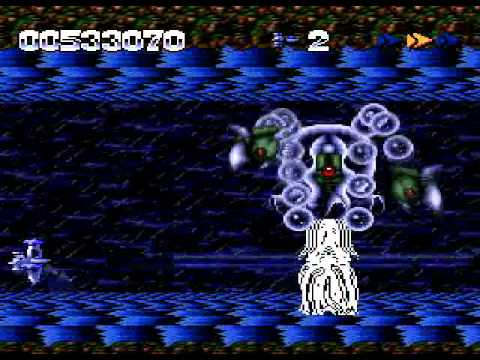
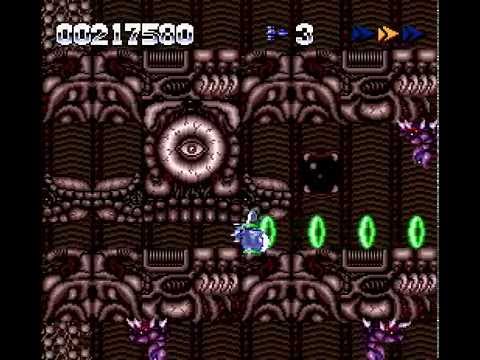
Gaiares
Garfield: Caught in the Act
Gargoyles
Gauntlet IV
General Chaos
Genesis 6-Pak
Ghouls ‘N Ghosts
G-LOC: Air Battle
Golden Axe
Golden Axe II
[Golden Axe III – have in collections only]
Greendog: The Beached Surfer Dude
Gunstar Heroes

Best games in this update: Golden Axe, Golden Axe II, Gauntlet IV


Faery Tale Adventure, The – 1 player, password save (36 character password to save). The Faery Tale Adventure is a top-down Western RPG by New World Computing and published by EA. You play as a prince or three, having to save the world from evil or something. I can’t really say too much about this game because it’s not a kind of game I have ever liked, but I can tell a few things about it. First, the game is not great on consoles; the game was designed for computers, and was compromised in the porting process. This is a big game with a large world to explore and action combat. This is a somewhat non-linear game, and the game tells you essentially nothing about what you should be doing when you start; this is a big issue for me, as while I know a lot of people love them, I do not enjoy these open-world games where you’re just supposed to randomly wander around until you figure out what to do, where you can go, and where you will die. The visual look is probably inspired by Ultimas V-VII, though I haven’t played either those games or the PC Faery Tale Adventure games so I don’t know how well this game compares. The overlong passwords do not make me want to try too hard to figure out this game. The controls are not very good either. The game was originally designed for a mouse, and playing it with a gamepad just doesn’t quite work. You move around with the pad as usual, but there is a menu of options in the status bar that you access with B. You will be using this clumsy menu CONSTANTLY as you have to switch between talk, pick up, buy/sell, inventory, pause, equipment, and more. Yes, all of those options require hitting B to pause the game, selecting the one you want in the box in the corner of the screen, hitting C to select that option, and often then hitting C again to use that option. Then hit B five seconds later to switch to another option. Then somebody kills you, try again. With a mouse this control system would be tolerable, but with a gamepad it’s horribly annoying. The game does have okay music and somewhat nice graphics with decent art design and better visuals than some early Genesis RPGs, but I don’t like this game at all. With save files and a mouse I’d probably play the game a bit more, but the basic gameplay of wandering around lost and not knowing where to go while dying constantly whenever I try to go anywhere is not fun at all. Even on PC I never wanted to play games like this, and playing this downgraded port does not change my mind on that. Play the original computer versions if you want to try The Faery Tale Adventure. The game also has a computer-only sequel. Or better yet, stick to New World Computing’s best series, Heroes of Might & Magic for PC; those games are fantastic! Port of a PC and Amiga game.


Fatal Rewind – 1-2 player simultaneous. Fatal Rewind is a pretty cool but very frustrating puzzle-platform-action game published by EA. This is a port of a European computer game. EA ported a lot of PC games to the Genesis in their first few years of support for the system, and this is probably one of the better ones, if you can tolerate maze-heavy games. In this game you are a person in a robot suit, and are a participant in one of those futuristic death games popular in fiction. This is a one or two player game; it’s pretty cool that this game has two player co-op support. You can jump with Up (common in European computer games) or C, fire with B, and use items… by hitting jump, or a button combo, or something. You can walk on horizontal walls if you jump at them; that’s pretty cool. Hit down to grab items, of which there are many. There are a variety of weapons to collect, health powerups, and shapes that act as keys. This is a fast-paced game, and your robot zips along nicely. You will need that, though, as death is following you only a moment away! Your goal in each stage is to get to the top before the rising liquid below reaches you; fall in the water and you’re dead. The levels are made up of thin platforms, mostly horizontal but occasionally vertical; there are no diagonal-angle platforms in this game, and all platforms are thin. There are some nice parallax backgrounds in the stages, though. The graphics are good for an early-ish Genesis game, and the music is great. Fatal Rewind has some very good electronic music that helps encourage you to keep trying, important in a game this reliant on replaying again and again.

And you will be replaying the game again and again, as this is, at its core, a maze game. The path to the top is not obvious and levels loop around horizontally so you will never reach a left or right edge. Levels are designed to make use of this fact; stages aren’t too big, but can take a while to finish because of how often you’ll be going back and forth. You wander around, explore, and figure out which keys go in which doors, because keys and doors are a big part of this game. If you take the wrong route you will die for certain as the water will catch you, or you will jump or fall into it, try again. And of course, you have limited lives and continues to figure all this out in, so success at this game will only come with a whole lot of memorization. You’ll need to keep straight which route to take in each level, which key to pick up first, and where each one goes, and then will need to execute on that while avoiding the enemies. Enemies are another unique element of this game, on that note; there are no enemy robots on the paths you explore. Instead, enemies are all flying objects that zip around the screen in formation irregardless of where the platforms are. They can really get in your way, but if you kill all enemies in a wave a small health powerup will float up out of the last one, which is nice if you can jump and get it. Playing Fatal Rewind is, overall, fun but frustrating. I like the graphics and really like the soundtrack, and the game controls well and can be fun to play, but the grind of having to memorize everything in every single stage in order to have a chance of finishing the game is daunting, and while I definitely like this game, I never have gotten anywhere near the end. With passwords every few stages or something this would be a much more fun game; it is impossible to beat this game on the first try, what you need to do in each stage takes a while and that wall of water following you up the screen moves quickly so you can’t make many wrong moves and survive. This game is not fair, but it’s still fun most of the time despite that. Despite its faults, Fatal Rewind is a good game worth playing. Amiga port also on Atari ST, but this kind of game probably plays better with the Genesis’s multi-button controller than it would on the Amiga. In Europe this game is known as “The Killing Game Show”.


Fire Shark – 1 player. Fire Shark is a great vertical shmup from Toaplan, one of the top shmup developers of the day. Fire Shark doesn’t get quite the attention of some other Toaplan shmups of the time such as Truxton or Twin Cobra, but while those games may be better, this game is very good as well. From Tiger-Heli to Truxton II, most of Toaplan’s vertical shmups are very similar in a lot of ways, and Fire Shark is no exception. This game is very much Toaplan, and anyone familiar with their shooters will immediately be at home with Fire Shark. When I got this game I wasn’t expecting too much, because when I got this in 2011 the only Toaplan games I had were the mediocre Tiger Heli for NES and the subpar Genesis port of Twin Cobra, but this one is great. The basic concept is similar to those games, but it’s a bit faster and easier here, and it isn’t broken like the Genesis version of Twin Cobra. Toaplan was a great shmup developer, and this game is a fine example of why. The game has good controls, first. Toaplan shmups always control well, though often ship movement is a bit slow. It is like that here, but the speed is manageable, this isn’t Tiger-Heli slow. You’ve got a couple of weapons to choose from, including a forward gun, a flame laser shot, and a straight laser. The weapons here are clearly fantastic, more so than the machine-guns-only weapons of Daisenpuu, for example, though the general gameplay of the two titles is very similar. The game has your typical Toaplan graphics and sound, with okay but not great graphics and sound. The game has a large status bar on the left side, a feature all Toaplan vertical shooters on the Genesis share. Their Turbografx shmups don’t have that, presumably for screen-resolution reasons — the Genesis usually runs at a higher resolution than the SNES or TG16. The music is classic crunchy Genesis electronic music. It’s good, well composed stuff. The game looks decent and sounds nice, but never will really impress in either respect.

This game is different from Truxton or Twin Cobra in difficulty, though — while those two games are extremely difficult, Fire Shark is a conquerable challenge. This is the sequel to Sky Shark, an arcade game that got a mediocre NES port. You play as a time-travelling World War II pilot defeating an evil superpower which has taken over the world in the future, not that the game itself ever tells you this. The plot is a bit weird, but you’ll see next to none of it in the game, which is just fine; the game’s about shooting stuff, not story. And the shooting is great. Unoriginal or no, the game has great gameplay with very well designed enemy patterns, a good weapon selection, decently nice graphics and sound, and very good controls. Toaplan’s greatest skill is at level design and game flow. Enemy patterns are all well thought through and varied, and the game is great fun to play. There is a boss at the end of each of the ten stages, and they are all fun challenges. And while beating loop one on easy isn’t too hard, and in fact I have beaten a loop of this game, something I have not yet accomplished in any of Toaplan’s other vertical shmups (I have also beaten Zero Wing for Turbo CD, but that’s horizontal), but I don’t mind that there is a Toaplan shmup I can finish. I’ve come close to finishing in Daisenpuu Custom for Turbo CD, another one of Toaplan’s easier shmups, but haven’t quite beaten the game… but I did better at this one. I didn’t beat Hard mode, though, and the game does loop over into each higher difficulty setting after you finish one, so if you keep going it’ll get plenty hard. There is also a slight addition to the ending if you finish it on Hard, sort of like the Genesis version of Truxton. Overall, Fire Shark is a very fun shooter. All you need to do is fly up while shooting the enemy tanks, planes, and ships before they can shoot you, but that will be a challenge… a fun challenge. With three powerful weapons at your disposal you stand a chance, so long as you can stay alive. Eventually you will be able to, at least on Easy. It’s a rewarding game you will get better at, and a great starting point for those interested in getting into Toaplan shooters. Highly recommended! Arcade port.


Forgotten Worlds – 1-2 player simultaneous. Note that with 6-button controllers you must hold Mode and cannot use a 6-button controller at all if you’re using a controller extension cable, it will not work. I use both an extension cable and 6-button controller, so I’ve got to get out my 3-button controller for this game, annoyingly. The 3-button controller just isn’t quite as responsive or comfortable as Sega’s 6-button pad is… ah well. The game is worth it, though, because it’s good. Forgotten Worlds is a horizontal shmup, originally by Capcom in the arcades but this Genesis port is by Sega. You play as a pair of flying muscled guys; they don’t have jetpacks, they just fly because it’s cooler like that. This is a very early Genesis game and you can tell, but the game plays well despite some issues. I don’t like this game quite as much as its great spiritual predecessor Hyperdyne Sidearms, which was released on arcades and on the Turbografx, but it is a good, well-made game. Both games, and Sector Z before them, allow you to fire multiple directions in order to hit enemies coming at you from both directions. In Sidearms you had separate fire buttons for left and right, a simple setup that works well, but this time the game uses two buttons to rotate your character, while the third fires. This allows you to fire in any direction, but it makes for more complex controls than Sidearms, as you will be frequently rotating to the direction you need, instead of just tapping the other button to instantly fire the other way. While it is nice to shoot any way, the clumsier controls are a drawback for me, versus its predecessors. There is an autofire option where you shoot all the time and only need to worry about rotating, but the game does autofire if you hold B, so it’s not essential even if it can be nice sometimes. Another thing I prefer about TG16 Sidearms over Genesis Forgotten Worlds is that this game has absolutely no continues; when you die without a health refill item, it’s game over, start again from the beginning. That’s no fun, having a couple of continues really would have made the game better.

During play, you move your burly flying muscleman around, shooting at the enemies who attack from all sides. The game has good level designs with some variety, obstacles to shoot or avoid in some stages, plenty of enemy types, and more. There are also some decent parallax-scrolling backgrounds. There is slowdown far too often, though, one of the signs of the games’ early release date, and while this game looks decently good, later Genesis games look a lot better. The music is also average at best. This is a tough game too, particularly thanks to the absence of continues. Bosses can be tricky, as well, unless you learn their patterns well. To help you out, early in each stage there is a shop you can, and should, enter. Here you can buy powerups, an extra life, helper orbs that add to your firepower Gradius-style, and more. Buy everything you can, it’s essential, and shops only appear once a stage so you won’t get another chance soon! You can also buy a cryptic hint for how to fight the next boss here, but using a guide might be more helpful if you’re stuck. Overall Forgotten Worlds is a good game, but it’s not great. The slowdown, sometimes average graphics and sound, clumsy controls, and lack of continues all hold the game back, as does its unfortunate incompatibility with 6-button controllers on controller extension cables. Still, if you find it affordably, pick it up; the game can be good stuff, particularly with a friend. Arcade port, also on TurboGrafx CD. The arcade version is in various Capcom arcade collections for newer systems. The Turbo CD version has no parallax and is one player only (unless you use a code that just lets a second player control your ‘bit’ helper orb), but has much better music and more detailed graphics than the Genesis one, so each has advantages over the other.


Fun ‘N’ Games – 1 player. Fun ‘N’ Games is bad Mario Paint-inspired minigame collection. The game has three main modes, creation, games, and some little toy things. None are very good. For creation, there is painting and music composition. The painting mode is decent, with a nice variety of colors and patterns you can draw on the screen with. There are also a bunch of black and white outlines of pictures to fill in if you wish. There’s only one brush width, though, and no mouse or saving support, so drawing is a bit clumsy compard to any game on a computer or with mouse support such as that in Mario Paint, the game this one obviously tries to copy. Worse, you cannot save anything in this game as there isn’t a save chip in the cart, so you’d better take a photo of the screen if you don’t want to lose your creation. Or better, use virtually any drawing program for any computer ever, they are all better than this. The music program is even more pointless; it’s a fairly simple thing and doesn’t match Mario Paint’s. And again, no saving your creation.

The ‘games’ side has three bad minigames to try. First is Mouse Maze; this is the best thing on this cart, and it’s not great. Mouse Maze is a Pac-Man knockoff, only with small mazes and maybe ten dots per stage. Enemy AI is pretty terrible, and this game is not exactly the next Pac-Man to say the least, but it’s not utterly horrible, which makes it better than the other two games. Second is a terrible light-gun-style space shooting game. You use the controller and not a gun, of course, and move a target cursor around the screen, pointing at enemy robot things as they fly around and trying to hit all of them. With bad graphics, no variety, no way to avoid taking damage, and more, this is a terrible, horribly unfun game. And last is a subpar whack-a-mole minigame. It might be amusing for five seconds… probably not, though. And last, the game has two little software toys which let you mix and match people and scenes. Ha ha, I can make a person with a head, body, and legs that don’t match! I’m sure little kids might be amused by these for a few minutes, but I doubt it’ll last much longer than that and there is nothing here for people over age five or six. In conclusion, Fun ‘N’ Games is a terrible waste of time and space. While when it released I could see getting this for a young child who did not have a computer or a Super Nintendo (PCs were expensive back in the early ’90s!), today there is absolutely no reason to even consider wasting your time or money with this debacle. Fun n Games is awful and one of the worst Genesis games I own. Also on SNES and 3DO; I’ve never played the other versions, but they’re probably just as bad. If the 3DO version lets you save your creations it’d be better than the others, but I don’t know if it does. I don’t think any of the three have mouse support, even though mice do exist for all three platforms.


Gadget Twins – 1 player. Gadget Twins is a weird … shmup, I guess… from Europe that was published by GameTek. This is a horizontal game. As in most shooters, you control a plane and fly to the right, but you can’t shoot. Instead, you punch with a short-range boxing glove attack. The game has a money system and shops where you can buy powerups as well, money is in chests as well as enemies, and you’ll need to break through walls and such to progress, so this is a quite nonstandard ‘shooter’, or puncher I guess. So, this game is unique, but is it good? Well, it’s okay, but not great. T his is a difficult game which shares some common flaws of European games of its day, including no invincibility on hit and no saving. The absence of hit invincibility means that if an enemy touches you you will lose health until you get away, so while you have a health bar, it’ll drain fast if you mess up. And since you have to get very close to enemies to hit them, you WILL mess up unless you are very good at this game. You attack with one button, and switch attack directions with a second. The third button enters shops. There is only one rotation button, so to you’ll need to hit that button three times to attack an enemy behind you if you are currently aiming down, for example. This is a real problem and makes an already difficult game harder. The game does look nice, though. The game has a good cartoony art style with an underwater theme, and nice parallax backgrounds as well. The European-cartoon look works great and makes the game fun to look at. I like the various silly enemies, including various fishes, crabs, robots, and more. The two player co-op play support is pretty nice as well. The music is decent, but forgettable, stuff, though, but overall the presentation is pretty good. The gameplay doesn’t quite match up, though.

The biggest problem with this game is the difficulty, with the bosses, controls, and that health system as major culprits. Having to get up very close to enemies in order to attack them can make for some tricky situations, and the boss fights in this game are a bit too hard. Those controls, with the clumsy single-button rotation system, make this worse. Bosses take a lot of hits to kill and can damage you quickly with cheap attacks you can’t avoid because of how close you have to get; the first boss is way harder than a first boss should be, and it only gets harder after that. You only get three lives per continue and three continues until it’s Game Over, start again from the beginning, if you even beat a level; levels are long, so this may or may not happen. I like the various weapons you can buy, though. You start out with only small fists to attack with, but as you progress the periodic shops will give you access to better weapons, and it’s a good idea to buy them if you can afford it. When you die and it’s not a game over you respawn where you died, and here you do have a moment of invincibility. You drop a weapon when you die, so make sure to pick it up if you can or else you’ll lose it. Despite the games issues playing Gadget Twins can be fun, particularly in co-op. The nice graphics and game variety add to the game, even if it’ll be a struggle to see much of it. Overall, though, Gadget Twins is an average game. It might be worth trying if you see it cheap and you have some tolerance for European games of this era. It’s also Genesis-exclusive, I don’t think it’s a port of some computer game.


Gaiares – 1 player. Gaiares is a very difficult, but popular, shmup from Telenet, published here by their US division Renovation. I’ve heard a lot about how good this game is, but it’s not one I had played much of until a few years ago. Once I did, though, I quickly found that its reputation for difficulty is very well earned. Gaiares reminds me a bit of Valis games or their extremely unpopular Turbo CD shmup Legion, in that enemies come at you very quickly and from all directions, making the game as much of a trial of frustrating memorization as it is anything else. I’ve never liked this style of Telenet game, and I don’t care for Gaiares either. Hard games can be fun, but this one isn’t, it’s just frustrating. The game does have some good points, though. The graphics are decent, with better visuals than many early Genesis releases. Still, compared to later Genesis games, Gaiares looks only okay. It does have parallax scrolling and some decent ship designs, but it’s nothing special either. The art design is decent, but not great, as usual from Telenet. The music is decent to good. It has some good compositions, but isn’t anything I find memorable. The game does have a surprisingly long intro cutscene, though the story is extremely generic and not that good. The evil female pirate ZZ Badnusty is threatening Earth, and you, male hero, and your prototype fighter are the only hope for the survival of the human species! With a game this hard humanity is probably doomed, sadly, though the whole ‘guy saves the day from the evil woman’ plot is definitely questionable. Gaiares has eight levels, all fairly long and difficult. At almost an hour for a longplay video, Gaiares is probably a bit above average for the time in length, among shmups. I’ve never gotten past level two or three, though; you have limited lives and continues here, of course.

In game design, this is mostly a conventional shooter, though you feel a bit under-powered, particularly if you aren’t powered up — and losing power is very easy. The game does have one unique feature here, though — Gaiares doesn’t have your usual weapon powerups. Instead, you have a special gun which takes the power of the enemy you shoot it into. As you shoot more enemies, or one enemy multiple times, the weapon will level up and increase your weapons’ power. You can get a shield and some helpers, but otherwise your powerups come from the enemies. It’s a good concept, thouhg you get de-leveled a bit too easily when you hit anything, and even with the stronger weapons your ship feels a bit weak. That’s fitting with the game in general, though. Gaiares is a punishing game. You get sent back to the last checkpoint when you die, and checkpoints are a bit far apart at times and it’s easy to lose weapon power as enemies zoom in at you fast and are hard to dodge at times. Still, the game can be fun to play; this is an okay game. Even so, I was hoping that I’d really like Gaiares, but I don’t. Maybe in 1990 this game was impressive, but later on the Genesis got many shmups far better than this one, that are actually fun to play, have better graphics and art design and even better music, and are just much better balanced all around. There is enough decent shooting action here that Gaiares is an average game overall that some people overrate. Fans of masochistically-hard shooters absolutely should check out Gaiares if they haven’t already, though others will probably want to stay away. Arcade port.


Garfield: Caught in the Act – 1 player, password save. Garfield: Caught in the Act is a platformer by Novotrade that was published by Sega in 1995. As a late release for the system you might expect well-polished visuals, and the game delivers. The gameplay isn’t nearly as good as the graphics are, but this game does look very, very good. This game may not be one of Sega’s better-known licensed Genesis releases, but it is a very nice-looking game with some beautiful visuals that captures the style of the comic strip well. I have always liked the comic strip Garfield even if it repeats the same few jokes endlessly, and this came captures the look of the series well. In this game Garfield broke his TV, and in his failed attempt to repair it created a monster machine which has warped him into his television! So, you’ve got to work your way out by collecting the TV remote at the end of each stage. The setup reminds me a bit of Gex, though this game isn’t as expansive as that one is. The game has fantastic use of color, and makes use of the Genesis’s rarely-used hardware shadow capabilities that allow the system to display more colors on screen than you usually see. I have no idea why more games didn’t use this function, but this game does at points and it looks great. Garfield is also very well animated, and looks different in each of the games’ six levels, fitting the theme of the stage, so he wears a pirate hat and uses a wooden sword in the pirate level, a vampire cape and shirt in the horror level, and such. It’s a nice touch.

However, things start going downhill as soon as you stop looking at the screen and start playing the game. Garfield’s controls are not precise; this game is slippery and frustrating to control. Garfield will constantly slip off of the edges of platforms you think you’re on, get hit by things that probably should have missed you, and such. This makes platforming kind of annoying. It also can sometimes be hard to tell what you can jump on and what you can’t, making jumping something of a guessing game at times. Fortunately the game doesn’t have much in the way of instant-death pits, but still, it is an issue. Your main attack is very short-ranged, as well, so it’s easy to get hit while trying to hit enemies. You can take ten hits before you lose a life, but running out isn’t hard with controls this hard to get used to. On top of that, the difficulty is unbalanced. The first level of this game is a somewhat frustrating one with some mazelike qualities to it, and the first boss isn’t easy either, and there is a puzzle element to the bossfight that is not obvious. Oddly, the second level and boss are quite a bit easier and more straightforward than the first, so if you can manage to keep playing past the bad first impression the game makes it does get easier, though it doesn’t get much more fun. In between levels are some amusing little bonus stages, and also a hub-world stage inside the television where you go from level to level.

It is great that the game has passwords, though; having any kind of save system is a somewhat uncommon thing in Genesis platformers. It’d have been nice if the game gave you passwords after each stage instead of only after you get game over, but having them at all is fantastic. Even so though, Garfield: Caught in the Act isn’t a very good game. With only six not-too-long levels, this is a very short game, first. If you don’t quit in irritation, this game won’t take long to finish. The game is also unbalanced and has some control problems. However, the game is beautiful to look at, and for Garfield fans it may be worth sticking with just to see what’s going to come next. The Vampire-Odie and Dino-Odie bosses are particularly clever. And though it is sometimes frustrating, it is nice that there is more to this game than just walking to the right and hitting things. Still, overall this game is disappointing. Only graphics and Garfield fans should check it out. Maybe watch a video of the game, it does look good.


Gargoyles – 1 player. Gargoyles for the Genesis was Disney’s first attempt at making a game itself, and not just farming out its licenses to external studios. They chose to make a Genesis-exclusive platform-action game, based on the pretty good TV series of the same name. Gargoyles was an interesting show with a darker tone than most Disney work, and I did like it at the time, though I didn’t play much of this game back then. You play as Goliath, the lead Gargoyle. The game is okay, but flawed. Somewhat similarly to other Disney games of the day such as Virgin’s The Lion King, the game has beautiful, impressive graphics, but iffy gameplay with poor combat and sometimes frustrating controls. And that’s really the contrast here, between the very good visuals and the often not-great gameplay. Copying Sonic much like a lot of platformers of the day, there are three levels in each setting, followed by a boss fight. Levels are usually fairly large, also, and take some time to traverse. This means that while the game looks great, you will be seeing a lot of each setting. Even if the environments repeat, though, the work done on environment and sprite design in this game is very impressive for the time. Characters also animate very well.

For the most part, graphics aside Gargoyles is a conventional Western platformer. The game has big levels, exploration, stuff to collect, platforms to jump between, and enemies to fight along the way. As you are a gargoyle, you have some great mobility in this game. Goliath can attach to and crawl along any non-spiky wall or ceiling surface, do a nice gliding double jump that adds a lot of distance, do a charge attack (run and then hit B), do a ground-strike (hit A while in the air), and more. While the controls are a bit frustratingly loose at times, I like the platform jumping, and the verticality in levels that your wall-climbing allows is great. However, combat here is pretty bad. While fighting B is your regular attack, and A plus a direction close to an enemy will grab and throw them. Regular enemies aren’t too hard to beat, though they can be annoying at times, but bosses are much harder, unless you find repeatable patterns you can get them in or exploit glitches. I beat the second boss by ducking right in front of him and then hitting B until he died, for instance… yeah. It took a while, but that’s much easier than the ‘real’ fight; that kind of bug should have been fixed. Fighting is this games’ biggest weakness, and there is a lot of it in the game. Still, I like some of the platforming challenges here. While levels are linear, you will often need to figure out some simple puzzles along the way, to find walls you need to break through with a charge, pull-chains that act as switches to turn on or off things you will need to progress, and such. I like some of the levels here, and figuring out each stage is fun, when the controls aren’t getting in your way. Overall, Gargoyles is an average game with great graphics but poor controls. There is enough to like here that it may be worth playing, both to see the various environments and for the platforming part of the game. Note that Gargoyles won’t work on a Genesis 3 system, and often doesn’t work on clone Genesis consoles, because it was programmed to use some hardware glitches that those systems fix.


Gauntlet IV – 1-4 player simultaneous (with multitap), password save (30-digit password for saving each character plus 10 digits for progress in the current dungeon). Gauntlet IV is a top-down multiplayer action-RPG in the great Gauntlet franchise. This Genesis version was made in Japan by M2 for Tengen, Atari Games’ console division. I’ve loved the Gauntlet games ever since I played the first game in an arcade, and it’s still a favorite series of mine. This Genesis Gauntlet release is an interesting, and sometimes overlooked, one. The game has four modes, Arcade, Quest, Battle, and Record. The game is one part upgraded port of the original arcade game, and one part all-new Gauntlet game with more RPG elements than any Gauntlet game before it. In Japan this game actually was just called Gauntlet, but they added the “IV” to the title for the US because the last Gauntlet release before this one here was “Gauntlet III” for the Lynx. This is a great game with good graphics and a fantastic soundtrack, and it’s a real under-rated classic of the Genesis library! It’s also interesting for being the only Japanese-made Gauntlet game, all others are American. The long passwords are kind of a pain, but they are one of the few problems with this great game. This is a Gauntlet game, so there are, as usual, four classes to choose from: Warrior, Wizard, Valkyrie, or Elf. They look and sound similar to the first game, but with better visuals than the NES versions, of course. Gauntlet IV looks good but not great. Arcus Odyssey and Dungeon Explorer for Sega CD both probably look better, but this is a decently nice looking game, and it plays fast, without slowdown. Each of the five areas does look different, which is nice. There are also voice clips for each character, just like the arcade original; this is something that the NES games didn’t have. The soundtrack is better, and really is a standout feature in the game.

The gameplay is standard Gauntlet action-RPG fun. You walk around exploring mazelike levels while killing the numerous enemies that spawn from monster generators as you look for exits. Shooting the generators levels them down, weakening the enemies which spawn from it, until finally they are destroyed. You start with a lot of health, but your health steadily drains, so you need to keep moving in order to not die. Gauntlet Legends’ home ports would finally get rid of this, and that was for the best, but this game does use it, unfortunately; it’s a feature put in to keep people pouring quarters into the machine that a home game didn’t need. At least you can buy health from the store; this isn’t something all Gauntlet Legends home ports let you do. Levels also have keys and magic potions. Using a potion kills the enemies on screen, and each key can open one door. There are multiple routes through each dungeon, so sometimes your choices for which doors to open do matter. That’s Gauntlet, and it’s a fantastic formula which is as great now as it ever has been. The main additions here are experience points and a money system, with a larger inventory beyond just magic potions. The NES version of Gauntlet also added in some RPG elements, but this game goes much farther with it. Fortunately it was well thought through here; the leveling system in this game is well-designed, unlike, say, Dungeon Explorer for Sega CD and its somewhat busted system. I like the addition of more items to buy too. Levels, and items you can buy from a store in the hub area, are ideas that Gauntlet Legends would pick up and expand on, but within the Gauntlet series they were here first.

While the version of arcade Gauntlet is pretty good and has a bunch of nice options including difficulty, continues, and more, I have barely touched the arcade side of this game; the main feature here is the original quest mode, and it’s great. In Quest mode, as in the main game each player chooses a character, or enters their 20-character password. The game has a hub area you start in, with four dungeons to play through and two shops to buy items from. Each dungeon has 20 levels and then a boss at the end. After you beat all four, then the fifth and final one unlocks, to go to the final boss, for a total of 100 stages. It’s a good-length game, but each stage doesn’t take too long, so this game probably isn’t too different in length from the later Gauntlet Legends games even though it has far more stages. If you can’t finish an entire dungeon in one sitting, you can get your password for the current dungeon; these are the 10-digit passwords. I guess you could have one for each dungeon if you’re working on all of them at the same time, but it’s a better idea to focus on one at a time. Your main character password will save if you’ve beaten a boss, but not progress in a dungeon. It’s better this way, 20 digits is long enough. As for the other two modes, the battle mode is a versus arena where players can fight eachother. It’s kind of pointless. Record mode is a bit more interesting, though. It’s basically the arcade game, but with passwords added, and you can’t die — instead you lose points when you lose health, which matters in this score-based mode. Remember that arcade Gauntlet is endless and just loops around to the start when you finish it, so score is the main reason to play it anyway. I like games to have endings, so this is one reason I prefer Quest mode, or NES Gauntlet 1, which also has bosses, passwords, and an ending.

In conclusion, Gauntlet IV is fantastic. I’ll get the flaws out of the way first: the passwords are long, graphics aren’t improved over the by-1993-dated original arcade game, and they kept the health-drain system. None are major problems. With either one player or four, Gauntlet IV is great fun. Of course, as with all Gauntlet games the game gets better with more players to work together with, but it is fun even by yourself. This game is a good reason to get a Genesis multitap, though. Exploring levels looking for hidden breakaway walls, fighting the enemies, collecting gold, magic, and keys, and upgrading in the shop all are great fun features. The soundtrack deserves the high praise it gets, also. The original Gauntlet was a brilliant game, and this collection here includes both a great port of the original game, a new spin on it in Record mode, and a fantastic RPG-ish Quest mode, all in one! This really is a must-have game and is one of the best action-RPGs of the 4th generation. The Gauntlet arcade game portion of this game is available on innumerable platforms in various forms, but this version, with all of the new added modes, is not available on any other platform so get it for the Genesis for sure.


General Chaos – 1-4 player simultaneous (with multitap). General Chaos is a combat-only action-real time strategy game published by EA. This is a unique and original game for the time, and seems to have been fairly popular. The game has a definite learning curve, but once you get used to it it’s pretty amusing. This is a short little game designed for replay and multiplayer more than anything, and it works as such. This game would be more fun with a mouse, but it is alright with a d-pad. The game has a handful of different maps, and in the main campaign mode you will see most of them as you try to conquer the other sides’ base. This game has no explanation for its war; Generals Chaos and Havok want to wipe eachother out. This is a cartoony game filled with silly graphics and animations. The game certainly doesn’t take itself seriously, which is a good thing. Each level is a single screen, which is great because you can see the whole area at once. Sprites are moderate-size, so General Chaos maps are pretty small. Still, each has a good amount of detail with various buildings, rivers, trees, and more to provide obstacles, and cover.

Most of the time this is a 5-vs-5 game. There are several different types of guys, each with different weapons. You control a cursor with which you control your team. A tells the team to start shooting at the nearest enemy, B tells the currently selected person to move to the point selected, and C switches team member. You can also call in medics to heal injured team members. If someone takes too much damage they will die, but unfortunately there are not visible damage meters displayed. You also can fist-fight enemies if you get close. The fist-fights can be difficult to win against the AI. The different weapons really are different, so you need to get used to how the machine gun, rocket launcher, grenades, and such each control. Fortunately there is a training mode in the main menu to help players learn how to play the game; make use of it, it’s very helpful. I should note, there is also one mode which gives you direct control of your characters, if you play as the Commandos team, but this team has only two guys, so winning will be tough. Still, it is a nice option.

A game of General Chaos can seem, well, chaotic, as the ten guys on screen run around and shoot eachother, but there is method to the madness. Once you get the hang of it, General Chaos is a fun little strategy game. There are a lot of much better real-time strategy games out there on the PC, particularly, but for a Genesis game this simple, combat-focused design works well. This game really gets good in multiplayer, though; in single player it’ll probably get old after a few games. But if you can play this game with others, it’s worth taking the time for everyone to learn the controls, it’ll be fun stuff. The two player mode allows for full strategy battles, or in 3 or 4 player mode (or 2 player co-op) all human players play as Commando teams. This restriction is perhaps unfortunate, but it is understandable; these maps are barely large enough for 10 players, they could not fit the 20 players 4 full teams would require. So yeah, pick up General Chaos if you see it cheap, or want to play a unique RTS-action hybrid title. You can’t play it anywhere other than on the Genesis, either; EA has never ported or re-released the game.


Genesis 6-Pak – 1 player or 1-2 player depending on game. One game has saving. The Genesis 6-pak is a 6-in-1 cartridge Sega released in the US. The cart includes Golden Axe, Streets of Rage, Columns, Sonic the Hedgehog, Revenge of Shinobi, and Super Hang-On. I review each of the six games separately, at their places in the alphabet; I decided to count them as separate games in my collection, even though I only have most of them in this collection; I do have a Sonic 1 cart, but not the others. This is an absolutely fantastic collection of early first-party Genesis games that all Genesis owners should definitely own! It’s an easy, and cheap, way to get a whole bunch of mostly very good games. Of the six games here, only one, Super Hang-On, isn’t that good; the other five are great at minimum. Definitely pick up this fantastic collection of some of the best early Genesis games. Sonic the Hedgehog and Golden Axe are my favorites here, and both are among the better games on the Genesis, too. The first Sonic the Hedgehog is a bit of an under-rated game, today; it’s still really good, I don’t agree with the critics at all! This specific collection isn’t available elsewhere, but all of the included games have been included in various collections and digital re-releases of Genesis games.


Ghouls ‘N Ghosts – 1-2 player alternating. Ghouls n Ghosts, originally released in arcades by Capcom and ported to the Genesis by Sega, is the sequel to Ghosts n Goblins for the arcade and NES. This game is the second game in this somewhat long-running series, and it is fairly well remembered. Ghouls n Ghosts is a cartoony-horror-themed platform-action game. This was an early release for the Genesis, releasing in 1989, and it is one of the few 1989 Genesis releases that legitimately is a great game. The Genesis has a great library, but its first year had only a few hits, including this, Truxton, and Golden Axe. As always in the main series you play as Arthur, a knight in armor who must rescue his kidnapped girlfriend Princess Prinprin from the demon armies who keep taking her. As always Arthur can’t control his movement while jumping, so jumps are harder here than in most platformers. You do have a double jump, but be careful because it’s easy to accidentally double jump into an enemy or pit. Enemies will often rise up out of the ground in front of you, so be careful as you move around.

This series is infamous for its extreme challenge, but this Genesis version of Ghouls n Ghosts is as easy as a game in this series gets; indeed, I beat this game on the easier difficulty in a couple of days without too much trouble, even though I’ve never even finished level two of the third game in this series, Super Ghouls n Ghosts on the SNES, despie many attempts! It really is that much easier, and more fun, than that game. There are several reasons why. First, you have infinite continues in this game, and always continue from the last checkpoint even after getting a game over, so you will never have to replay levels from the start. This is fantastic and makes the game more fun than the first or third games, which aren’t so kind. This game also has fewer levels than Super G&G, so though as with all games in the series you need to play through the game twice to win, it won’t take as long. I don’t mind the shorter length. The levels also aren’t quite as crazy-hard as some stages in SG&G. And last, in this game you can attack up and down as well as left or right. That sure would have been nice to have in Ghosts n Goblins and SG&G! There is plenty of challenge to be wfound here though, particularly in the harder difficulty setting, but for me this game is an approachable challenge, while SG&G is just near-impossibly frustrating.

Visually, Ghouls & Ghosts looks good, but not great. This is an early release, and while the game is a reasonably good approximation of the arcade original, it is a bit downgraded visually versus the arcade. There are a nice variety of enemies, and lots of obstacles to face. The music is good as well, and fits the series well. On the whole, Ghouls & Ghosts is a pretty good game. This game surprised me, after playing its SNES sequel I was not expecting to like this game at all, but I do. Of the main-series G&G titles, the Genesis version of Ghouls n Ghosts is my favorite. The game looks okay and plays quite well, and has some design choices that make it a more approachable and fun game than the others. The difficulty is balanced perfectly, with an easier default setting and much tougher hard mode available. Ghouls & Ghosts is short but fun. I’d definitely recommend this game to anyone who likes platformers, Ghosts n Goblins-series fan or not. Arcade port. There is also a PC Engine SuperGrafx version of this game from Hudson under its Japanese title, Daimakaimura. The SuperGrafx version was only released in Japan, since that system only released there, but it has better, more detailed graphics than the Genesis game. The core game is the same, though. The arcade version is also available in some collections of Capcom arcade games.


G-LOC: Air Battle – 1 player. G-LOC is a port of the Sega arcade rail shooter game of the same name. This is a jet-fighter game and effectively is a spiritual sequel to Sega’s earlier classic jet-fighter rail shooter After Burner. I remember playing the arcade game back in the early ’90s. I did not have many experiences in arcades playing After Burner, or at least I don’t remember it if I did, but I definitely played G-LOC. I thought arcade G-LOC was a pretty good game, but hadn’t played much of this Genesis port until not all that long ago. When I finally bought a copy of the cart earlier this year I was not expecting good things, but the game very pleasantly surprised me. G-LOC is not perfect, but it is about as good as a Sega super scaler arcade game to Genesis port could be. Yes, I think this game, on the Genesis, is pretty good! G-LOC is now easily my favorite first-party rail shooter on the Genesis, though it isn’t an A-grade game, none of the Sega rail shooters that gen are because of the compromises versus the arcade originals. G-LOC is a simple game. You are a fighter pilot, and have to take down huge numbers of incoming enemy fighters. You fly along automatically, dodge a bit, and shoot at the enemy planes, but it’s good, exciting fun. The software scaling here is jerky, but looks a lot better than the awful, eye-pain-inducing hideousness of Sega’s early “scaler” Genesis games such as Super Thunder Blade, Space Harrier II, or Outrun. This is a midlife title for the Genesis, and it benefits from its later release. The game has some low-flying ‘bombing’ missions mixed in with the regular air combat. They have some choppy-looking walls on the sides, but still nothing is as bad as the framerate in those aforementioned games. The sprites and backgrounds all look pretty nice and a lot like the arcade game. The pilots and ground scenes are drawn in a realistic style, so though this is a port of a Japanese arcade game it doesn’t look it. The style looks good here, though like After Burner it probably was inspired by Top Gun.

This game distinguishes itself from After Burner in its perspective. While that game is mostly behind-the-plane, G-LOC largely takes place inside the cockpit. In in-cockpit sections you cannot freely fly around the screen, but instead can only sort of dodge a bit in any direction with the d-pad, as you move the cursor. Dodging is critical, though, as you need to stay out of the way of incoming enemy missiles! Either shoot them or dodge them, one or the other. Enemies come in waves, and this game breaks things up into short timed segments. That is probably G-LOC’s most distinguishing element, and I like it because it keeps the pace up. You’re always facing new waves and new challenges in this game. In each wave, you need to shoot down a set number of enemy planes or ground targets, and have a very limited amount of time to do it in. You have two weapons, a machine gun with unlimited ammo, and a limited quantity of missiles. Missiles will lock on automatically to enemies in the targeting box in the center of the screen. It’s best to use the gun when you can to conserve missile ammo, but hitting enemies with it can be tricky, so you’ll need to use both weapons to succeed. If you succeed at hitting the required amount, time is added to the clock and it’s on to the next wave. If you don’t, you will have to try again, and if time runs out it’s Game Over. You do get a couple of continues, but they are limited, so even though this is a short game it will take practice to beat. The game has several main missions, and between missions you go to a briefing room where you can buy missiles, ammo, and armor for your plane. It’s best to take as much ammo and armor as you can, generally. You ‘spend’ your score as currency, here; it’s a simple system that works. And then it’s on to the next mission and some more high-tempo blasting. G-LOC is a good game, and I was relieved to see that the Genesis port is good. I’d been kind of afraid to try the Genesis version of this for years because of my good memories of the arcade game compared to how poor Sega’s earlier scaler rail shooters are on this system, but it’s a good B-grade game that looks and plays great. G-LOC absolutely is a must-play game for rail shooter fans. Arcade port. There is also a Game Gear version of G-LOC, which is far better than you might think a GG version of G-LOC possibly could be. Some people even like that version more than this one, though I do prefer the Genesis game. Both are well worth playing, though.


Golden Axe – 1-2 player simultaneous. I have this in the Genesis 6-Pak collection. Sega’s Golden Axe is one of the greatest classic arcade beat ’em ups of the 1980s. This is a side-view isometric beat ’em up, and it’s a very good one. I have loved this game ever since I first played it, and still think it’s a great game and one of the best beat ’em ups ever. Golden Axe is a somewhat dark fantasy game set in a world of magic and monsters. The games’ world is interesting and unique. You will ride small dinosaur-like creatures, travel in giant animals across the sea, and fight innumerable hordes of orc, lizardman, and skeleton enemies, among others. The game has fantastic art design, with that classic late ’80s Sega look. The art design here is similar to Altered Beast, except here the game is actually good. You can play as three characters in Golden Axe: Ax Battler, Tyris Flare, or Gillius Thunderhead. Despite his name, Ax Battler uses a sword, oddly enough. Ax and Tyris are barbarian-styled characters like something out of Conan, while Gillius is a fairly stereotypical dwarf. Each character plays a bit differently, and has different magic as well. Magic is collected as a pickup, and fills a meter. When you use magic, you will get the spell of the level the meter is full up to, but it will drain empty. The sequels add the ability to use only some magic, but in this first game you have to use it all. You do more damage the more magic you use. Each character plays about as expected from their character types — Gillius is slow and has weak magic, but has strong attacks, Ax is in the middle, and Tyris is fast and has stronger magic but weaker attacks. Visually Genesis Golden Axe can’t match the arcade game, of course, but it does about as well as a 1989 Genesis game could have. The low game-size does show, but still, it’s a great version of the game, and looks far better than the Turbo CD version of Golden Axe. The music is great as well, and is a very good recreation of the classic arcade soundtrack.

The gameplay is simple, but works well. You can attack and jump, as usual in this genre. The running charge attacks are key to survival, as enemies will often come at you from both sides. One thing that makes combat a bit more interesting in this game than some beat ’em ups are the level designs. Golden Axe isn’t like one of those Capcom beat ’em ups where you just follow a straight path to the right; no, it’s got interesting, twisting levels, among the better in the genre. There are many pits to avoid and jump over, multi-level areas to navigate, and more. You can often exploit the levels to lure enemies into pits and such, which is always great fun when you can manage it. The AI will usually come straight at you, so use this to your advantage. Unfortunately boss rooms never have pits… ah well. I strongly prefer the more varied, multi-level, twisting levels found in games like this series or TMNT III for the NES over those bland just-walk-to-the-right levels of too many other games in this genre. The levels tie in to the story in interesting ways, too. “Turtle Village” is more than just a name, in a pretty cool way. Everything from the arcade game is here, and a new final level has been added to the end, too, to add a bit more to the game. There is also a somewhat pointless two player versus mode added, though as usual with such things in beat ’em ups it’s not very fun; these games aren’t designed for that kind of fight. Golden Axe is not a long game, but it is quite difficult, and I have only ever managed to beat the shortened Easy mode; I have gotten to the real final boss on Normal, the first difficulty that allows you to play that new final level, but he’s crazy-hard and always kills me. It’s a fun challenge though, and I will keep trying for sure. You get a couple of continues, but not infinite.

Overall Golden Axe is a game I’ve loved ever since the late ’80s, and it still holds up very well today. This is a simple game, as you walk around hitting baddies and trying to lure them into pits without falling in yourself, but with great art design, good gameplay, some of the better level designs in the genre, and good music, Golden Axe is still fantastic with either one or two players. I know most people don’t like this game quite as much as I do, but this is absolutely an A-grade classic in my book. Absolute must-have stuff. Arcade port. This game is available in collections and digital re-releases of Sega’s Genesis games, and it is usually the Genesis version Sega ports and not the arcade original. Golden Axe was also ported to many other platforms by various developers — the game is on Turbo CD (done incredibly badly by Telenet, do not buy this), Sega Master System (okay for the SMS, but far worse than on Genesis, and you can only play as Ax), and a bunch of computers — Amiga, Commodore 64, Amstrad CPC, PC (DOS), Atari ST, and ZX Spectrum. Some of the computer versions are Europe-only. Neither the Turbo CD nor SMS versions have multiplayer, so get this Genesis version for sure.


Golden Axe II – 1-2 player simultaneous. Note that you need to hold down the 6-button controllers’ Mode on power on if you want to use 6-button controllers with this game. Golden Axe II is, basically, more Golden Axe. This game plays a lot like the first game I love, but with new levels, new enemies, some new features, and new graphics and music. Again Ax, Tyris, and Gillius are off to defeat an evil demon lord and his legion of skeleton and monster followers. Golden Axe II is a Genesis original, not an arcade port, and doesn’t change much versus the arcade version, but I am okay with that; the base formula was fantastic, so why change it? The few changes that are made here are improvements, though. First, the graphics are a bit better than the Genesis version of the first game. Golden Axe II has a larger cart size, and it does show. The first game still looks great, but there is a bit more detail this time. The music is just as good as before, and I like the new tracks. In gameplay, for the most part everything is the same. The biggest change is the improved magic system. Now you can choose to use only some magic in your meter, instead of having to use it all any time you press the button; just hold the button down to select what spell power to unleash. It’s a nice improvement which does make a difference sometimes. The new levels are in new settings, but the general design styles are the same as the first game, with stages full of variety, including pits, paths in various directions, and more. Enemy AI is about the same as before, so it’s still not hard to lure enemies into pits. Yes, I like this even if some don’t. It is a bit disappointing that no levels have stage concepts as cool as the turtle or eagle levels from the first game, but otherwise this game has great level designs, as expected from a Golden Axe game. Just as before thre are three difficulties, and the easy one doesn’t let you play the final stage. I wish they let you play the whole game in any setting, but oh well, it works as it is. Overall game difficulty is very similar to the first game, so it’s well balanced between fun and challenge. This game is just as much fun to play as the first game is, and I like playing it a lot. But that’s pretty much it; Golden Axe II is, overall, a sequel very similar to its predecessor. If you like Golden Axe as I do, it’s an absolute, definite must-own classic, but if you don’t, this won’t change your mind. This game is available in collections and digital re-releases of Sega’s Genesis games.


[Golden Axe III – 1-2 player simultaneous. I do not have this game for Genesis, but do have it in several Genesis classic collections, for Xbox 360 and PSP, so I guess I should mention it. I won’t mention other games I only have in those collections, so far at least, but have to say a bit about this one. Golden Axe III is a somewhat controversial game. This game has a poor reputation, but it’s a bit undeserved. This game wasn’t released in the US on cartridge, sadly; it was one of Sega’s Sega Channel download service-exclusive games, along with some other great games such as Pulseman, Alien Soldier, and others. The game has a new cast to play as, a new look that sets it apart from the first two game, and some gameplay changes, but it is still recognizable as a Golden Axe game. I like the level designs, which if anything are even bigger and more varied than before. The new player characters are similar to the originals, but fit in well. This is a pretty good, misunderstood beat ’em up that is a lot better than some people give it credit for. The original Golden Axe probably always will be my favorite, but both of its sequels on the Genesis are great games as well. Japan-exclusive on Genesis as a physical cart, only released in the West in the Sega Channel digital-download service for Genesis (and thus inaccessible since you could not save things there, only play them while power is on) and in digital re-release collections of Genesis games on newer platforms.]


Greendog: The Beached Surfer Dude – 1 player. Greendog is a decent little platformer published by Sega and made by an American team. In this Carribean-themed game you play as Greendog, a surfer in a red knee-length bathing suit who has lost his ability to surf because he picked up a cursed talisman. Oh, and when near people, they freak out because of the talismans’ powers, but he cares more about the no-surfing part. Greendog can skateboard and rollerblade just fine, though; only surfing was affected, for whatever reason. You’re off on a quest through six Caribbean islands, visiting various local sites and ancient Aztec ruins, to collect the six parts needed to remove the talisman’s curse. Conveniently someone (his girlfriend?) knows exactly what he needs to do to get rid of this awful curse… that sure was convenient. As a kid, I disliked this games’ cover art; I thought the art style looked ugly. I didn’t play too much of the game as a result. When I finally got the game several years ago, though, I found that the game is better than I gave it credit for back then. That cover art is kind of bad, and I still don’t love Greendog’s look, but the game itself is a fun, competent platformer. Greendog is a slow-paced game, and isn’t anything great, but it is at least average, and I like seeing the various environments as you progress through the game. Each of the six islands is broken up into three parts. First is a level or two on the island. Each island has a different theme here, whether it is on the beach, in a city, underwater, or more. Second, you go through an Aztec temple stage, to find the islands’ piece of the talisman. Some of the temples have boss fights against stone totem-like foes. And last, there is a silly pedal-copter flight to the next island, as Greendog flies himself from island to island by foot power. Heh. The game repeats this formula to the end, but there is enough variety between stages that the game stays fun, even if every island has some similar backgrounds. You have two continues before you have to start the game over.

The game has a cartoony art style, and I don’t particularly like the look of the characters, but the visuals are okay overall. The background graphics are somewhat realistic, in contrast to the cartoony sprites. The backgrounds are reasonably well drawn, though there is a lot of dithering. The music tries to sound like steel-drum music, and such; it’s nice and fits the setting well. The game does use that unpopular GEMS music-creation system, but while the Genesis can do far more complex audio than this, I like the results here. In terms of gameplay, Greendog has okay but slow controls. Perhaps the slow pace is designed to fit the stereotype of Caribbean island life, or perhaps it’s just to fit the gameplay, but either way, Greendog walks slowly and there is no run button. When jumping you can control your movement in the air, but as adjustments are slow, you need to plan falls in advance. The same goes for attacking. You attack with a frisbee, or something like that, and it tosses out at a bit of a delay. You’ll get used to the timing fairly quickly. Some levels are faster-paced stages where you use a skateboard or rollerblades; these will take practice to get right and can be frustrating. Hit those jump pads perfectly! In the levels, for the most part this is a straightforward platformer where you follow an obvious route, but there are some optional side areas with items that give you points or, sometimes, powerups to find if you want. Many levels have these annoying bounce pads or other such obstacles which knock you back some in the level, but those aren’t so bad compared to the instant-death pits that start appearing more often in the second half of the game. Greendog starts out easy, but the second half is much tougher, so this game will take practice to get deep into. At least when you just get knocked back, you can try again. Overall, Greendog is a fun little game. It’s slow-paced and simple, and the game has no depth, but I like the somewhat realistic backgrounds, the steel-drum soundtrack, and the gameplay. Greendog isn’t great, but it is a fun little above average game, and it’s worth a try. There is also a Game Gear version of Greendog, though it’s a somewhat different game.


Gunstar Heroes – 1-2 player simultaneous. Gunstar Heroes is a very popular run & gun game from Treasure and published by Sega. Gunstar Heroes is indeed great, though I don’t love it as much as some. This is a crazy, fast-paced shooter with good graphics and art design. The game constantly is tossing new challenges at you, either in short platform/shooting segments, or mine cart rides where you jump between the top and bottom of the screen to avoid enemies, or in one level a giant board game. But always there are bosses, a lot of bosses. Treasure loved their boss fights, and you see that here. Gunstar Heroes does have stages too, and they are occasionally challenging, but it’s the bosses where most of the challenge, and game, lies. You play as Red or Blue, two soldier guys, and have to save the world from an evil guy and his henchmen, all named for colors as well. The game has a light, silly tone to it as usual in Treasure’s games of the time and the art design is great. The game is visually impressive as well, with some scaling and rotation effects, large amounts of sprites on screen with a minimum of slowdown or flicker, and more. With variety, technical prowess, good art design, and more, Gunstar Heroes looks great. The music is good, up-tempo work, and fits the action well.

Ingame, the game controls well and your characters are responsive. You have two firing modes, locked (you can aim any direction but can’t move while shooting) or free (you can shoot while moving, but it’ll be harder to shoot in a specific direction). Frustratingly, you can’t switch between these during play as you should be able to; instead, you are stuck with only one or the other, chosen at the menu at the beginning of the game. This really is a mistake they should have fixed, each is useful at different times. Also, as with Dynamite Headdy, sometimes the screen is perhaps TOO busy and filled with stuff. You take damage easily, and don’t have invincibility after being hit. You do have a starting 120 health per life, so it will take a while to die, but if you’re not paying attention it can go quickly. It can feel unfair sometimes when you get cornered by a foe. There are health powerups, but they are few and far between. Making things worse, if you die you go back to the last checkpoint. You do have infinite continues in this game, which is nice. Despite that, I’ve never gotten anywhere near the end; I always give up somewhere in the middle at a tough boss. And more often than not that boss is Seven Force, a very tough seven-stage boss that takes up a large chunk of one of the levels. That board game can be a sticking point as well, in that level. The game does let you play the first four levels, against the four underlings, in any order, and that’s great, but the game won’t save your progress and can be difficult, so you do need to leave the system on for some time or keep trying in order to finish this. And while the game definitely is good, I haven’t liked it quite enough to do that, so far at least.

The game does have a good weapon system, though. You can have two weapons at once, and can switch between them with the A button, or use both for a combined weapon. There is a different power for each combination of base weapons, giving a decent-sized arsenal. Different weapons are useful at different times, but I do like the homing weapons a lot. Overall Gunstar Heroes is a very good run & gun action game. It really showed off what Treasure can do, and helped make their name. The co-op play is great fun as well. While I like the game a lot, I’m not one of the games’ diehard fans; this isn’t my favorite run & gun on the system as I do like Contra Hard Corps and Adventures of Batman & Robin a bit more. Still, all three are among the best run & guns ever, and you can’t go wrong with Gunstar Heroes. It’s absolutely a must-play title. This game has been re-released in various collections and digital re-releases of Genesis games. The game has a Game Gear version that was, stupidly, only released in Japan. The game is based on the Genesis game, but with downgrades to fit the lesser power of the GG. For the GG it’s a great, very impressive game, and I quite like it; it’s one of the best action games on the system. The game also has a sequel, Gunstar Super Heroes for the Game Boy Advance. That is a very good game that I like more than this Genesis game; it’s similar to the original, but is improved in enough ways that I like it more overall even though it’s single player only.
Posted in Classic Games, Genesis | Tagged , , | Leave a comment

Sega Genesis Game Opinion Summaries, Part 3: Letters D & E

Covered in this update: D and E games, and a game I forgot from C from the Genesis 6-Pak, Columns.

Columns (from Genesis 6-Pak)
Death Duel
Decap Attack
Desert Demolition: Starring Road Runner and Wile E. Coyote
Desert Strike: Return to the Gulf
Devilish: The Next Posession
DJ Boy
Duel, The: Test Drive II
Dynamite Headdy
El Viento
ESWAT: City Under Siege
Eternal Champions
Ex-Mutants


Columns (from Genesis 6-Pak) – 2 player simultaneous. Columns is Sega’s first major puzzle game. This game was released in the wake of Tetris’s smash-hit success, and filled the need for a puzzle game from Sega. Columns is no Tetris, but it is a decent game that can be entertaining to play, even if it isn’t as great as the best block-dropping puzzle games. Columns has three modes, 1 player endless, 1 player Flash mode, or two player versus. In Flash mode you have to clear a certain flashing tile to progress to the next screen, while the others are self-explanatory. In any mode, blocks drop as vertical stacks of three gems. In Columns the blocks are always a three-tall pile of pieces, that is the games’ main distinction. Gems disappear when three or more of the same kind touch, either vertically, horizontally, or diagonally. So, Columns is simple, but there is some strategy to it. You have to always keep in mind when dropping a piece how it’ll line up three-in-a-row connections. The field is not huge, so you need to keep making a steady stream of matches in order to keep going. Fortunately that’s not too hard, and sometimes in Columns massive combos will empty big chunks of the playfield without your even trying. The game eventually does get challenging, but I don’t find Columns as hard as, say, Puyo Puyo or Tetris, and it’s not quite as fun as those games either. The vertical-only orientation may be distinctive, but it is also restricting; sometimes I wish I could rotate pieces horizontally. I know a few later Columns games do allow that, but this first one did not, and nor does Columns III on Genesis. As for the graphics and sound, Columns looks and sounds okay, but that’s about all. This is a very early Genesis game, and it looks it. Still, overall, Columns is a decently fun little puzzle game worth playing once in a while. I like puzzle games, and though Columns does have some flaws, overall it is above average and well worth having in some form. I’ve got it in the Sega 6-Pak, Sega’s great collection of six early Genesis games. It is also available individually. Arcade port, also on the Master System, TurboGrafx-16, Game Gear, and more. This game is available in collections and digital re-releases of Sega’s Genesis games.


Death Duel – 1 player. Note that with a 6-button controller you need to hold Mode down on power on with this game for the controls to work correctly. Death Duel is a somewhat odd first person robot fighting game from Razor Soft. This is an ‘edgy’ game for the time, with a tough name and a bit of blood and sexuality. Death Duel is no Mortal Kombat, though; this game is about giant robots and monsters shooting at eachother, and the violence is somewhat tame today. Still, you’d never see this game on the Super Nintendo, though it’s not that good either. The story is that in order to save the Federation from rival powers, you need to fight ten duels to the death. If you win, glory; if you lose, the game over screen explains how people now revile your memory while looking at your (unseen) corpse. Yeah. Winning won’t be easy until you know what to do against each foe, though. This is a shooting game, but it’s as much puzzle as it is shooter because you must use the correct loadout of weapons against each enemy in order to win, and you won’t know what that is unless you look up a guide or guess correctly. Good luck. The game has a first person view. There are two aiming modes. In movement mode you move left or right with the dpad, but the cursor is locked to the center of the screen. By hitting Start you switch to aiming mode, and now you can’t move your robot but can move the cursor around the screen. Enemies are moving all the time, though, so aiming mode is mostly useful for adjusting cursor location, not for actual combat. The enemy robot moves left and right in front of you, and there are some breakable shields in between the two of you that either can destroy with weaponfire. Each enemy robot is made up of numerous parts which you will have to independently destroy, because enemies are only destroyed once all of their parts are blown up. You automatically lose if you run out of health or ammo, or if your robot’s parts are too damaged to continue. Between levels you buy weapons from a shop.

It’s a decent system, but the game is more frustrating than it could be. In order to make this short game longer, unless you know the exact right weapon loadouts to use you have no hope of winning after the first match or two. You can only sometimes change weapons after losing and the game punishes you by carrying over damage incurred in your failed attempt so you can’t just buy a full set of weapons the next time if you do go back, annoyingly, so sometimes just starting the game over is easier than continuing. That’s just not right. I don’t find the puzzle element of this game fun, the game punishes you too much for guessing wrong. Your ammo runs out very quickly and does not carry over between missions, so you really need to know what weapons to equip against each foe to have a chance. Trying to get the most points possible to spend in the shop for the next enemy is also critical, both during battles and in the shooting-gallery minigame between each stage. Sure, conceptually it’s nice that the game isn’t just a mindless, simplistic light-gun-style shooting game, but this isn’t really better, not with as annoying as it can be to play. Visually the game is only average, also. The robots do look decent, but graphics are, for the most part, not too great, and the music is average chunky Genesis techno. I do kind of like the soundtrack, but it’s not too memorable. Overall, Death Duel is an interesting, but not that great, game. If prices in the store were cheaper, so you could afford to buy more stuff, and the game let you respec after each failure with no punishment maybe it’d be better, but the core gameplay isn’t anything special either. Tracking enemies can be annoying because they move around quickly, causing you to waste ammo firing at enemies who have moved by the time the shots get to where the enemy is. Their movements are not predictable either, so luck plays a bit too large of a factor here, though skill matters as well, certainly. Of course teh game also punishes you too much for failing to guess what weapon you need, so as to force you to restart the game over and over to make this maybe 15-minute game take much longer to finish. Overall, Death Duel isn’t that good. The game is amusing in short bursts, but isn’t fun or engaging enough to really be worth playing.


Decap Attack
– 1 player. Decap Attack, or DecapAttack, is an average-at-best platformer with a comical horror theme to it. This game is from the same developers of, and plays very much like, Kid Kool on the NES and Psycho Fox on the Master System; gameplay-wise, the three games are sort of a trilogy. DecapAttack is one of the first games I got for the Genesis after getting the system in 2006, but it’s not a game I had played before that. The game started boring me almost immediately, and I’m not sure if it was actually worth getting. I know some people like this game, but I don’t at all. This is a fairly quick-moving game, and you often have to make blind jumps, and memorize segments in order to make it through jumping puzzles because of the games’ momentum system. This is really annoying and not good. Also, Decap Attack, like those other two games, has a weird attack system where you attack with an extremely short-range punch. In this case, it comes from a weird creature living in your torso, fitting the undead-monsters theme of the game. You can also throw this thing at enemies, but it doesn’t come back automatically, which is a problem; you have to go pick it up. And no, you can’t jump on enemies, that hurts you. Attacking enemies in all three of these games is sometimes frustrating and poorly designed. Levels are not fun to play, either; they are too long and tedious, on top of the poor mechanics and frustrating jumps. Visually the game looks decent to good, and I like some of the graphics, but the gameplay just isn’t any fun at all and the few times I’ve played this game I usually turn it off even before getting game over just bcause of how frustrating and boring it is. Don’t bother with this bad game, it’s one of the worst Japanese-made Sega platformers on the Genesis in my book. This game doesn’t quite make my bottom-10 Genesis games list, but it’s close. Note that the Japanese version of the game plays the same, but has entirely different graphics with a different theme based on a licensed anime; it was redrawn for the West to remove the license and presumably fit the market better, I guess. I haven’t played the Japanese version but imagine it’s mostly the same, visuals aside.


Desert Demolition Starring Road Runner and Wile E. Coyote
– 1 player. Desert Demolition is one of the Looney Tunes-licensed platformers Sega of America published on the Genesis. This quite nice-looking game was made by Blue Sky, the same team as the Jurassic Park and Vectorman platformers, and is in between those two in quality. While Taz-Mania was far and away the most popular of Sega’s four Looney Tunes games, it’s also the worst of them. This game, on the other hand, might be the best. It’s no Vectorman, but it is a good little game. For Sega’s best Genesis Looney Tunes game it’s either this or Taz: Escape from Mars, but I think I might like this game more. Some of that might be that I always loved Road Runner, while I didn’t care about or watch the ’90s Taz cartoon. This is the best Road Runner game I have played; other Road Runner platformers are usually too fast for their own good and are ruined by slippery controls and mountains of blind jumps, but though this game is fast and you do have blind jumps when playing as the Road Runner, the game is great fun despite that thanks to good design.

Desert Demolition distinguishes itself from other Road Runner games not only with its good graphics and solid design, but also its faithfulness to the cartoon, variety, and ability to play as Wile E. Coyote instead of the Road Runner in two separate routes through the game. This is a short game with only maybe five levels per character, but the high replay value makes up for that. Each character plays very differently and plays the levels in a different order, so playing as both is strongly encouraged. As the Road Runner, you move around very quickly as usual in Road Runner games. However, it works here because you won’t find much in the way of death pits in this game, so you can explore around without constantly dying. Levels are large and well thought through, and are fun to explore. Desert Demolition is a Western platformer, so like many of the time levels are large and open, and exploration is important. Your goal is to get to the end, but there are multiple routes along the way. The level designs are decent to good, and the levels are nicely large. The Road Runner is trying to reach the end of each stage without getting caught by Wile, while picking up lots of powerups along the way. As either character you have only a one minute timer at the start for each stage, so as the Road Runner you need to pick up time-extend powerups and keep moving in order to not die. Wile will appear from ACME boxes and various other trap locations as you move around each stage, while other pickups give you points and hourglasses give you time.

As Wile E Coyote, though, the game is slower and more deliberate. Wile doesn’t zoom around, so you can take your time more as him. You do have a run button, but even there you are under control. In order to keep that timer from running out, Wile must catch the Road Runner regularly; that is how you get those hourglasses. So, you’ve got to chase that roadrunner and do your best to leap on him with your leap attack! It’s a different playstyle from the Road Runner, and might actually be even more fun thanks to the slower pace and chase-focused gameplay. You almost never can play as Wile E. Coyote in Road Runner games, and it’s awesome that you can in this one. The animations are just great as well, and really add to the game every bit as much as the very nice backgrounds do. Since this is a Road Runner game it is set in the American deserts, of course. The visuals are all very well drawn and look great; this game does a good job pushing the Genesis hardware, visually. This is one of those later releases for the system that shows what it can do. The audio is cool too — instead of a normal soundtrack, the game plays music while your character is moving, and it changes tempo based on your speed. It’s cool stuff which fits the series great. Overall, Desert Demolition looks great, plays well, and has a nice amount of variety with two very different characters to play as. Exploring levels is fun, and running away from or chasing the other character while also looking for items is a nice challenge. This isn’t a long or particularly hard game, though the tight timers can be tricky sometimes, but it’s a fun one that many people overlook. This is a good game that I like, and it’s well worth playing. Pick it up!


Desert Strike: Return to the Gulf – 1 player, password save. Desert Strike is an overhead-isometric flight combat game from EA. It’s part shooter, and part sim, making for a somewhat unique mix when combined with the perspective. This game was very popular at the time, and its massive success led to a long-running series through the ’90s. However, I’ve never liked this game very much, or the other two 4th-gen Strike games either. Desert Strike isn’t a bad game, and for the time it might even be good, I just don’t find interesting to play or much fun. I do like the two 5th-gen Strike games slightly better, but still, I’ve never quite gotten why this game, and series, was so popular. Part of might be that the theme clearly was inspired by the first Gulf War of the early ’90s. EA did a good job capitalizing on the war against Iraq with this games very Saddam Hussein-like villain and desert setting. The gameplay has to have kept people interested once they got past the theme, though, and that’s where the game loses me. Desert Strike is not a fast-paced shooter, but it is not a simulation game either. It’s in between, too boring to be a shooter but not nearly deep enough to be a real sim. The game has only four missions, each on a different map, but each is absolutely huge with many objectives to complete. I’ve never beaten the first mission, as much because of a lack of interest as anything. There are passwords between missions, but not between objectives, unfortunately. Visually the game looks okay, with reasonably well drawn sprites, but the realistic military theme isn’t something I find too exciting and the desert all looks the same. The music is strictly average.

So how does Desert Strike play, then? While the game looks sort of 3d due to the isometric angled perspective, the game is, control-wise, two-dimensional. You can only move around at a set altitude over the ground and cannot control your height. All four subsequent Strike games use this same exact mechanic. It keeps things simple, but sometimes height control would be nice, though it would add complexity as well due to the difficulty of targeting things in 3d. Anyway, enemies can be on two planes, in the air on level with you, or, more commonly, on the ground shooting up at your copter. While moving forward your copter will angle down, because that’s how helicopters work, so you can shoot downwards while moving, or straight ahead while standing still. You have several weapons to use, including machine guns and various missiles. All have limited ammo which definitely can run out, so learning where the ammo pickups are on the map is important. If you stop over a pickup, you can use a winch to get the item, whether it is ammo or health. Avoiding damage is impossible, as enemies fire too much to avoid it all, so just try to stay alive. You can’t be too cautious, however, because the game also has limited fuel. If you take too long, and run out of fuel and can’t find any more refills, you crash and lose a life. If you run out of lives, game over, try the mission over. That will take a while. It’s a challenging, somewhat boring, and not particularly fun game, and I’d rather not put the time in to this game it demands. I’m sure some people will really like this game, though, so it is worth checking out, whether or not you like it. For me though, this is an average game at best. Still, Desert Strike was a hit and was EA’s best-selling game up to that point when it released in 1992, so they ported it to many platforms. Desert Strike is also on the SNES, Game Boy, Game Gear, DOS PC, Amiga, Macintosh, Master System, Lynx, Game Boy Advance, and PSP (in the EA Replay collection). I don’t know which is the best version, but this is the original one — the game was developed first for the Genesis.


Devilish: The Next Possession
– 2 player simultaneous. Devilish is an interesting ball-and-paddle block-breaking game in the style of Arkanoid or Breakout. This is a difficult game with nicely drawn visuals and some original concepts, but poor ball physics and no continues. I do like this game, but it could have been a lot better. You don’t get any continues in Devilish, so it will take a while until you’re good enough to get far, but the game is reasonably rewarding as you play it more and get a bit farther each time, if you can ever get used to the weird, random ways the ball bounces, that is. In Devilish, you play as a prince and princess who were turned into paddles by a demon named Y. You’ll have a fair number of levels to beat here, each with a boss at the end to work through. The bosses are difficult and can kill your ball easily, so practice and memorization are essential, along with some luck as well. Despite their plight, they take off to defeat him as they are, using a magic ball that appeared as their weapon. The game has either one or two player cooperative play, which is great, and does have difficulty settings though it’s hard on any of them.

So yes, as that may suggest, you have two paddles in this game, one at the bottom of the screen and one a bit above it. The upper paddle can be rotated either flat, left vertical, or right vertical by hitting a button, and can move all the way up the screen with up and down. It’s very useful stuff! The lower paddle, however, is locked to the bottom and can just move left or right, to try to save the ball from going down the bottom. This game scrolls, and sometimes goes sideways instead of just always moving upwards, which is interesting. Making a blockbreaking game with scrolling is somewhat unusual, but for the most part it does work. As the ball bounces around and breaks through things the screen will scroll up along with the ball, to keep it in view, and you can’t go back, of course; you lose a life when the ball goes out the bottom, though that is not true for the sides of the screen. The game has a nice variety of blocks, powerups, and enemies to whack the ball with, and because you can move that upper paddle around, you won’t have teh usual Arkanoid/Breakout problem of that one block you can’t get to in this game, which is great.

Visually, Devilish has detailed art with a dark fantasy visual theme. It’s a bit Alien-like, actually, at times. I like the graphical detail, though the game clearly didn’t have the biggest budget. The music is okay but not great. Overall, Devilish is a good game with some interesting things that make it worth a look for sure if you like blockbreaking games, but also some drawbacks. The ball physics, tough bosses, and zero continues are its main faults, but with nice visuals, unique gameplay for the genre, decent mechanics most of the time, and some variety, Devilish is more good than bad. I like Arkanoid-style games, and this one is a fun challenge to try playing once in a while. There is also a Game Gear version, though I think it’s a bit different. Devilish got a remake many years later on the Nintendo DS from Starfish. Unfortunately, the remake might be worse than the original, though most of Starfish’s DS and Wii classic remakes are also worse than the games they follow up so that isn’t surprising; Monkey King is a lot worse than Cloud Master, and Heavenly Guardian, while good, isn’t quite as good as Pocky & Rocky.


DJ Boy – 1 player. DJ Boy is a bad beat ’em up from Kaneko. This game has poor controls, mediocre design, zero extra lives or continues so if you die once you have to start the entire game over, is single player only in a genre which is far better in multiplayer, and has a racist-stereotype character which they censored for the US release, too (it’s the first boss). Kaneko was not known for making great games, and this one is no exception, unfortunately. You play as DJ Boy, a hip urban youth in this game straight out of Japanese stereotypes of America. He’s on roller skates, permanently. This means that you slide around with slippery control. This fits the skates, sure, but is kind of annoying. Visually, DJ Boy is an early Genesis release and looks it. The graphics are okay but not above average, and it’s hard to understand why there is no two player support, though it’s easy enough to just play a better beat ’em up on the system which does. As far as the gameplay goes, this is basic stuff all the way. You just slide around, punch and kick people, and repeat. There is no depth here beyond hitting both attack buttons for a hit to both sides. Considering that you have only one life and no continues, try to avoid taking damage when you can if you want to survive long at all. Really, your only task in this game is to memorize the levels so as to avoid traps and enemy attacks. However, it’s not fun, it’s far too easy to die, and the controls aren’t great. You will do better with practice, and this isn’t the worst beat ’em up around, but there isn’t much of a reason to put that kind of effort into a game this poor. Skip it. Arcade port.


Duel, The: Test Drive II – 1 player. Test Drive II: The Duel, whichever order you put the title in, is a racing game from Accolade ported over from the PC. This game has sprite-based cars in polygonal 3d worlds, with the single-digit framerate you expect from a 4th-gen title that attempts to use polygons. The first three Test Drive games were popular racing games in the late ’80s to early ’90s, and this game was the first time the series came over to consoles. There wouldn’t be another Test Drive game on consoles until the PS1 version of Test Drive 4 in 1997. For anyone who knows newer Test Drive games, though, this one is a bit different from the style of the series from TD4 and on. While Test Drive II is not a simulator, it tries to be a bit more realistic than other racing games of the time. The 3d graphics are one element of that, as they allow a much more realistic world than you can do with top-down or linescroll graphics, and the slow-paced gameplay also fits that theme. In this game you choose one of three real licensed high-end sports cars and one of three tracks. This game has long, point-to-point races made up of multiple stages each, so three is actually a reasonable number; each one will take a while to finish, if you finish at all. This style, with long multi-stage point-to-point races in a semi-realistic car racing game, is one you also see in EA’s later first Need for Speed game. NFS1, particularly the original 3DO version, was probably inspired by Test Drive. Due to the better hardware that is the better game, but Test Drive II does have some things going for it, for car fans particularly. I’m not one, this is probably why I find the game somewhat boring. Still, it’s an okay game, framerate aside.

First, you choose a track and car in the menu. Each race is, as the title suggests, a 1-on-1 race of you against an AI opponent car. You only have one opponent, so you’ll either win or lose, nothing in between. The games’ pace is slow thanks to the slow framerate and realistic speeds, but that doesn’t mean that it will be easy. There are a lot of civilian traffic cars on the road to avoid, though, so it’s not only the two of you alone. Tracks are often quite narrow, and some are on cliffsides and the like, so avoiding the traffic while staying on the road can be difficult; this is a major part of the games’ challenge. If you hit anything you lose a life, and you get five lives per race. If you run out of lives it’s game over. Your car has limited fuel, so make sure to stop at the periodic gas stations to refill. If you run out you will be returned to the last gas station you passed, losing a bit of time in the process, though you won’t lose a life for this, thankfully. Finishing all of the sections of a track without running out of lives will be difficult, but with practice it’s surely possible. Is it fun enough to be worth the time, though? Well, I don’t regret buying this game, but it’s not something I’ve played a lot of either. It is interesting to see what the Genesis can do polygon-wise, but the low framerate makes enjoying the game difficult. The original PC version, on a more powerful system, is probably better, though I haven’t played that myself. That version also would probably save your best times, while here you’ll need to write them down if you want them recorded; Accolade didn’t put a save chip in the cart, sadly. Also, of course, I strongly prefer less realistic, fast futuristic racing games over this kind of more realistic approach. Still, Test Drive II: The Duel is an okay game worth getting if you see it for a few bucks. PC port also on the Amiga and maybe other computers. The computer versions are better, but this game is okay.


Dynamite Headdy – 1 player. Dynamite Headdy is a platform-action game by Treasure. You play as a robot rejected from the factory who goes through a sequence of quite silly and crazy adventures… if you can survive them. While Treasure’s shmups are usually exceptional and three of them are among the best ever in the genre, their record with platformers is more mixed. They’ve made some good ones like Mischief Makers, but also some that aren’t as good, like Stretch Panic. This game is pretty good, but I don’t love it quite as much as some. Treasure games usually have some kind of gimmick that the game is designed around. Dynamite Headdy is for the most part a standard platformer, but its unique element is suggested by the title — your cute cartoony robot guy can throw his head around. You attack enemies that way, so you use projectiles to attack in this game and not jumping. You also can use your head to can grab on to certain points to vault up to higher platforms. You also can find a wide variety of alternate heads which give you different powers, including homing attacks, higher jumps, shrunken size to fit in narrow passages, and many more. The game has great graphics with bright, colorful designs and some nice visual effects that show off how well Treasure knew the Genesis hardware. The rotating 2d/3d platforms in one stage a bit into the game are particularly awesome looking. The bright and colorful look has to have been inspired by Sonic the Hedgehog but with a different, toys-and-robots aesthetic, but it does look good.

This game can be great, crazy fun as you fight off the many robot enemies. While the game is supposedly a platformer, with how much shooting you do and the constant barrage of bosses sometimes it feels as much like a run & gun game as a platformer. I’m sure Gunstar Heroes fans love this game, there are definite similarities between the two games even if this isn’t always as fast-paced as that game is. I like both games, but they do get a bit crazy; sometimes it’s hard to follow what is going on on screen, as you spin around attached to a cat-slinky-robot thing for example. Fortunately you can take a lot of hits, but the health meter is just a colored light in the upper corner of the screen, not a meter. I wish there was a health meter to make it clearer about exactly how much health you have left. And on that note, this is a very hard game. The Japanese version is a lot easier, but the Western version of Dynamite Headdy is unforgivingly difficult, and you don’t get any continues either; one game over and it’s back to the start of the game. I haven’t finished it yet. I’d kind of like to try the Japanese version, it’d be fun to play a version of this game that isn’t super hard. You really would need to memorize everything in this not-short-for-the-time game to have any chance of winning the Western version. There is a level-select cheat at least, if you want to use it. Apparently some cutscenes were cut back on in the Western version too, disappointingly, though some do remain. The game has a good sense of humor, so they are missed. I like the game, and it is worth playing to get better at, but I wish that they had put in both difficulties as options, instead of just making everything a lot harder. Also, this game has many Secret Bonus Points scattered around the game, but apparently collecting them does nothing, so there isn’t much of a reason to go back and play this again if you finish it other than to just experience it again, or get those secret bonus points for no reason other than to get them. Mischief Makers’ system, which unlocks more of the ending based on how many of the major collectibles you’ve gotten, is better.


El Viento – 1 player. El Viento is a good platformer from Telenet, published here by their US division Renovation. As with all Telenet games the game has issues, as Telenet never released a game without at least some problems, but the good is more than the bad, here, for sure. This is a very anime-esque game set in 1920s America. You play as Annet, a mysterious girl from Peru, on a quest to stop some badguys from resurrecting a demon and conquering or destroying the world with it. Naturally, she wears a skimpy, and somewhat odd-looking, outfit, but it’s rare to find a 4th-gen console game with a female protagonist and Annet is a reasonably strong character despite her costume. The game has cutscenes between each level telling the story. The plot doesn’t entirely make sense, but that’s okay, it is better than nothing. Ingame, the game has average graphics, decent but not great music, and solid level designs and gameplay. Annet controls okay, with your usual run and jump, and attacks with projectiles. She can run fairly quickly, but this game isn’t Sonic fast. The pace is just about right. As you progress through the game you will get magic spells to use, which you use by holding down the attack button to charge up for them. Using these is a bit clumsy, as you can’t move while charging but often will want to use spells in bossfights, so you’ll have to try anyway. This game isn’t polished, but it is fun. Each level is different, and it’s amusing to see this games’ quite stereotyped version of 1920s America. ’20s America means gangsters of course, so one level is in a gangster-infested warehouse in Chicago. You also go to the Grand Canyon, among other places. Each level is different, and the level designs are good. The game does slow down a lot when Telenet shows off their attempts at getting things like sprite scaling and rotation working on the Genesis, but it’s nice that they tried, and there aren’t many such parts. The game keeps mixing it up with new challenges. You’ll fight people on motorcycles, tanks, demon-worshiping magic-users, and more, and each level has an entirely different setting as you chase the villains and try to stop their plot to destroy the world. Yeah, this is an amusingly weird game, though the story gets dark as you get farther in. This is a challenging game and finishing it won’t be easy, but it is rewarding and you should get farther each time. El Viento is a good game well worth playing, and it’s probably one of my favorite Telenet games. They made two more games in the franchise, Earnest Evans (Genesis, also Sega CD in Japan) and Annet Again (Sega CD, Japan only), but this is the best one.


ESWAT: City Under Siege – 1 player. ESWAT is a side-scrolling platform-action game by Sega. This is an earlier release for the Genesis, and definitely looks it; the graphics here are not great. Gameplay is a little better than the visuals, but the game has some issues there as well. ESWAT for the Genesis was clearly inspired by the original Shinobi, except with a character with a jetpack and a variety of weapons. I love jetpacks in games and like Shinobi, so the core design here is good. You play as a police officer. For the first two levels you’re just a normal guy, but after level two you get a power-armor suit, complete with jetpack. The game gets even harder at this point. Throughout, you move very slowly, and turn around slowly as well. You can shoot left, right, or straight up, but not at diagonals. Because of your slow, frustrating controls, hitting an enemy straight above you can be hard; you’ll need to fire up, miss slightly, turn around, edge back a bit, try to aim up again, fire up… it’s not great. The game should have had diagonal attacks and better movement control. Visually, each of the eight levels has a new setting, but there are only so many enemies, and the graphics are pretty mediocre compared to a lot of other first-party Sega titles on the system. The music isn’t too great either. Playing this game again now for this summary I liked it more than my mostly negative memories of what I thought of the game from when I got this game in the late ’00s, but it’s still a flawed game. Still, I like Shinobi and Rolling Thunder enough to want to play this game even though ESWAT isn’t as good as any classic Shinobi or Rolling Thunder game.

This is a hard game for quite a few reasons. ESWAT has some difficulty and lives-per-continue options, but it’s hard on any of them. You do have three continues, but only in the Western version; the Japanese version has no continues at all. Beyond that the controls are, as described above, slow and not great, so avoiding enemy fire can be hard. And worse, you have absolutely no invincibility after being hit, so if an enemy gets on top of your sprite, or if you are hit by a wave of fire, you’ll lose hit points FAST, and you do not have many of them to lose. It’s very easy to go from full health to almost dead in a second, and health refills are few and far between. Memorizing enemy locations is absolutely critical if you want any kind of chance in this game, and it gets frustrating starting from level two. Bosses also are difficult and require a lot of memorization to get past, if you don’t just give up or go look up what to do online. That’s not all, though; ESWAT punishes you further for dying, as if you have a weapon other than the default one equipped when you die, you lose it. And since there are not weapons in boss rooms, if you die at a boss, that weapon is gone until your next continue, if you have any left. It’s really frustrating stuff; I understand punishing players for losing, but making boss fights essentially impossible just because you died once is not fair, and yet that’s exactly how this game works! Without the charge-shot attack many bosses will be ridiculously hard, but one death with it and it’s gone. It’s really frustrating stuff. After dying on a boss once it’s basically over, just give up and try again next continue or game. Playing the game for this summary I got to the end of level three, which is as far as I’ve ever gotten into the game I believe, but all the problems I just described made me not really want to keep trying, after getting stuck there. ESWAT is an okay game and there are some good things about it, but with mediocre visuals, bad controls, no invincibility on hit, and more, overall ESWAT is a disappointment. Sega could make great platform-action games, but though I like some things about it ESWAT isn’t one of their better ones. This game is available in collections and digital re-releases of Sega’s Genesis games.


Eternal Champions – 2 player simultaneous, 6-button controller supported (and very highly recommended). Eternal Champions is a fighting game by Sega of America, and this was a popular and highly-marketed game. The game is basically comic books crossed with Mortal Kombat, but not quite as good. Eternal Champions is, literally, a difficult game to like, though; this game is HARD, and the AI will wipe the floor with you unless you have practiced a lot and can do the moves. Make sure to have the manual or a good guide before playing this game, you need it. The game plays okay, but it’s not Capcom or SNK-caliber. This is a standard, special moves-based fighting game, but it doesn’t have quite the near-perfection of controls and moves you’d find in those games. Oh, do have a 6-button controller, you do NOT want to try to play this with only three buttons. The game uses a Street Fighter-style six button layout. The modes here are only the usuals for a fighting game of the time — a championship where you fight against the others and then the boss, a versus mode, training, and options. The story here is that a group of people good at fighting who were just killed at various points in history have been pulled into a fighting tournament by the master, or something like that. Only the winner will be rewarded with life; all the others die. The game has decent comic book-style art design, and the character designs are good. The graphics are extremely dithered, which doesn’t look great on modern pixel-perfect TVs, but that is common in 4th-gen games. Overall Eternal Champions is okay, but I just don’t find it very fun to play. The game is unapproachably difficult, decent but not great looking, and only okay mechanically. It plays well enough, and I don’t really dislike Eternal Champions, but I’ve never tried to get good enough at this game to beat the story mode, either. The game has a sequel on Sega CD that I don’t have because of how I don’t like this game too much, and two spinoffs — X-Perts for Genesis and Chicago Syndicate for Game Gear, each starring a character from this game. This game is available in collections and digital re-releases of Sega’s Genesis games.


Ex-Mutants – 1 player. Ex-Mutants is an okay platform-action game based on a comic book, developed by Malibu, a mid ’90s comic and videogame company, and published by Sega. The game is based on a comic which I know nothing about by Malibu’s comic book arm. The game highlights a team of six mutants, but you can only play as two of them, one male and one female; you need to rescue the other four. Some ex-Malibu developers would go on to make The Adventures of Batman & Robin, but this game isn’t quite on that ones’ level. It is better than Malibu’s Batman Returns game for the Genesis, however. The name clearly was “inspired” by X-Men, but the concept here is sort of the reverse of that series — this game is set in a post-apocalyptic world, and everyone else are mutants while your characters are among the few humans. The game has a story which is told between missions. A lot of the mutants are evil, though not all. There sure are plenty of them for you to fight, though. These characters aren’t as memorable as Wolverine and co. so I can see why it didn’t take off, and the character art for the humans in this game particularly isn’t great. The environments are average looking at least, though, and the game is a quality, fun game even if the visuals are only average. In addition to some environments, I also like the voice samples; both playable characters have some voice quips they’ll say during the game. They will also encourage you in text form sometimes when you die. That’s nice. The game does have limited continues, so it’ll take practice to finish despite having only six levels. You get a lot of continues, but it’s easy to lose lives, particularly in levels such as the quite frustrating mine-cart stage. This isn’t the hardest game, but it isn’t easy either. The mine cart stage aside the difficulty here is reasonably well balanced.

This game is heavy on shooting and exploration. As in many Western platformers of the day you have good-sized levels to explore. There is always one path forward, but there are often multiple routes and lots of secret areas to find full of weapons and other powerups. You can only hold one sub-weapon at a time, and these have limited ammo, so you will need to make choices about which one to take with you. Some of the many powerups just get you points, but the health and weapon powerups are vital, and there are 1-ups as well. Exploration is worthwhile; try attacking or blowing up suspect walls, sometimes hidden areas are behind them. The game has a nice variety of challenges to overcome, and there are quite a few different enemy and trap types. Most enemies are exclusive to one level, so you’re not facing the same exact foes throughout. Traversing the levels is a fun challenge, as you try to avoid lava fountains, swinging axes, guns in the walls shooting you as you travel on ladders, and more. There are also bosses every other level, and they do have on-screen health bars, which is great. Overall, Ex-Mutants has only average graphics and fairly standard gameplay, but it’s a fun, reasonably well-designed game, and I like it. That mine-cart level is a pain, but otherwise this game is good.

Posted in Classic Games, Game Opinion Summaries, Genesis, Reviews, Uncategorized | Tagged , , | Leave a comment

Sega Genesis Game Opinion Summaries, Part 2: Letter C

This time, 13 summaries of the games that start with the letter C. There are a lot of very difficult games in this update. Some are pretty good, others not as great, so it’s a nice mix of quality… but in terms of challenge, only a few games here aren’t hard. That’s okay though, the Genesis has a lot of good but hard games, and games like Comix Zone and Contra Hard Corps are great examples of that!

Update Contents
————–
Cadash
Castle of Illusion Starring Mickey Mouse
Castlevania: Bloodlines
Chakan
Championship Pro-Am
Columns III: Revenge of Columns
Combat Cars
Comix Zone
Contra: Hard Corps
Cool Spot
Cosmic Spacehead
Crack Down
Crusader of Centy
Cyborg Justice

Genesis Game Opinion Summaries, Letter C


Cadash – 2 player simultaneous. Cadash is an okay side-scrolling action-RPG by Taito. This is a port of the arcade game of the same name. The graphics and gameplay are very similar to the arcade version, but there are a few missing features in this Genesis version that really do hurt the game when compared to the arcade or Turbografx-16 versions. But first, the game. In this game you can choose two playable characters, the Warrior or the Mage. In two player, one person plays as each one. This is a sidescrolling fantasy action-RPG where you walk around killing endlessly respawning monsters as you train yourself up enough to be able to fight each areas’ boss. The graphics and sound are okay, but not great. Levels are reasonably well designed, and while this is a linear game with a clear path to follow, you aren’t just always walking to the right, level designs are a bit more involved than that. There are also some tricky jumping puzzles at times, to add some variety. The two player co-op mode is great and is defnitely the way to play the game, if you have someone else good at this kind of game and with a lot of time, that is. Cadash does not have any saving on any platform, so you’ve got to play the whole game in one sitting. Unless you use cheatcodes you have limited continues as well. This is a real problem; this is a tough game, particularly at the beginning, and having to either cheat or constantly start over isn’t fun. Probably the best thing to do is grind up some levels right at the beginning of the game. That isn’t fun either, but at least you’ll be able to make it through the first area.

After the first boss you then finally reach a town where you can heal and buy items. It would have been better if you could do this at the starting castle as well, the game is probably a bit too hard right at the start, but you can’t. And then I eventually get game over and it’s back to the beginning of the game unless I cheat. Seriously, this is why almost all action-RPGs have save systems, they’re needed in this kind of thing! Still, Cadash is an okay to good game. On the good side the visuals are decent enough, there is some variety, two player co-op is nice, and the game will certainly present more than enough challenge. However, the graphics aren’t great, the game essentially requires grinding in order to progress, it should have had a save system, and two of the playable characters from the other versions have been removed in this Genesis release. That is the main cut I referred to earlier; the Ninja and Priestess, probably the more interesting and better two characters from the arcade and TG16 game, aren’t in this one. I don’t know why they cut them, but it was an unfortunate decision which hurts the game. Still, despite all its flaws, Cadash can be some fun. If you find it cheap pick it up. It is an average game for the genre overall, though. Arcade port, also on TurboGrafx-16. The TG16 version is the way to go, though it also has no saving and requires cheats if you want to continue.

Castle of Illusion Starring Mickey Mouse – 1 player. One of the Genesis’s first great platformers, Castle of Illusion helped show off some of the capabilities of the Genesis, and it’s a pretty good game as well. Castle of Illusion predates Sonic, and definitely doesn’t have Sonic’s speed as this is a somewhat slow-paced game, and as usual from Sega at the time the difficulty is high, but the great level designs, variety, puzzle elements, graphics, and music all combine to make this a quite good game. As the name suggests, in this game you play as Mickey Mouse, and as usual in videogames you have to rescue the girl; Minnie was kidnapped by your requisite evil witch. So yeah, the story is sexist unfortunately, but the game is good. Castle of Illusion is made up of only five levels, but each has several stages and won’t be too easy to finish. This is one of many Sega games on the Genesis that I haven’t managed to finish. Castle of Illusion is an approachable challenge, but it will take practice and quite a bit of repeat play to get through. You have limited continues, so you will have to regularly start the game over, and that’s where I get frustrated and quit; I really do strongly prefer to not have to redo things I’ve beaten before in games. This game isn’t easy unless you have it all memorized, and I don’t.

This game is more than good enough to be worth that effort, though. Castle of Illusion controls well, though the controls are a bit weird. Mickey walks, runs, and jumps as usual, but you have to hit jump again before landing on an enemy to do a butt-stomp or you will take damage. This is a bit annoying even once you do get used to it. You also need to be careful to land on enemies on the top, not the sides, even with a stomp. Mickey can also throw projectiles, though these are limited. You only have one walk speed, however: slow. The visuals along the way look good, though. Castle of Illusion has bright, colorful graphics, and each area is different looking. There is a good amount of enemy variety as well. Enemies fit to each setting, from the toyland world to the dark forest. Later Genesis games look even better than this one, particularly in spritework, but for an earlier release this looks great. The parallax scrolling backgrounds are nice as well. More importantly, the game keeps mixing things up as you go forwards. This is a platformer, but the game does have exploration and puzzle elements to it. Later games in this series would emphasize this side of things more, but even this first game has some mazelike stage layouts, tricky bosses that take practice to figure out, secrets to find, and more. I really like the stage variety. Sometimes you go right, other times up, other times multiple directions. Sometimes you are on solid ground, and other times you’re jumping on platforms in the sky. There is a lot to see here. It is possible to be stuck sometimes and not know what to do to progress, but still, overall there is a lot more to like than dislike about the level designs. The music is good as well. The Genesis soundchip can do more than this, but Castle of Illusion’s tunes sound good and have a cheerful tone that fits Mickey’s character well.

Overall, Castle of Illusion might be the Genesis’s best platformer released before Sonic the Hedgehog. The game is challenging, the graphics, while good, don’t quite match up to later releases for the system, the pace is slow, and I really wish you had passwords, but otherwise this is a great game which deserves most of the praise it gets. With good graphics, varied levels, lots to see, and more, Castle of Illusion is a classic. There is also a Saturn port of this game that was only released in Japan. Sega also made a Game Gear/Master System game of the same name, but it’s a different game with the same concept.


Castlevania: Bloodlines – 1 player, password save. Castlevania Bloodlines is a good, but somewhat disappointing, game in Konami’s iconic platform-action series. I have, in the past, frequently been critical of Bloodlines. It’s a pretty good, B-grade game for sure, but it followed up two of the best action-platformers of the generation, Super Castlevania IV and Castlevania X: Rondo of Blood, and isn’t nearly as great as either one. This game feels more like a followup to the NES Castlevania games than either of its predecessors. Some people like it for that, but I don’t. Worse, though, as with Contra below, Konami made this game harder for its Western release… and again just like Contra, they made it far too hard. What they did to the continue and save system in this game is unforgivable and kind of breaks the game.

First though, the good. Castlevania Bloodlines is a sidescrolling platformer that plays a lot like a NES Castlevania game with a few elements of Super Castlevania IV tossed in. The game has two playable characters, John Morris or Eric Lecarde. One has a whip, and the other a spear. Each can access a few areas that the other can’t, which is nice. One can attack diagonally while on the ground but not while jumping, while the other can attack diagonally while in the air but not while on the ground. The controls are good and responsive as usual in the series, but that is an incredibly annoying limitation that shouldn’t have happened; Super Castlevania IV got it right in letting you attack diagonally at any time, this limitation was a bad idea. But at least you have SOME diagonal attacks. The game has only six levels, but each one is long; this design, of having few long levels, is common in many (though not all!) of Konami’s Genesis games, perhaps to save money on a platform Konami clearly considered secondary by not having to design as many areas as they would in a SNES game. The story mixes in elements of the Dracula movie mythos, most notably the Bram Stoker’s Dracula story, into Castlevania. Unlike the usual castle-based setting, in this game you travel all over Europe; each stage is in a new place. I like the variety. Visually, the game looks okay, but lacks the polish of its SNES and Turbo CD predecessors. This game clearly had a smaller budget than either of those games, that’s for sure. Still, there is a reasonable amount of variety within each stage. Each level is made up of several parts, often with different settings, and there are usually minibosses in each level. The stages have variety, and some have nice visual effects, most notably the reflective water and the spinning Leaning Tower of Pisa. The music is also great. It doesn’t match the music in its two predecessors, perhaps because the SNES sound chip and CD audio are more suited for orchestral-style scores than the more techno-suited Genesis chip, but still, Bloodlines does sound good to great.

Apart from the cheaper feel compared to its console predecessors, though, my main issue with Bloodlines are the ways Konami messed with the game for its Western release. In Japan, Bloodlines gives you a password when you get game over that lets you continue from the beginning of the level you died in. You get two continues per game before you reach that game over and get a password. Passwords start you with a full load of lives and continues, so you can keep trying on each level as long as you want with no punishment, once you have reached it. Dying definitely punishes you, because levels are long, but it’s a doable challenge and I very much want this version of the game. In the West, however, the game is an insanely annoying punishing challenge. Konami changed things so that now you get a password only after beating a level, and the password saves your lives and continues into the password! Now, when you get game over, that’s it, start again from your last password. This transforms the game into an extremely frustrating game where you need to repeatedly replay levels over and over, trying to die fewer times so as to save some of those precious lives and continues. Any death means a life permanently lost, unless you find a 1-up. This is utterly unlike the continue system in every single other TV console Castlevania game ever made; all other console Castlevania games, and almost all of the handheld games, have infinite continues from the beginning of the level you are currently on. Almost all also allow you to save your progress by password or save file. The Western version of Bloodlines is the only Castlevania game ever to have both passwords AND limited continues that are saved to the password, and it was a terrible design decision that really hurts the game. Overall, though, Castlevania Bloodlines is a good game despite its faults. The game looks decently nice, plays well, has some nice variety and good level settings, and sounds good. Despite all my complaints I do like the game overall, even in its frustrating Western incarnation. Bloodlines is no Rondo of Blood, and that is a negative, but it is a good game. If it wasn’t getting a bit overpriced now I would certainly recommend it. Get the Japanese import version if you want to have fun; I’ll need to do that for sure, someday!


Chakan – 1 player. Chakan is a super-difficult platformer that seems to have been designed mostly to make, well, a super-difficult platform-action game. The game is based on a comic book license, and has a dark tone with brooding music and a dark color palette. It fits the ‘edgy’ style of a lot of Genesis games well. You play as Chakan, an immortal, and unhappy, warrior. You’ve got to destroy all evil if you ever want to rest. Good luck with that, I’ll never see the end of this game and nor will most players. Chakan may be immortal, so you can keep trying as many times as you like without ever seeing a Game Over screen, but when a game is this hard that’s not much of a help. The game has four levels you can play at the start, with many more levels after that that if you somehow manage to beat all of the first four. Chakan is longer than many platformers of its time, apparently; the shortest longplay on Youtube is an hour and a half long. You can’t save either, of course, as usual from a Sega game. Thanks. Apparently the game has two endings, one normal and another if you beat the insanely hard final boss, but there’s next to no reward at all if you beat it; the designers must have presumed no one would.

Visually, Chakan is a decent-looking game. The graphics and art design are well designed, but are a bit average for the system. The music is similarly good but not great. Chakan is a large character, which looks good visually, but this makes gameplay harder because things come at you from just off screen far too often; you don’t have much draw distance with sprites this big. Blind jumps are, as a result, a big problem in this game. If you fall in a pit that counts as a death, it’s back to the main level-select area with you, and this will happen often with pits you couldn’t see. Stronger enemies can take a ridiculous number of hits to defeat, as well, and if you run out of health, it’s back to the level select. I’ve never gotten very far at all into this game; I kind of like the style and visuals, but the game is unapproachably hard, and I don’t like blind jumps. Overall, I’d call Chakan a below average game, though fans of very hard games will surely like it more. Maybe check it out if you find it for cheap, though; Chakan is interesting, regardless of its issues.

Championship Pro-Am – 1 player. Championship Pro-Am is a port of Rare’s popular NES racing game R.C. Pro-Am. This is one of four NES games that Rare ported over to the Genesis, before they were bought by Nintendo. I covered another one earlier, Battletoads Double Dragon. R.C. Pro-Am was a very popular racing game on the NES, and it’s still great fun here! This game has okay graphics and fun but very simple gameplay. You race an RC car along walled-in tracks. The controls are skiddy, but you quickly get used to them. It controls just like the other games in the series. When you hit a wall you bounce off it, angling into the road, so you will eventually finish even if you don’t turn. Still, this is a tough game and skill and memorization will be required in order to get deep into it. You move on if you finish in the top three in each race, and fail if you finish below that. You only get three continues. I like the gameplay in this series a lot, and this game is as good as any of them there. RC Pro-Am games are very simple, but lots of fun. This is a fast game with a nice sense of speed. You zoom along, make the turns with the help of the on-screen map, and try to pick up as many of the powerups and weapons as you can that are scattered around the track. There are tire, acceleration, and top speed upgrades, along with bomb or missile weapons. You can only have one weapon or the other at a time, as always in the series. Stars add ammo for your current weapon.

The problem is that enhanced visuals and music aside, absolutely nothing here is new. This game is essentially the same exact game that released on the NES four years earlier, but with better graphics and music. I do like the visual and aural upgrade, and the sense of speed is probably improved here, but because of its simple design originally, the game feels dated compared to other Genesis racing games. None of the added features found in R.C. Pro-Am’s sequel on the Game Boy, which released before this game, or its sequel on the NES which released soon after are present here, so there is no multiplayer, no choices in the upgrade system, and the game still is an endless title that goes on until you lose, instead of having an ending as the sequels have. There is a limited number of tracks, but they will repeat if you manage to finish them all. All Rare did here was port over an old game, upgrade the graphics, and replace the NINTENDO letters you can collect in the game with CHAMPION ones. I wish that they had at least put in multiplayer, that would have been fantastic. For what it is, though, Championship Pro-Am is great fun. RC Pro-Am is a simple series, and I do prefer Micro Machines in part because those games are harder and require a lot more skill to be successful at because unlike this series the raceway is not walled in in Micro Machines and bumping into things doesn’t knock you ahead, but this is a fun little game that’s fun to race around in once in a while. There is challenge too, if you want to get through all the tracks and loop the game, so it isn’t easy, just simple to learn. I like Championship Pro-Am, it’s a good game. I just wish that they had made a new game instead of a feature-unaltered NES port. This version is better than the original, but the sequels on GB and NES are, overall, the better games.


Columns III: Revenge of Columns – 1-5 player simultaneous (with Sega multitap). Columns III is, of course, the second and final Columns game on the Genesis. There was another arcade game in between the first one and this, to explain the name, but I’ve never played it. Anyway, this is a puzzle game in Sega’s long-running Columns block-dropping puzzle game series. This time the game is Egyptian themed, instead of the supposed Phoenician theme of the original Columns. Columns III is one of their first-party games Sega allowed other publishers to publish in the US, and I can sort of see why; this is an okay game, but not great. Columns III is a fairly bare-bones game, particularly if you are playing alone. This game is heavily focused on multiplayer, that’s for sure. The only modes here are a single player vs. CPU quest with three difficulties or multiplayer modes for two to five players. There is no endless mode, oddly enough, even though the original Columns was all about endless play and this game adds a few new features. In single player, you will only ever see one bland stone-block background and one music track; other backgrounds and music are exclusive to the multiplayer modes, annoyingly enough. There are sprites of your opponent in single player, but they are very simply drawn and have minimal animation. Overall this is not good design, don’t lock so much out of single player! There should be a music selection, at least. There are three difficulty levels to choose in the single player game, but that’s the only option, and if you know how to play Columns even Hard isn’t too tough to beat.

In terms of gameplay, Columns III is very similar to the original game, but with some additions to the multiplayer. As before, stacks of three gems drop from above. You can rotate the order of the gems, but cannot turn the blocks, so all pieces you drop will be three vertically-stacked titles. Your goal is to match 3 gems of the same type in a row. It’s simple, but works. Columns is no match for the best block-dropping puzzle games, but it is a fun little amusement here and there. It’s a bit easier to play than some other puzzle games, and that isn’t all bad. The game now has a display showing the next piece you will get, and a counter for special attacks as well. This is the number below the next-piece display. 3 points add to this meter when you make a 3-in-a-row match, 6 points for a 4-in-a-row, and 12 points for a 5-in-a-row. The counter maxes at 30, so pay attention to it; there is no indicator when it’s full. Hitting a button uses meter, with a minimum use of 10. 10, 20, and 30 each use a different ability, lowering your block field and raising the enemies’. Some powerups also can raise your blocks or lower the other players’. You also get a special powerup for each match you win that you can use at any time in the pause menu. I like the added strategy that having to deal with an opponent brings, it’s a nice challenge. Still, as a single player game, Columns III is lacking. The single background and music track get old, and there is no gameplay variety. The multiplayer options are better, and this is probably your best option for 3-plus player Columns on a home system, though, so it is well worth getting for that, if you have the right multitap. But as a single player game Columns III is strictly average. I like it because I like this genre, but non-fans can skip this without missing too much. This game is available in collections and digital re-releases of Sega’s Genesis games.


Combat Cars
– 1-2 player simultaneous. Combat Cars is Accolade’s take on RC Pro-Am, pretty much. This is a top-down sci-fi combat racing game. Unfortunately, while I want to like it, the game has some critical design flaws which mostly ruin the game.. Combat Cars is unbalanced, has poor controls, and is absurdly difficult. As a result, it’s not nearly as much fun as it should be even for someone who likes top-down racing games as much as I do. To start with the worst thing about this game, you have, effectively, one life and no continues in the main championship mode here. No continues, no extra lives, no saving. Finish out of the top three positions on any race in the game and you lose, try again from race one. There isn’t even a ‘Game Over’ screen, you’re just dumped to the high-score entry screen and then back to the title. I don’t think I’ve ever seen the like in a game like this. Of course, this game demands memorization to succeed at; you won’t beat races after the first few on your first try. Combat Cars is a fast game with skiddy controls that are hard to get used to and tracks loaded with sharp turns and obstacles that will slow you down if you don’t get turns just right. Memorization is the only way to proceed, but with the game kicking you back to the start after every single failure, it’s not worth the hassle. There isn’t a course map on screen during play, either; it’d be nice if there was. This is an awful combination. Thankfully there are some cheat codes that make the game more playable, though really emulators probably are the best way, sadly enough. Even with them, however, this is a flawed game that only the dedicated will get far in due to the super-skiddy controls. There is a two player splitscreen co-op mode, which is nice, but why play this when you could play Micro Machines instead?

Presentation-wise the game is better, but does have issues. In this game you can play as eight different futuristic combat racers. However, the only ones worth using are the ones with homing missiles; the rest are near-worthless, pretty much. Don’t pick them. Visually Combat Cars looks nice, but not great. This game is about on par with the first Micro Machines game, visually. This is a strictly top-down game which doesn’t really push the hardware, but it does *look nice enough for the time. There is a nice variety of track settings as well, which is nice. The music is okay but not too memorable, but does have some decent tunes. This should have been at least an average game, and with better controls and a continue system it could have been… but it was not to be, sadly. I love futuristic racing games and top-down racers, but I can’t defend this one. Combat Cars is a bad game and while I like some things about it, it’s probably is the worst racing game I have for the Genesis. Accolade came close here, but their mistakes are sadly crippling.


Comix Zone – 1 player, 6-button controller supported. Comix Zone is a very good side-scrolling beat ’em up from STI and published by Sega that released in 1995. This is a game I noticed at the time, and I thought it was really cool! Comix Zone and Vectorman are probably the two Genesis games from ’95 that I remember best, and the game is indeed very good. Comix Zone didn’t sell nearly as well as Sega hoped, but it is a great game I highly recommend, even if it’s excessively difficult as some Genesis games tend to be. I don’t mind that, it’s really great regardless of that I’ve never gotten past halfway through the game, Comix Zone is almost certainly my favorite side-scrolling beat ’em up ever! So, Comix Zone is a side-scrolling beat ’em up, but it is an unconventional one with puzzle and adventure elements as well as platforming. It also has a very unique visual style. You are Sketch Turner, a somewhat implausibly buff comic book artist, and the supervillain from your comic has come alive, warped you into your own comic, and is drawing new pages as well! The game sticks with the comic-book theme throughout, as each level is called a “Page”, and all game play areas look like panels from a comic book. I love the look of the game, the panels are a unique mechanic and look great. The graphics in general look great, actually. Comix Zone is a later release for the Genesis, and it really shows; this game has fantastic, very well drawn visuals that get the most out of the Genesis’s limited color palette. The game does have some slowdown when a lot is going on on screen, but mostly it runs well, and it always looks very good. The game has a great synth-rock-style soundtrack, also. While not the absolute best, it’s probably one of the better soundtracks on the system. Presentation-wise, Comix Zone is fantastic and is a real showcase for what the Genesis can do.

The gameplay is very good as well, difficulty aside. While there are only six pages (levels) in this game, each one is reasonably long. This game is made up of many single-screen panels, so there isn’t a lot of scrolling except between panels. This works fine, and serves to focus you on the current area. The game has branching paths in each page; though they all lead to the same places in the end, which ones you choose does matter. Comix Zone has an inventory system, you see; this isn’t just a brawler. A six button controller is highly recommended for this game, it gives you quick access to your inventory — X, Y, and Z each use the item in that slot on screen. You can only have three items at once, so sometimes you will need to choose what is more important. Memorization will be key here, because sometimes you don’t know what you’ll need until you go to the next panel, and you cannot go back to a previous panel once you have advanced. It’s important to search each panel, both as Sketch, and by letting out your rat companion from its space in the inventory. Your pet will turn off traps, find hidden items, and more! It really is essential stuff. When faced by a wall of barrels, you do NOT want to have to break them down with your fists, as each punch drains some health and it will take many hits to destroy them. Instead, just use that dynamite that your rat found hidden behind the panel earlier in the page! So yes, memorization is key here, and I very much wish that the game had a save or password system between pages, but the game is rewarding as you figure out what to do to progress past each puzzle or action challenge.

As for the combat, it isn’t too complex, but does have a bit of depth. You have only one button for fighting, items aside. You can do attacks at different heights by pressing up or down along with the button, though, powerful attacks with a combo of punches, and jumping attacks, though, so there is a reasonable variety. Some items also can act as weapons, knives in particular. Generally don’t use dynamite on enemies though, save that for key obstacles. You also have a strong attack that drains health (hold down attack to use it), but this should be avoided because health is precious. Enemies often will block, so you need to use a mixed variety of attacks in order to get hits through. Sometimes there are scripted sequences such as the one at the end of the first page where you punch a guy through several panel borders, tearing open the page; that’s pretty cool. There’s never been a comic book game that more feels like it really is taking place in a comic book than this one! The game is hard, though. Enemies can be tough, and the game is unforgiving — health it does not refill between pages, only if you use one of the very few healing items, and you get only one life per continue and start with zero continues. You do get a single continue each time after beating the bosses on pages 2 and 4, but the one added chance won’t keep you alive for long. Comix Zone demands a lot of repetition, and I keep dying in page 3 or, at the best, 4. There is a stage-select cheat, but I’ve always wanted to try to beat this game legit, so I haven’t used it… ah well, I don’t mind; what I have seen in this game is amazing. If it was easy it probably wouldn’t be as fun, the challenge keeps you coming back again and again for more! And that code does exist. Overall, Comix Zone is a fantastic game, and it’s probably a bit under-rated as well. The game has very good graphics and music, a great sense of style, is unmatched at sticking to its comic-book theme, has branching paths and some depth to its combat system, and has puzzles along the way to keep things varied. Your usual side-scrolling beat ’em up is a tediously simplistic affair, but this is about as far from that as you can get, and so while not perfect, this is the best game in its genre on any platform. Comix Zone is really great, play it! Also available for Windows 3.1/95 PC and, in Europe only, Game Boy Advance. This game is available in collections and digital re-releases of Sega’s Genesis games.


Contra: Hard Corps – 2 player simultaneous, 6-button controller supported. Contra: Hard Corps is another one of the Genesis’s amazing, but incredibly difficult, games. This game is a side-scrolling run & gun game in the popular Contra series. Despite its excessive difficulty, Contra: Hard Corps is easily my favorite Contra game. As with Castlevania Bloodlines Konami messed with the game in negative ways for its Western release, but even if I’ll probably never beat the US version of this game, it’s really amazing. What makes this game so great, then? Everything, really! Contra: Hard Corps has fantastic graphics, lots of great visual effects, an outstanding soundtrack that is ideal for the Genesis’s sound hardware, great, extremely responsive controls, lots of awesome bosses to fight, branching paths with a total of 14 levels between all of them, an actual story for the first time in the Contra series, four playable characters including the series’ first female playable character, constant high-tempo action, good level designs and challenges, and more! Contra: Hard Corps really is the complete package, and difficulty aside I don’t have much of anything bad to say about this game, except that it IS still a Contra game, and while Contra games are fun, personally I like the Metal Slug series more. But of the Contra games this is the one I like best and have played the most; it’s the only Contra game that gives the Metal Slug series a run for its money, for me. Some series fans dislike this game because it is different from previous games, with a more Gunstar Heroes-inspired focus on boss fights and flashy visuals, but I think this style works better than classic Contra, myself. It surely also helps that I probably have more nostalgia for this game than most any other Contra game, admittedly, but regardless, it’s great.

This game is a sequel to Contra III: The Alien Wars for SNES. The story is told over the course of those 14 missions, and there are multiple endings so you will not see the whole story even if you do manage to play great enough to reach one of the endings. The levels have a huge amount of variety and the game is constantly throwing new challenges and obstacles at you. This is a beautiful game with lots of sprite scaling and rotation, showing off how well Konami could program for the Genesis when they pushed it hard. This is easily Konami’s most technically impressive Genesis game. If it is a response to Treasure’s Gunstar Heroes, well, Konami outdid Treasure for sure in my book! The level designs are as varied as the graphics, too. Rarely will you just be walking to the right and shooting; instead, flying stages, many boss fights, vertical sections, and more keep the game interesting. This is an incredibly fast-paced game which is constantly changing. Each route through the game is very different as far as I have managed to get, and I’m sure it keeps that up to the end in each path. The soundtrack is almost as great as the graphics, and has just as fast a tempo as the gameplay. The music almost seems sped-up at times, but no, this is how it is supposed to be. The game controls great, too. You can run and shoot with the buttons, and with a 6-button pad, X through Z or pressing A while holding B will switch between two firing modes, one where you can move freely and the other where you stand in place and fire in any direction. A 6-button controller isn’t essential, but it s nice to have the command on a single button. One key move is the slide. Press down and jump and you slide, and while sliding you are invincible. Mastering the use of this is essentially the only way to finish the Western version of this game, but it is great that it is here. Awesome work all around, in graphics, design, and gameplay.

Really the only downside to this game are the changes Konami made for the Western release. As with Castlevania on the Genesis, this game also was made far harder than it was originally intended. In Japan, this game gives you three hit points per life and you get infinite continues. It is a very hard game, but with patience you will finish it. Someday I will definitely get a region-modded or import Genesis so that I can play this version of the game; I’d miss out on understanding the story, sure, but at least I’d be able to get to the end! In the US version that is unlikely. Here, you die in one hit and have only 5 continues. This makes the game exponentially harder, and forces you to start the game over constantly as you run out of continues. Sure, eventually you will get a bit farther in as you learn the next bit of the game, and the game is rewarding in that regard, but I hate having to start over because I don’t know what to do in some boss in level three or four, it’s frustrating! The Japanese version is better designed. This is a memorization-heavy game where learning enemy and boss patterns is absolutely key, and sending you back to the start frequently is kind of unfair; you can’t get through this on your first try, you need to die a bunch to learn what to do in each area. It’d ahve been better if they had 1 or 3 hitpoints and infinite or limited continues as options you could choose between; that would be ideal to satisfy both those of us who want to have fun with the game, and masochistic types who are great at this kind of game and want a serious challenge. Even so, though, as it is Contra: Hard Corps is an amazing game. It may be too hard, but with fantastic graphics and sound, great level designs full of constant action and technically impressive bosses, great controls, and more, Contra: Hard Corps is a must-have classic that I can’t recommend enough. It really shows of what Konami could do with the Genesis when they seriously tried! For me, this is as good as Contra games get. Buy it. Sadly the Japanese version is region-locked, but if you can play that, play it instead (or also).


Cool Spot – 1 player. Cool Spot is a platformer from Virgin. This is a licensed platform-action game starring the 7-Up Spot, the lemon-lime soda 7-Up’s 1990s cartoon mascot. 7-Up soda was more popular then because Pepsi did not introduce its own lemon-lime soda, Sierra Mist, until 1999; before that many restaurants serving Pepsi sodas had 7 Up who now would have Sierra Mist instead. Spot is a round red circle with legs, arms, and, of course, some ‘cool’ shades to have some of that ’90s attitude. He’s got a good design which fits the mid ’90s very well. This is a nice-looking but average game. The game looks a lot like Virgin’s other Genesis platformers such as Global Gladiators or Aladdin, but plays a lot more like the former of those two games than the latter, unfortunately. Cool Spot has good graphics and animation, as expected from the developer, but the game has some design issues. Though it is an okay game, Cool Spot doesn’t play as well as it looks.

This is an exploration-based platform-action game. You need to collect a minimum percent of the red dots on each stage, then find the cage holding a jailed spot, and only then can you progress. Levels are, as a result, large, open, and exploration-heavy. Fortunately at the start there aren’t too many death pits, but that will gradually change as you progress. Enemies are numerous and fast-moving. Spot moves quickly as well, so enemies often hit you before you even saw them coming, and those death pits can be impossible to avoid. You shoot in this game to kill enemies, instead of jumping on heads, but because of the speed, and Spot’s loose, slippery controls, many hits are inevitable. Fortunately you do have a life meter, so the game doesn’t have one-hit kills, but still this is a frustrating game. Making things worse, you have no continues at all unless you find them in the game, so you’ll be starting this one over from the beginning a LOT. I don’t like that, of course. This game may not be quite as ruined by blind jumps as Global Gladiators is, but the numerous fast enemies help make up for that gap.

Despite its problems Cool Spot can be fun to play. This is a somewhat fun game to play, but the slippery controls, high speeds, death pits, and somewhat aimless levels drag the game down. Blind jumps over death pits are bad design, particularly. They pretty much ruin Global Gladiators and Taz-Mania, and this game is worse because of them as well. An element of chance in a game is fine, but forcing players to take that kind of chance, in a game with limited lives and no continues or saving, is not fun. Trying to creep through the levels slowly enough to shoot enemies before they hit you also isn’t fun, not when Spot’s natural pace is quite quick. I also would probably prefer a more focused game overs the large, sprawling, collection-focused levels in this game. Still, there are things to like about Cool Spot. The game has very nice graphics and production values, decent music, a different setting in each level, lots of stuff in each level to find, and some okay level concepts. Still, overall Cool Spot is an average game. I had hopes for Cool Spot when I got it some years ago, but didn’t like it as much as I hoped, and I never have played this game much, I don’t have enough fun to want to face trying to memorize the game. I do like the art design both in the game and in the manual, though. Only get this if you like the Virgin school of platformers beyond Aladdin. Also on SNES, PC, Amiga, Game Boy, Game Gear, and Master System. The game was successful and has a sequel, Spot goes to Hollywood. That game is an isometric action-platformer, so it’s a different kind of game from this one, but I’ve never played it.


Cosmic Spacehead – 2 player simultaneous (minigame only, main game is 1 player), password save. Cosmic Spacehead is a platform/adventure game from Codemasters. This is one of only two games Codemasters published for the Genesis in the US, along with Micro Machines; I have both. Their other games only released in Europe. This is a comedy space adventure game, and it’s amusing stuff. The game is a sequel to Linus Spacehead, a somewhat similar game for the NES. I haven’t played that one, only this. Cosmic Spacehead has a nice cartoony art style with reasonably well-drawn graphics. You are Cosmic Spacehead, a boy in a superhero-style costume with a “C” on the chest, and are on an adventure in a somewhat Looney Tunes-esque retro-future world. I love the look of the backgrounds. Those background graphics are great, but the sprites are only okay; they look a bit amateur at times, and don’t match up to the environments. The game starts out as a traditional adventure game. You walk around, collect items, and try to figure out where to use them, and such. You control your character directly, but also can move a cursor around the screen. Pressing a button switches between controlling the two. Here you have five commands, Look, Pick Up, Talk, Give, and Use. As a console game on cartridge this game does not have nearly the volume of text that a PC game of the time probably would have, but there is a fair amount of it, and with dialog options along the way as well. This is an amusing game with a decent sense of humor.

As you figure out what to pick up and where to go, you will play side-scrolling platformer segments in between adventure areas. Codemasters was probably trying to make the game more interesting for kids than just a straight adventure game would be, but the mix is a little odd. The platformer is decent, but it’s nothing special, visuals aside. You just walk to the right, avoiding enemies as you go because you can’t attack them; it’s average stuff at best. The platformer stages are short, as well. Fortunately most of the game is in the adventure portion, so this is mostly an adventure game, but perhaps it should have been only an adventure game, though I guess some variety to mix up the usual item-based puzzle-solving is okay. The game has some tricky puzzles and difficult platforming at times, so while the game isn’t too long, it is challenging. Linus Spacehead isn’t a great game, and it never did hold my interest long enough to finish the game, but it is a fun little game worth a look. It’s definitely something I will return to sometime to play more of. Also on PC, Amiga, Master System (Europe only), and Game Gear; this is a remake of Linus Spacehead’s Cosmic Crusade for the NES. (The first game is Linus Spacehead for the NES.)


Crack Down – 2 player simultaneous. Crack Down is a good top-down action game for the Genesis from Sega. I have finished this game; it’s not particularly difficult, surprisingly enough, even in single player. The game has ugly, basic graphics in a small window, but the good stealth-action gameplay makes up for any visual shortcomings. You have to kill the enemies in each level, get to certain points to deal with bombs, and get to the exit. You will attach to walls when you get near them, something fairly original at the time. Just running around and shooting will get you killed, so you need to take it slow. With a little practice it’s not too hard, but it is a lot of fun; this game is good fun regardless of its visuals. I did a full review of this game several years ago, so go look that up, it’s better than something I can write in the more limited space I have here. This game is available in collections and digital re-releases of Sega’s Genesis games.


Crusader of Centy – 1 player, battery save to cartridge. Crusader of Centy is one of the three great top-down action-RPGs on the Genesis. The game was developed by NexTech, and while Sega published it in Japan and Europe, they didn’t release it here, and Atlus brought it over instead. This game is the most expensive of the three today, but unfortunately for your wallet, it’s also a very good game that anyone who likes the genre definitely should play! I do like Landstalker a bit more than this game, but Crusader of Centy is also great. Right from the first moment, Crusader of Centy’s main inspiration is obvious: it’s The Legend of Zelda: A Link to the Past. The visual look of this game is about as close to LttP as you can get on the Genesis. particularly in the environments; sprites have an anime-style look that is a bit different from . The game is colorful and very well drawn; it’s impressive stuff for the Genesis, though Beyond Oasis does outdo it visually. Aurally, the game sounds good, but not amazing. Centy doesn’t match a Zelda games’ incredible soundtrack. The sprite work probably doesn’t match a Zelda game either, though I have my issuees with LttP’s sprite work as well. Either way though, this is a good-looking game which impresses, though the music isn’t quite as good as the visuals.

Crusader of Centy has a large world to explore. While it isn’t exactly the same as Zelda, this game plays even more like Zelda than Beyond Oasis or Landstalker do. This is definitely the most directly Zelda-like game on the Genesis. The story is one of the ways this game distinguishes itself from Zelda. Centy has a surprisingly interesting and weird story. You play as a somewhat generic teenage boy hero, but while the game doesn’t have a lot of text there is a fair amount, and the plot is unique. Your hero can talk to animals, and in fact, through most of the game you can ONLY talk to animals, not other humans. Yeah, the story is a bit odd and unique. You do do a lot of basic help-the-animal quests, but that’s fine. The gameplay is what matters most in games, not the story. But I do like that the story isn’t just a standard heroic journey, it has a unique twist.

And in that gameplay, Crusader of Centy is a pretty good game. The game doesn’t quite match Zelda’s quality, and it really is a blatant clone, but still, it’s good. This game is broken up into areas, so unlike Zelda, but more like Beyond Oasis but with bigger levels, it doesn’t have one contiguous overworld. The style works fine. Each area in the game looks different, and you can travel between them from an area-select map screen. In town areas you will find some minigames, to mix things up a bit. That’s always nice to see. In exploration areas you walk around, kill monsters, and try to figure out puzzles. Combat is simple, as you just hit a button to swing your sword, but works well enough. You can jump, nicely, with the right ability; that’s nice, though Zelda did it first, as this game released after Link’s Awakening. You’ll hop between platforms, push blocks, find switches, kill monsters to open paths, and such. Some puzzles that use the special abilities you have equipped… or rather, the animals you have following you. As you progress you will get various animal companions, and each will give you different powers. You can have two following you at a time, so this works a lot like items in Zelda. As you might expect, you get them from beating bosses, generally. This game never gets really hard, but I’m fine with that because it’s fun along the way. You wander around, fighting enemies and solving puzzles for animals, with the help of your animal companions. The game looks nice and sounds okay. This is a very good game overall. However, it gameplay is VERY similar to a Zelda game, and Zelda does this slightly better. Also, this game is highly overpriced now, and perhaps hard to justify at its currently inflated prices. Still, if you can afford it, definitely get Crusader of Centy. It’s a pretty good game well worth playing.


Cyborg Justice – 2 player simultaneous. Cyborg Justice is an isometric beat ’em up made by Novotrade and published by Sega. This is a cool-looking game with a great concept and lots of moves, but also flawed, incredibly repetitive gameplay and design. Overall this game is average to below average, but it’s the fun kind of average. Cyborg Justice may not actually be good, but it’s good stuff anyway! In this very Genesis-ey concept, you play as a robot and have to defeat an army of enemy robots. You can create your robot at the start, which is cool; there are at least a half-dozen parts each for your arm, leg, and torso slots, and your choice does affect how the game plays. This is a fairly standard isometric beat ’em up, but instead of just button-mashing you do have moves to learn in this game. If you want to succeed at Cyborg Justice, reading a guide to learn how to do the moves, the rip-apart-the-enemy moves in particular, is highly recommended. The old staple of the genre, the jump-attack, is also effective and does quite a bit of damage, though actually hitting enemies with it can be tricky because you need to jump from just the right spot in front of an enemy to hit them. The gameplay and controls are somewhat slow and clunky and hard to get used to, but it is nice that there are moves to learn. Still, I wish the game played better. The game is playable once you learn what to do, but there is no flow in this games’ combat, and moves may or may not work when you try to do them. Different robot types have different moves, too, interestingly.

The game has good graphical design as well, with some nice-looking robots and decently well drawn backdrops. However, everything is extremely repetitive. There are three stages in each location, and all three are just palette-swaps of the same exact environment. Each stage is just a straight walk to the right with absolutely no variation; don’t expect any kind of interesting level design here, you won’t find it. There are probably only a couple of screens worth of actual background to see in each location, repeated far too much. Along the way you will fight enemies, but the only other things that appear are occasional pit or magnet-freeze trap circles. The pits must be jumped over, and this can be tricky because of the somewhat clumsy controls, while the circles are just spots to avoid. Otherwise, you just walk to the right. There is no more variation in enemies than there is in backgrounds, either, as most everything you fight also seems to come straight out of that same character creator you used at the start. Yes, it creates a fair number of robot variants, but you’ll see the same designs over and over and over as you play, with little new added. Cyborg Justice is a tough game, too. There are five difficulty levels and they definitely affect the games’ challenge level, and you can select whether you get 1 to 5 health bars per life, but enemies can do the same moves you can, and some bosses will use those instant-kill tear-apart moves on YOU! These mean an instant game over no matter how many health bars you have left, and you only get two continues per game. And with how repetitive and bland the game is, it’s hard for me to want to keep playing this game enough to get deep into it. I do like some things about this game, the graphical design and concept most importantly, but the gameplay is sadly lacking. Overall, Cyborg Justice is average at best, and could have been a lot better. It’s too bad. Still, the game can be amusing, so give it a try if you find it cheap and like beat ’em ups. Plodding along ripping apart or jumping on robots is fun, once in a while, until the frustration and repetition set in.

Posted in Classic Games, Genesis | Tagged , , | Leave a comment

Sega Genesis Game Opinion Summaries, Part I: Letters A & B

For anyone following the site sorry for the lack of updates for a few weeks, but I’ve been busy, and working on this.  Instead of working for months on a list like this and posting it all at once, this time I’m instead going to break it up into smaller parts.  I finally finished part one, so here it is!  Sega Genesis Game Opinion Summaries, part one: summaries for the 28 Genesis games I have starting with the letters A and B.

I have 211 Genesis games, the first 28 of which are covered in this post.  A full list is also below.

Intro

The Genesis is one of the best systems ever! Sega released the Genesis in August 1989.  It initially did okay, and Sega did outpace semi-incompetent NEC’s Turbografx-16, but the NES still reigned supreme. However, in 1991 that all changed with the release of Sonic the Hedgehog, Sega’s legendary classic.  While I probably had heard of the Genesis before Sonic, it was Sonic that made me, along with a lot of other kids, pay attention to Sega for pretty much the first time; I have no memories of even remembering about the existence of the Master System, in the ’80s… but a lot for the Genesis in the ’90s.  Behind Sonic’s success in the West, Sega rapidly expanded, and in 1993 was #1 in the US home console market.  Sadly, after that Sega started making mistakes which, combined with their smaller size compared to the competition, would eventually drive them out of the market.  But before that they had a lot of success, and the Genesis was their peak.  The Genesis is Sega’s best and most successful system, and I like it a lot.  That’s part of why this list took so long — it’s a list I’ve wanted to make for quite some time now, but I kept putting it off in favor of easier lists for systems I don’t like quite as much as the Genesis.  I’m glad to finally be posting the first part of the list, even if it is just a part.

During the ’90s, I had more personal experiences with the Genesis than the other 4th-gen home consoles.  I love all three of the major 4th-gen consoles, the SNES, Genesis, and Turbografx, but the Genesis is the one of them I have the most nostalgia for, certainly.  While I did not own any home consoles until I got an N64 in 1999, the NES, Genesis, and N64 are the systems I played the most at friends’ houses back in the late ’80s and through the ’90s.  So, I have a lot of nostalgia for the Genesis, more so than I do for the SNES.  Sure, I read Nintendo Power and got a Game Boy in 1993, but the Genesis, not the SNES, is the system I played a lot more of.  While I’ve always liked Nintendo the most, for console-game developers, I always liked Sega as well; in the SNES vs. Genesis console war I didn’t dislike either one.  It was only when Sony entered the industry that there was (and still is) a major player I couldn’t stand.   On top of that, the Genesis is, on my list, Sega’s best console.  Both systems are great, and I can’t choose which one I like more; I always just say that they’re tied overall, and for me it really is true.  Looking up the numbers I’ve put next to games in my game-collection spreadsheet, the Genesis has more games I’ve given a 9 or higher to, and this advantage gets bigger if you include its addons the Sega CD and 32X, but the SNES has a slightly higher average score.

Notable Game Lists

My favorite games (the order is NOT certain, these could be in almost any order, other than S3&K definitely being the best.):

1. Sonic 3 & Knuckles
2. Sonic the Hedgehog 2
3. Sonic the Hedgehog
4. Mega Turrican
5. Outrun 2019
6. Aladdin
7. Adventures of Batman & Robin
8. Landstalker: The Treasures of King Nole
9. Streets of Rage 2
10. Lightening Force: Quest for the Darkstar

Honorable Mentions:  Shadow Dancer: The Secret of Shinobi, Ranger-X, Contra: Hard Corps, Vectorman, Golden Axe, Alisia Dragoon, Hardball III, Rocket Knight Adventures, Wonder Boy in Monster World, The Lost Vikings, Rolling Thunder 2, Universal Soldier, Golden Axe II, Truxton, Gauntlet IV, Warsong, Phelios, Micro Machines, Viewpoint, Blades of Vengeance, Comix Zone, Street Fighter II: Special Champion Edition, Sub-Terrania, Beyond Oasis, Roadblasters, Warsong, The Lost Vikings, Crusader of Centy, and many more! (see full Genesis list for more)

My 10 least favorite Genesis games I have (in alphabetical order, not prioritized)

Battle Squadron, Combat Cars, DJ Boy, Fun ‘N Games, Instruments of Chaos starring Young Indiana Jones, Mallet Legend’s Whac-A-Critter, Rastan Saga II, Super Battleship, Technocop, Quad Challenge.  Dishonorable Mentions: Taz-Mania, Mario Andretti Racing

Special Awards

Best Music and Best Overall Audio-visual presentation: The Adventures of Batman & Robin
Most Impressive Technical Graphical Achievement: Red Zone
Most Important Game: Sonic the Hedgehog
Best Addon: Sega CD

Sega Genesis Game Opinion Summaries

28 summaries are in this update

Adventures of Batman & Robin, The
Air Diver
Al Michaels Announces HardBall III
Aladdin
Alex Kidd in the Enchanted Castle
Alien Storm
Alisia Dragoon
Altered Beast
Animaniacs
Arcus Odyssey
Arrow Flash
Asterix and the Great Rescue
Atomic Runner
Batman: Revenge of the Joker
Battlemaster
Battle Squadron
Battletoads / Double Dragon: The Ultimate Team
Beauty and the Beast: Belle’s Quest
Beauty and the Beast: Roar of the Beast
Beyond Oasis
Bio-Hazard Battle
Blades of Vengeance
Blockout
Boogerman: A Pick & Flick Adventure
Bubba ‘n’ Stix
Bubsy II
Bugs Bunny in Double Trouble
Burning Force

Best Games This Update: Aladdin, Adventures of Batman & Robin, Alisia Dragoon, Blades of Vengeance, Beyond Oasis.


Adventures of Batman & Robin, The – 1-2 player simultaneous.  The Adventures of Batman & Robin, by Clockwork Tortoise and published by Sega, is a fantastic run & gun action game, and is my favorite game in the genre on the Genesis.  I know that most people’s favorite is Gunstar Heroes, but I much prefer this game myself; I’d put that game third, behind this and also Contra Hard Corps.  Yes, this licensed game is that great!  With outstanding graphics that show off the power of the Genesis, an exceptional techno soundtrack, two player co-op play, and lots of action, this game is a must-have classic.  In the game you can play as Batman and/or Robin, and have to make your way through some long levels, as you defeat the various enemies from the show.  The levels are few, but each one is extremely long and has multiple areas and miniboss fights before you get to the final, stage-end boss.  The end bosses are always impressive.  There are several weapons to pick up, all projectiles — this is a run & gun, so it’s a shooting game.  The enemies will shoot a lot of bullets at you, so do your best to dodge!  You do have health in this game, shown by a ring of health blocks around your life counter in a corner of the screen, but while dying will not be immediate, it will come frequently thanks to the volume of enemies, and enemy attacks, you will face.  Either characters’ basic weapon is a boomerang, but better ones are available, including a stronger straight shot, and a spread shot.  You CAN fire diagonally in this game, thankfully!  It’s very much appreciated.  If you don’t fire you will charge up for a strong attack.  Make sure to collect the weapon powerups, because they’re important!  With only the basic attack power, you’re in trouble.  You lose weapon powerups when you die, so stay alive too.  Make sure to collect all the health-refilling hearts you can!  In addition to your standard ranged attacks, you also have a few melee attacks, and these don’t lose power.  You have a slide, jump-kick, and a punch.  The slide is great, but won’t make you invincible like the Contra Hard Corps slide.  The punch and jump kick are powerful, but only works at close range of course.  Still, they’re great moves, very useful.

So, this is a great game, with a constant stream of cool encounters to face.  The game does have two issues, though.  First, it’s incredibly hard.  The Adventures of Batman & Robin has only a handful of levels, but they are all extremely long multipart stages with several bosses in each one.  Actually beating this game will take a SERIOUS effort; you have limited continues and lives, and there’s no saving of course.  The levels can be tough, and bosses have a lot of health and take quite some time to take down.  Fortunately bosses do have health percentages shown on screen.  I’ve gotten maybe 2/3rds of the way through the game, but not any farther.  The game gets harder and harder and harder as you go along.  This game requires a huge amount of memorization, but with effort you will slowly get farther.  I just wish that I didn’t have to go back to the beginning of the game so often, because having to go back to the beginning every time I run out of continues is frustrating.  Also, within each area, the game has very limited graphical variety.  In the first stage for instance, you’re looking at the same couple of buildings again and again.  Get used to the repetition.  There are only a few enemy types in each stage, too, so you’ll see each one a lot.  This isn’t uncommon for a 4th gen game, of course, but it is noticeable.  The cool graphical effects are also noticeable, though.  The screen warps around, they pull off scaling effects such as wrecking balls zooming in and out of the screen or bosses twisting around, characters are fairly well-animated and look great, and more!

In addition to the platformer levels, there is also one fairly long shmup level in the middle of the game.  It’s even more repetitive than the platformer levels, with basically only one background you’re flying over for the whole long thing, but I think it’s pretty fun.  The sense of depth is impressive, too — it’s not just parallax scrolling here, it really looks like those buildings are moving by below you!  Really cool effect there.  Shmups are fun, and while this isn’t a great shmup, it is a good one.  Overall, with action this furious, against numerous enemies with projectiles all over the screen and with no slowdown in sight, these faults are forgivable.  The backgrounds may repeat, but they’re visually impressive all the same, and the constant action never stops!  There is lots of variety between levels, also.  The amazing music helps as well, certainly; this game has one of the best, most technically impressive soundtracks on the Genesis, hands down.  The composer, Jesper Kyd, did some of his finest work here!  It’s all fast, up-tempo techno, and the pounding beats are perfect for the chunky electronic sounds of the Genesis sound chip.  The music tracks are long, too.  The title-screen track is over nine minutes long!  This is one of the best soundtracks on the Genesis.  Overall, in graphics, music,  gameplay, level designs, boss fights, and everything else, The Adventures of Batman & Robin is absolutely exceptional, easily one of the best run & gun games of all time.  It’s not quite as great as the Metal Slug games on my list, and it’s so hard that I don’t know if I will ever manage to finish this game, but it’s one of the best after the Metal Slug games.  Buy this game, absolutely no question.  There are Adventures of Batman & Robin games on other platforms, but this one is Genesis-exclusive — the SNES, Game Gear, and Sega CD games of the same name are entirely different titles.  Clockwork Tortoise did also make the Sega CD game, but it’s completely different from this one!  It’s a scaler-style driving combat game.  It’s absolutely INSANELY hard, but pretty great as well!  See my review in the SCD thread.


Air Diver – 1 player.  Air Diver is a mediocre first-person rail shooter-style game, in the vein of Sega’s G-LOC but much worse.  After getting this game it immediately disappointed me, and my opinion on it hasn’t changed.  Air Diver clearly wants to be a harder version of G-LOC, but the problem is that they made it far too difficult!  This is a very challenging, frustrating game, and the Genesis hardware holds it back as well; this game needed hardware sprite scaling and rotation, but this system doesn’t have that.  The game seems to have a sci-fi setting, and you’re in a futuristic fighter plane, saving the world from the enemy forces, but the enemies are mostly in fairly normal-looking jets, except for the massive sci-fi spaceship bosses.  Visually, this is a rail shooter with an inside-the-cockpit view.  The cockpit takes up far too much of the screen, leaving only a relatively small amount of the screen for the actual game.  Despite this the scaling is very choppy as I said, and following enemies as they fly around is difficult.  The radar is key, but even there it’s tricky.  For controls, one button is for guns, one for missiles, and one for maneuvers such as loop-the-loops, with a direction.  As usual in the genre, in each stage you fly along a set path, and have to kill the enemy planes along the way.  Once you take out the tough miniboss at the end, you fly up into space and take on the real boss.  The key for minibosses is to use loops to get behind them once they fly behind you; otherwise they will kill you every time.  Try Up+C, that might be the right command. following a set path killing the enemies, and then fight a large boss at the end of the stage.  The regular enemies aren’t too bad with practice, though you will have many random deaths from their nearly-impossible-to-track missiles, but the minibosses and main bosses are kind of ridiculous!  This game really is too hard for its own good.  It’s hard enough to dodge the missiles in After Burner and G-LOC games, but it’s even harder here, and the game punishes you more by setting you back a good ways each time you die.  The dying gets old fast, and I’ve never gotten far into this game at all.  I admit that G-LOC is a bit easy, so maybe there is a place for people who really want something like that but hard, but they went too far the other way on hardware that can’t quite do this kind of game well, or at least it doesn’t here.  G-LOC for Genesis runs a lot better than this game does, and it’s much more fun too.  Just stick to that one, though hard game fans might want to check Air Diver out.  For me, though, when I played this game again for this summary I liked the game slightly more than I thought I would, but it still is kind of bad.  Air Diver is for masochists only.


Al Michael Announces HardBall III – 1-2 player simultaneous, battery save (can save a game in progress as well as a season).  Hardball III is my favorite baseball game ever made!  It’s true.  Well, the original PC version of this game is.  This Genesis port isn’t quite the equal of the PC game, thanks to its downgraded graphics and absent real-players option, but otherwise this is a great, great game I highly recommend at least trying.  Yes, the players in this game are made up, and the teams are just named for their cities; there is no license here.  However, the game does have every single one of the real baseball stadiums from 1992 in the game!  How many cart-based baseball games from this generation have that?  They’re good representations, too, they look just like they should.  Being able to play in Fenway Park instead of Generic Stadium 3 makes a huge difference, even if the players aren’t real.  The Hardball series was very popular on computers from the mid ’80s to mid ’90s, and it’s a bit more simmish than most console baseball games of the time.  Instead of being one of those NES-style games where you view the field from a zoomed-in view, Hardball III’s field view shows the whole field on one screen, or at least, it goes to the outfield in one screen; there  are three angles, for left, center, or right field focus, but you can always see everything you need to on one screen.  This makes for a dramatic difference from your usual 8 or 16-bit baseball game with their suffocatingly close-in cameras; in Hardball III, you can actually field like you should be able to!  For one example of this, I never, ever play this game with the optional ball target markers on.  You can tell where a ball is going to go based on watching the ball and its shadow, and the arcadey crutch of “go here to catch the ball” target circles is entirely unnecessary and, for me at least, unwanted.  Hardball III’s graphics are a bit small, but they’re good.  It’s much lower resolution than the PC game, but that can’t be helped.  The game does have some good sound and music, including voiced announcing and several nice music tracks.

The field view isn’t the only unique thing about Hardball III, either.  The batting/pitching mechanic is also somewhat unique, and so is the impressively full-featured feature set!   First I’ll talk about the batting view.  Hardball III has two options for this, a behind-the-pitcher view or a behind-the-batter view.  I generally much prefer the batter view, and almost always play exclusively with that view.  In the classic Hardball games, the game works with just a stick/pad and one button.  And yes, it works great this way!  Simple menus appear for the pitcher and batter before each pitch.  From here the pitcher selects a pitch, and the batter a swing type, Normal or Power.  Power will hit the ball harder, but the sweet spot is smaller, so it’ll be harder to get a hit.  Pitchers have two to four pitch types each, from a selection of six or so pitches in the game.  Batters can also choose to steal or hit-and-run here, and the pitcher can change defensive player alignments (to do a shift, for instance), or try to throw out a player on base. After choosing a pitch, you then can sort of aim it; this isn’t one of those silly games where you make a curveball by waving the ball around in the air with the d-pad, but pressing the directions after selecting a pitch will aim your pitch towards that area.  Hitting is HARD in this game, and getting used to the batting is very, very challenging.  You can move around in the box, and holding a pad direction will angle your swing.  Good luck getting hits, you’ll need it!  You’ll lose a lot at this game before finally starting to get used to it.  For those without the patience, this might be the games’ biggest flaw, because there are NO difficulty settings to be found here — you’ve just got to get used to it and try to figure out how to actually get hits.  Of course, players all have a bunch of stats.  Pitchers get tired, too, so warm up relievers when your starter tires.

Of course, as the name suggests, this game is also fully voiced with voice samples by the very well-known sports announcer Al Michaels, who actually is still around as an announcer, mostly for football I believe.  It’s very pasted-together stuff, with lots of silly broken sound bits, but it’s classic stuff and I love it.  “Next up, the THIRD baseman, number SIX ty Four”… :D  Just getting this much voice into a Genesis game is impressive, really!  The save features are impressive too.  When I got this, I was NOT expecting the PC games’ save-game feature to be present here — the idea of a console baseball game where you can actually save a game in progress was still near-unthinkable two or three generations AFTER this game!  And yet, as I said earlier, it’s here.  You can pause a game in progress and save it.  You can save your season progress too, which is great.  There are various season length options, from 30-something games to a full 162.  You can play as several different teams in the same season, interestingly, if you want.  One thing to note, though — this game uses the 1992 season, so there are only two divisions per league, East and West, and there are only 26 teams total.  That’s how it was when the game came out.  The game also has a batting-practice mode, and a home run derby mode.  You can also play a single game of course.  You can watch an AI-versus-AI game too, amusingly.  The game also lets you fully edit the league and league championship names and the logos for all of the teams, if you want to draw in the real names and logos.  You can also edit all the players, though just buying the PC version with the real-players expansion would be a lot easier than inserting them all yourself!  Sure it’s the 1992 players, but as this is two-divisions anyway, it fits.  Overall, I’ve been a huge fan of Hardball III ever since I first played the game for PC somewhere around 1995, and I still am.  It’s a hard, hard game, but is truly great!  It may be partially nostalgia, but on either PC or Genesis, in my opinion Hardball III is the best baseball game ever made.  Play it.  Also on PC.  Thre is a Super Nintendo game called “Hardball III”, but it is NOT in fact a port of Hardball III; instead, it’s a port of the downgraded Genesis sequel, Hardball ’94.  The Genesis version of that game is reviewed below, but on SNES, it’s even worse: they cut out the battery save, shamefully!  Just awful.  Skip that and get the Genesis games, Hardball III and ’95 particularly.  Hardball III for PC and Genesis is the best baseball game ever made.  Play it.


Aladdin – 1 player.  Aladdin was one of the most popular Genesis games during the system’s life, and it’s very easy to see why!  Genesis Aladdin is a game I did play during the system’s life, and I thought it was pretty amazing.  Aladdin is my favorite Disney movie, which I’m sure helps, but Aladdin is a fantastic game which holds up great.  It has a few issues, but is very good overall; Aladdin the Genesis game is almost as great as the movie is.  This game is a platformer, and unlike the inferior SNES game, you get a sword in this one.  You can throw apples at enemies in both games, but on the SNES you’re relegated to just jumping on heads.  The Genesis game is better. :)  The game was directed by Dave Perry, and while Earthworm Jim might be his most popular game, Aladdin is my favorite one of his games and the only one of his platformers I love.  This game was developed by Virgin while Perry still worked there, but Disney was brought in to help out, and actual Disney animators did the art used for the sprites in the game.  It shows, as the animation in this game is some of the best of the generation!  Virgin’s games had great animation even without Disney, but with them the results are very impressive.  The level graphics are also fantastic; this game is incredible looking all around.

Aladdin isn’t just about great graphics, though.  The game also has great gameplay and level designs, too.  Generally I am not a big fan of highly-animated platformers like Prince of Persia, or the gameplay of other Dave Perry Genesis platformers, but Aladdin plays better than those other games.  This is sort of in that style, so you do need to get used to how Aladdin moves and jumps,  He has momentum, so the goal is fast and fluid movement.  Aladdin should be in motion most of the time.  One nice thing is that while this is a challenging game, Aladdin has a very well-designed difficulty curve.  At first even the first level may seem hard, but once you get used to the controls and how Aladdin moves, it’s easy.  For instance, it’s not until some levels in, in the Cave of Wonders, that you finally have to deal with instant-death pits.  It’s there that the game gets hard, and indeed I have never managed to beat this game, sadly enough.  I’ve played the game enough over the years that the levels up until the Cave of Wonders aren’t much of a problem, but The Cave of Wonders levels are tough, and you have limited continues and no saving.  This game rewards practice and repeat play, and it is fun enough that I’ll keep trying to finish this.  Aladdin is mostly a straightforward game where your goal is to reach the end of the level and maybe also get some key items.  There are some other things to collect along the way, though, including health items, gems to spend in the hidden stores for lives and continues, and access to the bonus minigames.  There are two minigames, a wheel of chance which can give you stuff, and a bonus game where you play as Abu the monkey, and have to grab good items and avoid bad ones.  The Abu minigame is fun, but the wheel is just random luck.

But again, one of the best things about Aladdin are the level designs.  Levels are good-sized and complex, and exploration is always important.  Exploring the levels is quite fun.  They are full of enemies, ropes to climb on, platforms, and collectibles.  I already mentioned teh absence of death pits until well into the game, but another great thing about Aladdin is that unlike some other Dave Perry games on the Genesis, most notably Global Gladiators and Cool Spot, Aladdin has very, very few blind jumps.  For me at least, this makes a HUGE difference!  Blind jumps are extremely frustrating, and I really don’t like them much because of it.  Aladdin doesn’t have that problem, thankfully.  The game can be tough, but it’s not unfair about it.  Sure, sometimes I find the disappearing platforms or the flying section in the Cave of Wonders frustrating, but the game makes me want to keep coming back until I get better.  The game has a great variety of enemies for the time, too, and they’re all animated well.  Each level both looks and plays differently.  From the city to the dungeon to the cave of wonders and beyond, Aladdin is a great, great game, one of the best on the Genesis.  Anyone with a Genesis should definitely have Aladdin!  Also on Game Boy, Game Boy Color, and DOS PC.  The Game Boy ports aren’t anywhere near as great as the original game.  (Game Boy Advance Aladdin is a port of the SNES game.)


Alex Kidd in the Enchanted Castle – 1 player.  Alex Kidd’s only Genesis game isn’t that great, unfortunately.  I haven’t spent much time with most of his Master System games, though the first one seems decent but hard, and The Lost Stars is okay until you beat it a few minutes later.  The series kept changing in gameplay, but this game tried to get back to the style of the original game.  It’s just too bad that it doesn’t look and play better.  Alex Kidd in the Enchanted Castle isn’t a great looking game for the Genesis, and it’s very frustrating and has design problems, too.  This game is way too hard, for one.  And not only is it hard, but it’s sometimes random as well.  The game has regular rock-paper-scissors battles, and they’re pure guessing games.  Guess right, you win; guess wrong, you lose a life.  It’s an absolutely absurd mechanic to put into a tough platformer like this one!  This is one of the games’ bigger problems, but the platforming isn’t the greatest either.  This game doesn’t control nearly as well as a good platformer would.  The levels are good-sized and full of stuff to collect, but it’s too frustrating to play for me to want to actually stick with this one.  I got the game hoping it would be okay, but it’s a disappointment for sure.  Probably skip it.  This game is available in collections and digital re-releases of Sega’s Genesis games.


Alien Storm – 2 player simultaneous.  Alien Storm is an isometric beat ’em up.  It’s very much like any of Sega’s other beat ’em ups of the era, such as Streets of Rage and Golden Axe, except it’s got a sci-fi theme, unlike the others.  Sega’s beat ’em ups were some of the best in the genre, so it’s great to have another one!  I didn’t play this game as a kid, unlike Streets or Rage or Golden Axe, though, and don’t like it nearly as much as those games.  Still, it’s a quality game, and the core action is very well done, as always in Sega beat ’em ups.  You play as one of three characters, but even though they have guns, they only shoot a few inches, so as to make this like a traditional beat ’em up instead of a shooting game.  This is kind of annoying; I have a gun, why can’t I shoot it more than an inch?  Ah well.

As for the actual game, it’s okay, but pretty average stuff.  Alien Storm is one of Sega’s earlier beat ’em ups on the Genesis, and it’s one of their weaker ones.  Walk to the right, attack the aliens, and repeat.  Most of the game is like this, but the game does have a little more variety than most beat ’em ups — once in a while the game mixes things up with some target-shooting-style segments.  Here, you move a cursor around the screen, shooting at aliens and the environment.  These segments are moderately amusing, but aren’t anything special, and I don’t think they add that much to the game.  They do add even more to the ‘but why can’t I shoot far the rest of the time?’ question, though.  I know, the answer is “it’s a beat em up, that’s how they are!”, but some later Sega beat ’em ups manage to include guns; Die Hard Arcade, Dynamite Cop!, and especially Zombie Revenge have them.  It would have been nice if this game was more like a 16-bit version of that.  It’d have made it stand out a little, which as it is the game does not do.  This really is just a generic Sega beat ’em up, with alien enemies instead of thugs or medieval warriors.

Graphically, the game looks okay.  It has that classic ’80s Sega look, which is great, but it’s a bit too familiar, as the art design is a lot like other, better Sega games.  Despite all the problems I have with it, though, overall, Alien Storm is a good game.  The good core beat ’em up gameplay makes up for a lot, and it’s great that it does have two player co-op too; Sega’s all do, but third-party 4th gen beat ’em ups didn’t always.  And the art design is good; the aliens have that classic Sega style.  Even so though, overall this game is just above average, and isn’t as great as Sega’s two main Genesis beat ’em up franchises.  It’s worth a play sometime, though, if you like the genre.  Arcade port.  This game is available in collections and digital re-releases of Sega’s Genesis games.


Alisia Dragoon – 1 player.  Alisia Dragoon is a pretty fantastic side-scrolling platform-action game with design from the anime studio Gainax and developed by Game Arts.  One of Game Arts’ only cartridge games on the Genesis (they mostly worked on the Sega CD), this game is pretty fantastic!  Alisia Dragoon is one of the best games like this around, and it’s got some unique design elements as well that make it unlike anything else.  In the game, you play as female mage Alisia, who has to save the world from evil.  It starts out in a fantasy world, but gets weirder later on.  There’s some great variety of settings and enemies in this game!  It’s always throwing new things at you.  Alisia Dragoon is designed extremely well, but it is a really tough game.  This is one of those short but super-hard games that were popular back in the 3rd and 4th generations; there are only eight levels, but getting through all of them will be a serious challenge!  Alisia Dragoon looks and sounds good, as well.  The game isn’t one of the system’s best-looking games, and definitely has that color-poor Genesis look to it, but the art design is great, and spritework pretty good overall.  The music is catchy and high-quality as well.

The best thing about the game is its gameplay, though.  Instead of your average melee-range attack, or a normal gun, Alisia shoots lightning out of her hands!  This lightning automatically attacks every enemy on screen in the direction you are facing, so when facing right you shoot all enemies to your right, and facing left you shoot all to your left.  There is a magical charge meter on screen, so you can’t just hold the button down; if it runs out you have to stop shooting until it refills.  If you wait for the meter to fill up all the way, you’ll do a ‘bomb’ type attack that damages all enemies on screen some.  Alisia has four helper summon animals as well.  You can switch between them anytime if you pause the game.  These summons fly behind you and shoot at the enemies as well.  There’s a small dragon, a dragonfly, a fire wheel thing, and one other one.  The summons will level up as you use them, too, until they max out at third level.  Each level up increases their power and gives them more health.  There are also pickups to add to Alisia’s health bar, and you can also find hidden continue statues.  Explore every level thoroughly looking for secrets!  There are plenty to find.  All of this might make it sound like the game isn’t that tough, but it is!  Enemies can come at you from any direction, and it’s often hard to avoid them.  Enemies are numerous and avoiding damage is often near-impossible.  The games’ many bosses also can be fairly tough, as well, and can deal out plenty of damage if you get hit.  The boss fights are another standout element of this game; you face everything from mages to dragons to aliens, and more!  So yeah, this is a hard game.  Making it harder, while Alisia and the summons have health bars, and the four summons actually each have separate health, if you die, unless you’ve gotten a continue, that’s it; there are no continues by default, and there’s no save system of course.  Harsh!  Of course I wish it had a save system, I almost always do in games which don’t save, but this is a fantastic, addictive game, and it’s kept me coming back again and again.  The game rewards memorization and exploration, and the controls are fantastic.  The games’ graphical design is also great, and the music is good.  Alisia Dragoon is an outstanding game, play it!


Altered Beast – 2 player simultaneous.  Altered Beast was a launch title for the Genesis, and it was the original pack-in game with the system in the US.  I don’t have much of a memory of this game from the time, though, and looking at it more recently, it’s not very good.  Honestly, as much as people like to criticize the first Turbografx-16 packin, Keith Courage, I like that game a lot more than I do this one!  Altered Beast may have better graphics than Keith Courage, but in gameplay it’s subpar at best.  The two are quite different kinds of games, but still, Altered Beast is not that good.  Altered Beast is a side-scrolling beat ’em up, essentially.  The game has some platforming, but for the most part you just beat up the enemies as they come at you.  If you collect the powerups, which you need to, after a while you will power up and turn into an animal form, as the games’ name suggests.  These beast forms are much stronger, but you lose them after finishing each level, of course.  Argh.  As in many side-scrolling beat ’em ups, Altered Beast is an extremely simplistic game.  Beat ’em ups really benefit from moving to that isometric perspective, because being able to move in another dimension adds a lot to the games!  Here, there just isn’t enough to it.  Worse, what is here isn’t that good.  I dislike side-scrolling beat ’em ups in general, but the better ones are a lot better than this.  In Altered Beast levels are short, the challenge level uneven, level designs bland, and enemies repetitive.  Other than the admittedly nice ’80s Sega artwork and the two-player co-op mode, there’s not too much good to say about this game, honestly.  I know some people like it, but I don’t at all.  Altered Beast gets boring very quickly.  It’s blandly designed and not much fun to play.  Altered Beast is not one of the worst Genesis games, but it is below average for sure.  Arcade port, also on Sega Master System, PC Engine (TG16), and PC Engine CD (TG CD), and on various computer platforms as well.  This game is available in collections and digital re-releases of Sega’s Genesis games.


Animaniacs – 1 player.  Animaniacs for the Genesis is a puzzle-platformer based on a ’90s Disney cartoon that I didn’t watch much back then.  You control all three of the Animaniacs as you go through levels, beating enemies and solving puzzles.  In gameplay, it’s sort of like a second-rate The Lost Vikings.  Unfortunately, “second-rate” is just as important as “Lost Vikings” is.  I’m a big fan of The Lost Vikings, and have loved the game ever since I got it as a kid, but this game is nowhere near its quality.  Animaniacs isn’t bad, but for a game from Konami, I was expecting better!  This game is okay but somewhat disappointing all around.  Graphically the game looks okay, but not great.  The system can do a lot better than this.  Sure, the Genesis’s 64 color limit is a problem, but other games manage with it a lot better than this one does, and the sprite work isn’t anything special either.  The music is mostly forgettable as well.  Things don’t improve much when you start playing.  Animaniacs is an average game, nothing more.  Each of the three Animaniacs has a different ability which you will have to use in certain places in order to get past the puzzles and obstacles and progress.  All three move together, but you can switch which one you’re playing as with a button.  The games’ puzzles are generally simplistic and easy to figure out, sadly.  Controls are seviceable, but not the best.  This makes the game more of a traditional platformer than The Lost Vikings, since you’re not controlling each one separately — the other two will just follow the one you’re controlling around.  This is good, because a lot of this game is comprised of fairly standard platforming, it’s not all puzzles.  However, this also means that the game isn’t nearly as unique as The Lost Vikings is; it’s more much generic, and a lot less interesting.  The game does present some challenge, though, so it’s not all easy; it’s easy to die, and finishing a whole Scene (chapter) is tough.  The game sends you back a bit too far if you die, and continues mean restarting the whole scene.  The game is made up of four Scenes, each broken up into a bunch of stages.  The game does have passwords, but only for the Scenes; if you get a game over near the end of one, it’s back to the beginning with you.  This gets quite frustrating, as the levels can take a while to get through, and the controls could be better as well.  This is a short game, but I lost patience with it long before the end.  Overall, Animaniacs is okay.  This is an average game, and can be some fun, but isn’t nearly as good as Konami’s better platformers.  Fans of the show might like it more, though.  Konami also made Animaniacs games on other platforms, but they are entirely different from this one; it’s Genesis-exclusive.


Arcus Odyssey – 2 player simultaneous, password save.  Arcus Odyssey is an isometric action-RPG from Telenet’s Wolfteam studio that feels a bit like a Gauntlet game, but Japanese and without monster generators.  This is a fairly good game with some flaws that make it hard to finish.  This game has four playable characters, each quite different.  The game has only eight levels, but they are reasonably long, and get longer as the game progresses, so this game is not short unless you are quite good at it.  The action is fun at first, as you go around, kill enemies, and explore the stages.  The game controls well and looks decent, though this is a Telenet game so it doesn’t look great.  There is a decent variety of enemies, but they do respawn, and that is one of the games’ issues.  The main problem here are the stage designs, which quickly get frustratingly mazelike and confusing.  Unfortunately this game has a somewhat close zoom, large, mazelike levels, and respawning enemies, and these factors combine to create frustration.  Sure, you do get a password after each level for your progress and character, and that’s great, but that requires actually finishing levels to get, and I’ve only ever managed to get halfway through this game, as much as I do like it.  It just gets too hard.  If the game had had a map I think I’d stick with this a lot more, but without one I like this less than I perhaps should.  Overall though, Arcus Odyssey is worth a look.  Genre fans probably should pick it up if you find it cheap.  Even if they are usually flawed, Telenet games are at least interesting.  This is a Genesis exclusive in the US.  The game originally was also going to release on SNES in the US, but that  version was cancelled when Sega bought Renovation, Telenet’s US branch, when Telenet gave up on publishing games itself outside of Japan, perhaps Telenet’s first step towards their falling apart; Telenet was mostly dead by 1995.  At least we did get this Genesis version.  In Japan there is also an Arcus series of first-person dungeon-crawler RPGs, on Japanese computers and collected on Sega CD, which I believe this game is an action-RPG spinoff of.  This is the only game in the series with a Western release.


Arrow Flash – 1 player.  Arrow Flash is a bland and average horizontal space shooter from ITL which was published by Sega in Japan and Europe.  It is an okay game with some strengths, but I’ve never liked it much.  This was one of the first shmups I got for the Genesis after buying the console in 2006, and it immediately disappointed me with its average graphics and tedious, subpar gameplay.  Arrow Flash is decent, but it’s far from great, and there are much better shmups on the Genesis than this.  Sega of America must not have thought too much of this game, because they didn’t publish it themselves and instead let the third-party publisher Renovation release the game in the US.  This is something Sega of America did sometimes between the late ’80s and mid’ 90s, but while sometimes it’s hard to tell why they did it because the externally-published first-party titles are good, such as OutRunners or Columns III on Genesis, in this case my guess would be that they just didn’t think this one was good enough to release.  That shmups were one of the most popular genres in Japan into the early ’90s but didn’t quite hit that level of popularity in the US also could be a factor.

I should discuss the game itself, though.  For positives, Arrow Flash has okay graphics with some interesting stage backgrounds, good music, a female protagonist, and plenty of challenge.  Playing the game again for this summary, I really noticed the music, I had forgotten how good it is.  And while a fair number of shmups do have female protagonists, it still is a nice thing to see.  The game can be frustrating, though, as whenever you die you lose all your powerups and reset to the most basic weapon with no speed powerups.  It’s painful stuff and makes the game very challenging.  There is a shield powerup, but if you get hit too many times or get hit without one, you lose everything.  This is one of those games where you can be cruising along killing the enemies no problem, but when you die, you will soon die a lot more times in a hurry.  Bullets and enemies are often fast and very hard to avoid, adding to the frustration; the level designs here are not great.  And the game has limited continues, so you will need to play well in order to finish this game.  I haven’t managed that yet, this game is challenging.  The art design is fairly bland as well; some shmups have better ship designs than others, and this isn’t one of the better ones.  So, overall, Arrow Flash has bland visuals only spiced up with some wavy backgrounds, a good soundtrack, mediocre and sometimes frustrating level designs, and average-at-best visuals.  The game has a few high points, but it’s definitely more bad than good.  Only play it if you really like shmups or find it for really cheap.  This game is available in collections and digital re-releases of Sega’s Genesis games.


Asterix and the Great Rescue – 1 player, password save.  Asterix and the Great Rescue is an average-at-best platformer published by Sega.  I liked the Asterix comics quite a bit as a kid, and have some of them I got as a kid in the late ’80s and the ’90s, but because of its general unpopularity in the US, very few Asterix games have released here.  Unfortunately, this isn’t one of the better ones.  It isn’t the worst either, but for the only Asterix game I own and one of the only ones with a US release, I was hoping for better.  But no, this is just one of Sega’s many average Western-made licensed platformers they released this generation.  It isn’t the worst of them, but is far from the best, either.  On the positive side, Asterix and the Great Rescue has decent graphics, you can play as either Asterix or Obelix, and the gameplay is sometimes okay.  I also like that it retells the story of one of the Asterix comic books.  It’s just bland and sometimes frustrating, as this game gets hard fast.  You need to attack enemies, not jump on them, to hurt them, and your attacks have very little range.  The controls needed work.  The level designs aren’t the best either; this is a European-developed game, and it shows in the game design.  While your goal in each level is to reach the magic potion at the end of the stage, there are some puzzle elements here to mix up the usual jumping and hitting.  You have to use magic powers in certain places in order to progress.  You’ll just need to figure this out, the game doesn’t give any hints about what you should do.  Up+C switches powers, and then C uses one; this is important to know.  It’d have been nice to see something introducing the powers and such, as a more modern game would do.  Otherwise, the level designs here are bland and generic.  The backgrounds and enemies are inspired by the comic, but the game looks only okay, visually.  It’s average stuff, overall.  The game is also kind of slow and boring, as Asterix and Obelix move slowly and you can’t run.  I do like that the game has a password system, though, it does have that going for it at least.  The sprite work is also nice and looks like the cartoon, and the game does provide at some challenge at times.  But even as an Asterix and Genesis fan, I can’t recommend Asterix and the Great Rescue; it just isn’t all that fun, and seems to have been made on a budget.  This is a below-average platformer I can’t really recommend except maybe to series fans, and even there, you can do better.  This is far from an awful game and can be moderately entertaining as you try to figure out how to get through each stage, memorize the obstacles and jumps, and learn where to use the powers, but still, you can do much better and I lost interest a few levels in to the game and never went back.


Atomic Runner – 1 player.  Atomic Runner is a pretty good Data East game based on the arcade game Chelnov.  I did a review of this game several years back, and it’s quite good!  Atomic Runner is pretty much an auto-scrolling run & gun, so it feels part platform-shooter like Contra, and part shmup because the screen is always moving.  The game takes a bit of getting used to, but the mix works well with a bit of practice.  The game controls quite well, looks good, and plays great.  This is a high-intensity game with nice, varied visuals, lots of enemies and challenges to face, and a good difficulty curve that is challenging but not too difficult, with practice.  I did eventually finish this game, and had great fun doing so.  Visually this Genesis version is in some ways improved over the arcade original thanks to some improved backgrounds.  I would say more, but just go read my full review!  This game shows how a platformer/shmup hybrid can work very well.  Atomic Runner is a great game I highly recommend.  Arcade port.


Batman: Revenge of the Joker – 1 player, password save.  Batman: Revenge of the Joker is a port of Sunsoft’s second NES Batman game, Batman: Return of the Joker.  Despite the name change, beyond a visual upgrade, not much of the actual game has changed.  Not only has not much changed, but in fact many people prefer the NES version of this game over the Genesis, though I only have this Genesis version myself.  This game is an okay platformer, average or a bit above average overall.  Maybe I like this game more than most, but I do like Revenge of the Joker.  This isn’t one of the best Batman games, for sure, but it isn’t bad either.  In the game you play as Batman of course, saving the day yet again.  The game is moderately long and pretty tough, so the password system is welcome and a big help.  I strongly prefer it when games don’t require you to replay the game from the beginning every time, so I like this.  The game has big graphics with large, well-defined characters, and looks good, though some signs of its NES roots do show in the game and level designs.  This is a straightforward game and your goal in every level is simply to move to the right along a fairly flat path until the level is over.  NES platformers more often than not only scroll in a single direction at a time because of hardware limitations, and this one is no exception.  Still, the game has solid, responsive controls, interesting challenges to work your way past, a solid difficulty level that challenges you as much as expected from a Sunsoft game, and some decent graphics and music even if they aren’t among the system’s best.  If you find the game for a reasonable price, absolutely pick it up.  Enhanced (?) port of the NES game Batman: Return of the Joker.


Battlemaster – 1 player, password save.  Battlemaster (aka Battle Master) is a somewhat complex action-RPG that I don’t know if I can recommend to anyone not playing the game in an emulator, because the passwords are up to 78, yes, seventy-eight, characters long.  That’s insane.  Besides that big problem though, there are some interesting things going on here.  This is a quite obscure and flawed game and I got it knowing nothing about the game.  Battlemaster is clearly a port of a computer game, and I’m sure the computer version is better; it probably doesn’t have 78-character passwords for a save file, and the framerate is surely higher than the unacceptably low, single-digit-framerate slog of the Genesis version.  This is an ambitious game and I want to like it, but it’s just so flawed on consoles that I can’t quite.  Still, Battlemaster is an interesting game with some strengths.  The game is a top-down action-RPG.  You are on a quest to save the land from evil, of course.  First, you choose a class, either fighter, mage, thief, or merchant.  You can also choose a race, human, elf, dwarf, or orc.  Each race and class combo is a preset character (and they are all male), but still, you can choose which one you want.  Each class does play differently, so your choice matters.  Fighter class characters start out alone, but the other three will have AI-controlled companions along with you, for instance.  All classes will get more followers as you progress, though.  Stats and abilities vary as well, though all classes have the same basic controls, with melee and ranged attack buttons for your hero.  Your quest will be long and I’ve never gotten too far into it, but there is a large world to explore as you progress.  The game is made up of a long sequence of areas in a larger world.  As you reach new areas you can travel between them from the pause menu if you want, or need, to revisit earlier parts of the game.

Survival will be difficult and unlikely, however, because the levels are full of powerful monsters and more than a few traps, and you can’t easily save your progress.  Getting anywhere in this game will require a lot of memorization and skill; you’ll die over and over and be sent back to the start again and again.  Enemies are tough and can be numerous, those traps will kill, and your AI companions, if you have them, are hopelessly stupid. and are often nearly useless, if you can even keep them on screen.  There are formation options, but they get stuck on things CONSTANTLY.  Pathfinding is a huge problem here.  The graphics aren’t the best either, because you play the game in a fairly small window.  I like the graphics and art design, it’s got nice-looking fantasy art, but everything is small and the game runs incredibly slowly.  Also, there is a large border around the screen, and a good 40% of the right side is taken up with a large interface showing your characters’ health, mana, inventory, and such.  I really wish I could see farther, it’d be great.  The game also gives you no direction about where you should be going in each of the levels, leading to a lot of aimless meandering in monster-filled wilderness.  While I like action-RPGs, I don’t like randomly wandering around in games not knowing what I should be doing, and this game has a lot of that.  The high difficulty level and frustrating party manipulation are big problems as well.  This gmae has a large initial learning curve that I haven’t gotten over yet, though I do kind of want to someday.  Few people online seem to have given this game much of a chance, and with its extreme challenge, awful pathfinding, 78-character passwords to save your progress, and slow gameplay it’s not hard to see why.  Still, with time perhaps this game gets good; I’ll have to give it a more serious try sometime.  There is a very nice guide to the game on GameFAQs that really is required reading for anyone who wants to figure out this game.  Despite everything, I like some of what I see while playing the game.  Amiga port also available on Atari ST and DOS PC.  Any of the computer versions are probably much better than this one.


Battle Squadron – 2 player simultaneous.  Battle Squadron is a bad vertical-scrolling shmup.  This EA release is a port of a European Amiga game, and its European computer roots are clear as soon as you look at the game.  That isn’t the problem, though; Euro-shmups aren’t always great, but some are very good, such as Firepower 2000/Mega SWIV.  This game, sadly, is not any good at all.  Battle Squadron looks okay in that classic European Amiga style, but the graphics are drab and mediocre.  The controls have issues too, with sometimes questionable hit detection and a too-slow ship speed.  The game also has an obnoxiously high difficulty level, invisible enemies at times, and more.  Yes, Battle Squadron makes a bad first impression, and it doesn’t get better with time.  People who like overly difficult shmups might like this, but they could just play a better game instead, so I don’t know if this game is for anyone other than huge Euroshmup fans.  This game has a lot of issues that make it as bad as it is.  Again your ship is too slow; obstacles (those walls in the sub-levels particularly) can be hard to predict and avoid, and enemies can shoot at you from behind you off the screen after they have flown past so you will constantly die from bullets you never saw if you are near the bottom of the screen; you die in one hit and dodging the bullets, even at the easiest setting, is difficult when enemies and bullets always fly straight at you without any hint of bullet-patterns to dodge; enemies take many hits to kill particualrly on lower weapon-power levels and, of course, you lose a weapon power level when you die, of course while, again, you die in one hit; there is only one music track that plays during gameplay and it’s only average; and more.  It’s bad.

For positives the game does have two player co-op and difficulty settings, but it isn’t any better with two people than it is with one, so just play a better game instead.  Oddly, instead of regular difficulty settings, in Battle Squadron you can choose your lives and continues and how many and how fast enemy bullets are.  Normal difficulty settings might have been better, this feels like they couldn’t decide how to make the game — fast bullets, or slow?  Who knows, just put it in the options… it doesn’t really work.  It’s a very hard game on any setting, though; even on the easiest setting I’ve never gotten too far into this somewhat short game.  Oh, the game does have a somewhat unique level setup.  There is one main level, with multiple sub-levels scattered along it.  The main level will loop if you get far enough, but you’ll need to go into those sub-levels to beat the game and they are tough.  It’s really not worth it.  Overall, Battle Squadron is a bad game that only masochistic Euroshmup fans might enjoy.  I’m not one; Battle Squadron is probably one of the worst Genesis games I own, in my opinion.  Amiga port; apparently the Amiga version is a bit better, with mouse controls and better visuals.


Battletoads / Double Dragon: The Ultimate Team – 2 player simultaneous.  Battletoads Double Dragon is, really, the second full Battletoads game.  Developed by Rare, the same team as the Battletoads games, the “Double Dragon” side of this game really amounts to only some cameos.  I don’t mind this myself, as I like Rare’s games a lot more than Technos’s Double Dragon series.  The first Battletoads is a great classic, stratospheric difficulty level or no.  This sequel is still pretty good, but I think I like the first game more.  Battletoads Double Dragon is a beat ’em up.  The Toads, along with Billy and Jimmy, are off to stop the Dark Queen and the Double Dragon villains, who have teamed up.  The five heroes set off for the Dark Queen’s spaceship, to destroy it from the inside, and once they arrive the game begins.  The first Battletoads has a great deal of level variety, but this sequel has much less; most stages are about you beating things up, usually from an isometric perspective but sometimes side-scrolling.  It’s disappointing that Battletoads’ interesting variety of stages has been replaced with a much more traditional beat ’em up style, but the first two levels of Battletoads were surely the most popular ones, so Rare probably decided to focus the sequel more on that.  It was an understandable choice, but it does result in a somewhat less interesting and unique game.  At least the beat ’em up action keeps changing settings and styles, so for a beat ’em up it is pretty good, but the first game was more.

This game has a lot fewer levels than the first game as well, and a much lower difficulty level.  The game is entirely set on a large spaceship, so there isn’t as much setting variety as in the first game either.  This is still a hard game, make no mistake, and I haven’t finished it, but I have gotten farther in this game than I have in NES Battletoads.  The one Turbo Tunnel-style dodging stage is a LOT easier than the levels of this style in the NES game, for better or worse, and afterwards the game returns to more beat ’em up action.  This is a fun beat ’em up though, with similar gameplay to the first level of Battletoads, but with some new additions and a lot more game like that to play.  The enemies come from both franchises, and there are plenty of amusing touches thrown in as you progress; Rare’s sense of humor is present in this game, and it can be amusing.  The Toads’ reaction faces are great, for example.  Visually, though, the game looks only okay.  Despite releasing in 1993 Battletoads Double Dragon was a NES game first, you see, and the SNES and Genesis versions are just ports.  As a result the sprites are quite small and unimpressive compared to those in most Genesis or SNES-exclusive beat ’em ups.  The last SNES Battletoads game looks a lot better than this one, for example, because it wasn’t first designed for a last-gen system.  Despite these issues though, Battletoads Double Dragon is a pretty good game.  This was the first Battletoads game I actually owned; I didn’t own the Game Boy Battletoads games in the ’90s, never have had either for SNES, and got this game in ’06 or ’07 not too long after I got a Genesis.  Battletoads Double Dragon is not the Battletoads game most people think of when they think of the franchise, but it is a good, fun beat ’em up with some varied action, fun combat, a fair challenge, and good two player co-op action.  This is a good game worth playing.  Also on NES and SNES; I think the SNES version might be the most highly regarded?  This version looks fine as well, though, so get any version really.  Note that probably thanks to licensing reasons this game has never been re-released for digital download on any platform, so if you want it you need to buy the now somewhat overpriced cart releases.


Beauty and the Beast: Belle’s Quest – 1 player.  Beauty and the Beast: Belle’s Quest is a below average platformer with some simple adventure game elements.  Sunsoft may have been one of the greats of the NES era, but they fell fast after that, and this not-so-good Western-developed licensed platformer that they published is an example of that.  This game has good, well-drawn graphics that look a lot like the movie, but the gameplay isn’t as good as the visuals.  Belle’s Quest is a bit interesting as a Disney-licensed platformer where you actually play as the female lead from the movie, a quite rare thing before the ’00s outside of The Little Mermaid and Pocahontas games, but the tedious, bland gameplay more than makes up for that, unfortunately.  Belle’s Quest is a short game, but most players probably won’t keep playing through to the end, and they aren’t missing much.  The controls are only okay, and I’m never sure when I’m going to take a hit or avoid it, for one.  So, in Belle’s Quest, you play as Belle.  There are four levels in this game that bring you through some parts of the movie, with a few minigames along the way.  Naturally everything is expanded on versus the film; even a game this short can’t just retell the movie just as it was.  A good chunk of this game occurs in the earlier parts of the movie, from before Belle meets the Beast, though some is later.  Combine this game with the below Beast game and you get a videogame retelling of most of the film, albeit a very mediocre one; it really feels like the two should be one game, but they were split in two in order to make more money by selling the game twice.  Still, the game does have good graphics.  The cutscenes, both between levels and occasionally during them, look great, as close to  the movie as the Genesis can do, and the ingame graphics are well drawn.  They repeat constantly in most levels, but what little there is looks good.  On the subject of repetition, though, both games reuse a LOT of the same background and enemy sprites, and the soundtrack is also mostly identical in both games, so expect very little difference between the two.

The main difference between the two games is that Belle’s game is more of a simple adventure/exploration game, while Beasts’s is an action-platformer.  Belle cannot attack, so you just have to jump or duck to avoid enemies when you see them.  It’s not much fun, though there aren’t huge numbers of enemies at once so it is doable.  Belle has eight health per life, and it’s plenty.  This game is only moderately challenging at best, but the designers tried to make up for how rarely you will die most of the time with things like annoying mazes and poorly-explained (though very simple) puzzles.  Of the fours levels, the first is the best; it’s set in Belle’s home village.  This level has some conversations with the villagers, a simple stealth mechanic as you avoid Gaston, a minigame, and some simple conversation puzzles.  It’s somewhat fun.  The rest of the game isn’t as good, sadly.  The second level is an annoying maze in the forest; the third, a long and somewhat tedious level where you explore the Beast’s mansion; and the last, a short butt tough trip through a snowy forest on horseback.  Several more minigames are scattered through the game.  At the end there is no final boss fight against Gaston, play the other game for that.  This game does have the more complete ending, though.  Overall, Belle’s Quest is below average but not awful.  The game is far too simple and repetitive; after the first level most of the adventure elements are lost in favor of maze-wandering and the final action sequence; you can’t fight back against enemies; and the third level drags on for longer than it should.  The repetitive and boring stages are a big problem in both of these games.  Still, playing a classic Disney-license action game where you play as Belle is interesting; this is the only such game from the ’90s.  But sadly, that and the visuals really are the only positives here.  I can’t really recommend Belle’s Quest, though big Disney fans might want to check it out.  Just don’t expect it to be all that good, or fun.


Beauty and the Beast: Roar of the Beast – 1 player.  This is the other one of Sunsoft’s two Genesis-exclusive Beauty and the Beast games.  This time you play as the Beast, and gameplay is much more actioney.  This might sound better than the slow and boring Belle game, but actually this game is probably even worse, with its too-high difficulty level the biggest issue.  First, the visuals and sound mostly are the same as the other game.  Backgrounds are again unbelievably repetitive.  The first hallway goes on for minutes, looping the same 1 1/2 screens worth of background over and over and over!  Little is new here, it’s just rearranged for the new game style.  Yes, that first-area background is also seen in Belle’s game.  It’s nicely drawn, but kind of awful when it’s all you are looking at it for so long.  Now, the Beast can actually attack, so this is a faster-paced game with plenty of enemies to fight.  It’s got combat, instead of mazes.  Unfortunately, it’s not good combat.  The controls are not the most responsive, the Beast’s attack range is short, and enemy hitboxes are weird so it’s hard to tell when you will hit an enemy and when you will be hit.  And you can’t take many hits before you go down; only four, each with half-hits, though some enemies do a full hit of damage instead of just a half.  The Beast will go down a lot faster than Belle does in her game, basically; this seems backwards.

This game can be a challenge, but not for the right reasons.  The Beast’s controls a lot like Belle, so controls are not great.  This is a bigger problem in an action game; it could use tight, precise controls but doesn’t really have them.  Dealing with the Beast’s large hitbox is also frustrating, when faced with never-ending waves of small, fast-moving enemies.  Memorization is key; expect to get Game Overs regularly and have to start again from the beginning.  You only get one continue in this game.  I hate that stuff.  Unlike Belle’s Quest this game has bosses as well, and they’re tough.  Memorization will get you through the levels eventually, but the bosses will require more work, and I don’t really want to do that, not with a game as lacking in fun as this one is.  Roar of the Beast is certainly beatable, but it’s too hard for its own good; I can’t see many children sticking with this one long enough to beat it, unless they had nothing better to play.  The ending is lacking, too — it ends right after you beat the final boss, pretty much, lacking the final scenes of Belle’s game.  At least there is a final boss, though, of course, though I don’t know if I’ll ever actually try to beat it; I saw the ending by watching it on Youtube.  Roar of the Beast is a frustrating game probably not worth the effort.  Overall, while I like the visuals and concept of these two games, both of them are below-average disappointments not really worth playing.   If you are going to play one, though, stick with Belle’s Quest.  The much easier difficulty level makes that one more fun to play than this one.  I got this game expecting bad things, because I already had Belle’s Quest, but thanks to the controls and enemy patterns, it’s worse than I thought it would be.  Overall, Belle’s Quest and Roar of the Beast are nice-looking games whose graphical promise is lost in a sea of repetition, iffy controls, and frustration.


Beyond Oasis – 1 player, battery save to cartridge, 6-button controller supported.  Beyond Oasis is a quite good top-down action-RPG with a good combat system and beautiful, well-animated graphics.  This game is one of the Genesis’s three good Zelda-esque action-RPGs, along with Landstalker and Crusader of Centy.  Of the three Landstalker is my favorite, but all three are very good games absolutely worth playing.  In this game you play as an Arabian prince, off to save the kingdom.  Your quest won’t be a particularly long one, but it’s a lot of fun along the way so I don’t mind the length.  The great gameplay and fantastic graphics are more than enough to make Beyond Oasis a must-play for any Zelda fan regardless of length.  This is one of those games that shows how good Genesis graphics can get.  The game is set in an anime-esque fantasy Arabia with magic and genies, and as you progress your hero will gather together various magical powers, each tied to a genie.  It’s a great setting, and one more games outside of the Prince of Persia series could use.  The blue genie has water powers, red for fire, and such; unoriginal, but it works.  The magical genie summons look cool, too, and will follow you around once summoned.  You have separate inventories for weapons and healing items.  With a 6-button controller, buttons X, Y, and Z give direct access to the overworld map screen and both inventories; it’s helpful.  You can save at any time in the overworld on the pause menu, but you can’t save in a dungeon.  More original for the time is the combat system.  While you can hack and slash, Beyond Oasis has a variety of weapons, each with different moves and abilities.  Only the default weapon has infinite uses, while the others are limited-use, but you get enough of them so that you should always have some when needed.  Combat is fluid, well animated, and great fun, and is probably more complex than combat in other games like this in the 4th generation.  This game plays just as well as it looks.

The game isn’t just about combat, though.  Like Zelda, Beyond Oasis has exploration and puzzle-solving elements as well as fighting.  There isn’t as much wandering around an overworld as there would be in a Zelda game, however; this game is more linear.  The style works, though, and keeps the game moving.  There is still a fair amount of exploration, though, and the puzzle elements are well done.  Some combat is simple ‘kill the enemies’ stuff, but other times you will have to use magic powers or special weapons in the right place in order to progress.  What you need to do isn’t always obvious, so thought is required.  It helps that it’s always clear where you should be, though, so at least you know what area to look in to solve the current puzzle.  This is a fairly fast-paced game that is a lot of fun to play.  Overall, Beyond Oasis is a beautiful-looking game with fun, varied combat, decent puzzles, and more.  The Arabian setting and magic add to the game as well.  This is a great game I highly recommend.  The game also has a sequel on the Saturn, Legend of Oasis, but I haven’t played that game yet, sadly.  (Defenders of Oasis on Game Gear is actually an entirely unrelated traditional RPG that Sega tacked the name onto for Western release.)  This game is available in collections and digital re-releases of Sega’s Genesis games.


Bio-Hazard Battle – 2 player simultaneous.  Bio-Hazard Battle is a fairly good horizontal shmup made by Sega.  It’s actually Sega’s only internally-developed shmup for the Genesis, surprisingly enough.  The fantastic soundtrack and two player co-op play might be the strongest points about this game.  The graphics don’t quite match up to the music, and the game has some balance issues, but still, it is mostly good.  In Bio Hazard Battle, which was titled “Crying” in Japan, you can choose to play as any of four different bug-styled ships.  Two have one set of weapons, and the other two a diffrent one.  The homing laser one pair of ships has seems to be by far the best weapon though, so there’s no reason to choose the other two ships once you know which ones have the homing laser.  The games’ weird, unique visual theme extends through the game, though the graphics in general are only good, not great; the Genesis can do better than this.  Some of the enemies do look pretty cool, though.  You fight lots of strange bug enemies.  Gameplay here is fairly simple, too.  Fly to the right, dodge enemy fire and obstacles, pick up powerups, and shoot everything; that’s pretty much it.  This game does not have the depth of a Gradius or R-Type, it is a simpler game.  The game is plenty challenging, though.  Enemies are numerous, bosses can be tough, and the game does have walls that will kill you instantly.  Getting past the bosses in this game will take a lot of practice and repeat play, but for some reason I mind this less in shmups than I do in, say, platformers.  This game is great fun, and while I haven’t beaten it, it’s something I come back to fairly regularly.  Flying along with either one player or two and blasting baddies with that homing laser is great.  And yes, I do particularly love the games’ fantastic atmospheric-electronic-music soundtrack.  It’s really good.  This game is available in collections and digital re-releases of Sega’s Genesis games.


Blades of Vengeance  – 2 player simultaneous.  Blades of Vengeance is a great sidescrolling action-platformer game published by EA and developed by Beam Software.  EA published five fantasy action-platformers on the Genesis, and of them this is the best one.  Beyond that, the game is probably the best game EA released for the Genesis!  Yes, Blades of Vengeance is a fantastic and under-rated classic.  This game has two player co-op, three playable characters, great graphics and music, and a more complex combat system than many other games of this kind of the time.  The key to combat in Blades of Vengeance is learning the blocking system.  While you crouch you block and are invulnerable to any attacks coming at you from the direction you are facing.  Enemies will often be attacking from both directions, though, or will move past you, so it can be tricky to avoid taking damage unless you are careful.  And you’ll need to be careful, because this game is quite difficult and unforgiving.  There are eight long levels in Blades of Vengeance, each has a boss at the end, and you have limited lives and continues and no saving.  Repeat play and memorization are the only way to make any progress.  Fortunately, the game is very fun to play and has a fair amount of variety, as well.  Each of the three characters, a female warrior, male warrior, or male mage, plays differently, so your choice of character really does matter.  There is also character progression partway through, as you get upgrades during the game that change your outfit and weapon; the female warrior gets a ranged weapon when she updates, most notably.  She is the default and probably best character, while the mage is the hardest one to play as.  The male warrior is tougher to play as because he never gets a ranged attack.  Oh, yes, the female character is very scantily clad, but at least the male warrior is also wearing little beyond a Conan-like loincloth, and the costume upgrades add a lot more clothing, even for the female character, so that is nice.  Character, enemy, and background graphics are all great and show off the Genesis’s power very well.

One great thing about this game are the great level designs.  Levels are not just straight corridors, but are large, fairly complex areas.  Levels are mostly a linear path, but there are many side areas along the way.  Levels are loaded with traps and secrets, so while you need to be careful as you wander around, exploration is very rewarding.  There is a fair amount of variety between levels as well, though the later levels have a few too many somewhat similar-looking castles.  Still, the graphics are great.  The game does keep introducing new enemies though, which get trickier to deal with as you go along.  Those green lizardmen that first appear well into the game are tough!  I love the amount of strategy this game requires; each enemy and boss requires learning something new, and even once you know what to do, executing on that is tough.  Blades of Vengeance is a difficult game in execution as well as in strategy, and I love that about the game.  The soundtrack is really good as well.  This game does not use that generic Gems Genesis music-making software that a lot of third-party games used, and instead has great music that gets a lot out of the Genesis audio chip.  Overall, Blades of Vengeance is a very good, top-quality game with good graphics and music, great gameplay with more strategy in its combat than most Genesis games, good level designs loaded with stuff to find, and more.  Very highly recommended!  Great game.


Blockout – 2 player simultaneous.  Blockout is a Genesis version of the 3d-well Tetris game that released on computers at some point in the ’80s.  I remember disliking Blockout, or Blockout clones, for the PC back in the early ’90s, and I still definitely prefer regular 2d Tetris.  Still, Blockout is an interesting game with some awesomely early ’90s cover art and very challenging gameplay.  This is definitely a game which requires a lot of strategy to not be terrible at.  The basic concept here is Tetris, but in 3d.  The gameplay area is a well-like pit made up of many levels.  Pieces start at the top, and drop down from there one level at a time.  You can choose how many levels deep the well is in the game options, to affect the difficulty, but the default is about ten, so the well in this gmae usually has a lot more levels than that in Nintendo’s 3-D Tetris for the Virtual Boy, a game clearly inspired by this one.  I like 3-D Tetris more than Blockout, but this game is the original.  Pieces are 3d Tetris-like groups of cubes.  They will vanish if you fill a whole layer of the well with blocks.  It is vital to try to keep the well as empty as possible at all times, because this game, unlike 3-D Tetris, does not have a display at the side showing what is in each level of the well.  Instead, you’ll just have to try to remember what’s underneath whatever block is on top.  It’s not great; Blockout can seem easy and slow as long as you can keep the field mostly empty, but as soon as things start to fill, it’ll go wrong fast, probably more so than in regular 2d Tetris.  The 3-d element makes this kind of game harder to play than a 2d puzzle game, but it is an interesting challenge.

Visually, Blockout looks fairly plain.  The cover may be an awesome early ’90s group of colorful blocks, but the game itself looks fairly plain.  Blocks are wireframes until they hit ground, when they turn solid-colored.  The field is a wireframe well on a black background, nothing fancy.  Music is okay, but not great.  This game looks like the early-ish release that it is, and has a minimal graphical presentation.  There aren’t a lot of modes and options either, beyond choices for the well’s size, and some basic 1 player infinite or 2 player versus modes.  The controls are somewhat complex as well.  The Genesis only has three buttons and one d-pad, so the controls here are a bit harder to get used to than 3-D Tetris for the VB, which uses both d-pads and all four face and shoulder buttons that system has. Each face button modifies what the d-pad does.  Without a button, you move the block around the current level of the well.  Beyond that, you’ve got to remember which button rotates the block vertically, which rotates it horizontally, and which spins it.  It’s easy to forget which button does which.  Still, Blockout is an interesting game that is worth a look if you like puzzle games.  I wasn’t sure if it would be worth getting considering my general dislike for 3d-well Tetris, but when I saw the great cover I couldn’t resist, and it was a good choice.  The game may not have great visuals or sound, the controls are confusing, and I miss VB 3-D Tetris’s diagram showing what is on each level of the well because that makes this kind of game much easier, but still, Blockout for the Genesis is a good puzzle game worth a try if you like the genre.  I do recommend 3-D Tetris for the VB to anyone with one of those systems, it’s the better game, but Blockout, the game which inspired it, is also a decent game.  This game is a serious mental challenge which can be fun to face.  Arcade port also released on the Lynx and numerous computer platforms — PC, Amiga, Atari ST, C64, Apple IIGS, Mac, and PC-9801.


Boogerman: A Pick & Flick Adventure – 1 player, password save.  Boogerman is a platformer by Interplay.  The game mostly tried to sell itself based on its gross snot, boogers, and fart-focused character and world design, but underneath that extremely juvenile aesthetic is, in fact, a good platformer.  The gameplay is fairly standard, but it’s well-made and plays well.  This isn’t a game I played in the ’90s and once I got classic consoles the theme did not interest me, but when I learned that the game runs in the The Lost Vikings engine, I wanted to try it; The Lost Vikings is a game I like a lot.  I got this game last year, and it did not disappoint.  Boogerman really is pretty good!  Boogerman may be a standard 4th-gen Western platformer, but it’s better than most such games.  Sure, this isn’t the best game, but it is good.  This game didn’t need the ridiculous theme, it’d have been good with any visuals.  I do kind of like how green everything in this game is, though, since that is my favorite color.

So, Boogerman is a game about a middle-aged overweight eccentric millionaire who has a secret identity, Boogerman.  He’s investigating a mad scientists’ machine, when he sneezes on it and gets pulled into a portal!  Here the game begins,  You can jump on enemies, but also have projectile weapons.  The main one is a booger flick, and there is also a powerful belch attack you can charge up.  Yes, this game is a juvenile comedy for sure, but while some things are just juvenile, I do like Boogerman’s character; he is well-drawn and funny.  I like his big grin as he runs around.  So yeah, even someone like me who has never really liked potty humor much can find something to like here.  Enemies are also well-drawn and amusing looking.  Backgrounds don’t look quite as nice as the sprites, but they are okay, at least.  The good comic-book style art design helps a lot here; Boogerman is a somewhat nice-looking game, visual themes aside.  But no, what makes Boogerman good isn’t the graphics or theme, though, it’s the gameplay, controls, and level designs.  Interplay used a good engine for this game, which means the game controls well.  Boogerman has tight, responsive controls.  You do need to be careful when jumping on enemies because if you miss you will take damage, but that’s where the ranged attacks come in handy.  Also you can take several hits, so the game doesn’t have one hit deaths.  Boogerman’s cape is his life meter; it changes colors with each hit.

The level designers did good work as well.  This game does have more complex level designs than some games, so levels are not just a straight path, but it’s not too hard to figure out, and the password system is a big help as well so once you do beat a level you don’t have to play it again.  While the game does have nice animation this isn’t a game in the Prince of Persia or Aladdin schools of highly animated platformers, just a conventional one with a silly theme, but I like this kind of game better than those, most of the time.  The game also doesn’t have have blind jumps, avoiding one of the major faults of some of the major third-party platformers of the time.  The game has large levels to explore, lots of enemies to fight, many items to find scattered all around, and such, as usual.  Toilets and giant noses act as warps, and outhouses are checkpoints.   Exploring the levels is fun, as you try to find stuff and the way to the next stage.  Enemies you kill do stay dead, so if you backtrack to look for stuff you won’t have to fight enemies again, thankfully.  It is fun to explore the levels.  Graphics aside this may sound like a lot of 4th-gen platformers, but Boogerman is better-designed than most, with tight, precise controls and good level designs backing up its solid visuals.  So yes, I recommend Boogerman.  This isn’t just some grossout game, it is a good game platformer fans should pick up.  Also available on SNES.  The game has been re-released on Wii Virtual Console (Genesis version).


Bubba ‘n’ Stix – 1 player, password save.  Bubba ‘n’ Stix is a side-scrolling platform-puzzle game by Core Design.  It’s sort of a platformer crossed with an adventure game, albeit one with a very limited inventory.  This is a short but tricky game with fairly nice visuals, a unique and fun concept, and some good puzzles.  The game has good graphics with a nice cartoony art style.  You play as Bubba, a hickish boy zookeeper wearing a backwards baseball cap and overalls (with no shirt) who was abducted by aliens and found himself on an alien planet, where the game begins.  He also found an alien which sort of looks like a stick, called Stix.  You work together in this game.  While this game does have some platforming, in that you can jump and thre are platforms to jump on,you can’t jump on enemies; that will hurt.  You have to hit them with Stix, instead.  However, most of the challenge, and gameplay, in this game comes from trying to figure out the puzzles that keep you from moving forward in each stage, not from combat or platforming.  Your main form of interaction is using Stix.  You can swing or toss him at enemies, put him in holes in order to make a step to get up a cliff with, and more; you will have to figure out more uses for Stix as you go.  This may be a short game if you know what to do, but really, it’s only short if you figure out the puzzles quickly.  Figuring out what to do can be tricky, but that’s the whole point of the game, of course.  The game will give you a password before each of the five levels.  I like the bright, colorful cartoon graphics.  Bubba looks appropriately silly, and things like trees with eyes that follow you while your back is turned are amusing as well.  There’s some nice animation here.  This game can be frustrating though, when you’re stuck and have no idea what to do to proceed.  Still, Bubba n Stix is mostly good.  The game is short and sometimes frustrating, but it is also good-looking and well animated, and the puzzles are more good than bad.  I do wish that there was more content in this game, but there is enough here to make this worth getting for sure if you like puzzle games.  Check it out.  Also released on Amiga and Amiga CD32, though I think the Genesis version came first.


Bubsy II – 1 player.  Bubsy II was the first Bubsy game I got, and it definitely did not exactly make me want to like this series.  Bubsy II is a poor platformer much more frustrating with fun.  With a health bar, passwords, and such maybe it could be alright, but it doesn’t have those things.  Bubsy is one of those games ‘inspired’ by Sonic, but while it has Sonic’s speed, it doesn’t have Sonic’s great level designs, gameplay, graphics, or much of anything else.  I like large platformer levels well enough, but it’s no fun when every time I get hit even once you die and get sent back to the last checkpoint, and it’s hard to avoid taking hits when you run anywhere near as fast as you can in this game.  But moving around slowly isn’t any fun either, so really there is no good solution here other than to not play this game.  And that’s what I recommend, not playing this game.  Bubsy II has mediocre-at-best controls, sometimes annoying level designs, random licensing tossed in (Bubsy uses Nerf guns), a high difficulty level, and little fun or rewarding gameplay to be found.  Bubsy II is a pretty bad game; it is, overall, a failure.  Don’t bother with this.  I should note, some people say the first Bubsy is a better game than this one, but this one is so bad that it doesn’t make me want to try that one.  Oddly enough though, I do like the much-despised Bubsy 3D for the PS1.  Yes, really.  Go figure.  Also on SNES and Game Boy.


Bugs Bunny in Double Trouble – 1 player.  Bugs Bunny in Double Trouble is a Western-made platformer published by Sega in 1996.  You play as Bugs Bunny, as the name suggests, playing through some of his more famous cartoons from the great Looney Tunes series.  Looney Tunes is the best animated series ever, so I’ve wanted to try all of the Looney Tunes games.  This game has nice graphics, but the gameplay has issues and is a bit below average.  Even so, I do like it more than Sunsoft’s also mediocre SNES Bugs Bunny game.  But as a 1996 game, yes, this is a fairly late release for the Genesis.  The game looks it; Double Trouble has pretty good graphics with some nice pre-rendered art with large, detailed sprites, as fitting the Donkey Kong Country-inspired style of the time.  While the game plays like a standard platformer, your goal isn’t just to run to the right.  Instead, each level has a mission you must accomplish.  Pay attention to the briefing text scrolling by at the bottom of the level-select screen, because it tells you what you’ll need to do.  You get two levels to choose from at first, and have to beat both of them before you unlock the next group of stages.  In the first level for instance, you have to stay just ahead of Daffy Duck, luring him to run past all of the signs so he flips them from rabbit symbols to duck symbols, as in the classic cartoon where Bugs is turning Rabbit Season into Duck Season to save himself from Elmer.  You’ve got a time limit and if you take too long Elmer will shoot you, but if you keep moving these stages aren’t too hard once you learn them.

There are several stages with each basic level concept, but each cartoon has its own goals.  In the other starting level, you need to jump off of a bull from the bullfighting cartoon in order to grab bombs and land them on piles of wood, to blow them up and make holes.  Then you go underground into some somewhat mazelike webs of tunnels, looking for items while avoiding lions.  I like the games’ variety, but the controls and hit detection are an issue; with large sprites and many obstacles, hits often feel hard to avoid, and Bugs’ controls are a bit loose and slippery.  Daffy is always right on top of you in the first level, for instance, and avoiding those lions isn’t easy either.  You do have a health bar, but it will drain fast.  The game also has limited lives and continues and no saving, though, so repeat play will be required.  I wish it wasn’t; this game is okay, but not fun enough to make me want to play it over and over in order to get to the later stages.  Ah well.   Still, while it is below average, this game isn’t all bad.  It is definitely worth a look for Looney Tunes fans, and maybe platformer fans in general if you find it cheap and want a flawed platformer with more variety than most of the time.  Bugs Bunny in Double Trouble isn’t great, but it is an okay C-grade game some people will enjoy.  Also on Game Gear.  I got that version first; it’s very much like this one, but with very small graphics and some gameplay downgrades.  The Genesis version is better.


Burning Force – 1 player.  Burning Force is a pretty good Namco rail shooter.  You play as a future policewoman taking her computer-world test to join the force as a hover-bike police rider.  The test is five days long, and each day is made up of three stages.  First there are two normal stages, then a boss stage.  This is an early-ish release for the Genesis, but has pretty nice visuals for the time; the scaling looks better than Sega’s early rail shooters for the Genesis.  The game does have somewhat slow forward-movement speed and not the best draw distance, and those are surely part of why the game plays as well as it does.  After Burner or Space Harrier II on Genesis are much faster games, and struggle more as a result.  Also, unlike most rail shooters, in most of Burning Force you are stuck to the ground, jump-pads aside.  Those jump pads are nice, though.  You only take to the air in a plane for boss levels; the rest of the time you ride a ground-based futuristic hover-bike.  This is kind of unfortunate, but the game has a good amount of variety despite this, with lots of enemies, bullets, and obstacles to try to avoid.  Also, the simpler design does make the game easier to play and probably helps it run better on the hardware, too.  Burning Force is a bit choppy of course, as all scaler games on systems which don’t have hardware scaling are, but again the game runs reasonably well, so when you die it generally is your fault.  You do have multiple hits per life, and can choose how many lives per continue you get in the options.  You can also choose Easy or Hard difficulties.  Burning Force has okay but not great graphics.  It really looks like an ’80s arcade game and has that visual style to it.  Still, even if they don’t play better, Sega games like Space Harrier II do look better than this game.  This is a fun but fairly simple game.  You just ride forwards, shoot the baddies, and pick up weapon and point powerups when you need them while dodging enemy fire.  Levels do eventually get harder, but Burning Force isn’t as tough as Space Harrier.  Bosses are trickier, as each has a specific weak point you need to shoot at, but still this is a straightforward rail shooter.  It works, though, and is quite fun to play.  Burning Force is a good game worth playing.  Arcade port.

Below is a list of what I currently have for the Genesis after letter B.  I have 211 Genesis games, so this will take a while.  I’ll probably have more by the time I get to some of the later ones; I doubt I can get a full update of this up every week, but I’ll try.

Cadash
Castle of Illusion Starring Mickey Mouse
Castlevania: Bloodlines
Chakan
Championship Pro-AM
Columns III: Revenge of Columns
Combat Cars
Comix Zone
Contra: Hard Corps
Cool Spot
Cosmic Spacehead
Crack Down
Crusader of Centy
Cyborg Justice
Death Duel
Decap Attack
Desert Demolition Starring Road Runner and Wile E. Coyote
Desert Strike: Return to the Gulf
Devilish: The Next Possession
DJ Boy
Duel, The: Test Drive II
Dynamite Headdy
El Viento
ESWAT: City Under Siege
Eternal Champions
Ex-Mutants
Faery Tale Adventure
Fatal Rewind
Fire Shark
Forgotten Worlds
Fun ‘N’ Games
Gadget Twins
Gaiares
Garfield: Caught in the Act
Gargoyles
Gauntlet IV
General Chaos
Genesis 6-Pak
Ghouls ‘N Ghosts
G-LOC: Air Battle
Golden Axe
Golden Axe II
Greendog: The Beached Surfer Dude
Gunstar Heroes
HardBall ’94
HardBall!
Haunting Starring Polterguy
Izzy’s Quest for the Olympic Rings
James Pond 3: Operation Starfish
James Pond II: Codename RoboCod
James Pond: Underwater Agent
Jewel Master
Journey from Darkness: Strider Returns
Junction
Jungle Book, The
Jurassic Park
Kid Chameleon
King of the Monsters 2
Landstalker: The Treasures of King Nole
Lethal Enforcers II: Gun Fighters
Light Crusader
Lightening Force: Quest for the Darkstar
Lost Vikings, The
Lost World, The: Jurassic Park
Lotus Turbo Challenge
Lotus Turbo Challenge II
Magical Taruruuto-kun (J)
Mallet Legend’s Whac-A-Critter
Mario Andretti Racing
Marsupilami
Marvel Land
Mazin Saga: Mutant Fighter
Mega Turrican
MERCS
Mick & Mack: Global Gladiators
Micro Machines
NBA Jam (1994)
Newman Haas’ Indy Car featuring Nigel Mansell
NHL ’94
NHL ’96
NHL ’97
Ooze, The
OutRun
OutRun 2019
OutRunners
P.T.O.: Pacific Theater of Operations
Phantasy Star II
Phantasy Star IV
Phelios
Pier Solar and the Great Architects
Pirates! Gold
QuackShot Starring Donald Duck
Quad Challenge
Rambo III
Ranger-X (Ranger X)
Rastan Saga II
Red Zone
Risk
Ristar
Road Rash
Road Rash 3: Tour de Force
Road Rash II
RoadBlasters
Rocket Knight Adventures
Rolling Thunder 2
Rolling Thunder 3
Samurai Shodown
Shadow Blasters
Shadow Dancer: The Secret of Shinobi
Shadowrun (1993)
Shining Force
Shining Force II
Shining in the Darkness
Shinobi III: Return of the Ninja Master
Socket
Soldiers of Fortune
Sonic & Knuckles
Sonic 3D Blast
Sonic Spinball
Sonic the Hedgehog (1991)
Sonic the Hedgehog 2
Sonic the Hedgehog 3
Sorcerian (J)
Space Harrier II
Spider-Man — X-Men: Arcade’s Revenge
Spider-Man and Venom: Maximum Carnage
Spider-Man and Venom: Separation Anxiety
Splatterhouse 2
Star Trek: Deep Space Nine — Crossroads of Time
Street Fighter II: Special Champion Edition
Streets of Rage 2
Strider
Subterrania
Summer Challenge
Sunset Riders
Super Battleship
Super Monaco GP
Super Monaco GP II, Arton Senna’s
Sword of Vermilion
Syd of Valis
Target Earth
Task Force Harrier EX
Taz in Escape from Mars
Taz-Mania
Technoclash
Technocop
Teenage Mutant Ninja Turtles: Hyperstone Heist
Teenage Mutant Ninja Turtles: Tournament Fighters
Thunder Force II
Tinhead
Tiny Toon Adventures: Buster’s Hidden Treasure
Tom and Jerry: Frantic Antics
Trouble Shooter
Truxton
Turrican
Twin Cobra
Tyrants: Fight Through Time
Ultimate Qix
Universal Soldier
Vectorman
Vectorman 2
Viewpoint
Wardner
Warrior of Rome II
Warsong
WeaponLord
Whip Rush
Winter Challenge
Wiz ‘n’ Liz
Wolfchild
Wonder Boy in Monster World
World of Illusion Starring Mickey Mouse & Donald Duck
Zero Tolerance
Zombies Ate My Neighbors
Zoom!

Posted in Classic Games, Genesis | Tagged , , | Leave a comment

Article: “Nintendo 64 Controller” Famiclone Systems: The Super Joy III and Power Joy Pirate Consoles

This is an improved, rewritten upgrade of a post I wrote in 2012 when I got the Power Joy system described below.  These things are pretty interesting pirate game units, and it’s cool to have a few of them. 🙂

INTRODUCTION

In Asia, unlicensed pirate clones of consoles were popular from the early days of the industry. Pirate Famicom (NES) consoles and games were particularly popular; there are a huge number of them out there if you look! China and Taiwan particularly have very weak enforcement of intellectual property laws, so companies like Nintendo couldn’t do much to stop the pirates. Pirate products were much harder to find in places like the US though, because here it is much easier to shut down pirates. However, in the early ’00s, a few companies tried to release pirate Famicom clone systems in the US despite their obvious illegality. These systems were widely sold, particularly in stalls in malls across the country. They use Nintendo 64 controller-shaped handhelds as the console, because by that point a NES could be emulated on a single chip, a style often called a “NES-on-a-chip” system. I presume the N64 controller was chosen as a design for these US models because of the system’s popularity here.

Perhaps inspiring these N64-alike Famicom clones was Jakks Pacific. Also in the early ’00s, for a little while plug-in systems gained popularity. These are videogame systems which don’t require separate games, but just plug in to a television via the composite jacks, usually with only red and white plugs for only mono audio. Often they have batteries instead of a power supply. Jakks Pacific was the most successful at this. They made legitimate products, mostly licensed re-releases of old Activision games for the Atari 2600 and such, along with new games as well. Though the fad later faded, for a few years Jakks Pacific plugin systems were everywhere.

These “N64” Famiclones were released during this period, and probably were meant to build on the plug-ins’ popularity. I do remember seeing a stall in the Maine Mall selling at least one of the “N64” Famiclone systems, which seemed interesting but obviously illegal. I was wondering how they could do that… and then Nintendo answered the question shortly afterwards, when they got some “N64” Famiclone distributors arrested in 2004, seizing tens of thousands of unsold systems as well. With those arrests this kind of blatant pirate-system sales in the US stopped. So yeah, that answered my question. For details see the links section below, I’m not going to cover the whole history here. Many systems sold before that though, so these shouldn’t be too hard to find. I have two of these systems which I got for cheap several years ago. Both do have a Famicom cartridge port, but also have built-in games. They can run on batteries, just like those Jakks Pacific systems, but one also came with an AC adapter.

SUPER JOY III

The first “N64 Controller” Famiclone I got is called the Super Joy III. This is the N64-controller Famiclone that was the most widely distributed in the US in the early 2000s, and actually seems to have released after the Power Joy below. This is also the system that Nintendo cracked down on. This system came with just the controller/system and a light gun that plugs in to it, for light-gun games. I got it for a few bucks used. The system looks like an N64 controller, but a third-rate pirate one. It has the usual three-prong design, though you don’t actually use the middle prong. While there is an “analog stick” in the middle, it doesn’t actually move or work, you use the d-pad on the left prong to play. On the right, the controls on both systems are laid out similarly: the A and B buttons are on the N64’s C buttons (lower for regular, upper for turbo); Start and Select are on A and B on the N64; and the N64 Start button is Reset. Power is a switch on the side. It works, though it doesn’t feel great. This system feels cheap and bad, and I don’t like that the joystick is fake. Super Joy III systems apparently come in a variety of colors, thoug the guns all look similar. The link below shows several different colors of Super Joy III systems.

For power, the Super Joy III requires AA batteries. There is an AC adapter for the system, but sadly I don’t have it. The batteries go in a removable box that goes into where the controller pak port would be in an N64 controller. I think this works well, putting batteries in the most natural place for them in this controller style. The battery box is annoying, though, as it’s far too hard to open! I wish you could just put the batteries in the end of the controller, but no, you’ve got to try to pry apart this box every time you have to change them. Not good. This really is a flaw because of how much of a pain getting that battery box apart is.

For accessories, the only one I have is that light gun. It plugs in to a port on the back of the console and looks like a small pistol. It’s a very average light gun, and like all light guns will only work with a non-HD CRT screen. It’s nice to have the gun though, otherwise you can’t play light-gun games. Unfortunately I don’t have a second controller for the Super Joy III, but my Power Joy did come with the second controller, and both should work fine with either system, or other Famiclones that use this style of Atari/Sega 9-pin ports. The Super Joy light gun plugs into this port as well, so you can’t use it on a regular NES, or anything else other than compatible Famiclones. From looking at pictures, the Super Joy III’s second controller looks sort of like a 6-button Genesis controller and says “Power Player” on it.

For games, the Super Joy III has some games built in to the system, and though this was not really advertised it also has a fully functional Famicom game port. You can’t plug NES carts into the cartridge port ports unless you have a FC-to-NES adapter, and real Famicom games may or may not work — the port is there, but again most Power Joy and Super Joy III systems have things blocking parts of the port that don’t allow all Famicom games to connect. I wouldn’t want to use these things as a Famicom anyway, so this doesn’t bother me too much, but it is poor design. You were mostly supposed to play this system with the built-in games, though. It’s effectively a pirate Famicom multicart built in to the system that plays if no cart is inserted, and it’s interesting; this system was my first experience with such things. It’s one of those multicarts with lots and lots of “different” games that aren’t any different at all… that is to say, lots of padding. It claims “76,000 games in one!” but of course that is a lie, there are maybe 1/1000th that many games at most. These multicarts often claim to have “thousands” of games, but only have maybe a few dozen, and the rest are repeats of the same ones over and over. Heh. Also the names are often changed in teh list, but the actual games here are just as they originally were, excepting only games which are actually just a single level of another title. There are a fair number of games to play on the cart, though, plenty for many hours of fun. Note that different irevisions of the Super Joy have different numbers of games and some different actual games built in; see the links below for more, I only have one of these myself.

The system is flimsy and not built well; compared to the below Power Joy, this system definitely feels cheaper. That battery box also is a real pain, and is required because I don’t have the AC adapter. Ugh. Overall, I don’t use either of these systems much, but in the rare case I do want to play one of them, it’s going to be the Power Joy. It’s not only that I have it complete, it’s also a better package with more to offer. Still, if you see a Super Joy III for very cheap, with the gun, pick it up. It’s an amusing thing to have.

POWER JOY: The System

I got a complete-in-box Power Joy Famiclone for $5 several years ago. Compared to the Super Joy III, this one is more complete, and better too. It’s cool to have the box, instructions with complete game list with descriptions and controls, and accessories — a second controller, AC adapter, and 84-in-1 Famicom multicart as well. The system looked unused, as though it wasn’t sealed, there were plastic baggies around the parts, and everything was wrapped in plastic ties. Huh. The Power Joy aparently only comes in white, but it looks nice so that’s fine with me.

Anyway, the thing is another pirate Famiclone, of course. The thing has an interesting design, though — while it also uses an N64-controller design, uniquely they decided to integrate the light gun into the controller. Yes, this is a system, controller, and light gun all in one! It’s kind of neat. There is this clear plastic cone that contains a sensor protruding out of the controller. You point it at the screen for gun games. It actually works, though of course as always only will work on non-HD CRTs. And of course just like the Super Joy III, the Power Joy has a Famicom cartridge port on the bottom as well, for playing games not built into the system.The system has decent Famicom emulation, but I’m sure there are games it won’t work with. You can’t even plug all of the Famicom games I have into this system; because of a small port with some plastic pieces right on the edges, larger carts or carts with the wrong-shaped corners won’t fit. Famiclones have a fairly standard list of games that won’t work with them that you can find on the internet, and I’m sure both of these have those same limitations, but because I do not have a Famicom-to-NES adapter I can’t test them with NES games. Really though, again I didn’t get these things to play other games on, so I don’t mind — but if you were planning on doing that, do keep in mind that it may or may not work, depending on the cart and game.

For controls, the Power Joy has the usual three-prong design, but unlike the Super Joy III it actually has a real stick in the center and not just a fake knob of plastic. The center handle is comfortable as you expect from a N64-style controller. There is a button where the ‘Z’ button is on an N64 controller that is the light guns’ trigger. This works great, integrating the gun into the controller was a good idea. For normal games, the layout is very similar to the Super Joy III, but with two changes.  First, this time the stick actually works, and second, the power button is in the middle along with Reset, instead of on the side.  You have your usual N64-controller-knockoff design, with Start and Select in the A and B button locations, and the Famicom’s A and B buttons on the C buttons. The lower pair are the normal buttons, and the upper pair for turbo. And no, they aren’t any bigger than C buttons. Heck, the Power Joy even leaves the C button arrows on them, no other labels! It works, but bigger buttons for the main action buttons might have been nice. Oh well.

Though the Power Joy does have a working joystick, the stick is digital and not analog. Of course NES games do not support analog control so that is the only way it could be, but for playing digital-control games, a d-pad is usually better than an analog stick…. Usually. Either way on that, though, giving you the option is better than the Super Joy III’s fake plastic “stick” that doesn’t actually move. And you mgiht want to use the stick even though they are usually worse than d-pads, because the d-pad on the Power Joys actual control goes) stick. This is good, because the d-pad isn’t particularly good; though I expected to use the pad, while playing this system I soon found myself mostly using the stick. It only works okay, but it’s still better than the d-pad. As for the buttons, they are small but do work. As I said earlier the center prong works well as a light gun. I can’t hit much of anything at any distance, but that’s just because i am terrible at hititng anything with light guns even if they are accurate, so I don’t know if it’s actually worse than a NES Zapper; it’s probably fine. Again the controller/gun hybrid design is cool, works well, and looks better than you’d think — this doesn’t look super cheap, and feels like it has better construction than, for instance, the Super Joy III.

The system came with a controller for player two. It plugs in to a 9-pin Atari/Sega-style port on the first controller. The second controller has a different button orientation, design and d-pad from the main one, but it works fine. It looks like the original-style Playstation controller, with d-pad on the left, buttons on the right, and no analog sticks. It has hand-grips just like the PS1 did. It’s nice to have it, and as I said it works iwth the Super Joy III as well. I like the N64 controller more than the PS1 one of course so I’d rather use the main system anyway, but this is great to have.

The battery compartment is far better designed in the Power Joy too — you just open the flap and put batteries in. However, the Power Joy uses only AAA batteries, not AAs like the Super Joy III, so it gets worse battery life. Of course, the thing came with the AC adapter in the box, so I don’t care much about that because I can just use AC power, which is great. I don’t think the Super Joy III came with an AC adapter, even if I did have that complete, so this system is better in that respect for sure.

POWER JOY: The Games

As for games, the Power Joy has ten built-in games and a Famicom multicart. The Power Joy has only ten built in games, far fewer than the Super Joy III’s internal multicart, but they are really interesting because they are actually semi-original. These games are modified versions of NES games. Yes, interestingly, the ten built in games aren’t just straight rom dumps — they’ve got redone graphics or gameplay in all ten of them. The gameplay is the same in most cases (Tengen Tetris was significantly altered, but the others are the same), but the graphics are different, which is quite unexpected. Seeing these ten games is probably the most interesting thing about the Power Joy, and you can’t play them elsewhere unless they also exist in pirate Famicom cartridges because they are built in to the system. Of the games, two pairs of three are light-gun games to work with the gun. They are modes from Duck Hunt and Hogan’s Alley, split up into three separate “games” for each titles so as to pad the game total I assume. The graphical changes make them worth a look; the gameplay didn’t change, but the visuals have. The other four games, which don’t use the light gun, are actually different, full titles. They are modified versions of real NES/FC games, but these are even more changed than the “six” light-gun games.

Now, while eight of the nine games built in to the system are just graphically-changed early Famicom games, the version of Tengen Tetris is different. The graphics are unaltered, except for one thing — the pieces are all removed and replaced with completely different shapes. There’s a single block, a two block line, the “three long with one sticking out in the middle” Tetris shape, a 5-block U, a 3-block diagonal shape (like the third one in this description but with the center block removed – and no, this is Tetris so they won’t fall down once placed above a space.), a 3-block corner piece, and that piece with the center piece removed (leaving two pieces diagonal to eachother). Yeah, it makes for a seriously weird game of Tetris. It’s not as good as regular Tetris, but it’s very cool stuff, worth a look if you can somehow play it.

The Famicom multicart is an 84-in-1 cart “PJ-008”. Apparently earlier Power Joy systems have a worse “PJ-001” multicart which has only 64 games, some of which are doubles, but I have the better one thankfully. The multicart came in the box is much more conventional, however — it’s just straight roms of 84 early Famicom games. They don’t even change the names of most of them, unlike most pirate Famicom multicarts, so stuff like Gradius, Challenger, The Goonies, Xevious, etc. is all here in its original form and name. As for the games though, these games are all from the first few years of the Famicom’s life, so expect a lot of games from 1983 to 1985 and not much from after that. Some of the games I recognize, but others I initially did not. Many of these titles are very obscure in the West. B-Wings, Exerion, Arabian, and such may be known to Japanese Famicom fans, but here they are quite obscure, as most Japan-only NES game releases sadly are. Some titles are misspelled, but most are right, and the manual and game menu both have exactly the same spellings for the misspelled titles. One great thing here is that all 84 games on the cart are entirely different, so there’s none of the padding you often see in multicarts. This is great, but a couple of games are on both the system and multicart (though with different graphics on the system of course), which is kind of annoying when only ten , or really six, games built in to the system. Why not have separate sets of games on each one? Also, the multicart has almost no lightgun games on it. The only lightgun game on the multicart is the Duck Hunt skeet mode again, which is also redrawn on the system, so there are really only two games to use with the light gun, Duck Hunt and Hogan’s Alley. If you want to do anything else with it, you’ll need to import some Japanese lightgun games. American ones presumably wouldn’t work even with a converter thanks to the different lightgun formats — Japanese light guns plug in to the Famicom accessory port, a port removed from NES consoles in favor of our guns which plug in to the controller ports, becasue the original Famicom had hard-wired controllers instead of the ports we know. While I have several dozen Famicom games now, I do not have any Famicom light-gun games yet, so I can’t test if they work with this system. I would think they would, but I don’t know for sure.

Oh, and yes, the multicart IS a normal Famicom cart. It works just fine on my NES through my Honey Bee converter. This is pretty cool! I’d owned the Honey Bee converter for several years years since finding it for like $2 at a pawnshop, but the 84-in-1 was the first Famicom cartridge I owned. There were so many NES games to get that I hadn’t yet bothered with importing. It was great to see that the Honey Bee converter works fine, once I finally had a cart to use it with.

CONCLUSION

In conclusion, it was interesting to get a few of these N64-controller Famiclone systems. They are certainly not a replacement for a real Famicom, or NES, but they’re neat things to have, and are more functional than some because they do have working controller ports, game ports to plug games into, and light guns. I also love the N64 of course, so the shape of the systems was also a definite draw; if these looked different I might well never have bought them. I’m glad I did though, particularly for the Power Joy’s 84-in-1 cart and modified built-in games. Those are pretty neat things to play. If you’re going to get one, I’d recommend the Power Joy. The Super Joy III will probably be easier to find as it sold better, and it’s newer, but its Power Joy predecessor is better-made, more interestingly designed, and actually has some interesting games built in in those modified titles on the system. If you see one for a few bucks, pick it up.

LINKS

http://bootleggames.wikia.com/wiki/Power_Player_Super_Joy_III – Good Bootleg Games Wikia page on the Super Joy III. This covers the court cases and distribution, and also has pictures of the system.

http://bootleggames.wikia.com/wiki/Power_Joy_Classic_TV_Game – Bootleg Games Wikia’s Power Joy page is shorer and has less information, but there is a picture of the unit in box.

http://www.promoguy.net/2004/04/01/power-playah-th/ – A nice web review of the Super Joy III, with lots of pictures and text.

Posted in Articles, Classic Games, First Impressions, NES | Tagged , , , | Leave a comment

Review (PC Freeware) – Gal Pani X, A Great, and Unique, Qix Clone

  • Title: Gal Pani X
  • Platform: PC (Windows 95 or better)
  • Developer: D5
  • Released: 2000 (original demo version); 2002 (final release)
  • Freeware PC game, not distributed in physical media

Introduction

Gal Pani X is a Japanese freeware PC doujin game from the early ’00s. This great game is perhaps the most unique Qix-style game I have ever played. It’s Qix, but crossed with a bullet-hell game, and with some key original additions I’ve never seen in any other game of this kind. However, it DOES have images of scantily-clad anime girls, so be warned. I won’t post that stuff here, but it’s in the game. If there are any naked images in the game I’ve never seen one, but there are plenty in their underwear and such. Unfortunately for anyone who doesn’t want to see that kind of thing, though, there is no other game out there I know of that plays like Gal Pani X. I wish there was, this game may be amazing but the visual theme is definitely not going to be for everyone. There’s no nudity in this game, but it definitely is quite NSFW due to the more suggestive images you can see if you play well.

The game is from the developer D5, a small doujin (indie) group who made only two games, this and Sispri Gauntlet, a super-hard Gauntlet-style game with Sister Princess characters in it. Gal Pani X is true freeware, while that one was sold, so the only free version is a two-level demo and the full game will prove very hard to find, I’ve never seen it myself. This review is about Gal Pani X, though, so on to the review. D5’s website was here: http://d5-dot.net/ but it’s offline now, sadly. Fortunately the game is still available for download online from other sites; remember, it’s freeware, so that is entirely legal. I link one site below, because all the others I found are “abandonware” sites full of retail titles for free download.

This is a PC game from the early ’00s, so it may have compatibility issues. The final game seems to be from 2002, though I also have an early demo version from 2000. The review below is for the final 2002 game. Note that this game is 4:3 and runs at 640×480; it didn’t auto-resize sometimes, on my newer computer, but the game is designed for that screen size. Also the game has some issues running on newer computers — on my current PC I can’t get the game to recognize my joystick, though it can see it just fine on my old WinME PC, and the framerate seems to stutter sometimes as well. I don’t know why. The game does play though, fortunately. If you are forced onto the keyboard as I am on my newer computer, Z is draw line, X is use bomb, and ESC opens the pause menu during play. Even on gamepad controls seem to just be digital, but work well enough.

Title

The title screen. The logo blatantly rips off To Heart.

Background

Qix is a classic arcade game from the early 1980s. The basic concept is that you control a small marker of some kind, and move around the edge of a screen with a vibrating line moving around the middle of the field. By holding the button, you can move into the field, and if you reach the edge again that line becomes the new border. However, if the line, called the Qix, or the Sparx moving around the edges of the field touch you, you die. The games’ later sequel Volfied, aka Ultimate Qix, adds small enemies in the field and adds easier difficulties where there aren’t enemies moving along the border you’re moving on. In either game you win by bordering off a set percentage of the screen, somewhere between 65% and 80% or so depending on difficulty.

Qix proved to be popular, and at some point in the late ’80s or early ’90s, somebody thought of the idea of making an adult arcade game using the basic gameplay concept. It was a somewhat natural combination — Qix is all about sectioning off a screen, so these games have you reveal a portrait of a naked or scantily-clad picture of a woman, either drawn in some games, or photos of real models in others. Many of these games have nudity in them, but some have only bikinis, underwear, and such. Perhaps the most popular series of this kind of game was Gals Panic. Gals Panic games were released for arcades, Saturn, and other platforms. There were many other similar arcade games, though, such as Miss World and such. I played this game before ever hearing about the Gals Panic series, or any of those other games, but that’s what the name references. This game has anime art and no nudity, just bikinis and underwear. I’m glad it doesn’t go any farther, it’s more than creepy enough as it is. This is a homebrew game though, of course, not an actual part of that series.

Then, starting in the mid 1990s, bullet-hell shooters rose to some prominence in Japan. These games are shmups, shooters where you fly a spaceship or flying person and shoot at things flying at you — but the hitbox, the number of pixels of your ship that actually kill you, shrank dramatically, sometimes to only one pixel. The most popular bullet-hell games are from the developer Cave, who made titles such as Dodonpachi, Mushihime-sama, and Death Smiles. In many of these games, the ‘beauty’ of the bullet patterns matters. Can you survive when the whole screen is full of patterns of bullets?

So, that is where we get to Gal Pani X. I first heard of this game because I watched, and really liked, the anime To Heart (the first To Heart series that is, not To Heart 2) back in the early ’00s, and at some point looked for PC fan-games about the series. This was by far the best such game I found, though there’s also a very mediocre To Heart doujin shmup out there. Gal Pani X takes the basic look of a Gals Panic game, but innovates the gameplay to such a degree that I think the games’ name is unfortunate; this game deserves its own name, not one inspired by what really is a very different series! Crossing Qix gameplay, freer movement (more on that soon!), and bullet-dodging makes for a unique and fantastic experience.

1

Stage two. Bullet patterns get tricky quickly. These folding enemies aren’t the hardest, but you do need to be careful while dodging them.

Basic Gameplay

Gal Pani X is a 2d game with fairly basic but nice-looking 2d graphics and a decently catchy MIDI soundtrack. It looks good, but certainly doesn’t push PC hardware of the early ’00s in any way. The game does play well though, and the controls are great and very responsive. In terms of gameplay, there are two key major differences between Qix as described above and Gal Pani X. Most importantly, unlike Qix, all Gals Panic games, Fortix, and all other Qix-style games I have ever played, in Gal Pani X you are NOT locked to the edge of the screen. Instead, you can freely move within the sectioned-off area of the screen! And second, all enemy fire can kill you at any time, unlike Qix where you could only die while trying to section off a part of the screen or if a Sparx hits you. In this game you have to watch out for, and dodge, bullets at all times; this is the bullet-hell element of the game. Oh, and you have a timer in each stage as well, so you need to get moving. These changes may sound simple, but together make for a fundamentally different game that plays incredibly differently from any other game in this sub-genre. I really, really love the free movement within the revealed part of the screen; after playing this game it can be hard to go back to regular Qix games where you can only move around the edge! Gal Pani X is an addictive game that I played for over 30 hours, which is a reasonably large amount for what is a pretty short game to finish if you just want to beat it once. And there is a lot more to find in this game, too, if you have the skill.

In the game you control a little diamond-with-a-circle-around-it sprite. You start in the center of the screen, in the middle of that random rectangle I mentioned. This is sort of the reverse of Qix, where you start on the edge of the screen and have to fill in the center; here you start in the center and have to fill in the outside. In each stage in the game, you start out in the center of the screen in a randomly-sized rectangle. A boss enemy will be somewhere on the screen outside of the box, along with some smaller regular enemies. The boss enemies and regular enemies are very cutely drawn sprites and look great. If you hold down the button (X on the keyboard, or the first button if you can get a joystick working with the game), as in Qix, you will be able to leave the box and start drawing a line on the screen. If any enemy or enemy bullet touches your line before you reach the already-revealed area, you die and lose a life, but if you reach the revealed area again that area is revealed. Importantly, bosses will shrink as the amount of space they have to move around in shrinks, but regular enemies won’t do that and are a set size. As in Gals Panic, there is an outline of a picture in the background on each stage. Most of these pictures are of To Heart girls, or other mostly-female characters from that games’ developer. I’m not sure if it is original artwork or stuff copied from the games, but it’s high-quality artwork for the time.

In addition to making lines, the game has a second button, which will use a bomb. When you use a bomb, all bullets on screen turn into point pickups. They are limited, however, so use them carefully. Also, if you surround a regular enemy, they will drop a powerup. What you get is random, but what you want the most are Speed powerups. Speed is crucial in this game! You MUST get speed powerups to stand a chance, and you drop them when you lose a life. Fortunately they aren’t permanently lost, though, but instead go bouncing around the screen. They will vanish after a few seconds, though, and you’re at the slowest speed, so getting them all back while avoiding dying again can be difficult and frustrating. It’s best to not get hit in the first place. :p When you set off a bomb or surround a regular enemy, they generate a circle of point-star powerups; for bullets they turn into point stars, while for regular enemies they generate a circle of point stars which move outwards towards the edge of the screen after you kill them. Collect these for points and to build your Combo counter; more on that below.

2

The first stage is fairly easy with practice, but I may have just died here. Note how the status box moved because of the player is in the upper left corner, where it usually goes.

The Screen and Onscreen Displays

Gal Pani X puts a lot of info into the status display on screen. First, the game displays your current life and bomb counts, of course. Your score is also on screen, and also your time remaining. The game also tells you your current Combo and max combo you’ve gotten during the current stage; combos build as you grind against edges of enemies or bullets, remember. One other meter is vital, the red and green bars which show how much of the screen, and of the hidden picture, you have revealed. Bright green boxes represent revealed parts of the portrait; dark green, unrevealed parts of the portrait up to the percent needed to clear the stage at a minimum percent-completed bar; and red, the parts of the portrait beyond that limit. Once you hit the red the stage ends, you win. To get 100% you must surround the entire red area at once.

If you hit ESC on the keyboard or a button on your gamepad (it’s on button 3 or 4), a pause menu appears. Here you can quit to the menu, take a screenshot of the current screen if you have unlocked this option, and retry the stage if you are in Mission or Score Attack modes. You can also save replays of levels after beating the stage if you wish, a nice option.

While playing the game though, it can be hard to keep track of everything that’s going on on screen at any one time. YOu will often have your little marker; perhaps a line, if you’re off of the revealed area; a large, colorfully-drawn boss; five or more regular enemies; and a screenfull of bullets, lasers, and missiles, all at the same time! You’ll just need to get used to the chaos with practice. The game will move the status box into the opposite corner if you are in the area it usually displays, though; that is helpful. But beyond that, memorization really is key. You will need to learn how each boss fights, which attacks it will use, and such. There are a wide variety of attacks, and each requires different strategies to dodge the bullets. Sometimes you have to carefully weave through waves of bullets, other times just get out of the way of a giant laser blast, and others keep moving as a homing missile tracks you, for instance. While bullets are on screen you should not leave the revealed area unless you are VERY sure that they won’t touch your line, of course — remember that if a bullet touches the line, you lose a life and your speed powerups go flying.

One important suggestion I have is to enable the option that shows all hitboxes. You can’t do this at the start of the game, but instead unlock it, I think by beating the game and such, or maybe through play time. Once unlocked, it’s great! This option significantly affects the graphics, as it draws bright solid red boxes over the middle of every sprite covering over the great sprite work, but the benefit is that now you will have no more guesswork, no more of those times where you say ‘but I thought I was safe there’. I usually play with this option on; I’d rather know where the hitboxes are than see the nicer graphics. This may be an option you have to unlock, I should note, but once you do unlock it, I highly recommend playing with it on for at least a while. It’s a HUGE help. All of the screenshots in this review have this on because that’s how I play the game, even if it looks worse.

3

Here I am ready to make a line around the edge and get 100% on stage one!

Game Progression

With only six or so stages per game Gal Pani X is short, but the length works well in that classic arcade way, and the difficulty curve is well designed. Also, you can play more than twice that number of levels if you get 100%-portrait-revealed scores, as I will explain. The early stages are easy, but the last ones, particularly if you’re going for 100% clears, get quite tough. There is also fantastic replay value here thanks to the games’ branching level tree and numerous unlockables to get. You start from one start point, but after each stage you have two choices, so there are at least six different final stages, and then a whole bunch of bonus final stages to unlock if you’re good enough.

There are three ways to beat each stage. First, as in Qix, you can surround the boss with a line. If you do this you win immediately. You can also win by revealing 80% of the portrait, helped by paying attention to that red and green meter mentioned earlier. However, Gals Panic games have a second way to win: by revealing 100% of that character image on the screen. In order to do this you will need to corner the boss in some corner of the screen that isn’t part of the background portrait, because you can’t reveal the area underneath the boss itself. This isn’t hard at first, but gets difficult as you progress in the game and the portraits take up more and more of the screen. You’ll have to try to corner it against a wall in the largest sliver of free space you can find, and then carefully slice off any bits of picture still in the area. Of course bosses often seem to love to stay right exactly on top of teh exact spot you need them to leave… argh. That’s fine though, that is what makes the game a fun challenge. Then, in one go, make a line around the rest of the screen, and if you did it right and didn’t miss anything you will reveal the whole rest of the picture at once and get a 100%-revealed note.

If you got 100% of the picture in a stage, instead of moving to the next stage you go to a second bonus EX level on that stage. EX stages are a bit harder than regular ones, with pictures that take up more of the screen and thus are harder to 100% complete. They also usually have skimpier pictures of the girls, for better or worse. If you can manage to stay alive, playing twice as many stages will allow you to get a much higher score than you would get otherwise… but of course, the challenge there will be staying alive. This game isn’t too hard at first, but the last few stages on many routes get very challenging. I think I’ve beaten the game before without dying, but I don’t know how many 100% stages I went through in that run. After beating all of the regular stages, there is usually one final special level before the credits. Or at least, if you did well there will be. I’m not sure how the game determines which one you get, but it’s probably based on your score, whether you have continued, the route you took, and such. There are a lot of stages that you can only see as these final special levels, so a lot of replay is required to get everything in this game.

4

Here I just used a bomb to wipe out a screen-full of bullets. The number on screen is, I think, something showing the multiplier I got for a combo which just ended. How combo bonus multipliers work I don’t know, but wish I did.

Scoring

On that note, the scoring system is somewhat complex. You get points based on how fast you beat a stage, the completion percentage of both how much of the portrait you revealed and also how much of the whole screen you revealed (this second one cannot be 100% because the boss takes up space, but the higher the better), and such, but you also get points for Combos. The aforementioned combo meter builds as you graze against the edges of enemies or bullets or grab those point stars, and then resets to zero as soon as you stop doing so. There is also a bonus multiplier for longer combos, though I’m not sure exactly how it works; the instructions, such as they are, ARE all in Japanese, after all, and no English-language websites go into any detail about this game. The screenshot above shows that there are indeed multipliers, though. Of course, you can see your current and best combo on screen in the status area. Anyway, grazing enemies or bullets will get you points. You need to be close enough to touch the enemy sprite, but not close enough to actually be hit by it. Having the red hitboxes on makes this task easier.

Also, every time you kill an enemy or set off a bomb the size of the point stars gets larger and the number of points you get for each one increases. At the same time their speed increases as well though, so getting a lot of them at the higher speeds can be difficult if it’s from the circles shot out by defeated enemies. It does make it easier to get lots of points from using a bomb, though… so long as you stay alive; if you die, the size resets to the minimum. As a result you need to stay alive to get a high score. In addition you have a few second at the end of each stage to try to grab a few of the point symbols the boss spits out, but you only can reach any if you’re close to it. As a final note on scoring, again, there may be more to the combo system that I do not fully understand. I wish the game had English-language instructions, this is the one thing that I need help with. I know about the larger point totals if you stay alive and kill enemies, the increasing bonus points from edging bullets, and such, but I’m not sure I entirely get the point and combo system, though I’m not one who focuses on that kind of thing in shmups most of the time, so I don’t mind this really, it’s just a little bit confusing at times.

If you get game over and continue, it’s important to note, your score is reset to zero and you CANNOT enter it in the high score table. You can only enter a score if you either choose to not continue, or beat the game and have a score high enough to be on the table. I wish that scores from when you continue could count for the high score table, but they don’t. Ah well. My best recorded score is a bit over 22 billion, and I’m sure better players could do much better than that. Yes, you get a lot of points in this game.

5

… This might be difficult…

Modes and Options

First, do remember that you don’t hit a button to get to the main menu. Once the game starts up, you can hit a button to skip the D5 company logo screen, but once the game title screen appears, don’t touch anything or you will start a game! Instead press down to select a different option, if you want to play something other than the main game.

The main gameplay mode here is selected with the top option, Game Start. This is the normal game, where you start from the beginning stage, with a background image of Akari from To Heart, and then go through the branching tree to whichever end you reach. You have infinite continues, but cannot save a game in progress to continue later. Any pictures you get 100% on are added to the Collection menu below. The game also keeps track of your best scores, play time, and more; see below.

Second is Mission mode. Here you have a specific goal to achieve. You must beat each mission in order to progress to the next one, and these missions are HARD! I did beat the first mission years ago, after many tries; you have to beat a challenging stage. The difficulty goes steeply up after that. It was only just before posting this that I finally managed to beat the second mission, which requires you get a combo score of 20,000, a very difficult task; I had to corner the enemy in a very small area and stay right next to it, hoping it wouldn’t kill me too many times. After that mission 3 is easier, just survive 90 seconds against lots of bullets. Mission 4 is hard again though — you have to corner the enemy in a very tiny little area marked on the screen, and get a 100% score as well. That’ll take a lot of practice to get right! Overall Mission mode is cool and very difficult, but I do wish that you didn’t have to beat each mission to see the next one — a design which let you play them in any order, like the combo or move challenges in some modern fighting games, would have been great here. From watching the menu-screen demo I know that there are at least 24 missions, so there is a LOT more of this game that I haven’t seen but badly want to! The rest of the missions, and the remaining secret stage backgrounds I haven’t gotten yet, are the main things I haven’t done yet with this game.

The third option is Score Attack mode. This mode will appear once you beat stages in Game Start mode. Here you can play any stage you have completed in the game, so this is a one-stage mode, for if you don’t have time for a full game and don’t want the challenge of a mission. The game has a separate high score table for each stage you’ve unlocked in Score Attack. Unfortunately, the names for all of the characters and stages here are in Japanese even when the game is set to English-language menus, so I don’t know who the non-To Heart characters are.

Next is Ranking. Here you can view your high scores in each mode, both for the main game and for each stage in Score Attack. Some mode names are in English and others Japanese, and others a mix of both. Heh. The game saves the top 10 scores for each table.

Following this is the Replay menu. Here yo ucan watch replays if you have saved any during or after a stage.

Next is the Config menu. This menu has three panels, for Game Setting, Sound Setting, and Display Setting. Here you can change the base game difficulty, turn on or off the floating menu (so it moves away when you go over it, I like this), turn on or off a FPS counter, set the number of lives you get per game, and set audio volume settings and such, and more. One nice option is Inst Skip, which skips the intro screen telling you how to play, unnecessary once you’re used to the game. Setting Inst Skip to On is a good idea, once you know how to play. There are two more options on the Display Settings screen that you will have to unlock, Hit Disp and Language. Hit Disp is the most important of these; I mentioned it earlier. This enables those solid red boxes over each sprite’s hitbox. Definitely check it out once you unlock it, it’s very useful info to know even if it covers over the sprites. And second is the Language setting, to switch between English and Japanese menus.

Finally, there is the Collection menu. This menu has five sub-menus, once you have unlocked them: Graphic, Music, Attack, EX Config, and Ending. Graphic allows you to view any of the background images in the game that you have 100% completed. Even though I have completed almost all of the regular stages in the game on all routes I’m only at 53%, so obviously I’m missing a lot of those special final bonus stages at the end of the game, or something like that. I presume a LOT of replay, on different routes and with good scores, will be required to get all of the images. Music is a music test, of any music you’ve heard. Attack records how many of the various boss attacks you have seen while playing the game. I’m in the 80-percent range for this one, so I’ve seen most boss attacks, but not all of them. You can’t actually watch the attacks here, unfortunately, only look at small pictures of them. Ending lets you view any endings you’ve seen. I have gotten two, the Good and Bad Endings. They are quite similar, but have different music and show different stages on the side of course, as the credits scroll. I do wish the endings were more different, but maybe there’s some secret one I don’t know about? Who knows. As for EX Config, these unlock as you play. At the point I am at in the game, I’ve got five things in this screen. It’s not interactive, it just shows what hidden options you have unlocked. First, and everyone has this, you will find your total play time (over 33 hours, for me). Next, there’s the ability to take screenshots in the game from the pause menu. Then after that I unlocked the Hit Draw option, which makes that Hit Disp option appear. Next is Free Shot, which will save a screenshot to a file whenever you press F11, for even easier screenshotting. Nice! And last is Language, to change the display language between English and Japanese. I think English is the default, for whatever reason, in this Japanese game, but regardless you can change it if you want.

And last, you can quit the game with Exit.

6

One of the last levels, as the enemy opens fire early in the stage. Dodging everything will be difficult. Also note how much of the screen is taken up with the portrait — getting a 100% will be hard, you’ll need to corner the boss in a small area.

Conclusion

Overall, Gal Pani X may be a visually risque game, with dozens of images of scantily-clad anime schoolgirls (though it has no nudity, at least), but the core gameplay beneath that iffy exterior is fantastic and extremely compelling. I would never still be playing this game once in a while, or be writing this review, if the actual game here wasn’t good… but it is, it’s really good! It really is true that whenever I play a Qix-style game, I think ‘this is fun… but Gal Pani X is better’. Being able to move around inside of the filled area is such a fantastic feature that I don’t understand why other games in this genre haven’t copied it! And yet, as far as I know, this is the one and only Qix-style game ever to do this. It’s crazy. The bullet-dodging mechanic this allows is also a great addition which makes the already tricky core gameplay even more challenging. Qix had a very good concept, and this game evolves on that idea in ways which make it better. I do admit that it helps that I like the To Heart anime, the game that makes up so many of the sprites and backgrounds in this game, but still, I am certain that I would love this game regardless of what the theme was. The core gameplay is exceptional.

For criticisms of the game, really I have only two — I wish there was a game like this but without the anime-girls-in-underwear artwork, and I wish there were better English-language instructions particularly for the combo system. I could make some other minor complaints, such as that the amount of replay required to get everything is a bit more than I’ve ever wanted to deal with, but that’s only an issue if you must collect everything you can in the game. I don’t mind not having all of the unlockable images and such, myself. I like the game enough to play it for over 30 hours, but not to play it enough to get everything. But for issues that’s really about it, though. I guess I could also complain about not knowing exactly what to do to get the numerous remaining stages, but I don’t mind that honestly; just keep playing and do better and you WILL see different final stages, so I know what to do, I just didn’t keep playing long enough to get everything. Anyway though, otherwise I love this game. The game has good sprite art, well-drawn backgrounds (where ever they came from), good, very responsive controls, huge amounts of replay value thanks to the unlockables and branching level tree, a high but approachable difficulty level, and, above all, great gameplay. Sure, I first played Gal Pani X because of To Heart, but I found one of the best freeware PC games around. I give Gal Pani X an A-, and it borders on a low A so it might deserve an A.  It is a quite good game I definitely recommend. This is a unique game which puts a new spin on an arcade classic and improves it as a result. I’m still waiting for a Qix-style game better than this one. (For those who can’t stand the visual themes, and I can certainly understand why someone would think that way, if you like this kind of game at all, at least try it for the gameplay! That is the focus of the game, and it’d be a shame to miss out on this game because of the graphics.)

7

This bullet pattern is interesting — a lot of things drop from above, and you’ve got to move left and right to stay away from them.

Links

http://d5-dot.net/ was the developers’ website. It is now gone from the internet, and isn’t archived on web.archive.org. Argh.

http://www.ricedigital.co.uk/doujin-classics-sispri-gauntlet/ has a nice review of the developers’ other game, Sispri Gauntlet, from someone who actually has the full version of the game.

http://games.softpedia.com/get/Freeware-Games/GalPaniX.shtml – Here is one of the few sites with a download of the game which isn’t a sketchy “abandonware” site full of downloads for licensed games. The download here works great, so download, unzip (this game doesn’t install, it’s just a folder; run GPX.exe to play), and play the game!

Most English-language websites which mention this game are abandonware sites; they’re easy enough to find in a search, but I’d rather not link such things.

Oh, I do have a copy of that earlier 2000 demo version; I’m not sure how hard that is to find on the internet now that D5’s site is dead, the sites I saw only seemed to have the final game.

Posted in Full Reviews, Modern Games, PC, Reviews | Tagged , , , , , | 4 Comments

My Favorite Games, Circa 2004

I’m working on several new articles, but in the meantime, this one is a fairly amusing old list of mine.  I used to have this published on my old website I had on Geocities that nobody probably ever read.  I originally made the site in 2001, and updated it every once in a rare while through the decade.  The lists below were last updated in October 2004.  I cover all of the gaming platforms I had at the time, the PC, Nintendo 64, Gamecube, Game Boy / Game Boy Color (combined only), and Game Boy Advance.  I had only gotten the GBA in summer 2003 and could only infrequently get games back in college, so I didn’t have many games for it a bit over a year later, so it is only a top 5 instead of 10 or more.

Looking at these lists now, they’re mostly pretty good, but I would now add some titles I didn’t have back then of course in each platform list, and would shift some of the orders around.  A few games definitely shouldn’t be on this list, too, most obviously Sword of Mana for the GBA, that game is mediocre at best!  I must have gotten it recently and was trying to convince myself that it was a good remake of the awesome classic Final Fantasy Adventure… which, sadly, it isn’t.  Gradius Galaxies for the GBA is also ranked too high.  Otherwise though, most all of these games are still among my favorites.  Once I decide I really like a game, it’s very hard to get me to change my mind on it. 🙂


Overall Best Games, All Platforms

1. Starcraft w/ Brood War (PC – Win9x or better)
2. Warcraft III: Reign of Chaos (PC – Win9x or better)
3. The Legend of Zelda: Ocarina of Time (N64
4. TIE Fighter 95 (PC – Win95) or CD-ROM Edition (PC – DOS)
5. Civilization II Multiplayer Gold Edition (W/ Fantastic Worlds disc for music) (PC – Win3.1 or better)
6. Planescape: Torment (PC – Win9x or better)
7. Eternal Darkness (GC)
8. Jedi Knight w/ Mysteries of the Sith (PC – Win9x or better) 
9. Super Mario 64 (N64)
10. Baldur’s Gate II: Shadows of Amn w/ Throne of Bhaal (PC – Win9x or better)
11. Grim Fandango (PC – Win9x or better)
12. The Legend of Zelda – Link’s Awakening (GB)
13. F-Zero GX (GC)
14. Warcraft II w/ Beyond the Dark Portal or Battle.net Edition (PC – DOS or Win9x or better)
15. San Francisco Rush 2049 (N64)

Best PC Games

1. Starcraft w/ Brood War (Win9x or better)
2. Warcraft III: Reign of Chaos w/ The Frozen Throne (Win9x or better)
3. TIE Fighter 95 (Win9x or better) or CD-ROM Collection (DOS)
4. Civilization II Gold Multiplayer Edition  (with Fantastic Worlds for all music) (Win9x or better)  5. Planescape: Torment (Win9x or better)
6. Jedi Knight w/ Mysteries of the Sith (Win9x or better)
7. Grim Fandango (Win95)
8. Baldur’s Gate II: Shadows of Amn w/ Throne of Bhaal (Win9x or better)
9. Medieval: Total War (Win9x or better)
10. Warcraft II: Tides of Darkness W/ Beyond the Dark Portal (DOS) or Battle.net Edition (Win9x or better)
11. The Longest Journey (Win9x or better)
12. Disciples II: Dark Prophecy (Win9x or better)
13. Conquest: Frontier Wars (Win9x or better)
14. POD (Win9x or better)
15. Heroes of Might & Magic II w/ The Price of Loyalty (DOS/Win9x or better)

Best Nintendo 64 Games

1. The Legend of Zelda: Ocarina of Time
2. Super Mario 64
3. The Legend of Zelda: Majora’s Mask
4. F-Zero X
5. San Francisco Rush 2049
6. Ogre Battle 64
7. Wipeout 64
8. Goemon’s Great Adventure
9. Perfect Dark
10. Jet Force Gemini
11. Blast Corps
12. Excitebike 64
13. Donkey Kong 64
14. Super Smash Brothers

Best Game Boy and/or Game Boy Color Games

1. The Legend of Zelda: Link’s Awakening (GB) or DX (GB/C)
2. Kirby’s Dream Land 2 (GB)
3. Super Mario Land 3: Wario Land (GB)
4. Super Mario Bros. Deluxe (GBC)
5. Gradius: The Interstellar Assault (GB)
6. Final Fantasy Adventure (GB)
7. Donkey Kong [’94] (GB)
8. Micro Machines V3 (GBC)
9. Warlocked (GBC)
10. Heroes of Might & Magic II (GBC)
11. Kirby Tilt ‘n’ Tumble (GBC)
12. Micro Machines (GB)

Best Gamecube Game

1. Eternal Darkness
2. Metroid Prime
3. Skies of Arcadia Legends
4. Mega Man Anniversary Collection
5. The Legend of Zelda: The Wind Waker
6. F-Zero GX
7. Super Mario Sunshine
8. Rogue Leader: Rogue Squadron II

9. Super Smash Bros. Melee
10. SNK Vs Capcom 2 – EO

Best Game Boy Advance Games

1. Fire Emblem
2. The Legend of Zelda – A Link to the Past / Four Swords
3. Advance Wars 2 – Black Hole Rising
4. Gradius Galaxies
5. Sword of Mana


Posted in Classic Games, Game Boy, Game Boy Advance, Game Boy Color, Gamecube, Lists, Modern Games, Nintendo 64 | Tagged , , , , , , , , , | Leave a comment

Review: W-Ring: The Double Rings (TG16) – A Good but Obscure Shmup

  • Platform: TurboGrafx-16 / PC Engine (Japan Only Release)
  • Year: 1990
  • Publisher/Developer: Naxat Soft
  • Single Player Only


Cover

The cover art is pretty nice.


Introduction

W-Ring is a great shmup for the Turbografx from Naxat Soft, one of the stronger third-party supporters of the platform on both card and CD.  I’ve liked this game since the first time I played it, but I went back to the game recently and finished it this time (pretty much) on the highest difficulty setting.  As I will explain, this was quite a task; Normal is quite easy to beat once you’ve learned the game, but Hard is an entirely different story.

This game is a horizontal scrolling shmup released during that genre’s peak which lasted from the mid ’80s to early ’90s.  The game was clearly inspired by Gradius, but isn’t just a straight clone of that series.  W-Ring has normal weapon pickups, instead of the Gradius powerup system, and has a narrow shield ring around your ship that can protect you from some hits from above and below. You also can, as in many TG16 shmups, change your ship’s speed with the press of a button between three speeds, instead of needing to use powerups for that as you do in Gradius.  Also unlike classic Gradius games, you have infinite continues in W-Ring, which definitely makes the game a bit more approachable.  Dodging bullets is much less predictable here than in Gradius or R-Type, though, an issue which is my biggest problem with the game, particularly in Expert mode; the lower difficulty settings are fairly easy and disguise how frustrating the shield and bullet-dodging mechanics can be when the game gets hard.  This means the game should be playable by players of almost any skill level; just choose the appropriate difficulty setting for you.

For the plot, I’m not sure what the story is in this game, there isn’t really one in the game itself and while I don’t have the case or manual for this game, only the HuCard, even if I did it’d be in Japanese so it probably wouldn’t be too helpful.  I can say that the game is set in the Solar System.  I presume that you are defending the Earth from evil aliens who have set up camp in the outer solar system. The game does have an English-language name for each stage — Stage one is Saturn, 2 is Uranus, 3 Neptune, 4 Pluto, 5 Main Gate, 6 Death Hole, and 7 (if you count it as a level) Stage X.  If not for those names you’d never guess where the stages are set, though — they don’t have much of anything in common with their supposed settings.  They are just fairly standard stage settings for shmups of the day.  I’m fine with that, though.  Each of the seven stages looks different, and there is a good degree of variety in the game as well, with nice gameplay variety from stage to stage, great graphics and music, lots of enemy types, interesting bosses, secret alternate versions of most or all stages for you to try to find, and more.  The game does have some issues, which I will cover below, but for the most part it’s a pretty good game.

Stage 1 Gameplay

Flying through level 1. Note the ring around your ship and the rocky green and brown visage of … Jupiter?

Basic Design – Weapons and Your Shield

For weapons in this game, your basic gun shoots a gun ahead and bombs angle down.  One enemy type drops weapon powerups which replace your default armament.  The powerups alternate between five colored weapons.  If you collect several of the same color powerup in a row without getting hit, you will power it up several times.  However, it’s important to note that if you get hit you lose your weapon powerup and go back to the normal gun, so don’t get hit if you want to stay powered up.  Getting hit without a weapon powerup will kill you of course.  And just like in Gradius (well, the ’80s Gradius games at least) or R-Type, when you die you go back to the last checkpoint, you don’t continue right where you died. There are infinite continues as I said, but only from the beginnings of levels 1 through 6, not from the last checkpoint in a stage.  The final stage isn’t a continue point either, it sends you back to the start of level 6, but much more on that later.

There are also alternate versions of those weapons if you are in a stage with a hidden “?” weapon-modifier item to find.  The five weapons are colored blue, green (both straight lasers), pink (spread shot), red (shield-orbs), and orange (missiles).  Each weapon is potentially useful in different situations, though some are maybe a bit too similar –I’m not sure why the game really needs both blue and green.  Still, there is nice variety here, particularly with those hidden “?”-mark alternate weapon variations.  These secret powerups will appear if you shoot in the right places.  One of the most interesting weapons is the alternate version of the red shield-orbs weapon.  Normally, this ‘weapon’ just gives you the normal gun but with a trail of round shields which follow your ship, ship protecting you from enemies and doing some damage if you maneuver them onto an enemy.  It’s too close-range to be useful most of the time.  But with a secret “?” powerup, this weapon is great!  Now it shoots out a constant stream of balls which bounce off of any walls in the stage, taking out bullets and enemies along the way!  This is very useful in stage 6, particularly.

A key mechanic surely inspired by R-Type is that shield-ring.  Bullets which hit it will bounce off and can hurt enemies.  Bullets are very small, fast, and can blend in to the backgrounds, however.  Trying to bounce bullets off of your shield ring can be a 50/50 thing sometimes — the shield-ring is very narrow, it’s not large like in R-Type or R-Type Leo, and you NEED to deflect bullets with it at times, particularly in stage 6 of Expert mode, the games’ hard mode.  W-Ring does have good, accurate controls, but it’s not as consistently predictable as those other games are and that is an issue.  This game can feel unfair at times.  In Gradius or R-Type, with tight controls and clear graphics, when you die it is your fault.  To beat those games, next time learn the levels better and don’t mess up.  In W-Ring, though, sometimes it feels like I did nothing wrong, but just got unlucky.  Even so, with only seven levels, infinite continues, and forgiving lower difficulty levels, W-Ring isn’t anywhere near as hard as Gradius or R-Type.  It’s only in Expert difficulty where the issues I just discussed help make the game a serious challenge, and even there Gradius and R-Type are probably even harder, but also more innovative and more fun.  Overall, while it is pretty good, W-Ring isn’t quite as great as the Gradius games are.  Gradius is my favorite shmup series, though, so that is a very high standard.  W-Ring is a very good game that I like a lot.

shot 2

Game over already? Whoever played this on Gamefaqs for these shots wasn’t very good. Do note the ship in the upper right, though — that’s the type of ship that drops powerups.

Graphics and Music

In addition to playing great, W-Ring also looks and sounds great.  This game is one of the better-looking, and better-sounding, HuCard shmups for the TG16/PCE!  Every stage looks good, and the background environments are very well animated for a 4th-gen console game.  Most levels have animation in both the stage background and also on the platforms and other areas you can’t fly over on the screen.  From the flowing water in stage 3 to the giant spinning mechanical wheels and moving lights in stage 6, every stage background is interesting.  The game looks better than you might expect a HuCard shmup would look, and that animation is cool.  Those two levels probably are the two best-looking ones in the game, but every stage looks very good.  The game also can throw lots of enemies and bullets on screen with no slowdown to speak of, which is reasonably impressive.  Sometimes, particularly in Expert mode, the screen can be loaded with stuff.  The lack of slowdown does make the game harder, and the bullets sometimes are too hard to see versus the background colors, but still, it’s a nice technical accomplishment to see so much stuff on screen running so well.  The game doesn’t have any parallax scrolling, as usual on the console, but the animated water on stage 3 has a slightly fake-parallax look to it.  The graphics in this game are good enough, though, that for once I don’t mind the absence of parallax.

Aurally, W-Ring has a really fantastic soundtrack!  This game sounds very, very good.  I’m very far from an audiophile so I can’t really explain why in detail, but I love chiptune and early CD console game music, and the electronic music soundtrack here is richer than usual on this platform.  Every level has different music of course, and each boss as well, but all of the hidden special stages (see below) have unique music too, surprisingly enough.  It’s very cool, and encourages exploration to find all of them and hear all of the great music!  The normal stage 3 theme might be my favorite track, but there are lots of good music tracks as you go through the game.  The good graphics and sound definitely add something to this game.  This game really sounds fantastic.  If you want to hear all the music watch both videos at the end of this post, one for the regular stages and one for the special stages.

level 3

The boss of level 3, the water level. The moving blue ‘waves’ along the platform edges look very cool. (Image from Youtube.)

Level Designs – Graphics and Gameplay

The level themes are not original, though., just well designed and interesting.  I like the designs, and the game has a great and very well thought out difficulty curve, but there’s noting too original in the level settings and such.  Stage 1, Jupiter, has grassy rock platforms with alien ships scattered around.  The stage is several screens high and is a good starting point for the game.  Stage 2, Uranus, is a brown stage that looks like something straight out of the movie Alien, with the usual alien heads, dripping fluids, and such.  Again the stage is two screens tall.  Alien clearly made a huge impression on games, seeing how everything from Contra to W-Ring copy its style.  Stage 3, Neptune, is the water level, because Neptune is blue so it’s got water on it, right? :p  As I said that water looks great. Stage 4, Pluto, is another base, this time a research lab with biological cell and robot enemies and a green circuit-board-like background.  There is some animation on the circuits on the platforms.   Stage 5, Main Gate, is the fast stage, so you have to set the speed to max and try to learn the layout.  This stage is another all-metal base.

Stage 6, Death Hole, has a similar theme to the last stage, but with some pretty cool machinery around the stage as I said earlier, and some animation in the main background  behind your ship as well.  I love the large spinning wheels of lights, they look pretty cool.  Also, things have slowed down; you are now nearing the final stretch, and have a narrow pathway to make your way through, the titular ‘Death Hole’ I guess. While earlier stages often give you a screen or two of vertical space to move up and down, this level varies between half a screen and very narrow passages, so you are very constrained and there often isn’t much room to avoid the enemies.  This level is tough!  And last, Stage X plays over an animating wavy red screen.  The background looks great, but it can be very distracting.  This stage is short but the enemies are tough, the background crazy, and the boss hard.  And if you get a game over here, you learn one of this games’ crueler tricks: if you get a game over on stage 7, you go back all the way to the beginning of stage 6; Stage X doesn’t count for continues.  This makes the game so much more difficult than it needed to be, when you try to play the game in Hard mode!  I wish Stage X was a continue point.  Ah well.  What’s here is mostly quite good.

There is one last thing to mention here, those alternate stages.  As with the ?-mark alternate weapon powerups, alternate stages are accessed with hidden “EX” icons which you have to shoot to see.  If you touch the secret warp point, you’ll go into an alternate version of the level in question. These levels are generally shorter than the regular stages, but can be harder — the speed stage is even faster for example, in alternate mode.  Interestingly, the color palette changes in the alternate version of each level, so the water level has red water instead of blue if you’re in the secret variant version.  It’s cool stuff.  It’s more fun to try to find them for yourself, but if you want to be spoiled watch the video at the end of this post which shows ways to get into all the special stages.  Many do have multiple entry points so there are other ways to enter some special stages, but still it might be handy.  I found almost all of them myself without that video, only perhaps missing the one in, oddly, stage 1.  That explains why I never have been able to can’t find a special stage in level 6 — there apparently isn’t one.  Too bad.  Stage X doesn’t have one either, but I never thought it would with its short length and focused design.

screenshot

The level 4 boss, from the computer/bio-research stage. (Screenshot from Youtube.)

Difficulty and Expert Mode

I beat this game on Normal several years back; it may seem challenging at first, but even I don’t have too much trouble with it anymore and I’m far from great at this genre.  A month or two ago, though, I played the game again for the first time in a while, and started the game on Normal difficulty.  I found it surprisingly easy — on my very first try, I beat the whole game without getting a game over!  There were a few hairy moments in level 6, but I got through and beat the game.  That’s impressive stuff for me, I haven’t 1-credit-cleared many shooters, for sure.  So I was feeling good… and then it looped over into Expert (Hard) mode, after the short endgame sequence.  Everything changed; Expert is an entirely different story! As easy as the game is on Normal, it’s BRUTALLY hard on Expert. I got my first game over early in stage 1, and it took a fair number of tries at each of the first five stages to get past each one.  I was working my way through Expert mode at a reasonable pace, though.  In addition to wanting to complete this great game on its more challenging setting, I also I wanted to see if the game has a different ending on Expert difficulty versus Normal — nobody online had mentiond if there is one, and there are no gameplay videos of Expert mode online.  And then I hit stage 6, and a brick wall of bullets and enemies.

You see, stage 6 plus X in Expert mode is INCREDIBLY difficult.  Again, there is no continue point at the last stage, 7 aka “Stage X”, so you have to go back to the start of stage 6 upon game over, had me frustrated for hours as I kept trying, and failing, to beat the game.  This stage-and-a-half of game is super, super hard on Expert. I did beat it, finally… sort of: I ended up having to use a cheatcode to win because I just couldn’t quite manage it otherwise.  I came very close once to beating the game without the cheat, though, in my time trying, but more on that soon.  I spent more hours trying to beat stages 6+X than I did level 9 of Zero Wing for the Turbo CD, to compare it to another tricky shmup I played recently, and to less avail.  Stage 6 is so narrow and confined that sometimes there is nowhere to go to avoid bullets, and there are SO many enemies on screen all shooting at you! Not getting hit is near-impossible at times, even with the best weapon for the stage, the Red + ? weapon that sends bouncy spheres around the screen forwards and back.

In all my tries, I defeated the final boss twice, once without the cheatcode and once quite a few hours later with it. See, that first time, I beat the final boss, but somehow died moments later. I don’t know how, I should have been safe with the boss dead. Killing me after beating the game was incredibly cheap, and I never managed to get that far again, frustratingly.  Perhaps the worst was a time I got to Stage X with four lives left, only to waste all of them and reach the boss on my last life since Stage X is really hard unless you have weapon powerups when you reach it, which I didn’t because I’d messed up at the Stage 6 boss and got hit. Eventually I gave up and turned off the game… then looked the game up on the PC Engine FX forums and found a cheatcode. If you go into the sound test and start playing music tracks 7, 9, 3, and 10 (in that order), you get an additional pair of sphere-shields rotating around your ship. You’re not invincible, but this help was enough to get me through Expert mode on this second attempt, though it did take more than a few tries to get past level 6+X even with the help. I’ll count it as a win.

shot 4

Level 2 looks like something straight out of Alien. (Screenshot from Youtube.)

Conclusion

So, W-Ring is a great game, but the difficulty level is a bit unbalanced.  I do love W-Ring, more than many people seem to, but still, the stratospheric jump in challenge between the rest of the game and Expert mode is a bit much.  This is a very easy game on Normal, and even EASIER on Easy… and a near-impossible nightmare of frustration on Hard (“Expert”). And in Expert, the last level (6 and X combined) is exponentially harder than any other stage in the game. A smoother difficulty curve would be much better than what you see in this game; it doesn’t need to be much easier, just not have as massive a gulf between the rest of the game and this.  Just having a checkpoint in Level X so that if you get game over you start from there might have done the trick, really.  It’s too bad they didn’t do that.

My other main issue with the game is that I never really felt like I could just get through with pure memorization — I felt like there is a random element to the hit detection in this game, more so than a highly-precise game like R-Type or Zero Wing has.  It’s very hard to tell when a bullet was going to hit my ship versus and when it was going to harmlessly bounce off the shields, and the bullets are fast, small, and SERIOUSLY blend in to the background too, particularly in level 6. So, I often just had to take my chances, and this often resulted in getting hit. And in a level where taking even one hit is doom because you lose your weapon when you get hit and weapon powerups in lv. 6 are far apart, so you’ll get hit again and die, that is a problem. I still like this game, but I wish the bullets were easier to see and it was clearer about whether something is going to hit the ship or the shield ring. The game has great graphics and music, with impressively animating backgrounds and lots of color and variety, but the hard-to-see bullets are its one visual flaw.

Finally… why is the title “The Double Rings” when that shield around your ship is a single ring? There are some things constructed out of two rings, such as the red-weapon balls or that twin rotating shield from the cheat, but I don’t know if it’s meant to refer to any of those things, the single ring around your ship is the most obvious thing. It’s a weird title. I wonder if the manual explains it… but I don’t have the manual, just a loose card for this game, and it’d be in Japanese anyway of course.  Someone on PC Engine FX has speculated that the cheatcode’s added double shield explains it and the “double rings” refer to those, but I’m not so sure; each of those balls is made up of two rings itself, so that adds up to well over two rings, between teh two of them and that single ring around your ship.  So it’s a bit of a mystery.  Regardless, though, W-Ring is a very good game I highly recommend.  The game has flaws, but it also has strengths, and overall I quite like it even if it’s not Gradius or R-Type precise.   With great graphics and music, varied levels, and plenty of challenge, I give W-Ring: The Double Rings an A-.  It’s good.

Video

https://www.youtube.com/watch?v=BBepfrMRizk – This is a longplay video of Normal difficulty.  The player does not enter any of the hidden alternate versions of stages in this run.

https://www.youtube.com/watch?v=D3L0YjNhYNY – In this longplay the same player as above enters all of the special hidden stages.  Note that many of them do have multiple entry points so this doesn’t show every way to get into the special stages, but it definitely is a nice help for anyone who doesn’t want to have to find them the hard way by just shooting at stuff or lucking into one.

Posted in Classic Games, Full Reviews, Reviews, TurboGrafx-16 | Tagged , , , , | Leave a comment

List: Looney Tunes Games

Looney Tunes is my favorite cartoon series ever.  No other cartoon, Western or Eastern, matches its brilliance.  And because of its lasting popularity, there have been many Looney Tunes games over the years.  This list should include all of them.  Looney Tunes games are actually often decent, usually avoiding being the terrible licensed games you might expect.  There are some bad ones, but most are at least decent, and some, most notably Sunsoft’s Game Boy Looney Tunes games, are great!  Looney Tunes for the Game Boy is the first Looney Tunes game I remember playing, and it’s still lots of fun even if it is short and easy.  The other Sunsoft B&W GB games (Taz, Speedy, Daffy) are also very good.  Of the rest of the Looney Tunes games, Desert Demolition for the Genesis, the two 3d platformers (Lost in Time and Time Busters), Speedy Gonzales: Los Gatos Banditos, Taz in Escape from Mars, Porky Pig’s Haunted Holiday, and Looney Tunes Space Race are also good.  The worst I have played might be Space Jam; I don’t know how they messed up Looney Tunes basketball with the NBA Jam engine, but somehow they managed it.  I haven’t played some other widely-panned titles like Back in Action or Loons, though.  But regardless, Looney Tunes games are often worth a look, check them out!

There is also a Looney Tunes games list on Wikipedia: https://en.wikipedia.org/wiki/List_of_Looney_Tunes_video_games.  I checked it while fixing my old list here up for posting.  The only games I was missing were: Bugs Bunny (2600), The Bugs Bunny Hare-Brained Adventure (PC), Galactic Taz Ball (DS), Looney Tunes Dash (iOS/Android), Looney Tunes Monster Match (BlackBerry), and Looney Tunes Galactic Sports (Vita).  I added them from that list; the rest of the games I found myself, including a few Wikipedia missed.  That list is missing a few games, and doesn’t try to list all the playable characters in each game, so I think mine has a place too.  Trying to figure out what all the playable characters are in every game took some time!  I should mention that I do not count Tiny Toon Adventures games here as Looney Tunes games; that is its own series.

Notes: The list is sorted into two major parts, first for games starring only a single Looney Tunes character, and second for multi-character games.  Games are sorted from oldest to newest within each category, and categories are sorted by number, from most to least — so the characters or groups of characters with the most games are listed first.  For games where I can’t find any info on who all the playable characters are, I made my best guess for where they should go in the list.

Note that even if the names are the same, every separate entry is an entirely different game — multiplatform games are listed with one title and the platforms afterwards.  Handheld Looney Tunes games are often similar to the console games, but they are mostly not ports, most are original titles.  Also, for each game I list the name, the platforms it was released on (in parenthesis), and lastly the games’ genre.  Most Looney Tunes games are platformers, but not all of them.

Finally, the two Looney Tunes Collector games are a bit tricky — Bugs and Marvin are the main characters of the two games, but each one also has 10-14 other playable characters.  Are they multi-character games?  Mostly… but unlike the multi-character games in that section, these two games have one character as a clear lead, so they aren’t quite like them.  So, I listed them in both categories.  Also, the biggest unanswered question here is, what are these games’ full character rosters?  I spent some time searching and watching videos, but can’t find a list of all playable characters in each game, and sadly I don’t have them myself; though they look pretty interesting, somehow they just weren’t on my radar.  I’ll need to change that!  But for now, I don’t know exactly who is unlockable in these games.  Otherwise, the only other games missing full character lists are some mobile and edutainment titles — Monster Match (if there are unlockable characters), Home Tweet Home, and Cosmic Capers.

Edit, Nov. 2018: I incorrectly listed the Game Gear and Master System versions of Taz-Mania as being the same game, but they very much are not, the two are entirely different.  That’s nice, because the SMS game looks like fun, quite unlike the mess that is the GG game…

One Playable Character Only (or as the clear lead)

Bugs Bunny

  • [Unreleased Title] Bugs Bunny (2600) – Arcade Action – Though cancelled, the rom of this game is available on the internet so it can be played (or else I probably wouldn’t list it).
  • The Bugs Bunny Crazy Castle (GB/NES/FDS) (character is Mickey Mouse in original
  • Japanese version) (US only on NES, JP only on FDS) – Puzzle-Platformer (2D)
  • Bugs Bunny Birthday Blowout (NES) – Platformer (2D)
  • The Bugs Bunny Hare-Brained Adventure (PC) – Platformer (2D)
  • Bugs Bunny Crazy Castle 2 (GB) – Puzzle-Platformer (2D)
  • Bugs Bunny Rabbit Rampage (SNES) – Platformer (2D)
  • Bugs Bunny in Double Trouble (GG) – Platformer (2D)
  • Bugs Bunny in Double Trouble (Genesis) – Platformer (2D)
  • Bugs Bunny: Lost in Time (PSX/PC) – Platformer (3D)
  • Bugs Bunny: Crazy Castle 3 (GB/GBC Dual-Mode) – Puzzle-Platformer (2D)
  • Looney Tunes Collector: Alert! (GBC) – Action-RPG (Topdown) – Bugs and 14 other characters are playable in this game as you unlock them during the game, but Bugs is the main character and the one the story centers around.
  • Bugs Bunny Crazy Castle 4 (GBC) – Puzzle-Platformer (2D)
  • Bugs Bunny Rabbit Rescue (BlackBerry mobile phone & GSM Java-compatible mobile phones) – Adventure

Taz the Tasmanian Devil

  • Taz (2600) – Arcade Action (2D)
  • Taz-Mania (Genesis) – Platformer (2D)
  • Taz-Mania (GG) – Platformer (2D)
  • Taz-Mania (SMS) – Platformer (2D)
  • Taz-Mania (SNES) – Autoscrolling Platform-Action (behind-the-character 3D)
  • Taz-Mania (GB) – Platformer (2D)
  • Taz in Escape from Mars (Genesis) – Platformer (2D)
  • Taz in Escape from Mars (GG/SMS) (Brazil only on SMS) – Platformer (2D)
  • Taz-Mania 2 (GB) – Platformer (2D)
  • Looney Tunes: Taz Express (N64) (Europe-only release) – Platformer (3D)
  • Taz Wanted (GC/PS2/Xbox/PC) – Platformer (3D)
  • Galactic Taz Ball (DS) – Platformer (Topdown 3D)

Daffy Duck

  • Daffy Duck, P.I. – The Case Of Missing Letters (PC)  – Edutainment (2D)
  • Daffy Duck: The Marvin Missions (SNES) – Platformer (2D)
  • Daffy Duck in Hollywood (SMS/GG) (SMS EU only, GG EU/SA only) – Platformer (2D)
  • Daffy Duck in Hollywood (Genesis) (EU only) – Platformer (2D)
  • Daffy Duck: The Marvin Missions (GB) – Platformer (2D)
  • Daffy Duck: Fowl Play (GB/GBC Dual-Mode) – Platformer (2D)
  • Duck Dodgers Starring Daffy Duck (N64) – Platformer (3D)
  • Looney Tunes: Duck Amuck (DS) – Minigame Collection

Speedy Gonzales

  • Speedy Gonzales (GB) – Platformer (2D)
  • Cheese Cat-Astrophe Starring Speedy Gonzales (Genesis) (Europe only release) – Platformer (2D)
  • Cheese Cat-Astrophe Starring Speedy Gonzales (SMS/GG) (Europe only release on SMS, US only on GG) – Platformer (2D)
  • Speedy Gonzales: Los Gatos Banditos (SNES) – Platformer (2D)
  • Speedy Gonzales: Aztec Adventure (GB/GBC Dual-Mode) – Platformer (2D)

Road Runner

  • Road Runner (Arcade/Atari 2600/Amstrad CPC/Atari ST/Commodore 64/PC (DOS), ZX Spectrum, NES) – Arcade Action-Platform (Topdown)
  • Road Runner and Wile E. Coyote (Amstrad CPC/Commodore 64) (Hi-Tec Software title, sometimes called just “Road Runner”) – Single-Screen Platformer (2D)
  • Road Runner’s Death Valley Rally (SNES) – Platformer (2D)
  • Desert Speedtrap Starring Road Runner and Wile E. Coyote (GG/SMS) (EU/SA only on SMS) – Platformer (2D)

Sylvester the Cat

  • Sylvester & Tweety in Cagey Capers (Genesis) – Platformer (2D)
  • Looney Tunes: Twouble! (GB/GBC Dual-Mode) – Platformer (2D) & Action-Adventure (Isometric)

Porky Pig

  • Porky Pig’s Haunted Holiday (SNES) – Platformer (2D)

Marvin the Martian

  • Looney Tunes Collector: Marvin Strikes Back! (GBC) – Action-RPG (Topdown) – Marvin and 15 or more other characters are playable in this game as you unlock them during the game, but Marvin is the main character and the one the story centers around.

Tweety

  • Tweety’s High-Flying Adventure (GBC) – Platformer (2D)

Ralph Wolf

  • Looney Tunes Sheep Raider (PSX/PC) (“Looney Tunes: Sheep, Dog ‘n’ Wolf” in Europe) (PC version Europe only?) – Puzzle-Platformer (3D)

Multi Character Games

Bugs Bunny and Lola Bunny

  • Looney Tunes: Carrot Crazy (GB/GBC dual-mode)

Bugs Bunny and Taz the Tasmanian Devil

  • Bugs Bunny & Taz: Time Busters (PSX/PC)

Bugs Bunny and Daffy Duck

  • Looney Tunes: Back in Action (GBA)
  • Looney Tunes: Back in Action (PS2/GC)

Road Runner and Wile E. Coyote

  • Desert Demolition Starring Road Runner and Wile E. Coyote (Genesis)

Bugs Bunny, Daffy Duck, Porky Pig

  • Looney Tunes: By A Hare (Arcade)

Bugs Bunny, Taz the Tazmanian Devil, Daffy Duck, Sylvester

  • Loons: The Fight for Fame (Xbox) – Beat ’em up-style Fighting (3D)

Bugs Bunny, Daffy Duck, Tweety Bird, Porky Pig (and maybe more unlockable?  I don’t know)

  • Looney Tunes Monster Match (BlackBerry & Java Touch mobile phones) – Puzzle

Bugs Bunny, Taz the Tasmanian Devil, Porky Pig, Daffy Duck, Speedy Gonzales, Tweety

  • Looney Tunes (GB) (later re-released as a GB/GBC Dual-Mode game)

Sylvester, Bugs Bunny, Daffy Duck, Yosemite Sam, Marc Antony, Porky Pork

  • Tweety & The Magic Gems (GBA) – Minigame Collection

Bugs Bunny, Daffy Duck, Wile E. Coyote, Porky Pig, Yosemite Sam, Taz

  • Looney Tunes Galactic Sports (Vita) (Europe-only release) – Sports Minigame Collection

Bugs Bunny, Road Runner, Tweety Bird, Daffy Duck, Taz, Speedy Gonzales [Taz and Speedy have 1 Episode each, the others 3 each.]

  • Looney Tunes Dash! (iOS / Android mobile phones) – Platformer – Endless Runner (3D into-the-screen)

Bugs Bunny, Taz the Tazmanian Devil, Foghorn Leghorn, Daffy Duck, Marvin the Martian, Gossamer

  • Looney Tunes: ACME Arsenal (PS2/Wii/Xbox 360) – Third-Person Action (3D)

Bugs Bunny, Daffy Duck, Yosemite Sam, Elmer Fudd, Wile E. Coyote, Sylvester, Porky Pig, Marvin the Martian (last two must be unlocked)

  • Looney Tunes: Space Race (DC/PS2)

Bugs Bunny, Lola Bunny, Daffy Duck, Wile E. Coyote, Foghorn Leghorn, Yosemite Sam, Marvin the Martian, Taz the Tasmanian Devil (latter four must be unlocked)

  • Looney Tunes Racing (GBC)

Bugs Bunny, Daffy Duck, Marvin the Martian, Sylvester, Yosemite Sam, Tasmanian Devil, Wile E. Coyote, Elmer Fudd

  • Looney Tunes B-Ball (SNES) – Sports (Basketball)

Road Runner (Game 1); Bugs Bunny, Daffy Duck, Foghorn Leghorn, Tweety Bird, Porky Pig, Sylvester (Game 2)

  • Looney Tunes Double Pack – Dizzy Driving & ACME Antics (GBA) (ACME Antics: Road Runner.  Dizzy Driving: Bugs Bunny, Daffy Duck, Foghorn Leghorn, Tweety Bird, Porky Pig, Sylvester) – ACME Antics: Running Action (2D); Dizzy Driving: Racing (Topdown 2D).  Note that these games are not sold separately so I count them as one.

Bugs Bunny, Daffy Duck, Wile E. Coyote, Sylvester the Cat, Elmer Fudd, Yosemite Sam, Marvin the Martian, Porky Pig, Instant Martian King

  • Looney Tunes: Space Race (DC/PS2)

Bugs Bunny, Daffy Duck, Witch Hazel, Elmer Fudd, Sylvester, Foghorn Leghorn, MOT, Tweety Bird, Pepe Le Peu, and 6 more characters (who?)

  • Looney Tunes Collector: Alert! (GBC) – Action-RPG (Topdown)

Marvin the Martian, K-9, Speedy Gonzales, Road Runner, Papa Bear, Elmer Fudd, Marc Antony, Lola Bunny, Bugs Bunny, Daffy Duck, and more (who?)

  • Looney Tunes Collector: Marvin Strikes Back! (GBC) – Action-RPG (Topdown)

Bugs Bunny, Taz the Tazmanian Devil, Lola Bunny, Daffy Duck, Wile E. Coyote, Marvin the Martian, (unlockable characters beyond this) Porky Pig, Sylvester, Granny, Duck Dodgers, Gossamer, Rocky, Pepe Le Peu, Genie, Hector, Yosemite Sam, Evil Scientist

  • Looney Tunes Racing (PSX) – Racing (Kart, 3D)

Michael Jordan (digitized human, not a Looney Toon obviously :p), Bugs Bunny, Taz the Tazmanian Devil, Lola Bunny, Sylvester, Wile E. Coyote, Foghorn Leghorn, Elmer Fudd, Yosemite Sam, Daffy Duck, Pepe Le Pew, Porky Pig, and the Monstar rivals from the movie:  Nawt, Bang, Blanko, Bupkus, Pound.

  • Space Jam (PSX, SAT, PC) – Sports (Basketball – NBA Jam-engine 2d isometric) & Minigames (misc. 2d)

Unknown beyond Marvin the Martian and Bugs Bunny (but there are surely quite a few)

  • Looney Tunes Cosmic Capers Animated Jigsaws (PC) – Jigsaw Puzzles (each one is of a Looney Tunes scene.  I do not know which characters specifically appear, beyond Bugs Bunny and Marvin the Martian.)

Misc. Looney Tunes Art Creation Tools

  • ACME Animation Factory (SNES) – Art
  • Home Tweet Home: Interactive Coloring Book (PC) – Jigsaw Puzzle (Tweety theme)
  • Looney Tunes PhotoFun (PC) – Art
  • Looney Tunes: Cartoon Conductor (DS) – Art
Posted in Atari 2600, Classic Games, Dreamcast, Game Boy, Game Boy Advance, Game Boy Color, Game Gear, Gamecube, Genesis, Lists, NES, Nintendo 64, Nintendo Wii, PC, PlayStation, PlayStation 2, Saturn, Sega Master System, SNES, Xbox, Xbox 360 | Tagged , | 2 Comments

Opinion List: My Favorite Console (TV or Handheld System) Games By Platform (lists for each system) & A list of how much I like each console relative to the others I own

This post is a purely opinion-based list of my favorite games for each of the consoles I own.  This is only a console list — I will do a PC list separately because it’d be too hard to do them all at once, and computers really are different from consoles.  It includes top 5 lists for systems I have few games for, top 10 lists for systems I have a medium amount for, top 15 lists for systems I have a lot of games for, and a top 20 for a few combined lists (GB+GBC, for example). Top 1 list for the 32XCD. :p

Please note that all of these lists are just my thinking at the moment, they aren’t set in stone at all!  Some of the top titles are definitely my favorites for their consoles, but below that lists like these can always change.

This is different from my last favorite-games-by-platform list because it includes all titles, not just exclusives, and a full list for each platform instead of only one game for each.  It’s a much longer list, that’s for sure!  I also tried to get the games in the best order I can for how much I like each title.  The Honorable Mention sections are, for the most part, in order from best to least best (they’re all good games here, so “worst” doesn’t seem like the right word…), so they are organized and aren’t just random lists.

This post has three major parts — first this introduction section with this, the notes, and a list of how much I like each console relative to the others I have; second the handhelds section of the list; and third the TV consoles section of the list.  Within each of the latter two sections, consoles are organized in mostly chronological order from oldest to newest, excepting only the GB line which I group together to make the list flow better.  I don’t attempt an overall “my favorite console games I own” list, but maybe I will add one at some point; I’ll make a post about it if I do.  That is a lot harder than making single-platform lists.

Notes:

A * before the number marks a game that I’d give a 10/10 if grading easily (that is, if not using a PC Gamer-style tough grading scale where no game gets a perfect score).  No game is perfect, but these are better than the rest.

For most platforms I limit the honorable mentions list to titles I’d give at least an 8.5/10 to by the above standard, but for some platforms with fewer games, such as the Sega CD, I go a bit lower than that.

And finally, I usually don’t count Virtual Console-style re-releases for the main lists, though I may mention a few in the Honorable Mentions — straight emulated ports like those should count mainly for their original console.  I make exceptions for titles which are changed during the port, such as the new English translation of Monster World IV on the Wii (& other platforms), or Gamecube Ocarina of Time with its new addition, Master Quest.

Ranking my Consoles, favorite to least favorite.

Note that This is purely opinion-based here!  Also, all systems from #1 to #20 I like; it’s only the bottom six that I don’t like as much, though they have plenty of great games of course.

1. Nintendo 64, N64
2. (tie) Super Nintendo, SNES
2. (tie) Sega Genesis, Gen (with Sega CD, SCD & Sega 32X, 32X)
3. Nintendo DS, DS
4. Game Boy, GB
5. TurboGrafx-16, TG16 (with Turbo CD, TCD)
6. Gamecube, GC
7. Dreamcast, DC
8. NES
9. Wii
10. Odyssey 2, O2
11. Game Boy Advance, GBA
12. Atari 5200, 5200
13. Xbox 360, X360
14. Saturn, SS
15. Nintendo 3DS, 3DS
16. Atari 2600, 2600
17. Xbox
18. Neo Geo Pocket Color
19. Virtual Boy, VB
20. Game Boy Color, GBC
21. PlayStation Portable, PSP
22. Sega Master System, SMS
23. PlayStation, PSX, PS1
24. Game Gear, GG
25. Atari 7800, 7800
26. PlayStation 2, PS2

HANDHELDS

Note – for the Game Boy / GB Color line, I broke this up into four categories — first a combined GB+GBC list, then the original GB grey cart games only, then dual-mode black cart GB/GBC titles, then GBC only (clear cart) titles.  It’s messy, but necessary.

Game Boy & GB Color Combined List

*1. The Legend of Zelda: Link’s Awakening (GB) (just edging out Link’s Awakening DX (GBC))
*2. Super Mario Land 3: Wario Land (GB
*3. The Legend of Zelda: Oracle of Ages (GBC)
*4. Donkey Kong [’94] (GB)
*5. Kirby’s Dream Land 2 (GB)
*6. Gradius: The Interstellar Assault (GB)
*7. Hexcite (GB/C)
8. Super Mario Bros. Deluxe (GBC)
9. Bionic Commando: Elite Forces (GBC)
10. Mole Mania (GB)
11. The Legend of Zelda: Oracle of Seasons (GBC)
12. Final Fantasy Adventure (GB)
13. Kirby’s Pinball Land (GB)
14. (tie) Mega Man IV (GB)
14. (tie) Mega Man V (GB)
15. Survival Kids (GB/C)
16. Micro Machines (GB)
17. Donkey Kong Country (GBC)
18. Montezuma’s Return (GB/C)
19. Pokemon Puzzle Challenge (GBC)
20. Kirby’s Star Stacker (GB)

Honorable Mentions (the 10 games that are in the GB, GB/C, and GBC lists below but don’t make the top 20): Wave Race (GB), Bionic Commando (GB), WarLocked (GBC), Gargoyle’s Quest (GB), Tetris DX (GBC), Top Gear Pocket 2 (GBC), 3-D Ultra Pinball: Thrillride (GBC)

Game Boy (GB) – B&W-only games

*1. The Legend of Zelda: Link’s Awakening
*2. Super Mario Land 3: Wario Land
*3. Kirby’s Dream Land 2
*4. Donkey Kong [’94]
*5. Gradius: The Interstellar Assault
6. Mole Mania
7. Final Fantasy Adventure
8. Kirby’s Pinball Land
9. (tie) Mega Man IV
9. (tie) Mega Man V
10. Micro Machines
11. Super Mario Land 2: Six Golden Coins
12. Wave Race
13. Kirby’s Star Stacker
14. Bionic Commando (1992)
15. Gargoyle’s Quest

Honorable Mentions: Tetris, Parodius Da! (JP Only Release), Mega Man in Dr. Wily’s Revenge, Mega Man III, Kirby’s Block Ball, Kirby’s Dream Land, Kirby’s Star Stacker, Super Mario Land, Quarth, Wario Land II, Looney Tunes, Montezuma’s Return, Wave Race, Aerostar, Quarth, Bomberman GB, Speedy Gonzales, Looney Tunes, Taz-Mania, Daffy Duck: The Marvin Missions, Out of Gas, Amazing Penguin, Operation C, Alleyway, Lazlo’s Leap, Bionic Commando (1992), Vattle Giuce (JP Only Release), Parodius Da! (JP Only Release), Mega Man III, Turrican, Teenage Mutant Ninja Turtles 2: Back from the Sewers, Super Mario Land, Castlevania II: Belmont’s Revenge, Ninja Gaiden Shadow, Wario Blast: Featuring Bomberman!, Kid Icarus: Of Myths and Monsters, Rod Land (JP Only Release), Tetris Attack, Donkey Kong Land 3

Game Boy / Game Boy Color Dual-Mode Games

*1. The Legend of Zelda: Link’s Awakening DX
*2. Hexcite
3. Survival Kids
4. Montezuma’s Return
5. Tetris DX

Honorable Mentions: Conker’s Pocket Tales, Shanghai Pocket, Ghosts ‘N Goblins, Wario Land II, Looney Tunes, R-Type DX

Game Boy Color (GBC) – GBC Only Games

*1. The Legend of Zelda: Oracle of Ages
2. Super Mario Bros. Deluxe
3. Bionic Commando: Elite Forces
4. The Legend of Zelda: Oracle of Seasons
5. Donkey Kong Country
6. Pokemon Puzzle Challenge
7. WarLocked
8. Kirby Tilt ‘n’ Tumble
9. Top Gear Pocket 2
10. 3-D Ultra Pinball: Thrillride

Honorable Mentions: Toki Tori, Wario Land 3, Micro Machines V3, Lufia: The Legend Returns, Driver, Dragon Warrior III, Wendy: Every Witch Way, Top Gear Pocket, Frogger 2, Harry Potter and the Sorcerer’s Stone, Harry Potter and the Chamber of Secrets

Game Gear, GG

1. Bust-A-Move
2. Sonic the Hedgehog
3. Crystal Warriors
4. Super Columns
5. Royal Stone (JP Only Release)
6. Ristar
7. Gunstar Heroes (JP Only Release)
8. Psychic World
9. Columns
10. Tails’ Sky Patrol

Honorable Mentions: Pac-Man, Fray: Shuugyouhen (JP Only Release), Donald Duck: The Lucky Dime Caper, Outrun, Poker Face Paul’s Solitaire, Sonic Spinball, Putt & Putter: Miniature Golf, Ms. Pac-Man, GG Aleste II (JP/EU Only Release; JP Version), Sylvan Tale (JP Only Release)

Virtual Boy, VB

1. Virtual Boy Wario Land
2. Vertical Force
3. 3-D Tetris
4. Mario’s Tennis
5. Galactic Pinball

Honorable Mentions: Mario Clash, Telero Boxer, Red Alarm, V-Tetris (JP Only Release)

NeoGeo Pocket Color, NGPC & Neo-Geo Pocket, NGP
(combined because I only have a NGPC, so I don’t know how the dual-mode games would play in B&W.)

*1. The Last Blade
*2. Metal Slug: First Mission
3. SNK vs. Capcom: Match of the Millenium
4. Picture Puzzle
5. The King of Fighters R-2

Honorable Mentions: Sonic the Hedgehog: Pocket Adventure, Metal Slug: Second Mission, Crush Roller, Samurai Shodown! Pocket Fighting Series (JP version; JP/EU only release), The King of Fighters R-1 (B&W-only game) (JP version; JP/EU only release)

Game Boy Advance, GBA

1. Fire Emblem
2. Digidrive (JP Only Release; has Western release on DSiWare)
3. Fire Emblem: The Sacred Stones
4. Summon Night: Swordcraft Story
5. Riviera: The Promised Land
6. Fire Emblem: Fuuin no Tsurugi (JP Only Release)
7. Super Puzzle Fighter II Turbo
8. Kururin Paradise (JP Only Release)
9. Advance Wars 2: Black Hole Rising
10. Golden Sun
11. Gunstar Super Heroes
12. The Legend of Zelda: A Link to the Past w/ Four Swords
13. Summon Night: Sworcraft Story 2
14. Metroid: Zero Mission
15. Wario Land 4

Honorable Mentions: Super Mario Advance, Castlevania: Circle of the Moon, Summon Night: Hajimari no Ishi (JP Only Release), Shining Soul II, Rayman 3, Mario vs. Donkey Kong, The Legend of Zelda: The Minish Cap, Kirby: Nightmare in Dream Land, The King of Fighters EX2: Howling Blood, Golden Sun: The Lost Age, Final Fantasy V Advance, The Mysterious Murasame Castle (Famicom Mini; JP Only Release), Shining Soul, Mega Man & Bass, Konami Krazy Racers, Karnaaj Rally, Racing Gears Advance, Wario Ware Twisted!, Medal of Honor: Infiltrator, Kirby and the Amazing Mirror, Top Gear Rally, Polarium Advance, Metroid Fusion, Gradius Galaxies, Sabre Wulf, The Legend of Zelda (Classic NES Series), Lady Sia

Nintendo DS, NDS

*1. Picross 3D
2. Picross DS
3. Etrian Odyssey III: The Drowned City
4. Advance Wars: Dual Strike
5. Planet Puzzle League
6. Knights in the Nightmare
7. Castlevania: Portrait of Ruin
8. Mario vs. Donkey Kong: Mini-Land Mayhem
9. Tetris DS
10. Etrian Odyssey
11. Desktop Tower Defense
12. Professor Layton and the Curious Village
13. Puzzle Quest: Galactix
14. Castlevania: Order of Ecclesia
15. Mega Man ZX Advent

Honorable Mentions: Phantasy Star 0 [Zero], Professor Layton and the Diabolical Box, Magnetica, Mario Kart DS, Mega Man ZX, Metroid Prime: Hunters, The Legend of Zelda: Spirit Tracks, Dragon Quest IX, Touch Detective, Touch Detective 2 1/2, Speed Racer: The Videogame, TrackMania Turbo: Build to Race, The Legend of Kage 2, Mega Man ZX, Meteos, Etrian Odyssey II: Heroes of Lagaard, pac’n Roll, Trace Memory, Might & Magic: Clash of Heroes, The Legend of Zelda: The Phantom Hourglass, Kirby Super Star Ultra, Kirby Mass Attack, Custom Robo Arena, Advance Wars: Days of Ruin, New Super Mario Bros., Yoshi’s Island DS, Super Speed Machines, Pokemon Ranger, Space Invaders Extreme 2, Orcs & Elves, Mazes of Fate Lunar: Dragon Song, Kirby Canvass Curse, Heroes of Mana, Geometry Wars: Galaxies, Bust-A-Move DFS, 7th Dragon (JP Only Release)

PlayStation Portable, PSP

1. Growlanser IV: Wayfarer of Time
2. Knights in the Nightmare
3. Castlevania: The Dracula X Chronicles
4. Every Extend Extra
5. Class of Heroes II
6. Class of Heroes
7. Ys Seven
8. WipEout Pulse
9. Hot Shots Tennis: Get a Grip
10. Daxter
11. Gurumin: A Monstrous Adventure
12. Lemmings
13. Ys I & II Chronicles
14. WipEout Pure
15. Gradius Collection

Honorable Mentions: Outrun 2006: Coast 2 Coast, Sid Meier’s Pirates!, PixelJunk Monsters Deluxe, Dissidia [012] Final Fantasy, Mega Man Powered Up, Gungnir, Capcom Puzzle World, Untold Legends: Brotherhood of the Blade, Super Collapse 3, N+, BlazBlue: Calamity Trigger Portable, BlazBlue: Continuum Shift II

Nintendo 3DS, 3DS
(my newest system, so only a top 5 for this one.)

1. Fire Emblem Awakening
2. The Legend of Zelda: A Link Between Worlds
3. Etrian Odyssey IV: Legends of the Titan
4. Mario Kart 7
5. Tetris Axis

Honorable Mentions: Super Mario 3D Land, Sonic: Lost World, Crosswords Plus

TV CONSOLES

Atari 2600, 2600

1. Warlords
2. Kaboom
3. Megamania
4. Buck Rogers: Planet of Zoom!
5. Enduro
6. Moon Patrol
7. Space Invaders
8. Solaris
9. Indy 500
10. Amidar

Honorable Mentions: Dodger Cars (Dodge ’em), Dragonfire, Commando Raid, Pheonix, Demon Attack, Moonsweeper, Kangaroo, Turmoil, Atlantis, Secret Quest, Dragonfire, Star Trek: Strategic Operations Simulator, Spider Fighter, Sprintmaster

Odyssey2/Videopac, O2
(different from my original O2 list because I have more games now.  I’m listing a top 10 despite having a small library for this system because this system has a lot of great games, I can’t pick just five.)

1. UFO!
2. Turtles
3. Quest for the Rings
4. K.C. Munchkin!
5. K.C.’s Krazy Chase!
6. Blockout! Breakdown!
7. P.T. Barnum’s Acrobats!
8. Freedom Fighters!
9. Alien Invaders – Plus!
10. Speedway!

Honorable Mentions: Pick Axe Pete!, Out of this World!, S.I.D. The Spellbinder!, Alpine Skiing!

Atari 5200, 5200
(only a top 5 because I have few games for this system)

1. Defender
2. Galaxian
3. Pole Position
4. Super Cobra
5. Popeye

Honorable Mentions: Dig-Dug, Astro Chase, Centipede, Missile Command, Star Raiders, Moon Patrol

Atari 7800, 7800
(only a top 5 because I have few games for this system.)

1. Galaga
2. Pole Position II
3. Desert Falcon
4. Centipede
5. Asteroids

Honorable Mentions: Robotron 2084, Food Fight, Ms. Pac-Man, Joust, Xevious

NES

*1. Super Mario Bros.
2. Mega Man 4
3. Super Mario Bros. 2
4. Super Mario Bros. 3
5. Kirby’s Adventure
6. Battletoads
7. “Ironman” Ivan Stewart’s Super Off-Road
8. Startropics
9. Rolling Thunder
10. Metal Storm
11. Mega Man 2
12. The Guardian Legend
13. Faxanadu
14. Gradius
15. Teenage Mutant Ninja Turtles III: The Manhattan Project

Honorable Mentions: Ninja Gaiden II: The Dark Sword of Chaos, The Legend of Zelda, DuckTales, Zoda’s Revenge: StarTropics II, Salamander (JP version of Life Force; better than the US release), Super Spy Hunter, Starship Hector, Gauntlet, Faria, Conquest of the Crystal Palace, Abadox, The Adventures of Lolo 2, Life Force (the US version), Iron Tank, Crystalis, Bionic Commando, To the Earth, Rollergames, Ninja Gaiden, Jackal, Gargoyle’s Quest II: The Demon Darkness, Donkey Kong Classics, Contra, Castlevanai Bubble Bobble, The Adventures of Lolo, Double Dragon II: The Revenge, Vindicators, Guerilla War, Bucky O’Hare, Zelda II: The Adventure of Link, Xexyz, Teenage Mutant Ninja Turtles II: The Arcade Game, P.O.W., Magical Taruruuto-kun: Fantastic World (JP Only Release), Little Nemo: The Dream Master, Blaster Master, Archon, Ninja Jajamaru: Ginga Daisakusen (JP Only Release), Journey to Silius, Layla (JP Only Release), Kabuki Quantum Fighter, Gyruss, Dr. Mario, Chip ‘N Dale: Rescue Rangers

Master System, SMS

1. Zaxxon 3-D (in 3D mode, with the SegaScope 3D Glasses)
2. The Ninja
3. Ys: The Vanished Omens
4. Choplifter!
5. Rastan
6. Rambo: First Blood Part II
7. Kenseiden
8. Power Strike (aka Aleste)
9. Global Defense
10. Shinobi

Honorable Mentions: Shooting Gallery, Shanghai, Action Fighter, Golvellius: Valley of Doom, Missile Command 3-D

Combined TG16 & TCD List

1. Gradius II: Gofer no Yabou (JP Only Release) (TCD)
2. Nexzr Special: Summer Carnival ’93 (JP Only Release) (TCD)
3. Blazing Lazers (TG16)
4. Ginga Fukei Densetsu Sapphire (JP Only Release) (TCD)
5. Alzadick: Summer Carnival ’92 (JP Only Release) (TCD)
6. Castlevania X: Rondo of Blood (JP Only Release) (TCD)
7. Bomberman ’93 (TG16)
8. R-Type (TG16)
9. Monster Lair (TCD)
10. Bonk’s Revenge (TG16)
11. Zero Wing (JP Only Release) (TCD)
12. Bomberman ’94 (JP Only Release) (TG16)
13. Victory Run (TG16)
14. Super Darius II (JP Only Release) (TCD)
15. Valkyrie no Densetsu (TG16)
16. Bonk’s Adventure (TG16)
17. Gradius (JP Only Release) (TG16)
18. Bikkuriman World (JP Only Release) [Wonder Boy in Monster Land] (TG16)
19. W-Ring: The Double Rings (JP Only Release) (TG16)
20. Aero Blasters (TG16)

Honorable Mentions (the 10 TG16 and TCD games that are in the numbered lists below but don’t make the top 20 here): Avenger (JP Only Release) (TCD), Down Load (TG16), Splash Lake (TCD), Metal Stoker (TG16), Hyperdyne Sidearms (TG16), Shanghai II (JP Only Release), Puyo Puyo CD (JP Only Release), Ys Books I & II, Seirei Senshi Spriggan (JP Only Release), Alien Crush (TG16)

TurboGrafx-16, TG16

1. Blazing Lazers
2. Bomberman ’93
3. R-Type
4. Bomberman ’94 (JP Only Release)
5. Bonk’s Revenge
6. Victory Run
6. Bonk’s Adventure
7. Valkyrie no Densetsu (JP Only Release)
8. Gradius (JP Only Release)
9. Bikkuriman World (JP Only Release) [Wonder Boy in Monster Land]
10. W-Ring: The Double Rings (JP Only Release)
11. Aero Blasters
12. Down Load (JP Only Release)
13. Hyperdyne Sidearms
14. Metal Stoker: Neo Hardboiled Shooting (JP Only Release)
15. Kyukyoku Tiger (JP Only Release) [Twin Cobra]

Honorable Mentions: Kaizou Chounin Shubininman (JP Only Release), Final Soldier (JP Only Release), Cyber Core, Gomola Speed (JP Only Release), Son Son II (JP Only Release), Neutopia, Kiki Kaikai (JP Only Release), Tiger Road, Super Star Soldier, Street Fighter II’: Champion Edition (JP Only Release), Momotarou Katsugeki (JP Only Release), Keith Courage in Alpha Zones, F1 Circus ’91 (JP Only Release), Dungeon Explorer, Armed Formation F (JP Only Release), Moto Roader, Final Blaster (JP Only Release), Doraemon: Meikyuu Daisakusen (JP version of Cratermaze, slightly different), Shockman

TurboGrafx-CD, TCD

1. Gradius II: Gofer no Yabou (JP Only Release)
2. Nexzr Special: Summer Carnival ’93 (JP Only Release)
3. Ginga Fukei Densetsu Sapphire (JP Only Release)
4. Alzadick: Summer Carnival ’92 (JP Only Release)
5. Castlevania X: Rondo of Blood (JP Only Release)
6. Monster Lair
7. Zero Wing (JP Only Release)
8. Super Darius II (JP Only Release)
9. World Heroes 2 (JP Only Release)
10. Avenger (JP Only Release)
11. Splash Lake
12. Shanghai II (JP Only Release)
13. Puyo Puyo CD (JP Only Release)
14. Ys I & II
15. Spriggan (JP Only Release)

Honorable Mentions: Blood Gear (JP Only Release), Sylphia (JP Only Release), Efera & Jiliora: The Emblem from Darkness (JP Only Release), The Legend of Xanadu II (JP Only Release), Brandish (JP Only Release), Cosmic Fantasy 2, Super Darius (JP Only Release), Minesweeper (JP Only Release), Magicoal (JP Only Release), Last Alert, Ultra Box (I have vols 2, 3, 4, and 6) (JP Only Release), L-Dis (JP Only Release), Langrisser: Hikari no Matsuei (JP Only Release), Daisenpuu Custom (JP Only Release), Xak III (JP Only Release), Ys IV (JP Only Release)

Genesis plus Sega CD plus 32X (all combined)

*1. Sonic 3 & Knuckles (I’m going to count this as one game.)
*2. Sonic the Hedgehog 2
3. Lunar 2: Eternal Blue (SCD)
4. Sonic the Hedgehog
5. Mega Turrican
6. Outrun 2019
7. Space Harrier (32X)
8. Aladdin
9. Silpheed (SCD)
10. The Adventures of Batman & Robin
11. Landstalker: The Treasures of King Nole
12. Streets of Rage 2
13. Lightening Force
14. Shadow Dancer: The Secret of Shinobi
15. Sonic CD (SCD)
16. Ranger-X
17. Contra: Hard Corps
18. Vectorman
19. Golden Axe
20. Robo Aleste (SCD)

Honorable Mentions (the 10 games that are in the Genesis, SCD, and 32X lists but don’t make the top 20): V.R.: Virtua Racing Deluxe (32X), Popful Mail (SCD), Ecco the Dolphin (SCD), NBA Jam T.E. (32X), The Adventures of Batman & Robin (SCD), SoulStar (SCD), Dark Wizard (SCD), Flink (SCD), After Burner (32X).  Note that 34 Genesis games not listed here are as good or better than any of these ten games, but those games can’t fit in to my Genesis top 15 so they’re only in the Genesis Honorable Mentions list.

Genesis, Gen (Genesis Only)

*1. Sonic 3 & Knuckles
*2. Sonic the Hedgehog 2
3. Sonic the Hedgehog
4. Mega Turrican
5. Outrun 2019
6. Aladdin
7. Adventures of Batman & Robin
8. Landstalker: The Treasures of King Nole
9. Streets of Rage 2
10. Lightening Force
11. Shadow Dancer: The Secret of Shinobi
12. Ranger-X
13. Contra: Hard Corps
14. Vectorman
15. Golden Axe

Honorable Mentions: Alisia Dragoon, Monster World IV (JP Only Release), Eliminate Down (JP Only Release), Hardball III, Rocket Knight Adventures, Wonder Boy in Monster World, Universal Soldier, The Lost Vikings, Rolling Thunder 2, Eliminate Down, Golden Axe II, Truxton, Gauntlet IV, Warsong, Phelios, Micro Machines, Viewpoint, Blades of Vengeance, Comix Zone, Street Fighter II: Special Champion Edition, Sub-Terrania, Beyond Oasis, Roadblasters, Warsong, The Lost Vikings, Crusader of Centy, Zombies Ate my Neighbors, World of Illusion, Viewpoint, Vectorman 2, Target Earth, Gleylancer (JP Only Release), Dynamite Headdy, Cool Spot, Atomic Runner, Arcus Odyssey, Technoclash, Shinobi III, The Ooze, NBA Jam, El Viento, Samurai Shodown, Rolling Thunder 3, Ristar, MERCS, Ghouls ‘n Ghosts, Bio-Hazard Battle, Trouble Shooter, Red Zone, The Lost World: Jurassic Park, Fatal Rewind, Sonic 3D Blast, Boogerman, Burning Force, Desert Demolition starring Road Runner and Wile E. Coyote, Fire Shark, Greendog: The Beached Surfer Dude, Gunstar Heroes, Shining Force II

Super NES, SNES

*1. Super Mario World
2. F-Zero
3. Donkey Kong Country 3: Dixie’s Double Trouble
4. Super Turrican
5. Gradius III
5. Super Metroid
6. Illusion of Gaia
7. Donkey Kong Country 2: Diddy’s Kong Quest
8. Super Street Fighter II: The New Challengers
9. Firepower 2000
10. Donkey Kong Country
11. Space Megaforce
12. The Legend of Zelda: A Link to the Past
13. Kirby’s Dream Course
14. Yoshi’s Island: Super Mario World 2
15. Top Gear

Honorable Mentions : Doom, BlaZeon, Sunset Riders, Super Castlevania IV, Uniracers, Super Mario All-Stars, Super Bonk, Rockman & Forte (JP Only Release), Mega Man X, Jim Power: The Lost Dimension in 3D, Super Star Wars: Return of the Jedi, Street Racer, U.N. Squadron, Suoul Blazer, Tetris Attack, Teenage Mutant Ninja Turtles IV: Turtles in Time, Super Star Wars: The Empire Strikes Back, Super Nova [Darius Force], Operation: Logic Bomb, NBA Jam: Tournament Edition, Gun Force: Battle Fire Engulfed Terror Island, Final Fight 3, Ganbare Goemon 2: Kiteretsu Shogun Magginesu! (JP Only Release), Battle Cars, Axelay, ActRaiser, Top Gear II, Super Tetris 3 (JP Only Release), Seiken Densetsu III (JP Only Release), Spectre, Mohawk and Headphone Jack, Hyper Zone, Goof Troop, Top Gear 3000, World Heroes 2, Choplifter III, Wing Commander: The Secret Missions, The Twisted Tales of Spike McFang, Secret of Mana, Pop’n Twinbee (JP Only Release), Pilotwings, MechWarrior 3050, Magic Sword, Indiana Jones’ Greatest Adventures, Gods, First Samurai, The Block Kuzushi (JP Only Release), Arkanoid: Doh it Again, Ganbare Goemon [4]: Kirakira Douchuu — Boku ga Dancer ni natta Riyuu (JP Only Release), Fire Emblem: Mystery of the Emblem (JP Only Release)

Sega CD, SCD

1. Lunar 2: Eternal Blue
2. Silpheed
3. Sonic CD
4. Robo Aleste
5. Popful Mail
6. Ecco the Dolphin
7. The Adventures of Batman & Robin
8. SoulStar
9. Dark Wizard
10. Flink

Honorable Mentions: Lords of Thunder, Star Wars: Rebel Assault, Wirehead, Ground Zero Texas, Android Assault, Mickey Mania, Battlecorps, Night Striker (JP only release), Sol-Feace, Lunar: The Silver Star, Shining Force CD, Mortal Kombat, Ecco 2: The Tides of Time, Snatcher

Sega 32X, 32X
This is only a top 5 because I have few games for this system.

1. Space Harrier
2. Shadow Squadron
3. V.R.: Virtua Racing Deluxe
4. NBA Jam TE
5. After Burner

Honorable Mentions: Kolibri, Star Wars Arcade, Zaxxon’s Motherbase 2000, Tempo, Metal Head, Mortal Kombat 2, Star Trek Starfleet Academy Starship Bridge Simulator

Sega 32X CD, 32XCD

1. Fahrenheit (the worst game in this entire post; but I wish 32XCD Soviet Strike actually was out there or it’d be that!  And Wirehead 32XCD should have been finished, too.)

Saturn, SS

1. Panzer Dragoon
2. Panzer Dragoon II: Zwei
3. WipEout
4. Vampire Saviour: The Lord of Vampire (JP Only Release)
5. Daytona USA: Circuit Edition (JP Only Release)
6. Assault Suit Leynos 2 (JP Only Release)
7. NBA Jam: Tournament Edition
8. NiGHTS into dreams…
9. V.R.: Virtua Racing
10. Daytona USA
11. Magical Drop II (JP Only Release)
12. Night Warriors: DarkStalkers’ Revenge
13. Star Fighter
14. Soukyugurentai Otokuyo (JP Only Release)
15. Tokimeki Memorial Taisen Puzzle Dama (JP Only Release)

Honorable Mentions: Bug!, Galactic Attack, Steamgear Mash (JP Only Release), Soviet Strike, SEGA Rally Championship, Mega Man 8, MechWarrior 2: Arcade Combat Edition, Grandia (JP Only Release), Dead or Alive (JP Only Release), Willy Wombat (JP Only Release), Sonic Wings Special (JP Only Release), Mass Destruction, Magical School Lunar! (JP Only Release), CrimeWave, Bulk Slash (JP Only Release), Solo Crisis (JP Only Release), Puyo Puyo Sun (JP Only Release), Lunacy, Hang-On GP, Fighting Vipers, Puyo Puyo Tsuu (JP Only Release), Last Gladiators: Digital Pinball, Bust-A-Move 2: Arcade Edition, Bug Too!, Arcade’s Greatest Hits: The Atari Collection 1, Detana Twinbee Yahho! Deluxe Pack (JP Only Release), Parodius Deluxe Pack (JP Only Release)

PlayStation, PSX, PS1
This order is different from the list I posted several years ago in the PS1 list, but these lists aren’t meant to be set forever, so that’s fine.

1. Threads of Fate
2. Star Ocean: The Second Story
3. Tempest X3
4. Wipeout 3
5. Rollcage
6. Darkstalkers 3
7. Wipeout XL
8. Warhawk
9. Strikers 1945 (II)
10. Croc: Legend of the Gobbos
11. Lunar: Silver Star Story Complete
12. Evil Zone
13. Red Asphalt
14. Grandia
15. Tenchu: Stealth Assassins

Honorable Mentions: Alundra, Motor Toon Grand Prix, Persona 2: Eternal Punishment, Steel Reign, Gradius Gaiden (JP only release), PuchiCarat (JP only release), Sled Storm, Need for Speed: High Stakes, Space Hulk: Vengeance of the Blood Angels, Megatudo 2096 (JP only release), Egg (JP only release), Bushido Blade 2, Dead or Alive, Rage Racer, Sea-Doo HydroCross, Heart of Darkness, Road Rash 3D, MDK, Wild ARMs, Croc 2, Brave Fencer Musashi, Driver, Driver 2, Vandal Hearts, Rush Hour, Pac-Man World, Ghost in the Shell

Nintendo 64, N64

*1. The Legend of Zelda: Ocarina of Time
*2. Super Mario 64 / Super Mario 64: Rumble Pak Edition (JP Only Release)
*3. San Francisco Rush 2049
*4. F-Zero X
5. Wipeout 64
6. Paper Mario
7. Goemon’s Great Adventure
8. Donkey Kong 64
9. Perfect Dark
10. Ogre Battle 64
11. Excitebike 64
12. Blast Corps
13. Wave Race 64
14. Jet Force Gemini
15.
Mario Kart 64

Honorable Mentions: Bust-A-Move ’99, Turok 3: Shadow of Obliviion, Shadowgate 64: Trials of the FOur Towers, San Francisco Rush: Extreme Racing, Doom 64, Custom Robo (JP Only Release), Banjo-Tooie, Susume! Taisen Puzzle Dama (JP Only Release), Gauntlet Legends, Forsaken 64, Bomberman 64 (2001, JP; JP Only Release), Worms Armageddon, Star Wars: Rogue Squadron, Top Gear Rally, Sin and Punishment: Successor to the Earth (JP Only Release), Resident Evil 2, NFL Blitz 2000, The New Tetris, Mysterious Dungeon: Shiren the Wanderer 2 (JP Only Release),  Mischief Makers, Micro Machines 64 Turbo, Dr. Mario 64, Custom Robo V2 (JP Only Release), Conker’s Bad Fur Day, Banjo-Kazooie, Turok: Dinosaur Hunter, Top Gear Hyper-Bike, Tetrisphere, Star Wars: Battle for Naboo, Shadow Man, Lode Runner 3D, The Legend of Zelda: Majora’s Mask, Extreme-G 2, Wertrix, Turok 2: Seeds of Evil, Super Smash Bros., Star Fox 64, Space Station Silicon Valley, Rush 2: Extreme Racing USA, Pilotwings 64, Mickey’s Speedway USA, Indiana Jones and the Infernal Machine, California Speed, Big Mountain 2000, 007: The World Is Not Enough, WinBack: Covert Operations, Turok: Rage Wars, Top Gear OVerdrive, NBA Hang Time, Fighter’s Destiny, Castlevania: Legacy of Darkness, BattleTanx: Global Assault, Snowboard Kids 2, SD Hiryu no Ken Densetsu (JP Only Release), Rocket: Robot on Wheels, Pokemon Puzzle League, Monaco Grand Prix, Mega Man 64, Fighter Destiny 2, Diddy Kong Racing, All-Star Baseball ’99

Dreamcast

*1. Skies of Arcadia
2. Ikaruga (JP Only Release)
3. Rayman 2: The Great Escape
4. San Francisco Rush 2049
5. Street Fighter III: Double Impact & SFIII: Third Strike
6. Project Justice
7. Under Defeat (JP Only Release)
8. Jet Grind Radio
9. Soulcalibur
10. Crazy Taxi
11. Dead or Alive 2 Limited Edition (JP Only Release; this has more content than the earlier US version.)
12. Tennis 2K2
13. Grandia II
14. 4 Wheel Thunder
15. Sonic Adventure 2

Honorable Mentions: GunLord, Bangai-O, Giga Wing 2, Virtua Tennis, San Francisco Rush 2049, Toy Commander, Unreal Tournament, Quake III, The King of Fighters ’99 Evolution, Re-Volt, Vampire Chronicle for Matching Service (JP Only Release), Super Puzzle Fighter II X For Matching Service (JP Only Release), Phantasy Star Online ver. 1.0, Grandia II, Red Dog, Bust-A-Move 4, Ecco the Dolphin: Defender of the Future, Sonic Adventure, Rune Jade (JP Only Release), Border Down (JP Only Release), Trizeal (JP Only Release), Frogger 2: Swampy’s Revenge, Zombie Revenge, Puyo Puyo Fever (JP Only Release), Suzuki Alstare Extreme Racing, Crazy Taxi 2, Daytona USA (2001), House of the Dead 2, Sturmwind (Homebrew Release), Get!! Colonies (JP Only Release), Dynamite Cop, Capcom vs. SNK 2, Draconus: Cult of the Wyrm, TimeStalkers, Power Stone 2, The King of Fighters: Dream Match 1999, Fur Fighters, MSR: Metropolis Street Racer, Dynamite Cop!, Capcom vs. SNK: Millenium Fight 2000, Capcom vs. SNK 2 (JP Only Release), Street Fighter Alpha 3, Blue Stinger, Armada, Sakura Wars: Hanagumi Taisen Columns 2 (JP Only Release, Bang! Gunship Elite, Puyo Puyo 4: Puyo Puyo~n (JP Only Release), Centipede, 18-Wheeler: American Pro Trucker

PlayStation 2, PS2

1. Outrun 2006: Coast 2 Coast
2. Metal Slug Anthology
3. Maximo: Ghosts to Glory
4. Gradius V
5. Final Fantasy XII
6. The King of Fighters ’02/’03
7. The King of Fighters XI
8. Jak and Daxter: The Precursor Legacy
9. Champions of Norrath: Realms of EverQuest
10. Dragon Quest VIII: Journey of the Cursed King
11. Unlimited SaGa
12. WipEout Fusion
13. Rogue Galaxy
14. Shining Force Neo
15. Okami

Honorable Mentions: Primal, The King of Fighters 2006, Kinetica, Grand Theft Auto III, Chaos Wars, Soulcalibur III, Kya: Dark Lineage, Samurai Shodown Anthology, The King of Fighters ’98: Ultimate Match, Ys VI: The Ark of Napishtim, Jet X2O, Tribes: Aerial Assault, Stuntman, Nightshade, World Heroes Anthology, Haven: Call of the King, Sly Cooper and the Thevius Raccoonus, Gradius III and IV, Dark Cloud, Tenchu: Fatal Shadows, Taito Legends 2, Champions: Return to Arms, Xenosaga Episode I: Der Wille zur Macht, Tenchu: Wrath of Heaven, Stella Deus: The Gate of Eternity, Shadow Hearts, The Mark of Kri

GameCube, GCN

*1. Eternal Darkness: Sanity’s Requiem
*2. The Legend of Zelda: Ocarina of Time / Master Quest (listed because MQ was new)
3. Metroid Prime
4. The Legend of Zelda: Twilight Princess
5. Skies of Arcadia Legends
6. XGRA: Extreme-G Racing Association
7. Fire Emblem: Path of Radiance]
8. The Legned of Zelda: The Wind Waker
9. F-Zero GX
10. Star Wars: Rogue Squadron II: Rogue Leader
11. Wario Ware Inc.: Mega Party Games
12. Capcom vs SNK 2: EO
13. Gauntlet: Dark Legacy
14. Soulcalibur II
15. Super Mario Sunshine

Honorable Mentions: Paper Mario: The Thousand Year Door, Custom Robo: Battle Revolution, Defender, Donkey Kong Jungle Beat, Geist, The Legend of Zelda: Four Swords Adventures, Lost Kingdoms, Mario Kart Double Dash, Mega Man Anniversary Collection, P.N.03, Ikaruga, Metal Arms: Glitch in the System, Midway Arcade Treasures, Mystic Heroes, Beach Spikers, Star Wars Rogue Squadron III: Rebel Strike, Sonic Adventure 2 Battle, SpyHunter, Tales of Symphonia, SSX 3, Super Monkey Ball, Wave Race: Blue Storm, XG3: Extreme-G Racing, Phantasy Star Online Episode III: C.A.R.D. Revolution, Turok: Evolution, Super Smash Bros. Melee, Battalion Wars, Final Fantasy Crystal Chronicles, SpyHunter, Wario World, Phantasy Star Online Episodes I & II Plus, Mega Man X Collection, 1080 Degrees Avalanche, Resident Evil Zero, Donkey Kong: Jungle Beat, Zapper: One Wicked Cricket, Super Monkey Ball, Mega Man X: Command Mission, Lego Drome Racers, Billy Hatcher and the Giant Egg

Xbox

*1. Panzer Dragoon Orta
2. Quantum Redshift
3. Dead or Alive Ultimate
4. OutRun2
5. Crimson Skies: High Road to Revenge
6. GUNVALKYRIE
7. Burnout 3: Takedown
8. Enclave
9. I-Ninja
10. Hunter: The Reckoning
11. Oddworld: Stranger’s Wrath
12. Dead or Alive 3
13. Yager
14. Sphinx and the Cursed Mummy
15. Jet Set Radio Future

Honorable Mentions: Otogi: Myth of Demons, Sonic Mega Collection Plus, Street Fighter Anniversary Collection, SSX Tricky, RalliSport Challenge 2, Vexx, Turok Evolution, MechAssault, Halo: Combat Evolved, Guilty Gear X2 #Reload, Sonic Riders, Top Spin Tennis, SSX On Tour, NBA Ballers, The Lord of the Rings: The Two Towers, Blinx: The Time Sweeper, Unreal Championship, Whiteout, Sudeki, Tecmo Classic Arcade, Red Dead Revlver, Mortal Kombat: Armageddon, Malice, The King of Fighters NeoWave, Hunter: The Recknoning – Redeemer, The Bard’s Tale, Arctic THudner, Tenchu: Return from Darkness, Star Wars: Obi-Wan, Metal Slug 3, Black, Fable: The Lost Chapters, House of the Dead III, Freaky Fliers

Xbox 360, X360

1. Hydro Thunder Hurricane (XBLA)
2. The King of Fighters XIII
3. Kameo: Elements of Power
4. Daytona USA (XBLA)
5. Dead or Alive 4
6. Banjo-Kazooie: Nuts & Bolts
7. Dragon’s Dogma: Dark Arisen
8. Dead or Alive 5 Ultimate
9. Fatal Inertia
10. Dust: An Elysian Tale (XBLA)

Honorable Mentions: Stuntman: Ignition, Pure, Virtua Fighter 5 Online, The King of Fighters XII, Too Human, Catherine, BlazBlue: Calamity Trigger, Jetpac Refueled (XBLA), D&D: Chronicles of Mystara (XBLA), Moon Diver (XBLA), SSX, Blue Dragon, Venetica, BattleBlock Theater (XBLA), Rocket Knight (XBLA), Motocross Madness (XBLA), Defense Grid: The Awakening (XBLA), Dishonored, Crackdown

Wii

1. Super Mario Galaxy
2. The Legend of Zelda: Skyward Sword
3. Super Paper Mario
4. Kirby’s Return to Dream Land
5. Metroid Prime Trilogy
6. Xenoblade Chronicles
7. Mario Kart Wii
8. Fire Emblem: Radiant Dawn
9. Kirby’s Dream Collection: Special Edition
10. Donkey Kong Country Returns
11. Sin & Punishment: Star Successor
12. Monster World IV (Virtual Console – Sega Genesis – listed because the official translation of this previously JP-only title is new)
13. Final Fantasy Crystal Chronicles: My Life as a Darklord (WiiWare)
14. Mega Man 9 (WiiWare)
15. Gradius ReBirth (WiiWare)

Honorable Mentions: Mega Man 10 (WiiWare), Wii Sports Resort, Super Smash Bros. Brawl, Kirby’s Epic Yarn, Speed Racer: The Videogame, Spectrobes: Origins, Overlord: Dark Legend, Need for Speed: The Run, de Blob, NyxQuest: Kindred Spirits (WiiWare), Archer Maclean’s Speed Zone, NBA Jam, Geometry Wars: Galaxies, Excitebots: Trick Racing, FAST Racing League (WiiWare), TrackMania: Build to Race, Sonic and the Secret Rings, Klonoa, Shiren the Wanderer [3], Vampire Crystals, Wario Land: Shake It!, SSX Blur, Disney Epic Mickey, Excite Truck, Heavenly Guardian, Muramasa: The Demon Blade, New Super Mario Bros. Wii, Cruis’n, Tales of Symphonia: Dawn of the New World, Octomania, NiGHTS: Journey of Dreams, The Conduit, New Play Control! Pikmin, New Play Control! Pikmin 2, Naruto: Clash of Ninja Revolution, Naruto: Clash of Ninja Revolution 2, The Last Story, Dragon Quest Swords: The Masked Queen and the Tower of Mirrors, Jett Rocket (WiiWare), Eduardo the Samurai Toaster (WiiWare)

Of the very few other Wii Virtual Console games I have, Castlevania Dracula X: Rondo of Blood (from the Turbo CD) and Sin & Punishment: Successor to the Earth (from the N64) are also fantastic, as good as many games in the Wii top 15.

Posted in 32X, Atari 2600, Atari 5200, Atari 7800, Classic Games, Dreamcast, Game Boy, Game Boy Advance, Game Boy Color, Game Gear, Gamecube, Genesis, Lists, Modern Games, NES, Nintendo 64, Nintendo DS, Nintendo Wii, Odyssey 2, PlayStation, PlayStation 2, Playstation Portable, Saturn, Sega CD, Sega Master System, SNES, Turbo CD, TurboGrafx-16, Virtual Boy, Xbox | Tagged , , | 2 Comments